 YouTube
 Spotify
 Amazon
 iHeart
 Apple
Apple
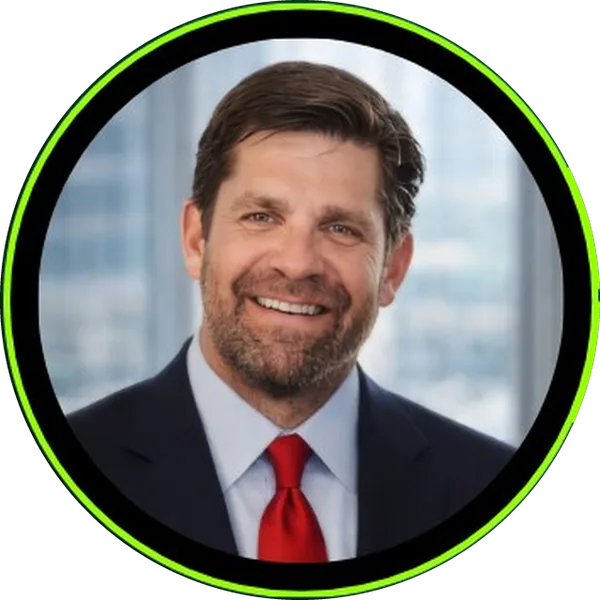
Ken Bunn
Ken Bunn, Vice President of Claims at Builders Mutual Insurance Company, joins James Benham and Rob Galbraith to unpack how a construction only Southeast insurer built its entire claims department from scratch after cutting ties with an outsourced TPA, why the AI tools that fail are the ones that never make it onto the adjuster's actual screen, and what it takes to keep training junior adjusters into seniors while automation eats the easy claims.
The full episode
Press play for the whole conversation.

Building a Claims Department From Scratch
Ken spent 18 years at Nationwide, rotating through claims leadership, field training, IT program management, and back to claims again, a path he credits with giving him a broader view than most claims executives ever get. Twelve years ago, Builders Mutual called with an unusual offer: come build a claims department that doesn't exist yet.
Builders Mutual, a regional carrier that insures nothing but the construction industry across a footprint stretching from Maryland to Florida, had always outsourced its claims handling to a third party administrator. When leadership decided to bring the function in-house, they leaned on the TPA relationship rather than starting cold, pulling over close to 40 people from that team. Twelve years later, close to 30 of them are still with him.
The company itself has grown from roughly 200 million to 650 million in revenue during Ken's tenure, now serving over 28,000 policyholders through 5,000 independent agents.
"I've still got that core group. 39 folks that we brought over, we still have close to 30 of them left."
Ken Bunn
The AI Models That Worked, and Still Didn't Stick
Builders Mutual started experimenting with AI during the pandemic, well ahead of most carriers its size. The team built predictive risk scoring and total incurred prediction models on its work comp book, working with a vendor Ken trusted. The models performed as designed. Adoption still stalled.
The reason, Ken explains, comes down to where the tool physically lives. If a risk score or a predicted reserve value isn't sitting on the same screen where the adjuster sets that reserve, it simply doesn't get used, no matter how accurate the model is underneath. That lesson reshaped how he evaluates every tool since: the highest returning AI use cases at Builders Mutual haven't been the flashy predictive models, they've been document routing, indexing, and medical record summarization for work comp claims, the unglamorous work that adjusters touch on every single file.
"It's not going to solve all your problems. It's going to help."
Ken Bunn
Assembly Lines, Brain Surgery, and Where AI Actually Belongs
Ken's clearest articulation of his AI philosophy is also the one his own team has heard him repeat for years.
The idea: AI should absorb the transactional, pattern based work, indexing documents, routing them, summarizing them, so adjusters can spend their attention on the complex claims that actually need judgment. Ken is explicit that the goal isn't reducing headcount by replacing adjusters, it's protecting the part of the job that only a person can do.
That same philosophy surfaces a problem most AI conversations skip entirely. If automation absorbs every simple, low complexity claim, junior adjusters lose the on-ramp they need to develop into senior ones.
"You can't work on an assembly line and do brain surgery at the same time."
Ken Bunn
"Pick and choose your tools well so they inform the adjuster, not just replace them."
Ken Bunn
Leading Change Without a Change Management Program
Ken led Builders Mutual through a full claims platform overhaul with what he describes as no formal change management process at all, just a close knit team and a simple standard for himself.
He points to admitting mistakes openly as the real driver of trust: when a rollout didn't go as planned, he told his team plainly rather than downplaying it. Over time, that honesty is what let the team accept whatever change came next, without a formal committee or change champion program behind it.
"Be real. Tell people what's going to happen and why you're doing it."
Ken Bunn
Where Work Comp Is Headed
Ken also weighs in on the broader trajectory of the industry. Frequency of construction work comp injuries keeps falling thanks to better training, safety technology, and initiatives like the Job Site Safety Institute that Builders Mutual helped found over a decade ago. But severity is moving the other direction: catastrophic claims, medical utilization, and long term care costs are climbing fast enough that Ken thinks the years of steep work comp rate softening may be hitting a floor.