 YouTube
 Spotify
 Amazon
 iHeart
 Apple
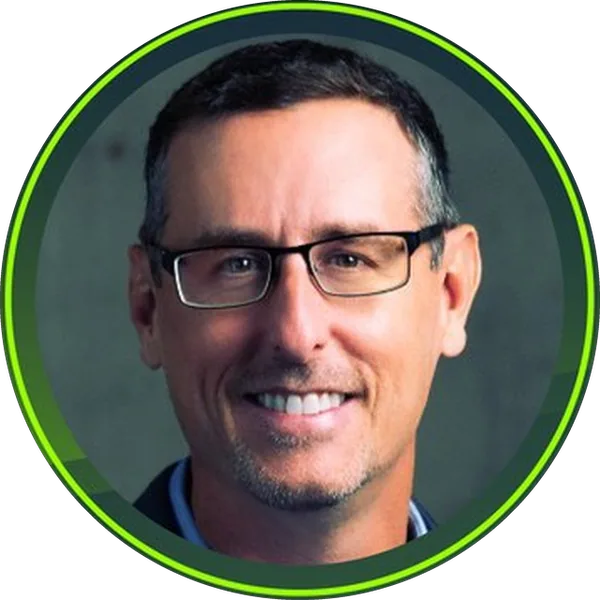
Chris Griffith
Chris Griffith from American Coastal Insurance and Skyway Underwriters shares his expertise on going from the help desk to the executives desk. Discover how strong execution, smart frameworks, and leadership drive innovation without compromising quality or compliance.
The full episode
Press play for the whole conversation.

Introduction
In this episode of the InsurTech Geek Podcast, James Benham and Rob Galbraith sit down with Chris Griffith, President of American Coastal Insurance and Skyway Underwriters, to unpack an extraordinary career journey. From humble beginnings in technical support to leading an insurance company, Chris's story is a powerful testament to resilience, learning, and the transformative power of technology in insurance.
This blog explores the major themes from the conversation: career development, the evolving role of AI, the power of no-code platforms, and why humility is a secret ingredient for success.
Career Paths Are Rarely Linear
Chris's career began not in an executive boardroom but on a help desk, followed by a stint as a repo man - a job that taught him resilience under pressure. Eventually, a newspaper ad landed him a tech support role at DataStream, and the rest is history. His rise through tech roles, including Java development and database administration during the dot-com boom, gave him a front-row seat to the volatility and opportunity in tech.
Chris emphasizes that career trajectories are rarely straight lines. "You go from the help desk to manager to director to CIO - it wasn't as clear as it sounds," he noted. Career setbacks, such as the dot-com crash, were vital learning experiences that taught adaptability and persistence.
From Tech to Executive Leadership: Bridging the Gap
One of the major themes from Chris's story is how technologists can transition into business leadership. His move from CIO to President didn't happen by accident - it required a deliberate effort to deeply understand the business, not just the technology.
Chris's advice: if you're a technologist, don't just build systems to specifications. Understand why the business needs what it asks for. This curiosity and business insight positioned him to influence decisions beyond IT, eventually stepping into COO and President roles.
Humility and Hard Lessons
In an industry often filled with fast-talking tech evangelists, Chris's story is refreshing. He shared moments where mistakes (like accidentally deleting a live database) taught him humility and the importance of double-checking everything.
He also emphasized a key leadership lesson: "Dance like nobody's watching, but write emails like they'll be read in front of the Supreme Court." In short, professionalism, caution, and emotional intelligence are as important as technical skill.
AI in Insurance: Assist, Not Replace
Chris and his team at American Coastal are keenly aware of AI's potential - but also its limits. While AI tools can support underwriting by gathering information and highlighting outliers, human judgment remains critical, especially for complex risks like condos and apartment properties.
Rather than seeing AI as a replacement for underwriters, Chris views it as an accelerator - helping teams make decisions faster and with better information.
The Power of No-Code and Speed to Market
One standout achievement Chris discussed is launching an entirely new insurance product - apartments - in just six months with a seven-person team.
By leveraging a no-code platform rather than traditional heavyweight systems, they were able to skip lengthy development cycles and bring new products to market rapidly. This approach showcases the future for nimble Insurtech startups: agility over tradition.
Chris's advice for anyone building new lines: "Don't just follow what you've done before - go explore what's new in the market."
Conclusion
Chris Griffith's career exemplifies the perfect marriage of tech savviness, business acumen, and relentless curiosity. In a time when insurance companies are navigating seismic shifts, leaders like Chris demonstrate that real innovation requires both expertise and humility.
Whether you're starting your career at a help desk or launching the next great Insurtech startup, the lessons from this episode are clear: Master your craft. Understand the business. Stay humble and curious. Embrace new technology without losing sight of human judgment.
Related Podcast Episode
Educating The Future of Workers' Comp with Bob Wilson from WorkCompCollege.com
The full transcript
Transcribed automatically from the episode audio, so some names and terms may be misheard.
James BenhamOn this episode of the InsurTech Geek podcast, we're talking about what it takes to go from the help desk to the executive desk with Chris Griffith, president of American Coastal Insurance and Skyway Underwriters. The InsurTech Geek podcast is all about technology that's transforming and disrupting the insurance world. We'll be interviewing guests and doing deep dives into specific tech we see changing the industry. We're taking you on a journey through insurance tech, so enjoy the ride and geek out. Terra, this week's episode sponsor, is revolutionizing the world of workers' compensation claims and policy management.
Terra's cutting edge platform empowers insurers with comprehensive benchmarking tools, robust management systems, and an integrated ancillary services marketplace. Discover how Terra is driving innovation and efficiency in workers' comp at terra.insure. That's T E R R A dot I N S U R E. And we are back with another great episode. With me, of course, my illustrious cohost, the most interesting man in insurance. That's right. Rob Galbraith. How are doing, Rob? Doing well, James. Doing well, James. And, for those loyal viewers
Rob Galbraithof ours, you can see that, in the process of we're we're gonna be selling our house. I got to fix up this house and all that. So still staying at San Antonio, but we're we're downsizing. We've got one out the door, one that's probably ready soon. And our youngest just turned 15 this past weekend, so she's not quite there yet, but already pasking me to learn to drive and all that. So, yeah, we made the decision to go ahead and start that process downshifting.
James BenhamWow, that's a big deal. Yeah. Okay. And I've seen people like downsize and then like bounce back and upsize again afterwards. They're like, oh, we didn't mean that small. And,
Rob Galbraithbut, yeah, whatever whatever works, man. That sounds great. As long as you're staying in Texas, I'm good. Yep. Yep. Nope. Staying local for sure. I mean, she's our youngest just finished freshman year of high school, so you know how that is James. And Oh, yeah. Yeah. She that was like number one question. Like, do I have to change schools? We're like, nope. Nope. Definitely stay in the district. Yeah. Don't make them change school or change friends. That'd be that'd be be terrible. With
James Benhamus from the beautiful Saint Petersburg area, Tampa Bay area of Florida, Longtime friend and and colleague of mine, Chris Griffith. Chris, how you doing today?
Chris GriffithI'm doing great. It's about, you know, 75 here. Sunny, terrible weather. Terrible
James Benhamweather. You know? Gonna play tennis later. You know? It's it's
Chris Griffithall good. 06:00. 06:00.
James BenhamI knew I knew it was gonna be today sometime. That's that's awesome. So, you know, Chris and I, like, like a few of my guests, you know, you you invite some longtime friends on. I I've I've invited Chris on, a couple of times, and, he he, for various reasons, had to had to wait until now. And so I'm so excited that he was able to come in and and talk. He's a rare breed. Know, he's he's president of a pretty good sized insurance company now, but started out literally working help desk.
So before we talk about current technology topics with all of our guests, we always talk about their career path because insurance is generally something that you, like, stumble slash fall into, and then you fall in love with it. There there are people who go to college for insurance, but that's it's kind of rare. It's a small percentage. Most people do other things and then discover insurance later, and we're like, oh, yeah. This is where I'm supposed to be. And you definitely are in that category. Are you not?
Chris GriffithWell, fun fact. Before I was on the help desk, I was actually a repo man. I have been shot at. That's a whole story for Unable. But yes.
James BenhamThat's that's for, like, a that's for, like, a different I feel like that'd be great for my cousin, my my for my other listeners out there. Have a famous cousin, Theo Vaughn, who's a really well known podcaster, and, and, that would be the kind of person that he would interview as a repo man. He would love to have a repo man on his podcast. I can only imagine
Chris Griffithhis stories about the repo man from his hometown. He has one.
James BenhamHe has the best hometown stories. Side note, it's as I record this, it's Tuesday, March 25. He's coming here tomorrow. He's performing in in at Texas A and M. I've been harassing him for years to come perform here. He's performing at, the basketball arena. It's sold out, of course. Yeah. And, so we've got the return of the rat tour with Theo Von coming. So I'm excited, but he would totally love hearing about the I would love hearing about the Reaper story, but we need to go even farther back.
Where were you born and raised? And then, like, where'd you end up going to school? And tell me tell me about that that path.
Chris GriffithBorn in Michigan. At three, I moved to Texas and grew up spent spent my formative years in Cleburne, Texas. Cleburne. That's why I have a little a shirt with Texas logo. Nice. I am I am a Texan even though I was not technically born there. My dad was born there. His grandfather was in the navy. He was actually born in The Gulf and claims Texas even though he didn't grow up there. So I think that's a little unfair. I actually grew up there, started school at UTA in electrical engineering, and got into circuits lab and realized I couldn't tell the difference between the red and green wires.
Didn't know I was color blind. Found out in lab that I'm color blind. So, obviously, electrical engineering wasn't the career path for me. Switched to computer science and found my home and transferred to University of South Carolina, go Gamecocks, and graduated with a computer science degree with a computer science award for the school, top computer science student, and then left my life as a repo man while I was in college and decided I should probably go use my degree.
James BenhamWait. Wait. Wait. When you got shot at, was that like the moment you're like, maybe there's a different career path for me? Maybe maybe chose a a poor start. Yeah. Yeah.
Chris GriffithAnd actually applied from a newspaper. This is this is I'm dating myself here. Applied to a newspaper ad for a help desk analyst at a technology company in Greenville, South Carolina called Data Stream. And they hired me. And from there, my career went to .coms and, you know, .com boom was happening. It was super fun. I had a ton of stock options that are were now worth the paper they were printed on. But, you know, that was those were the days where you could write your business plan on a napkin and get VC funding, and people were.
And I I joined several of those as a Java developer. This is when Java was Apache was alpha mode. Java was brand new. Had never really been a Java developer, but, you know, we could figure it out. And then got a job as a ASP developer. This is this is all brand new. Microsoft had the first debugger. Yep. And I'm like, what is this? Is this cheating? It is cheating. Was cheating. You come from Java to ASP, and you're like, wait a minute. I can just click a button and it steps through the code?
It was totally cheating. Again, never seen ASP, but, you know, you take the job and then you figure it out. Yeah. And and our team did, and we did we did great work for every one of the dot coms that we we were at. But, unfortunately, the business plans were all flawed. I was at the first ever online furniture company, fun fact, that couldn't figure out how to get the they could get that couch to your city, but they couldn't figure out a distribution model to get it from the city to your home on a schedule.
So we were drop shipping couches at 02:00 in the afternoon on people's lawns, and they didn't seem to like that very much.
James BenhamAin't it ain't it funny how many of our like, the .com boom wasn't necessarily flawed ideas. It was just flawed ideas. It was a good idea at the wrong time because a lot of the Yep. A lot of the concepts like, you know, home grocery delivery and, you know, shopping for furniture online, these are mainstream concepts now that that are profitable and they work. And but it just needed a lot more infrastructure. So it was almost like dreaming was, like, twenty years ahead of the the the ability to pull it off.
You know? Yeah. It's it's the convergence of technology. It wasn't there. Yeah. You know, there was no Amazon. Think about that. Amazon wasn't even a a thing yet. Yeah. Not even a not even a bookstore online yet. So it was it was early.
Chris GriffithThe .com crash happened and couldn't find a job. I went for making 70 an hour as a contractor thinking I had made it. Right? Back then, I'm like, okay. I've made it. Couldn't even find a job. I took a job for 70,000 a year as a database administrator for for a restaurant company. Big big one. A big chain. Ryan's lucky and was thankful to have a job. I I was really thankful. I was I was you know, it was it was a tough time. I knew friends that great developers that were out of work for, you know, thirteen, fourteen, fifteen months plus.
They do they couldn't find anything. So I was just grateful to be employed, and that's about the time I met this guy. I applied for a job as a as a director of a of an of a property casualty inspection company. And JB was was working young JB was owner of a company and was was in there really trying to salvage a a disaster of a tech situation and was also hired to go find the the person to run IT and met me and and and interesting story.
There were two Chris's interviewed. JB recommended the other Chris.
James BenhamNever let never let him down on this one. You're never gonna let me forget this. So it's been nine it's been nineteen years. We had two Chris's. I won't say the other Chris's name because I'm sure he's still around. And, you know, I I I told the the the president of the company. I said, look. If you want the more experienced guy, hire other Chris. If you want the the the younger, high energy early in his career guy, then hire Griffith. And, you know, I said, you know, I'd probably go for experience because, you know, things are difficult.
But he he to his credit to his credit, he interviewed both. He picked Griffith. Chris and I had an awkward first day on the job where we kinda circled each other like two dogs in a in an arena trying to figure out what was gonna happen. And then, yeah, we started working together on a on a project to to rebuild their systems, had to spend fourteen weeks in a small room together writing a, what, 400 plus page manifesto.
Chris GriffithIt was it was 550 pages. Five fifty there. JB and I spent fourteen hours a day in my office for fourteen weeks, and I think we get each gained 40 pounds at this point. We gained a lot of weight.
James BenhamWe just were
Chris Griffitheating and writing. That's all we did. We ate, and we wrote this document. And and we put that technology in place, and they
James Benhamran off of that tech platform for a decade. Yeah. At least. Yeah. Yeah. Yeah. And then, you know, you you you had an interesting path. You, you ended up going over to a a large independent TPA called CCMSI running their enterprise development team. You did that for, really functionally five years. You then got tapped to go to Safety National as their CTO and eventually their vice president and CIO. Again, both of those are really largely work comp technology assignments. And then, you know, safety is pretty pretty good sized entity.
And and then from there, you went to be the CIO at American Coastal Insurance Corporation, ACIC, for for really six years. And then, you know, you you see, you really had, like, three, I'd I'd say, well, you had two two CTO, CIO gigs, and then you had a head of app development gig. So what was it like to kind of jump into a much larger scale with those three companies, you know, versus what you were doing as a consultant developer, then Ryan's Restaurant Group, then, you know, and and then then at the inspection company.
What what was that like to jump into a much bigger scale?
Chris GriffithNo. It was it was great, first of all. And, you know, I'd like to encourage everyone. The path that I took wasn't this linear, you know, next thing, next thing, next thing. You you you're you go from help desk to manager to director to CIO. It wasn't as as clear as as JB made it sound there. It was it was more like this. You know, the the .com boom was was a high, and then it crashed, and it was a low. And then I I got this job as a director running IT for a a company, and I thought, okay.
This is this is what I'm meant to do. And there was a moment when I when I was looking at it thinking, do do I stay here in this smaller company in a larger role, or do I take a step down, become a manager, and go to a bigger company but manage IT team? And it was a you know, it could have been seen as another dip for me, but I looked at it as an opportunity to go learn something new. And I'm really glad I did because I learned I went from the inspection side to the back end, to the claims handling side, and I got to learn how claims are handled at a TPA.
And then that by taking that step down and to the manager level managing a team, I had an opportunity to interview for a CIO role with a much larger company as a part of Tokyo Marine, which is a, you know, a top four, top five carrier in the world and got exposure then to the whole aspect of insurance from the start to the end. And I was exposed to the the way the the brokers work and the way MGAs work and exposed to how the insurance carrier works and exposed to underwriting and finance back end office systems that I hadn't had access to before.
And then also got to travel internationally. Got to go meet other CIOs from around the world and hear their stories about how, you know, their journeys through their career. And also all the different projects that were being worked on and and got an opportunity to participate in global project teams where we were looking at implementing enterprise wide software on a global level at multiple companies. And if I hadn't taken the opportunity to take a step back occasionally or to kind of dig down and learn how the business works, I wouldn't have had those opportunities.
And then I always wanted to be in Florida. The opportunity here opened up in an executive level as a CIO and got an opportunity. I wouldn't have had that if I hadn't, again, taken the the time to go, you know, move my family to the Midwest and go to St. Louis and work for a great company that was a part of a huge organization that gave me the experience that this company was looking for at American Coastal, then I came here as a CIO. And I didn't just stop there and say, you know what?
I made it. I'm gonna I'm gonna sit here and work on IT for the rest of my career. I I also take that opportunity, go learn American Coastal. What is this? What is the business? What how do they how do they what is their niche? You know? How do they make money? What is what is unique about this company? Which then opened the door to COO and ultimately president and still involved in IT and still able to influence technology decisions, but from the business side now.
James BenhamYeah. It's really interesting. And we're gonna jump into questions from Rob here, but I just I like to cover background first before we do that on every show because it helps to understand people's perspective and the path they took. And your case, I mean, you jumped into insurance nineteen years ago, so it's almost two decades of this. And you learned it the same way I learned it, which is from the inside out through the technology lens. You know, we've we've, you know, both had to learn it the same way where you go build a system for underwriting, go build a system for claims, go deal with all the ETL problems with data moving around the organization, go deal with all the, you know, customer portal and the your your direct to consumer app and go get there.
You're like, oh my gosh. How does this work? How does regulatory work? Oh my gosh. Now got the opportunity to make the big switch, which is really rare to go from being in IT technology leadership as a CIO to being a COO. You know, that's usually not the path. And and and and right now, you're you're president of a of a pretty sizable insurance company. What's that transition been like for you?
Chris GriffithI would I would encourage anybody listening from any level of of technology in the organization. The I think the door is more open now than it probably was before. Right? For people that are in tech, that are learning the technology side, but to do that to to implement the technology, you have to understand for the most part how business is using your software. So I think it is a unique opportunity now, and I think it's a growing opportunity for anybody that's in the tech side of a company to go learn the business as you're implementing the software and and be seen as the person that understands, how the company operates because you had to put the technology in from the back office system all the way through the front end, whether it's, you know, you're putting Salesforce in to learn distribution or you're putting a a large enterprise management software in to manage the business or, you know, something that we're on the backside to manage a a GL system or finance, you're learning the whole process.
Take the time to not just do what the requirements say. Take the time to understand why are they needing this requirement and connect those dots in your mind. And then when you have the opportunity to demonstrate your expertise and your knowledge, take it and show the company that you do you are capable of doing more than just implementing the software.
James BenhamYeah. That's a really great lesson. Really great lesson. And now, you know, at ACIC, now American Coastal Insurance Company, you guys do, what, largely condos and apartments. Right? Property insurance?
Chris GriffithWe're we're the largest writer of condos in Florida, and we which is unique. And then we have a a long established strong renewal condo book. But we're also a start up, and we have a a start up MGA internally called Skyway Underwriters that has started writing apartments. So it's really fun because I get the opportunity to manage a well established company that has a great reputation in the market and knows how to write catastrophes expose property in Florida, but also run a startup that has new tech, that has new teams, new people, and is doing new things in the state, bringing new opportunity, bringing new capital into Florida, which is a great message.
James BenhamYeah. It absolutely is. For sure. Awesome. Rob.
Rob GalbraithGreat to have you on, Chris. It's a pleasure to meet you. It's great to to hear about your background with with James. So thrilled we could finally, make this happen to to to bring you on the podcast. So I'm curious, like, in your current role, clearly, right, you've got kind of a good niche in the market that you're really focused on, that you do a great job on. Like you said, you kind of have a history, but yet, you also kind of have this startup ethos.
I'm imagining the reason you got the role as president is technology is somewhat integral to everything that you are doing and are looking to do going forward. So maybe you can talk about some of those lessons that you learned. You talked about like the .com days, learned a lot of how not to run a business through some of that. Maybe just help our listeners understand, what is that technology background? How does that help you today in your role? And how are you leveraging that? Or, you know, maybe some examples of technology that you're leveraging to to do things better.
Chris GriffithSure. So my early career, I started as an Oracle DBA, actually. To this day, I will I will say that I think my most difficult set of exams were the seven exams I had to take at I think I was 21 years old to get my Oracle certification. And, you know, I thought I was at that point, I thought I was pretty hot stuff. Let me just say it that way. Right? I'm 21. I'm now at a technology company that that was calling itself a .com even though it was already a well established company.
I was running teams in they were offshore in India in '98 and '99. Mean, super early, right, in in that whole idea. It was brand new. Internet was just good enough where you could do that. But I'll tell you that every line of code that was written there in '98 and '99, we rewrote because it was early. Right? We were we were teaching that group how to even be developers. So I'm I'm thinking I'm really, really hot stuff. Right? I've got a whole team that's working for me, and I'm 22 now.
And my boss, his name is David Mortensen, and he's this super chill hippie from Minnesota, long curly hair, chain smokes. Right? Slightly overweight with a potbelly, just, yeah. Hey, man. What's going on kind of an attitude. And I think, I'm better than this guy. Come on. I have my Oracle certification. He doesn't even have a certification. What does he know over me? And we go to Oracle world together, me and David. And he's he's now, like, director of the of the development team, and he's you know?
But he's super chill, and I I'm not. Right? I'm I'm you can ask JV. He has a term that back in my early days, would call griffing people. I'm I'm a little softer now than I used to be. I wasn't I wasn't that chill in my twenties, let me just say. So we get to Oracle world together, and this guy sees a sign. He says, you know, come take your Oracle certification exams. Now I studied for nine months for these. I took a test every month to two.
Some of them I did well on. Some of them I barely scraped by, like, one or two points. And I was think and they were hard. He walks in and an hour walks out, and he has a certification because he just knew it. He'd been doing Oracle database administration for twenty years, and he knew it backwards and forwards. And that was that was a real moment for me as as a brash technologist of, okay. You need some humility. At that to that point in my career coming out of repo land to help desk and then quickly rising through that organization to management.
As a young kid, I did not have humility in at my core, and I had to learn it really fast. That was a that was a wake up call. The second wake up call I had at that job back then, this is early, and and the Internet and the regulations of rules were not quite so great. I was in a production database. No. In a production database live for a customer of ours to be not to be named. Let's just say it was a large manufacturing company that made cars, something really big.
And I was in, and I wrote a terrible line of code in a on a Sun system that basically I was trying to take some files off of off of the that were trash out of their system, and I accidentally did a instead of star dot extension, I did an r m r f j b No. Recursive delete. No. Hyphen hyphen slash I was supposed to do hyphen slash dot t x t or whatever. I accidentally put a space between the asterisk and the dot t x t, which told the system, delete everything from root.
With a recursive force, everything's gone. No restore, no control z to back it up.
James BenhamNothing. Was there a pseudo at the front of that too? So it was gone. Yeah. It was super user I sat there.
Chris GriffithYeah. I was super user. Oh, for sure, was a super user. I was in their production system trying to fix their database, and instead I wiped out their entire production server and spent the next twelve hours restoring it myself. These are the moments in your career where you either learn from that real quick or you're out. Right? And so I learned some humility from Mr. Mortensen, who then left and went and worked for a bank, which I I didn't follow-up with him later. I should probably go figure out what happened to him.
He was really a great mentor of mine. And then to learn, you know, the quadruple check your what you type when you're typing into a production system or when you're writing a SQL query. These are things that you learn. And then another piece of great advice that that I learned later in life is, you know, dance like nobody's watching. Write an email like it's gonna be read in front of the Supreme Court. Good good things for you to learn in your career as you're going up through an organization.
Right? Learned a lot about audit and compliance rules that I had no idea about. Like, how what why does a why does an IT person care about audit and compliance related to, you know, third party auditors and how I had to learn all of that. SOX, you know, how how all the SEC regulations work, how, you know, SOX and compliance works, all of the things that you had to learn in technology along with the personal experiences of, oh, I really messed this up. Let me make sure I learn from my mistake.
Oh, I need humility. These these little lessons along the way that you pick up that that translate into you getting into now a senior leadership role where you're most of your day isn't writing code anymore. None of your day really is writing code anymore. It's all about leading and influencing other people that to, you know, to deliver results for, in in my case, for our shareholders and to ensure that we're, you know, we're on track with the board of directors is guiding us and influencing us to do.
Those are all things that you don't get to do unless you spend the time. And I had a young kid working for me years ago at the property and casualty inspection company, and he so badly wanted to be a manager. And he's, let's say, a year and a half into his job. He's like, I just I want the opportunity. Just give me the opportunity to manage. Give me the opportunity. And I had to sit him down and say, okay. Listen. I I under I hear what you're saying, but, really, what I want you to do is I want you to spend the next year becoming the best SQL developer you can be.
Learn it inside and out. Understand what you're doing, how you're doing it, what the purpose is for it. He came back to me, and and ultimately, he he left the company two years later, got a great opportunity to work for as a consultant, actually. And he he reached out to me about five years later and said, that was the a pivotal moment of my life, and that was the best thing that could have ever happened to me because I became an expert at something instead of quickly rushing through it and and taking a management role and not really understanding it.
I mean and he said, because I did that, I now have the job I have today.
James BenhamWhen you've taken a similar approach now that you're in the non IT, although you obviously oversee technology now, but and that that's underneath you. But you've taken a similar approach of kinda getting your hands dirty and getting down on the details with underwriting because you've never been an underwriter. But you've had to really get hands on with underwriting on this this new effort with apartments. Right? And like you've had you've had to really get into the details and work, you know, hand in hand with the underwriters and with the exit and that talk talk about that experience because the the, you the get your hands dirty and learn the hard way by doing it.
And I it and certainly, it's how we do it in IT, you know, that you can you can manage it later. You know, how how has that translated now that you're you're having to go in and actually underwrite apartment policies? It's just obviously a very So it's so it's
Chris Griffithit's another piece of advice that I will give anybody listening. I learned this from an early job. The the job where I left consulting and the .com crash happened, and I had to beg for a job as an or as a Oracle DBA for a restaurant company. This was a privately held company called it was called Ryan's Family Steakhouses back then. They they were acquired later. But there was a and they were about a $2,000,000,000 privately held company. And the CEO of that company's name was Charlie Way.
I'll never forget him. He was the type of leader that stayed he was he was kind, and he listened well, and he stayed at the high level most of the time. But when something was really important to Charlie, he dove all the way in. And I was at this point of my career, I was a ASP developer and a database developer and a DBA. That's what I was. I wasn't in any management role. I had I had you know, I was hot stuff early. Dot coms all crashed.
I had to go take a job wherever I could find it. And this the CEO of this 2,000,000,000 company, tens of thousands of employees in Ryan's. They have 450 restaurants in The US. It's massive. He would he would come down into the the the tech area. This is this is so cliche. It was in the basement. So they put us in the basement and they put up those kind of fake walls and they made us like our own little area down in the basement. And we're sitting down there and I was sitting in my office.
And my office had, I call it an office. It was very meek for an office at this point. But it had two doors. It had a door in the front, and then for some reason, they had my they had stuck in my office in an area that had a door to the back. And, Charlie, I would hear a knock on this door in in the back, and I would open it up. And it would be Charlie, the CEO of this multi billion dollar company. He's like, I had this idea last night.
I was thinking about it. And he knew I was the guy that could that knew how to get to the data. Right? He had figured this out. He had he had knew enough about this 10,000 person organization to know this is a guy that if I go, hey, show me this information on this one restaurant or this one group of restaurants, he can do whatever he does on his computer and then it'll be on the screen. He figured that out. And so he'd walk down, and he'd be like, hey.
Can you show me this? And then I'd pull, you know, SQL query analyzer up, and I would write a quick query, and there would be on the screen. And he'd look at it and and he'd go. And he'd make a decision based on what he just saw. But he would dive into an individual store and fix that store's problem based on the data he saw. And then he came in one day and he's like, you know, I had this idea. I was at Wendy's and I saw this thing on I I was buying a cheeseburger or whatever, and I saw this thing on a back wall.
It was like a score at the restaurant, and it looked like a a grid. And I kinda saw on there that they had they were doing things with, you know, evaluating sales and operation, but they were also doing some other things on that. I think we could do that. What do you think? Can you put something like that together? And he knew I was the guy that could put the data together. So then I threw something together for him and I showed it to him. That turned into a system that they used to rate every restaurant across the entire organization all the way up and scored all of their restaurants that way.
But he had that ability, that really unique ability to encourage and motivate and lead from the top, but dive in and find the individuals and find the things that he wanted to focus on. And I've tried to carry that along the way where I don't dive into everything. Don't have time to do that. But if I think something is really meaningful or can really have an impact on the potential future of our company or the success of our company, those are the things I'll go dive in and learn.
You know, I had to learn how to how to work with actuaries, how to how to work with underwriters, how to look at risks from a properly framed perspective. And and our CEO of our company are now now chairman of the board. Dan Pete is one of the best underwriters that's ever lived on this planet. He's actually a he's a Texan. He's a former Aggie.
James BenhamSo, you know, JB Former student. Current Aggie. You're always an Aggie. He's a former student.
Chris GriffithExcuse me. One of the he's one of those. I'll just put it that way. He's an Aggie. I am not one. But he he is a teacher too. And, you know, I just sponge that. If he's gonna teach me how he thinks about a risk and why we why we ensure what we ensure, I'm gonna go learn everything I can from him inside and out.
James BenhamThat's awesome. Rob?
Rob GalbraithSo, Chris, obviously, you've seen a lot of technologies over the years. So what what's out there today that you're excited about that you guys are experimenting with that's gonna shape the the future of American Coastal?
Chris GriffithWell, we we did, you know again, we get the unique opportunity to operate an existing line that's very mature, that has its own systems that, you know, that they can just basically run at this point on renewals and also a start up that we had to go build everything from scratch. So I did have an opportunity to to and and our team had an opportunity to play around with some of the newer things as we were launching our apartment line. The you know, everyone's gonna say the same thing.
I'm gonna say AI is is something we're always watching, especially in insurance. We're very interested in how it can assist the underwriter. Not yet ready to to declare that it can replace the underwriter because I think that's you know, especially in our line of business, it's something that you still want the person with the eyeballs looking at something. And, you know, a lot of it is judgment based, and, you know, I I don't think AI is quite gonna be quite there on risks like ours. Maybe maybe they can do more of that with, you know, personal lines, auto, and and and homeowners at some point.
But for large complex commercial, I think we're still a ways away. But it can help with the marketing, you know, putting together marketing materials. It can help with assisting the underwriter with gathering information and just putting it together in a way that it can be presented to the underwriter so that they can save time and not have to go dig for things. And and it can help if we have a a clear set of guidelines, it can help tell us when a particular apartment or or condo doesn't meet those guidelines, that there's something that's just not quite right about it versus what we're seeing in the guidelines.
So we're we're experimenting there. We have very sophisticated pricing models that do that do a lot of both analytical prescriptive type analytics, but also predictive. We've we've baked in, you know, quite a bit of tech there that that helps us that helps guide the underwriter. And what's really interesting about it is we've done it really in Excel, but we use technology that allows us to put those Excel models in the cloud and be able to call them like an API, which opened up just a world of opportunity on speed and ability to adapt.
And when you're when you're pricing the way we do, when you're when you're looking at risk the way we do and you're able to use judgment as your pricing and it's not it's not quite as locked in and and prescriptive, it's very powerful to be able to go in and look at how your model's doing on a daily, weekly, monthly basis and make adjustments to it without having to go through a full, you know, SDLC to deploy changes, and you can you can more quickly adapt to the market.
James BenhamAwesome. Let's close with this. Like, you you've recently been part of a a pretty rapid deployment of a policy system that works really well with property in the area that you're in. You were able to do it with a small handful of people in a few months, which is just kind of unheard of. It's it's almost Elon esque, you know, like as as fast as you would go and implement things, you kind of grift the you kind of grift the policy implementation process. Again, this was a very specific narrow, you know, line and property.
I mean, there were there were some nice constraints that allowed you to really focus on this deployment. But where do you think we're heading InsurTech now that you've been doing it almost two decades, and you're able to deploy so much faster and work with, you know, some really amazing people. Help help me understand, like, where you think we're going in InsurTech.
Chris GriffithSure. So I'll put my I'll take my my president hat off and put my CIO hat on. So, you know, as a as a technologist, I'm excited most about the opportunities to to operate differently, especially in a start up. It's harder to do this if you're in an established line that has, you know, a a big book of business and a big set of claims, and now you're having to think about conversion and and all of the other things that go along with that and how to how to get documents out of and images out of one system and into the other, and it that's that's hard.
If you're at a company that you have an opportunity to have a start up, even one line of business, you know, my recommendation is look at what's new. Don't don't just go back and and repeat or retread what you've done in the past because it's it seems like an easy decision. It's actually not the best decision. I think the best decision is go go in the market and see what's new. We did that. We we decided to go with a with a no code platform. We took a team of seven people, which was, you know, two senior level developers that were way overqualified for the role that I asked them to step into as configuration of a a no code platform, two BAs and a PM and two QA people.
And that team in six months deployed apartments from scratch. And so but they had a lot of knowledge and experience related to implementing policy systems. They put Guidewire in. They put Duck Creek in. They knew what they were doing. So they understood probably better than business did, what the requirements were of a policy system for commercial lines and for apartments. So it starts with making sure you have the expertise. But but don't just go, you know, follow them follow yourself or the market into one of the big three.
Go look and see what's out there. There's there there are new things happening every day in insurance and technology. There are new systems that are out in the market. There are new ways of of pricing. There are new ways of of paying for these things where you don't have to necessarily tie a percentage of your premium to them or or lock yourself in on some kind of fixed fixed amount at the bottom while you're trying to grow a start up line. Go go explore the market, check out the new players, and see what's there, and don't just follow what you've done in the past.
James BenhamYeah. Amazing feedback. That's, like, fantastic career feedback for technologists, great feedback for people that are having to make difficult decisions about core systems and new things. I mean, that's a lot a lot to unpack there. We could go another hour, but it's we are at time, and I know you've got a lot going on your plate. You know, it's great to finally have you on. It's also great to hear about your journey, about what you've been working on, and all your guidance for people in the insurance business.
Thanks, y'all. Appreciate it. Also, Rob, any any closing comments?
Rob GalbraithYeah. Just, Chris, I really appreciate your candor. I can see why you and James got along so so well. You both are really down to earth folks even though you've achieved a ton. So if I feel like there's so many breadcrumbs that people could follow-up on. So if if we do have, you know, audience members that wanna reach out, what's the best way for them to reach out to get in contact with you?
Chris GriffithYou can email me, chgriffith@gmail.com. It's one of one of the original Gmail accounts back in alpha Gmail. That's right. That's how I'm dating myself again. But, yeah, you can send me an email.
James BenhamYeah. And obviously, it's on LinkedIn as well. But, you know, the Gmail is the easy one to get to. So it's awesome. Thanks, Rob. As always, thanks, Chris. And thank you to all of our listeners out there, either it's on video or audio or streaming, any of the channels that we broadcast on, we appreciate you joining us today to tune in to geek out our interview with another InsurTech geek, mister Chris Griffith from American Coastal Insurance and Skyway Underwriters. See you next time. The InsurTech Geek podcast is all about technology that's transforming and disrupting the insurance world.
I'm your host, James Benham. That's jamesbenham.com with cohost Rob Galbraith at endofinsurance.com. We're taking you on a journey through insurance tech, so enjoy the ride and geek out.