 YouTube
 Spotify
 Amazon
 iHeart
 Apple
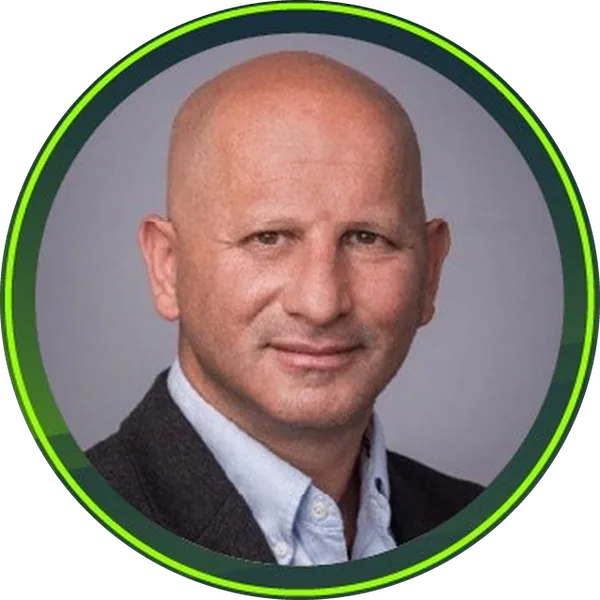
Kobi Bendelak
Kobi Bendelak from InsurTech Israel discuss what insurtech is coming out of Israel and the role InsurTech Israel plays in that.
The full episode
Press play for the whole conversation.

The full transcript
Transcribed automatically from the episode audio, so some names and terms may be misheard.
James BenhamOn episode 100 of the InsurTech Geek Podcast, talking about building global bridges for the InsurTech community in Israel with Kobi Bindalak from InsurTech Israel. The InsurTech Geek podcast powered by Jibby Knowledge is all about technology that's transforming and disrupting the insurance world. We'll be interviewing guests and doing deep dives into technology that we see changing the industry. We're taking you on a journey through insurance tech, so enjoy the ride and geek out.
Rob GalbraithRob Galbraith, how are you doing? Good to see you on the show. Hey, James. It's great to be with you. I'm super excited for today's episode. Our guest, our hundredth episode, and it just so happens the day we're recording is my son's eighteenth birthday. It's hard to believe. So he's a man now. Well
James BenhamWow. I'm I'm gonna I'm gonna be excited about eighteenth birthday. He's a he's a little man. I, you know, I call that boys who can shave at 18, but he's he's starting to figure things out. But episode 100 of the podcast too, man. We've been we've been at this for a little while, brother. Absolutely. Absolutely. Huge milestone for us. Yeah. It's been fun. And with us from Israel,
Kobi BendelakKobi Bendelak. Kobe, how are you doing? I'm fine. Great. Great to be to be here. Thank you for having me on your one hundredth episode. It's a it's a pleasant. You know, it turns out when you do something long enough, the numbers add up.
James BenhamJust sheer force of will and persistence, as are most things in business, and you know that as a multi decade business owner, Kobe, it's sometimes it's just being too stubborn to quit.
Kobi BendelakYes. Yes, you're right.
James BenhamAnd so, glad glad to have you on. Glad to talk about InsurTech, InsurTech in Israel. You know, happy birthday to Rob's son, 18. Man, big 18. I remember I remember when I turned 18. That was That was exciting. I turned 18 in London, if I remember correctly. It was the summer after I graduated high school, I had a great little trip around Europe with my dad and a school that we went with. I'll never forget that. So having a summer birthday, I always was in different places.
Was in a different country every summer, you know, turning some birthday, doing I did a bunch of exchange programs, and so I always looked forward to that, and it's exciting. You
Kobi Bendelakknow what's happened in the eighteenth birthdays in Israel? So the boys and the girls went to the army service.
James BenhamYeah. Yeah. A little bit different for three years. Absolutely. You're happy eighteenth. Time to put on your uniform and shave all your hair and lose your identity for two years. Yeah, it's unique. You guys have a mandatory public service component of your society, which I think is pretty cool. I went to a military college in Texas called Texas A and M, and I was a Navymanshipman for four years. I did not commission, but I did four years as a cadet in college and enjoyed the military training.
Right. One of my best friends from that time, a buddy of mine, Colin Kerenick, just retired out of the Navy after twenty years as a lieutenant commander in Navy Intelligence, and so big shout out to my buddy Colin. But back to you, Kobe. Let's talk about you for a second because speaking of military service, you retired from the Israeli Defense Forces as a colonel, which is a high ranking officer. You also built a business because you were a reserve officer. And for those who are listening who don't know what reserves are, The United States, it means two weeks a year and one week in a month.
Kobe, you said in Israel, it means like sixty to ninety days a year you're actively serving. Is that correct? That's correct. It depends of your rule and your
Kobi Bendelakbank, but this is the average. Yeah.
James BenhamWhich pretty heavy service. Reservists here, I think, might have a harder time with that. Obviously, they get called up to serve, though, and when they when they're called up for tours, it'll be six months at a time for a tour if they get activated. So it's a little bit different. But tell me where you grew up in Israel and, you know, what your big dream was, what you wanted to do when you were a kid.
Kobi BendelakThat's a great question. I born in the North Of Israel, in a village somewhere not far from the border between Israel and Lebanon and Syria. It's a nice place. It's called the Galilee, a green place. Actually, I don't remember a lot what I thought to be when I was 18 years old, but I'm sure that I didn't dream even to be an insurance guy.
James BenhamThis was not on my Oh, weren't you mean, you weren't sitting around at 16 and planning on, like, how you were gonna write quotes and buying policies and go, that wasn't your dream as a 16 year old?
Kobi BendelakNo. Not at all. Not at all. I thought about my army career. I think this is what I thought about. But anyway, as an insurance, not an insurance type, of course. But it's nice to see how the life has led you to places.
James BenhamYeah, absolutely. And then you went to university. What did you study in school? I have a second degree, MBA in law. Which is obviously a really, really, really good prerequisite for insurance, considering the entire industry hinges on contracts, right? I mean, that ended up working out pretty well.
Kobi BendelakThat's right. Actually, I learned that after my long service, so I was 40 years old when I started going in university. It's not a regular way for a regular person, but this is what I did. So after the Army service,
James BenhamI just went to be an insurance guy. I didn't find a way, and I didn't have the budget to learn the university until 40 years old. Wow. So tell me, what got you into insurance? What was it about someone who's in the army and serving Israeli Defense Forces that led you to wanna to to join insurance?
Kobi BendelakIt's a very nice story because I I like the I like the army. I like the service, but it was for after ten years of being in the army, I decided that I wanted to have the feeling how to be a regular civil citizen. So I decided to quit for a short period of time for the army, and look for new jobs. In that time in Israel, when you want to look for a new job, you open the newspaper. So I opened the newspapers, and I found a lot of advertising about being an agent.
Looks interesting, so I just went to some interview and then decided to start working as an agent. In that time it was very easy to be an insurance agent in Israel, so I just got the license very fast, and I started working as a broker, insurance broker. The way that my career started, from being in the army officer and to be an agent, insurance agent very quick.
James BenhamYeah. I mean, it's interesting that a newspaper steered your entire life calling, but that's the way it often is with so many of us. I mean, I had no concept of insurance being an area that I wanted to work in until I started building software, and I found out how many technology problems there were in insurance in 'four when I landed my first insurance client, and then it became a, you know, an eighteen year deal. And I'm in my eighteenth year building software for insurance companies.
So it's certainly something similar. A friend told me about it, connected me, and here we all are today talking about insurance. Yeah. So you were an agent for a long time. What were the main lines? I mean, decades as an agent, right? Mean, I think you said thirty years or something. Yes. Twenty two years. Yeah, twenty two years as an agent. So twenty two years writing insurance. What were the major lines that you wrote? Okay, So my
Kobi Bendelakagency was particularly focused on special risk. This means cyber insurance, clinical trials insurance, the DNOA, air and omission. This is what made my company so unique and very successful, because at that time the Israeli industry, the high-tech industry, was bubbling a bit like today. So it's increased my incomes and my company get bigger and bigger. And in the end of the period of the time before I sold the company, was something like the first and the second second and the first biggest insurance agency in Israel.
We had almost 1,000,000,000 shekels premium, so it's $300,000,000 So it was a big company, and someday I got a phone call from my competitor that he wants to buy the company. Suddenly, one day, one day I got a call, you know, it's a dream that, something that you'd never dream on, and he wants you to buy the company.
James BenhamYeah. Because he wanted it mean, at 300 and that's an that's an incredible book. I mean, that's a lot of premium Yes. For That's right. That's right. And so and that's a that's a especially considering the market size of Israel too. I mean, you're you're a you're a major player there. One of your competitor calls you, he says, hey. I wanna buy your company. How how'd that process go?
Kobi BendelakNo. He did it in a different way. First, I I I really hit him. I didn't like him at all. So he he knew that. So he knew that if he will approach me directly, will never say yes, even for the phone call. He's a smart guy. So what he did, he took someone from partner from and the partner called me and said, There is someone that wants to buy the company. It's interesting you? I told him, I was so curious to know who wants to buy the company, so I told him, Yes, let's admit, so who wants to buy the company?
And he was smart. He didn't want to tell me until our third meeting who is the guy. After that, I said, Oh my gosh, he wants to buy the company. But the check was too big to say yes, so this is what I said. It came in the right time, because I was 45 years old, and it's a good time to start a new part of your life. I've got enough money for all my life and for my kids, so it's fantastic. So I decided to say yes.
I told him that I have three things that I want to be sure. One is that he give me all the money in one check I don't want to be lean on his success the second is that I will not give any other services after the sign on agreement and the last one is that he will keep all my employees for twelve months. He will not file any one of them because they were part of my life. So he said yes, and we signed on the agreement.
James BenhamNice. Yeah. And so obviously, those type of transactions are typically life changing. That happened, did you have a crisis of what do I do now, or did you jump straight into being an investor, board member, advisor? No. What was the transition?
Kobi BendelakThe first thing is is is so nice that your phone your phone is is not ringing ringing. It's not ringing anymore. Nobody called you. It's it's fantastic. It's it's quality of time. But so, you know, I tried to make all my dreams come true. So I went to the Himalayas, to the Everest, to the Maldives, you know, all the Africa, all these great places, took my kids, took my wife, have fun, but after five months, I realized that it's too boring not to be in charge of something.
So I decided to open my heart to new adventures, and I knew that something will happen. So after a while, I got an email written in the subject Insurtech Meetup. I was an agent. I didn't know what is Meetup.
James BenhamNo. You're like you're like, is that when you meet is that when you meet up at someone's office and sell them insurance?
Kobi BendelakYes. I didn't yeah. Really. I didn't know what I was so I was so boring. So I went there, and it was amazing because I met a very nice start up pitching about my previous industry, how they are going to change it, how they're going to it. And I said, Wow, this is interesting, this is my new adventure. So I decided to open in Shutek Israel. This is how it's happened. Suddenly, somewhere, some it's like most of my great things that happened to me all my life.
Nothing is planned. Yeah,
James Benhamvery cool. And so today, let's fast forward all the way to today, what is InsurTech Israel? I mean, you said in the introduction we talked about it building bridges from the world to the InsurTech community in Israel, but what is it? What are you doing there? And also, since you co list InsurTech Israel on your LinkedIn along with Israeli InsurTech Accelerator, why don't you tell us about InsurTech Israel and Israeli InsurTech Accelerator?
Kobi BendelakOkay, great. So InsurTech Israel have four pillars. The first one is investment, so until today we invested in 14 startups, and the second pillar is biz dev activity. We assist startups, Israel Shootek startups, to designate their product, to focus on the insurance industry, make them operate well in the insurance industry. It's a new culture, it's other culture for them. Most of them are entrepreneurs and technology guys that don't have any knowledge about insurance, this is what we are doing as a system. In the business pillar, the third one is media.
We call it media activity, it's including delegations to all the big conferences around the world, road shows that we operate in The US and Europe, roundtables, conferences, all this stuff. So it's a great tool for our startup to expose themselves to brokers, insurance companies, and investors. And the last arm, the last pillar is our accelerator program that we opened here in Israel two years ago, together with great global partners like Dell Technology, Microsoft, the SOMPO Insurance, Lloyds of London, AIG, Aon, Sapiens Milliman, Deloitte sorry for all my partners that I didn't mention, great coalition of global partners.
So we operate two cohorts per year, and it's a very unique and boutique accelerator program. We recruit five to seven startups, just five to seven startups each cohort, and by providing them a great mentorship program together with a lot of workshops all over the world and roadshows that we operate for them during the ten weeks of the program, We assist them to accelerate VEM activity in the insurance world. The cohorts and the program is very successful. Our startup raised more than $100,000,000 during the last eighteen months, and signed on more than 25 agreements.
So it's a very successful opportunity to our start ups. All that made us really connected here in the Israeli InsurTech ecosystem. We have almost 200 InsurTech start ups, and we're really connected. And because of that, we are, as you mentioned, a bridge for the startup abroad and for all our friends around the world, insurance companies, brokers, and investors, as a bridge for them to the Israeli insurance ecosystem.
Rob GalbraithThat's awesome. Well, thanks for the explanation. I appreciate it. Rob? Kobi, it's so great to have you on, my friend. We've known each other now for a few years. Actually, I had the opportunity to to meet in Istanbul for the first time a few years back. And, just congratulations on all your success to date. So I'm gonna ask you, this is a tough question because I know you're literally all over the world and each week is different, but just kind of pull back the curtain a little bit for our audience.
What are some of the big activities that take up your time during a typical week? And I'm curious not just about your business week and what you do, but also, I know a little bit about your weekend activities, and so I'd love you to share a little bit of light on what you like to do for fun in your spare time. Okay,
Kobi Bendelakgot you. Catch me, got it, Rob. Okay, so part of my time is related to other activities not connected to the insurtech industry. I'm a Polaris guy. Polaris is a big American car manufacturer, UTV, ATV, vehicles. So what I'm doing with them, I'm an off road manager for them around the world, doing a lot of tours, a lot of test drive and things around. So I'm doing that in Israel and of course abroad, especially in The US. I really like The US Deserts, the Mojave Deserts and all this stuff, so I'm really happy about this adventure.
So it takes, let's say, 25% of my time driving on that vehicle with great people. It's fantastic because you're arriving to places around the world, let's say there's a ranch in the middle of Utah, 200 miles far from each other location, and you find people like you, that like this habit or this experience, and it's fantastic. So it connects people, and it's a pleasant time. So this is what I'm doing 25% of my time, driving on the Polaris vehicles, and the rest of the time I'm focusing on promote as an evangelist for the Israeli shooting ecosystem.
James BenhamThat's great. So look, I'm not sure how you've squirreled away that much time to go around and tour deserts, but it sounds amazing and it sounds like something I would really enjoy doing. So, good on you for figuring out how to run that because it sounds really exciting. I too really enjoy the American West and the deserts that we have. I've I've been to some some desert territories down in in South America and and Northern Argentina and Southern Bolivia, and they're pretty amazing down there too, and Salt Flats.
There's there's a lot of really cool places to go see in the world. And, when you're when you've got outdoor outdoor, activities, you know, a lot of fun can be had there. What, what do you let's just, let's just, jump in on InsurTech Israel and the, the community of, of companies that are there. Of all the things you're looking at, of all the things you're investing in, you don't have to specify individual companies. Maybe we just keep it at the topic level, but what major investment thesis or what major change in insurance are you most excited about?
Is it automation for agents? Is it streamlined underwriting? Is it parametric insurance? Mean, walk me through what's really geeking you out that you're excited about that you're seeing on a regular basis or you're seeing come through your pipeline there at InsurTech Israel? This
Kobi Bendelakis the first time that someone asked me that question without asking me to promote or say something about one of my startups, because it's very complicated for me because all of them are like my kids, so I can't say some names, I don't want to make a misunderstanding or unpleasant time. So thank you for asking this question, that question is in another way. I think what really makes us very interesting is the AI that they develop here, coming from the Intelligent Unit. It's a great tool for the insurance industry.
It's not just AI with data, it's something very big, because it's taking the InsurTech to the next generation, next level. I think until the last year, the InsurTech, we can say that the InsurTech industry was InsurTech one point zero generation. So probably most of the technology was focusing on digitized insurance industry, index the data and digitized insurance industry. And now you can see a lot of technology coming to the insurance areas that take the data, take the information, and make the insurance even be better. And that's very wide, because it's related to underwriting, it's related to services, it's related to claims, it's related to a lot of great things.
So I think what's the most exciting is all the technology that coming from the Israeli Army and intelligence unit that implement in civil technologies, solve big problem and changing the insurance world. So in the coming years, you will see a lot of good things coming from that. Yeah. The United States is no stranger to defense
James Benhamcommercialization. That's right. The Department of Defense in our in our space program has certainly been a major incubator for new ideas and new case studies. And and there's been, you know, hundreds of critical technologies that have commercialized out of our military and our space program. And so, certainly, we're no stranger to that. It's, I agree with you. And, you know, the last, you know, three or four weeks have been big weeks for AI as the general population has started to use generative text tools and generative design and generative image tools like ChatGPT and some of the imaging tools that allow you to upload photos and really generate any image of anything that you want, which is scary for professional graphic designers when someone can just go in and upload a photo and say, give me five pictures or something like this.
But there's a lot of really good applications that we're seeing leveraged in Insurtech, and it sounds like you are as well.
Rob GalbraithRob, what you got? So, Kobe, we've had several entrepreneurs from Israel on past episodes of the InsurTech Geek podcast. And I think the the word has certainly gotten out there in terms of just the the unique, mix of culture, the technical skills, from the service and the IDF, etcetera. But just from your perspective, you know, what would you say to anyone that may not be familiar with What makes you guys so special, and why should folks look to Israeli entrepreneurs for
Kobi Bendelaksolutions to any challenges they may be facing? So first, it's what makes Israel so a startup nation and so popular in the InsurTech scene. It's based on something, some basic infrastructure. So first, we have a great education and great infrastructure to be an entrepreneur. It's easier to be an entrepreneur in Israel than the other places around the world. Maybe you can just take out The US. It's very easy. It's not very easy, but it's easier. There is a lot of money here, there is a lot of global technology companies here, there is the army of course, and universities, and support from the government.
So it's easier to be an entrepreneur. Based on that, it's a culture. You know, there is a joke that's saying that the Jewish mom in the previous time wanted her son or daughter to be a lawyer or doctor. Now she wants that her son or doctor will be an entrepreneur. So it's a culture, you know, it's a culture. The third issue is that we are living in a very tough neighborhood. We need to be independent, we need to be entrepreneurships. It's kind of living here in Israel.
So this is from the area around. For the inshutics, I think there are two reasons that we are so successful. First, I think that insutex is not technology. It's not just technology. Actually, it's bringing solutions for big problems, and then implement technology to solve it. And we are really good with that, the Israelis. The second thing is that we have a great success story, and success story attracts the entrepreneurs that want to be a success story themselves. We have Lemonnett, and we have Next Insurance, and we have Hippo, and we have Erynix, and we have Sapiens, and we have many more great companies and a very successful one.
Not a lot of people know that, that all these names came from Israel, from our ecosystem. So it attract entrepreneurs to join and to bring great entrepreneurs to join the ecosystem and grow it. So I think this is the reason that Tel Aviv is one of the institute capital of the world. Yeah, absolutely. And I think
James Benhampeople forget how many companies come from Israel. And whenever I meet Israelis, I start recounting all the Israeli companies I've had on my podcasts over the years and all the innovation that's occurred. And they're always pleasantly surprised that I'm actually aware of the, of the commercialization efforts there and what what goes on. So I think that's that's, good good to remember. On that note, I'm gonna close out with this question because you ran a profitable business in in your agency. Correct? Mhmm. And you sold your profitable company because it generated this thing called cash.
In your case, was cash shekels. In our case, it's cash dollars. At what point do insure tech companies have to start generating a profit and proving they can be sustainable economically? From the beginning, from day one. Okay. From day one. Then why then so then why isn't that happening? Right? Because you have a you have a lot of InsurTech companies that even at large scale, and you mentioned one, Lemonade, that are still losing vast sums of money. At what point do they have to prove they can be profitable?
That they could.
Kobi BendelakThe reason that because they could. They could raise money. It was easy. So they raised money. They're smart, smart people. It's better to have the money in them bank account, I mean the company, the startup bank account, not the private people. So it was easy, they cool, so this is the reason that we raise a lot of money in big valuation. But if you want to build a great company, you need to be profitable. And if you are not profitable, you need to understand why and when.
Probably you need to invest a lot of money to develop your technology, but after that you need to bring money. And right now, and that's starting to be a tough time for the technology industry, you will see that the goods will survive, and the goods will get the company that will bring profit. Yeah, and you're definitely seeing tech companies right sizing and,
James Benhamyou know, bringing staff back in line with their revenue so that, their outgo doesn't exceed their income. I'm just yeah. I I keep keep looking at earnings reports and keep looking at public company earnings reports and wondering at what point will the stock prices go to zero or go under a dollar if the companies can't prove that they can generate a profit because, there's a difference between saying that you could be profitable and then becoming profitable. Right? That's right. And so that's something I've been thinking about a lot.
Certainly I'm a bootstrapper myself, and, and believe in building, profitable, financially sustainable businesses. And so it's, it's something where I'm, I'm excited for them to prove that they can, because I'm rooting for them. I'm excited for them. I want them to, to stay around, and I want them to continue to disrupt things like the customer experience and underwriting and policy and claims and, you know, embedded insurance, parametric insurance, you know, Internet of Things. There's a lot of areas they're pushing on that are really exciting. But if, at the end of the day, if the company that graduate from the Israeli InsurTech ecosystem, The United States InsurTech ecosystem, I'm in a country within a country called Texas.
And so, you know, the Texas tech ecosystem, if if our if our companies don't graduate and then actually grow up and make money, then it's kind of all for naught at the end of the day. It just takes a long time to watch that maturity happen. And so I think I'd I'd just be curious to, you know, see where that goes. Any further thoughts on Insurtech and its future from a financial sustainability and profitability perspective? Yes, I have. I think
Kobi Bendelakis, insurtech there is two layers, or two paths. One is the B2B and one is the B2C. There are different approaches, different go to market, it's even different mindset, but they're both under the name of Insurtech. So until the last time, the last year, I think most investors feel very comfortable to invest a lot of money in the B2C startups, because it's easier for them to understand how these startups are going to operate. It's easy for them to understand. This is what made their valuation so high.
It was embarrassing even to see that, because it was easy to the investor. But we see the B2B startups. And I always say that if you want to invest good money in good company and get good returns, invest in the B2B startup. It's a long scale to bring money, and the sales process is very long, but in the end, they will have a long or big, sorry, a big opportunity to sell theirs up. The insurance market is huge, so if you are successful startups, or B2B insurtech startups, you will be profitable, faster, and you will be worth a lot of money.
And now I see changes that's happening. And one more thing, the B2C startups realize that they cannot sell insurance product without agents and brokers. It's very, very, very complicated to sell it, because They learned that the hard way. Yes, yes, yes, that's right, the hard way. They can't, because insurance product is a push product. I was an agent, I know that, it's a push product. There is no one coming and wakes up in the morning and say to his wife, I want to buy to policy today.
Let's have fun. There is no one, and if yes, he's crazy or something happened to him. So it's a push product. Someone needs to push clients to buy it, and the B2C startup realized that. See a lot of my startup using our connection with BrokerTec Ventures in US, and a lot of brokers in other regions to start engage with the brokers, to start sell them product by the technology that they developed. It's a huge movement. I'd say it's very it's fascinating.
James BenhamYeah. Awesome. Well, Rob, we're about out of time. Any final comments or questions? Yeah. I just,
Rob Galbraithso thrilled to to have you on our program, Kobe. It's been so, wonderful to get to know you over the years. And I I'm just blown away by the success that you've had at InsurTech Israel. I know you've said you've been here in The States five times. I told you on LinkedIn, I see you. It feels like you're all over the world and obviously that's part of your role. And so you've just been a tireless advocate for the Israeli startup community, for InsurTech Israel. I know you've had tons of success and will continue to have success.
So just curious if if folks wanna find out more on InsurTech Israel, where's the best place they can find that info? Thank you. They can find us on and,
Kobi Bendelakof course, our website. And I want to say thank you for having me here, and happy and Merry Christmas and Happy Hanukkah for everyone. Absolutely. Merry Christmas and Happy Hanukkah to you as well. And I'll always love having
James Benhamguests from, from Israel on. It's good to to hear about all the great innovation. A very small geographic space that has a outsized impact on the world of technology and insurance. And so it's always good having you on. Again, this has been the InsurTech Geek podcast powered by Jibby Knowledge, jibbyknowledge.com. It's all about technology that's transforming and disrupting the insurance world. I've been your host, James Benham. That's jamesbenham.com with cohost Rob Galbraith at endofinsurance.com. Thanks to Jim Greenlee, our podcast producer, Cara Daltonaro, our creative producer, and thank you for joining us today.
Look forward to talking with you soon. We're taking you on a journey through insurance tech, so enjoy the ride and geek out.