 YouTube
 Spotify
 Amazon
 iHeart
 Apple
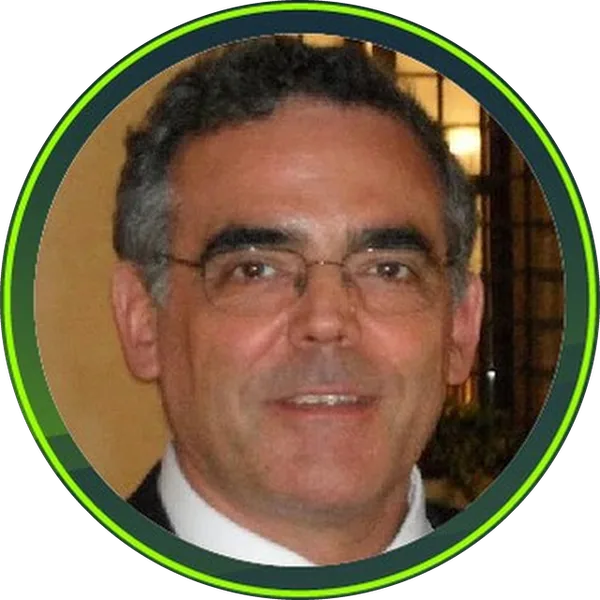
Roberto Sicconi
Roberto Sicconi from Dreyev discuss how Dreyev is using hardware, computer vision and artificial intelligence through their virtual passenger to create "Drivermatics" and provide real-time feedback to help drivers navigate their environment.
The full episode
Press play for the whole conversation.

The full transcript
Transcribed automatically from the episode audio, so some names and terms may be misheard.
James BenhamOn this episode of the InsurTech Geek Podcast, talking about identifying risky drivers through DRIVermatics with Roberto Cicone from DRIVE. The InsurTech Geek Podcast powered by Jibby Knowledge is all about technology that's transforming and disrupting the insurance world. We'll be interviewing guests and doing deep dives into technology that we see changing the industry. We're taking you on a journey through insurance tech, so enjoy the ride and geek out. And we are back with another episode. My illustrious cohost, the most interesting man in insurance, Rob Galbraith. What's going on, Rob?
Not much, James. Not much. Just living the dream. How about yourself? Yeah. Same here. You know, it's already the second month of the new year. As usual, it's blowing by. Been been busy. Been seeing customers, talking insurance, talking policy and claims. Went live with my new claim software, like, live, and it's super exciting. So I know, dude. Three and a half years of work for that. You just come out of the gate and then start fixing stuff as soon as you get there. You know? It's super exciting.
It's been a good month. January was exciting for us because of that. So it's good to good to be on the good to be on the old podcasto talking about a word you might not have heard. Drivramatics. It's like a combination of telematics and computer vision and some other really fun things we're going to talk about with Roberto Sicani from Milan. Sorry. I had to do it. I I'm I'm gonna fall into my Mario brothers, you know, Mario and Luigi. It's like, I love I love Italy.
I love Italian food. I love Italians. And and this guy's no exception. Roberto Cicconi, he is from Milan originally, but but but no longer. And we are gonna we're gonna talk about him and his company Drive and what they're doing in computer vision and telematics into this really cool phrase, DRIVERMatics. Roberto, how are doing? Hi, James. Very good. Thank you. Thank you for having me here. Yeah. Glad to have you on board. And where are you joining us from today? Montgomery, Connecticut. Yeah. See? Right near New York.
New York, the larger, less cool Milan of The United States. No. I'm just kidding. It's not. There's no other Milan, man. What a unique place. How long have you lived in Danbury, Connecticut? It's twenty four years now. Twenty four years. My goodness. Yeah. Yeah. It's a little colder there in the wintertime than Milan.
Roberto SicconiYes. Although this winter has been an exception. Has been surprisingly mild.
James BenhamReally? Yeah. Because because it's been it's been it's been cold here in Texas. But but look. Well Rob's laughing at me because he's from Michigan, but he lives in Texas, so he's tainted by, like, harsh, horrifically cold Michigan winters. Yeah. Yeah. Like, it was 44 today, and I was unhappy. I was like, what? It's too it's too cold, but that's okay. Well, come, come, come over to Connecticut.
Roberto SicconiNow this year, we had pretty much a no snowstorm and just a couple of, very, you know, one inch levels, snowfalls. Wow. When I came here in the September, we had 13 snow storms. Oh my gosh. Okay. This is, this is very different from Italy. But now,
James Benhamnot anymore. Yeah. It's an old hat for you now. Thus proving that people can get used to anything. Right? Yeah. We can get used to anything. But we're not gonna talk about the weather. We're not gonna talk about New York or Milan. We're gonna talk about driving Mhmm. And cars and insurance. So but but but before we get into that, I would like to know kind of because this podcast is half about the technology and half about the guests. Mhmm. I'd like to know a little bit about you.
So you you you I'm born and raised in Milan. You went to school in the area. Like, give me your background and what led you to DRIVE and to Informatica.
Roberto SicconiYes. I joined IBM a long time ago. I was became quickly manager of multimedia developing lab in Italy, serving special customized products for the European market. I really liked the idea of working on image processing, which was not necessarily an area of interest to IBM at the time, but speech was, and became the lead of speech recognition activities in Italy first in Europe. I was responsible for the first release of speech recognition system for Italy. That was the first one that IBM put on the market, believe it or not.
And then it expanded to Europe and then to The US and then became a global phenomenon. And I've been working on speech recognition and synthesis and dialogue management, NLP for most of my career in IBM. As part of it, I looked for ways to adapt the technology to other spaces. So we started initially with PCs and servers in radiologist settings or so, and then we moved to mobile settings and cars. Starting in 2002, we started working specifically on conversational systems for cars, working with very big manufacturer OEMs in Japan and Europe and The States, particularly with Hyundai.
I worked for about ten years bringing speech capabilities into the vehicle. And one of the ideas was to reduce the destruction caused by rich and richer dashboards you can get into cars, which speech recognition partially helps with, but it's not the only element. Bringing speech in the car can help, but can also distract. And what really matters is understanding how much you can talk and when you can talk. And that depends on what is happening on the road and what happens inside the cabin. So I started thinking of an idea of creating a personal co pilot, if you wish, that has, keeps an eye on you and is aware of the situation, understands whether you are ready to cope with traffic or not, whether you're paying attention to things on the road or not, and then warns you when you don't.
So that was an idea that was formed over time where I started thinking of ways to incorporate the experience in the technologies that there was measuring and bring them into cars. My last attempt at IBM was as part of the Watson team. I was a former director of the group that developed the solution to beat Jeopardy. I mean, they become a champion Jeopardy. And then I led a little effort initially, work and mentor to use AI in the healthcare space. And that was very early on, if you wish.
Now we are in a completely different space that there's major players looking at the same. But there was a very eye opening for me, how AI can help use combining speech visual capabilities into analyzing, observing what the drivers do and find a way to help them. So that's really where the whole idea started. Then when I left IBM, created the drive, I decided to focus on the space specifically. Initially, the idea was to help teenage drivers, senior drivers, who may have trouble understanding whether they're paying the right level of attention or not.
And then we expanded to the commercial sector of where professional drivers are exposed to risk all day long. And more recently started working with insurance companies to help them understand the differentiate between good and bad risk and how they can promote discounts safely without taking into any chances,
James Benhammonitoring drivers, etcetera. Awesome. And there's, you know, this has gone pretty mainstream. I mean, I drive a GM product Mhmm. And GM has you know, I have a I have Super Cruise on it. Mhmm. So it it it drives itself, has a camera that studies my behavior, and then alerts me if I'm not looking at the road. Mhmm. When Super Cruise is on, it it'll, you know, it'll disengage Super Cruise and slow the car down and pull it over if if, you know, you fall asleep.
It does all kinds of things. It's a it's a camera and censored babysitter. Mhmm. Pretty damn accurate. I've tested it. You know? You know what I mean? And it I so so we we've seen this pretty mainstream. GM as well, with the OnStar product allows you to analyze all of your driver data and then ship it out to insurers. They have they have partnered insurance companies. So Mhmm. You know, it's between OnStar and Super Cruise and and GM, one of the world's largest auto manufacturers, are not the only ones that are doing this.
It's it's come fairly mainstream. So where where do you think you play in a world with, you know, with with OnStar having a having mainstreamed telematics and
Roberto SicconiGM having taken, you know, at least facial analysis and and eye tracking and Mhmm. You know, they've they've done some interesting things. Like, where where do you differentiate yourself from what's mainstream available on the market from the major manufacturers? Yeah, you know, we, as a startup, we have to be cautious in how we apply technology, how we present ourselves in the market. So, our approach is to come in as an aftermarket solution for cars, for vehicles that don't have much of any kind of assist, so that really applies to the vast majority of vehicles on the road.
When it comes to a new generation vehicles, they have some of these capabilities over very sophisticated ones. Of course, we would not apply our aftermarket solution. In that case, the idea is to license some of aspects of our technology to become manufacturers that they have the underground, the underlying capability built in, and then we can provide some context analysis and intelligence that we are proud of to those vehicles. So today, it's mostly called them the smarter dash cams that you apply into the vehicle that give you warnings.
They don't act on the vehicle. We have no pretense to steer the vehicle or slow down for you. We just tell you if you're not doing it, you should. So it's more a tool for the driver than for the car. But they conceptually, the scope is very similar. We want to understand if you're getting too close to another vehicle and you're not slowing down sufficiently, you're going to gain too faster to a intersection where there's a stop sign or the red light. And we give you a warning that they should need to slow down earlier.
That's very similar to what the driving assistance solutions do. The difference is that we tend to we combine what we see on the road and what we see inside the cabin, make sure that the driver is aware, so we don't warn a driver who is already doing the right thing. We do warn the one who is not paying attention to the pedestrian trying to cross the street and the driver is looking in the opposite direction. Yeah. Because you have a you have a risk of overalerting and then numbing drivers to getting alerted.
It's like having a what, what we used to call a fuzzbuster,
James Benhamyou know, radar detector in the car, and it and it goes off all the time. Then you start to ignore it and no longer no longer becomes effective. If you over alert and this this is a danger any software or hardware system has. If you over alert the user, they begin to ignore it, they just tune it out, and it ceases being effective. Yeah. Exactly. Mhmm. So for now, it's aftermarket retrofits that make the most sense for this. Yes. That's correct. Where have you seen the most success?
What what like, just so we can kinda get up to speed on this, and I'll I'll hand it over to Rob. Like, what type of cat you know, category and class of vehicle or category and class of driver? You said you started with with, like, professional drivers who who have a lot of they have a lot of risk, and they have casual drivers every day, casual drivers who aren't professional drivers. Like Mhmm. Where are you seeing the most success and the most uptake rate? My impression is that the the two areas where you can help the most are
Roberto Sicconiwith long haul drivers when it comes to feeling a little drowsy, and that can happen if you're driving for long hours, especially at night, and with local delivery guys in terms of distraction. So, distraction is an issue during the day on the short trips. Drowsiness is a big issue on long trips. Both are important. Both can happen at any time of the day, but there is some preference for them happening different times of the day. I wouldn't say that people are immune to either. Anybody can be a little drowsy at times or can be a little too distracted at times.
James BenhamSo we look at both, but in terms of adoption and where we can provide the best benefits, those are two spaces that I mentioned. Makes sense. So you said there's a combination of cameras and sensor data. Are you plugging into the car's OBD2 port so you can pull data off the car? Are you solely relying on your device's sensors? Today, we are solely relying on the device.
Roberto SicconiWe have the ability, we have, as a matter of fact, we are powering the unit from the OD2 bus, but initially the decision was not to use it because that could lead to some liability in case of somebody hacking the vehicle. So if somebody tried to hack our device and through our device, managed to hack the vehicle, it would be a serious issue and we decided to just stick to power only for now. But we have the option of reading information from the OB2 bus, if you need to, we connect the notification number, engine load, odometer, so to double check the information that we collect from the device.
Makes sense.
James BenhamAnd you can pull a good bit of data off OBD2. I mean, it's a pretty robust data feed, even though it's a very slow protocol. Yeah. And it's slow and old, but it's standard. And it has, what, nine volts on it? Is that why you're powering it? Because it's a it's a it's a nine volt power bus or what? No. Well, the the device operates out of five volts, so it can be charged over, you know, USB charging cable
Roberto Sicconior even case OBD2. There's a little power supply that converts it from 12 to 24, depending on the vehicle to five. Okay. Gotcha. Yeah. I
James Benhamhaven't haven't studied the, o e d two data data or power bus specs, so I didn't know what it had. But that's interesting. And then it's good to hear what you're what you're up to there. Rob, what you got? Yeah. So, Roberto, really thrilled to to have you on the podcast.
Rob GalbraithI know what's challenging, for folks that are either watching this or on YouTube or listening to it on their favorite podcast platform is, being able to show your solution because I've seen some of the videos that you have for drive and just the coordination of kind of seeing, you know, outside the cab, like, what's the external environment and then syncing that with, you know, hey, at the moment, you've got a pedestrian a little bit farther away or a stoppage in traffic, and then you're able to actually look internally and say, is that are the drivers eyes up?
Are they aware that, you know, there's a potential obstacle there? Or are they distracted? They're looking at the dash, they're looking at the phone, the eyes are getting heavy, as you kind of mentioned, Roberto. So you're, you're seeing both inside and outside this kind of driver Maddox part, not just the telematics, not just the data from the vehicle itself, but you're also getting information about the driver. So maybe you can just talk a little bit about, that the describe your solution as best as you can in words.
And, you know, if you want to mention a website that folks can go see some of these videos, you're welcome to do so, but maybe just give our folks just an idea for the basis of what it is that you're capturing and looking for. Yeah. So the dashcam,
Roberto Sicconiwhich is the main part of the sensor, looks like most of the dashcams you can purchase today, looks about at the road and inside the cabin. The camera looks at the road, uses a wide angle view, so that you capture anything that happens before the vehicle. And we have the ability to detect most of the moving objects that are of interest. So we don't care about a pole of holding a sign, but we look at the sign. We look at traffic lights, we look at cars in trucks and buses and bicycles, motorcycles, anything that is not part of what is called the road furniture and is moving and then potentially may be associated with the human beings that you want to protect.
Then pedestrians, of course. Not so much animals, but I will say anything that moves is of interest. We look at the position, we classify it, we look at the distance in the direction of movement, and based on that, we estimate that we're, that object is going to be one, two, three, ten frames later, and whether there's a collision course that they need to be aware of. So the distance, the speed, the location all tells you how much of a risk you are starting to get into.
There are some difficult situations like pedestrian waiting at the corner of the intersection, waiting for the green light to change and then they may decide to jump with the red whilst you are driving. And if you see them, you have a time to slow down or swerve. If you don't see them, you may have risk colliding with them. So there are situations where detecting whether the risk is going to be real or not may be tricky, but that's one of the areas we're specializing in. At the same time, let's say you are waiting at a traffic light, the cars are moving, you're not at risk of hitting anybody, but you're ready to go.
And then, whilst the pedestrian is coming across, you look at the other direction, make sure there's no vehicle coming, And then without paying attention again to the pedestrian, you start moving because the last you checked, the person was not moving and then you hit them. So those those situations are very critical and they're on our
James Benhamalert list. Fair enough. So, we've talked about the technology and we've talked about how this improves safety, but what's the intersection with insurance? Are you looking at architecting a program where the insurance company would subsidize the cost of this or provide this or discount premium if this was purchased? I mean, what, what does the insurance program look like? Yeah, I think this is an interesting space.
Roberto SicconiInsurance companies traditionally were basing the premium on a number of parameters they could collect. They were more statistical, so depending on where you live, traffic rates and whether you drive at night or a number of crashes that we have had in the past, your credit score, you would be classified in a certain category and then you get to some premium for your vehicle and the value of the vehicles, etc. I think here we are now approaching a point where telematics, particular behavior of the driver, can impact the risk attitude or whether you are good or bad risk in the eyes of the insurance.
So now the technology can be used to help you screen your abilities, skills, really driving skills and your ability to evaluate risk at all times to tell the insurance, Hey, am I really good driver? I'm always paying attention. Give me discount. And there are many companies that are starting to look into that, that to be more competitive. So, if you can reduce the risk of loss, you can afford a higher discounts and that attracts more drivers. That respect, a solution like this is a win win because it allows the driver to get better discounts and allows the insurance
James Benhamhave a better insight in that control, the level of risk they're taking. Yeah. And have you have you actually been able to prove prove out the stats that that people who have this are actually a better better risk and have lower cost of claims? Well,
Roberto Sicconiin order to approve the stats, need to quite a few drivers on the road in a certain amount of time to statistically say, usually I would expect a five percent of this type of crashes over six months and now it's only one percent. And then you can quantify it. We have been in the field for quite some time. We have seen changes in behaviors of drivers, but in order to monetize that, you need more drivers, more miles driven, and then be a lot more specific. So, So, we are in the process of deploying more and more of the units.
And yes, I would say in three, six months time, we should be able to prove all of it. Right now, it's more projection based on the behaviors and the driving habits that we see and that we can drive. The other aspect I think is also worth mentioning is that the system that works in real time. It's unlike most of the telematics systems used today, it's not only about looking how the driver is doing over time, and then in case of a crash, of course, that wasn't good.
You understand why that happened. We want to prevent a crash. In order to prevent a crash, you have to make the driver behave differently, and the only way to do it, or the best way to do it, it's not that to coach the driver offline, but to coach driver as things happen. So, if you are hitting the brakes too often or too hard or you're accelerating too often, then you want to tell the driver when that's happening, not a day later or a week later, it's too late, And then, you know, if there's any chance to prevent crashes, it's only if you change behavior driver before crashes
Rob Galbraithbuild up. Gotcha. Makes sense. Rob? I just kind of building on this theme, Roberto, of, you know, the nexus with the insurance. I know that, drive had signed a partnership with CoverWheel, which is an MGA, that's sold through retail agents. And, I believe you guys were offering a 20% discount, for commercial fleets that were adopting your technology. Maybe you can talk a little bit about that partnership with CoverWheel. Is kind of an example of how you guys are partnering with insurance entities.
Roberto SicconiWell, don't want to speak for CoverWheel because it's their role, but they are clearly at the leading front of a new wave of insurance companies who are willing to take a chance providing higher discounts in exchange for a better understanding of how the drug is doing. I think this is, in my mind, this is going to be inevitable in the entire industry. But for now, it's just the beginning. And Covalho is a good pioneer in the space and we are happy to be one of the partners working on this and trying to figure out what are the the critical aspects of a person's driving that really matter.
What are the traits of your driving skills that turn into a higher or lower risk of collisions? So speeding is definitely one of them, but it's not the only one. You can be a speeder all the time. Yes, you raise the risk, but if you are very attentive and most of the time you handle things properly and there may be some, somebody else who is never a speeder, but falls asleep and then gets into ditch and then all of a sudden the damage is there and you didn't see it coming.
For example, if you get an Italian named Roberto and you put him in a Ferrari,
James Benhamand he's born and raised in Italy, so he knows how to drive a Ferrari. And you put him on the highway and he goes a 100 miles an hour, it's gonna be fine because Roberto's going to pay attention and he knows how to work that machine. Right? Yeah. Yeah. You know, the other side of the coin is that if you used to drive at that speed, which I used to do when I was in in Italy,
Roberto Sicconiand then you drive at 55, 65 miles an hour here, you get bored. Then you you move from there. Exactly.
James BenhamWhenever I leave Texas, because our speed limits here are pretty nice, you know, we we have some tollways in our area that are 85, so you can really go about 90. And Yeah. You you you go you go to New York and New Jersey, and you're at 55, and you're going, I cannot believe I have to drive this slow. I mean, like, what is the point? Speed the the point is and and all kidding aside, right, speed speed is not the speed is actually not even a really good indicator at all.
It's really about erratic behavior, attentive driving. I mean, inattention and driving is a far in my opinion, inattention and and impaired driving Yes. From drugs and alcohol are far bigger risks than someone who is fast. If they're fast, but they pay a lot of attention Mhmm. They they have they they are you know, they're they're still a pretty decent risk, surprisingly, just from, you know, numb at least from what I would see of of a number of accidents. But, you know, inattentive driving is a horrible, horrible thing.
So you're, yeah, it would make sense that you would prioritize
Roberto Sicconihow attentive the driver is. Yeah, this actually leads to another sort of extension of what we are doing. We started with traditional vehicles that had butchering of driving assist and I noticed that as you start to getting used to using more capabilities of the car to stay in lane, to stay at some distance, you may be tempted to spend more time looking around, even if you are still driving, you know, the car is going to keep you in lane and then you look at the side and what's that restaurant, you know, in this spend more time than you would do it in before using driving assist.
And as you move towards self driving, like a Super Cruise on certain highways, you are entitled to look away more, in some cases completely, depending on the engine. The problem is that you tend to feel disassociated from what is happening around you. And then by the time you need to take over, you lost context and then it takes some time to be fully alert again. So, we think that there is an important transition happening as you rely more and more on level two, level three assisted cars to monitoring and make sure that the driver is still aware of what's going on.
So in case he needs to take over or wants to take over, he has the whole history in mind of what happened on the road. Well noted. Rob? Yeah. I think that's a great point, Roberto. And I I do think about things like lane departure warnings. Right? They can go off and be very nice to kinda show that you're drifting into another lane, but depending on
Rob Galbraithwhether or you're talking about urban traffic or you're talking about, you know, some of the rural Texas highways or things like that, I may even be too late, right? Once I'm trying to leave the lane to be warning, and that's kind of reactive in terms of how the vehicle's responding. It's not looking at the driver's behavior the way drive solutions are. So I'd imagine that you talked about that real time feedback to drivers. Think about things like wearables that I've done pilot projects in the past when there's always a debate in that community of do you provide what's known as haptic feedback, either an audio or buzz, perhaps, you know, you're bending down, right, you're kind of lifting, do you give them that feedback in the moment to say, Hey, you actually bent the wrong way, bend at the waist, not at the knees, things like that, so that you can correct the behavior then or is that too distracting?
And, you know, you give them that safety report at the end of the day and said, Hey, you know, try to do better the next day. So, you know, just maybe you could talk a little more about the real time aspect that you are actually intervening right with drivers to make them more aware in the moment, help make them be more aware of their behaviors and course correct in a way that just relying on those ADAS type solutions is maybe a bit more reactive than proactive.
Roberto SicconiYeah, well, have a notion of warnings and alerts, for instance, that they are all audible. The warnings are usually just the sounds, very peculiar sounds that you don't get to hear normally in the car. They don't have to be loud. They're very short and you can easily learn them. And if a warning is ignored, then we follow-up with an alert message. At that point, you know, this is going to be noted and becomes a part of your scoring. And then if you keep doing certain things, let's say, you keep being distracted, your score is going to be affected.
If this becomes a part of the measurement criteria by the insurance, chances are that you may have to pay more. So, it doesn't happen. A single distraction is not going to kill you. It's not going to change your premium, But if you have repeated patterns and they get noticed and you've forego them, I mean, you ignore them, then eventually you're going to be hit by a higher premium and you want to know that. So we, it's a transition from being warned and having the opportunity to change your behavior to ignoring it and then knowing where and why the premium went up and you may not like it.
Yeah, I think about patterns of behavior. Yeah. Yeah, yeah, absolutely. You know, I like to sometimes make analogy. If you have a toddler and you tell the toddler, I remember three days ago you were walking next to the ice cream shop and then you touch this and you shouldn't do it. Now it becomes hard for the kid to relate to it and make use of it. If he does it and you say it right away, then it becomes an immediate lesson and it becomes much easier to associate with what you're doing wrong.
So, real time feedback, I think is fundamental to get the sense of how bad your mistake is and react to it. The other side of the same coin is that if you actually do change your behavior today and no system is telling you, hey, Jim, did a good job, much better than yesterday. If you have that and then at the right time, get a little motivational reward that tells you, today you did 3% better than yesterday on distraction. You used to be a little borderline now within the range and then you keep doing it and then at the end of the week say, Hey, you know what?
You are 15%
James Benhambetter than last week. Keep doing a good job. And this may eventually lead to a bigger discount. So it becomes an incentive to keep paying attention and keep doing the right thing because you see a reward. Yeah, very well. So let's let's wrap with this question because I always like thinking about the future. I'm a sci fi fan. Yeah. You know? So I I think about think about Star Trek. I think about teleporters and, you know, I think about three d printers that print food. And I think about a lot of these things.
I I I, you know, a lifetime of watching science fiction. So if you had to if you had to paint a science fiction world, what what's the future of drive look like beyond a year from now? Way out. Without going too much sci fi, I would say I like to see see a technology like ours built into next generation vehicles.
Roberto SicconiIf you see what has, what has happened in Europe, NCAP is mandating monitoring tools inside every single vehicle. So it's not going to be just super cruise or just to some manufacturers are doing it. It will be across the board. So the ability to look at what the driver is doing is going to be part of all vehicles within a few years. What we like to do is take advantage of that big powerful sensory environment and turn it to be useful to the driver, in addition to the manufacturer who wants to know how the car is being driven.
Looking a little more in the future, I think that conceptually, something like a wearable watch phone bracelet that is aware of your context and may see risks happening to you, may give you warnings, like you're jumping off the cliff or something. Those things could be extensions of what we're doing now for driving safety, but could they really be for your own safety anywhere you are, and then it could give you warnings, and then it's up to you to follow recommendations or ignore them, but at least you're warned.
Absolutely.
James BenhamYeah. It's it's a potentially a brave new exciting world. Hopefully, a much safer one. Right? Like, that's the I think, you know, the the the big goal is driving accidents to zero. Mhmm. It's often been said that if if everybody followed the rules on the road, that we'd have almost no accidents. Obviously, you have some accidents that are caused by mechanical failure, weather, animals, but so many are caused because people simply weren't following the rules Yeah. Or paying attention. So it has the potential to radically change safety, but also radically change this whole category of insurance.
Yep, absolutely.
Roberto SicconiAnd I think the other aspect that will become interesting when you have a mix of self driving vehicles and traditional ones with whatever level of assist they have, From an insurance perspective, will be important to know what happened, who was in charge, and if there was a transfer of control, did it happen right time? Was it justified? So it will be very important to have enough information about what happened in transition to fix the systems and fix behaviors and make sure that everybody
James Benhamtake advantage of the new technology. Yeah, absolutely. Okay. Rob, any closing comments?
Rob GalbraithYeah, no, I just want to echo Roberto what you were saying. I think that's a very interesting future when, you know, we've we've talked about this theoretically with autonomous driving is at what point does it become a product liability, that's born by the OEMs rather than the auto insurers. And so, when we're living in the kind of this mixed world where the car is driving itself sometimes, but then is relying on a human driver other times, you know, when was the the human warned that they needed to take over?
Did they respond in an appropriate manner at the appropriate time? That may determine, right, where the liability stands. And I also think, James, you know, you've seen them. I'm sure all the billboards we've got around town, all the buses, all those lawyers advertising, hey, been hit by an 18 wheeler, Call me. Right? And think about a solution like Roberto's talking about with drive. Right? Could really cut down on those types of accidents. And to me, I don't know about you guys, you know, the fewer lawyer billboards that I see around town, the better that means we're actually making real progress.
Progress. The better. Yeah. I'm I'm thankfully live in Texas where we have some limits on on litigation, but we still don't have enough in my opinion. Mhmm. I'd say,
James Benhamthere's there's a there's so much of it. You know, the other thing I think, Rob, just tapping into a theme in your book, end end of insurance as we know it, just a little side note in case somebody forgot what Rob's book is, is is fraud. You know? If if you actually have, all the data on drivers, I mean, theoretically, with customers who had this, you would you would potentially drive fraud to zero. I mean, you could potentially do that because Mhmm. You would have a full array of sensor and safety and camera data Mhmm.
On the user and be able to tell exactly what happened. I mean, it's it's a real thing. So I think that's something to think about as well is not just eliminating a lot of needless accidents, but also significantly curbing the the epidemic of fraud in auto insurance. Mhmm. So, it would be a huge, a huge deal, I think, Rob. Yeah. Absolutely. Couldn't agree more, James. Yeah. So, Roberto, thank you for joining us today. It's always good to geek out. It's always good to talk with a fellow tech nerd who's done something really cool.
You've worked on some really cool projects before you got into this, and I'm glad you're tackling this problem in the space. So it's it's exciting to have you on, exciting to talk about the about the technology. Thank you. Pleasure being here. Awesome. And thanks to all the listeners out there. Side note, Rob's got a a book and an audiobook, right, end of insurance as we know it. I have a book that was just released a few weeks ago called Be Your Own VC about how to bootstrap innovation.
Actually, talk with Rob in the book. So that's a that's a fun one. Yes. And so just just a a side note on that. But I just wanna mention, I just finished recording the audiobook. So it's in editing, and it'll be out soon. I recorded it with my own voice. So took a little while, but it was a fun project to work on, and it will be out soon. So just keep your eyes peeled for Be Your Own VC. This has been the InsurTech Geek podcast powered by JBKnowledge.
It's jbknowledge.com, all about technology that is transforming and disrupting the insurance world. I've been your host, James Benham, jamesbenham.com with cohost Rob Galbraith, endofinsurance.com. Thanks to Jim Greenlee, our podcast producer, and Cara Daltonaro, our creative producer. And thank you for joining us today. We're taking you on a journey through insurance tech. So enjoy the ride and geek out.