 YouTube
 Spotify
 Amazon
 iHeart
 Apple
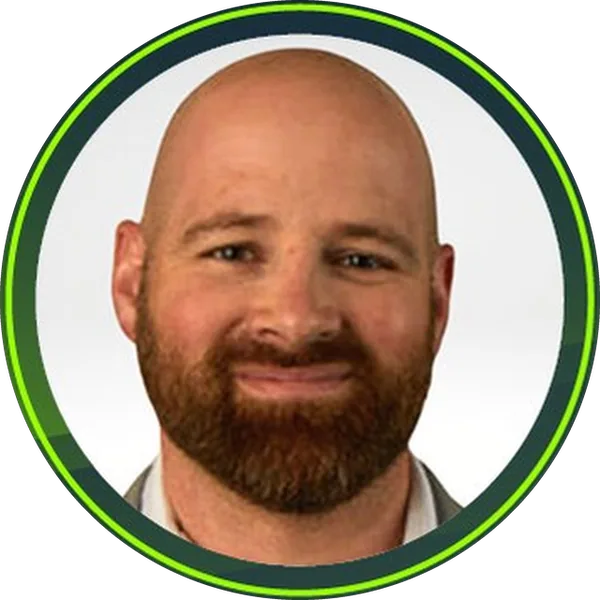
Steve Miller
Steve Miller from IOA Innovation Group discuss about ensuring new innovations are setup for commercialization.
The full episode
Press play for the whole conversation.

The full transcript
Transcribed automatically from the episode audio, so some names and terms may be misheard.
James BenhamOn this episode of the InsurTech Geek podcast, talking about ensuring new innovations are set up for commercialization with Steve Miller from Insurance Office of America Innovation Group. The InsurTech Geek podcast powered by JBKnowledge is all about technology that's transforming and disrupting the insurance world. We'll be interviewing guests and doing deep dives into specific tech we see changing the industry. We're taking you on a journey through insurance tech. And we are back with another episode of the InsurTech Geek podcast with me, my illustrious cohost, Rob Galbraith.
How's it going, my fellow Texagander?
Rob GalbraithIt's going, James. It's going. It's, already mid February, and, really looking forward to to spring break in a month. So, it's just trying to close out. It's coming into 2023. Well into it.
James BenhamYou you can you can tell Texans are gonna be traveling for spring break because everything is sold out right now for March. I was like, I was looking at everything vacation related for, you know, the the major two weeks that Texans are on spring break. And it's like, yeah, 20,000,000 people are gonna be traveling out of Texas at spring break. It's gonna be crazy. They are not slowing down. I'll tell you that. Not at all. It's it's bananas. And with us from the Pacific Northwest, good to see you, Steve.
How how's it going?
Steve MillerDoing well. Yourself?
James BenhamI cannot complain. It's it's great to be on the on the show talking about innovation and talking about with someone who's actually helping in innovative companies, make sure they stay covered and can roll out new products and function with the gears of business and still have insurance to do it. That's always
Steve Millerthe challenge. It's a it's a shifting landscape, and that's what we're going to talk about today, isn't it? It is. You know, our job is to provide solutions, and we don't always have the same leeway that insurance carriers made to have to say no, we'll sit on the sidelines.
James BenhamExactly. So we're going to chat about that. Before we talk about what you're doing at the Insurance Office of America and what you guys do every day, I want to talk about you and your background and just understand how you got in because you've actually been in insurance for a really long time, even in nineteen years. Started as a client service agent with mutual underwriters, I believe. And I just wanted to kind of hear from you, like, where did you grow up? What did you go to school to do?
And then how did you wind up in insurance? Yeah, there's always an origin story, right? And it typically hinges on some family
Steve Millerconnection. And that's the case with me. So I grew up in Northern California in Reading. Went to Hawaii to chase my high school sweetheart, who's now my wife of nineteen years next month, and her mother-in-law worked at an agency which was mutual underwriters. So that was the in. It was as close to the mailroom as you could get without actually working in the mailroom, and the thing I remember most is the weekend before I started this job, I asked my mother-in-law, Can you bring home the insurance book that I can study?
Because I was good in school, and I thought I could just read this book over the weekend and know exactly what I needed to do for the rest of my career, right? Nineteen years later, I know that I know less than than I need to, right? And we are continuing to learn. So so that was the start. What it's what it's done, James, is it's really allowed me to understand this business in this industry from the ground up.
James BenhamYeah, it's kind of how I feel about the tech business. You know, I've been I started building websites, writing code, testing it, then moved into project management. I mean, I've done every job in my company. I mean, it's done all of them. So it's, you know, you give someone twenty one years and you can get around to a lot of different things that you Yeah,
Steve Millerit gives you great leadership skills, right? Because your team now, you understand what they're doing and you're not going to come in as a tyrant and say, why isn't it done yet? Because you understand the steps in the process that might slow things down or might cause difficulty.
James BenhamOr when you are a tyrant, you're being strategic about it.
Steve MillerThat's it.
James BenhamAnd you speak with authority, right? That's a Maybe it's a little bit of both, right? Exactly. Yeah. So let's say so you got in through Family Connection. That's awesome. And you went through as a client service agent, account manager, vice president with McGriff. And then you, for the last three years, have been with Insurance Office of America. You know what? You know, and you spent a very long time over at McGriff. I mean, what lines of business did you write? Where did you really focus a lot of your time over your career?
Steve MillerYeah. I mean, everybody starts as a generalist from a from a broker standpoint, and I did as well. I had multiple points of influence from my mentors and have worked on and have specialization in everything from food manufacturing to senior living, transportation, nonprofits, and then really an emphasis on technology, both based on proximity to the Silicon Valley and proclivity to a line of business type of business. You know, I'm a I'm a big believer in do what you love, and that doesn't necessarily mean insurance is mine or many people's first passion.
But helping innovative companies is a way to to scratch that itch within our industry. Know, if I'm going to be working with an insurance, I would love to be doing it with exciting companies. So that's that's really how I got to where I am today and where I I grew was largely in tech. Yeah, that's awesome. And what is what
James Benhamis innovation lead really mean at IOA like at your company? What does what does it mean to innovate? I mean, that's a it's a really wonderfully broad phrase and can mean anything. You can create new insurance product. You can create new technology product. You can create new technology product for insurance product. You can do new service lines, new lines. I mean, what does it what does it really mean? What's the what's the mandate for y'all corporately in innovation?
Steve MillerWonderfully broad and broadly wonderful. Like, that's the intent. So it does plug in as technology, but if you just step back and take a more macro look, what it means is we're not executing the status quo. And it can be as specific and cutting edge as autonomous vehicles, which we're going to talk a lot about today, and it can be as basic as, Hey, how about we move our renewal process online because we're all tired of sending back and forth PDF non fillable applications to our clients who are conditioned now in the marketplace to go buy their auto insurance online through a very easy entry, click to quote sort of process.
James BenhamSo, you know, kind of soup to nuts, How do we really bring this industry into the twenty first century? Yeah, it's it's awesome. And there's a I've seen a good bit of movement in the broker community in the last two years to finally getting rid of PDF form filler. I mean, that's that's that that was amazing to see so many, and a lot of them are adopting very similar platforms. So it's been it's been really interesting to see that that movement is like finally acknowledging that this is a giant pain in the rear end that no insured enjoys.
Steve MillerIt was the first thing I did when I came over to Iowa, which was, by the way, one week into COVID lockdown in March 2020. So talk about timing. But I was so tired of the red tape of We can only do it this way. We only have these security clearances and protocols, and here's all the red tape. Came over to IOA and within two weeks was connected to one of these online platforms, and 95% of the clients love it. You're gonna have 5% old school, just give me my paper, but it's people are people are adapting.
Yeah. Absolutely.
Rob GalbraithRob? Steve, I'm fascinated, as a former innovation lead myself. I kind of know a little bit about, what my experience was like in the many different balls that we would have in the air and many hats to wear. But, you for you, as an innovation lead at Insurance Office of America, what does a typical week look like for you?
Steve MillerWell, it's interesting, right? Because as a seller expert, you've got one foot in client deliverables and one foot into development and prospecting and program creation. So, there is a balance there, and I've got a great team that stands with me to help execute on a lot of these client facing deliverables. It's insurance, right? Renewals, policy maintenance, risk control, all of the day to day activities. But we do spend a large amount of time not just on that business development aspect, but on, I would say, industry development, right?
So specifically around future mobility and autonomy in its many modes, from sidewalk delivery bots to private passenger cars and tractor trailers. We've spent the last eight years really working hard to get in front of insurance carrier executives, get together with new InsurTech opportunities, new MGAs, help build products. So a lot of my week is spent doing meetings like that, speaking to industry trade groups, helping on regulatory initiatives, kind of runs the gamut. But we do spend a lot of time trying to raise the tide.
James BenhamNow, let's talk about autonomous vehicles because this poses a new challenge across across the gamut. And it's not the only it's not the only emerging technology that causes headaches for insurance contracts. Right? Like, it's but but it's a really good example to talk about. So you you kind of gave us a precursor in about about three minutes ago that we're gonna talk about this, and I think we need to because it just my legal mind gets set ablaze when you're trying to figure out who's actually driving and who's responsible.
And and then how, you know, how do you ensure it? How do you build a risk program around it? You know, how how do how do employers feel about this? There's a there's a there's a a lot of moving parts here, and it's a really good case study in how insurance has to adapt to modern times. So tell me tell me what your thoughts are around it.
Steve MillerJames, we could do this one of two ways. I could give you the three minute version with follow-up questions, or I could start talking for ten minutes.
James BenhamWhatever you want, buddy. All right.
Steve MillerLet's start with kind of where we were and where we're going, right? In 2015, I was having lunch outside of Stanford with a professor who was starting what turned out to be the first self driving car company permitted in the state of California by the DMV to test autonomous vehicles that was not an OEM. Right? That distinction is important because OEMs have captive arrangements, self insurance. They didn't have to go into the marketplace to buy their insurance. This company did, and I was, to my previous point about just proclivity and interest level, I was very excited.
Went back to my office, started calling underwriters, telling them I wanted them to ensure autonomous vehicle risk. They thought it was really cool, and they laughed at my audacity to say that they should take a flyer on this brand new thing that nobody understood, that had no actuarial data, that flew in the face of the hundred years of human driven data that was available. So, we worked at that time and have worked since on getting that first carrier invested and then broadening the market and not just private passenger cars, but oh, now the industry is pivoting towards tractor trailers, you know, commercial trucking, as well as, oh, you know, on demand delivery robots and industrial automation.
So, over the last eight years, and this is a really brief summation, but we have worked intensely with risk control actuaries, underwriters, and carrier executives to help them stand up their own future mobility groups. And the intent here is to be ready for deployment. So if we talk about coverage, it's interesting in that the auto policy, the commercial auto policy works right now for testing. There's no quote unquote policy differentiation. There are few tweaks and endorsements, but essentially, the four corners of that insurance contract don't mandate that a car be driven by a human driver because it was the default until very recently.
Right? So the policy is silent on that. We don't have a coverage issue. We have an underwriting hurdle in that the underwriters need to be comfortable with the exposure to offer that policy. So this has been more of a trust gathering exercise and an eight plus year exercise in getting comfortable with, you know, renewing policies and saying that claims are not outsized and saying that when they do happen, there's a lot of data involved with it that actually helps in the defensibility of insureds. It helps in forensic reconstruction or the lack of need to do reconstruction because now we have very clear data on what happened.
As we move forward, you know, we're looking at a shift from what is now an auto liability standpoint or exposure, first party controlled tested vehicles, to deployment of these autonomy systems into third party vehicles, bots, what have you. That shifts it to a product liability exposure, right? And there are a myriad of unknowns as to how the regulatory influence will play out, how judicial findings and case law will work when you do have an accident that starts with, say, a motor carrier and then flows back towards the the fail point being autonomy and the AV company and their product liability.
So there's a lot of unknowns
James Benhamto to be taken care of. You know, I have a I have an Escalade with Super Cruise, and it drives me to work every day on Niwa. It is not perfect. You know, GM has some work to do. And I remember when the CEO of GM said that by 2019, they'd have, you know, autonomous fleet, fully self driving. I mean, and they have severely crippled their autopilot intentionally, more so than other auto manufacturers. I mean, in fact, I think I would have more self driving if I had a Hyundai, you know, because they don't require that the road be mapped for them to keep you in the middle of the lane and keep you distance from the car in front of you.
And so I just wonder, obviously, the lawyers are playing a heavy hand and them intentionally downgrading capabilities because they're deeply concerned. As they've released software updates, they've actually made me look up and look forward more often. So they've obviously got some concerns. You had a guy and this this this this weighs in on every under it's got to weigh on every underwriter that during the Super Bowl, somebody takes out an ad to trash Tesla's FSD full self driving. Right? This all has an impact, doesn't it?
It does.
Steve MillerWhat we should pay attention to is the language being used. The industry outside of Tesla has really moved away from the term self driving and embrace the term autonomy as an area of differentiation, right? The moniker that Tesla uses, that full self driving or autopilot, implies a level of functionality that the lawyers for Tesla say doesn't exist. So there is this disconnect between, I think, the face of that organization and the intent and the inspiration and the drive and then the functional reality. So you're right.
I would say GM is smart to reduce the functionality and make sure that you do have eyes on the road because we have seen instances of Tesla drivers that have been grossly negligent getting out of the seat or falling asleep or deciding that they could drive home drunk, which is not the intent, We're talking about on the in the market right now, a level two autonomy. So it needs constant supervision. It's going to perform some tasks of driving lane keeping, adaptive cruise control, but you need to be ready to take over at a moment's notice.
The industry and my clientele are intensely focused on safety, right? If you look at technology, there are two schools of thought. And the more traditional one is iterate fast, watch it break, and then patch it. And that works really, really well with a cell phone. That does not work so well with a couple thousand pounds of a vehicle or, you know, a tractor trailer driving down the road. So the industry that I work with is very focused on safety, thoughtful rollout, testing, guardrails, all that. And I think we probably should work to segment some of that press.
You mentioned that Super Bowl ad. You know, it didn't say we should not operate or research into autonomy. It said we need to be careful about Tesla. I'm
James Benhamfascinated by the topic. I'm fascinated by the by the technology itself, but I'm also fascinated by the just the liability questions that come up. And we can dig into that. I'm sorry.
Steve MillerNo. It's fine. I I think lost my train of thought there.
James BenhamWell, it was it was so I think when we talk when we talk when we talk about liability questions for me, I'm sitting there driving down the road and, like, one time it it just popped out of the lane. I mean, just straight up popped out of lane on on a curve. Yeah. Which That is same thing with an Audi. You know? If I'm going on a curve, I'm paying attention because I'm not sure what it's gonna do. Or if the lane markings change
Steve Millerand two lanes merge, starts to freak out. It came back to me what I was going to say, which is we have to be very careful not to make perfect the enemy of better. In this industry in particular, if we were to just flip a switch overnight and all vehicles were self driving or autonomous the next day, and we waited a year and pedestrian traffic deaths had gone from forty thousand down to ten thousand, the headlines would scream, Robocars kill ten thousand people, right?
James BenhamYes, it would. So
Steve Millerwe need to keep in mind these systems will fail, But at what threshold of failure do we find acceptability in honestly saving
James Benhamthousands of lives? Yeah. It's really hard in all technology. It's really hard to focus on the aggregate and the big changes. I mean, the the car fires, Tesla car fires were the same thing. Like, they were they were harping on batteries catching fire. I'm like, have you ever seen a car fire? It happens all the time because we carry gasoline around. They catch fire constantly. Like Right. This is not like, what are you talking about? The risk of fire is substantially less, but they just they they take the exception, make it the rule, they make it the headline Yeah.
Because because it it you know, if it leads, it bleeds. And then and then, you know, it impacts insurance companies because they don't have a palate. They don't they they actually end up not having a palate for that. Right? It becomes popular, and it's in the news, and they they're they're not just risk averse around losses. They're also risk averse around negative negative news.
Steve MillerThey don't stand to profit immediately from being on the cutting edge. Right. That's what I alluded to earlier is that we do have to find solutions. My clients are the ones that are deploying in short order. But the insurance carriers, for the political reasons, reputational reasons, and risk reasons just
Rob Galbraiththey can afford to step back. Rob, what you got? Yeah. I'm curious, Steve. So on the one hand, I've heard arguments that say, look, you know, lot of this autonomous driving should reduce accidents by up to 90%. Right? And so you could make the argument of, hey, if I'm willing to ensure humans on a standard commercial auto, right, or private passenger auto, then I should take a bet on autonomous because, you know, the overwhelming amount of evidence studies Etc. Say it's going be a much better risk than what I'm currently writing today.
I mean, I can potentially charge what I charge today, right? And then as the loss experience proves out I can, you know, lower my rates if I want to be very cautious. On the other hand. I've heard people say, you know, to your point this question about the liability. Well, we think it's going to be product liability, but we don't really know it's untested in court. And so we want to actually wait not just until the manufacturers maybe, you know, say they'll take it on or what it's like we want to actually see the case law.
We want to see this and we want to see it jurisdiction by jurisdiction because as we know insurance is regulated at the state level because each state has different laws, right? And so it's very kind of reactive approach. So, you know, those two poles, you're somebody that's obviously out there. You've got real clients with real needs and you're trying to thread a needle. So I would say, you know, what are some conversations that you've had with maybe some of the more innovative carriers out there or folks and how would you maybe encourage curious if there are people thinking about dipping a toe in the water here, more on the cutting edge, knowing that there could be some long term market share gains if they get this right rather than being reactive in the past?
Steve MillerAny guidance, advice, or thoughts that you might have for folks out there based on your experience? Yeah, absolutely. And to your point, something like ninety four or ninety six percent of accidents are human error related. So if you can just cut that in half, you're going to be way ahead of the game. So that's one component. I think also that when we talk about premium, we're going to need to see pretty quick investment, and I say investment on purpose, from carriers on reducing the premium, at least around auto liability.
And I'll talk about how they can feel secure actuarially or from a risk modeling standpoint doing that. But the reality is that the physical value of vehicles is going to be more expensive, right? Because we're in many cases, we're including LIDAR, radar, as well as camera stack. So your physical assets higher, your physical damage exposure is higher, and your cost to repair is higher. So when you do have an accident, it's going to cost more on the physical damage. Now, the accidents are less frequent and less severe and you've got that reduction of frequency as well as reduction in medical costs.
But I would say if we don't unlock the key on how to make the coverage cheaper from the get go, it hinders adoption, right? OEMs or commercial fleets are not going to want to take on this new software as a service, autonomy as a service with added capitalization and not see a relief in premium. Now, how do we get there? There's a lot of great work being done by safety engineering firms around how to prove a safety case, right? And that's not taking the secret sauce data of how the vehicle's driving itself, but that's benchmarking how the vehicle should drive, what the intended operation parameters were to look like versus how the vehicle was driving.
And if you're hitting these metrics and benchmarks along the way, you know your system is performing accurately and safely and repeatedly. So, that's the data right now and the approach that the interested carriers need to be involved in is starting to take the safety cases, modeling out and then dipping a toe in. When I come back to, you know, needing to be invested, it's an area where it behooves the insurance carriers to be in recognizing that the landscape is going to change. You know, you are going to have a reduction in frequency, severity, and therefore premium.
That's a big part of their books. They're going to need to supplement that with taking on some of that product liability risk. You know, I think you also kind of asked about how the product liability may shake out, and I think it's worth noting that although this technology is new and innovative, I don't know that that necessarily means that the entire legal framework is going to be new and innovative, right? How is this set up now with OEMs? You've got tier one, two, three manufacturers. They're providing brakes.
They're providing airbags, tires. When you have a major recall or a major fail point, Bridgestone tires, Takata airbags, that all gets tendered back through those tier ones. Right? So I think the framework is there for addressing that product liability risk. Yeah. I I would agree with that, that there's a
James Benhamthere's at least some scaffolding to hang a house on. You don't have to create entirely new legal arguments, but this is coming look. This is coming to more than just commercial trucking, delivery vehicles. You know, this is this is we gotta deal with this across the board. You have you have autonomous commercial drones in my town. My town is one of two cities. College Station is one of two cities in the country. Amazon's running their drone delivery. So you've got you've got, you know, beyond visual line of sight, autonomous drones.
Alright. Then you've got, you know, autonomous commercial trucking, and then then you've got, like, BILT Robotics. BILT Robotics built a really, really heavy set of bolt ons to heavy construction equipment, and it operates completely autonomously as well. So, you know, it's it's impacting a ton of categories all at once. Boston Dynamics, which is now owned by Hyundai Motor Company, you know, they made huge waves with Spot, the robotic dog, and then then their their humanoid robot, both of which are fully autonomous. I mean, fully autonomous.
You you give them a mission, they'll go execute it. They'll move around people automatically. They move around objects automatically. They have three d map the space. All of these things require similar legal arguments. Right? Because it's software piloting them, not a human anymore. A human might might be observing and may have the ability to override if they can react in time. But look, you you're really I I think people need to open their mind a little bit and just remind remember that this this is like eight or 10 categories all at the same time doing the same thing.
Steve MillerFirst, for my own curiosity, because you are in Texas, how many of these drones have been shot down by angry Texans?
James BenhamNobody yet. Now I'll say this. Amazon did a really good job in our town of explaining what's going on, of getting on the news, of having town hall meetings, of getting the buy in of city council and the mayor and the police department. So, generally, everybody here is really excited. They have to come map your house. You have a specific area, and they they they contact you and let you know that you're in the area or not. I'm not. I'm evidently a mile or or something outside the radius they wanna do for their initial test.
But they've done a pretty impressive job. But I will say this. Every single one of my friends has guns at their house. All of them. And so they are fully capable of shooting down a drone. Mhmm. But, it it is interesting that that drone doesn't actually land. Right? It it you you go place the target out, then it lowers down, it drops the package, and then it takes off. So I think they're trying to protect it some level. As much as they As
Steve Millermuch as they they can. As much as they can. To your point on all those examples of different types of robotics, I think the common through point is that those are in constrained ODDs, right? Operating domains. And I get the question somewhat regularly, When is autonomy going to happen? And that's a really broad question, and the answer is nuanced, and it involves it's happening now if you look at industrial automations and warehouses and ports and yards, mining. It's happening in the very near future when we talk about very well defined commercial trucking routes.
And then as we go further into the horizon, it's happening more broadly and at higher degrees of autonomy for the vehicles that you and I drive every day. But I think that there's a there's a there's a, gosh, there's a tendency to oversimplify the question, especially when you get public polls. Are you, you know, are you comfortable with autonomous vehicles? And the public says, No. Well, because they don't know anything about it, and they're not given the nuance of where are these going to be operated over what time period, and what weather conditions, day or night, all of these things that play a part.
If you were to go to somebody and say, are you comfortable with autonomous vehicles that are driving in Florida in sunny weather at 15 miles an hour on a predefined route? That's a different question, right? And that's where we're at right now. Rob, you want to take us home?
Rob GalbraithYeah, Steve, I'm just curious in terms of, so you're on the front lines, right? Of kind of this autonomous revolution across a myriad of different fronts and its intersection with the insurance industry. What are some big outstanding questions that you're looking to resolve or you think need to be resolved or you're in conversations and help kind of leading forward that you'd like our listeners and viewers to kind of be thinking about as they wrap their mind around this topic? Regulatory and public perception
Steve Millerare two really large looming things in this space. There are a lot of smart people on the AV company side. There's a good kind of cross pollination at this point as the industry matures, where these AV companies are bringing in compliance and regulatory experts and former government officials, which I think does a good job because that information has to be translated back to lawmakers on a state level and a federal level to pass legislation that is appropriate, that allows the development of the technology in safe fashion.
You know, we live in 50 different countries just based on the way that our state law works and our insurance law work. So that's going to be really key from a infrastructural standpoint, right? Is the country going to be ready for the technology as much as is the technology going to be ready for deployment. And then the other problem that we just wrestle with every day is, as I mentioned before, getting insurance carriers comfortable with that next step. And we execute that by very close contact with our clients and understanding that although we're talking in the very highest of high technology, we're dealing with people.
And at this point, we need to get the right people in the room face to face, you know, with the tangible ability to tact, you know, the tact, tactical or tactile input of touching the vehicles, taking a demo ride, seeing the expertise of the engineers and the safety drivers and attorneys. It goes a long way into building confidence.
James BenhamYeah. I'm from Louisiana, so we really are a different country. So just just saying we don't we don't use the same universal commercial code. We have parishes instead of counties. We use Napoleonic code instead of English common law. Like, I I've been in Texas for twenty, twenty six years or so, but, I'll never forget how when I left the state of Louisiana, how different it really was and how true your statement really is. Is you you gotta you've got to get Boudreaux and Thibodaux on the Bayou comfortable with this in Baton Rouge.
And you've got to you've got to get everybody else in the country on board, too. And I'm from California,
Steve Millerright? We we we've got people on the other fringe that want to succeed and say we're the sixth largest economy. Let's create our own state. Yeah, I mean, that's a great example of polar opposites within our country.
James BenhamYeah, there's a lot of those. A lot of those examples. That's great. Well, really, where can people go to find more information about Insurance Office of America?
Steve MillerIoausa.com. It's a lot of vowels if we're playing Wheel of Fortune. You can look me up on LinkedIn. You know, there's no shortage of ways. If you Google Steve Miller IOA Insurance, I actually do come up despite the fact that my my dad named me Steve Miller well after he should have known better with the band. I do come up if you type Steve Miller Insurance. Yeah. Well, good. And and Steve Miller Band's a good thing too. So just just I'm a junior, right? So so that was why I got named that.
But again, by the 80s, I think my dad should have gone, you know, this may not be a senior junior sort of thing. This might just be interpreted as, hey, are you that Steve Miller?
James BenhamThat's great. Well, Steve, the Steve Miller, thank you for being on the InsurTech Geek with us today. I really appreciate it. Thanks, James. Thanks, Rob. And Rob, thank you for joining on as always. Absolutely. And, yeah, Steve, just wanna let you know my first ever concert with Steve Miller Band. So there you go. Ties it all together.
Steve MillerThere you go. Hope you had a great chance. There
James Benhamthere and there's the tie in, folks. And this is James Benham. Thank you for tuning in today to geek out for our interview with Steve Miller from Insurance Office of America Innovation Group. See you next time. This has been the InsurTech Geek podcast powered by Jibby Knowledge. It's jibbyknowledge.com, All about technology that is transforming and disrupting the insurance world. I've been your host, James Benham, jamesbenham.com with cohost Rob Galbraith, endofinsurance.com. Thanks to Jim Greenlee, our podcast producer, and thank you for joining us today. We're taking you on a journey through insurance tech.
So enjoy the ride and geek out.