 YouTube
 Spotify
 Amazon
 iHeart
 Apple
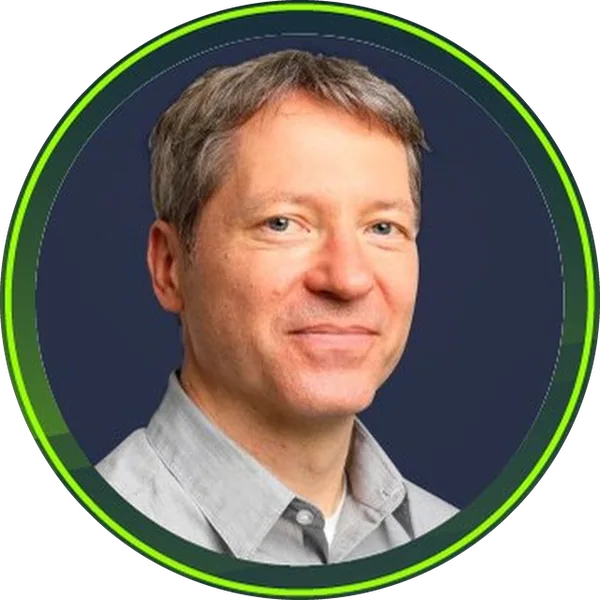
Lars Gehrmann
Lars Gehrmann from Qatar Insurance Company shares his expertise on the importance of collaboration in the insurtech ecosystem. Learn tips and tricks on how to successfully collaborate with ecosystem players in the insurtech industry.
The full episode
Press play for the whole conversation.

The Importance of Collaboration
If you're interested in attending the MENA InsurTech Rising 2023 Summit on May 21st and 22nd, get your ticket! InsurTech Geek Podcast listeners can use the promo code MESEB20 for a 20% discount on your ticket.
The full transcript
Transcribed automatically from the episode audio, so some names and terms may be misheard.
James BenhamOn this episode of the InsurTech Geek podcast, talking about the importance of collaboration in the InsurTech ecosystem with Lars Gurman from Cutter Insurance Company. The InsurTech Geek Podcast powered by JBKnowledge is all about technology that's transforming and disrupting the insurance world. We'll be interviewing guests and doing deep dives into specific tech we see changing the industry. We're taking you on a journey through insurance tech, so enjoy the ride and geek out. And we are back with another episode. My good buddy, Rob Galbraith. Rob, what's going on?
Hey, James. How are you doing, man? Having a great day. How about you? Doing well. I finally, after
Rob Galbraithsome business travel and personal travel, just got back from spring break in Seattle and Portland with my kids. I was in London a couple weeks before that. But lo and behold, when I got back and got through my desk, had a copy of Be Your Own VC on my desk. So there we go. I'm really Yeah. And it's fantastic book. Highly recommend. So always love a good book. This one, in particular of, interest and importance.
James BenhamYeah, congrats James It's again on the fantastic. Thanks. Yeah. I had to try and live up to your standard of books, man. You wrote an incredible book called the end of insurance as we know it. I recommended that many times to people. It certainly gave me a masterclass on insurance and I wanted to try and give some education on how to bootstrap innovation, bootstrap companies. And so been a, surprisingly timely topic with VC money drying up. So it's, it was, it's been a, a very interesting two weeks with Silicon Valley bank collapsing and, you know, they were, they were funding half, half of tech startups, half had had a connection to Silicon Valley bank.
Was like, oh my gosh, that's a, that's some deep tentacles into the startup ecosystem. So little crazy, little crazy times. Absolutely.
Rob GalbraithI know I've been to several events sponsored by Silicon Valley Bank over the years, met some fine folks there. So I was pretty stunned by the news, just digging deeper. I mean, running a bank is not easy in the current interest rate environment. And, of course, lots of scapegoats that people are trying to make out there. Not a banking expert, but, yeah, lots of turmoil both here and obviously on the the European side of things as well. Yeah, it's not over.
James BenhamYou know, rates just went up another quarter point and it's going to continue to impact people. Any bank that assumed that rates would plateau and come back down and they're being proven wrong right now because they're going up still, You know, it's proving challenging. So we'll see how far this, a contingent spreads. But it turns out that the quarter million dollar FDIC limit is actually not a quarter million dollar limit anymore. Cause they, they just de facto guaranteed all deposits, which they, they literally don't have this.
That's an insurance problem, Rob. The FDIC is an insurance company and they don't have the capital to insure all of the deposits. They've been collecting premium to insure a quarter million dollars per account. So, it's a, they've, they've created a pretty big insurance problem.
Rob GalbraithAbsolutely. Yeah. I mean, the moral hazard of it, I think they have something like a $12,000,000,000 backstop, but that's not going to cut it. If, all the banks are threatened, if this is more systemic.
James BenhamNo way. No, they've got to figure it out. And with us, from, from Cutter, actually, Lars Gerriman.
Lars GehrmannHow's it going Lars? Good to have you on the show. Thank you for having me. Right. And I think we have fear the pulse of all these banking issues in our region as well. So yes, absolutely.
James BenhamA lot of impact. Yeah. Yeah. It's, it's got an impact around the world. There's no, you know, it's, it's a global economy. You can't say anything is contained to one country anymore at all. You talk about a banking crisis. You have a, you immediately have a global banking crisis because everybody banks their bodies. It's it's complicated. It turns out the world economy is really complicated. That that's actually my number one summary from the last three years. Cause we're at the three year anniversary of COVID.
Rob GalbraithYeah.
James BenhamThree years ago, world shut down and we found out how interconnected the global supply chain war is. It turns out every other industry, insurance banking has just interconnected, but that's not what we're going to talk about today. We're going to talk about innovation. We're going to talk about insurance. We're going to talk about what it's like to live in Qatar in the Middle East. We're also going to talk about an event that's coming up there in the MENA, Middle East, North Africa region. And with us today again is Lars Gerriman.
He's group chief digital officer at Qatar insurance company. Some pronounce it QATAR, Q A T A R, but my friends who live there all like made me change the way I say it, say it to cutter. The company website there is qicgroup.com. If you want to check out while you're listening to the show. Lars, let's talk about you for a second. Before we talk about your job. Where were you born and raised?
Lars GehrmannIn the Eastern Part of Germany. So I've seen a couple of, changes in systems. So yes, born there and raised there and then moved to the Western Part of Germany, then have many years in Spain, couple of years in Switzerland, the last, almost two in Qatar. So tell me about the significance of 11/09/1989 for you? Mass massive. If you have lived in the Eastern Part of Germany, then it just been old enough. I had at least an age, not old enough, but at least that age that saw a change for everybody.
But you still feel this in people. Really long ago, you still have this difference between these feelings and how actually you you believe. And, also what is your perspective on the current political situation in Russia and Ukraine?
James BenhamYeah. It's amazing how interconnected modern events are with past events and it helps to have some historical perspective on those things. Of course, for the uninitiated, November 1989 is the day the Berlin Wall fell. It really changed everything in Europe, re architected Germany's future, pretty, pretty fascinating culmination of of a pretty terrible time, I would say, for, for Germans having to split their country and, and deal with deal with, a lot. And I it's rare that you meet someone who lived in East Germany. For at least for me, it's rare for me to meet someone who actually lived in East Germany before the wall fell.
So it's it's nice to meet you. It's nice to talk about that when you were growing up. Now the wall fell in the middle of your childhood. So did it, did it change your outlook on life? Did you have a career goal before the wall fell? And then once the world opened up and you could travel freely and did things change for you? It's really a long time ago, I have to say, right? We're talking about years. But nevertheless, yes, I still remember.
Lars GehrmannI still remember. I was for somebody looking out where I couldn't travel because this was just limited. Right? And suddenly, the world was open for us. Right? And I'd to live my life in this way. I took the opportunity to work and live in other countries because it's what's really lovely about this world, the interconnection, the culture, a different way of living. Yeah. Your it looks like your first job out of college was at PricewaterhouseCoopers as a business analyst. Is that right? Yep. Yeah. I was a consultant there, so I did this, stood up for two years and then I was getting fed up with the business.
And this is how it was done back then was really rapidly going into a new small company and doing the same thing, consulting, but with more responsibility. Yeah. So this was actually my first touch point with insurance. Imagine mid two thousand, before the Dabcom bust, right? On one of the first German digital MGAs, and you're still trying to solve the very same issues twenty two years later. Ain't that interesting? Still haven't figured some of this out.
James BenhamI did a grand total of six months of work in the exact same timeframe at PricewaterhouseCoopers. I was an undergrad business intern and a graduate student intern at Pricewaterhouse in Dallas. And the summer, I think it was 2000, 2001 were the two summers I did that. So I was there for six months and it was definitely long enough for me to realize I didn't want to do it. And so it led me to starting the business I'm still running today. I've been running this company for twenty two years when we build insurance software.
So you and I had a very similar place to start, and then you launched into consulting and had touch points with insurance. You had an interesting career, largely in, it looks like financial services, Honda Finance, and you worked at a family office clients for Golden Visa, then you had Honda Bank, and then you had TESTIF, and then you had Venture Builder. You had quite a few steps along the way in financial services. When did things come back to insurance for you? Was it during time at Zurich?
Lars GehrmannYes. So it was actually like this, right? I got out into the fight of financial services. I had a lot of fun. We built a couple of own companies, some of which good success, right, and others that didn't fly. Right? And then in 2018, I got a call from somebody, Zurich Insurance, yeah, that wanted to change the way how Zurich Insurance works in terms of new digital things. This is me. I'm digital entrepreneurs. I look for newer challenges, how we can do things differently. This was the call back to the insurance.
James BenhamI had a good time over there for year, something like this and then booked. So, what path would be, you can fast forward? We don't have to go through every stop on your resume. Cause I want to, I really want to talk about what you're doing now, but your, your path to your current job, which is group chief digital officer, you know, for the Cutter insurance group. And, you know, you what led you back into insurance and what led you to Cutter Insurance?
Lars GehrmannBack in insurance is basically my passion for doing new things. I've built companies in different sectors. Right? Automotive, the founder, we built a bank, a digital bank. It's very I had an education app company. I have a fashion app company. And so I did a lot of things. I have learned a lot of things on how to get startups to succeed. Yeah. Made my own mistakes on this process in the last years. And really coming back into insurance was this challenge. Can you work in a big corporate and trying to bring the background of startups into this big corporate and do new things.
This sort of brought me back. It was not really a call back to insurance. It was, wow. This is an interesting journey for me. Right? Combining corporate with the startup mentality and doing this kind of innovation. This also brought me back to insurance, and so I think we have a really lot interesting projects in different countries with different people. Amazing, amazing stuff. Right? That she has been working on start ups more on the European sector being exposed to global opportunities, so this was really fun. But I also realized this is a tanker that was too big for me to really have a lot of fun.
I had fun, but not enough fun. So it was time to move on something else. Right? And there's something else I I said, okay. I have done that that many things already, so I was really happy about what we could do in insurance again. And that and the call came from insurance group. That's a different setup. It's obviously a smaller company, but credit insurance group is a leading insurer in The Middle East. Number one in Qatar, number four in UAE, number three in Roman. It's we do 60% of our business in The UK through a reinsurance and a Lloyd syndicate.
So what interest international setup. And coming back to the ecosystem here, there was really an ancient ecosystem, like, of ideas are flying around in The Middle East. So this was, I think, the right setup for me, a company that is willing to renew things, exercise to do new things in an area where not much is done last year. It's all about new things for me, building new companies. And what is that? Let's, so let's talk about Cutter Insurance Group
James Benhamand you know, tell, tell me about the company and what the major lines that that rights are. Like what, what does it do and what do you, what do you do? Cause your, your job title is really pretty broad reaching and could apply to a lot of things inside the company. So what does the company do and what do you do inside of Penn Insurance Group is really a full stack insurance. So we are in The Middle East, mainly about the P and C business, retail and corporate.
Lars GehrmannWe have a strong footprint in Qatar and UAE on on health and the like. We have a reinsurance business, which people in your care know us quite well. We have a really good Lloyd's syndicate. So it's really a little bit of all, but this makes us a diversified into opportunity, so to work on many things. My job is rather not doing IT stuff, but, again, looking into new digital business models. How can we build new things that help us in the future to grow in different business models and different revenue streams?
Can we partner with other companies to build faster and get more more reach? This is what I do in Cada Insurance. So less digital transformation, do this a little bit and influence. Yeah? Impulse
James Benhamgiven, right? But really about the opportunity. Yeah. You say build things faster. Give an example of something that you want to build faster. We want to build faster. So, yeah, one year and a half in.
Lars GehrmannHow do we do this? Like, so this is the question. You have to see you see what is the company set up and which ecosystem you're living in, and then you have to find the right answer to doing this kind of innovation. We found we still find and we found our way would be what we can now call digital venture part. Build a unit that's compromised its own venture studio, a team, and he looks into new business models, this business model hours, and get them out.
We have two ventures right now in Stel. Let's see that we we hope to get them out during the summer. Yeah. So this is one. And then, obviously, you want to help the ethical system and the access to help you to build faster. So if a small CVC unit invest into each of these, that do this. Right? Help us to build faster, enable the distribution. Yeah. As we can help and grow with other IntraTechs in the different sectors that we are not in, then this is fun as well.
So this is our approach. This is how we we are getting out. We are one year and a half in. Right? So a little fun time. Right? A lot of concept strategy, getting things done, hiring the right people. We have a green team with us. All the support we can do, we can get to build.
James BenhamAnd looking at your website, you got, quite a few different, you have personal insurance with a lot of lines, boat, motorcycle, home, travel car, you have business insurance, property and casualty, marine aviation, energy, motor fleet. Mean, you, you have, you have a full claims department. So, I mean, there's real quite a few lines is that there's so there's a lot of room for you to experiment and play with in this, in this company that. Yeah, absolutely. But there's more room that we have actually energy and possibilities right now, capabilities.
Lars GehrmannSo we're looking into I mentioned about those two things. One is in digital health. So and this is one of those areas where, yeah, rocket science compared to what the things that we are doing in Europe and The States and Asia. Nevertheless, there's still a couple of areas that are missing at least, so we are working with this. How can we use technology to reduce the claimants ratio to have better service and enable new kind of propositions that tech actually helps to get out in the business.
And we look into cyber. Yeah. There's a couple of interesting plays. In The States and Asia and Europe, we haven't landed yet in The Middle East. Yes. The question is right. There are that many things that we actually could work on, but we cannot. And we will not be able to work on all business lines in the future. So we have to focus. We focus on those three points. And on the others, I cannot wait. So what do we do typically? Right? So we work with the ecosystem.
This is what in addition to that. Right? So I can invest in Intrutex that help us to work on a business line that we don't have the capability to
James Benhamwork on, and you're still getting things done. So this is the approach that we are taking. It's interesting if you study the history of the Cutter Insurance Company and you go back and you read through their, their heritage on the website from, you know, the start in 1964, when, when Cutter was a very different place and Cutter insurance company was a much smaller company. And you see much, this company has adapted to the new reality of The Middle East and the new reality of Qatar and, you know, oil money and all the things that that brought.
It's been fascinating to see its transformation. And of course, I think from a, from a technologist perspective, it's exciting to see them being tech forward enough to have a digital officer and to have investment arms and to really be experimenting with how to roll new products out and how do you, how do you do something in, in what, you know, is relatively young country. If you look at just the country, the way it is now, it's only been this way for not too long. So they're not burdened by a lot of the baggage that other places are burdened.
So you're seeing, in my opinion, a lot more room for experimentation. I've studied the construction sector extensively and Qatar has been an area of rapid experimentation and deployment. They're trying to grapple with, big city problems in a very short period of time. And so it's been interesting to see all the ways that not just insurance, but other industries are experimenting in your area. So for a guy who likes change and likes new challenges,
Lars Gehrmannit might be exciting to be in the middle of all that energy. Right? No, absolutely. It's a lot of fun. The whole region is a lot of fun right now. It's a booming market. It's emerging, but it's really a booming market everywhere. A lot of people coming into the region, which gives you opportunity to just do new thing. And, yes, we have this big poster in our office where you look into the desert, and there's one building which is constructed as our building thirty years ago.
There was nothing. Right? And in the meantime, if you see the images of the World Cup, right, as Doha, as West Bay, all the skyscraper, there was nothing. That was our our office. Right? So it's like, how? What happened in the last thirty years? I was not there. Right? I'm one year and a half, almost two years in, so it's just it's just amazing what what happens over here in in the region. I think this is what makes interesting, yeah, opportunities. And also, we are working this way that we are working.
The management teams come from different regions. We have seen different kind of intertext and digital opportunities coming up, fail and coming up and succeed, and they're trying to bring the best here and adapt it in the way that actually can work. I think you mentioned what else we do. What I think we have an intertech with 300 people in the group that delivers our back end system. You mentioned that you develop your own. We are delivering the back end system for all our different kind of insurance.
This is MDFX from the clients as well. So even before I came, the company was looking into the future of how to do the things in the proper way. So I think you're quite an innovation and tech leader for for the wider region, and we are building on this and try to do it even faster.
Rob GalbraithSo, Lars, I wanna follow-up on the region. I know you spent a a large part of your career in Europe and in different countries. So, you know, think about the MENA region, right, and the InsurTech ecosystem. What are some of the key challenges and opportunities that you're seeing out there? I think in in general, it's a good market in the terms that new people are coming in.
Lars GehrmannSo if you have new people coming in into those different countries, there's always room to sell something in terms of insurance and other service. It is challenging market because you have an 80 or 90% expat population, at least in Qatar and UAE, less than normal. It's all but nevertheless, there's a lot of expats in there, which makes it challenging in terms of propositions because you could have one proposition that fits all, but this never works. Right? Or you build proposition for different kinds of market sectors.
The region itself in the insurance sector, I think, is in general undercapitalized. We have a lot of insurance companies that are not able to take risk on their own balance sheet. We have different QC and maybe that proved before five other insurance companies. They have the strength in the balance sheet and the capital to really take risk, which, as a consequence for the ecosystem, reduces the capabilities to do really innovative projects. If you always sell and then have to deliver everything else to the reinsurance, there's just no margin to invest in the new things.
This is one of those areas where you're you're lacking in the ecosystem. I believe you have to work on this. They're trying to do this. But as such, it's it's a really dynamic market. Many things are happening here. Many things can be tested out, And you have this opportunity. Right? So 80% of the people living here are expats, and they have their family home in the wider region in The Philippines, Bangladesh, and India. It's different, but it's interesting. Now let's talk about your intersection with it.
James BenhamYou said that you're not doing it projects. I think that's what you said. I'd be interested if you could elaborate on how you work together with the technology group and what your partner share looks like? Yes.
Lars GehrmannI think we talked at the beginning about our shared PVC, PwC, practice. Right? So I was able to read SQL. Right? So I was able to read it, but I don't do anymore. But now I'm not tech guy anymore. It's really about business and doing things. Think I'm really happy compared to what I've been living in twenty or even ten years ago. IT was a major headache. I think we have seen in the last three, four years or even two years big shift on IT getting marginalized so you can actually get it, put this into a business model, and it works.
This is amazing. Yeah. So you don't have that many headaches anymore because it's really a lot of solutions are out there that are really standard. I can get them via SIS, but and put this into business model and see if it's actually working out. So, yes, you have the intersection. Modern architecture helps us to really don't complicate the things anymore. Yeah. And I'm really grateful for this. It's all about business and today's world and not that money more about IT. Which assets. Right? Yes. You need IT guys.
Yeah. You're working not only with our own IT, and on my initial tech to test the back end, but we have a couple of other providers as well. You just have the best solutions for the problems that we want to solve and get them in and connect this time with the interface and APIs.
James BenhamAnd then, yeah. So do you, are you a, you a customer of it in your digital group? Yes. Yes. And so you're, you're, you're working with them to roll new product out. Like what, what exactly are you innovating? Are you, are you experimenting with parametric insurance and are you experimenting with IOT devices like data? Are you experimenting with, you know, paper mile paper use mean like what, what major experiments are you conducting? Yeah. So I think in the retail sector, and this is where we focus right now in the retail sector,
Lars Gehrmannwe have exactly this, right? You have mobility solutions that are tested in the system in the market. I think that most solutions that you just can rent, and we rent them and testing them in certain market segments. Using data to the better proposition for better for certain market segments is, I believe, we are strong, we have the background on on how to use it. This also requires that the underwriters understand how to work with this data, which is something that I believe we are not really strong in the wider region.
Right? But still, as we talked about in the beginning, it's all about standard business, standard product. One product fits everybody, right, until you're coming now and saying, look. Take the small product for this 10% of the market segment, and, actually, everybody's is up here. So, yes, you're working on ED Yeah. Electric vehicles and propositions. I think there's a couple of the writing rules that are not really done in the proper way here in The Middle East. And we log obviously on health, but health is everything around data.
Yeah? How we can be tracked and how this data that is tracked about us can be used to help us to live healthier even longer. Right? So we're doing this. And how do we do this? Well, we have interesting companies, tech companies in our region that we're partnered with, but there are also cooperations with some companies like Prefina, Home Industries, that help us to do crazy stuff. Yeah. So we like to bring this kind of innovation into the region and go to the next step. So Lars, I want to ask you about a couple of
Rob Galbraithgroups that you're involved with and you've you've started. So I know at Qatar Insurance, you guys have started digital venture partners where you're building your own insure techs. You're alluded to that. So I'd love to learn a little bit more about what that looks like and, and what's the vision for that. And then also, I know you're a co founder of the Mina Insurtech Association. So that's going to involve a lot of, capacity VC Insurtechs, the wider ecosystem going beyond, right, just your own company and really speaking to the region.
We'd love to hear a little bit more about each. So, Glenn, thank you for the question. Yes, Digital Venture Partners is what we agreed every day. Right? The team is looking into new ideas,
Lars Gehrmannthose ideas in the market. It's like, you would test ideas. Right? So growth hacking. You'll put a landing page out. You see the as the interest or not interest. Right? You find the right tech provider to really provide the solution if there is enough interest. And then the challenge starts, right? How do we get this insurance drug out? Because, yes, you have a certain market segment, but then you need internally, you put it on your own balance sheet, which is in our case fine. But many other central techs actually have to pick the doors and say, hey.
We need to take the risk. And we came to the point where we as did this, also working on a couple of propositions that we are not able to take on our own books. Right? So I have to do the same, the knocking on the doors and our same fight as well. So we do this. We're building this kind of style ventures and investing into Intrutex. But seeing the limits of the ecosystem, and I think the limits in our region are not similar. They're the same, but I think we have a different variant.
I think we have a lack of fronting and capacity providers in the region. I think regulators still have to catch up on what tech means and new business model means. Yeah? We also have, at least in our region, the VC capital is there. Everybody understands Middle East has money, but VC money doesn't really understand what insurance means. Yeah. Because there's a difference. And you notice, I know this. Right? Our team knows this. There's a difference in investing in insurance and investing just in financial services or in some other products.
So you need to understand what are the limits. Right? And then I think on top of this, the challenge is that we haven't seen many intros being successful in The Middle East in the last years. And as a consequence, we don't have enough talent. This is what is missing. Right? If there are more digital techs that are there and even if they fail, why don't you build talent and the talent does the next thing? As you don't have many of them in there, we don't have the talent to test out the new things.
Right? On top of this, we have really small countries. Don't forget close to this, but finally, compared to the state three fifty million or to Europe, three fifty million people, small states. Right? Three, six, 10,000,000. Saudi's a little bit bigger. Yeah. But but this is what we're having. So if you're building a proposition, you need from the day one, think about how we can scale this across the border. In an ecosystem that works totally different, you need local partners to communicate flight. And I think what I just mentioned are the limiting factors in the ecosystem.
And this is why we are putting the Media Nature Tech Association out, which is a networking organization that is trying to solve those factors by connecting the different dots of the different partners to make more things happen. Yes.
James BenhamYes. So let's, let's talk about the most let's, let's kind of close-up the conversation, talking about exciting projects. What's the most exciting innovation or project that you can talk about that you're working on right now? I believe really exciting, excited about two things, digital health. Yeah. And yes, there's the health thing that everybody does, but, can you work and build on data and new propositions? Yeah. And this is something that is
Lars Gehrmannquite unique in different ecosystems. It's unique to our challenges, health challenges that we have in The Middle East. So we're really excited about this. Precision health is something where we can do kind of different models in insurance as well. So this is one area where we're really excited about. Yeah. Having a scan on your face and have the variables of your health, by the scan of the face, like, yes, it's some sort of FDA room, but some others still not. But if you think this through the next two years, what will happen, there's just a totally different experience, user experience on how health will be delivered, and this means it's a totally different experience in insurance as well.
So we are working on this and a couple of other insurance companies I work with. I'm really excited about health in general, not only in Middle East. Globally, Middle East, have our own challenges. I'm excited about this. Also, how can we I mentioned this before. We deliver for the people that are living in our countries, but their families outside our countries. Right? This combination is really an interesting area. I think it's one of those areas where we are talking about the immediate interest rate associations. We want to enable that 75% of the people living there have at least access to digital insurance, and this proposition does.
Think the other thing that I'm really excited about is I've seen this in The States. You've seen it in Asia, a little bit in Europe as well, a proactive monitoring cyber insurance. They don't have a paper form to fill out. Yeah. And then you see what they have done in the past that actually scan the companies, see where they are right now, see how fast they are patching, calculate the proper underwriting risk that you are taking, and building a proposition that works. At least you are one of the regions where we have the highest rents of payouts compared for the rest of the world.
Right? We don't have a proper insurance yet. So we're working with partners on things. There are a couple of players doing similar things, but it's about doing it right and
James BenhamSo those are two areas where we are really excited about. And we get all data on how we can use tech to deliver a different kind of user experience. I mean, it's really exciting, but on digital health, like when you're talking about digital health, I didn't see health insurance as a line that you guys offer. What do you, what, what area of your business is that going to really impact?
Lars GehrmannYeah, no, it is. Yeah. So yes, you have seen right on the website. You don't see it anymore, but we are founder of QM Qatar Life Medical Life, which is leading health insurance in Qatar. Yeah. It's now IPO ed two years ago. This is what you don't see on our page, but it has been built out of QC. So, yes, this is our partner client, Ben Schott Eisenhardt, in doing this. So, yeah, they're reaching a good chunk of the Qatar population, is health insurance. Yeah. And this is why it's a good natural start to get new things.
James BenhamGotcha. Understood. Makes, makes a lot of sense. I, I recently about a year ago, got my very first client in health, life and disability. And it's been a education to say the least. Cause for, for nineteen years I've worked in work comp property, auto, general liability, and to jump into the health life and disability and dental, etcetera, has been a big education, but you do find out that fundamentally the challenges are very similar, just expressed in different ways. Rob, why don't you take us, why don't you take us home last question or comment you got?
Rob GalbraithYeah, Lars. No, I, I'd be remiss if I didn't ask you. You have a big event coming up and in InsurTech Summit later this spring. So I'd love you to tell our listeners a little bit more about that. And I understand that you might even have a discount code for our fine InsurTech Geek podcast
Lars Gehrmannlisteners and viewers. Thank you, Rob, for this question. I'm really happy to talk about this. Yes. So as you talked, you talked about the ecosystem and what you're doing over here. So we have been running Intertek competitions in couple of countries over here. We have Internet techs at Applied. We are selecting the 25 best inter techs out of the whole Vienna region, Middle East and North Africa. And we bring them to our summit where we see the best 25,000,000 inter techs and want to select the very best out of those 35, and we have a matchmaking with VCs.
Yeah? So international mid tech VCs and regional VCs, and we have capacity fronting a matchmaking. Second day is a knowledge conference, interpolate knowledge conference with international speakers coming in, the regional ones coming in. So this is the event that they're doing. May, three days event. I would be happy to see you all there either on-site or online. We have a streaming service with us, So please reach out and yes, we have a discount code here for this podcast.
James BenhamHappy to see you then. Great. That's good. Good. About that. And we hope that if you're in the region and want to go to that event, you can go right, Rob, you're going to go. I probably won't be in the region, but I'll definitely try to join online for sure. Virtually. Yeah, that's great. Yeah. I, I have never just full disclosure, never been to your, your area of the world. So, I have a strong desire to get over there and check it out. I've heard lots about it and it's, it's high on my list.
I unfortunately have spent twenty two years bootstrapping a software company whose clients are predominantly here. And, so it's, it's meant a lot of, a lot of domestic travel and travel around North America with that, not a lot of time for, for anything other than London and, and, one trip to China. I, I'm a, I'm a little jealous that you get to be in this rapidly transforming part of the world. That's, that's really building great things. Can people connect with you on LinkedIn? Is that where
Lars Gehrmannyou're at with Lars? Yes, that's the best way of connecting. So we would be looking into partnerships. We're helping international companies to come to the reach and get into this space. Yes, please connect me. I think they have in the back like,
James BenhamI'm a lead to a profile and so on. Then we take it. Okay, great. Well, thank you so much for being on the show today. I know it's a good bit later where you are than it is where we are. So I appreciate you staying up and being on the show during our hours. But it's really wonderful talking to you and certainly it's been a pleasure having you on the show. And thank you to all of our listeners for tuning in today to geek out for our interview with Lars Gurman from Qatar Insurance Company.
See you next week. The Insurtech Geek podcast powered by Jibby Knowledge, jibbyknowledge.com. It's all about technology that's transforming and disrupting the insurance world. I've been your host, James Benham. That's jamesbenham.com with co host Rob Galbraith at endofinsurance.com. Thanks to Jim Greenlee, our podcast producer, Cara Daltonaro, our creative producer, and thank you for joining us today. Look forward to talking with you soon. We're taking you on a journey through insurance tech, so enjoy the ride and geek out.