 YouTube
 Spotify
 Amazon
 iHeart
 Apple
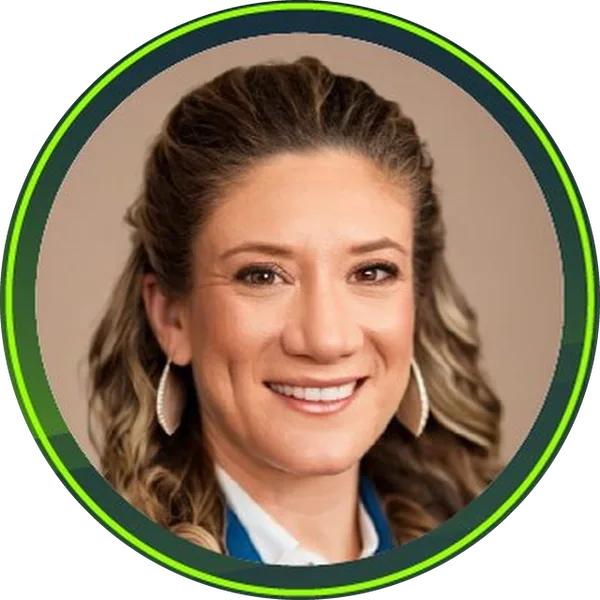
Rose Hall
Rose Hall from AXA XL shares her expertise and insights on driving innovation in the insurance industry. Learn tips and tricks on how to foster a culture of innovation and leverage emerging technologies.
The full episode
Press play for the whole conversation.

Driving Innovation
In today's rapidly evolving world, the insurance industry faces the challenge to keep up with emerging technologies and drive innovation.
To shed light on this topic, the InsurTech Geek Podcast proudly presents its latest episode, featuring a special
Fostering an Innovation Culture
One of the fundamental aspects of driving innovation is fostering a culture that encourages creativity and out-of-the-box thinking. Rose emphasizes creating an environment where employees feel empowered to share ideas and experiment with creative approaches.
"If you don't have an innovative culture supported at your organization, you're going to have a hard time getting something off the ground."
By fostering a culture of innovation, insurance companies can tap into their workforce's collective intelligence, unlocking new opportunities for growth and development.
Embracing Emerging Technologies
Innovation in the insurance industry comes hand in hand with the adoption of new technologies. During the podcast, Rose Hall discusses the transformative potential of technologies such as artificial intelligence (AI), blockchain, and data analytics. Leveraging these technologies can streamline processes, enhance customer experiences, and enable insurers to make more accurate and data-driven decisions. By embracing emerging technologies, insurance companies can stay ahead of the curve and meet evolving customer needs.
Collaboration and Partnerships
Driving innovation requires collaboration and partnerships within and beyond the insurance industry. Rose Hall highlights the importance of fostering relationships with startups, insurtech companies, and other industry players.
"We innovate by helping our customers innovate, and that's how we win."
By collaborating and sharing knowledge, insurance companies can tap into fresh ideas and leverage external expertise to drive meaningful innovation. Building a network of strategic alliances, accelerates innovation, and positions insurance companies at the forefront of industry advancements.
Overcoming Challenges and Roadblocks
Innovation efforts within the insurance industry face many challenges. Rose Hall addresses the common roadblocks faced by insurance companies on their innovation journeys. These challenges include legacy systems, regulatory complexities, and cultural resistance to change. By recognizing these obstacles and proactively addressing them, insurance companies can create a more conducive environment for innovation and overcome barriers that hinder progress.
In conclusion, innovation is a vital component of insurance companies' growth and success in today's fast-paced world. By following Rose Hall's advice and tips, insurers can unlock new opportunities, deliver exceptional customer experiences, and remain competitive in an ever-changing landscape.
Tune in to episode 113 of the InsurTech Geek Podcast and embark on a journey to discover the transformative power of innovation in the insurance industry. Learn from Rose Hall's expertise and gain valuable insights into driving innovation at one of the world's largest insurance companies: AXA XL.
Don't miss out on this opportunity to stay ahead of the curve and revolutionize your insurance practices.
The full transcript
Transcribed automatically from the episode audio, so some names and terms may be misheard.
James BenhamOn this episode of the Insurtech Geek podcast, talking about driving innovation in one of the world's largest insurance companies with Rose Hall from AXA XL. The Insurtech Geek podcast powered by JV Knowledge is all about technology that's transforming and disrupting the insurance world. We'll be interviewing guests and doing deep dives into specific tech we see changing the industry. We're taking you on a journey through insurance tech, so enjoy the ride and geek out. And we are back with another episode with my illustrious co host, Rob Galbraith.
Rob, how's it going today, buddy? It's going. It's going. We're hitting the end of the school year, heading into the long Memorial Day weekend here.
Rob GalbraithAfter this recording, I'm off to see the Little Mermaid with my daughter. Oh, yeah.
James BenhamAwesome. I think my 16 year old went to watch that and loved it last night. So I'm I'm hearing good positive reviews from it. I hear I hear it's going well. So, Rose, what are you up to? Where are joining us from? I'm in Southern California, Orange County. Really nice here. A lot of palm trees. Let me guess. 72 degrees and sunny.
Rose HallYeah. Yeah. Day. On a bad day. Is it like eating dessert every day? Is that what it's like? It's it hasn't worn off yet. I've been here a year, and it hasn't worn off yet. It's amazing.
James BenhamYeah. It's like, at some point, do you get tired of perfect weather? Or I guess not. No. You just you just don't. You're just like, no. You wake up every day, and it's amazing. I love it. I love it. Look. I lived in New Jersey most of my life. How can I not love this? Right? It's Yeah. Yeah. You know, when you go from New Jersey and it's in New Jersey, you gotta say it the right way. You know, it's like like, I love I love Saturday Night Live because anytime they say New Jersey on Saturday Night Live, it's like New Jersey.
Yeah. They say it like Danny DeVito. Exactly. It's just a harder life in New Jersey. I was just up there in New York and New Jersey for my daughter's 16. It was it's interesting. You know? The weather is not nearly as good. The traffic's not nearly as nice. The roads aren't near. It's it's just a harder life. So I I I guess you can appreciate it better over there. But, you know, they say if you can make it there, you can make it anywhere. Right? Oh, you had to quote the line, didn't I pulled it out of New York.
I can't help it. Why? It applies to Jersey too, though. Well, look. Let's let's jump straight in before we talk. Like, we've had you on the show before. We've had I had you on my podcast before, but I always like to give listeners a recap because you've had some career, you know, some enhancements at AXA XL since we had you on last. So just tell everybody, like, were you born and raised? You just mentioned New Jersey, but, you know, what was the, you know, early career like?
And then and then what what have been the the most recent changes in your in your career path? Yeah, yeah. So thanks, James. So it's always fun to be with you guys. You guys have great sense of humor and we talk about fun stuff. So I love geeking out with this team.
Rose HallYeah, so born and raised in New Jersey, obviously, as we talked about. My undergraduate degree and my graduate degree are in civil engineering, which, you know, you look at that and then you go, okay, how did you end up in insurance? I did a bunch of construction work for a large general contractor, Turner Construction for many years. And my last part of my career at Turner after I was building buildings is I spent four years in risk management. So, then I got interested in insurance and risk transfer and how that creative art of those two things come together.
After that, did some expert witness work for a company called WCD Group that's now a Gallagher Bassett organization, part of the Gallagher Bassett organization. That was pretty fun. I spent four years on a case, on a wind flood case from Hurricane Katrina. It was an interesting expert report to write and some depositions and mediations to sit in. That was a lot of fun. So, I got to see, how buildings are built. I got to see how large contractors and large organizations ensure their risk on the front end and the underwriting part of that a little bit with working with the insurance partners.
Then I got to see the claims side, which is the back end of it when things go wrong. And lo and behold, I ended up here at AXA XL about eight years ago in the construction business unit, helping assess risk and process claims for when things go wrong and kind of worked my way into a position of innovation in construction, thinking about how we can do both of those things differently,
James Benhamhow we can change the paradigm of insurance. How'd that happen? I mean, you go from being a risk engineer to being on the innovation and technology side of Like, the what's the connection between risk and innovation in tech? I love that you asked that.
Rose HallYou know, there's three ways you can manage risk. You can buy insurance for it. You can give it away to somebody else, which is called contractual risk transfer, or you can choose to manage it yourself. And deciding which one of those three things to do with your risk is really the art. And insurance companies have been traditionally focused on this one, you know, what our customers are going to buy insurance for. And we want to be present in that market, of course. But when you start to think differently about servicing a customer, so in risk engineering, our job was to help make our customers better risks for themselves, for us, for the world, for the industry.
And when you think that that's not just about, okay, buy insurance and get rid of the risk. Sometimes it's about what part of that risk can you retain for your own profit. What part of that risk are you really good at and you don't actually want to give it away? And so, when I was in risk engineering, I was focused on the customer, 100%. How can we help the customer be a better risk, be more profitable in their organization, which translates to us being a better risk and us being more profitable?
And in my mind, that's an innovative way to approach a customer. Yeah, I mean, that's a different
James Benhamperspective, right? I mean, acknowledge that self insurance in some cases makes sense, and you want to help clients work through that, right? But you also have to acknowledge that if you help make your client a lot safer and help them mitigate risk internally, you can certainly make your own business more profitable. Kind of everybody wins. That's the interesting scenario. And at the end of the day, when you look at a lot of the technologies that drive safety and risk reduction, they also drive productivity. So, there's a really interesting connection between productivity and safety in risk world, right?
And you know what else they drive? ESG.
Rose HallSo, as we are using technologies to protect to prevent against water leaks, we're also managing our water better. As we're using technology to for collision avoidance, telematics and ADAS in our vehicles, We're also using it to measure fuel consumption and potentially lower our carbon footprint. As we are using wearables to help prevent human injury, we are protecting the S, the humans, the social part of ESG, right? Environmental, social, and governance. And all of these technologies that are helping bring data in and helping measure these things is part of the governance piece of it.
So, there's a lot of
James Benhamsymbiotic relationship between protecting your people, protecting your profits, protecting what matters to an organization and to society that pairs with risk reduction and ESG. Yeah, I mean, you're hitting all the buzz phrases, but not because you're doing buzz phrase bingo, but because it actually is real, right? There's a real connection between, you know, sustainability governance behind innovation, profitability,
Rose Halland safety and risk reduction. There's actually a coral in there. Yep, I believe so. And so, when I presented that to our organization, you ask how I got from risk engineer to where I am. I presented a concept similar to that to our organization, and I suggested that there be a head of construction innovation role to help contractors achieve exactly what I'm talking about. You know, to my delight, the powers that be decided that was a good idea. So, I made up a role for myself and I think that's the last time we had this podcast I was in that role.
Well, subsequently, we did this proof of concept and see, okay, does this work? Does this work for our customers? Does it work for our business? Is the bang worth the buck? Can we help whittle the wide, wide world of innovation down to some really specific things that can help our customers grow their businesses, promote their ESG goals, and reduce their risk at the same time? Does this thing fly? And I think we learned over the three years in construction that it did. And so, the Chief Underwriting Officer of The Americas, Donna Nadeau, tapped me on the shoulder and said, Hey, can you do what you did for construction for the rest of our business units in The Americas?
And that includes
James Benhamthe go ahead. Like, did it actually work, though?
Rose HallDid you actually see increased profits and reduced risk? Reduced risk is so hard to prove. I mean, it's so hard to prove a negative, right? The water mitigation one's a great example because it actually the technology on the pipes actually looks at the water flow and it can tell when there's a leak and you can shut that leak off remotely from your phone when you're sitting on the couch. So, you can actually see the near miss. But some of these other ones, the ergonomic wearables, are cueing a worker to stop bending improperly and start bending properly.
And they may actually prevented an injury. You can see that near miss. But then when they provide training, right? So, it looks like, oh, it looks like all your people lift improperly. Let's provide some training on that. How do you quantify a week's worth of training on lifting
James Benhamto your AI? It's really hard. It's really hard. I mean, you'd have to look over a period of years at incidents, incident rates, average cost per claim, number of claim, total claims.
Rose HallKnow, I mean, And the laws don't develop for many years. So, it's going to take a while for Exactly. Us It's figure it
James Benhamgoing to take a while to prove it out for sure. But I'll say this, I'll say this. We know intrinsically
Rose Hallthat it worked, and it's a leap of faith for us. Have we proven, you know, have we proven dollars and cents ROIs? Not necessarily, but that's not going to stop us from continuing to do it because we know it's the right thing. Yeah, it's also it's logic at this point, right? You're following logic. Think this stuff's going to be table stakes in short order.
Rob GalbraithActually, Rose, you stole the word that I was thinking as you were talking, leap of faith, right? And so I think about you, you talked about the different roles that you've had and came across this term and I'm sure audience members have heard it, entrepreneur. So you are kind of an entrepreneur within a larger organization. So when I think about you, I think of you personifying that. So maybe you can just talk about in this new role as that entrepreneur or one of the entrepreneurs within a huge organization, AxxL.
I think for a lot of folks, innovation, it's a great buzzword, but people really think about two things. They think about ideation, and then they think about implementing some new whiz bang, bright shiny object, whatever. And maybe you can pull back the curtain a little bit just from a process at a high level. Like, how do you approach opportunities? How do you decide which few to pursue? Which of the many I'm sure that you evaluate kind of go by the wayside? And how many are no's versus not now's, right?
Just maybe kind of walk our audience through how do you approach, I'm sure, where a myriad of opportunities that come your way? Yeah. Thanks, Rob. I couldn't have queued that up if I wanted to.
Rose HallIntrapreneurialism is a word I like to use a lot because and there's lot of power in it. So, entrepreneurs struggle with a couple different you know, they often have really growth mindsets, bright ideas, they're digital natives, they're young and hungry and the Shazams and the Rent the Runways and the Waze and all of those that we think of when we think of a startup, very few of them have market presence. They have to struggle for that to get their name out there. They don't have the things that we have, things that large organizations, legacy organizations have that a startup might not have.
We have already a market presence. We have name recognition. We customers already. So, what we're doing is we're providing additional value to an already bought in customer base. And we have financial stability. I'm not backed by a VC. I don't have valuations. I need to produce results for my upper management, of course, to continue to be able to do what I do. But those are some of the things that we don't have restricting us when we do an intrapreneurial project. And the second thing I want to hit on that I love that you said is innovation is such an almost misused word anymore, and especially in insurance.
I go to a ton of innovation insurance conferences, and what I'm quickly learning is that most innovation teams within an insurance organization are either part of global tech, or they're part of operations, or they're mainly focused on their own infrastructure, claim systems, submission systems, upgrades. And these things are 100% needed, absolutely. But they're not focused directly on the customer and they're mainly focused on technology and infrastructure. And I think that's a bit of a misnomer. And so, when I think about our group, our group sits in, as I mentioned before, the underwriting team.
We report to the Chief Underwriting Officer who reports to the CEO. And the reason I say that is because we don't report to IT, we don't report to and we have a group that does that, and they do all this stuff I just described. But our innovation team is customer facing. So, my role is to help find things that delight the customer, that help them reduce risk. We are innovating by helping our customers innovate. When we do that, we win. And sometimes that's a piece of technology, but more often than not, it's a business process.
And that's what we're innovating by suggesting so, James, you were talking about, you know, how did you get into all this tech? I got into the tech because the tech can help the customer. I'm not actually using the water mitigation tech. I'm helping the customer find the water mitigation tech that works for them. And in that way, by helping them innovate, we're actually, you know, elevating everybody like the win win situation you talked about earlier. But I'm not working on our infrastructure. I'm not working on our own systems.
I'm only concerned. Well, something you probably heard me say many times, Rose, is that individual
James Benhamtechnologies themselves are not sustainable competitive advantages, right? Because eventually, they become table stakes and then everybody has them. It doesn't so eventually this be right? It's like you wouldn't install a water main without monitoring, right? Like that's you know, eventually, a lot of the things that you're adopting. So the the sustainable competitive advantage has got to be something bigger than the technology. It's got to be the process. And it's like I give the example would be fire sprinklers.
Rose HallA handful of decades ago, putting fire sprinklers in buildings was not standard. It was a best practice. Now, it's absurd to not have it, right? That's going be the same for technology. So, you're right, the technology will age and will become anything that becomes standard practice is no longer innovative, right? Once it's business as usual, it's no longer innovative. So, then what's next? And so, the what's next for us in my group in innovation for the Americas is keeping up with what the customer needs and making sure that we're who they look to for innovative ideas, for how to better manage their risk, for what are their peers doing, and we become their trusted advisor.
And for us, what we get out of it is we want to write more business with our good customers. We want to cross sell. We want them to be interested in some offering we have in construction and then go, Oh, I didn't know you wrote cyber. Sure, I'll take a quote for that. And then perhaps we are now getting a deeper relationship with some of our existing customers that we understand the risk, they're good risk. Let's get in deeper with those partners.
Rob GalbraithRose, maybe you could expand on when you talk about the customers, are there certain customers that are more ripe for these type of collaborations than others? How do you evaluate kind of, I guess I would say innovation product market fit, right? Do you take the same approach with every customer or is it the ones that you've had the deepest relationships with? Maybe you can share a little bit about
Rose Hallfinding the right partner when you're exploring these new innovative ideas. So, is different. It's bespoke. And that's why this is a business what we're doing is a business initiative. It's actually not a digital first service. We have a website and you can search for our technologies and ask us questions and get some of our consulting advice and our white papers and so forth. But we're not digital first, we're business first. So, for each of our lines of business, we have construction and then we have a number of others.
We have in the marine, environmental, property, casualty, aerospace, specialty niche, and design professional, and cyber. And so, for each of those businesses, so, know, one of those business units may have 500 customers that we touch all the time. Another business may have tens of thousands of customers that we really only go through the broker for. So, they have different business models within their industries. So, we have to meet the customers where they are. So, if it's a lot of customers that we go through the brokers, we start to develop the relationship with the brokers and we help the brokers and us have this conversation about of your customers could benefit from this or from that and we do a targeted approach that way.
For the ones that are more white glove service, we rely on the underwriters and the claims. You know, the claims account managers that know the business really well and they go, Hey, you know what this large global hotel chain could benefit from? X, Y, or Z. And then we bring that to them at our next stewardship meeting or our underwriting renewal or something like that.
James BenhamVery well. Rose, let's talk about what's next because building an ecosystem is hard, and now you're trying to build multiple ecosystems in different industries. And you're trying to you're really pushing a very, very different concept internally. Like, what does the next five years look like for this rollout? Well, the first thing I would say is we're building one ecosystem.
Rose HallSo, we built construction as a proof of concept. And then instead of building ecosystems for each one of the business units I just described, we said, well, that's not going to help connect our customers with all the offerings that we have. Let's create one ecosystem that is for all of our customers and includes all of the things we have to offer so that we're encouraging a construction customer to come to us because they have interest in something in our ecosystem. And then they find out that we write property and maybe they want a quote for that.
They find out we write you know, they learn a little bit more about what else we can do for them and in that way we cross sell for our existing customers. So, for that reason, we decided to make this one brand, one ecosystem. What I see in the next five years for that ecosystem is getting some maturity with the other business lines and getting everybody up to speed. But we also have interest from The U. K. Already, our U. K. Operations. And we have three business units here.
We have Americas, U. K, and then APAC Europe. And so, if we can expand this across those other regions, we can have a global impact on this sort of thing, which really helps reduce risk in a really, I mean, in a global way, in an influential way. It gets me excited about what we can do impact wise for risk across the board. And then we have we're actually going to be putting our website is going to be up on a digital commercial platform, which will offer what I just described with the ecosystem, third party vendors, and thought leadership, and we also do benchmarking.
So, that's going to be up on our digital commercial platform. But in addition to that, we're going to be launching some software as a service products that customers can interact with too. So, all of this will be scalable from a customer perspective. We love to do white glove service, but like I said, we have some lines that have tens of thousands of customers we can't possibly reach them all. So while we're not digital first, we are supported by a digital platform so that we can scale globally.
I mean, you have that many policyholders and that many different lines.
James BenhamAt some level, you have to have true technology enabled scalability on some of these lines. You can't do the full, you know, full risk engineer consultant thing on every single line of business, every single customer.
Rose HallI mean, you're over 150,000,000,000 in premium, right? I mean, it's a massive organization in Triantech. Well, some of them don't also don't want it. Like, I'll give myself as an example. Sometimes I don't want to talk to a human. I just want to clickity click and find out whether I can, you know, what auto carrier I'm going go with this week, right? Sometimes you want to do that self-service type of thing. And I think that the next let's call it the next generation of risk managers is going to want to do a little bit more of that self education, self-service online, looking up our thought leadership, taking a benchmarking quiz online, and getting some recommendations, and then maybe phone a human or maybe not.
But we'd like to have the option for both to meet everybody where they are. Yeah, it's a brave new world, and certainly with the level of chat interaction we can have with machines now.
James BenhamSo, I think our entire paradigm about how we interact with people and machines is about to completely change anyway. So, I'm
Rob Galbraithexcited about the future there. Rob? Yeah, Rose. So, I'm thinking about, you talked a little bit about kind of your background, right? Civil engineering, highly technical, obviously a lot of learning, a lot of education. You're a very smart individual, right? And you talked about the risk management part of it and talked about like underwriters, I think about very safety conscious, right? But yet you've talked a lot about innovation. So I'm sure there's a lot of folks out there in our audience that are trying to innovate.
They may be in a formal innovation role or they may not be. They may be in a particular discipline, whether it be underwriting claims, you name it, right? What advice would you give somebody out there that's trying to stand up or champion innovation efforts at their company based on your career and the lessons that you've learned along the way? Patience is number one.
Rose HallNumber two would be, you know, because you're going to fail a lot and you should. If your first idea flies, you better wait for the other shoe to drop because it's going to. So, be willing to, you know, people say fail fast, but think about that term. I mean, don't just breeze over it. Think about it. Fail fast and keep failing. And recognize that each failure is a step to the success, right? What did Edison say? Something like, I don't know, 10,000. He found 10,000 ways now not to make a light bulb before he got it right.
So, patience for sure. The second is executive leadership, honestly, sponsorship. Having people in your organization. If the people at the top of your organization aren't well, let me not say at the top, all right? Top down, bottom up. If you don't have an innovative culture supported at your organization, you're going to have a hard time getting something off the ground because you're going to have a hard time getting it approved by the executives. And then when they do, you're going to have a hard time getting it adopted by everybody else in the organization.
So, having an innovative culture within the organization, super, super important, growth mindset, all of that. The other thing I would say is be a champion of it. So, what I mean by that is if you're an innovative thinker and you're a technological thinker and you're willing to move fast and break things, if you go to an innovative company, right, I don't know if Google actually has an innovation department because I feel like everything they do is innovation. We have innovation departments in insurance because everything else that we do isn't, you know, actually innovative.
So, if you go over to a company, you come out right out of school and you've got a whole bunch of brilliant ideas and you go over to Google, how long is it going to take you to get your innovative ideas noticed? Probably a while. If you come over to a legacy company, like an insurer, that is struggling for innovative processes, procedures, mindsets, that may be a place where you can be a leader. So, what I say to people who are in their organization is, and they're trying to innovate maybe even in an organization that's not particularly innovative, be that leader.
Don't just expect somebody else to do it for you. So, you can get it right in either scenario. If you have an innovative culture, chances are you'll get more things adopted more quickly. If you don't, that's an opportunity for you to build it. Awesome.
James BenhamRose, those are really great words for us to wrap. We're at our thirty minutes, and I really appreciate your mind, your passion for insurance risk management, of course, our shared passion for construction, which I have spent more than half of my career in. And and just on a personal note, thank you for your friendship. Absolutely. So I just really appreciate you, and thanks for being on the show. Rob, as always, thank you for being really appreciate it. And to all of our listeners out there, thank you for tuning into another episode of the InsurTech Geek Podcast.
We will see you next time. The InsurTech Geek Podcast powered by Jibby Knowledge, jibbyknowledge dot com. It's all about technology that's transforming and disrupting the insurance world. I've been your host, James Benham. Jamesbenham.com, with co host Rob Galbraith at endofinsurance.com. And thank you for joining us today. Look forward to talking with you soon. We're taking you on a journey through insurance tech, so enjoy the ride and geek out.