 YouTube
 Spotify
 Amazon
 iHeart
 Apple
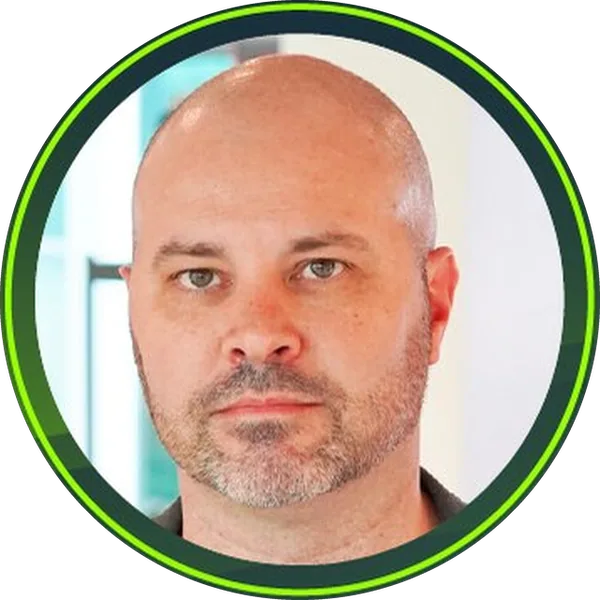
Chris Rhodes
Chris Rhodes from NEXT Insurance shares his expertise on creating innovative processes for an evolving insurance landscape. Learn tips and tricks on how to encourage forward-thinking approaches and identify opportunities for process improvement.
The full episode
Press play for the whole conversation.

Foward Thinking Innovation for Improvement
How can insurance professionals keep up with the changing industry and foster forward-thinking approaches?
In this episode, our guest, Chris Rhodes, Chief Insurance Officer at Next Insurance, dives deep into the world of innovation, sharing his expertise on how to drive process improvements and embrace innovation in the ever-changing insurance sphere.
Episode Highlights
James Benham, host of the InsurTechGeek Podcast, engages in a captivating conversation with Chris Rhodes, a prominent figure in the insurance industry. As the Chief Insurance Officer at Next Insurance, Chris brings a wealth of experience and insights to the table, shedding light on the intricacies of creating innovative processes for an evolving insurance landscape.
Key Takeaways
1. The Power of Forward-Thinking: Chris Rhodes emphasizes the importance of adopting forward-thinking mindsets within the insurance sector. He shares practical tips and tricks for cultivating an environment that encourages innovation, enabling insurance professionals to stay ahead of the curve.
2. Identifying Process Improvement Opportunities: Discover how Chris and his team at Next Insurance identify opportunities for process improvement. Chris delves into strategies and methodologies that can help insurance companies streamline their operations and enhance customer experiences.
3. Leveraging Technology: In an era dominated by technological advancements, Chris highlights the role of technology in driving innovation. He explores how leveraging technology can reshape insurance processes, enabling greater efficiency and effectiveness.
4. Embracing Change: Change is inevitable, especially in an industry as dynamic as insurance. Chris shares insights into embracing change, from adapting to new trends to navigating regulatory shifts, and explains how insurance professionals can thrive amid these transformations.
Unlock the Future of Insurance
If you're curious about the dynamic world of insurance innovation, Episode 117 of the InsurTechGeek Podcast is a must-listen. Remember, the future of insurance is shaped by those who dare to innovate.
Stay tuned for more captivating discussions, insights, and stories on the InsurTechGeek Podcast!
The full transcript
Transcribed automatically from the episode audio, so some names and terms may be misheard.
James BenhamOn this episode of the InsurTech Geek Podcast, talking about creating innovative processes for an evolving insurance landscape with Chris Rhodes from Next Insurance. The InsurTech Geek podcast powered by JBKnowledge is all about technology that's transforming and disrupting the insurance world. We'll be interviewing guests and doing deep dives into specific tech we see changing the industry. We're taking you on a journey through insurance tech, so enjoy the ride and geek out. And we are here with yet another lovely episode of the InsurTech Geek podcast. It's been a dynamic summer here in Texas.
And by dynamic, I mean, yeah, eight weeks over 100 degrees, hot, sweaty, humid. Interesting. I've been traveling a lot, seeing the world, visiting with my teammates in some other countries, and it's been a really good way to pass the summertime. My kids have been in camp for, geez, I think a month of the two months of summer, having a great time. And it's good. It's kind of wrapping up. You can feel football coming soon. Two a days are going on here in Texas for football practice.
We got SEC football coming up, which of course is, if you listen to the show, you know that's what I care about. We got some great college football coming up, the pro, the preseason games, you know, those meaningless throwaway games where the real players don't play. Those are coming up really soon. Fall is in the air, just not temperature wise. And with us today, I've got my illustrious guest from Providence, from Rhode Island, which is really cool, Chris Rhodes. Chris, good to have you on the show.
Likewise, James. Great to be here.
Chris RhodesSimilar to you, I've been traveling around the country and experiencing the different weather that we've been having going on. So I spent some time in Austin, Texas,
James Benhamvery much identified with the temperatures you were speaking about. Yeah, I went it's really been messing with me because I started the summer in Greece and Turkey and the Greek Islands. And then I went to Michigan for two weeks of cool 72 degree weather. And then I went to Argentina where it's wintertime for two weeks. And then I came back to Texas for two weeks, then went to Mexico City where it's like 72 and rainy, because it's, know, super high elevation. It's been bizarre. I don't know how to dress.
Have a bag of like, long sleeves, short sleeves, sweaters and swim trunks, just to try and pick a grab bag out of what's going to happen. But it's been, you know, dynamic travel season, but a good summer. I hope your summer's been great too. Do you like football?
Chris RhodesI do like football. I will say regionally where I'm located in Rhode Island, I don't have an SEC team of favorite, but very much respect the quality of football that is played in the SEC.
James BenhamWell, your team, the Patriots, so I'm assuming you're you're a Patriots guy. That's correct. You you can't be in Rhode Island and not be a pay a Pats guy. So they like to recruit from the SEC. They like to come down and get their prospects there. So that's pretty exciting.
Chris RhodesWithout a doubt, I think the pipeline of talent and the connectivity, particularly between Bill Belichick and Nick Saban and the University of Alabama has served the Patriots very well over time. Absolutely.
James BenhamIt has, and he's historically been a really good recruiter. Yeah, Yes. That's awesome. So you, let's talk about you. We're going talk about next. We're going talk about insurance. Chris, for your, for your edification, I mean, I've spent, twenty two years running this company. I started in my dorm room at Texas A and M. Got into insurance just three years later. 2004, got my first insurance client, started building software for them. They were on the personal lines property business. They were a vendor. And then I started working for integrating them with some really cool carriers like State Farm, Nationwide, USAA, and then kind of got into work comp in 2008, then got into other P and C commercial lines.
And, you know, it's been a really exciting ride for me in insurance to learn it through the lens of technology. I've gotten to work for carriers, TPAs, brokers, PBMs, you name it. I've worked all up and down the vertical. We've got about two eighty teammates in my company now, and we have product and services for insurance companies. So I kind of learned the insurance business through the software that runs it. You know, I didn't go work at an insurance company and then build this. I did this in my dorm room and kept doing it.
You have a background that we would love at a software company. Just by the way, educationally, math and computer science, a double major is like a dream from a programming perspective because mathematics is so critical to computer science. So you obviously had some inkling of this. Let's talk about you personally. I mean, when you were growing up, were you fascinated with technology and decided that you wanted to go into tech? So you majored in literally the two degrees that would make you most attractive in that field?
Or what was it that led you? What'd you want to do growing up as a kid in Rhode Island? Great question.
Chris RhodesAbsolutely growing up, I knew numbers was a strength of mine. I very much found mathematics interesting, the field of mathematics interesting. And I did some summer work for an engineering company, a civil engineering company, actually, and just found the application of math to the civil engineering business extremely interesting, really getting a chance to see tangible real world application of that. And going back to the 90s growing up, certainly what was happening with the evolution of the Internet was interesting to me, and I really had an affinity towards networking and understanding the connectivity of computers and how traffic was being routed.
So that interest in general is what led me to the double major of math and computer science when I went to college. I very much wanted to continue to pursue that more academic space of mathematics, but also college as an opportunity to learn more about how the Internet was growing, what types of jobs were out there. And I'll say learn a little bit more about coding as well. Java and C plus plus were a few of the programming languages that were the flavor of the day back then.
Yeah, I mean, same here. We went to college almost at exactly the same time.
James BenhamAnd I learned how to program in high school and then got to college and did two years of comp sci and actually switched into accounting because I was kind of burnt out on several years of coding by that point. And so I actually ended up with a degree in accounting, but all with the intention of going into technology and business. It was like, just wanted to understand how the businesses worked first. So out of college, you actually got a job pretty much immediately in insurance. You had various P and C roles at MetLife and, and you worked at MetLife for nineteen years?
I mean, you, at least that's what I read. I mean, this, that, that's, that's an incredible amount of dedication and extremely rare for Gen Xers like us to jump in and, and, you know, of course, I, I stuck with my company for that long. You, you stuck with MetLife for that long. What, what, what happened there? Did you intern with them and just fell in love with it? Or what was the story? That's correct. I really found MetLife or MetLife found me a little bit by chance.
Chris RhodesSo I referenced earlier that I had been working for an engineering company, as I was pursuing my degrees in college. And towards the end of that work, we were reconstructing a house for a family in Rhode Island. And the family was originally from Greater Chicago area. And the husband was a former member of the insurance community, an actuary, actually. And as we were redesigning the house, the the client was really pushing me towards, you should look into the actuarial field. He said it's highly aligned with math, highly aligned with engineering type of mindset and skill set, and, provides a lot of good value really to the broader financial ecosystem.
He'd be a very rewarding career. And I logged in my mind, I nodded along. And as coincidence would have it, about a week later, MetLife reached out to me. They they found me in the recruiting process and made a pitch to join their actuarial science rotation program. And this topic of being an actuary come up, I'll say towards the end of my college career. I had the conversation with the client for the engineering firm I was working with about becoming an actuary, And the stars just seemed to align that MetLife was reaching out right at the same time and promoting joining their actuarial program.
And really went on a journey with them, as you mentioned, over the next nineteen years of joining that actuarial program, spending a lot of different time really understanding the financial mathematics of an insurance company, really how they manage risk, a lot of different dimensions of how they manage that risk, from pricing to underwriting to product and coverage design, catastrophe risk management, reinsurance. I really found the world fascinating when I joined. And between, I'll say, the endless amount of analytics that you can pursue in the insurance space, coupled with just working for a great company that always afforded different opportunities.
Over the course of nineteen years, I worked a lot of different roles and served a lot of different functions
James Benhamat MetLife and really never found any reason to leave as a result. That's awesome. That's one way of putting it. Never found a reason to leave. Yeah. Yeah, when you can grow and move and change and develop at a single company, that's, that's great. I mean, you can, you can explore all the different things it has to offer. Then you actually briefly went over to head of product at Farmers Workplace Solutions at Farmers Insurance before coming to NeXT. So what was it about NeXT? It looks like you've been there for a year, year and a half.
You're their first CIO. What was it about NeXT that, and Chief Insurance Officer, since it's a technology podcast, I do have to clarify, it's not Chief information officer, chief insurance officer. What was it about NeXT that attracted you to come over? Great question.
Chris RhodesAs I worked in the insurance industry, I noticed some things that I really gravitated towards, and that's centered around solving customer problems. So the first few years in insurance, as I alluded to earlier, I found it fascinating to understand the financial mathematics of the industry and all the different dimensions of risk. And after you spend a lot of time really getting grounded in the risk analytics, I think it's a natural evolution to start better understanding customer processes. So as I worked more closely with distribution leaders, understanding how coverage is sold and provided to different clients, as I started working with claims leaders to really understand the experience of dealing with customers and claimants.
And really when they're having their worst day, you start to become much more interested in the idea of how can I take this financial foundation that I've built over time and really try to help improve the insurance ecosystem? And that really means identifying where customers are having problems obtaining coverage, where customers are having problems finding the right level of coverage, and how do you think about designing experiences and products that make things simple for customers and make the products affordable to really match their needs. So after spending close to twenty years on the personal lines side of the business and watching the evolution of auto insurance products, personal homeowners insurance products, and serving the broader P and C landscape in general, I realized two things.
I very much wanted to find a place that I could continue to support my own personal evolution in understanding how to use data analytics technology to better improve the customer experience. And I wanted to work in an area of insurance that was really fragmented and had some of the biggest opportunities to evolve and really help customers. And Next Insurance absolutely met both dimensions of these. Next was born in what I would call the data and analytics era of insurance, really in that period of the 2010s, where third party data, external data started to become a lot more widely available, in addition to the processing power of machines to be able to ingest that data and really accelerate the pace that companies are able to design solutions.
And next, the DNA of the company is focused on doing that. And then also when you think about, I'd say the different types of insurance, the different insurance marketplaces, so to speak, across PNC. NeXT was very focused on small business, even micro business. Companies that are typically less than $2,000,000 a year in revenue, typically 20 employees or less, right? For a $2,000,000 business, that could be a few construction employees, or it could be up to 20 employees at a restaurant. And that world of insurance in the small business and micro business space is still very complex and burdensome on business owners and entrepreneurs.
You think about the number of different activities that a small business could engage in. It really creates a much more diverse set of risks. And that's reflected in the quoting and underwriting process of small business today. It's often very challenging. It puts a lot of burden on small business owners to know a lot about their business and answer a lot of detailed questions in a lengthy underwriting process.
James BenhamA lot of things they don't understand too. Like, that's the you're you're asking people to dive into a topic they don't understand well. And a lot of brokers don't want to spend a lot of time on small BOBs, right? Like it's just, it's challenging for them to make money when the commission's that small, right? So you have a
Chris Rhodesbig challenge there too, right? You've nailed two dimensions of this problem that are widespread across the industry. So next, I'll say in their approach to the small market business insurance is really trying to solve those. They're recognizing that the underwriting process is onerous. They're recognizing brokers and agents don't see good return on the time that they need to spend to be able to play small businesses. And if you put the customer in this market at the center of the conversation and say, how do we make things simple?
How do we make things affordable? That really lends itself to strong data and analytics and efficiency to be able to solve those problems. And I thought between the customer problem and my background and focus on mathematics and insurance financials, it would be a great fit. Yeah. So
James Benhamlet's you and I just have some honest talk about what really holds up being able to provide the highest level of services for small businesses. And it's typically, this is something that's harder to gather all the information you need to provide a quote, to do all the underwriting you need to do at the premium size that you have to deliver it for it to make sense financially, right? Spot on. And you're offering GL comp, a BOP, professional liability, plus some other coverages, to, to small businesses.
This and look, this can be really, really challenging. I've been a small business owner for twenty, twenty plus years. And, you know, I've, as I've gotten larger and went to multinational operations, I had to move up into a broker and really start doing some more complex, complex things. For a long time, I was in this boat. And it's, it's hard as a business owner to know what you should get and shouldn't get, to know what the exclusions are and aren't, you know, what's covered and what's not.
A lot of people had a very rude awakening on their insurance during COVID because they had to shut things down. They had no coverage even though they thought they did. You know, there were exclusions they didn't understand. So let's talk about this. I mean, first, going direct versus going through broker channels. What are your thoughts on this? I mean, brokers typically explain all this to people. Are you direct only, broker only, a hybrid? Like what's your distribution model?
Chris RhodesIs going through three main distribution channels. Next started at its core as being a direct writer and going through the direct distribution. Over time, it's developed partnerships and finding other companies that are engaging with small business, either to help them manage their books, help them set up legal documents, things like that. And we provide insurance at, I'll say, point of interaction with those other companies that help small businesses. And we also go through the agent and broker channels as well. Our mission really is to say, be where small business owners are going to look for insurance and make sure that we're in that conversation.
And right now, small business owners are going to all of these different sources to try to find the appropriate insurance coverage. I think your question gets at something very interesting. There's no question that brokers and agents provide tremendous value to customers, particularly around the consultation of coverage. And as you mentioned, as businesses get more complex, the value and the need for that consultation increases. There's also plenty of businesses that find value in the affordability of going through direct channel, particularly when they have simpler operations, when they're focused on more one type of activity and they believe they've got the confidence or just need a little bit of help from an insurance carrier understanding if they've got the right coverage.
So we do approach the different channels slightly differently when we think about how we're providing coverage and the level of consultation that's needed. And in a direct channel, we are definitely focused on understanding the business and using data and analytics to really understand the nature of that business and the activities that they perform so that we can help shift the conversation about purchasing insurance less from an interrogation into the business and more into an automated process of collecting the data we need to understand the business and then looking for the small business owner to validate the information that we've collected to ensure we've properly identified the activities.
And if we do that, we're able to very successfully tailor the coverage package, whether they need a business owner's policy or whether they only need general liability or professional liability coverage. We can successfully tailor those coverages and provide a holistic service
James Benhamback to the customer. So let's talk about some specific examples. Now you're leveraging technology to help you do all this, right? Absolutely. So before we talk about the tech that you're leveraging, do you like things like a pizza franchise? Do you like franchises in general because of the, the repeatable, predictable nature of franchise operator to franchise operator? If you 3,000 franchises of the same franchise, are you going to be comfortable writing a lot of those businesses because of how uniform each of those small businesses is and the size of them?
I think the concept
Chris Rhodesof the franchises fits well for insurance and is very scalable. I would say the evolution that NeXT is at right now, we don't have a lot of large scale relationships with franchises because it starts to quickly, I'll say, get outside of the risk appetite that we really started ourselves with. Our risk profile and our customer base looks much more like independent, I'll say, singular shops, or I'll say businesses that are more virtual in nature with respect to the services they provide. Think some sort of consulting business where employees could be located in different locations, but not necessarily operations being there.
That's more of the risk profile that we started with as a business. We certainly see down the road being able to, I'll say, expand into larger businesses exactly like you're speaking about, which is understanding the core of an individual business, the core risk of an individual business, and seeing the scalability of that in a franchise model. Yeah.
James BenhamIf you're in the virtual, virtual delivery consulting, intellectual property delivery, small businesses, cyber is one of the most important coverages that we have. Right. And technically a combo cyber, you know, policy is probably one of the most important coverages because that's what everybody, all of our clients pay attention to in the virtual and IP space. So I didn't see that on the site. I mean, are you actually offering a cyber combo? Are you staying away from cyber because of the complexity and the dynamics of the premium right now?
We're staying away from the complexity
Chris Rhodesthat you're speaking to, particularly, I would identify around the risk of businesses exposing customers' personally identifiable information through some sort of hack. The frequency of these types of events, I would say, is known that it happens and it's a major risk, But we're not at the size of a business yet that can really step into that space. And properly, I'll say, assess the risk and cover businesses that are exposed to losing that personally identifiable information. We do have insurance solutions, I'll say, for the more simple side of the cyber equation, which is if your business is disrupted, your systems are disrupted for a period of time due to some sort of software issue or some sort of hack that doesn't necessarily expose customer data and it's more of a business interruption type of issue, that's more where NeXT has great coverage for more simple types of business applications.
Okay, fair enough.
James BenhamSo let's talk about the technologies that deliver this. If you're in the, you know, the smaller premium, small business, you've got to be able to quote, bind, you know, quote, underwrite, bind, bill pretty efficiently, or you're going to have a hard time with your overhead, right? Like you've got to be able to get the policies written pretty efficiently. What do you think has been your approach on technology and what's really been the key differentiator? Are you building a lot of your own tech? Are you licensing off the shelf tech and then wrapping it in custom front end experiences?
Like what are you doing differently that you think sets you apart from all your competitors? Definitely,
Chris Rhodesnumber one differentiator for NeXT is having a completely proprietary full tech platform, full tech stack platform, that's been built internally. So Next is not relying on third parties, outside vendors to build its tech stack. And what this has enabled is a design of microservices that can interact, I'll say very frequently, and create a lot more points of dynamic decision making as the quoting and underwriting process is taking place. And really what that means in simple terms is if we see a business that is, I'll say, more homogeneous and simplistic with respect to its risk, and we're able to easily identify the coverage needs for that business, we create a fast track and get to that quote and coverage offer as fast and as simple as possible.
If we see complexity in the business and the business has more complex insurance needs, we're gonna take our time in the quote and underwriting process and really make sure that the questions that we're asking from a business owner are really not only to help assess risk, but it's consultative and coverage that the business is going to need. I would say another key point of our overall technology is the ability to iterate that customer experience quickly. So we very much have a method of quick test and learn with respect to the questions that we ask and carefully monitoring the time it takes for customers to work through quote and how accurate are the information that we're getting.
So if we see that we're asking a question in a way that is causing confusion, it's taking too long for customers on average to answer the question, or we don't believe we're getting good answers, we're going to quickly iterate and change that as we're tracking each component of our process as somebody moves through the questionnaire funnel. Then finally, I would say the reliance upon a broader network of third party and publicly accessible information to really reduce the burden on the customer to ask questions. As businesses evolve more and more, you're just seeing every day a larger and larger footprint online of businesses that explain their hours of operations, what it is that they're selling and what services that they provide.
And we absolutely use that information to eliminate questions and get to the point where we can make a recommendation for coverage and have the customer validate the information that we collect in a faster, easier way to simplify the process overall. Okay, fair enough. So let's go back,
James Benhamyou're talking about building your full tech stack. So your policy and claim system is in house?
Chris RhodesCorrect.
James BenhamSo how has that been for you as the Chief Insurance Officer? I mean, that's a little bit of a different ballgame, right? You're the primary customer for them? Without a doubt.
Chris RhodesI would say a lot of the work that traditional large carriers are doing, which is bringing your core insurance functions of insurance product claims service to a technology team and assessing what are the business needs, how can we help and improve the overall customer experience, how can we ensure we're collecting the appropriate attributes, whether they're operational based or risk based, so that we've got the data and the understanding to know if our products and processes are working well. We're still having all of those traditional conversations.
I think the advantage I see of having a proprietary built platform is there's no intermediaries between the teams that are focusing on being business facing and delivering, I'll say, the product solutions and the financials that a company needs to remain healthy. There's no intermediary between those teams and the engineers that are actually building and designing the platform. A core part of what gives NeXT an advantage is bringing those two teams directly together, having very focused conversations on what is the business or the customer problem, and sort of very much blurring the lines between a business requirement and a technical requirement and bringing those into one discussion to really make sure the engineers understand the problem and can be consultative and iterative with the business teams on designing the most effective solution.
Well, look, I can tell you, having been involved in a lot of ground up policy and claims projects, because we're a we have
James Benhamtwo different sides, right? We've got a company that does outsource software development for people that have in house proprietary systems. Then we have our own off the shelf product called Terra that does policy really comp GL property auto is our first lines on that product for policy and claims. Custom development's amazing. I mean, it can be really amazing because you can, you know, there's so much of off the shelf products that has to be built for the general market that doesn't apply it has to work for the general market.
So you can really tailor the application specifically down to your risk appetite and the type of customer you're pursuing, and you can tailor the user experience. But it's a very expensive process to build your own stuff. And so, I mean, it's, it ain't cheap. And, and so there's a, you know, there's always a positive and a negative. But the end of the day, I've talked to a lot of companies who say they're Insurtechs, but they license all off the shelf product. And they say, well, you're licensing the same product that everybody else licenses.
Your user interfaces don't look that different. How are you an Insurtech rather than just a startup insurance company? And that's always the, we've talked about that a lot on this show, probably because the name of the show too is InsurTech Geek. So we talk about the meaning of InsurTech. What does that really mean? How do you define it? And it's kind of hard. We've talked about, you know, leveraging the use of new technology to dramatically change the customer experience and the experience for the underwriter and the claims handler so that we can have a far more profitable operation, but also a better cost and better speed operation for the claimant and the policyholder, right?
So there's kind of you're trying to push on both things at the same time, leveraging technology. But when you have your own, when you own your own tech stack, for good or for better or for worse, you do have the ability to fully control. Do you what's next for next in that area? Pun intended. What's, you know, what's next for y'all? Where, are you starting to leverage forms of artificial intelligence to read, let's say, it a lot easier for the owner to quote with you or to read and parse free text on application documents, or if you're covering property to leverage heavily satellite imagery and then use forms of AI to actually interpret the images to maybe help people do their own underwriting inspection or do their own claims handling with their own app.
Like what are you doing that you think will really set you apart going forward? I think
Chris Rhodesthe nature of the question, it almost feels like you're in my head a little bit in terms of the space and the direction that we're heading as a company. So I'll hit on each of those a little bit. I think you're spot on here. Getting back to the idea of when you design your own platform and you think about, I'll say the advantages of using a third party platform versus designing your own and the trade offs, Very much the advantage we get of designing our own platform is the tailoring of everything that we do to small business to really make sure we're collecting the data points, the structured data points in a way that really help us design simple, affordable products for our customers.
And the speed at which we're able to iterate and change is critical. Any slowdown in the process of identifying the need to collect new information, redesign a coverage, find a new data point that can be incorporated into pricing or underwriting is lost opportunity in the market space. So we very much focus on the speed to be able to do that. And you brought up some interesting dimensions of risk that the insurance industry in general is looking at. I'll speak to them. So we'll start with the idea of aerial imagery.
Without question, the advances in this space over the past five or so years have been dramatic, both in the accessibility and the granularity of images that are available and the structured data attributes that are being extracted through computer vision models to get reliable data points on buildings that properly segment risk and also are usable in pricing and underwriting and coverage design decisions. So I would just say that NEXT is a company that is taking advantage of that technology and without question continuing to pursue, I'll say, appropriately designed products that solve customer problems.
Hail in Texas is a big problem. I'm sure you're aware of that, right? The complexity of a roof and knowing the number of squares, the slope of the roof, whether or not there's skylights on that roof, how many feet off the ground does the roof sit, are all things that are going to matter, not if the hail comes, but when the hail comes. It's going to affect payout. And I think not only is it an opportunity, I think you have a responsibility as an insurance carrier to accept and adopt and incorporate technologies like this into your insurance product design because it creates the right incentives that ultimately make sure the insurance ecosystem is going to be stable and sustainable over the long term.
We don't do anybody a favor by underpricing very complex roofs simply because there was a broad proxy on what the value of the entire building would be if it was damaged in a total loss. You need to know those granular elements of the roof to be able to solve this hail problem and say, if you have a really complex building with a complex roof, it needs to be priced and underwritten appropriately so that, I'll say, construction design that affords more simple, more sustainable materials on the roof is given the benefit and the affordability of the coverage is encouraging the marketplace to move in that direction.
I'll hit on another important dimension, I think you brought up in your questioning, and that's extracting data out of free form text and speech. Right. The more that we can, I'll say, take advantage of the natural way that customers and carriers communicate with each other. So this is things like you see consistent, repeatable types of questions asked from agents or customers out of a service department. You see consistent types of conversations happening from claimants or attorneys with the claims department to understand what was an event that occurred and what were the property damage or the injuries that occurred as a result of this event.
We absolutely see the opportunity, and I'll say, are acting in a way to ensure that we're getting structured data out of those conversations that can help accelerate and create efficiencies in our processes. So these are not things that necessarily are automated and turned back around in providing responses to customers or claimants in a way that we're not touching. These are really about providing tools to our customer service reps, to our claim advocates in a way that they can focus on having the right conversation, asking the right questions from our partners and from our customers.
And then in the background, we are automating the collection of the information that we really need to build the strong databases that allow better decisions. And whether that's operational routing within claims, whether it's identification of actions that we need to take to improve products, to reduce questions about gaps in coverage or the right ways to fill out a policy application. It's simply creating efficient processes to inform getting to the right decision for the business. Awesome.
James BenhamYeah. And that's going to lead to, you know, a bright future for your customers and for you. I mean, you know, it's been a really crazy market for the small commercial market. There's been a lot of change. And obviously, we've seen a lot of carriers having to take rate. And it's been tough for small business. And you've got to have insurance companies pursuing, in my opinion, a different way of approaching the market to try and, you know, produce, in my opinion, stability and predictability, right? It's been tough.
I think it's tough for business owners. I know, like, a cyber perspective, my cyber premiums tripled in one year. That's a very challenging thing to do to business owners because it's a very unpredictable cost. And so I'm excited for what y'all are working on and the approach you're taking. And certainly, as a full stack developer, I'm excited that you're building all of your own tech because it means that you're really taking charge of your destiny and you're really a true InsurTech because you're building a completely new platform ground up.
And then, you know, obviously wrapping insurance around your own tech stack, and that allows you to make changes that others are going to have a really hard time doing with traditional technology on the ground. One of the first things, and you know, my very first insurance gig in 2004 was with a property inspection company for underwriting inspections. And so that's something that I said, man, when Google Earth came out a long time ago, I'm like, Oh my gosh, this is going to completely disrupt these inspections.
We're not going to need to do nearly as many inspections because we're going have great satellites. Then, you know, the beginning of drones is around, like, we're going have great drones and great satellites, and everything's going to change inspections. That's just the tip of the iceberg, right? The amount of public data available on businesses, individuals, properties and automobiles is radically
Chris Rhodesdifferent than when you and I got into this industry twenty years ago. Agreed, Guy. There's two, I'd say, pressures that we put on ourselves at NEXT, it's purposeful for benefit, right? We want to own and have that entire tech stack be proprietary to preserve the speed to market of our changes, right? It's the fastest way we can iterate is if we have complete ownership over the tech stack. The second is we're going to be 100% digital with respect to automating our underwriting process. We're not going to put humans into the process that create a more burdensome approach for customers to be able to quote and bind coverage.
And really what's implied there is we have to be diligent about adopting data and analytics techniques that are gonna streamline and automate the processes. So exactly like you're saying, it's not efficient for a company to rely upon manual property inspections to verify what it is that they're insuring. If you are going to be 100% digital automated underwriter, you have no choice but to be on the forefront of identifying technologies that can be applied to traditional insurance processes that aren't going to sacrifice your assessment of risk and risk stability of the pricing and coverage you're going to provide over the long term.
You really have to get down to those core questions of what's the information that we need to provide the right solutions for our customers and rigorously pursue adopting it as fast as you can through your proprietary platform. Yeah, stability.
James BenhamStability while innovating, right? You can't innovate and be so bleeding edge that you deliver an unstable experience from an insurance or technology perspective. One of my clients' core values is stability, and I didn't appreciate it enough until I saw so many insurance companies going out of business in Florida on property claims. And, you know, seeing the challenges when companies don't make that a core pillar is stability. And so I think that's one of the challenges that we have is balancing innovation and stability, and balancing new technology with the ability to deliver a consistent process.
And so there's always that tug of war that we have to have. But in insurance, our policy holders value stability. They really do. They want stability in premiums. They want stability in the claims process. They want you to be around when bad things happen. They certainly don't like hearing about bankruptcies or deratings. And so they're, you know, we always have that, you know, the rate, the looming rating agency looking over our shoulder all the time saying, Are you really going to make it? You know, and so that's the most important thing.
We've seen a challenge in that in the InsurTech space with some, you know, pure play InsurTech carriers with awful financials, I mean, loss ratios. And I just don't think that they're going to be allowed to get away with that going forward. And so we've got to pay attention to it. Well, you for your time. We are at our time. Where can people go to find out more information about Next Insurance?
Chris RhodesNext Insurance, so we have a strong digital presence. So I encourage people to search us out. You'll find our site easily. You can be able to navigate, I'll say, all the different coverage and products that we offer. And we're also out there, I'll say, doing a fair amount of direct advertising. As So you see us pop up across, I'll say, different agent and broker marketplaces along with different common direct media channels, please recognize what it is we're trying to do. It's make simple, affordable coverage for small businesses and any way that you can refer people to us and support us.
We're here to help. Yeah. The website again is nextinsurance.com.
James BenhamYou can go check it out there. And I've been through the quoting process. I did it before our discussion today and it was impressive. It was easy. It was good to see that happening. And I like what you guys are building and really, really neat. So, Chris, thank you so much for being on show today. And thanks to all of our listeners out there for listening. It was a pleasure, James. Thank you so much. Thanks. And we'll see you next time. Thanks for tuning in today to geek out our interview with Chris Rhodes from Next Insurance.
See you on the next episode. The InsurTech Geek podcast powered by Jimmy Knowledge, jimmyknowledge It's all about technology that's transforming and disrupting the insurance world. I've been your host, James Benham. That's jamesbenham.com with co host Rob Galbraith at endofinsurance.com. And thank you for joining us today. Look forward to talking with you soon. We're taking you on a journey through insurance tech, so enjoy the ride and geek out.