 YouTube
 Spotify
 Amazon
 iHeart
 Apple
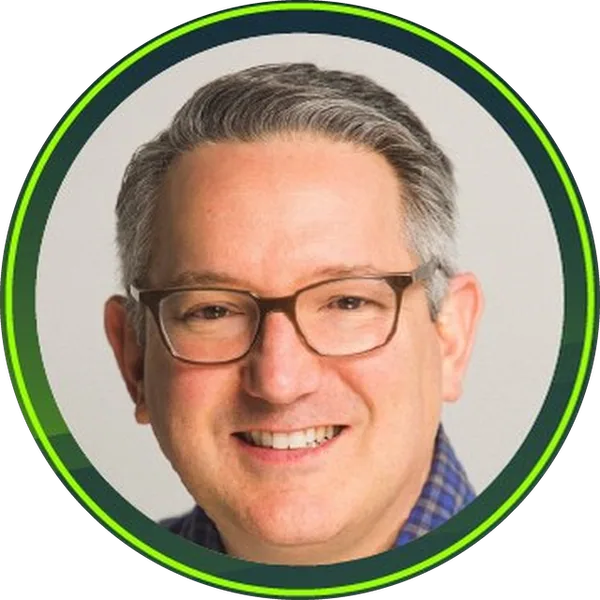
Jake Tamarkin
Jake Tamarkin from Everyday Life Insurance shares his expertise and insights about the role of technology in redefining insurance access. Learn tips and tricks on how to leverage technology to meet diverse customer needs.
The full episode
Press play for the whole conversation.

Technology redefining Insurance
Welcome to another episode of the InsurTechGeek Podcast! Prepare to embark on an exciting journey deep into the heart of InsurTech.
In this exciting episode of the InsurTechGeek Podcast, our hosts James Benham and Rob Galbraith interview Jake Tamarkin, the Co-Founder & Chief Executive Officer at Everyday Life Insurance.
Join us to learn how dynamic strategies will shape the future of insurance.
Navigating New Challenges
Two words will describe the future of insurance: resilience and agility. The insurance industry is no longer bound by traditional boundaries. Instead, it's evolving into a digital ecosystem where connectivity, data, and customer engagement are paramount.
One of the key takeaways from this episode is the discussion around leveraging technology to create a more inclusive insurance experience. Tamarkin emphasizes how Everyday Life Insurance integrates technological advancements to make products and services available to a wider audience. He sheds light on the profound impact that digital tools, data analytics, and streamlined processes can have on transforming insurance access.
Tips and Tricks for Industry Players
Are you seeking for actionable insights? So, you won't be disappointed! Tamarkin shares practical tips and tricks for insurance professionals and companies aiming to harness technology to expand their reach.
His insights offer guidance on adapting to evolving customer expectations and utilizing technology to provide tailored solutions.
"It's not just about adapting to change, but about driving change."
Join the conversation
Tune in to Episode 118 to discover how to build strategies that not only weather the storms of change but harness them to drive unprecedented success.
Now it is your turn. We would like to know: How do you envision the future of insurance? What strategies resonate with you the most? Your voice matters in shaping the ongoing conversation about the intersection of technology and insurance.
Thank you for joining us on another insightful episode of the InsurTechGeek Podcast. Here's to embracing innovation, fostering resilience, and building a future-ready insurance industry together. Stay tuned for more.
The full transcript
Transcribed automatically from the episode audio, so some names and terms may be misheard.
James BenhamOn this episode of the InsurTech Geek podcast, talking about the role of technology and redefining insurance access with Jake Tamarkin from Everyday Life Insurance. The InsurTech Geek podcast powered by JBKnowledge is all about technology that's transforming and disrupting the insurance world. We'll be interviewing guests and doing deep dives into specific tech we see changing the industry. We're taking you on a journey through insurance tech, so enjoy the ride and geek out. And we are back with another episode. How's my brother Rob doing?
Rob GalbraithGood, James, man. How are you doing?
James BenhamMan, bacon 109. No rain. You guys got rain in San Antonio. We didn't get anything. Everything's dead. It's all brown. We live in Arizona. It's a desert and it's 190. I can't figure this out. I know it's like some Saharan dust, you know, heat dome over the Gulf that's doing this. But dang, buddy, it is hot.
Rob GalbraithIt is hot. Yeah, still we were told it was to cool off after a rainstorm and thankfully the long got a good soak and I actually got to go out and mow it this afternoon. But, yeah, we're still back in the we're in the low hundreds. So I guess it cooled off slightly.
James BenhamI don't know, man. It's just bacon, bacon outside. Maybe it's a little better up where Jake is. Jake, how are you doing? Welcome to the show.
Jake TamarkinThanks, James. I'm I'm doing great. Thank you. Yeah, I'm up here in the Boston area. It's definitely cooler, but and wetter. I would actually trade some of our water for your temperature. I'd make that trade having endured two floods into my basement in the last ten days. Wow. That's
James Benhama lot.
Jake TamarkinI know. Been here six years and
James Benhamhadn't had any trouble until just the last couple of weeks. Been wild. That's a lot, man. Well, sorry to hear that. I know floods aren't fun. Hopefully, you've got a good residential insurance carrier who's going to take care of that for you. Yeah, well, I'm going to go back and
Jake Tamarkincheck on your podcast episodes that specialize in flood so I can.
James BenhamExactly. So we're going to we're going to be we're going be talking life insurance, though, today, not not flood insurance, right? Yeah. Yep. We're going talk about the morbid business of betting on people's death. Sorry. Did I say that?
Jake TamarkinThat's exactly right. Yeah.
James BenhamThat's okay. We're going to have a good conversation. So let's start rather than just talking about everyday life insurance. Let's start by talking about you. Jake, you are in the Greater Boston area, but you went to Indiana for your MBA. Where'd you go to undergrad?
Jake TamarkinActually, also in the Boston area, Berkeley College of Music, a very popular launchpad for financial services careers.
James BenhamAbsolutely. Yeah, it's I mean, it's a total connection. Yeah, total connection.
Jake TamarkinYeah. My
James Benhamdaughter, my 16 year old daughter is about to check-in for her first day of boarding school at Interlochen. Oh, wow. Which is a major feeder to Berkeley and yeah, and a bunch of other places. So I'm I'm really excited about that.
Jake TamarkinThat is that is that's that's a huge accomplishment already. Yeah, she's she's pretty fired up.
James BenhamSo I'm I love music. Let's just talk about music for a second. Tell me what you went to Berkeley to study.
Jake TamarkinIt was a paradoxical major jazz composition, which is I say it's a paradox because or a contradiction because jazz is improvised music. So the idea of composing it is a little bizarre, but it's just composed on the fly. So, you know, I love jazz music. I love all kinds of music, truly. But jazz is particularly interesting to me. And yeah, and it was an amazing experience to go there and learn with among some greats.
James BenhamBerkeley is, you know, Berkeley is Berkeley is an amazing place to go and learn about music. I wish I could have had the opportunity. My career goal when I was 15, 16 was to be a piano player, professional piano player. I was a competitive classical pianist from age 18, eight to 18 and loved it. Sang in choir from age eight to 18, did acapella and all kinds of fun things. And then I just found out how much musicians made and I had a hard pivot into technology.
So I'd also been writing code since I was 11. So coding and music to me were the same thing. Like, know, sheet music to me is the world's first programming language. And so I just, you know, looking at sheet music and looking at a set of, you know, of course, this is back in the early 90s, at Pascal code or Fortran or Assembly or C, it was kind of all the same thing to me. It was just programming. And, you know, of course, there's art in both as well.
You know, there's creativity and coding, creativity and music. So that's great. Jazz eludes me. Jake, I will say this, like, I did classical. Now I do pop. Learned I picked up guitar three years ago. And so I do our piano and I sing still. And I perform some and I do dancing, some dance. Jazz completely eludes me. So did you ever become like a jazz professional? Or did you go get paid? Yeah.
Jake TamarkinYeah. But I think the fact that I'm coming to you here today as an insurance executive could tell you a lot about how much money I made as a professional jazz musician. It was a great experience, though. I found I love playing music, and I think there are more parallels between the music world and the business world than that might appear on the surface. I also think that music really helped me train my brain as a teenager. It was very helpful for me in many, many ways.
But, you know, one thing that I apply all the time is as is the power of listening. You know, as a musician to play in a group, you know, from the outside looking in, you might think that the most important thing is to be a good player. But really, the most important thing is to be able to listen to what's going on around you and make sure what you're playing fits into that, you know, whether you're a part of a jazz combo or an orchestra. And as someone trying to innovate, you know, a lot of that is about, in our case, we're trying to serve people who we felt weren't well served.
And so it's all about listening to them and understanding
James Benhamfrom their perspective what's going on. Yeah, it's a it's a really interesting parallel. I I was playing I was jamming at a jam session this past weekend with a friend who's a pro drummer. And so I was playing guitar and singing and he was drumming and it took us just a few seconds, maybe five, ten seconds of that first song to get in sync, look at each other, to look at body language because, you know, it's all that queuing, right? Like Yeah. When are you gonna stop?
When are you gonna continue? How are you gonna slow down? And what's the drummer doing? And how's your I mean, it's it was just so cool because, like, it took us a few seconds. We synced up and then it was like it was magic, man. And I I play with another guitar player in the summer. I play in a farmer's market on Saturdays and Wednesdays. Oh, wow. And so this other guitar player, he and I will practice and it just takes a few seconds. Sync up and then he takes highs, I take lows or vice versa.
I mean, it's very similar if you have a really good business team and a really good technology innovation team. That same kind of that's why I like working with people physically, not just remotely because I think that sync ups a little harder virtually. Definitely. That's really cool. So you actually landed as a team leader and retirement planning consultant at MetLife. You were there for five years and then went to being in Womelon, where you worked as a treasury, transition services, merger and integration, obviously integrating acquisitions for the And then you became, you know, you went to the death star of seven years as a consultant with Then you jump into Forrester's Financial.
I mean, you have a long, really storied career in financial services and then in consulting for financial services, advisory services. I mean, you've really done you've done your time in financial services to a level that you have a great deal of understanding. But I don't see any stops per se in life insurance. So, walk me through how what was what was the the steps that took you through a lot of financial services and transaction advisory services and strategy and innovation at Forrester's Financial into the last four years for almost five years of everyday
Jake Tamarkinlife insurance? Yeah. Okay, good question. I you're right that a lot of my career was I would say a lot of it was until I was kind of adjacent to life insurance, but not necessarily directly in it. Like MetLife is obviously a big life insurer, but I was there in their retirement plan business. And then I went over to BNY Mellon, where our clients were insurance companies and pension funds and banks and other financial institutions. So I started getting a little bit of an appreciation for what it is to operate an insurance company when I was at BNY Mellon and they were my clients.
But then when I moved over to Transaction Advisory Services is kind of a fancy way of talking about M and A consulting, basically. And so what I focused on financial services, but there started a lot of the action was happening in insurance at the time. So I started concentrating more there. And over those seven years, I really got to understand the life insurance industry better. And so then when I decided that I wanted to do something, you know, the thing about being a consultant is there's a lot of great upsides.
But one of the things that ultimately proved frustrating for me is that you can't really own things for very long. Know, no, you're a you're a ship passing in the night, man. Yeah, right. So I got to work on some big things that were in the newspaper or whatever, and that's really cool. But I wanted to have a more substantial impact and on what I was working on and on the world in general. And I felt like at at the risk of I love I still have a lot of friends there and I still work with them.
So I hope this is received with the love with which it's intended. But a lot of work is essentially about helping Fortune 100 companies become Fortune 50 companies. And that's really great and very rewarding for a lot of people. But for me, what really like energized me, what I decided was really more at the other end of the economic spectrum and how these companies, including many of my clients, were using technology to expand the market and reach consumers who couldn't be and clients who couldn't be reached before.
So that's actually why when I left and joined Forster's Financial, that was a motivation there. Forster's actually at the time they joined them, life insurance was a big part of their business and they did asset management too and some other things. But what got me excited there was there were what what's known as a fraternal benefit society, which is basically a nonprofit mission driven company serving its members who have some common bond beyond just being a customer. Being a customer, yeah. Yeah. I loved that missionary.
I loved working for a company on a mission that was more than just the mission of printing more money. And I had a great experience there, but what I ultimately determined was that I loved the mission, but for me to really have the impact that I wanted, I would need to do it on my own. So it was still life insurance and it was still kind of mission driven. But, you know, working in a big organization with a lot of incumbent stakeholders and relationships, it's a little hard to move your agenda.
Right. But I just I it was actually during my experience there that I trying to buy life insurance for myself that I uncovered or discovered for myself how difficult it is and some of the factors that prevent consumers from getting coverage and why there's a large and growing coverage gap in The U. S. So I got excited about the idea of pursuing that, but from my own perch.
James BenhamIt makes sense. So tell us about everyday life. Like, tell us about the company. Yeah, yeah.
Jake TamarkinWell, so once I had that realization and left Forresters, I you know, I had moved to the Boston area, which has an amazing startup community. But, you know, as you mentioned, storied financial services and insurance career, but not a lot of startups in my background. So I immediately started networking into the startup community and seeking advice about what to do. This is 2018. And almost universally, I was told you need to you're a business guy for you to be taken seriously in the startup world. You need a technical co founder, a co founder with you who has a technical background and can write code.
And so to take your crazy ideas and make them real. So I immediately focused on that, developed a bunch of relationships, struck up a great friendship with an amazing technologist and entrepreneur who was in the middle of actually, she had gone back to MIT to get her MBA at the time. Her name is Dipali Trivedi, and she had a long background in from a technical perspective, solving similar challenges and as an entrepreneur, too. So there was a very complementary skill set there. And so we immediately started working on sketching out concepts and haven't looked back.
James BenhamThat's amazing. And what makes everyday life different? Like, what's the thesis around? Yeah.
Jake TamarkinWell, the way we describe it is that we're building the premier life insurance platform for everyday people. And if I can break that down for a second, I think to understand our the value that we create uniquely for our customers, it's helpful to understand what's going on in the life insurance industry today. So if you'll give me a second to if you'll allow me to give you a little context on what we saw and and how we what our thesis is that we developed and how we're acting on it.
What we saw was that if you look at like the ten years prior to the pandemic, the insurance life insurance industry grew the number of agents that were selling their products from like 900,000 to 1,200,000. It's like a grew by a third. Or it's actually even more than that, but grow by over a third. And the amount of income, premium income they were generating grew even like 40%, grew even more. So agents are getting more efficient. But at the same time, LIMRA did this amazing study that showed how households earning less than $100,000 were reducing their coverage, were less likely to be covered by life insurance than their parents were.
And I thought that was wild that this trillion dollar industry could be growing so fast and at the same time be shedding this core segments that had really powered the industry for so long. And I thought, wow, this is wild. This is turning into like a luxury good life insurance turning into a luxury good. And I felt like that was just wrong. And when we looked closer at why this is happening, why, you know, sub $100,000 households were less likely to own life insurance than used to be, we saw a lot of things.
But the first thing I'd mention is that. When you think of sub $100,000 households, that's 85,000,000 households. This is two thirds of our economy is effectively shut out of the life insurance market in a way that they weren't in the past, which completely blew my mind peeling away. It's like any other hard problem to solve. There's a lot of challenges and causes to it. So just a few that I'd mention are that a lot of these people historically were dependent on their employer for life insurance benefits and employers benefits budgets have been getting consumed by health insurance.
So and employers have been offering fewer benefits generally as people move to the gig economy, which disproportionately affects moderate income families. So that's one thing. The other thing is agents, you know, I talk to a lot of traditional agents and they would tell me it's just not profitable. It takes me so much work to sell a policy and it's basically the same amount of work, whether it's $100,000 of coverage or $1,000,000 worth of coverage, I lose money selling small policies. So agents are understandably focused upmarket for that reason.
Another factor that took agents out of the middle market also were changes in health insurance and the development of Medicare Advantage plans and other kinds of health insurance that are much easier to sell, you know, like signing up someone for Medicare Advantage, you're signing them up for a zero premium free product, right? So people love that. That's a much easier sell. And from a regulatory perspective, you can't cross sell life insurance and health insurance in the same transaction. So the few agents that were left in the middle market, many of them pivoted into health insurance.
And then the final other factor is really an accidental byproduct, we feel, of the modernization of the life insurance industry and underwriting in particular. But as we try to, as the industry moves away from like, you know, taking three months to underwrite a policy and having to talk to all of your doctors and look at all your and make you take a medical exam. And as the industry looks to replace that with big data, basically, they are, I think unintended consequences into some of those algorithms.
Like for example, twenty years ago, no one cared. I shouldn't say no one cared. Credit score was not and credit history was not a huge driver of life insurance underwriting. Now it is. And it's not so much that that's a great predictor of mortality risk. It's actually probably more a predictor of affluence, but it's more that it's readily available. And there's some connection, you know, there is some connection and you can get it for like every applicant in like two seconds. So now something like 96% of all applications involve some kind of credit score.
And that has the effect of shutting people out. So anyway, that's just one example. But underwriting has gotten, I would say, inadvertently more discriminatory. I think also underwriters are getting more are getting better, probably at being selective on their on the risks that they take. And it could be that for some, they feel like this isn't as attractive a market. But anyway, for all of these reasons, from the distribution side to the product side, these people were not getting access. And I felt like that was an area we can make a difference.
So that was kind of the basic problem that we sought to address. I know this is a bit long winded, but this is a complicated problem. And that's why we had to study it so carefully. And I think this context is useful. The next part of it is, okay, so traditional distribution is not going to solve this is how we felt because traditional distribution had grown tremendously. Right. But during that time period, as I was describing, but yet the coverage gap for these people was still increasing.
So we moved to online distribution. You know, let's sell it online. And we had the benefit of not being the very first people to think of that. So we had a lot we could learn from other people who have tried. And when we did that, we saw a couple of models in the market that that were working for online distribution, but they tended to have high acquisition costs that forced the providers upmarket. And we saw an opportunity to kind of take a hybrid of the two main models out there and use them, combine them in order to serve everyday people in a more effective way and have them look back.
Rob GalbraithRob, what you got? Yeah, Jake, a fascinating background. I think you have a really good kind of high level synopsis of some of the challenges that you came in as somebody familiar with the industry, I would say an outsider, right, rather than a life insurance veteran as we've kind of walked through your bio. So tell me a little bit more about the place that technology be. So you talked about distribution in particular, right? Agents, you talked about the challenge of direct to consumer. We've seen more direct to consumer and things like personal lines, and we've definitely seen the use of technology amongst a small commercial for the exact same reasons that you described where agents, right?
It takes just as much time and effort or not just as much time and effort, but the proportionately right to get a large size account versus a small account. So technology has been looking or people have been coming up with various ways to leverage technology to kind of fill that gap and to kind of make it more efficient because the vast majority of businesses, of course, as we know are small commercial similar to the those households with a thousand dollars less faucet. So yeah, maybe you can just expand a little bit more on how do you bridge the agent versus direct to consumer and the role of technology as you've seen it and evolved over time.
Jake TamarkinYeah, thanks. That's a great question. Well, given the the problems that I outlined for you, you know, what we also determine in crafting a solution and was that we have to figure out a way to lower the cost to serve so that someone can get a policy so that it costs us less to deliver them a policy than it took the traditional agent that couldn't serve that person profitably. So that's our basic goals, lower the cost to serve. And we felt like, you know, requiring human agents to be involved in it was a huge cost and a point of friction if it means that you're going to have to take a web shopper and force them into a phone call.
So we really wanted to make sure we could deliver a self-service experience that didn't require a lot of human interaction. We do make it available to people if they need it, but 98% of our sales involve no human interaction. And so that was one thing. The other thing, what we realized is part of the reason why from the consumer perspective, one of the things that makes it hard to buy life insurance without an agent is that there are literally thousands of products available in The U.
S. And they all have their complexities, but also they have their nuances and underwriting criteria. And it's very, very hard from the outside looking in to figure out what your best bet is. And, you know, we saw that the available resources online could give you a bunch of quotes maybe, but they were very superficial. And so like what happened to me when I used one of those to buy my insurance is that the final price and the quoted price were very different. And that was not a fun experience.
But I was so far down the road with that insurance company and that transaction that I just finished it. It would have been so much better if the upfront analysis had told me, Hey, dude, I think it might look cheaper, but if you actually apply for this, it's going to end up being more expensive. And that would have saved me a lot of time and money and hassle. So we felt like the area where we could make, you know, understanding that there's no one size fits all life insurance product out there.
We thought that the function that agents do of matching people with products is incredibly valuable. And we wanted to just find a cheaper way to deliver that service to people. So we built a recommendation engine and trained it on hundreds of thousands of cases to figure out what's the most efficient set of questions we can ask someone to give them a greater than 90% likelihood that they're going to get approved for whatever we recommend and at the quoted price. And so, you know, we've used some machine learning and a lot of other tools to help us figure that out.
It's as much of a design and human psychology challenge as it is a pure technology challenge. And I think my co founder, Dipali, would tell you that too. But basically, so I mean, you could, if you really want to simplify it, we built a robot to replace what an agent does in terms of that function. So that's where the main role of technology comes in. There's also a lot of, You know, you often hear that expression and doubters of direct sales or self-service sales will often will say things like, well, you know, life insurance is is sold, it's it's not bought.
And so self-service doesn't solve that kind of challenge, whether you call it the last mile challenge or whatever you want to call it, of actually getting consumers to the table. And so another place where technology plays a big role for us is in our marketing, where we use it to basically help us identify great prospects and develop relationships with them and build a trusting relationship with them to where when they're ready, they want to do business with us.
James BenhamThat's excellent. So, you know, the I wonder sometimes about sayings like that, you know, life insurance is sold and not bought. I just wonder if that's people who haven't tried enough ways of getting people to buy it. Well, you know, like what a fantastic excuse, right? To say, I mean, I know it's a convenient saying and it's a fantastic excuse, but I'm just not sure it's necessarily actually true.
Jake TamarkinWell, you know, I have I have to say, one of our investors who's also been a mentor and is a is himself an insurance company CEO, told me that he thinks you can kind of put consumers into three buckets of like, do it for me, help me do it, or I'll do it on my own. And I think you could say that life insurance is sold probably for the do it for me or help me people that definitely, you know, there's probably a good amount of truth to that.
But not everyone fits into that. I know me personally, I would rather gouge my eyes out than drive down to my insurance agent's office and hang out for an afternoon. Okay, so and that's not because of insurance. That's just true. Generally, I'm very much a DIY do it yourself type. No, you just really don't like your agent. That's what I I and so I just feel like the question is just how big is that segment? You know, that's the way I look at it. And what we're finding, I also think that that belief life insurance is sold, it's not bought, is kind of it's it's it's the kind of assumption I like to challenge because sometimes it's used to cover up.
It's an excuse for not challenging ourselves, kind of which I think you implied, James. But also it just seems it does not sound reasonable to me that this product that's been around for hundreds of years and is owned by like half of our population or more is requires a kind of basic education that a lot of a lot of industry decision makers seem to feel when they do things like life insurance awareness month, for example, something the industry sponsors every year. And my feeling is, dude, the problem isn't that no one knows.
No one is aware of life insurance. You know, that's not the problem. In fact, I think the fact that you think that's the problem is part of the problem in that to me, it's the opportunity I saw is, hey, these people don't respect their customers in a sense. They think their customers are uneducated. We can differentiate by assuming the opposite. And so that's kind of how we've changed. I should say that's kind of our unique positioning in the market. It helps inform how we talk with our customers and the experiences we provide them.
But also, I just think that when people make decisions about their customers, they don't, they lack education in what we offer. You're closing yourself off. You're putting blinders on when you, you know, and you're closing yourself off to other possibilities. And those other possibilities don't have to be trillion dollar markets for us to be a billion dollar company. So maybe there's some people where life insurance is sold, but I bet it's fewer than it than the industry might otherwise think because of these overly simplistic assumptions they make.
James BenhamExcellent commentary. Overly simplistic assumptions are at fault for all kinds of things.
Jake TamarkinWell, you know, also, I'm going to stay on my soapbox for another second. And to be sure, you know, I we work with a lot of insurance companies. I love them and I'm not trying to put them down. But I am frustrated, honestly, that this problem even exists in our society. And I think any time you find yourself questioning the education or intelligence or wherewithal of your customers, I think you disqualify yourself from being worthy of them in the sense that, are you sure that the customer's too dumb to buy your product or maybe you're too dumb to sell it to them?
Because, no, any business that blames people for not buying their product is not long for this world. You know, so right in any other context, if you said I built this awesome thing, if you heard some other entrepreneur, I built this amazing thing, but people were too dumb to use it. Do you really think that guy is such an amazing entrepreneur? You know what I mean? Yeah. So I that vibe that when it to the extent that it exists in our industry, whenever I hear it, I, I.
You know, get a little frustrated. And that's really our fundamental hypothesis is that that's not true. And I feel like the market has rewarded us for that. Yeah, absolutely.
Rob GalbraithRob, closing question or comments? Yeah, Jake, I'd be remiss if I didn't let you go by asking you. You've kind of said that there's an unfair advantage that the decision makers who are students of macroeconomics have had over the past few years and what it means going forward. So I'm kind of curious, maybe you can expand on that quickly for our audience. Oh, yeah. Yeah. Thank you.
Jake TamarkinYou know, it's been you know, we all have been going through this inflation and wondering what does it all mean? And I just see a lot of companies making the opposite decisions based on it. We've been able to benefit greatly from it. For for example, marketers pulling back this whole idea of there being a recession, that there were some that the inflation was causing a drop in demand, for example. And that's that was that was wrong. Inflation was coming from too much demand. So marketers were reducing their budgets, which meant that we could advertise for a lot less.
We and we had no problem scooping up customers. The other thing is if you looked more closely at that, were seeing like the people were freaking out because they're like, Oh man, there's layoffs in San Francisco. Right? But at the same time that there are these big headline tech layoffs, if you actually looked at the real data, you would realize those were very few employees, a lot of headlines, very few people in our labor market. And moreover, the lower end of our labor market where we specialize has been growing their income even faster than inflation.
So if you're interested in marketing to the bottom two thirds of our economy, the last year has been a great time to be doing that. But so many marketers misunderstood the macro trends that they were actually doing the opposite. The last thing I'm going to say on this is that if you think about it for a second, 90 something percent of the people in the workforce today have their entire working career was in a basically a deflationary environment in the sense that interest rates were basically heading down for their entire career.
No one around you has any idea what it means to be in a rising rate environment. That if you can get ahead of that and understand that and what the implications are to your customers and your business partners and to your business model, you have an unfair advantage because no one seems to really understand it or have the experience with it.
James BenhamInteresting commentary.
Jake TamarkinThat's my little piece of advice. I mean, the last, like just a little more example. Silicon Valley Bank went down last year and not for a very good reason, in my opinion. And I say that as someone who has lost all of their money the day before we needed to make payroll. And that was not fun, but we recovered. But my point is, if you went back to a treasury, someone who was running their treasury, If you brought in someone who was running a bank treasury department in 1980.
They would be they would not understand what happened because they would understand how to handle a rising rate environment. And Silicon Valley Bank obviously didn't. But it was just shocking that a top 20 financial institution could not was were not good enough students of history to know how to manage their balance sheet. And so my point is it just emphasizes how broad this ignorance is and why I think it's so advantageous for business people to get smart on macro.
James BenhamExcellent. Great discussion today. We are at time. Where can people go to find out more information about everyday life?
Jake TamarkinEverydaylifeinsurance.com.
James BenhamIt's as easy as that. Nice. As always, Rob, thanks for joining today. Absolutely. It's a pleasure, James. Great to be with you and thanks, Jake, joining us. Thank you both. It's been a lot of fun. And out there in listener land, thanks as always for joining us for another great episode. Geeking out with Jake DeMarkin from Everyday Life Insurance. It's been another episode of the InsurTech Geek podcast. We'll talk to you time. The InsurTech Geek Podcast powered by Jibby Knowledge, jibbyknowledge.com. It's all about technology that's transforming and disrupting the insurance world.
I've been your host, James Benham. That's jamesbenham.com with co host Rob Galbraith at endofinsurance.com. And thank you for joining us today. Look forward to talking with you soon. We're taking you on a journey through insurance tech. So enjoy the ride and geek out.