 YouTube
 Spotify
 Amazon
 iHeart
 Apple
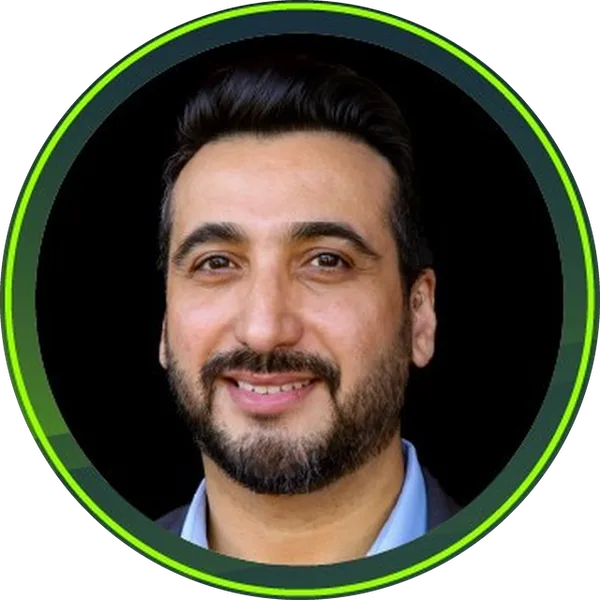
Amyn Rajan
Amyn Rajan from A-MAX Auto Insurance shares his expertise and insights on bridging the gap between tech and tradition in insurance strategies. Learn tips and tricks on how to strike the right balance between leveraging cutting-edge technologies and honoring established insurance practices.
The full episode
Press play for the whole conversation.

Leveraging Technology and Tradition
The insurance industry is at a crossroads, where innovation meets tradition. In our latest podcast episode, "Bridging the Gap between Tech & Tradition in Insurance Strategies," we had the privilege of hosting Amyn Rajan, a seasoned expert from A-MAX Auto Insurance, to shed light on this crucial topic.
Episode Highlights
In our conversation with Amyn, we uncovered valuable insights into how insurance companies can strike the right balance between leveraging cutting-edge technologies and honoring established insurance practices. Here are some of the key takeaways:
Why You Should Listen
"Bridging the Gap between Tech & Tradition in Insurance Strategies" is a must-listen for insurance professionals, industry enthusiasts, and anyone intrigued by the intersection of technology and tradition. Amyn Rajan's wealth of knowledge and experience make this episode a treasure trove of actionable insights.
As the insurance industry evolves, so should your strategies. Join us in this enlightening conversation with Amyn Rajan to discover how you can navigate the exciting journey of modernizing insurance while upholding its time-honored values. Listen now and stay ahead of the curve! ️ #InsuranceStrategies #TechAndTradition #Insurtech #InnovationInInsurance
The full transcript
Transcribed automatically from the episode audio, so some names and terms may be misheard.
James BenhamOn this episode of the InsurTech Geek podcast, talking about bridging the gap between tech and tradition and insurance strategies with Amin Rajan from Amax Auto Insurance. The InsurTech Geek podcast powered by JBKnowledge is all about technology that's transforming and disrupting the insurance world. We'll be interviewing guests and doing deep dives into specific tech we see changing the industry. We're taking you on a journey through insurance tech, so enjoy the ride and geek out. And we're back with another great episode of the InsurTech geek podcast. That's InsurTech without an e.
That's right. Lisa Wardlaw, she won finally, and we got rid of the e. She hated the e. We got rid of the e. What a mess. It's all good. It's actually it's actually been shockingly easy to drop the e, Rob. Shockingly easy. Wow. Okay. I would have thought that was like Yeah. I think five years ago, James, that was like a big and we've all kind of moved on and some of us are just like our wounds. But Yeah. It's just like, you know, those it's like VHS versus Betamax.
I feel like I was on the Betamax team and, like, we just kinda, like Yeah. But but there should be an e in there and just lick our wounds. No. It's okay. With with us today from rounding out the Dallas San Antonio College Station Triangle actually, the Texas Triangle is San Antonio to Houston to Dallas, but we're gonna pretend like the triangle is San Antonio to College Station to Dallas. Three Texans on the show at once. Sabado Gigante. No. It's actually not even Saturday. We've got Amin Rajan from Amax Auto Insurance.
What's up, Amin? From Dallas. Hi there. I did not expect the tone of this podcast
Amyn Rajanto be funny because we're talking about insurance, but I'm excited. Thank you so much for, having me on the podcast.
James BenhamWell, I mean, you know, take your work seriously, but not yourself. Right? It's okay to have a little bit of fun. Insurance can be fun. Yeah. I mean, really interesting. That's for sure. And sometimes interesting in the not fun way. Like like right now, let's just let's just say an ode to all of our property insurance brethren in Florida again. I mean, seriously. It's it's been a tough time to to be a property insurer. Adalia,
Rob Galbraithis that how you say this hurricane, Adalia? I don't know. I had somebody, like, trying to do the correct pronunciation on Instagram, and my Spanish is not good enough to even attempt to speak.
James BenhamSo so all the property reinsurers are, like, puckering up. They're seeing headlines like, hurricane expected to rapidly intensify before hitting Florida. And they're going, no. Why did we write that reinsurance? And then Citizens is like, prepare yourself for 700,000 more policies. Yeah. Because pretty much Citizens is just picking up the entire state of Florida at this point. It's a it's a mess. So it's intensifying Tuesday. It it's expected to make landfall early Wednesday on Florida's Northern Gulf Coast and Big Bend area. As a cat three, oh, man.
It's expected to have huge storage storm surges and catastrophic impact for the Big Bend area. You'll know that. That's like once you get past Panama City, it gets way less cool in Florida until you get all the way to, like, Saint Pete because, like, the beaches aren't as nice. That's the area they're talking about. Now there's people in that area that love that area because they're big into fishing and all kinds of other cool things, but it's not the area of the pristine beaches you usually hear about, although there will be consequences there.
And it's going to impact all kinds of airports and flights, and it's going be storm surge. And theoretically, it's going to hit both major Florida universities at the same time, University of Florida and Florida State. So we will keep a very close eye on what's going on. It's also gonna have some knock on impacts into South Carolina. They've already declared a state emergency there. So, anyway, we usually don't talk about news. We used to talk about news on the show all the time, but, you know, property insurance in Florida has been a sensitive topic lately.
And we got another hurricane coming, so there you go.
Rob GalbraithRob, no hurricanes here. I can tell you that. No hurricanes here. Yeah. More likely to have a wildfire, actually.
James BenhamYeah. Is it as dry in Dallas as it is in College Station? I mean
Amyn RajanYeah. I think so. Very hot. Man,
James Benhamit was it was a 110 yesterday. Mhmm. Like, yesterday, day before, whatever. 110. Man. It's a pleasant 90 right now. Yeah. Yeah. I know. Like, I was outside. I was like, oh, man. It's like a balmy, cool 90 degrees. Get my long sleeves out. So let's talk about insurance instead of the weather. Although the two kinda go hand in hand a lot of times for property folks. I mean, let's talk about you for a second and your background before we jump into Amax auto insurance. We're we're gonna we're gonna talk about Amax insurance.
But before that, we're gonna talk about you. Where were you born and raised, and what did you dream of doing when you were a kid?
Amyn RajanI was born in Karachi in Pakistan. I moved to States for schooling and somehow landed in insurance.
James BenhamSo you just glossed over about two decades of history in about three seconds. So Karachi through high school, then you came to United States for college? Yes. And how on earth did you land at UHD, like University of Houston downtown from Karachi?
Amyn RajanI came to University of Houston to study computer science. And, yeah, that was my passion, start up in tech, and that's what I was doing. But I also ended up changing my field or area of study a little bit. I got my graduate degree in public policy from University of Texas at Dallas after that, and then another graduate degree from Georgetown in conflict resolution. So my academic interests have shifted quite a bit since I started my undergrad at UHD.
James BenhamYeah, mean, you definitely got your smattering of education. I mean, two master's degrees and an undergrad. And look. Public affairs is a really interesting, you know, master's program to to to dive into, and you can use it in all different kind of fields. Yeah. You worked from '99 to eight as a forecast manager for Convergys. What what what was that about? Well, the Convergys was a
Amyn Rajansort of an outsourced consulting company for for several other major companies. So I got to work with some really interesting accounts.
James BenhamI worked with Compact Computer. Do remember Compact Computer back in the days? They were a cult in Houston. Compact was a cult in Houston until HP bought them and ripped the cult apart.
Amyn RajanSo worked on that account and worked on HP. A a cult in a good way. Yeah. Yeah. Those were cool computers. You know? And it was a very fun job because my job was yeah. I mean, though I my LinkedIn says forecast manager, which is where I landed. But for most of my time with them, my job was to sit in a research lab with a bunch of computers and networks, download anything and everything that I can think of. And the goal was to break the computers, break the system, break the network, invite the viruses, invite all sorts of trouble, and then spend days fixing those problems.
And it was the most fun job I've ever had. I did the same for Microsoft, HP computers, those old school printers that Compact used to make. And then did something similar with AT and T as well. So that first major experience that I had, I realized that I absolutely love to solve problems, you know, especially the problems that I create myself, but love to solve problems. So that's where I got my start in the tech. But then I really did want to make a shift. Had a deep passion in working in some sort of a social impact space.
I was really curious to learn more about different sectors, public sectors, nonprofit sectors. So I knew that I wanted to do something different for my graduate degree. So I landed in the public affairs, learned about public sector at University of Texas. And while I was there, I had a good opportunity to work with various different Dallas based nonprofits. I was working for a little bit with Boys and Girls Club, Catholic Charities, learned a lot about challenges of refugees in the Dallas area. I even ended up starting a small social impact enterprise which created an awareness campaign by way of art to tell people about the human cost of war and conflict.
So that was quite interesting, but the themes were quite similar. I mean, just sort of evaluating the challenges in industry, whether it be in a private sector, in tech, or whether it be in the social impact, societal challenges, and how can you find ways to sort of tackle those challenges. And that was quite interesting to me. So that's where my academic background sort of lies.
James BenhamAnd you've been at AMAX for quite some time. Yeah. You've had, it looks like, three different jobs there. Yeah. Let's just talk about that for a second. You know, you went through, you know, work working in corporate affairs and strategy and innovation. Now you're the chief strategy officer. I mean, tell us about Amax for a second because this is not a a brand that I was familiar with before I
Amyn Rajansaw you coming on the show. Yeah. So while I was in the grad school, I took this job at a local insurance agency, which I never thought would become my career. But I was instantly drawn to it, mainly because the work felt meaningful. So Amax is a non standard insurance agency. It serves the non standard sector. These are the customers who don't necessarily have the best of credits. They come from middle to lower income demographics. So serving that segment felt quite meaningful because it is truly solving a public safety challenge in the communities.
So I was really drawn to that. When I joined Amax back in 2008, it was relatively a smaller agency and had an appetite to grow. And I was trusted to figure out how to stand out from so many other small agencies that existed back then. The barrier to entry in the business was low, so competition was fierce. And it continues to be. There's a lot of non agencies out there, but the landscape looks a little bit different now. But yeah, went into it to study the market, understand the non standard space, study the business, and I was instantly hooked.
And here I am fifteen years later, I've done, like you said, several things in the company but mainly focusing on strategy and growth in various different aspects. I built so right now we have over 200 locations in Texas. We recently acquired a company in California, so we have quite a bit of presence in California as well. So we've been around for quite some time and it's been quite an interesting solving a problem with an innovation lens in this non standard segment
James Benhamat Amax. Awesome. Yeah, we'll talk more about that and what the challenges are in the non standard market and what that looks like from a technology perspective and how you've adjusted your user experience to that. I have a lot of questions around that. Before that, I know Rob, go ahead and take it away. Yeah. So great to have you on, Amin. So
Rob GalbraithI do want to dive into that nonstandard market, right, Because it is so different than what most of us myself working at USAA for twenty years are kind of a typical standard rider. State Farm, Allstate, Nationwide, Liberty Mutual, you name it, right? These are a lot of brands that we hear about all the time. And so there's not as much familiarity, I'm imagining, among our listeners about kind of the unique challenges. You touched on a little bit about the non standard market, who you serve. But you've also said that the larger intertech space has really not been fully serving the non standard market because they've been focused on some of the bigger personal lines, carriers, opportunities.
So maybe you can elaborate just a little bit about the unique challenges with the nonstandard market, but also where those gaps are that Intritech is not serving and maybe how you're looking to bridge some of those gaps. Yeah,
Amyn RajanI mean, I have been in this space for quite some time and always sort of trying to stay tuned with all the insurance incubators and new tech companies that come in. And I've definitely been noticing that this is Nonstandard is a pretty big market. Almost $80,000,000,000 premium gets written in that segment. So looking at that market is extremely important. I think most technological solutions that are coming in, they paint a wider brush and they look at trying to solve that same issues that an average consumer who can qualify for a policy from Progressive or GEICO is needing.
But the nuances of non standards are a little bit different. Like I mentioned earlier, these are the customers that are not necessarily coming from the background where they would qualify for most of those standard insurance. They live in neighborhoods where automatically the ratings are designed in a way that you would have a higher premium because those zip codes might have a higher crime rate, carjackings, so that becomes a challenge. So when the platforms are created, let's say a customer acquisition platform or an e commerce platform, It cannot use the same playbook as the Lemonades or Progressives.
These customers sometimes are unbanked or underbanked. They have certain language requirements. They might be cash customers. So when you design the platform, you have to understand those needs to make sure how you can seamlessly meet those needs and not just create a linear process. And I think that's where the challenges are. The technologies who want to work in this space have to understand these customers deeply to be able to find the solutions for them.
James BenhamThat's interesting. And I noticed you had, you know, pretty heavy multilingual influence on the website. And look, cash pay is a totally different challenge, right? They're going to walk into an agency and pay with cash. I mean, it's different. Let's talk about tech for you're leading innovation, right? You're really driving strategy and innovation. So what are you doing that you think is really different than everybody else that's led to your rampant
Amyn Rajangrowth? One of the interesting things that we have is I mentioned earlier that we have 200 brick and mortar locations in Texas alone, and we're continuously growing, right? So this customer base that we have, they tend to want to do business in person. A large majority of them are walking into our offices still. So although we are investing quite a bit in our digital capabilities, we're also looking at what are some of the spaces for innovation in the brick and mortar locations, these outlets that we have.
I was speaking at a conference recently alongside Stephanie Marcia of John Hancock Vitality Program, which is a 100 year old company. And she was talking about how they use the customer touch points to impact the health and well-being of their customers and they're seeing phenomenal results. So we have similar philosophy. Our brick and mortar locations are our community outlets where customers can come in, make their payments, but also get to enjoy several appreciation events that we can put together. So now innovation opportunities lies in how to use those customer touch points to improve retention.
So in the industry where customers tend to switch their insurance very often, we use these touch points to see how we can learn more about the customers, tend to their needs so that they will retain for a longer period of time, And they will also bring their friends and family into our offices as well. These locations also serve as an extension of our workforce. We have about a thousand agents that are employed by Amax that work in these offices. But they have capabilities to be able to serve not only the customers that walk into their offices, but the customers that could be 100 miles away.
So we're providing them the same tools that we would provide to our e commerce team, our virtual call center team. So they have the same tools to provide nudges for their customers. They have same capabilities to be able to use our customer relationship manager to be able to provide any sort of touch points that our customers are needing that they are more likely to respond to. So we're innovating not only in an online space or creating digital touch points, but we're also looking at our brick and mortar locations to also be our small mini innovation hubs.
James BenhamDo you have any locations that are like experimental locations where you try things first?
Amyn RajanOkay. So we have a separate brand that's a fun brand that we play with. Another insurance company called Alpa. It is our secondary brand. We have a lot of fun with that brand. We have about 20 locations and we tend to use that as our innovation hub. So we implement new software technologies that get implemented in that smaller segment first and we test and try that before we scale it into the large 200 plus locations at Amax. So, yes, we do that.
James BenhamSo you created literally an entirely separate brand website signage locations, not just to experiment. Right? Like, you you wanted to try to hit a different market segment with it? Yeah. I mean, that that brand is absolutely designed to attract more of a younger audience.
Amyn RajanIt's it's very fresh, very hip. It has its own character. And even the internal culture sort of reflects that new age customers. So yes, it is designed to go after a different customer segment, but the tools of business tend to be very similar. So it does allow us that base for experimentation and also be able to tap into a newer market.
James BenhamSo have the policyholder age brackets
Amyn Rajanactually lined up with who you targeted for the age brackets to be? Oh, yeah. Oh, yeah. Our digital touch points so that's one of the things at AMAGs because they've been added for quite some time and having that sort of a deeper understanding of customers, we've been able to perfect the targeting of our certain customers. So we collect a lot of data on this. We make sure that we're going after the right customers using the right channels. Certain media channels will attract certain kind of customers, and we do exactly that.
I know, Rob, you're in that space. I was looking into that. You're curating
Rob Galbraitha certain content to attract the customers. So we very much use the same science to go after certain targeted segments. Yeah. Actually, I want to follow-up. Maybe you can go a little bit deeper even, I mean, on the leveraging data and analytics to better understand the customer needs. Because I'm thinking about this, and it's like part of the challenge with nonstandard is, as you mentioned, you may not have some of the data points that you typically would be used to. You mentioned them being unbanked or under banked.
You mentioned the lack of no credit, thin credit file, poor credit score. So are there some kind of unique data points? How do you go deep and kind of have that blend of really knowing your customer from a data and analytics perspective on this fairly diverse population that maybe traditional carriers are struggling to
Amyn Rajanto understand through their traditional methods? I think one of the keys here is, and I think it should work in standard or non standard space, agents and brokers have quite a few touch points directly with their customers, so the data sets that they collect are quite important. But then carriers on the other side who manage the policies tend to have a different side of facts about the customers. And I feel that this partnership between carriers and agents can be very lethal in connecting or collecting good amount of data on these customers, and we tend to do that quite a bit.
So, you know, in this middle to low income demographic, the biggest challenge that carriers oftentimes have, the reason why they actually use the agency model to capture this customer segment is because they want to mitigate risk. There's a high chance of fraud in this space, so carriers tend to be very nervous in going direct to consumers or providing digital means of collecting the customer data. So what we've been able to do at Amax is, yes, we have brick and mortar outlets, and we use all the traditional means of selling a policy which requires customers to walk into our offices, us validating all the documents and agents personally looking at that, or going outside the office and taking pictures of the cars to make sure we do all of that stuff.
And that's traditionally has been the way non standard business or non standard carriers have been comfortable doing business with the agents. But what we have also been trying to do is we realize that not all customers in the segments are the same. More and more non standard customers, they're displaying the same exact needs as one of the other customers. They like to do business online. They might want to chat with us or they might want to give us a call. And we may never see the customer or customer's car, they still want to be insured.
So what we started doing is we started innovating or started experimenting with processes and various different technologies to see how we can overcome some of the challenges that the carriers might have. And that has been one of the ways that we've been able to sort of advocate on customers' behalf to our carriers. So I'll give you an example. For a while, we were working on an e commerce platform where customers can come in and they can finish all the journey from quoting to buying online, which is a common place in the standard space but non standard has been lagging.
And the biggest challenge that we had is carriers did not like for us to sell any policies that we have not seen personally. So what we did is we did a bit of a test. We convinced the carriers to do some tests with us. And for a period of time, we sold policies end to end online. It required processes in which we collected the information. We partnered up with a technology partner who used certain technology, AI technologies, to remove human from marking the e signature columns that customers need to sign, validating pictures to make sure that the customer is not submitting wrong or old pictures.
So we did that all by technology for a period of time, and we looked to see what sort of risks that were associated with that. We looked at the loss ratio of those policies and compared it with the policies that we were selling in our offices. What we found is that there was no difference in the loss ratio that we were collecting by digital means versus the traditional means. Now that we have this process built out, we've been able to improve that more and more, and we are confident that we might be able to get better loss ratios or better success in these customers and retain these customers even better compared to the customers who are walking into our offices.
And once the carriers see that, that data point, that has been the way that we can sort of continue to advocate and get more and more carriers to come in and do business with us by digital means. So these are some of the processes that we've done, and I call it advocating on customers behalf to be able to progress the whole industry. Excellent. Great description. So let's just talk about looking forward now.
James BenhamWhat does the next few years look like? What do you think is coming into personal lines auto that is gonna really change the game, or what are you trying to prepare for? Let's talk about the you know, whether, you know, it's technology, innovation, a regulatory change. There are a lot of predictions, a lot of predictions by that by this year, including by Peter Diamandis. I went to an three sixty conference by Peter Diamandis who predicted that we'll be all self driving cars by now, that that car ownership would be beginning to die out by now.
Seriously, by 2023, I have the I still love the graphic. I mean, there were a lot of predictions that by 2023, things would be radically different and, you know, ride sharing would be pervasive and it would all be driverless and none of us would own cars and park parking garages would be dead. And and the reality is the commercial office market is dead. People are still driving the snot out of their cars and buying them like crazy. Car you know, Auto dealers who were supposed to be out of business or had had a record profits the last three years.
So I mean, what do you think now knowing what's with the current conditions? What does the auto market look like in the next two or three years? And what innovations do think are coming down the pipe that could change things? So what's been interesting,
Amyn RajanJames, non standard space is these predictions sort of look very different in this market segment. During the COVID years, that more and more customers were working from home, they were driving less, they were not on the road. The customers that we serve actually were going to work. They had to go, so they were part of that essential worker segment. These are the nurses, these are the you know, construction workers. So we're working with these customer segments that had to get to work and they were the ones that were driving the cars.
So their insurance needs did not change as much as the average driver on the road. These customers do need the cars, they need the vehicles, they're not going out and investing in the latest and greatest EVs, They're not necessarily utilizing to the same degree the ride shares like the other customers are. So these are the customers that have different needs. And what I'm looking forward to is that the industry starts to sort of pay attention. Several years that I've been looking at and observing the industry, I really feel that the non standard space is largely overlooked and the potential to explore is phenomenal.
So I want more technologies, Insurtechs, to really think about what they can do in this space. Now, there's some notable companies that are innovating in this space, like Loop Insurance out of Austin, Texas. They're creating new pricing algorithms which are designed to take away bias. If you design something like that, then you're starting to blur the lines between the standard and non standard. So I'm looking forward to seeing more and more innovation like that come through that looks at insurance rating differently than the traditional means.
Know there has been lot of buzz about database, user based insurance. That has a huge potential in a non standard space because just because the customer is maybe living in zip codes with high crime rate does not necessarily mean that they are bad drivers. So they might qualify for a cheaper insurance if the insurance is rated on usage rather than where they live. Similarly, another company, our friends at Sego Seguros, another Austin based company, they're designing platform that Who we had on the show, yeah. We had Siguos Aguiras on here, yeah.
Yeah, see that's amazing. So they're doing some amazing work. They're looking at certain customer segments and trying to solve problems with them, and I feel that instead of looking at industry as a whole, this market segment requires some innovation in this and I'm really hoping that I see something. I'm going to Intritech this year again and I'm going to be looking for partners and try to see if there is people that can work with us or they can work on their own and create some sort of a synergistic partnership to understand this market segments and just come up with some cool new text, cool new solutions, and that could be the next thing.
Absolutely.
James BenhamSo well, heard it here. For those of you who are listening who want to meet new people at InsurTech Connect, he says me there and looking. Rob, you wanna wrap us up with a closing comment or question? Yeah. I mean, just to kinda get us out, this,
Rob Galbraithyou know, you've often talked about, like, having a disruptive mindset and kinda working with executives and trying to rally folks around going beyond maybe the traditional conservative views of insurance. I'm sure the non standard market being in that place, you kind of necessarily have to be maybe a little bit more of an out of the box thinker, but just, you know, what thoughts do you have for our audience that are maybe looking to disrupt within their firms? How do you approach it? Any advice that you might have?
Amyn RajanSee, my approach has always been to prove a concept by way of data or by way of various different pilots to test it out. And it always has worked. Of course, it helps to work with like minded people. Executives are open to trying and testing new things. That's always helpful. But there is room for technological solutions and it is lucrative. This is just because the market segment serves certain customer segments does not mean that this is the market that should be overlooked. There's a lot of potential opportunities here and I'm sure Amax is not the only company that is looking to innovate and looking to partner with InsurTechs.
The openness is there. I think we just have to make sure that the right minds meet at the right place to make sure that they can work together. Awesome. Great closing comments and thank you, Amin, for joining us. Also, Rob, thanks as always for being my illustrious co host. Always happy to co pilot with you, James.
James BenhamAwesome. Love it. And, Amin, thanks for joining us from Dallas. Appreciate you being on the show. Thank you, guys. And that is a wrap for another episode of the InsurTech Geek podcast. Thanks for tuning in today and geeking out with our interview with Amin Rajan from Amax Auto Insurance. See you next time. The InsurTech Geek podcast powered by Jibby Knowledge, jibbyknowledge.com. It's all about technology that's transforming and disrupting the insurance world. I've been your host, James Benham. That's jamesbenham.com with co host Rob Galbraith at endofinsurance.com.
And thank you for joining us today. Look forward to talking with you soon. We're taking you on a journey through insurance tech, so enjoy the ride and geek out.