 YouTube
 Spotify
 Amazon
 iHeart
 Apple
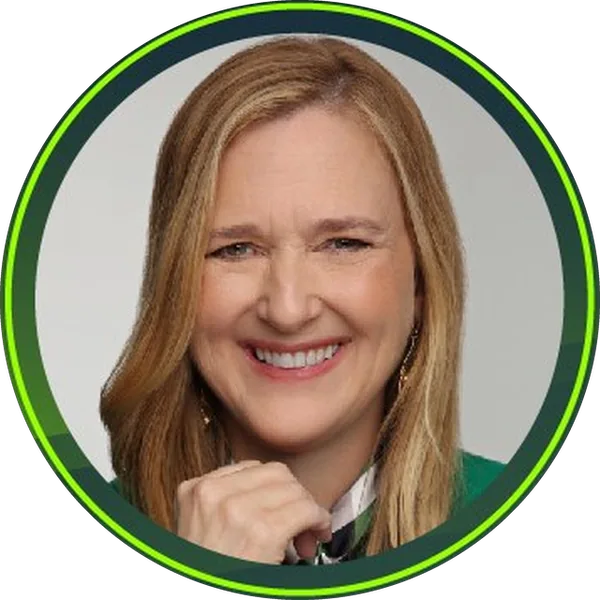
Lisa Wardlaw
Lisa Wardlaw from 360 Digital Immersion shares her expertise and insights on building strategies for a resilient insurance future. Learn tips and tricks on integrating dynamic advancements into traditional functions and creating forward-looking strategies to navigate the changing landscape of insurance.
The full episode
Press play for the whole conversation.

A Look Into the Future
Lisa Wardlaw, President, and Founder of 360 Digital Immersion, has spent her career challenging the status quo and driving innovation within the industry. With a background in liberal arts, she brings a unique perspective to the insurance landscape. She explains why she chose 360 for the name of her consulting firm, 360 speaks about her looks on holistically managing insurance and consulting.
The Power of Lifelong Learning
Lisa's commitment to lifelong learning was a driving force in her journey. She believes in bringing a questioning mind, non-traditional thinking, and a relentless drive to challenge the status quo.
She has observed a significant shift in the insurance industry from static-based to dynamic-based operations.
This transition is not just a buzzword but a transformative process that affects traditional functions and business lines within insurance companies. In our conversation, Lisa shares her insights on how these dynamic capabilities are being integrated into the industry, ensuring its continued relevance and growth.
Global Perspective on InsurTech
Having worked with insurtech companies across multiple geographic regions, Lisa has unique insights into the challenges and opportunities present. She discusses the similarities and differences she's noticed, shedding light on the global landscape of insurance innovation.
Lisa's journey has seen her lead teams through periods of transformation and change. She shares how she has developed and refined her leadership skills to guide her teams, ensuring success in an ever-changing environment.
The Exciting Future of InsurTech
Lisa is excited about the future of insurtech and envisions the industry evolving rapidly over the next few years. She shares her thoughts on the trends and opportunities that await us in the world of insurance innovation.
Don't miss this insightful episode, where Lisa Wardlaw shares her vision for a resilient insurance future and the dynamic strategies that will shape the industry. Tune in to the InsurTech Geek podcast to discover how insurance is adapting to the changing times.
The full transcript
Transcribed automatically from the episode audio, so some names and terms may be misheard.
James BenhamOn this episode of the InsurTech Geek podcast, talking about building strategies for a resilient insurance future with Lisa Wardlaw from three sixty Digital Immersion. The InsurTech Geek podcast is all about technology that's transforming and disrupting the insurance world. We'll be interviewing guests and doing deep dives into specific tech we see changing the industry. We're taking you on a journey through insurance tech, so enjoy the ride and geek out. And we are back with another great episode. I'm probably the I I nay, I say most excited about this one because, you know, when you anticipate something and then it doesn't happen and then you anticipate it more and then it doesn't happen and you anticipate it more and then it finally happens, that's the situation I'm in.
Because it turns out that Lisa and I have busy schedules. And getting them getting them to both line up has been a monumental effort. And we almost had to reschedule again, and I said no. No. Nay. This shall not happen in this eye castle. And and so we got it scheduled for today, which I'm really excited about. And with me, of course,
Rob Galbraithmy illustrious cohost, the most interesting man in insurance, Rob Galbraith. Rob, what's going on, buddy? Hey, James. It's going well. And and I will let our our viewers and our listeners in a little behind the scenes. So, you know, usually as we book guests, you know, I get the invite and and so you'll see them kind of pop up, right? Okay. We got a recording schedule this person and that person and, I've loved everyone that we've talked to very very interesting, but there are certain guests.
We have one of us with us today where the name comes across the the email is like, oh, yes. We get to sit down with Lisa Wardlock and record a show. So anyway, I'm super excited about today's episode. I thought you were just gonna say you were hopeful I didn't stand you up again. I'm joking. Exactly.
James BenhamRight? I mean, you know, to be fair to Lisa, and again, our guest from Atlanta, Georgia, Lisa Wardlaw. Lisa, it was kinda fifty fifty. You know? I mean, I I I had some stuff that came up, and you had some stuff that came up. And so to be fair to her, it was it was equally me parts me and her on on the the multiple cancellations and reschedulings. But, look, it's gonna be totally worth it. It's gonna be totally worth it. Lisa and I have a lot in common, and, it's been fun because, you know, like a lot of other things in the in in SureTech thought leader community, people who speak and moderate and podcast and do things around InsurTech.
You know, Rob and Lisa and I are pretty active, and and so we end up seeing each other at a lot of different conferences. Lisa and I have been at the last couple of Reuters conferences, and we're gonna be another one coming up in Toronto. And so it's been really fun getting to hang out with her. And she's just as crazy as I am, which is which is exciting because when you get two positively insane people together, then hilarious crap. What he's about telling me, Rob, is that I cut the line
Lisa Wardlawfor the barbecue.
James BenhamI'm like You did. I'm I'm with you. You're my date tonight. Right? You did. You just totally open the line. Are you doing? And I'm like, I really I'm like, you know, in in Texas, they don't take kindly to to Yankees coming in. I am not a
Lisa WardlawYankee from Atlanta. I love it.
James BenhamShe's not a Yankee. Hey. I know. You're you're from the South. Atlanta is definitely the South. Lisa, what do you what's the difference between a Yankee and a damn Yankee?
Lisa WardlawThe d.
James BenhamNo. Damn Yankees come south and stay.
Lisa WardlawYeah. My dad would have probably gotten that one right. Yeah. Yep. Yep. Yep. I actually gonna go for the Mason Dixon line. And the reason why I was gonna go for that, Sue, that's where you say Coke versus soda. And then we won't go to pop. But there's a in The United States. Like you can tell where someone's from by how they call a carbonated beverage. It's like the quickest test in the world. Right? Exactly.
James BenhamExactly. I mean, everything. And of course, you know, the headquarters of Coca Cola, Atlanta. I mean, everything for us is a Coke. Like, I grew up in Baton Rouge. Do you want a Coke? Yeah. What kind? Oh, you know, Sprite. Exactly. That's that's kinda what Coke was the the phrase. And, of course, in Michigan Michigan's a pop state, I think. I mean, that's what I've heard a lot. Yeah. Tends to be Pepsi,
Rob Galbraithdefinitely pop or soda pop. And, yeah. There's also the mayonnaise line. I don't know if you guys are familiar with this. Right? So there's, like, the north half of the country's Miracle Whip and the south half is Mayo.
Lisa WardlawMiracle Whip is not Mayo, just to put that out there. Miracle Whip is a salad dressing, but we could go into that. We could have a whole dialogue and discussion about what is your mom using deviled eggs.
James BenhamYeah. Well, let's jump in. We love talking about insurance. We love talking about about tech, but on this show, we love talking about the people behind it first. And, Lisa's one of the people behind it, InsurTech. Her company, three sixty Digital Immersion, that's 36360digitalimmersion.com. You can find out more about it there. Of course, can hit her up on her LinkedIn. She she may or may not be on LinkedIn once or twice a day or 20 times a day. So you can definitely hit her up. I mean, I for me, Lisa, like, LinkedIn is by far my number one.
I care about the other social platforms about, like, 5% of what I care about LinkedIn. So LinkedIn is where all the action is.
Lisa WardlawThat's right. That's where we get to Exactly. Hang out,
James BenhamSo let's talk about you for a second. You you went to Rhodes College. You got a business degree. I went to Texas a and m, got a business degree. You you have a great background, and your background starts at the same firm that mine does. What? Because I did I did a grand total of six months, two internships at PricewaterhouseCoopers. At the same time, so you're in the Atlanta office. I was in the Dallas office, and I was in this global risk man Grim's Global Risk Management Services.
Lisa WardlawRemember those acronyms.
James BenhamYeah. You you remember Grim's. And I was in this little cool practice area called sys.com, which was security integration services. It's back when an audit firm could audit you and then find the problems and then get paid to fix them and then get paid to audit their fixes, which is Literally the glory days. I know. Glory days of accounting when you when you had an obvious conflict of interest and nobody said anything about it. So you worked for eight you survived. Most people survived two years at the Big Five.
You survived eight somehow. And
Lisa Wardlawthen I went back and did it for two more.
James BenhamWow. Have a jacket. Sucker for punishment. I know. Seriously. And, and then you you you go from that to Voya Financial, and you're there for a year. And then you go to Home Depot for a couple of years, as senior manager of global sourcing finance. And then Titus Consulting for a year, then, you know, NBIS for a year, and then you go back to Pricewaterhouse for a year. And then you embark on an eleven year journey at Munich Re. So let's talk about, like, leading out to Munich Re.
Like, when did you did you grow up in did you actually like grow up in Atlanta, like high school, middle school? No.
Lisa WardlawDid not grow up in Atlanta. I grew up in Florida and a little small town in Missouri called Cape Girardeau, Missouri on the river because my dad was in avionics. I think I shared that with you and during one of your flight LinkedIn posts. My dad owns still to this day, owns an avionics shop. And as a small aircraft pilot, you can probably understand that you go where there is availability of a shop, which is usually if somebody retires and they don't have somebody, a family member that's going to succeed them and run their business.
Yep. That's how it works. Yeah. So my dad was originally in Orlando working for big avionics companies and his brothers were all in small avionics in Pine Bluff, Arkansas. And, that's where I was born, little known fact. And, he found somebody that was, retiring and didn't have anybody to sell a shop to in Cape Jordan, Missouri. So I spent like from fourth grade through college, you know, with my family living in Cape Girardeau, Missouri. And then they both both my mom and my dad had separated at the time they divorced, and they both went back to their kind of native places in Florida.
So, yeah, combo, Florida, Missouri.
James BenhamNice. And I've actually landed when when flying a plane at Cape Girardeau. Had to get some fuel there. Yeah. And so I've I've been there, been to the airport. Always always in need of a good avionics guy, by the way. Avionics good avionics shops are almost impossible to find. So you so you what what did you wanna be? Like, you did you wanna be an auditor? Did you wanna be an accounting? Or No. No. I mean, like, let's go let's go back to, like, let's go back to, like, 20 year old Kappa Delta Rhodes College.
And I was a Fiji. So, like, you know, let's go back to this is getting way too bad about my life now. Okay. Go for it. So so, like, let's go back to and I'm like, my you know, I have I have a lot of family that was Kappa Deltas and, you know, my dad was a Fiji. Mom was Alpha Z Delta. I was a Fiji. So, I mean, let's go back to 20 year old Kappa Delta Lisa and ask her, like, what do you wanna be?
Was it was it audit?
Lisa WardlawNo. No. No. Absolutely. I didn't even know what auditing was. I was originally a chemistry major minoring in economics because whatever, this was pre HMO healthcare reform days, all these things, this was the 90s. And I wanted to go get my master's in healthcare administration. But anyway, and I was a third year at Rhodes taking P chems, so physical chemistry, and calc three, and I really loved organic chemistry, and I really hated physical chemistry. Like I just hated the combination of physics and chemistry. Like give me organic chemistry all day long and I just hated P chem.
So I was minoring in econ and I was like crushing economics. Like I love economic theory, macro, micro, anywhere in between. I love economic theory, which is gonna connect to insurance in a moment. And I came home, I was the oldest, so I have a brother and I was the oldest and my parents had dropped out of college and started their own business and didn't get their college degree. My, there's a lot of pressure on me. You know, I was a, my dad was like, hi, you know, you need to graduate.
All of our faith is on you, you know, all this stuff. And so I come home from college my junior year, I guess it was Christmas break. I don't even remember. And I'm like, I'm changing my major. And that was like, did not go over well at all. And you know, my dad, my mom was a dancer and my dad's an engineer. And always want to impress. I always, till this day, I want my dad to be proud of me, like still to this day. And so I told him I was changing my major and he was, and I was like, I really love economics.
I think I'm going to major in econ. And at the time, Ray's didn't even have an econ specific because of liberal arts. So I had to major in business administration. And my father literally looked at me and was like, What in the world are you going to do with a business degree? He was like, this is before STEM. This is like midnight. He was like, No self respecting child of mine that has gotten this far along in their life is going to get the thing called a business degree.
So, Janice, my point is I had to come up with something that was tangible enough for my father to think that I could make a career of this insane decision I just took. I'll do this thing called public accounting.
James BenhamSo then you got into public accounting and finance, and you spent, you know, more than a decade in this. But then you you what what was the transition point that led you from that second standard price waterhouse into insurance in Munich Re? Because, obviously, starting then, and I'm always interested in how people got into insurance because I think it colors our comments afterwards, which is why I spend some time on it in every episode. You spent at least eleven years at Munich Re. What was it that led into that position?
Why insurance? Why Munich?
Lisa WardlawSo when I started at PwC, I had the least amount of any background in anything to do with audit. Like, I don't even know why they gave me a job other than they thought I was like capable and smart. Right? And because I had minored in economics and I really love financial modeling, they were like, you know what? Nobody wants to do insurance. No one. You're going to be assigned to all the insurance clients of the firm. So my insurance started like my first week at PwC, they designated me two insurance.
I mean, loved it because I spent all this time doing dual track and systems and financial modeling and all this stuff. I got to work, you know, at the ripe old age of 23 in Zurich, still in one of the biggest, financial divestitures ever, which was when British tobacco, imagine the irony here, sold off all this insurance company holdings, which is funny. They owned all these health life and health companies. What?
James BenhamThat's like all Altria got into that too. Know, Marlboro got into to life and health. They got into health. I it's hilarious. You're like, really? I don't know many people actually realize that farmers'
Lisa Wardlawlife was owned by British tobacco back in the 90s. So anyway, the point is I spent, I just, I honed my kind of that skill of financial modeling with my love for processes and procedures. And I guess the better way to say it is intangible. Like I love something that's intangible, but that there's a financial construct around. And so I had spent all those formative years at PwC, like my only non insurance thing was really Home Depot and I helped them create their global supply chain.
I spent all my years doing financial and financial modeling and Munich Re was actually a client of mine. They were a client of mine as an auditor. I helped them do their largest acquisition, which was the CNA acquisition. I helped them do all the purchase accounting. And so I really never wanted to work for an insurance carrier directly after my ING Voya experience, just because I was like, oh, I really want to do the M and A, the due diligence side of it, you know, operational integration and all that.
But as all things, I went back to PwC and I was doing a lot of work on the mythical IFRS 17, which this was like supposed to have come out and come out and come out. And I guess James to fast forward, I realized like it's not coming out anytime soon, which was fortuitous of me. That was back in 2008, 2009, and here we are and it just got implemented this year. And I was like, so Munich called me because the guy that I'd worked with their controller had retired and they were like, we're really looking for somebody that understands our business and that wants to kind of take this on and all these things.
The rest, as I say, is history. So that's why I joined Munich Re. Originally I hung up on the recruiter. I'm like, no, they took bets that I wouldn't last more than eighteen months. There were like people lost money, lost wages on me. But yeah, I kind of pivoted from the finance side at Munich Re into the operations side, into digital, into strategy. And then I got to do some really cool projects for senior, like board of management, some senior executives at Munich. Awesome.
James BenhamAnd you ended up in a variety of jobs at Munich Re, including chief accounting officer, EVP chief operating officer for NA Life, and then you got into global chief digital strategy and transformation officer for global reinsurance. That was your last your last job with them before you went to Farmers, and you were the chief strategic financial officer for Farmers Insurance. And then, and then you started this great journey of three sixty digital immersion. So what, before I hand it off to Rob, you know, what what led you to getting into consulting?
Like, first off, what is three sixty digital immersion? Because that's your your main your main gig. And, what is it? And then what led you to to go on your own and leave the carrier
Lisa Wardlawworld? Yeah, my midlife crisis in the flesh. So no, three sixty stands for, you know, like the da Vinci, like the three sixty. Am liberal arts, like humanities trained. And I believe that we have to look at things holistically, which is the three sixty and digital immersion. I think a lot of people think of digital as just this automation track. And I think of it more as like, how do you kind of foundationally embed it in everything you do, which is where the immersion comes from.
It is a consulting company that I own, that I'm the president and founder of. And I help insurance companies, insurance adjacent companies, and InsurTechs try to solve problems at scale that other people maybe don't understand how to solve or don't see the patterns of the white space and how to solve it. That's what I spend a lot of my time doing. Very cool. And I'm excited that
James Benhama great mind like yours would get into that so you can help people know, make a make a pretty big leap. It's a it's a lot for for insurance organizations to to think about what's next.
Rob GalbraithRob. Yeah, Lisa. So I I wanna you know, I'm glad we kinda went through your background so people kinda understand, right, Just the the myriad of expertise and experiences you've had but you know, most of those were very large firms particularly Munich Re, right? You've made the same leap I have for going from the corporate world to kind of you know, forming your own startup and and helping others. So you know, you have a unique perspective and I know you helped just a ton of clients.
You're kind of ubiquitous on the conference circuit. You're ubiquitous on social media. You have an amazing, you know, fun personality. Where are those problems that you see, right, and I'm sure we can spend hours on this, so mindful of time, but like, you know, were there big problems that you saw while you were at Munich Re in particular that made you wanna kinda make this leap? And then, as you work with clients, like where are those big gaps from your perspective? And then, how are you and your company trying to, you know, obviously collaboratively, right, but kind of close the gap and spur innovation?
Lisa WardlawGosh, that's such a great question. And there's so much to it. You're right. We could spend forever on it. But I think like, so I would say there's a, there's definitely like a group of us that are, I call it like almost like credentialed. Like, right, like we put in a time, we climbed the ladder, not because of the title, but because it proved that we have merit and deserve a seat at the table, right? Like we were an outlier, but we also had that seat at the table, which for me was like really important, especially being female, especially not being an actuary, especially not being somebody that priced products, etcetera, right?
Like we all know how elitist we can be as an industry, but okay, let me step outside of that. So that was like one really important thing for me and what I try to bring to the industry and people that I support. How do you credentialize the uncredentialed? I think that's really important that we have that conversation and that we understand that we're not gonna solve problems if we either isolate all newcomers as well, they don't get our business. And by the way, a lot of them don't, so that's a fair, but like we've got to create inclusion and belonging in that quadrant.
And then the other thing is if we just keep doing things the way we've always done them, just mediocrely better, like, and I mean that like, it's not okay. And I, you know, I was COO, so like, I understand what it's like to take cost out and OpEx and pay for, you pay to play. And I had to pay for my own innovation. So what was happening, Rob, is I was, you know, in this really unique lens of running, I, the COO, I had data and I had digital transformation and I was retiring all my mainframe systems.
I was the first one to take all my systems. I took 85% of my systems to the cloud and eighty, eighty, yeah, 85% back in twenty seventeen, eighteen. That's huge. Like, I mean, had to hire an I remember now how distinctly huge this is because we forget about it in 2023. I had to hire external counsel to review a cloud arrangement because back in twenty eighteen, seventeen ish, there weren't that many people that knew how to execute cloud contracts. So like, I know it's like 2023 now, we're like, yeah, that's passe, that's old news.
But I guess what happened was, I always call it like capture the flag. I was always looking for, at what point do we capture the flag and drive change? And so like, clearly I was at the reinsurer level. You can actually kind of see it if I tell you this, it'll make sense when you zig and zag my career together. So I did the consulting thing for a really long time. Then I went into, I'll call it the financial domains of the insurers, right? Then I move into the reinsurer, like the quant level, which is kind of to me, like theoretically where, like, I used to work on reinsurance as a service.
I was working on creating business models that like, I you can't talk about a lot of them because they were kind of like black ops secret things, but, you know, just think about it as how do we ensure algorithms themselves? I was like horizon three, horizon four plus plus, and then bringing that back to today. And what I realized, Rob, is that like, you can't just do this from one standalone vantage point. So then I thought, oh, I'll go up channel, like to get closer to the consumer, which was my farmers move, right?
Like how do I get closer to the consumer? And trying to do some things with direct to consumer, even though farmers is an exchange reciprocal company, the life insurance company has a little bit of different behavior patterns. So I was trying to think of kind of some of things I was doing at MuneGree. How would I apply that? Like, fluidless underwriting as an example, you know, all these things. Okay, so I went from Hold on. Pause. Tell us what that is. Fluidless underwriting? Yes. Okay. So it's life insurance.
When you historically, maybe five years ago, it's all changing COVID and this was before COVID. Historically, in order to qualify for a life insurance policy of a certain denomination, like, you know, like let's say you want a million dollar life insurance policy or something like that, you had to go prove that you were healthy.
James BenhamYep.
Lisa WardlawTo support underwriting. And what all carriers were doing and all reinsurers were kind of reinsurers, I won't get into all the nitty gritty, but we kind of provide the underwriting manuals by which the direct carriers use at point of risk acceptance. It's like the underwriting method. And so we would take, we would have, you know, the insurance carriers would have you go do a blood test, and we call it fluids. They would extract fluids from you, run samples on that, everything from cholesterol to blood, you know, all the things that they need to do, And then we would issue like whatever, are you preferred, substandard, you know, like whatever the rate class is.
So reinsurers started working on how do we do fluidless underwriting? So how do we do underwriting without fluids from the individual? So we got it heavily into data science. So there was like a huge center of excellence data science teams that were being formed. It wasn't just unique to reinsurer, like all reinsurers are doing it. It's kind of like racing. We were all racing against it. And we were doing these things to empower the direct carriers too, like how could we have large enough data sets in creating these, you know, what data points were relevant if we didn't have the fluids is the best way to think about it.
And how could we do what we call underwriting as a service? So I was part of the team working on fluidless underwriting, not the underwriter, but I was kind of working on some of the technology and the integration layers and what would that mean? And so I had a lot of experience in that when I went to Farmers. And then I guess, like, I was trying to do that COVID, of course, was going on when I was at Farmers, that little thing called COVID. And I started seeing once again that we were still brute forcing this.
So again, I have a lot of experience with ERP, with admin systems, with data, with data technologies, with data techniques, because I was kind of like at the cutting edge of all that. And then I just really realized, this is kind of like my midlife crisis, that I just wasn't in that capacity able to drive the big scale change that I really wanted for the industry. It goes back to my economics degree. You know, I'm really worried about what I often refer to it as this platonic shift in consumers, where consumers no longer care about need and duty and duress, which is kind of historically how we've gotten people to buy insurance.
It's like a sense of like a proper person does this, you know, who doesn't have this, who doesn't have that. And I was really starting to focus on, well, how do we create things people want, really want, like a new four letter word, want. And so in that vein, I had been working a lot with innovation, a lot with transformation. And I thought, well, you know, I'll go do digital for a while. And my first stint out of corporate world, I had some non competes and some things like that.
So I left life insurance for two and a half, three years entirely, which was funny because like I had this huge background in it, and I was like, oh, I'll do go do this whole thing called geospatial, and so I went into geospatial and natural catastrophe and parametric, and I became a little bit of, I'll say a little bit of an expert in that, and really just kind of fueled my passion for helping insurance and insurance adjacent. How do you do things at scale? How do you do things at like this bigger level?
Rob GalbraithSo, Rob, that was probably a long answer to your question. No. That was perfect. That was super helpful. I know our our listeners and our viewers really appreciate that.
James BenhamWas I'm I'm you know, I come at everything from a tech perspective because I've been writing software since I was a teenager.
Lisa WardlawAnd You were that guy. Yeah.
James BenhamI was that nerd. And started this company in my dorm room, and so I've kind of been doing this for a long time, but but from a technologist lens. So I I learned insurance through the eyes of writing software for insurance companies, not from actually working in the insurance operations. What what do you think the the real pivotal pieces of technology have been in the last few years that are really actually actually changing the nature of the game and insurance. Not that not the noise and the talk and what's actually really reshaping the products and reshaping how we deliver them and how we quote, bind, and pay and handle claims.
What technologies have really been impactful? If you could just pick one that you think is going to be huge in the next couple of years. So
Lisa WardlawI could probably answer this more like what I think hasn't been the holy grail that everybody thinks it is, and, where I think there's been a lot of perils and pitfalls or over indexing. So like, let me give my over indexing, and then I'll kind of like deduce my way down to like the ones I think that are the best. I think we've over indexed on APIs. And by the way, I think if you don't have an API enabled, like you shouldn't like, I'll say this, like APIs were table stakes for me five years ago.
I wouldn't even buy your tech if you didn't have API enablement. But I think as an industry, we've over indexed on APIs, like everything can be done because there's an API. I also think we've over indexed on, I think we've gone out of the realm of what business process management like BPMS, like where we should really be using BPMS as listening, listening and orchestration. And I think we've made it like this, like, I just think we've over indexed, and I personally lived through this, an unknown, unnamed transformation.
I think we've like basically over indexed that tool and we stretched it to its capabilities. And I think that tool taken out of the context of orchestration is not being used properly and it won't scale properly. So I think if you combine all these things together, I also think that our cloud strategies weren't sophisticated. I don't think we had sophisticated data, data at rest. What data do I need to structure? When do I need to structure my data? And I don't think we've kept current with evolving data techniques and capabilities as they're emerging.
So I think a lot of people, because insurance is such a long, difficult post stabilization, like when you implement technology, there's still, most people in my mind are like five to ten years ago with what they're doing today. It's like, in my mind, like if I had to evaluate, I'd say it's a low, probably tech I would have retired. Okay, so if I say all that, like, what do I think has been the most impactful? Oh, sorry. I think we also over index on modularity. Most systems that proclaim modularity are still monolithic systems that entrap you in the system itself, and they are not actually modular.
And I encourage anyone that's not a tech person, refuse the demo, ask to speak to the enterprise architect of the software provider, get under the hood immediately, look under the hood. That would be my number one call to action. Because I always tell people, I'm not demoing your product. I just want to talk to the enterprise architect and I want them to show me an architectural diagram. And I can usually tell in like about ten minutes if it's really truly modular. So that's like my little point of advice to anybody out there shopping for tech.
Yeah. If you run across Wardlaw, she's going to want to look under the hood. I will look under that hood. Even if you meet me, you know, and we're having drinks or whatever, be, I will say we're looking under that. Okay, so what do I think has been the most impactful? Okay, a couple of things. I think that it was appalling the level of manual processing that we had and still have to this day in insurance that like, by the way, had always been behind the times, never had a like remaining place and time and insurance.
And I think digitizing that and just getting rid of paper pushing and even like emails and just this manual routing of things. I still remember people bringing physical checks to my office to be signed. And I was like, I just, no, no, absolutely not. So I think that's huge. Like we just, we have to be efficient with our resources and we have to be more like forward. I think the thing, okay, this is like, what I would say is gonna change the insurance industry the most is, and I talk about it a lot, you listen to me, I apologize because you're gonna hear it again.
I think that tech is actually dynamic. I think of it as streaming and as fluid. And it has the capability to enable fluid and streaming. Just think of things that like not at rest. I remember the first time I learned about like data streaming, I was like, what? Like Hulu for operational data? What? And so I just remember being fascinated with this concept. But I think if you think of it like almost like the upside down here, y'all, like in Stranger Things, I think we think of the world and the insurance world today as relatively static.
But I think the technology and the capability and why so many people struggle to like do transformation and actually start ups struggle and all these things is that the capability enablement is actually dynamic. And so what we're trying to do, this thing that I think is gonna be solved, and I don't know what it is, like, I think it's like the conductor that allows static and dynamic to coexist, which right now that doesn't exist. People have this policy of thinking that that's an API. That's not an API.
And so really, I think what's really cool about, now we'll go to, well, we have to go to generative AI, right? I think the cool thing about it is it can kind of amplify oral communication and contextual understanding in a way that all this digitization couldn't I think put the way humans, it can put in humanity the way we want to talk and engage, which is typically through description and through talking and things like that. So I think that can kind of get us out of that digitization loop.
I think that can take that load off of us. And I don't mean just automation. I mean, I think it can contextualize so much of what we do in insurance and get us really into that cognitive decision. So I think that can free that up. And then I think the second thing that we have to solve for is, well, how do we actually create products people want, not what we think they need? And so that to me is really that dynamic, everything from like home and auto and commercial and health.
And I was actually on an advisory call this morning with a healthcare company that does kind of streaming of these things. I think it's like people know right now that their experience is a little intellectually and insulting. They're like, I know it could be better. I literally know this can be better. And so I think that we've got to create that dynamic conduit to allow that hydraulic pressure to flow between our processes. And in doing so, I think we need to totally redesign our processes. Now, do I think that piece of technology exists today?
I think the capabilities exist, and it's probably something that I spend a lot of time working on. Like, how can I help the industry unlock that? And I know, like, you all do that too. Like, right? Like, how do we collectively, we, as people who have spent a lot of time in this industry, kind of see patterns that maybe other people can't see and then bring people in and say, it's not exactly the product market fit you had in mind, but if we did this to it and that to it, right?
And I call it like the insurance innovation masters. Those are the people that I believe are going to kind of solve this paradigm. And the cool thing is I definitely think the Lego bricks are there. Like, it's like putting it together. Does that make sense? It does. Absolutely.
James BenhamYeah, I think the pieces are finally together. Just in general, just looking at technology, this is the first time in human history when you've had extremely fast bandwidth in tons of locations. You have extremely fast compute on the desktop and the workstation and the server. You have really cheap sensors that you can turn into IoT devices everywhere. You've got AI co processors that are chipsets designed just for AI. You have significant advancements in AI software. Like, there's all of these things are converging, you know, cameras and video and photo and lidar and, you know, OED two port readers for telematics and then wearables for people.
All of them are coming together all at once. Yep. And it's providing a from a technology perspective, a limitless set of combinations where you can you can combine a lot of technologies that happen to coming together. I I do believe that to to quote a well known sci fi quote, the future is already here. It's just not evenly distributed. You know, it's it's already here. The components are already here. We have the capacity to do this. There are players that are currently putting all those components together, and they're making big strides.
And so I think that I think that's that's critical. Rob, take us home on our on our last question. Yeah. So as we're we're
Rob Galbraithwrapping up, Lisa, you talked about scale, right, and that desire. And that's really what powers you in your company. Yet much of what you described, hear friction, I hear fragmentation, etcetera. So I guess, like at a very, you know, 30,000 foot view, how does it scale?
Lisa WardlawYeah. I mean, the great thing about our industry, right, is there's such momentum and power in the volume and the amount of society that we serve, right? And what we actually do with society, which is back, you know, we buy the investments that help back like nations, right? Like that's like literally what we do. And so I think when you put this together, there are groups of people that understand that this has to be solved for. And we work together to say, you know, we used to always have this little saying, this little adage that we would talk to ourselves about, which is we all predominantly have access to the same checkbook.
So I mean that, right? Like predominantly, most people are competitive at, like, we're all like kind of like pro NFL teams. Like we can compete, right? And so what it really comes down to is cognitive design. So who are the thinkers? Who are the people that are gonna be your innovation masters? And I mean that beyond the transformation team, beyond an innovation team, who's gonna be able to compose and decompose this tech? It reminds me a lot of, like, I'll take this like home with this, reminds me a lot of watching children build Legos and say, the people that are gonna scale this are not the people that love the Lego kits.
Because a Lego kit, by definition, is giving you a formulaic prescription and this says, build it. The people that are going to create, and this is the 101 of the crossing the chasm. Heed me, you cannot cross the chasm out of order. You're tech, you know, on the chasm, the visionaries and the evangelists, they're the people that do not like Lego kits. They're the people that like tons of Lego blocks. And no matter what you give them in terms of their Lego blocks and their resources, they're able to design.
You tell them to design X, they can build it with whatever box they have. And secondarily, they're the people that go on to be the innovation masters, and they design the blueprint and the Lego kits. And when you get those people to design those blueprints and those Lego kits, then what happens is you start scaling it by selling the boxes, the kits, right? And I think this is just my hypothesis. What happened is these InsurTechs came to the insurers and they're like, Here you go. Here's some Lego bricks.
What you gonna do? Let's go build something cool. And then they maybe over indexed a little bit on, oh, well, they don't really know what to do. So we're gonna take the UI, the dashboard, the this, the that, the other, and we're gonna build all that in our InsurTech. I'm like, no. What was missing is who is actually designing the three in one. I can build an airplane, I'll keep it back to you, James. I can build an airplane, I can build a helicopter, and I can build a cargo ship with the same set of bricks.
I just have to change a few parts here and there. That to me is why I stay in this. I know you all do too. And that definitely exists, and it cannot exist entirely outside of insurance. You have to have some credentials and it can't entirely exist if you're only insurance either. Like you've got to be able to see those patterns that you don't see and and deal with technology, you know, that you don't always deal with. So I don't know if that's a good answer to that, but I see it as being that holistic composable and decomposable, like, yeah, here we go Legos.
Rob GalbraithYou're the first Lego master of Insurtech. I love it, Lisa. Thank you. The
James Benhamroom next to me is filled with every Lego I've ever owned from childhood. I I that was one of the COVID projects my youngest daughter and I did as we assembled, and we still build Lego together. And I'm about to put shelving on the wall so that all the so all the Lego can be on shelves instead of on the floor where and and so it could be because I I love Lego. So love the Lego analogy. Let's roll with that. Great great discussion. Great answers.
And, of course, I love just walking through your background because it kind of colors the the resume of a modern day and InsurTech geek, right, which is, you know, deep experience in financial services and consulting and then deep experience in the insurance industry itself and, using technology as an enabler for organizational change, change in process, offering new products. I I I think my big takeaway out of our conversation is both in technology and in insurance, we have to build products that people want. Right. They actually want.
Letter word, man. Mhmm. Want. And so that's my biggest takeaway that I'm gonna be thinking about is, know, how do we build products? How do we, as a technology company, build products that insurance companies want? How do our client insurance companies build products that people want? Yeah. Not that they're sold. Great conversation. Lisa Wardlaw, Atlanta, Georgia. There she is. Can't wait to hang out with you in Toronto. It's gonna be fun. If you're gonna be at the Reuters event, think it's November, I believe, in Toronto, Canada.
A? Sorry. What? Sorry? A? Would you like some maple syrup? Some protein and did you want some protein and maple syrup and some protein. My favorite. Let's see. Let's have some so if you wanna join Lisa Wardlaw and myself, we're both gonna be moderators at the next Reuters future insurance. Yeah. They don't wanna put the stage together.
Lisa WardlawWhat?
James BenhamI I I don't think they'll I I don't think they're gonna allow that. Like, we're too we're too much. Yeah. Yeah. We'd blow through all our time limits too. Join us in Toronto if you wanna hang out with us. Even if you don't wanna even if don't go to Reuters event, just, like, come hang out with us after hours. It'll be it'll be great. Meet us. Yeah. Yeah. Just meet us meet us out. Come to Toronto. Hey. Have some poutine and maple syrup. And say sorry.
Apologize excessively for everything you do. Hey. Sorry. So, hey. Great conversation. Lisa, thanks so much. Rob, as always, thank you, sir. Thank you both. See you guys. Thanks. Thanks so much. And thank you to listeners out there for tuning in today to geek out our interview with Lisa Wordlaw from three sixty Digital Immersion. See you on the next show. The InsurTech Geek podcast is all about technology that's transforming and disrupting the insurance world. I've been your host, James Benham. That's jamesbenham.com with co host Rob Galbraith at endofinsurance.com.
We're taking you on a journey through insurance tech. So enjoy the ride and geek out.