 YouTube
 Spotify
 Amazon
 iHeart
 Apple
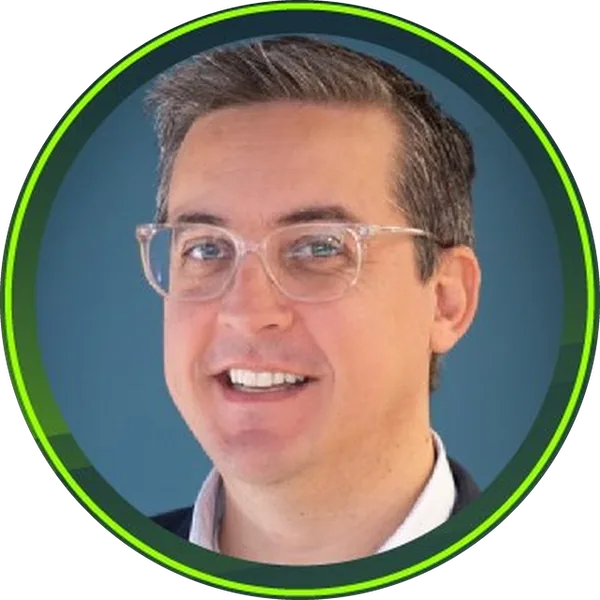
Greg Hamlin
Greg Hamlin from Berkley Industrial Comp shares his expertise and insights on how innovation and empathy are key to creating successful outcomes within workers' compensation claims. Learn tips and tricks on using a more holistic approach that transforms the way you manage workers' compensation claims.
The full episode
Press play for the whole conversation.

A New Way to Approach Workers' Compensation
In our latest episode of the InsurTech Geek podcast, we had the privilege of conversing with Greg Hamlin, Senior Vice President and Chief Claims Officer at Berkley Industrial Comp. The discussion revolved around the pivotal role of innovation and empathy in achieving successful outcomes within workers' compensation claims.
Greg's extensive journey in the workers' compensation insurance industry, coupled with his current role at Berkley Industrial Comp, provides a unique perspective on the evolving landscape of the sector. With over 18 years of experience, Greg shared insights into the transformative changes he has witnessed throughout his career.
Passionate about achieving optimal results through innovation and empathy, Greg delved into how this mindset influences his approach as the Chief Claims Officer. This passion extends beyond his role, as evident in his hosting of Berkley Industrial Comp's podcast.
During our conversation, Greg highlighted some of the significant insights and lessons gleaned from these podcast discussions. From the empathetic resolution model to the role of wearable technology in post-injury recovery, the episode explored various aspects critical to the future of workers' compensation.
Greg Hamlin's foresight into the evolving role of technology and automation in the industry provided a glimpse into the future. He emphasized the growing importance of communication skills in a landscape where technology is set to eliminate repetitive tasks.
Keep Geeking out with us as we continue exploring the transformative trends in the insurance industry. #WorkersComp #InsuranceInnovation #InsurTechGeek
The full transcript
Transcribed automatically from the episode audio, so some names and terms may be misheard.
James BenhamOn this episode of the InsurTech Geek podcast, talking about how innovation and empathy are key to creating successful outcomes and work comp claims with Greg Hamlin from Berkeley Industrial. The InsurTech Geek Podcast powered by JBKnowledge is all about technology that's transforming and disrupting the insurance world. We'll be interviewing guests and doing deep dives into specific tech we see changing the industry. We're taking you on a journey through insurance tech, so enjoy the ride and geek out. This episode of the Insurtech Geek Podcast is brought to you by Tara.
Visit tara.insure, that's terra.insure, to discover how Tara is changing insurance claims and policy management. And we are back with another great episode. My good friend who I met at one of the Reuters Insurance Conferences, Greg Hamlin from Berkeley Industrial. Greg, how you doing, buddy? I am doing fantastic. How about yourself? You know, I can't complain. It got a little cold here in Texas for a little bit, and then it circled back around to our usual balmy 70 degrees that we get this time of year. And so your Hawaiian shirt would be appropriate for our weather today.
Just finished raining for a couple of days, and I had my first of a couple of Christmas parties here at my house last night. So, the Christmas celebration season has started and we're having all kinds of, all kinds of fun with that. So it's been, it's been good. How about you? We're in full gear here, too. So I'm in Birmingham, Alabama.
Greg HamlinSo it's a little cooler, but, it we won't see any snow usually here in the winter. It lasts for about six to eight weeks, and then the tulips are up. But, we're definitely doing the Christmas thing. I've got a, one of my kids jazz Christmas dinner tonight. So nice. It'll be something every every night, I think, or at least a few times a week from here to the end of the year. So we just buckle up and go. Yeah, I love Birmingham. You know, my sister lives in Trussville, and I get to go over there and enjoy
James Benhamthat beautiful city. Really, really nice, Nice, nice people, great food. You got you guys got a lot going on in Birmingham. Really? Yeah. We love it. Yeah. There's a lot to love about it. It's a great it's a great place. So enjoy enjoy that for sure. Well, let's let's jump in and give everybody a little background on you. I I enjoyed our conversation on stage at the Reuters conference, and I I love how you introduce Berkeley Industrial as a company that ensures dangerous stuff, but the way you say it's better.
So why don't you tell me what Berkeley does?
Greg HamlinAbsolutely. So, well, we're we're part of WR Berkeley, which is, our parent company, and they have about 57 different operating units. And every operating unit specializes in something really special. So ours, Berkeley Industrial Comp, we are a monoline work comp carrier that focuses on high hazard workers' comp insurance. And I always say, you can light yourself on fire, blow yourself up or fall to your death or be crushed in a mine, we might insure you. So, we, we only look at stuff like that. So if you're a restaurant or a small business owner, we're the wrong company.
So my my first day on the job here, we had a employee who was eaten by three bears in Alaska. What? And then I was like, okay, this is gonna be a different kind of job than the other workers' comp jobs I've had over my career. So there are no boring days, you know, dangerous jobs where people are paid very well-to-do them that really make America
James Benhamwhat it is, build the infrastructure that we enjoy. Yeah, I mean, that's actually the point of insurance, is to enable shared risk in particular on risky activities, right? If everybody was just an office worker like you and I are, then, you know, insurance would be a totally different place. We'd have a lot of paper cuts and push button finger and other things. But the reality is that, you know, people have to do dangerous things for society to continue and to enable them to do those dangerous things.
We've got to have insurance so that, you know, that they can be covered and they can be restored. Obviously, that's the whole goal is indemnification. So it's a good thing that insurance exists. But I love the way that you put it. It's always it's like a connection with Mike
Greg HamlinRoderdy Jobs, you know? It is. Yeah, it's just the other side of it, which is the dangerous part. We, you know, where we fit in is a lot of these companies, they go across state lines, they're working across the country. And the challenge for them a lot of times is finding coverage. And so they don't want to necessarily have five different pools or state funds that they have to deal with. And we can handle them wherever they're at. And then we also have our own specialized safety team that will work with them.
So hopefully, can avoid ever having one of those bad days. And then if they do have one, we have a team that's specialized in in handling it when it happens.
James BenhamAwesome. That's great. So tell me about yourself. Like, what what's your background? I think you went to Indiana University Bloomington. You got a degree in criminal justice. So like, what was the what was the goal? Did you wanna go and and and work in the in the law enforcement industry, or what was your what was your original objective there? So good question.
Greg HamlinSo when I went out of college directly after that, I spent a couple of years out west on the Navajo Reservation, and then I went to Indiana University. And after I got there, I started out as a business major. And during that time, nine eleven happened. And so when that happened, that really changed what I wanted to do. And I and I realized there were gonna be a lot of opportunities in in, you know, with the war on terror that had just barely begun. And so I was thinking about how do I have a career that I can sustain.
And and so that's why I ended up in criminal justice. And then during that time, I was doing non for profit fundraising, for the university. And my wife at the time, we got married while I was in school, and had our first daughter, during that time. And so I thought I would stay in non for profit fundraising. And I remember meeting with one of the directors at the university, to talk about, how do I move forward with my career in non for profit fundraising? And he said, Greg, you've already got a baby, right?
I was like, yeah. He's like, are you going to have more? And I said, my wife, my wife says she wants to have 10. And, I said, I don't know that we're going to do that. But I said, I'm thinking three to five. He's like, you got to get out of this. You got to go into business. You got to, this isn't going to work for you. And I'm like, my degree is in criminal justice. I don't know. And he said, you know what, you've been doing not for profit fundraising for four years, you know how to talk to people, go to the career fair, and set, you know, set up with a business.
And that's where I met Liberty Mutual out of college, and started a career in claims. And actually, worked out well, in that I had had people yell at me on the phone, trying to And do then I also had the criminal justice background for investigating claims. And so it ended up being a really good fit. And I still get to help people, which is what I liked about fundraising is I felt like I was making an impact. So really, it ended up kind of bringing together all the things I had done in really neat way.
Absolutely. You know, I ran for
James BenhamCity Council in 2002, right after I started my my business that was still running. So I started my company, JBKnowledge, in 2001 in my dorm room, ran for office in 2002, and walking door to door asking for votes. I did that, you know, tens of thousands of times completely broke any fear I had of asking for sales. That's exactly right. It's just, you know, any anytime if you're if you're smiling and dialing at a foundation raising money or you're smiling down on a political campaign, it will break down walls in your head that you have about getting things done.
And, real it's really remarkable the impact it could have on you. So I understand and appreciate what you're saying. So you've been at Berkeley, for a bit now, And Yeah. You you've been there for five years at Berkeley Industrial Comp. And, you know, monoline carriers are kind of unique. Right? There's not a lot there's not a lot of them. Right? I mean, because inevitably, they wanna expand revenue. But when the nice thing about being part of a Berkeley family of companies is they have specialty companies in all the different lines.
And so they're they they they they really appear to have a different strategy of acquiring these, you know, acquiring or starting these specialty contractors, especially, companies, and then and then allowing them to just dive deep on their niche. Is that is that accurate?
Greg HamlinYou're you're exactly right. The way I I always explain it to people, I came up through Liberty, and I have great respect for them. But it is a lot more like, the Navy. You know, it's a giant, if there's an iceberg, you know, you're trying to, you're, you're not going to be able to turn on a dime. You're just not, it's too big, everything scaled, to take advantage of the efficiencies. Whereas the Berkeley companies are sort of the opposite in that we lose some because we're not scaling, necessarily, to benefit from size, but we're close to our customers and we're a lot more nimble.
So we're a lot more like, I would say, seal team six or something than the Navy. And that you've got these small specialized companies that are close to the customer and know exactly what they're doing in their niche, and they can turn on a dime. But we do lose some things with that. So it's a it's a very unique model. I think it may be the only one, at least at the in the insurance space as of in the Fortune five 100. So I really enjoyed it.
It's been a great fit to have the financial stability of a strong company,
James Benhambut the ability to make decisions at an operating level is huge. So and I love that. Yeah. And I you know, something I've really enjoyed because for a long time, I ran a business. You know, JBKnowledge was a general services technology company where we would build software for anybody. And then in 2004, I landed my first insurance client. I was like, oh my gosh. This is amazing. And then in 2006, I landed a construction product. We actually started a construction product in bidding, and then we we ended up with thousands of companies using that product.
And was was really fun because I got the deep dive on an industry that you insure very heavily, in construction and understand their problems. And and now, like, we're just we're super focused as a company, almost 300 employees here. And we we really you know, it's all insurance, first off. It's only insure insurance technology. And secondly, it's probably 70% of our book of business is work comp, and the rest is property. So it's very, very focused. So as gotten more and more niched out, I really have enjoyed being able to deep dive and understand the topics a lot better.
You know, I find it difficult. And I think in this economy, you really have to be a specialist. It's really hard to be a generalist on anything in this economy, in my opinion. I agree. And,
Greg Hamlinyou know, it really helps us because we may look at a risk that somebody else is afraid of. But because we have our own safety people, and we know what the job is, and we have an understanding, it gives us some leverage that others might not have. In fact, when we had one recently where our underwriting team came to me and said, Hey, there's this company that takes bauxite from Jamaica. They ship it up the Mississippi. They process it and turn into aluminum that use in people's deodorants.
I think this is a safe risk for like, you in? Are you alright with this from a claims perspective? And, you know, we had our safety guy go out there. He took a look at the operation. He's like, Oh, I know this entire process. I've done this, when I was in mining. And, he's like, I've actually been to Jamaica, and seen the conveyor belt that the bauxite was running off of. And I remember asking questions about it. So, we ended up being the perfect fit for them.
And, So you get you really dive in and get to understand the risk you're underwriting? That's exactly right. And they're very, since they're very complicated things like that, a lot of, other carriers might run from it or be afraid of what's involved. But you know, we've seen everything from companies working with explosives to ammunition, all kinds of things, mining, and we will get in there. And
James Benhamwhich I find really interesting, you know, that you dive in when other people are outside. They just make these blanket decisions to not write those kinds of business. And you're like, well, let's look at the rest. So do you all have a really strong loss control function where you you really get involved in and you're like, okay, if we're going to write this risk, you're going to have to change the way you do this. It is a partnership. It is a partnership for sure. And,
Greg Hamlinwe can usually tell pretty early. We like to do a lot of front end work to make sure it works. But we expect return to work programs. We expect partnership. We also will pick up the phone, though. So when that insured has a claim, they're gonna talk to a real person. We're gonna work them through their problems. It's not gonna be press 3, press 9, go on hold, leave a message. You don't know who your adjuster is. And we've even seen that on the flip side where, you know, market changes may cause some package carrier to come in and take a look at one of our insureds.
You know, we can't price things super cheap because these are dangerous risks. And so sometimes we will see someone leave. And I can think of one example where they called us back a month or two later saying, hey, you know, I need to have this file transferred to a different adjuster. This adjuster has no communication skills. They have no idea what we do. They're not answering their phone. They can't follow directions. And then we took a look at it and I was like, well, that's actually your new carrier that you've moved to.
And so they'll still call us, you know, with some things like that, because we'll answer the phone. Yeah.
James BenhamBuddy. You wanna, yeah, this claim is gonna stay with this carrier. So you're gonna have to deal with them. That's right. So, it really is up. We see all of our insurance. It's a partnership.
Greg HamlinAnd, we we pride ourselves on being able to have small caseloads, answer the phone, get we focus on outcomes. And we want to make sure that we we do things right right from the beginning. That's great.
James BenhamThat's really great. So we talked about a couple things in the interview on stage. I just wanna kinda deep dive on here. Tell me about empathy and what that what role empathy plays. And then we're then we're gonna talk about technology because we're I wanna get to tech. But I feel like Yep. We you have to deal with the people before you can really implement a lot of technology. Sometimes, especially in your business, and you just described the exact reason why. Like, when the when the fit hits the shan, right, people wanna Right.
People wanna talk to a human, and they wanna know that, like, a person is handling the situation that's gonna be handled. So let's talk about tell me tell me about empathy and how how you guys really take a strategic approach to empathy and what that ends up manifesting itself like during the claims process. That's something
Greg HamlinI love talking about. So first of all, I think technology is really, really important, and these two things go together better than, I think a lot of people would think. Technology is really great at doing things that allow our adjusters to be able to spend time building relationships of trust, being there when people need them, walking people through very complicated processes that are state driven by statute. When when we can use the technology piece to automate and simplify and cut down the places where there's inefficiencies, then we have more time to focus on empathy.
And so about three or four years ago, we, as a team came together and created what we call our empathetic resolution model. And the concept was it's pretty simple, that if we treat people with dignity and respect and we listen to them and we talk to them and we try to understand what they're going through, we're gonna gain cooperation. And if we gain cooperation, we're gonna get better outcomes. And if we get better outcomes, two things are gonna happen. The injured worker is gonna benefit from a better recovery, and it's gonna cost less.
And I would rather pay up front my adjusters to have lower case counts and the ability to talk to these people and walk them through what needs to happen, as well as to pay the physicians who are going to get them the best outcomes than to nickel and dime things throughout the entire process, and then end up finding out we're having two, three surgeries, they're never coming back to work. We have an adversarial relationship that we can't negotiate a settlement on. So we we so when we started that process, we opened it up to to the team and said, what could we do different?
How do we change this model that everybody knows how workers' comp's been handled and turn it into something different? And so that's that's where the idea came from. And then we've been plugging in different ideas almost as spokes on a wheel to that concept of how do we change that. And so let's give me give me some of the ideas on how this has really transformed, this is really I wanted to get at is,
James Benhamfirst off, just deciding to do that and deciding to experiment and deciding to step out of your comfort zone is major in a big organization. Right? Yep. So let's just acknowledge that first, that it's no small feat to decide that, hey. We're gonna come up with new ideas all the time and try implementing them. That look. The this this entire industry exists on stability and consistency. So new ideas aren't necessarily always rewarded well. Right? I mean, just the way it is. I've been twenty years in this, and I've seen I I've I've seen that.
Right? So sometimes new ideas can put insurance companies out of business, and that's the other part Right. That they have to really be careful of. So there is some legitimate,
Greg Hamlincredence to that. So walk me through what this looks like and what what some of the ideas are that you guys have implemented. Awesome. Yeah. So we we we look at everything. And, I think you've hit on something really important there is you always want to try new ideas on a small scale and then build out from them. And a lot of times, the best ideas come from iterating off of something small. So some of the ideas that came up, one is, we need to change the way we communicate when we send out our first letters.
We realize like all insurance companies basically send letters to injured workers that sound like an attorney wrote them. My brother's an attorney. I love attorneys, but they don't the letters actually weren't very empathetic. So, we work with the team to change that. And I'll just give you a little example. Our our letter now starts out saying, my name is so and so. I'll be assisting you with your workers' compensation claim. Being injured at work is not easy, but I want to reassure you that I'm here to help make your claims experience as smooth and streamlined as possible.
So, I mean, we just start out acknowledging they're going through something hard. And then everything in the letter is to help them know how to get the benefits that they're entitled to and to make sure they have what they need. So that was step one. The next thing that kind of connected to that, one of the adjusters said, well, what if we sent flowers to our injured workers? And, so I thought, well, that's a great idea. But then we started thinking about our injured workers. A lot of these guys are like electricians, like linemen, coworkers, you know?
And so we started thinking, that might be a little weird. Like, if you're having surgery and and, you're this rough, rough coal miner, you get some roses from from your carrier. So we came up with the idea of sending cookies. We started sending cookies post surgery. I don't know anybody who doesn't like cookies is all I'm going say. Right. That's exactly right. And we've had some of these guys call us up almost in tears saying, Hey, nobody's done anything like that. Like that, that meant a lot to my family.
And it's not very expensive, but it's those little thoughtful things that you do that build relationships that help people to understand that we're here for them. We text. That's how people want to communicate. They want to text. So we've integrated texting into our communication. We try to meet people where they're at. So on our website, if you want to use chat, you can use chat. If you want phone numbers, we have direct phone numbers to every adjuster on our website. It's not a secret. And so we try to look for ways to close that barrier between being a insurance company that you hear about when you hear about plaintiff attorneys talking about how you're going to be taken advantage of.
We try to change that model to really engaging with them to get an outcome. And let's talk about technology implementation and getting workers back because there is a there's a problem
James Benhamin physical therapy. Right? Getting injured workers back to work involves them going to physical therapy often. And going to just the PT is not enough. You actually have to do work at home. You do. And You do. I've been in PT multiple times. Unfortunately, I've had multiple surgeries. Two on my ankles, one on my tailbone. Well, I've had all kinds of, stuff I've had. Unfortunately, I I'm reactive, and I've just torn and broken some things being active. And none none of it at work, obviously, as sitting at desk.
I mean, if you Right. If you tear an Achilles out while you're sitting at a desk, you're doing something really weird. Right. And and so, you know, I found I had to do the exercises at home. I didn't like doing them. So that I'm I'm turns out I'm totally normal, because of that. So tell me how you got through that with, with technology. Sure. So, you know, very similar to you. I've, you know, I've hurt my shoulder a few times and, went through physical therapy, they gave me the TheraBands.
And I wanna say I used them. But,
Greg Hamlinif I'm being honest, they sat on my dresser. And, I did go to my physical therapy, but it really slowed my recovery, in retrospect. And one of the things that I think we struggle with in The United States with our current health care model is there's really two models that go on in The United States. There's a do it for you and and, the do it yourself models. And we don't really have a do it with you model. I give the example of my, wife. We've, we've had six kids, so we did not get to 10.
James BenhamSix is still incredible.
Greg HamlinBut so I give that example. And they were all C section. So I know that whole process real well, haven't been through this. And when when my wife's had one of our babies, you know, there's somebody there to take the trash out to, you know, make sure that she's getting all the medication she needs. There's someone bringing her food. There's somebody, wiping down the floor. Every single thing is being done for her, while she's there. And then when you come home for anybody who's had a new baby, it's like, oh, now I'm totally on my own.
And I have this screaming child, and I've got to figure out how to do it. And if your wife's had a C section, she can't really even move around much. And so that's a really good example of a do it for you versus then do it on your own. And our healthcare model is set up the same way. We have people who have surgeries where everything's taken care of, and then they suddenly come home, and they're expected to know how to do all the things they're supposed to do in their own recovery.
A lot of the people we have, they're they're hard working individuals, A lot of them might even have an eighth grade education. And so if you've been through physical therapy, they give you this instruction book, like a piece of paper that says do these things at home, and you're supposed to know how to do those. And so one of the things we started doing is we use a company called Plethy that actually has a adhesive, sensor, and it connects to an app on the injured worker's phone, which does a lot of things.
One is it, reminds them, hey. It's time to do your Greg, it's time to do your your your home exercise. And then the next thing it does is it has videos that show how to do the exercise. And then when you're doing the exercise with the video, it will beep at at the at the range of motion when you've hit the top and then when you hit the bottom, and it's gonna count the reps. And so what that does is create some engagement with the injured worker at home help support what they're trying to do in their own recovery.
And I think in general, that's a great example of how technology can be integrated into someone's recovery to,
James Benhamget more engagement and find a way to kind of bridge that gap between do it yourself and and have it done for you. Yeah. It's it's a it's an interesting like, I I work out more because Apple Fitness reminds me to close my bands and because then I do when I do my workout, it monitors me, and it tell gives me feedback on how I'm doing during the workout. That actually encourages me to work out more. So I I I know that for sure. Right? Oh, yeah.
It gives me it gives me feedback. Now they they could get even more interesting if you just had if they had you mount your phone and then had the camera on, they could tell you if you're actually doing the workout now because, you know, Apple Right. Baked all kinds of wonderful things into the iPhone. The iPhone and and okay. Let's just be let's give Android a little credit. I'm an iPhone guy, so you don't have to Yeah. Smart smartphones in general are are probably one of the most transformative technologies in human history because you have this in an incredible multi tool that we we are really just beginning to understand how to tap into the potential of.
You know? And when you've got cameras and lidar on a phone, you you can do a lot on monitoring and monitoring in a good way. Now you found something interesting, though, that they actually respond better when somebody else gives it to them. Right? And that's I think We yeah. We did. And and part of that goes back to trust.
Greg HamlinWhen we were trying to onboard our injured workers initially with the program, one of the barriers is a lot of people felt like maybe we were, they were worried that we were going to be spying on them, which is not the goal at all. But what we did is we ended up partnering with, a couple of physical therapy networks, and then their clinicians make those referrals now. And that's gone a lot better because, people have a little bit more trust with their medical providers. And it also gives the data to their medical providers so they can work with them.
And it's unfortunate, but the industry as a whole, there's, you know, a reputation that we have to fight that we really are there to help people get their best outcomes. And we fight that all the time. But it's in this case, going through a provider
James Benhammakes a big difference. Yeah. Makes it makes a huge difference. I just think in general, I think it's a it's important too that the actual health care provider being knowledgeable about what's going on, can coach guide them through it. There's a lot of it's a lot more than just who does it. It's how they do it. But the technology itself is really impressive. You know, there's there's some some really great, systems out there that can can really assist in the analysis of not only if the movements are being done, but if they're being done correctly as well.
And I think that's something that's really important to look at too is, like, you know, if this move is done correctly, the recovery rate, the return to work rate is so much higher. Right? And I think that's
Greg Hamlinimportant to look at, too, right? It is. And we've even used it with, one of our catastrophic injuries where we have an injured worker who's a paraplegic, and he can't self transfer because he's extremely heavy. And he was heavy at the time of the injury. But then and look, I can imagine what this would be like. He's he's in a bed. He can't do a whole lot. And so, you know, one of the things he's done is he's often was ordering Uber Eats because there's nothing to do.
You know, he's just sitting there in his bed and can play video games. That's about it. Yeah. And what's sad is he could we have very similar injuries where the person lives completely independent. Modify their car, we modify their home, and they have a really good quality of life as a paraplegic. And in his case, he can't self transfer because he's, you know, over four hundred pounds, that causes all these other problems. And so we engage, he actually loves video games. We had this company come up with an exercise program with his physical therapist that he could do every day with his arms.
And they started tracking that. They started monitoring that and that with, several other things that have been working together, we've gotten his weight down to the point where he can look at bariatric surgery, which hopefully we can get him to the point where he can live on his own. And, so one of the things we found through that program, because they also monitor it with a physical therapist, one point, his exercises all stopped. And we wondered like, well, what's going on? We didn't even know the company that manages the sensor called him to check on him and found out he had been hospitalized for some bed sores and a urinary infection.
We wouldn't have known any of that. And it's because the data started showing that, hey, his exercises suddenly stopped out of nowhere where he was doing it every day. So then we were able to engage and have a nurse involved and do different things to make sure. But the facility didn't call us. We found out through the technology. And so I think there's some things there that we'll see as there's more integration, where we really can get ahead of some of these problems and maybe, think have some outside the box solutions to some problems.
Yeah, absolutely.
James BenhamAnd that that's that's that's what I'm excited about. I've got a I've got a company I met recently called Zerapy, Z E R A P Y, that does some really interesting things with monitoring worker movement during their during PT at home and even during the PT at the physical therapist. And that's the other thing is if you go to a physical therapy, the therapist can't watch you the whole time. And so you actually even the physical therapist needs assistance in monitoring this. And this is a really critical thing in getting workers back to work.
So I'm excited about the prospect of that, but I'm also excited about wearables in general and just telling you what was going on at the time of the injury. Right? I mean, these Oh, yeah. These little guys, these little devices, those that are not on video, I'm holding up an Apple Watch, tell you everything about motion data. So you can really identify sound and motion and, you know, if the you know, they have a slip trip fall sensors now, which are incredibly helpful. You know, there's been incredible amounts of studies done that the faster you get to an injured worker and the faster you get them into medical care, the more likely it is that you're going to be able to restore them quickly.
It's all it's a total package, right? They need to be managed immediately and often to drive a successful outcome. And technology can really help us a lot with that immediacy. You know?
Greg HamlinI'm excited about that. I think so. And I think I think even on the safety side, there's going to be a lot that's going to change. And hopefully that avoids some of these accidents ever having having happened. We know most of our injuries happen from we always say wheels, gravity, and complacency. Uh-huh. And it's usually those three things Wheels, that
James Benhamgravity, and complacency. Wow. I love that. Hold on. Yeah. I gotta write that down. I'm gonna give you did someone come up with that so I can quote that properly? Our safety team. Yeah. Our safety team. That's
Greg Hamlinthe quote that they always lean on is, it's those three things. You focus on those three things, you'll knock out a lot of injuries. And I think there's opportunities where technology can help close the gap on all three of those things if you start to think about them. But those are where we see most of our injuries. Really, it's very rare that it's every now and then you'll have something crazy that is just totally unavoidable. But for the most part, if you could control those three things, you have a pretty good safety program.
So you you said that texting with claimants has been super important. Has that been a total game changer in the claims process? It's been huge. I mean, I think about myself now. I mean, how many of us get a call from an area code we don't recognize and we're like, I'm not answering that. We take one look at our phone and we figure it's a telemarketer. Well, you know, that's the same problem we're dealing with, except for we're trying to get them to a doctor or we're trying to make sure they get their check they need.
And if they don't answer the phone, we can't get hold of them. And so we found texting works so much better, in that our injured workers will respond to that. And we can get them updates pretty quickly. They can update us pretty quickly. We can remind them about appointments. I mean, all those things are just part of our day to day life. That's how people communicate. Yeah. Absolutely.
James BenhamIt is. And I I think that's an important technological innovation even though it's an old tech innovation. It's new to the claims process in general. There's there's still a lot of people who are reluctant to use texting with claimants, but I think it's it's critical and and and an important innovation. What about loss control? What what what you see as the successful components of a really great loss control program? Because that's something that you're really obviously, you're trying to prevent the losses in the first place.
And and you Yeah. I think And you said that it's, you know, again, wheels, gravity, complacency, those are the three things you're trying to mitigate. But what does that look like? Yeah. So I think the number one thing is a safety culture, and that's easy to say, but it's a lot harder to build.
Greg HamlinYou know, we'll have our safety guys go out and visit. Our director of safety shared an example of a time he went out to pre inspect the insured. And he goes out to see them and he says, well, I'm here, you know, to go through, take a look at your program. And he said he throws this huge safety manual down. It's covered in dust. He's like, this is our program. And so he's flipping through it. He's like, okay, well, it says here you do audiograms. So you have, your audiogram test.
He's like, what? And he said, well, says here you do them twice a year. And he's like, just bought that book. We don't do all that stuff. Then he takes him out to the shed and says, look at all the safety stuff. I got this at a flea market. We've got all these guardrails and scaffolding. And our safety person says, so this is everything, And he goes, oh, yeah, this is all of it. And he said, and you have three teams out in the field right now, right?
And he said, yeah. And this is all in here, right? And he goes, yeah. And he said, he called the underwriter and said, Run, run from this account. Do not close this account. And he said a couple years later, within a year or two, they had a fatality. And he said it was not a surprise because they weren't actually about keeping their employees safe. They were doing whatever they thought they needed to do to stay to keep OSHA happy or to keep whoever the inspectors were happy, but they weren't actually doing the things that will help,
James Benhamprotect your employees. So They bought a they bought a safety template and a loss control template, and then but, you know, they didn't actually implement it.
Greg HamlinNo. Yeah. And so it's really believing in it and having your staff believe in it and understanding, the importance of lockout and tagout and just taking care of when you get to the point where other employees are stopping each other and saying, hey, wait a minute, that's not safe. Know, that's a big deal. We I mean, we have one injury, a fatality that happened with a company that they had certain lanyards they were supposed to wear when they were doing roofing. And that day they were short three lanyards and the foreman who was supposed to bring him was coming in another hour or two.
So then they just decided, well, rather than have some wear them and some not, nobody would wear them. And the guy fell off the roof and died. And so it's those simple, small decisions. They should have just waited, but people are busy and then they're in a hurry and they take a shortcut And that shortcut ends up resulting in Killing somebody losing their life. They killed somebody got somebody died.
James BenhamYeah. Yeah. The the the consequences are pretty severe when bad things happen. And work comp deals with that, you know, every day. Right? We're dealing with some pretty pretty horrible accidents sometimes, and it's it's it's certainly motivates everyone involved in this industry to to stay focused on the the end objective, which is getting you know, keeping workers safe and getting them back home safely. And then if they do get injured, restoring them back to their original condition quickly or better. Yeah. The interesting thing I think some people forget too is that if you have a really good safety and loss control program, you can actually return workers to home better than they arrived at the at the office.
If you have a really Yeah. Yeah. If you have a really good stretch and flex program in the morning, they can actually, you know, return home, you know, more flexible and stronger. I mean, there there's there is some some some really good evidence that you can you can really focus on on the comp comprehensive worker health on the front end. So it's, always been interesting to study that. Well, let's close out with this. What's your favorite or what's what's the next big innovation you think is gonna have an impact on work on?
Greg HamlinIt's a great question. You know, I think there's a lot of talk about AI, and I and I do think that that's something that's gonna continue to be something that's going to change the way we think about things. But what I hope is that the technologies that's changing insurance will actually allow employees to spend more time doing what matters, which is building relationships of trust, helping people. And hopefully the technology piece enables us to spend time doing the things that are the most important. And so I don't know what that looks like.
I think it's moving pretty quickly. You may have a better feel than me, but I would say, the thing that I hope doesn't get lost in all of that is the importance of people. And when we're talking about recovery, those communication skills are so important. And I hope that technology enables us to do a better job of that. Exactly. I hope so too. My
James Benhamgoal in building claims and policy software and building all the custom software we build around people's systems because we we do both. Right? We have our own claims and policy platform for comp, and we've got our own services group. My my goal is always to automate the boring menial stuff so that claims adjusters and policy administrators and people in the insurance business, loss control specialists can focus on the people. Right? And focus on actually making, their lives better by getting rid of the BS tasks that consume a lot of their time.
Right? That that for me, that as a as a technologist, you've gotta have, like, a reason, and that's this is why I've dedicated two decades of my life and hopefully a lot more to technology because I think, legitimately, we can make people a lot happier at work, and we can deliver a lot more value per hour of work. And so it's just my reason for being, and I think it's a good focus for us to have in technology in general.
Greg HamlinAbsolutely. I couldn't agree more. Yeah.
James BenhamWell, Greg, if I if I end up over there for the holidays because I've got some great family members there in Birmingham, I'll definitely hit you up. Maybe go to Bottega. It's one of my favorite places over there. And and there you go. And that are I tell you what, you guys have a few restaurants now that that I will say came from Louisiana and Texas. You got Superior Grill, which I used to work at in Baton Rouge. You've got Okay. You've got Buc ee's now in Birmingham.
Which Oh, yeah. Just remember that's an Aggie owned business. So Yep. It is. I was hanging out with the owner of Buc ee's at the last Aggie football game. Really cool guy named Arch Applin. He's the beaver. You know? That's his actual Okay. So I was hanging out with the beaver last week at the Aggie football game. He just donated $15,000,000 to build A and M a school of hospitality. And so he was hanging out in one of the suites there and I ran into him.
And you also have got let's see. What else just opened up in Alabama? I'll have to I'll have to think about it because you got a couple other ones that have spread over there that I think you get to enjoy. So enjoy our Texas and Louisiana cuisine and stores, and I look forward to hopefully seeing you next time I'm over there. Sounds great. And Great visit. What yeah. Real quick before we go. What's your podcast? My
Greg Hamlinpodcast is called adjusted, and it it's been around for about three years now. And we focus on workers' compensation topics. But the whole goal is looking for people who are changing changing workers' comp.
James BenhamYeah. Adjusted. So for those of you out there in listener land, go check out Greg's podcast, Adjusted, and listen to that, check it out. I'm sure it's in all the major podcast directories, right? It is. Absolutely. Yeah. So I've got it up right now on the Apple podcast directory, and I just wanna make sure there it is, adjusted Berkeley Industrial Comp. And, go check that out. It's been got got a lot of back episodes, to listen to out there. And so, we'll hopefully, everybody will go check you out.
Well, appreciate it, Greg, and thank you out there in listener land to tuning in to geek out our interview with Greg Hamlin from Berkeley Industrial Comp. We'll see you in the next episode. This has been the InsurTech Geek podcast powered by JBKnowledge, jbknowledge.com. The InsurTech Geek podcast is all about technology that's transforming and disrupting the insurance world. I've been your host, James Binnam. That's jamesbinnam.com with cohost Rob Galbraith at endofinsurance.com. Thank you for joining us today. Look forward to meeting up again. We're taking you on a journey through Insurtech, so enjoy the ride and geek out.