 YouTube
 Spotify
 Amazon
 iHeart
 Apple
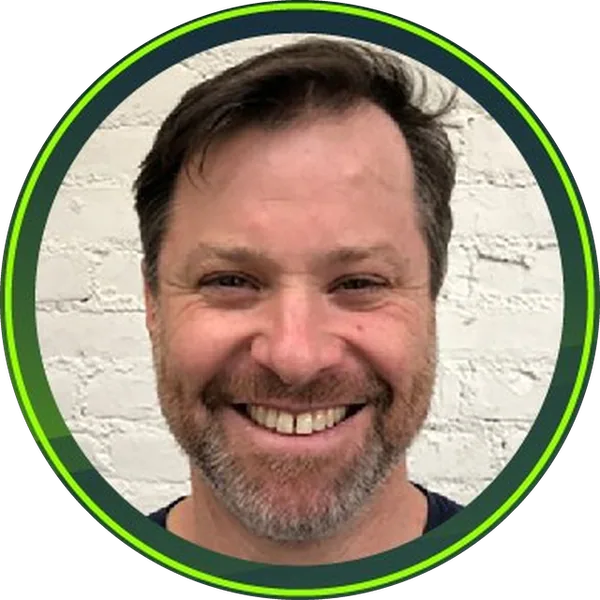
Mark Goodstein
Mark Goodstein from Streetscope shares his expertise and insights on redefining safety and risk management in road transportation. Learn tips and tricks on how innovative strategies and technologies are enhancing safety and risk management practices.
In this exciting episode of the InsurTech Geek Podcast, our hosts James Benham and Rob Galbraith interview Mark Goodstein.
The full episode
Press play for the whole conversation.

The Idea of Automation
After a series of conversations with friends and mentors, Mark discovered that Pasadena didn't have companies that were focused on building autonomous vehicles. In response, he joined forces with a group of other business innovators and thought leaders to start developing an autonomous control system for cars. This was between 2015 and 2016.
"We tried to solve what we thought was going to be a very big - and still is - a huge problem for cities. How can cities manage the deployment of these technologies safely, in an equitable way? How can they manage the data implications and everything else from these waving sensors with cameras and lights and radars and whatever else?"
The group realized six months later that they were too ahead of their time.As a result, their investors took their funding from them.
"That may not be controversial now, but back then it was pretty controversial, and we realized back then that the consistent ability to objectively evaluate safety was going to be the biggest obstacle to the wide scale deployment of autonomous technology," said Mark.
Learning User Behavior in Automobiles with Telematic Data
After ending company, in 2019 Mark started Streetscope, a method for measuring collision hazards so they can have an accurate thought on what the dangers are in the environment..According to Mark, as opposed to engineers, who are still designing with their gut, "We measure the hazards posed by all pairs of objects continuously. We have a continuous measure of hazards."
Mark believes that insurance is one of the main drivers for innovation since it provides coverage for property and casualty for infrastructure, for autonomous fleets for semi-autonomous fleets, or even the vehicles driven by us humans. While other companies measure trailing indicators -which are ethically challenged- other companies measure collisions and accidents instead of safety. Streetscope's method does not require collisions, instead, they have a big set of data that can be used by any company instead of their measurements. It's a standard approach to evaluating safety.
What The Future - And Innovation- Will Bring To Autonomous Vehicles
Mark sees a bright future in terms of automotive insurance and safety measurements. As long as the industry keeps incorporating technology, it won't matter if you are talking about autonomous or semi-autonomous vehicles or who is driving. Measurements and analytics will be provided as to how that driver drives, a completely different way to approach automotive insurance. Data will be tailored to each user's needs and carriers will also be able to gain deep insights into user behavior.
Tune in to listen to the episode on Spotify, Apple Podcast, iHeart Radio or watch it on Youtube.
Enjoy the ride & Geek Out!
The full transcript
Transcribed automatically from the episode audio, so some names and terms may be misheard.
James BenhamOn this episode of the InsurTech Geek podcast, we're talking about redefining safety and risk management in road transportation with Mark Goodstein from StreetScope. The InsurTech Geek podcast powered by JBKnowledge is all about technology that's transforming and disrupting the insurance world. We'll be interviewing guests and doing deep dives into specific tech we see changing the industry. We're taking you on a journey through insurance tech, so enjoy the ride and geek out. This episode of the InsurTech Geek podcast is brought to you by Terra. Learn more about our cloud native risk management information system at terra dot insure.
That's terra.insure. And we are back with another great episode for all of our insure tech geeks out there coming to hang out with us. It's a beautiful day here in Texas in the middle of the winter. Balmy 65 and a little bit breezy. It's all nice.
Rob GalbraithRob, I think it's the same for you down in San Antonio. It is, James, and I'm I'm I'm sure I'm gonna get some hate from our our audience over this. But yesterday, I had a headache half the day, and I was like, why is my head hurt so much? And I took headache medicine, didn't do it or whatever. And then I realized I actually got a sunburn. Burn. Like I was walking the dog. I was in the sun too long. Didn't that great.
James BenhamDidn't put on sunscreen. I was like, oh, we're we're already there. We're already there. It's still middle of winter in February, but, yeah, we're at that time in Texas. Well, we're at that time in Texas when my allergies go bananas because the cedars are popping right now, and it's, murdering me. But that's okay. That's okay. It's okay. It's all good. With us from Northern California, North Of San Francisco,
Mark GoodsteinMark Goodstein. Mark, how are you doing today? I am doing well.
James BenhamIt's great. So, Mark, we love talking about insurance. We love talking about tech. But more than that, we love talking about the people that make it up. So let's talk about you for a second. Tell me, where were you born and raised, and what'd you dream of doing when you were a kid?
Mark GoodsteinPasadena, California, born, and mostly raised. And, I think I probably wanted to be a physicist like my dad.
James BenhamYeah. Nice. What's your dad where is your dad a physicist at? At Caltech. Really? Did he just did he teach research? Did he do stuff like that? He
Mark Goodsteindid both. He researched and, in low temperature and solid state physics, and he taught. In fact, he was the creator of a of a physics series called the Mechanical Universe that was on PBS forever and still is sometimes, that replicates The from physics
James BenhamMechanical Universe on PBS. He was the host? He was the host. That is so cool. Look at that. Okay. From Caltech, there he is. I just found it. I'm gonna have to watch this. Doctor David Goodstein, the at Caltech. That is he. Okay. Well, I've got it on my list to watch now. That's super snazzy. You know, my dad was an engineer, and I wanted to be engineer too, except I thought being an engineer meant that you wore a striped cap and drove trains. I didn't really understand exactly what it was until I went to a until I went to a high school for engineers.
I'm like, oh, this is engineering, and I still wanted to do it. So it was it was a a fun deal. Let's, kinda walk through your resume real quick because you have a you have a few stops, along the way. You went to University of Chicago, got a and you did not get a bachelor's in physics. You got a bachelor's in history. What was the what was the aim there?
Mark GoodsteinI started out fooling myself in my first couple of years thinking that I wanted to be a scientist, but then realized that I didn't. And I ended up taking a break for a year and worked in a hospital in a biological lab as a bench scientist for a year and realized at the end of that time that I was done. And so came back and decided to focus on things that actually interested me, and that was history. Very cool. I'm
James Benhama bit of a history nerd as well. I did not study other than the required history classes in my business degree, I did not study history, but I love, Eric Larson's my favorite history author ever. Love everything that he wrote. I got hooked on all of his writing when he wrote devil in the white city about this, you know, serial murderer in Chicago during the Chicago exposition in the late eighteen hundreds. Fascinating book. Then he wrote about, Isaac Storm, then the the great Galveston hurricane of nineteen o one.
Then he wrote about the invention of the wireless telegraph. Mean, he he just all these amazing books, splendid in the vial about Winston Churchill. I learned what a what a eccentric man Winston Churchill was from him. And then I got hooked on hardcore history with Dan Carlin, the podcast. I mean, four to five hour episodes of a podcast about history. So what what's like of all your things you studied in history, like, what's your favorite genre or phase or or, you know, region? Like, what what what do you geek out on history?
Well,
Mark GoodsteinI'd have to say, you know, I was in school in 1990 when Iraq invaded Kuwait. And so I had just happened to have taken a class from a professor on a survey course in the history of the modern Middle East. And he was on what was then called the McNeil Lehrer hour, basically every week talking about what was going on. And I had a class with nine other students and it was pretty extraordinary. So I ended up choosing the professor rather than the subject, which I regret.
I think I'm probably most I'm most interested in the medieval period from Europe through what we call the Middle East. So the Ottoman Empire and and France and Italy and so forth, countries that didn't really exist back then but sort of did. Very cool. Yeah. I mean, I
James BenhamI think that's a fascinating I get frustrated when historical references or studies are really constrained to Western Europe and The United States because I'm I I've gotten to travel all over the world, and I I remember what ten years ago, went to a I I was been speaking at conferences since 2005, but 2014, I believe, or '13 or '14, I got invited to speak participate in a conference in China. And so it was in Xi'an, China, X I A N, which is kinda like the Saint Louis Of China because it's like the gateway to the West.
You know? Except there's no arch. They have a it's a walled city, and then the Great Wall Of China is nearby, and then the terracotta soldiers are there. That's that's the home of terracotta soldiers. Yep. And I was doing like a tour around the city on the wall, and like, in the year January, the city had like hundreds of thousands of people. They lived inside of this wall. They had running water, and it's like, crap. Like like a thousand years ago, it was a very modern society right here with several 100,000 people.
I mean and it just kind of opens your brain a little bit and makes you realize how, how myopic we can be sometimes. Exactly.
Mark GoodsteinExactly. Yeah.
James BenhamMy you know, but think when you study technology, it's really helpful and you build technology, it's really helpful to have a good understanding of the past. So you understand, you know, the trends in technology and really how tightly intertwined technological innovation is to historical shifts, you know? Yeah. It's a really, really big deal when a new technology hits the world.
Mark GoodsteinRight? Yes, it is. It has enormous impacts. Right? We've seen it over and over. Yeah. Over and over and over again, you know.
James BenhamSuper cool. So let's go through a couple of stops on your resume and just and and talk about this and let's jump to your your latest stop. You've you've worked across the the space. Like, you were actually a founding executive at Idea Lab '96 to '98. The Idea Lab? Like, the Idea Lab. The Idea Lab. It was. Which is super cool. I I just need to geek out. Tell me about that.
Mark GoodsteinYou know, in fact, my sister started it with Bill Gross.
James BenhamHoly crap.
Mark GoodsteinStarted in in her bedroom. Oh. Because at the time, Bill was still focused on knowledge adventure, which was an educational software company. And, I joined a few months later, and, my job was to start companies, was to figure out how to take an idea and turn it into a a concept that could be funded or or could grow on its own, and ended up starting several different companies at Idea Lab in in different tours of duty. So I started, a company called intranets.com, and then I went to goto.com, which pioneered paid search, and then left for a couple of years and came back and started a sort of Tinker Toys for Adults company called XBeams that we decided to pull the plug on because we realized that in retail, inventory is basically consignment.
So we were paying to have our kits inside of, retail outlets. And if they didn't sell, we were taking them back. So that was a big bite at the apple, and we decided not to to pursue it. But then we did, find, which turned into x one, which was a desktop search product, which is still around. And after that, I, left, I think, not for the final time because I came back and ended up starting another company many years later, which is part of this story, but,
James Benhamleft to start the, automotive x prize. Now what connection was there to the Ansari XPRIZE, like the major XPRIZE with that Peter that Peter Diamandis got involved in? So the XPRIZE Foundation, their first big prize was the Ansari XPRIZE.
Mark GoodsteinAnd I think in 2004, they awarded it. And it was the biggest you know, after the cult the the the capture of Saddam Hussein, I think it was the biggest story of the year in terms of media mentions and so forth all over the world. And it was a big deal. I mean, it was talk about, you know, maybe no enormous advances in technology, but the fact that we could do this ourselves without government support, etcetera, was a pretty earth shaking event. And, you know, the history of competitive prizes that would spur entire industries was older than the Ansari X Prize, but they really nailed it.
And they were looking for something that they could do that was just as big, just as impactful, and they needed someone to come on and and do it. And Peter and I had common interests and contacts and someone introduced us and he asked me to come on board and start this prize. And so I came on and we raised $25,000,000 more than that, 27, and, established the rules for a a competition. And I think the only thing we actually achieved was to coin a term miles per gallon equivalent, MPGE, because we wanted, you know, a fuel neutral and a technology neutral competition to get to a 100 miles per gallon, etcetera.
And, it was we did it in a principled way, but I don't think we ended up having as big of an impact as the Ansari XPRIZE.
James BenhamYeah. I mean, the the Ansari had a had a major impact. I I met Peter at Abundance three sixty. I'm an alum of that program and really enjoyed it and really with, you know, impressive vision to to pull that much money together and have that big of an impact. And, of course, now to to see what's actually going on in space and spaceflight. Yeah. It is a direct line. I mean, the the So oh, there's a super direct line to that text. Why is that? Like, it's like a it's like a it's like a it's like a straight line.
So Yeah. That's exciting. So you've you've you've moved through a few other stops along the way. Let's talk about scoutable. Let's talk about they're not scoutables really, but, like, you can talk about Scoutables AI pod, but really, like, what led to Street Scope? Like, what was the the founding story there?
Mark GoodsteinI'd say that, you know, Scoutables is fun, but it it was a it the only connection is the insurance connection. We I was back at Idealab for something else, and Bill was walking around talking about some company that had just raised an enormous amount of money to build an autonomous control system for for a car. And this is probably 02/1516, something like that. We'd all seen the DARPA grand challenge. We always, you know, we we knew what was going on. But, he looked at me and said, you know, how can it be that we have Caltech, Art Center, and the Jet Propulsion Laboratory here in Pasadena, and we don't have a company that is building an autonomous vehicle.
Why? And so we started chitchatting and and talking about different people. And he said, okay. Okay. Great. Great. That's a great idea. Well, I dragged out some idea that that we had had a few years ago, a few years before that. And he said, well, that's that's great. I'd love to do it, but who who could lead it? And so we started talking about some people, and I I suggested a a mutual friend of ours named Eric Antonson, who was then the chief technologist at Northrop Grumman.
And, you know, Bill said, no. Eric would never leave that job. And Eric had been a professor at Caltech before, and he had been, you know, the the CTO at JPL for a while, which is a position that the faculty at Caltech fill. And, you know, he would be ideal for this kind of job. Bill didn't believe it, but I was having a drink with Eric that night. So, of course, I brought it up. And then one thing led to another, and Bill and Eric went and pitched Bessemer Ventures, and he walked out with a check.
I mean, Eric had never pitched a VC in his life. He walks in and gets a check-in his first meeting. But okay. This is
James BenhamWell, that'll ruin you for life. But
Mark Goodsteinthe combination of Bill and Eric, you know, in terms of of ability to communicate a message to a very wide audience and belief that you could actually solve the core problems, that was a a good bet on their part. And we tried to solve what we thought was gonna be a very and still is a very large problem for cities. Right? How can cities manage the deployment of these technologies in a safe way, in an equitable way? How can they manage the sort of the data implications and everything else from these roving sensors with cameras and lidars and radars and whatever else.
And we realized about six months into it that we were too early. And that may not be controversial now because everyone knows it now. But back then it was pretty controversial. We realized then that the consistent ability to evaluate objectively, evaluate safety was probably the biggest obstacle to the wide scale deployment of autonomous technologies. And we all believed in it. We thought that it would make cities better and safer and driving on country roads safer, everything, logistics. But if you can't prove it safe, you can't get there.
So we wound the company down because our investors didn't believe that was a big enough vision, And we started our company Streetscope in 2019.
James BenhamAnd what does Streetscope do?
Mark GoodsteinWell, we invented a method, a measure of collision hazard. So, you know, we we all take a test when we're 16 years old, fifteen and three quarters, and we are granted a license to drive a car, a vehicle that could, you know, and does kill people when it's driven improperly. And there's no other test. We get old. We get glasses. We get other infirmities, and we still drive. Our our license is not taken away. That is sort of state of the art. And then we looked at a bunch of other sectors and, you know, if you're designing safe streets, you're designing a new parking lot with ingress and egress out into streets.
State of the art today is still engine you know, traffic planners and engineers design with their gut. They design they design, and decide the way it should be built, and then they wait three to five years and wait for collisions to decide whether they had a a safe design or not. That is, you know, frankly a little unethical if we can figure out how not to wait for collisions. And so and and that's just, you know, let's call it the built environment around transportation. When you when it comes to autonomous systems or partially autonomous systems, if there's no independent objective approach to the evaluation of that safe movement, that's also the same thing.
I mean, we're waiting for collisions. And even today, you know, Waymo, they simulate and they and and they drive, but they're counting collisions to demonstrate the safety of their autonomous system. It just seems unethical. And so we invented a measure of collision hazard that could be used by all these different constituent industries to evaluate and to demonstrate publicly and aberratively that their systems are safe or their streets are safe or whatever else. And we have been going to market ever since.
James BenhamAwesome.
Rob GalbraithRob? Yeah, Mark. It's really fascinating, and and, I've been following the journey of of Streetscope for a little bit of time, even remember the the AI pod days. So I I'm really fascinated about this. Right? When is the system you know, we've all heard about AVs for years. We're all excited about them. Right? We kind of definitely have fallen into the Gartner hype cycle or the hype and then this trough of it. You know, you asked the key question. Right? When is this safe to to to deploy?
So I'm just curious, like, how do you do that? Who are your clients? Are they they cities, municipalities? Right? Are they they private customers? Are they people thinking about operating these fleets? Like, maybe you can talk just a little bit more about, you know, what is the product? Who is it for? Maybe you have a range of products.
Mark GoodsteinWell, we actually have one product which generates a data stream, if you will, or a set of information products that can be useful to all these downstream industries. So we have customers in the, let's call it the infrastructure space or the evaluation of and mitigation of dangerous intersections and garages and things like that? Or should we, as you know, a city or municipality deploy an autonomous system on a given stretch of road? How can we evaluate that? Our product is uniquely useful for that kind of endeavor.
We measure the hazard posed between all pairs of objects on a continuous basis. So sort of like temperature, we have a continuous measure of hazard and it's objective and it's not making any assumptions or anything like that. So it can be useful in different contexts, but it's the same data everywhere. So I'll give you a few examples. Although the quick answer is it turns out insurance, not self serving because I'm on this podcast, but insurance ends up being one of the primary drivers for this because at the end of the day, it's insurance that's left holding the bag.
They have to provide coverage for property and casualty type insurance, for infrastructure, for operating insurance, for autonomous fleets or semi autonomous, or even the vehicles driven by us humans. And by the way, our measure doesn't distinguish between a computer driving a vehicle and you or me driving a vehicle. To us, vehicles are black boxes. So whatever control decisions they make, we are measuring, and we're measuring the hazard they pose. But it's you know, if you're a if you're an insurance company, right now, you're using trailing indicators to make assessments about the safety of a of a given system or of a fleet or of an individual.
How many times have they had an accident? What kind of accidents? Trailing indicators are, like we said, sort of ethically challenged if we have the ability to understand and evaluate safety in a way that is not does not require collisions. Those developing autonomous systems. Right? They need objective functions to to to understand how well they have progressed, how version one is not as good as version two, etcetera, and why. So objective functions in that context. So we have a a partner, a very prominent engineering consulting firm, an engineering services firm that does work for every OEM on the planet, those building cars that are integrating our measure of hazard into their early stage vehicle development services.
So when companies come to them and want to develop a vehicle, they have to follow standards of safety and so forth. In this world, it's called ISO 26,262, which is the last time I'm gonna say that, but but our measure fits quite well into the context of that kind of of engineering project. And, of course, in insurance, the problem with trailing indicators or the use of things like harsh events, which are useful, but not that useful and don't correlate very effectively to loss. But they're there, and they're they're better than nothing, if you will.
But our measure provides context. So it's not just that someone slammed on the brakes a few extra times. It's that we know that they slammed on the brakes not around anyone in a dangerous manner, but because they forgot their keys at home. Or, you know, the swerve that they did was not because they were driving unsafely, but because they were avoiding some hazard in the road that would have caused damage to their vehicle or caused damage to somebody else. So that's that's the basic picture, if you will.
James BenhamVery interesting. So I was a city councilman and a planning and zoning commissioner before that. I dealt with road regulations on a regular basis, and, actually, I I led a series of regulatory changes in College Station around block length signage, a whole bunch of things that we we did, but also tried to make sure that we would be a prime city for two things, drone delivery and five g deployment. And so we became a test bed for five g deployment in College Station. We also became the very first location for Amazon Prime Air to locate.
So I actually the the drone delivery center is just about a block from here where all the drones take off from to deliver things around College Station. So, you know, right, the regulators matter, and obviously to to Cruz, and let's talk about GM Cruz for a second because they got shut down by the San Francisco regulators. Right? Yes. They did.
Mark GoodsteinAnd, you know, I I don't know much about what's going on inside. Unfortunately, safety is still one of these things that people compete on. And so each developer of technologies of of automated technologies and by the way, not just what they call ADS, full automation, but also ADAS, like, you know, the the systems that help you and take control of the vehicle. You know, the the problems that Cruise was having, which are now well well documented and and and talked about, included things like, you know, stopping, on top of a a fire hose or, you know, performing, you know, bricking in the middle of a of a street because it didn't know what to do.
These aren't things that we can necessarily help with. I can't that that a collision hazard measure is not the end all be all of safety. It is just about the likelihood that you will collide. That's it. And the whole point about our measure is that instead of waiting for collisions to happen and then using that kind of of metric to evaluate, it's actually taking advantage of all of the kinematic encounters that you have before a collision, right? You and me coming up to towards each other and then each making a left.
Well, you know, we were coming towards each other, but there was no real hazard. But driving side by side or getting too close to the oncoming traffic, things like that, those are genuine hazards. And anytime you've sat in a passenger seat with someone else driving and they are, you know, maybe a little bit heavy on the gas and a little bit heavy on the brake and you feel it in your gut as you're slowing down to a a vehicle, that's the hazard that we're measuring. It just you feel it in your gut, but that's exactly what we're talking about.
But all of those encounters are the kinds of things that that are necessary to actually understand and factor in to evaluate. Can't talk about cruise, not because I don't wanna talk about cruise. We want them as a customer. We we think that they should be. They are not yet. But, there are a whole a whole bunch of things that a company that is automating techno automating transportation has to take into account even beyond collisions, to be, you know, good citizens inside of a city.
James BenhamBut ultimately, what you're selling is a dataset. Right? That's exactly right.
Mark GoodsteinSo, an objective set of data that can be used, in an independent way, And this is a crucial aspect, right? Every different company, and actually it's big point to make with respect to insurance as well, because every autonomous company needs to have insurance and every single autonomous company has their own method of determining safety and determining when they will deploy. But no insurance company is understanding how that works. And so all they can do is default to, well, you're gonna have to have double the the rates.
Meanwhile, the companies are saying, not only do we want coverage, but you've gotta lower the rates. Well, then use a standard approach to to evaluating evaluating your safety. Right? So that's the world that we're coming into, and that's why we wanna be used and why we think we are uniquely useful.
James BenhamAnd why not just autonomous car companies can use it, but also all the carriers too.
Mark GoodsteinThat's exactly right. Yeah. No. So if they all use the same dataset, they can make better decisions on the risk. Right? That's exactly right. And and you can start comparing apples to apples. Right? Instead of, you know, whatever the the opposite of that is. We we work very closely with a couple of very large insurance companies, one of which is Munich Re. Munich Re has a large commercial fleet business in North America, and we are helping them evaluate with our context aware data stream, the activities of their mostly human driven fleets.
So although they do actually work in the autonomous space as well, we are helping on both sides.
Rob GalbraithYeah, just a couple of thoughts, Mark, and would love to have you chime in. Number one, right? I always worry about, we talked about GM and Cruise, like, you know, what standard is good enough, right, to say? Like perfection is not the answer in terms of autonomous vehicles, right? And kind of letting that paradigm shift happen, right? We know there's tens of thousands of people that are dying on roadways each and every year from human drivers, right? And that's kind of the baseline. So to me, it's partly about incremental progress.
So it's like, are we going to hit a point where the autonomous vehicles are safer than humans, even if not, they're not as safe as they possibly could, right? And so establishing that baseline right through some of the objective data that you've got, I think could kind of help, right? As we come to that tipping point in decisions as it relates to that. So curious of your thoughts that. And the other thing is, personal to me is elderly drivers, both my mother and my father had some challenges later in life.
They both drove into their 80s. Thankfully, neither of them were involved in a serious accident. But my mother, for instance, actually fell asleep one time. She kind of took her foot off the gas and ended up kind of colliding into somebody on a country road that was at a stop sign and kind of like nudge them. But that could have been a much more serious accident than my father, having personally been with him for many years and seeing him drive the wrong way on a divided highway and not see red lights and things like that.
Nothing was close to being an actual accident, right? But these are things that are of a concern and you know, trying to have those conversations with him and ultimately his license needed to be renewed. I think he probably knew he was going to pass the test, but it's like, you know, trying to get him over to like, Hey dad, I think it's time to drive in. I know, you know, I had difficulties having those conversation with both parents. I think many people are as we are in an aging society, you know, more and more of these are going to be challenging conversations.
So I'm imagining that there potentially could be applications there in terms of, you know, as we age, right? How effective are our elderly drivers?
Mark GoodsteinYeah. I mean, we have I've got lots of thoughts on what you just said. I'm all over the map. I think that, just like I said earlier, you know, harsh breaking events or harsh harsh swerving events, things like that are are not necessarily correlative. They're they're helpful, though. But at the end of the day, if you can and I think you you you you said something that I think is a key part of this use of the data stream. When you're measuring something, which is exactly what we're doing, we are just measuring safety.
We're not making assumptions or or or anything else. But when you have a ruler, the thing you do is you compare. Right? So you baseline. And, you know, your dad may have been a great driver when he was 40. And, there's a probably if we had drive data of his when he was 40 to compare to now, you could make an objective case that he is not as good a driver right now. But there are 80 year olds out there that are good drivers and and do well, so there's no rule that you can establish.
I think in the same way, and I'm not advocating that you, smoke in the in the cab of a truck while you're driving, but does that really correlate? I think there are probably drivers who when they're smoking are less aware and are more dangerous, but there are probably just as many that are just as safe. And so it's hard to do that. But if you've got drive data and the know, when we came to market, there are all of these geometric sensors out there like radar and LiDAR, but they're not everywhere and they're very expensive.
So we made the decision to use cameras, which are ubiquitous to as the sort of main sensor for us to come to market. So all we need is a dashcam looking forward to be able to understand the context in which you're driving and and in which you're making, decisions as a human or as a computer. And we can baseline that. Right? We can baseline, you when you were 40 versus you when you were 50. If we have a little bit of drive data from both, we can baseline version one of the autonomous, stack versus version two of the autonomous stack.
We can baseline. In fact, when it comes to autonomy, I mean, we can we can tell the we can give you a baseline for the activity, for your for your your behavior, in in context of the kind of sensor package that you're using. Right? Can I use a sensor can I use fewer sensors on the top of my vehicle? Can I drive just as safely with fewer sensors? Can I drive it with a different configuration? Those are the kind of things that an engineer might want to use, our data stream for.
Whereas insurance just wants to understand and baseline the the behavior of the fleet in general because that's what they, at the end of the day, underwrite, and want to understand. So
Rob GalbraithYeah. I love it. And I think, Mark, you know, for a long time, right, insurers had information about the vehicle, right, through the VIN, right, and they can get the symbol and the model year and the make and all that. And then they can look at the driver, right? Age, general marital status, miles driven, things like that. And you try to combine those and get some estimated risk. But what you're missing is the context, right? You don't know the driving environment. You don't know what they were actually doing.
And so Telematics has started to kind of give us a view, like you're mentioning through harsh braking and stuff, but having the additional context that you're able to provide now, you're able to kind of have not just the driver data, not just the vehicle data, but the actual context in which you know, the actual risk is being encountered day in day out. You're not And then to your point before your only data point on risk was really claims like did a claim occur or not all the near misses and such and so you're able to put that in context now.
Yeah.
Mark GoodsteinDave was just telling me, my colleague Dave was just telling me that he was trying to get insurance for his daughter and he called up to get insurance and he talked to the woman on the other side about two vehicles they were considering for her. And the quotes were almost, one was double the other. And there was no difference between the vehicles. There was no difference. The driver had no history, and the vehicles all had the same safety equipment on them. But the the the insurance computer spit out two numbers, one of which was twice the other.
Why? Well, it made his decision easier.
James BenhamI mean, jeez. Yeah.
Mark GoodsteinDid he ever find out the contributing factor that made it? He he probably didn't. They probably wouldn't disclose it. They well, I'm not sure they knew the answer. The person on the other end of the line had never been asked the question. When he asked, you know, is there someone at your company that I can call to ask? Just I'm curious. She said, I have no idea. No one's ever asked this question. Oh, but I mean, that's a it's a it's a different domain, but it's the same it's the same set of, you know, we're using, we're using what we have.
This is you know, the joke keeps on coming up, but it's the old joke about the drunk looking for their street lights. Where do they look for them? Under the lamp, because that's where the light is. You can only use what you have. And so for a long time we have, you know, we have harsh events because smartphones came out and accelerometers and gyroscopes came out that were so cheap but had such great data. Well, we have the data. Let's use it.
James BenhamJust turns out that it doesn't correlate as well as the hype cycle said that it would. Well, let's let's close out by, just talking very briefly about what's next. We're at we're at time. So just tell me, like, what's the what's the next thing for you and the company? Well, next thing is more and more customers. So we are
Mark Goodsteinwe are working with a large Japanese insurer to help them assess mainly infrastructure type questions at companies called MSNAD. We're working with Munich Re on their fleet and and other things, and we've been demonstrating they they believe in us and believe, that we have an actuarially significant data stream that can help them make better bets. And, you know, I think that that relationship will blossom this year. And I think we are, because of them and others also now working for the first time with the developers of autonomous systems and and OEMs and with our partnership with FEV that makes it even stronger and more credible.
So I think you're you're gonna see a lot of activity this year. You know, we've been we've been building the technology and we've been bootstrapping. We haven't raised any venture capital to do this. We've been bootstrapping, which means we move a little bit more slowly, but much more methodically. And we now have a platform that can ingest data at scale. We have outputs that are relevant to our customers in the insurance space, in the infrastructure space and in the, what I would call vehicle development space, functional safety, if you know about that world.
So we're going to be moving much more quickly this year. I like to hear that.
James BenhamExcited to see what comes out of this. And, certainly, I'm excited to talk to you. Some of the companies you have been involved with, have read about and studied. So it's neat to talk to someone who was on the inside working on it. So it's, really great to see that you and your brain and your colleagues and their brains are working on a problem that's so important, to insurance. Certainly, we've seen a lot of radical changes in in auto insurance, and, I'm I'm a believer they could use a hell of a lot more data when making their decisions, so you don't end up with a lot of the illogical logic boxes that you that you, just described to us that when when they get to quoting and underwriting and making decisions about who to write and what to write and when.
So, excellent discussion, and, thanks for being on the show. Thank you very much. As always, Rob, thank you as well for being my most illustrious, most interesting cohost.
Rob GalbraithAppreciate it, James and Mark. So glad to have you on and really glad to, to see the progress and wish you continued success.
James BenhamThank you very much. Awesome. Great. And to all of our listeners out in listener land, this has been another great episode of the InsurTech Geek Podcast. Thank you for tuning in today to geek out our interview with Mark Goodstein from Streetscope. See you next time. This has been the InsurTech Geek Podcast powered by JBKnowledge, jbknowledge.com. The Insurtech Geek podcast is all about technology that's transforming and disrupting the insurance world. I've been your host, James Benham. That's jamesbenham.com with cohost Rob Galbraith at endofinsurance.com. Thank you for joining us today.
Look forward to meeting up again. We're taking you on a journey through Insurtech, so enjoy the ride and geek out.