 YouTube
 Spotify
 Amazon
 iHeart
 Apple
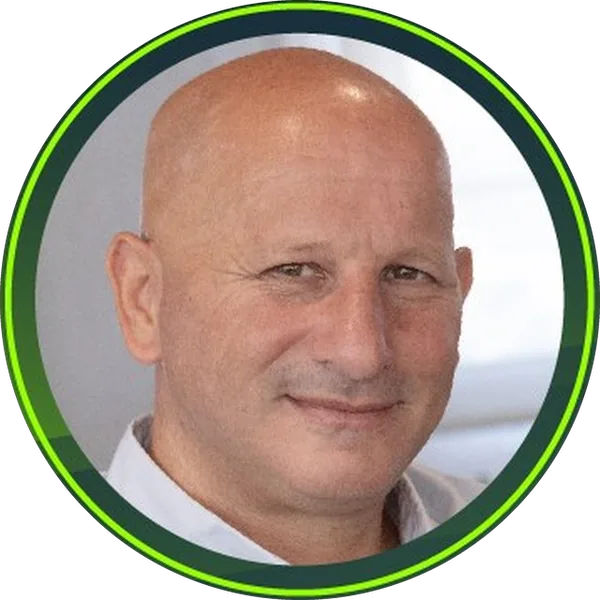
Kobi Bendelak
Kobi Bendelak from InsurTech Israel shares his insights on leading the Israeli insurtech ecosystem through crisis. Learn tips and tricks on navigating difficult times, fostering innovation, and steering your organization toward success amongst adversity.
In this episode, our hosts James Benham and Rob Galbraith interview Kobi Bandelak, CEO at InsurTech Israel.
How do Israelis handle risk management and innovation? What brought an experienced member of the army to the insurance industry and to insurtech in particular?
The full episode
Press play for the whole conversation.

The ways of an insurtech entrepreneur
So, what exactly is InsurTech Israel and how does it help the startup ecosystems?
For Kobi, it's all about culture. Firstly, he states "The infrastructure to be an entrepreneur in Israel is great".
Additionally, Kobi highlights the significance of the infrastructure for entrepreneurship and the role of the army, explaining how early exposure to technology during military service translates into civilian innovation upon completion of service.
Kobi makes a very interesting remark about how people behave towards innovation, stating, "It's mainly more solving big problems with great ideas and then implementing technology You need to have a great success story to attract the entrepreneurs to join. So all that made Israel one of the insurtech capitals of the world."
According to Kobi, there are four pillars to the Israeli InsurTech Ecosystem: investment, development activities - helping those startups connect to other, media, and the accelerator programs aimed at fast-tracking startups to become leaders.
A Disrupted Nation
Kobi reflects on Israel's resilience amidst the ongoing conflicts, acknowledging the sadness following recent attacks.
Despite the challenges, he emphasizes the nation's strength, "One week we woke up and we decided that we couldn't let that situation destroy what we have built here, this great ecosystem. So we decided to to operate and even accelerate our activity around the world"
He believes that the top 3 things needed to build an ecosystem are: building connections abroad, fostering trust in the ecosystem, and always keep going and believe in what you are doing.
Kobi wants his message to the world to be clear, "we are strong, stable and resilient" and we care about our customers, clients, and partners" They have amplified this messageby travelling worldwide, addressing these terrible events and affirming their commiment to resilience.
A Look into the Future
Following their discussion on the situation in Israel, Kobi, James and Rob discuss the state of the InsurTech Market in Israel. Kobi states that even though there was a lot of overvaluations, he believes that things will straighten out not only for Israeli insurtech Startups, but for all insurtech companies.
Stay tuned for more insights into the world of insurtech with The InsurTech Geek Podcast. Enjoy the ride and Geek out!
From the conversation
Kobi Bandelak explains how his years of experience managing crises and creating innovative solutions, helped him establish the largest insurtech company in Israel to this date.
After graduating college, Kobi Bandelak spent 19 years in the Israeli Defense Force.
When he found himself in the Army Reserve, he realized he needed another job, so after looking through the paper, an insurance ad caught his interest. This marked the beginning of his journey into the insurance industry.
Eventually Kobi founded his first company, Rachef, around 2004 and for the next 12 years he dedicated his time to building that company. During his tenure asCEO, he decided to sell 50% of his shares to Generaly, another insurance MGA group, transforming Rachefinto a subsidiary company of Generality Group until 2015…
When the entire company was acquired, at the age of 45 years old, he deicded to retire, but soon realized he needed an adventure:
"So I decided to open my heart and I said to myself open your heart good things will happen to you and this is what I did. Open my heart and one day I receive email that written this subject was InsurTech meet up."
That insurtech meetup ended up being an insurtech conference, and after hearing what was being said about all the endless possibilities of technology and insurance he decided to launch InsurTech Israel.
The full transcript
Transcribed automatically from the episode audio, so some names and terms may be misheard.
James BenhamOn this episode of the InsurTech Geek podcast, we're talking about leading the Israeli InsurTech ecosystem through crisis with Kobi Bendelak from InsurTech Israel. The InsurTech Geek podcast is all about technology that's transforming and disrupting the insurance world. We'll be interviewing guests and doing deep dives into specific tech we see changing the industry. We're taking you on a journey through insurance tech, so enjoy the ride and geek out. This episode of the Insurtech Geek Podcast is brought to you by Terra. Visit terra.insure to discover how Terra is changing insurance claims and policy management.
And we are back with another episode of the InsurTech Geek podcast. Got my illustrious cohost, another, fellow Texan,
Rob GalbraithRob Galbraith. How's it going, Rob? Going well, James. Going well. Spring has arrived early here, so I've been doing a lot of prep work in the yard and enjoying the temps in the eighties before it gets to the hundreds. Yes. It yes. It did arrive early and, I thoroughly enjoyed being outdoors,
James Benhamfor the weekend and the the the the quasi early summer warmth in February, which I'm sure we'll have some more cold spells between now and then, but was super nice. So good to see you Robin with us from Israel. Kobe Bendelak. Kobe, how's it going? I'm fine. Thank you very much, and thank you for having me in this great
Kobi Bendelakepisode, and looking forward.
James BenhamAbsolutely. Where are you joining us from today? From my home office near Tel Aviv.
Kobi BendelakAs you know, it's almost
James Benhamnight, almost midnight here in Israel. So Well, thanks for staying up late with us to to record this episode. It's good to good to see you. Good to have you on the on the show. Let's jump straight in and introduce our listeners. If they haven't already listened to you, we'll do a kind of a reintroduction. I'm I'm assuming you were born and raised in Israel because you went to to Barlon University there. So tell tell me, like, what city did you grow up in and what did you dream of being when you were a kid?
Of course, not to be in the insurance and the insure tech industry.
Kobi BendelakActually, I wanted to be a pilot. This is my dreams when I was a kid in the yard to be a pilot in the army, but it wouldn't happen. But something else happens during the time, so it's I had a great adventure in the army, but we will speak about it later.
James BenhamOkay, great. And then what did go to school to study? Biologic. Alright. Then where did that lead you after college? What
Kobi Bendelakpath led you into insurance? So actually it's a different style here in Israel than in The US. So after we graduated high school, I went to the army. I've been in the army for a long time. I'm a colonel in the Israeli army, so I didn't be able to be in the college when I was young. I finished my school my studies in the university just when I've been 40 years old. I had two degrees, so I I learned for four, five, five years during my my work time and my service in the army.
So it's not to be in the college and running the army and running the insurance industry.
James BenhamWere you a reserve
Kobi Bendelakofficer, or were you active duty that whole time? No. A part part of the time, ten years, I've been in the full
James Benhamtime, full full service. I made a full service in the army and then in the reserve. Yeah. So six so what? Nineteen? That'd be nineteen years in the reserves and ten years active. Yeah. So you you got started. It looks like Roshef was your was that your your launch into insurance? Tell me how you got into that. That's my that's what that's the company that I opened
Kobi Bendelakright after I finished my service. It was a MGA right right out right after my when I finished the service, I opened it, and it took me a while, and it's become one of the biggest MGA here in Israel. In 2004, I sold 5050% from the company to GeneraliQ. I had a big success, and and I sold 50%. And since then, until 2015, my company was subsidiary company of GeneraliQ.
James BenhamSo what led you to start an MGA straight out of the army? Like, there there has to be a story other than you just randomly pick that. So so when I've been in the in the army,
Kobi Bendelakone time, one of my soldiers asked me to I called him to a duty. He's a reserved soldier, I called him for a duty, and he sent me the letter that he couldn't arrive to the service because he's learning to be insurance agent. And he sent me all the agenda, all the agenda of his studies, and I read it. It looks for me interesting, but I left it somewhere somewhere on the desk. Of course, I let him not to arrive to that service on that time.
Anyway, when I decided to stop my service in the Army, you know, in that time you look for a job by opening the newspaper and look for opening jobs for you, opportunity for you. So I opened the newspaper and I saw a lot of commercial about insurance, so I said, Wow, this looks familiar for me. Maybe I would try it. It looks something that I can do. So I just started doing that to be an insurance guy, just in case, just, you know, and it's happened.
One lead for other things. So it's that's that's that's my the story of my life. That's great. And after, Rishef, you
James Benhamyou you ended up joining kind of a different community of startup ecosystems. Yeah. You were, you know, startup boot camp in SureTech London, then Lloyd's Lab Innovators, then, you know, Global InsurTech Alliance. Like, what what led you in down to the startup InsurTech
Kobi BendelakSo road? Yes. That's all the great question. So the story is that when I sold my company, one day I got a quote to sold all my shares in the company. It's came suddenly, nothing planned. And one day I just got a quote. I couldn't refuse the quote. And I said, yes. And I went to retire it. 45 years old, a retired person, and it took me a while, five months, to realize that it's very boring to be retired, and I look for new adventures. So I decided to open my heart, I said to myself, open your heart, good things will happen to you.
And this is what I did. I opened my heart, and one day I received an email that written the subject, Insurtech Meetup. Know, I, as a surgeon, don't know what is a meetup, but it looks for me something very interesting, and that was very boring, so I went there, and it was an amazing situation because people stand on the stage and speaking about insurance to see how they're going to disrupt it and how are they going to change it, and I said to myself, this is my new adventure, and I decided to open InsurTech Israel.
So, this is the story how InsurTech Israel established by, you even know, can say by me, in any case or something like that, on my journey somewhere somehow. And since then, InsurTech Israel become the leader of the Israeli InsurTech ecosystem.
James BenhamThat's great. Well, it's good to see it it evolve that way. Right? I mean, you you you saw an intro had an interest, had a passion, and brought that passion. And plus, of course, your, you know, decades of experience into into insurance. You know, there's always two interesting questions. Israel's a tiny, tiny country. Right? I mean, country. It's the the size of New Jersey, functionally. And so it's a it's a very small country, but they have a huge technology and start up scene and a and a really nice InsurTech scene.
What led to the to the this this small country in The Middle East being such a leader in technology and start ups?
Kobi BendelakI think the answer for that, it's based on culture. But just before that, I must say that the infrastructure to be entrepreneur in Israel is great. So it's easier to be entrepreneur here in Israel than other places. So what's helped Israel to be a startup nation is first is the culture, as I mentioned. The Israelis have entrepreneurial character, and we are independent people. We know how to solve problem and how to achieve goals. So this is the character, first is the character and the culture. The second thing, as I said, is the infrastructure.
The first thing is the Army. Young people join the Army at very early stage, lead great technology improvement in the Army and the Army technology units and the intelligence units, and then when we finish the service, arrive to the civil industry and implement what will add in the army to the civil industry, so it's the army. I've seen all, and of course the education, the university here in Israel are very good universities, so all that lead Israel to be a startup nation. For your question about the ShuTech side, it's a very interesting angle, because what I'm thinking that the issue take, first of all, is not technology.
It's mainly more solving big problems with great ideas, and then implement technology. And this is what, as I said, this is what the Israelis are very good at. So because of that, the Israelis are very good and very advanced in the Intrutech space. Of course, to build a good ecosystem, you need to have great success stories to attract the entrepreneurs to join. So we have a great success story like Lemonade and Hippo and Next Insurance and Sapiens and Enix and a lot of great and big insurance insure tech start up that started here in Israel.
So all of that altogether made Israel as one of the insure tech capital of the world.
James BenhamYeah. Do you do you I but before I hand it off to actually, I'll go ahead and let Rob take it from here. Rob?
Rob GalbraithYeah. Kobe, it's great to have you back on. So just, for those so you were on a previous episode, so I highly encourage our our audience, our our viewers and listeners to to check out the original episode that we had with you. And obviously we want to get an update. But before I do that, I just wanted you to kind of share with our audience, you know, what is Insurtech Israel exactly and how do you help enable the startup ecosystem in Israel?
Kobi BendelakThank you. So Issuitek Israel leading the Israeli ecosystem. We have here almost 200 Issuitek startups based in Tel Aviv. We support the ecosystem with four pillars. The first one is investment. We invest money in the startup. The second one is biz dev activities. We assist the startup, the entrepreneur, to sharpen the product, feed it to the insurance world, and open them a lot of doors around the world. The third pillar is the media activity, media division that we are producing and operate, our road shows and delegations to all over the world to assist our startup to engage with potential clients, insurance people, and investor.
As you know, and I'm sure the audience are all that, insurance builds on trust, and you cannot build trust by speaking with someone by phone, or by LinkedIn, or by Zoom. You must meet people and look to the eyes for each other, so based on that, we're operating a lot of opportunity to our startup to engage, and our last pillar is the accelerator. The Israelis should take accelerator that become one of the leader and the best accelerator program in the world, and been chosen for being that last year.
We operate, until today we operated six cohorts, so we are really experienced, and our startup are very, very successful. We raised more than $150,000,000 in the last eighteen months, and signed on more than 40 agreements. We are doing great jobs around the world. Our business partners are some of the leaders in insurance company and technology company in the world, AIG and IAG from Australia, Songpo from Japan, if look from US, Aon, Lloyds of London, of course our great partners, they started BrokerTec Ventures, and from the technology side, are part of our business partner, Dell Technology and Microsoft and Sapiens and Milliman and Resispro and some insurance, local insurance company like BigW and Direct Insurance.
So we have 21 business partner and altogether we're operating here the flourishing initiative ecosystem.
James BenhamYeah. Kobi, obviously, let's address the elephant in the room, as we say over here. You're in the middle of a war, really not just on one border. You've got to defend yourself as usual to threats that are surrounding the country. You're a longtime service member of the Israeli Defense Force. With a decade of active service and almost twenty years of reserve service, you certainly are acutely aware of the challenges the IDF faces. And October was a terrible month in Israel's history and truly awful things happened that day and continue to happen.
And, you know, when you have thousands of missiles being lobbed at your country, I believe those are still going on. You know, the how how does this impact the business and innovation community when you've got such a ferocious battle and you've got such a horrifying event that occurs on that day? I mean, what's
Kobi Bendelakthe mentality change and what's the impact on the people in Israel? So first, let me let me just say that the Israel, the life became almost as usual. I'm meaning from the business perspective. So schools are open, factories, malls, cinemas, restaurants, almost in the majority of Israel just, you know so the life, the business life became something like as usual, like we used to have, but from the feeling perspective, the vibe here is very, very sad. It's not the Israeli style, it's not the Israeli culture to be sad, so it's a very challenging time from the feeling.
Our brothers and sisters are still hostages in Gaza Strip, our brothers and sisters still fighting in Gaza Strip, we are suffering from some attacks, but the life becomes, as I said, as usual. We wake up in that Black Saturday, like the majority of the people in Israel, I think majority of people of the world, they're very surprised by this attack, this terrible attack and terrible things, and it's we've been in a shock for a few days. I must say that, to be honest, we, the people, the army, everyone here was really shocked about that situation, but Israel is a very strong strong nation, and where people are really strong here.
So it's take it's took us few days to recover, and since then, we took the initiative for our side. So from the army side, we are leading we are leading now the the attacks and the war there. As you said, James, in a few borders, not just one border, but we control the situation here in Israel from the armed sides. As I said, in the business side, so very often, not always, very soon after the Black Saturday, I think it took us one week, we wake up in the morning and we decided that we cannot let that situation to destroy what we have built here for furious, this great ecosystem.
So we decided to to operate and even accelerate our activity around the world and say the world that we are strong, stable, and resilient, and we care about our customers, clients, and partners. And we are we did that by traveling to The US and to other regions. I speak all over to say to them, we are here, we are stable, and we care, and we will keep going with our innovation and ideas and solutions. And I think it's made it happen because since then, we we become or not become, we come back to be to act as we used to act in the past.
James BenhamAnd I I I do have a follow-up because not only is the country under pressure, but I mean, let's be honest, you again, another elephant in the room or maybe the hippo in the room. You you reference you reference hippo and lemonade as Insurtech successes, but they're both down over 90% in stock value from their five year high. I mean, you look at that lemonade, you know, they're they they peaked at $144 a share. They're currently $163 a share. Sorry, and they're they're trading at $19 a share.
So they're down about 9090% in in value as a company, and they've demonstrated a remarkable challenge in turning a profit. Their loss ratios are still really far from optimal. They're losing a lot of money and Hippo, you know, from a stock price perspective, it's it's five year peak was $351 a share currently trading at 12, which puts it at an over 95% decline in value. How do you how do you reconcile the initial excitement and success with the reality that the public markets are absolutely
Kobi Bendelakpummeling these two stock prices for not being able to make money? Thank you for asking this question because it will assist me to show two things. First, that we already come to life as visual because people ask us usual questions, and the second, I will explain what I think about that situation. So first, I think the situation, what's happened to Lemonade and Hippo, and they explained that better than me, but can explain it better than me, but it's the valuation that they got from the market.
The valuation was very high, too high, because the people, the investors, looks like Hippo and Lemonade as a technology startup, not like insurance company. It took them a while to understand and realize that this initiative is very nice, it's digitized, it's fun, it's fantastic, it's great, but in the end, it's an insurance company, and you need to look at the papers, look at the balance sheet like insurance companies. And then when they realised that, the share had decreased. That's the reason that it was high for them.
So the problem is not, it's of course lemonade and epo, they're not running without any blame, but the blame is below more to the investors that value them higher than they needed to value. Now, they claim again, especially laminates and the others, and they claim again, and they are going to arrive to the right stage that they need to be right now. I believe in that company, and in the other issue techs, just from the Israelis ecosystem that will show us that the issue tech industry is the driving kicking and very good and very important.
James BenhamYeah. So your your assertion is that they're appropriately valued now and were hyper valued when they IPO ed. But of course, they played a pretty heavy role in pumping that valuation on IPO. But you know, to really actualize the money because of their their lockout periods, they had to keep that value high for a period of time. So it's yeah, really, really interesting. I think, you know, we're starting to see that, you know, the laws of gravity apply to all companies and insurance. You've got to make money, you got to generate a profit.
They're they're novel insurance companies, but they still have to be graded as insurance companies, not as other other types. Rob.
Rob GalbraithYeah, Kobe. So I'm kind of curious. We talked a little bit about some of the challenges just the the insurance tech sector in general has had right With the end of the zero interest rate environment, this focus on profitability as opposed to growth, right? We've seen funding decreases, maybe it started to tick back up again, so it's definitely been a challenging economic environment plus we've got this additional challenges that are unique to Israel with the war, right? And kind of the sociopolitical challenges as well as economic challenges.
So just curious from your perspective, what are some of those challenges? How are you navigating that at Intritech Israel and kind of what you're, as you're going on these road shows, you know, what are you telling partners and prospective partners of concerns that they might have to help assure them that, you know, things are still very, very healthy in terms of Intrutech in Israel.
Kobi BendelakOkay, so first you really write, we're suffering from some challenges, but challenges, sorry, were even in the past. So it's not something new for us. So the big problem, the big barrier for our ecosystem right now is I think something around, it's the survey that we made, around 25% for our startups are still raising money right now. Okay? And those that it's regular, it's almost all the time 25% from our startups find themselves in the process or are going to be in the process for raising money, but the situation right now to raise money in Israel, it's a little bit complicated, especially for early stage startups.
So the startup, the stable ones, keep raise money as usual. Just straight a few days ago, didn't announce it, so I cannot say next, but one of our great startups raised a lot of money in valuation, very high valuation. In the last two months during the war, for startup, it's published, we can speak about them, raised a lot of money like Digital Owl and Air Doctor and others. So it's a great opportunity for our startup to still grow, but as you said, you're right, the big product, the big barrier right now is for the early, early stage startups, because they're based until today, and like always, on angels.
The angels right now in Israel are not so willing to spend money or invest money in very high valuation or risk. So for that, we have built for the startup, and they say the coronary in Israel support that, a farm that they can raise money for the farm to cover the gap that we're having right now in between the last fundraising to the next one. So I think the majority of the startup here in Israel, the early stage startup, will still going forward for the next, let's say, year until the situation here in Israel will be better.
So the majority of the main problem is the early stage of government and us support these startups to keep going with that so the ecosystem are stable. One more thing to say to the entire world, the entire insurance world, that we present to all over that we are keep going with our ecosystem and with our innovation. We arrived just two weeks ago from Switzerland and from Germany with a roadshow that we operate there. We met great insurance companies like Allianz in Swiss Re, in Zurich, in Elbitzia, Provincial, and other insurance companies, and we spoke with them about the situation in Israel.
We presented them what we are doing. We presented them the idea, the technology, the technology that we are building and it was great. So, and we are going to do that next week in US. As you know, we are going to be in Chicago, and in Columbus, Ohio, and Edinburgh, Iowa, to speak with our clients, to speak with our, with the insurance industry, the insurance ecosystem in the Midwest, and to present them that we are still stable, strong, and resilient. It's very important to emphasize that all over the world.
James BenhamExcellent. Yeah, absolutely. And I think it's it's important to emphasize that, you know, times of crisis can actually be an excellent time to start a business. I mean, I started my business right within a couple of months of nineeleven happening And right after the dot com collapse is when I actually started. Now I bootstrapped from a few thousand bucks in my dorm room, but I didn't raise money, but it still was a great time to enter the market because there was a shakeout and there was less competition.
And so I had a really, you know, it was a really interesting time to start a business. I mean, it really was. You know, there's a lot of opportunity that shows up like right now. You know, there's opportunities with some companies stepping out of the market. They can't survive. They can't stay around some some larger players in insurance technology. For example, Ebix just declared bankruptcy and they're in a, you know, really interesting situation and that's that they're a major player in in in insurance tech in some levels.
And so you have you have some opportunities now to step into to gaps that those players are leaving in the market. So I I think it's a good time now. Are you going to get an $8,000,000 pre money valuation before you even start developing your product? Probably not. You probably shouldn't. You probably shouldn't have before either, I would argue. But you know, that's the you know. That's the reality is that there's a I think, a little bit more rightsizing evaluations right now. I think, you know, startup incubation is really hard, Kobe, and and I'd I'd be interested to know just kind of your top three things that you think you have to bring together to to do what you're doing in e ecosystem building is super difficult, you know, because you you it's so easy to break it apart.
People are, so fickle sometimes. And so you it it can be really challenging to pull off what you're trying to pull off in Israel. And and I'd I'd just be interested in knowing your top three things that you think to build an ecosystem. If somebody wanted to do what you're doing, in another country, in another continent, what do you think the the top three things they can do are? I think the ecosystem
Kobi Bendelakevery ecosystem in the world have different challenges before the so I look for what is the challenges for my startup, to the Israel InsurTech startups. And what I found what I've added, that's the first thing, the most important thing for the startup is connection abroad, because the Israeli insurance ecosystem here in Israel is not so important, it's not so big, it's not interesting, the Israeli startups. The main target market for them is The US and after that Europe. So the barrier for them, the challenges for them is to build a relationship with a global insurance company or a local insurance company abroad.
So what I firstly that I have built here in Israel for the ecosystem is a bridge, bridges, bridges to war. So it's a two path bridges, so for the startup to cross the rivers, across the ocean, oceans to the bank clients in US and Europe, and for The US and the European companies, insurance company to arrive to Israel. So this is the first thing that I've built here, And after I build the trust with these two ecosystems, the Israel InsurTech ecosystem and the insurance world, you know, just few years ago, I was an insurance, your insurance agent.
I needed to build trust with two different ecosystem that I never been in. So after I build the trust with this startup, who is this insurance guy that traveling around here? And after I build the trust with the insurance people around the world, I could bring up, I could, so I stabled the banks and I built the bridge. So this is the most important thing that I made in the beginning. So building the trust with the ecosystem, this is the first point. The second point for us, building the bridge.
And then the last thing is amplifies all the time, what you are doing, what you are planning. Tell the world that you are doing great things, Show them that. And the last thing that is very important, it's important to build ecosystem, but it's important for any entrepreneurs, and to build ecosystem is like to be entrepreneur, is always keep going forward. Good thing will happen to you. You don't know when and you don't see them now, but if you will keep going forward, you will see them somewhere around the corner.
So keep always keep going and believe in what you are doing.
James BenhamIt will happen. Yeah. You've really got to and what you've done, you've really got to turn yourself into a trade delegation. You're promoting the country as much as you're promoting the member companies and the people. And so you're really engaging in classic old school hand to hand international diplomacy at some level, economic international diplomacy. So you you do have to build a lot of those cross country connections for sure. Rob,
Rob Galbraithwhy don't you close us out? Yeah. Kobe, I just wanna first, congratulate you on all your success at InsurTech Israel. I actually met you before there was an InsurTech Israel, so I've been privileged enough to kind of see from the Ground floor just building it out. And I just think about some of the Israeli startups that I met prior to Intritech Israel. Mean, it was great and you know, I got to see some of the entrepreneurial spirit and talent firsthand but yet, I just feel like what you've built really just brings that community together as James was saying, right?
And a lot of these companies were kind of trying to do it on their own, right? And so now they've got partners, they've got friends and so you've formalized maybe what was an informal community, which has always been kind of a strength and resilience of the Israeli people to help each other out, right? And I think you've just built a tremendous foundation to really accelerate that. So kind of, you know, with that being said, I'm curious kind of what's next on your radar now that you've come so far, you've really formalized a lot, you've got a formula that works.
So what's kind of next in terms of where InsurTech Israel is going? Okay, thank you for asking that. So for the short term,
Kobi Bendelakwe are focusing right now to assist our earliest early stage startups. So we are going to open in June our first boot camp here in Israel for our early stage startups. We are even called a lot of startup technology startups that are operating right now in other industries, but thinking about starting to work in the insurance space to join us to the bootcamp. So it's going to be a very interesting bootcamp, five weeks of workshops and lectures and events to provide a lot of knowledge and understanding and relationship and connection to our startups with the insurance world, and in the global world, in the global insurance industry.
So this is for the short term, this is our plans. Of course, in parallel, we operate the roadshow, the delegations, and then the investment side, so all this stuff all together. For the long term, UNGEM's already touched this point, we want to export our success to other regions, because we believe that what we have built here in Israel can be present and can be something very useful to other communities around the world, especially in the third world, like Africa and other places around the world that can use our skill, know how, and the relationship that we have built to accelerate them appearance in the InsurTech world.
I saw a lot of things, a lot of good things happen around, and we for sure will be part of that. So to make InsurTech Israel a little bit global and support other communities, where there is no Ishutek community right now is our, I think, our next mission.
James BenhamAlright. Well, Kobi, thank you so much for joining us today. We really appreciate it. It was a good conversation. You know, blessings on the people of Israel and and, on all your businesses. I hope that it goes really well. I hope you guys can, can continue to promote your, your country, your companies, and InsurTech in Israel and continue to innovate and excited for what you're you're doing there. And
Kobi Bendelakreally, really appreciate you joining us on the show today when it's so so late there for you. Thank you. Thank you very much for having me here, and thank you for your great support. Thank you very much.
James BenhamAnd thank you to our listeners for tuning in today to geek out our interview with Kobi Bendelak from InsurTech Israel. We'll see you next time. The InsurTech Geek podcast is all about technology that's transforming and disrupting the insurance world. I've been your host, James Benham. That's jamesbenham.com with co host Rob Galbraith at endofinsurance.com. We're taking you on a journey through insurance tech, so enjoy the ride and geek out.