 YouTube
 Spotify
 Amazon
 iHeart
 Apple
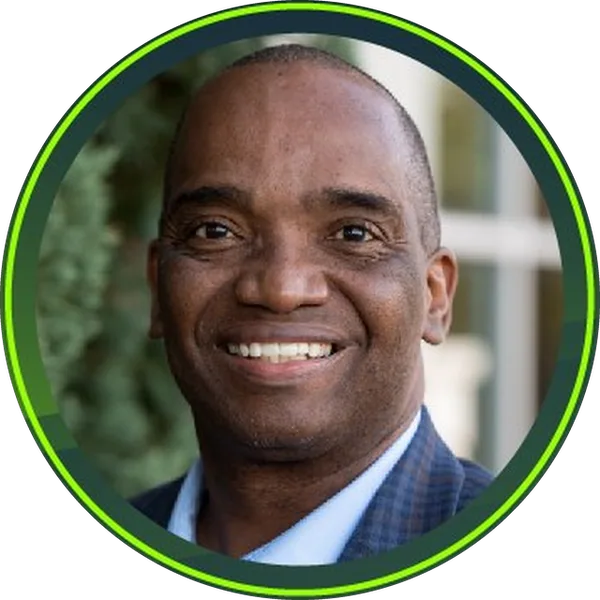
Albert Betts
Albert Betts from the Insurance Council of Texas shares his expertise and insights on trends, tech and initiatives in Texas Insurance. Learn about industry initiatives in Texas and explore the key factors and technologies influencing rates and ratios in the state.
Albert Betts is the Executive Director of the Insurance Council of Texas, the largest state property and casualty trade association. He has previously been a guest on the InsurTech Geek Podcast, where he, James, and Rob discussed the regulatory environment in the insurance industry in Texas. In this instance, he discusses trends in technology, innovation, and new initiatives in the Texas insurance industry.
For Albert Betts, these are economically challenging times. He believes that "the insurance council's members are navigating interesting times in property and casualty." At the beginning of the conversation, he points out that the biggest number of questions he's been receiving are about insurance rates and why their prices are rising.
The full episode
Press play for the whole conversation.

The Competitive Market in Texas
Albert emphasizes how much more competitive Texas is compared to other states because they have the largest number of insurance companies. People can shop around for the best offer.
James subsequently says that laws are an important factor in this regard. "It's about the regulatory environment," he states.
Albert agrees, remarking that Texas is in the top 5 of states that experience the most catastrophes, including earthquakes, hailstorms, fires, tornadoes, floods, and hurricanes. "The state has always been risky, but we've always had a good competitive environment where companies feel like they can operate."
What is the insurance industry of Texas excited about?
When asked this question, Albert immediately celebrates how well-adapted the Texas market is to the insurance industry. The industry, according to Betts, is excited about "the opportunity to make money in Texas. It's one of the states that is still growing. If you look at the overall growth rate, there are opportunities for companies to go there and write auto and home policies,".
In Dallas-Fort Worth, for example, Albert highlights that there are areas that were rural 20 years ago, and now they are growing because of the influx of people from other states. "There are more cars, and there's an opportunity for growth for companies."
Companies see Texas as an opportunity to grow and do business.
The regulatory and business environment in Texas is acceptable to them in terms of making a profit or breaking even. "They are excited about Texas, excited about the opportunities, excited about this market being stable enough. That is what attracts them."
Innovation within the industry
Betts remarks that growth is still a focus and a mix between insurance and technology. According to him, it continues to be a key component of that growth as companies are trying to adjust to their customers' expectations.
While companies are looking for capital to make new investments in new products now, Betts remembers a time when there was a lot of pushback to new products. That attitude has started to disappear, and organizations are more inclined to foster innovation.
2024 Workers' Compensation Conference
Among the best methods of staying current, James, Rob, and Albert agree on networking by visiting events.
In that regard, Albert Betts, Executive Director of the Insurance Council of Texas, extends an invitation to all listeners for the 2024 Workers' Compensation Conference, where experts and thought leaders in the industry will discuss various topics.
James Benham will be a keynote speaker at that conference, and it's geared toward Texas workers' compensation professionals.
"It's a good place to network with brokers, administrators, and thought leaders discussing issues ranging from artificial intelligence to fraud," finalizes Betts.
Stay tuned for more insights into the world of insurtech with The InsurTech Geek Podcast. Enjoy the ride and Geek out!
From the conversation
In that regard, Betts emphasizes that "insurance rates are up due to some legitimate factors. Companies in Texas continue to do what they can for their customers." At the same time, he highlights the importance of a safe environment for businesses to grow.
He remarks, "You want your insurance company around; you want them solvent. You do not want your company going out of business, and you want to at least ensure there's a competitive market that you, as a consumer, can shop around in."
Connect with Albert Betts
The full transcript
Transcribed automatically from the episode audio, so some names and terms may be misheard.
James BenhamI think we are back with another great episode of the InsurTech Geek podcast. Of course, I'm your host, James Benham. And with me, my illustrious cohost, the most interesting man in San Antonio and insurance. That's right. Rob Galbraith. Rob, how's going? Hey, James. It's going well. Going well. Coming off that post eclipse high here. I know. As you know, when you're in the path of totality,
Rob Galbraithdoes it matter that there was clouds the whole day or it doesn't matter? It matters some, you know, we didn't get to see that perfect, right, disc over disc kind of it. It definitely got dark, street lights went on, and then as it started to lighten up again, the clouds just, you know, between the clouds, there was enough parting where we got to see a pretty good partial eclipse just that nice. I kind of joked. I said Amazon was sponsoring it because it kind of looked like the Amazon smiley face.
James BenhamA little nice moon on sun action. Anyway, it it's it's it's cool. I mean, I I went you know, I I go around Texas a lot and heard that there were multiple eclipse festivals, multiple. And I saw one in Burnet, Texas that was advertised. I did not go to it, but it was like a whole weekend, Friday, Saturday, Sunday, Monday of basically electronic dance music, all all kind of techno and hip hop and I didn't recognize a single band name on there. And I like some electronic music, but they they had all kinds of stuff going on.
Mean, turned this into a big thing. So evidently, a lot of people capitalized on the eclipse. Definitely some sad faces when it was a little cloudy, but it's it's okay. College Station was not the path of totality. We had a mostly total eclipse. So it was pretty close to it. Albert Albert Betts, of course, with us, our guest from the Insurance Council of Texas. He's in Austin. Rob's in San Antonio. I'm in College Station. It's a Texas trifecta today. Albert, did you watch the eclipse? We did.
We tried. I actually live in San Marcos,
Albert Bettswhich is South of Austin, about 20 miles. And although, you know, partial eclipse was great, then we got clouded out and couldn't see anything. So we missed it. So I watched it on TV along with the rest of America. Now you you mentioned partial in College Station. You know I gotta take a shot at you. I'll send you a great picture I have of the longhorn eclipse of the sun. I'll send that to you. I wish I could share it right now, but I I know you'll appreciate it, James.
You have my you have my cell. You know I accept all smack talking. It is it is 2024.
James BenhamIt is it is the year the rivalry renews between your alma mater and my alma mater of UT and Texas A and M. So bring it on.
Albert BettsI'll accept it. You can send it all in text. I will send it over to you. But, yeah, we we survived the hysteria. We had our glasses ready,
James Benhameven put glasses on the dog, at least my daughter did for a while, but, it's over now, so I'll just wait twenty more years, when I'm 80 to watch the next one, so there you go. Yeah. Exactly. You know, I was thinking about getting up and, you you know, for most of our listeners now, I'm a pilot. And so I thought about just flying during the eclipse and then just flying up along the path of of totality, but obviously above the clouds to be and but I had ended up having meetings all day.
I I didn't even I didn't even go outside. I was in meetings So all day I was like, you know, it's super cloudy. Forget it. We're not gonna see much anyway. And so certainly. And that's, like, actually exactly what ended up happening. So I I don't feel as bad. So I just need to find out where it is next that's not in The United States and and then just go there. I'm just gonna travel to it, I think, and go check it out. I don't know if I wanna wait twenty more years.
Anyway Yeah. Yeah. Enough about the eclipse. Albert, it's been a little bit since you were on. How are how are things with you and at the Insurance Council of Texas? We are doing fine.
Albert BettsAs I remind everyone, we're the largest state property and casualty trade association in the nation. 400 member companies, 39 associate members. So for us as an organization, things are going fine. I think our members are navigating continued interesting times in property and casualty insurance. The market, we can start off by let's talk about what's happening with rates. That's what most of our questions are about. I'll remind everybody, I too am a consumer. So when I got my renewal, I too had a little bit of a sticker shock as to what was, how much it had gone up, but then I just read myself my own talking points as to why insurance rates are up.
So there's some legitimate factors obviously influencing that. So I think companies here in Texas are continuing to try to navigate these economic times, do what they can for their customers, and recognize, James, that rate alone can't solve the problem. So I know companies are looking at underwriting, looking at coverages, looking at where they're riding, etcetera, and trying to make good, smart business decisions. As I tell everyone, in the end, you want your insurance company around, you want it solvent, you do not want your company going out of business, and you wanna at least make sure there's a competitive market that you as a consumer can shop around for the best price you can find.
And that's a good thing about Texas, hundreds of insurance companies. We're not California. We're not Louisiana. We're not Florida. Nothing wrong with those states. I go to them myself for vacation sometimes. But from an insurance market standpoint, I think Texas is much better positioned
James Benhamthan those states are right now. Yeah. And look, again, we're not knocking other states, but we are proud of our own. And we we're proud that we have a more competitive market. Certainly, look, the laws have a lot to do with this. The the reason there's a difference, we have a ton of hurricane exposure in Texas. A ton. We have a ton of coastline here, but we have very different laws about how things are handled. Right. And so,
Albert Bettsyou know, it's it's it's not just about weather or the location. It's it's, it's about the it's about the laws. Yeah. It's about the regulatory environment. You're right, James. It's, I mean, Texas, we've always been top four, top five in terms of rates. It's just because we get every catastrophe you can imagine, flood, hurricane, tornado, hail, fire, even earthquake occasionally out in West Texas right now. So, you know, the state has always been risky, but we've always had a good competitive environment where companies feel like they can operate, that the regulatory environment's not like you see in other states where there's literal refusal to allow companies to price their products appropriately or limitations on what companies can write or even litigation.
Look at Florida. That's part of their huge problem is just a runaway, litigation system. And and although not perfect in Texas, we don't have that severe of a litigation problem that literally almost every insurance claim becomes a lawsuit. So I think, yeah, our regulators, and then we get mad at them a lot, we complain about the Department of Insurance a lot, but let's be honest, I think they do a fair job at making sure companies can compete and maintaining one of their primary goals is to maintain the solvency of the insurance market in this state.
And so we've avoided the huge withdrawals. Or, you know, you look at the news. This company is pulling out of this state or pulling out of that state, and you thankfully just do not have that here. No. You know, the the challenge, like, in aggregate in The United States commercial, and this is just from the Insurance Information Institute in Milliman,
James Benhamyou know, they said that the combined ratio for PNC as a whole was 103.9% for 2023. But, you know, commercial lines had an underwriting profit at 97.7%. Personal lines, not so much at 109.9%. So there's a definitely a problem in the personal lines market in The United States. But then you have to really break it down to each state, you know? And so there's there's, you know, companies have to go to make money. It's what it comes down to. Bottom line. And even even, James, you cite those figures.
Even the commercial market at some point has had some some difficult times.
Albert BettsThat's just started trending back around to a positive loss ratio. I think we're seeing some leveling out of the losses here in Texas. I know rates were up off top of my head, I think 10% on the personal side. Homeowners last year, I'm hopeful that we're seeing some of that level out in terms of cost and inflation. Now there's nothing we can do to predict losses. We do our best to try to predict them. But I just saw a forecast earlier this week that the hurricane season is supposedly with the combination of La Nina and warmer water water in the Atlantic that perhaps this might be one of the worst hurricane seasons on record.
But, James, I read that, and then I remember last year. It was supposed to be one of the worst hurricane seasons on record here, and it just wasn't. So I'm hopeful, fingers crossed, Texas coast has been spared since 2017 from a large hurricane, and let's hope that that that trend continues. Yeah. It'd be it'd be wonderful.
James BenhamAnd look. Yeah. Rates rates and hurricanes aren't everything in insurance. Right? There's a there's a lot more that goes into it as a whole. What what what do you think the insurance industry in Texas is excited about right now? Let's let's let's stop. Let's not talk about the negative. Let's talk about the positive. What do we what do we what what are your members excited about? I think they're they're excited just to the opportunity to try to make money here in Texas.
Albert BettsThis is one of the few states that's still growing. If you look at our overall growth rate over the last few years, there's opportunities for companies here to come here and write auto and home. I've talked recently about, let's take DFW, where I'm from, Dallas Fort Worth. Initially, are parts of Dallas Fort Worth that were rural country areas twenty years ago that now there's opportunities to build homes. There's more cars here as everyone moves here from California and Colorado and other states. So there's an opportunity for growth for companies, which is exciting.
And obviously that has to be balanced with how do you price that new risk as you take it on. But I think companies see Texas as a, particularly when they look at other states where there's problems, Texas as an opportunity to grow and do business, to come to a regulatory and business environment that is more acceptable to them in terms of trying to operate and make a small profit or at least break even. So I think companies are excited about Texas, excited about the opportunities, obviously worried.
I mean, part of the business of risk. You worry about what's in the future, but I think confident that this market is stable enough that it's attractive for new business, for new consumers,
Rob Galbraithand for new opportunities to write business and coverage. Yeah. Hi, Albert. It's great to have you back on the the podcast. So, you know, thinking about, you know, the the unique position that you hold kind of, you know, you you get a really broad view right of the Texas insurance marketplace. And one of the outstanding things I think that ICT has done is not just focus on obviously your traditional member firms that have been members for many years, not decades, but you've really, I think been very proactive about, trying to reach out to the startup community to kind of foster innovation within our industry.
You know, obviously, you've partnered with, say, Intritex ATX community in the past. Austin, obviously, is kind of well known as a hotbed for for startups, some of which are are focused or can pivot towards the insurance industry. So we'd love to just maybe hear you say a few words about, you know, how that's been going today, what you're seeing, obviously our podcast is is primarily focused on innovation and insure tech. So, you know, where do things stand from your point of view? Obviously, a a lot's changed, particularly with the economy, some of the pressure on, you know, rates, you know, return to profitability vis a vis your growth was maybe more of a focus in the past.
So just kind of what are you seeing? What are you hearing? I think growth is still a focus,
Albert Bettsand the mix between insurance and technology continues to be a key component of that growth as companies are trying to adjust to their customers' expectations regarding interactions, risk mitigation techniques. There's obviously the Insurtech community is looking for capital to help create new products and new innovations for insurance. Rob, you're familiar at one point, even before we had Uber and Lyft, there was initially a lot of pushback on the insurance side about the notion of coming up with a new insurance product. So I think you've seen that sort of attitude disappear.
I think companies are looking for opportunities to expand, create, find ways to be more efficient, use technology to help underwrite, use data to help do better risk management and risk mitigation. I think looking for tools as simple as, I know there's an official name for them, but the water detectors, the leak detectors within homes and other techniques to try to mitigate against loss because, yes, insurance companies will write your risk, but they also would like to make sure let's make that risk less risky. And if there's a way to use technology to do that, then taking advantage of that.
I think our members are open to, I know many of our members have partnered with InsurTech to create new products, new innovations, look for ways to reduce losses, look for ways to provide products to their policyholders to help protect their investment. So I think that feature looks good, particularly as more young people enter our industry. They want to use technology. They want to take advantage of data analytics. We need to, as an industry, move away from that notion of we are a bunch of stodgy old guys who just wanna do business the way we've always done it.
I think that those days are gone. And I think as we're trying to attract new talent, stay ahead of the curve, use drones, use data, use analytics to keep our customers happy, I think this industry has done a a heck of a job over the last few years in in being more cutting edge and being more interested in innovation.
James BenhamIt has. And think certainly the policyholders are catching on as well. They're starting to see all these years of initiatives going out. Even even look. Even even in myself where I was like, you know, I had my first auto claim in, like, twenty years, by the way. And it and it and it was, you know, a bizarre it was a small auto claim, but it was surprisingly expensive. I I didn't know how much a headlight cost to replace, you know, when the headlight when the headlight levels and moves, evidently, it becomes a much more complex instrument.
And I was like, wow. That's that's a because I yeah. That's a real claim. You know? And and I was thinking myself, and I know that a lot of people have got become much more aware of potential water damage issues and technology that's really readily available on Amazon to mitigate it. You know, like, basically, shutoff valves are becoming really easy to understand. So there's a lot of things that cause that cause a lot of loss that that can really, really dramatically help. And I think you have a combination of insurers.
We certainly lost prevention is a really worthwhile investment for an insurer, because if you can stop the claim from happening in the first place, it's great. But then there's a lot of innovation around what to do once the claim has happened to pay it out quickly and reduce the administrative overhead expense and to reduce the likelihood that they'll litigate and get get legal representation. You know, there's I think there's a really fascinating combination of it's kind of like when when semiconductors got, you know, even smaller and smaller and smaller and super portable and really cheap and memory chips did, too.
And then, you know, four gs and LTE chipsets became cheap and super available. All of a sudden you saw an explosion of devices available on the market that radically changed things. I feel like we're approaching the same perspective with rates getting so high. People are paying more attention to their insurance and what they can do to lower it. And it's actually providing incentive to to take, you know, loss prevention steps seriously on personal lines, even commercial lines, you know, commercial building owners and commercial property, you know, auto owners.
And so I think there's a lot of really interesting converging coincidences. Right. Converging facts that are resulting in a lot of technology finally being adopted. That's been available in the market for a while, Albert. Yeah. And I think it it you're exactly right. As losses get bigger more frequently,
Albert BettsI think the convergence of the industry plus ways to mitigate. Now I saw an example once. I don't remember what the product was call called, but it was literally something that if the house detected or there was notification there was a flood in the area, there would literally be a barrier that would rise up out of the ground around the house to protect it from a flood. Similar instrument for a car in the event of a hailstorm in the area, something that you could put over your car that would protect your car.
So I think there's always going to be innovation. That's a great thing about competition, that it will spur someone to come up with a way to help protect against a flood, a hailstorm, you know, to the extent you can a windstorm with your roof or your house or your business. But I think the industry, we pay our claims, but we're also, you're exactly right, trying to work and figure out ways to be more resilient, how to mitigate against losses, to educate consumers. And so I think this is a time where when these storms do hit, they're huge.
Billion dollar hail storms are not uncommon now. So when they hit, it's how do we figure out to make the damage as minimal as possible to let people get on with their lives and get their claims taken care of. And let me add, you talk about a claim being handled in such a different way than when, at least I know when I was growing up. So auto claim, this is a few years back, someone hit my car, let's just say it was a group of Romanians in a rented vehicle that ran into my car while I was at work.
I'll give you the story later. But short version of it was to resolve my claim, I just used my app with my insurer, which was take the app, take pictures of the damage, describe what happened, they reviewed it, and they were able to adjust it that way. And if you told me twenty years ago someone could do that without you having to take it somewhere or someone come out, I would have told you no way possible, but something as simple as that helps speed up that claims process and keeps policyholders happy and gets claims resolved and gets claims paid quickly.
James BenhamI think the end West Westville, I did. They they said they, you know, it was it was, just last week, and the claims adjuster got back to me within eighteen hours of filing the claim. They sent me a link to they said the fastest way for you to get this resolved is to take your own photos, not take it under a bearish eye. If you take if you take photos of this, it's the fastest way to get resolved. So I I said, Okay, text me the link.
It's a single use link. You click on it, takes you to a mobile friendly site that connects with your camera. And I took all the images. They had settled it out within hours of receiving the images. It was done. Everything was done. They they sent me the estimate. I took it to a shop and went in the next day. It was like, wow. I mean, this is this is so radically different than twenty years ago, like the last time I had an insurance claim. I mean, completely streamlined experience.
Albert BettsAnd and so I was like, man, this really is technology at work. It's the real deal. Yeah. Yeah. So it's it's been a lot of change. I'm I'm old enough to have seen a lot. Tell my kids I used a typewriter when I was in law school. That's how old I am. And so the, you know, the world has changed. Companies have changed. We're bringing in younger people who expect different workplaces and different engagement at work. And even COVID made companies move very quickly to remote workplaces.
And that is the expectation we're finding amongst the students and younger folks we're trying to recruit in the industry. They expect a remote workplace that is technologically up to date, that is innovative, and that is concerned about how business is done in an efficient and modern fashion. So I I think we're there, at least working towards that and doing a pretty good job of it across the board. The on the remote workforce
James Benhamnote, and I should mention this as in should direct insurance ties. But I read a recent article from the Austin Business Journal that there there is an incredible amount of office space available for rent in Austin. It was well north of a 100,000 square feet in in downtown. It was I can't remember what it what what the exact number was, but they said there's three more buildings coming online that don't have any pre leases. I mean, it's you know, the the entire Facebook lease went out to market because Facebook backed out on their 20 story dedicated lease.
Like, there is a staggering amount of real estate available because companies, as as their leases come up for renewal, they're downsizing or moving out completely. And it's having a really big impact on the the real estate market. It would be interesting to see what the knock on consequences on that will be to insurance companies' non underwriting profits, their investment profits, because a lot of them are invested in commercial real estate. Exactly. In fact, I was about to say that is a,
Albert Bettsthat issue of commercial real estate is also something we're looking at from the insurance front in terms of our investments
James Benhamand what it means going forward. So Yeah. It's serious. Yeah. Yeah. Big issue there. We had you last on the show in September, and it's currently April. And you've got quite a few events coming up this year. And one of the things our listeners ask Rob and myself is how do we keep up with what's going on out in the insurance space? And of course, one of my big answers is go to some great conferences. Conferences can really be a great place to get continuing education.
You've got, of course, my the one I'm most excited about because of our focus on work comp. Your work your work comp conference for Insurance Council of Texas is coming up at the end of the month on April 24.
Albert BettsWhat can attendees expect at that conference? Well, one, they can expect your smiling face, James. Yeah. Leading one of our panel discussions on AI and workers' compensation. They can expect my face a little bit. I try not to hog up the podium too much, but really fun event for Texas workers' compensation professionals. It's a small event, maybe a 100 or so. It's in our office space here at ICT, but it's a good way to network with claims adjusters, risk managers, attorneys. We'll have staff there from the regulatory agency, the Division of Workers' Compensation, and then thought leaders like yourself, discussing issues ranging from artificial intelligence to fraud.
I've got a panel of a mix of old and new, where we're gonna do a little Texas brag and talk about how well the Texas workers' compensation system works and why it works the way it does and how we got from, let's just say chaos twenty years ago in Texas to now, what is a model of consistency and some of our programs have been adopted in other states as well. We'll have a discussion on how to deal with stress. You know, in these times, if you're workers' comp or any profession, but your job's stressful, things going on in the world are stressful.
If you watch the news, you get stressed. If you listen to some podcasts, not this one, but others, you get stressed. And talk about how do you manage that and how do you stay sane as you try to do the best work you can. So looking forward to a really good gathering of industry professionals. Our speakers are great. James is probably the best one gonna be there outside of myself, but speakers are great. It's gonna be a really fun event. So we encourage, if you're doing workers' compensation here in Texas, come out, learn what's going on in this system, network with your fellow professionals, and particularly, we have a panel discussion on a trend that's happening around the nation where we have different laws for first responders and others in the public sector than we do with private sector for benefits.
So we're gonna have a panel of distinguished Texas lawyers talking about that and what it could mean for the private sector in terms of benefits and healthcare going forward in comp. So great event. Looking forward to it. Hope to see people there. You can still register. Go to our website and sign up for that. We will have another event this summer, which is a broader property and casualty symposium, July up in Dallas. And that event is mostly about 300 folks are C suite levels, folks from around the country and here in Texas, from our various members, reinsurers, risk managers, agents, brokers, and so that is a broader discussion of everything property and casualty in Texas.
There will also be an AI panel there because a lot of discussion as we talked about, but a lot of interest all of a sudden in AI and how it may impact the industry. Regulators are looking at it. The Texas legislature will be looking at it. They just appointed a committee to look at all things artificial intelligence. So that would be a topic. And then, James, we are heading into a legislative session next January. Yes. We are. So we will do a little preview, during this symposium on what do we think we'll be talking about next year at the legislature.
So politics are always interesting. I know I pretty much live and breathe it here down in Austin, but if you're not in it all the time, I think it'll be interesting just to hear kind of the things that come up and some of the issues and concerns that happen. And then we'll discuss the state of the market from a broader perspective across the country, plus also some unique challenges in Texas and how Texas has addressed those in a proper way. So James, we started off talking about hurricanes.
There'll be a speaker there talking about how Texas is addressing its windstorm issues compared to other states and how we're managing the economic challenges that insurance companies are facing now. So that's our fun stuff, a lot of fun things that we do for our members. You can also keep up with us through webinars and podcasts that we do on our own. So a lot of information out there. We wanna keep our members informed, keep our non members also informed. Perhaps if you're not a member, you may decide at some point to join the Insurance Council of Texas.
We welcome having you. So I'm looking forward to April 24, James.
James BenhamI think it'll be I think it'll be a good day. Yeah. I can't wait to be there well. It's gonna be good at office is on 290, I think, in in Austin. Yeah. It's Southwest Austin,
Albert Bettsnot that far from the airport. So if you fly in, James Yeah. It's literally a ten, fifteen minute drive.
James BenhamNice. Rob, follow-up?
Rob GalbraithYeah. No. Just you've got an endorsement from me, Albert, in terms of the midyear symposium. That's always a fantastic event, so I I could not recommend it more and then I've been privileged enough to give one of the webinars in the past and so definitely just all the content, you know, outside of the live event space, highly recommend you guys do a fantastic job, Albert. And yeah, I just kind of want to wrap up with, you know, what else is on your mind, what's going on, what, you know, maybe folks are looking for particularly non insurance companies.
Right? If you're a technology firm, if you're outside looking for ways to engage, or just looking to learn more about the insurance market in Texas, what's the best way for folks to interact with you? Well, one, come to our event, because there's a good good explanation of what's going on in the marketplace,
Albert Bettssome of the challenges, and some of the positives as well. Two, if you wanna get engaged here, I'm gonna put a plug in for our education foundation. So ICT has an education foundation, which is a nonprofit charitable organization that raises money to provide scholarships and funding to nine Texas schools that have risk management and insurance programs. And part of that is we give scholarships to students enrolled in those classes or pursuing a degree in risk management and insurance. And the idea is, remember I mentioned earlier, we need young people, is to try to attract those folks into our industry.
And so last year, for example, we were able to give 40 students scholarships, totaling $75,000 And those students who are some of the brightest people you ever want to talk to, they really make me feel bad when I look back when I was 20 because they are so much smarter and so much more focused, but it's a good effort by us in the industry to try to help those students be attracted and come into the industry and help replace us since half of us are retiring in the next ten years or so.
So it's always good. It's one thing I enjoy doing as the director of the Insurance Council of Texas is participating, visiting those schools, talking to those students, and then seeing them enter the industry and, have successful careers, within the, insurance industry. So that's something if you want to get engaged, want to get involved, we'd love to have you participate in. Come to our event, reach out if you want to learn more about us. If you want to be a, your company wants to be a member, we'd love to have you.
But it's just a, it's a good group. Texas is booming. Economically. Texas is doing well. As the Texas economy goes, the insurance economy goes here. So I think it's a good time to be a part of ICT, to be doing business here in this great state and to, where you can help out students and help out others, enter this very, very interesting industry.
James BenhamIt's interesting. I think you, you you highlighted something that it would be great for us to get more universities in Texas on board with insurance education. I I love that you have a foundation that's supporting students. It's interesting, Albert, that neither your alma mater in in Austin or mine in College Station has one of those insurance programs, although the UT Dallas has one that, you know, they've got a degree in actuarial science and they've got that they have, you UTSA. So some branch campuses do. But I think that the bigger schools have still been remiss to get on board with one of the largest industries on the planet.
Right. Where they're producing prepared graduates for very specific industries. And you'll get engineering and they have all the different subdisciplines in engineering. And yet this multi trillion dollar behemoth industry is pretty rare to have degree programs. And so I'm I'm hopeful. And as a higher ed administrator, I'm believe me, it's on my radar for for our business school.
Albert BettsWell, let's not forget UT RGB, Rio Grande Valley. Yep. Also is a participating school. The University of Texas, my alma mater, at one time was a participating school. They're not right now. I'd love to have them. They actually have some risk management courses and a program there, but unfortunately they are not a member right now. But hey, we've got some great schools, even without the flagship university in the state. We've got some other great schools participating and I'm very happy to work with them as well.
But yeah, we are we actually have talked about other schools that we can include and increase our reach and and base a potential a potential new property and casualty professionals.
James BenhamSo I have a I have a fun one to end on. There's a a popular work comp blog I follow by a guy named Joe Paduda, and I mentioned this in a in a in a recent podcast. But he he heard an article recently, AI A. I. Adjusters are becoming a reality. He said it's happening sooner than expected. I'm quoting his article from April 1. A new entrant into the workers comp insurance business is pursuing regulatory approval for and licensure of an A. I. Adjuster, an A.
I. Adjuster. And so that, you know, things are getting real when they're asking for a license for their software to be a license adjuster. Yeah,
Albert Bettsthat's a little different. I'm gonna have to go read Joe's blog on that. That's I don't know. We'll see what happens there. Yeah. That's I had not heard that. Thanks for the
James Benhamheads up on that one. It it's it's one that I it it know, I read it every week because it's all about work comp. And but that that that week, it got my attention because it was just a, you know, just a few days ago. But I was like, okay. Alright. We're gonna license an AI just I think they're calling it an AI adjuster. But I'll I'll I'll email you the article. But, man, it things are getting real out there. I guess so. I'd like to see how you determine how to license a an AI adjuster.
Adjuster. Yeah. Well, it I think I think it presents a lot of the same issues that licensing a self driving vehicle comes into play. Right. You have you have things, you know, humans historically are licensed to drive cars and humans were licensed adjuster. In both cases, you have software trying to do the majority of of specific tasks in that. And, you know, then, of course, the question comes down to who has the liability in that case, you know, is by the way, if the adjuster makes a mistake, is that an Eno claim or is that a product warranty claim against the software company?
So there's there's also some insurance questions around the insurance insurance on insurance, and there is insurance on insurance. You know, there's, you know, insurance on insurance companies for the anyway. But the point the point is that it's a it's a very interesting time. I can't wait to see you and hang out and talk about all this. Sorry about that mistake. Know, you have to understand why you corrected me because San Marcos is not Austin.
Albert BettsIt is not Austin. You gotta remember that. Not Austin.
James BenhamIt is not Austin. It never has been, never will be. It's its own town. It's a beautiful city with a beautiful university that's right on a beautiful river. So I I I I love that beautiful city that you live in down there in San Marcos. No. Thank you, James. I I will take back almost everything bad I've said about College Station. That's you, dude. Except for that university that said it. Well, look. We appreciate you being on. Look forward to hanging out at the conference. And for all of our listeners out there, Texas is, what, a $2,300,000,000,000 economy with 28,000,000 people that all live within about a three and a half hour drive.
I mean, you're not all. Like, 90% of them live in a three and half hour drive each other in the Texas Triangle. This is a massive mega market. It's it's worth spending your time on and worth coming and checking out. So we hope that you'll check us out. So, Albert, thank you for being on. Thank you, sir. Thank you, Rob. Rob, as always, thanks for being my illustrious cohost and the most interesting man. She's still he's still the most interesting man to me, Rob. Just letting just letting just letting you know.
And thank you to all our listeners for tuning in to another wonderful episode of the InsurTech Geek podcast. We will see you next time. The InsurTech Geek podcast is all about technology that's transforming and disrupting the insurance world. I've been your host, James Benham. That's jamesbenham.com