 YouTube
 Spotify
 Amazon
 iHeart
 Apple
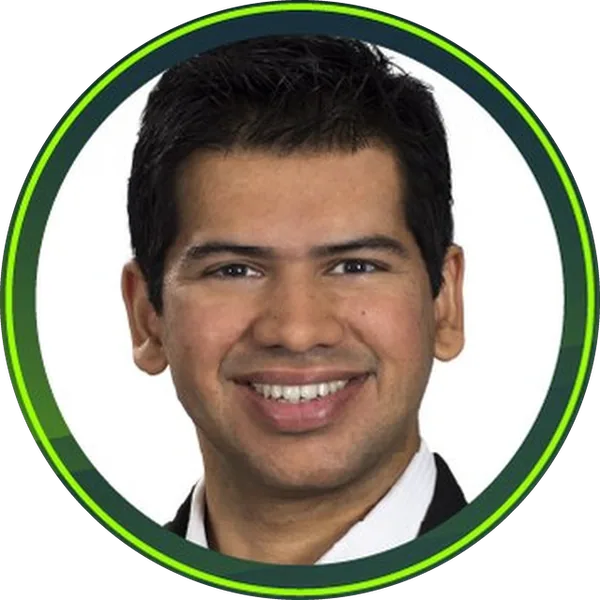
Vidur Nayyar
Vidur Nayyar from McKinsey & Company shares his insights on leading AI transformations and global teams in high-stakes environments. Learn how he collaborates with teams to devise and implement cutting-edge technology solutions and operating frameworks while ensuring sustainable growth and value realization.
In the latest episode of The InsurTech Geek Podcast, we had the pleasure of hosting Vidur Nayyar from McKinsey & Company. Vidur shared his insights and expertise on leading AI transformations and managing global teams in high-stakes environments.
The full episode
Press play for the whole conversation.

From Engineer to AI Leader
Vidur's journey began with a passion for understanding how things work, inspired by his father's career as a master mariner. This curiosity led him to pursue academic studies in engineering, specializing in electronics and communication. It was during this time where he initially developed an interest in understanding and harnessing data. His transition to the data field came during his master's program, where his work focused on improving healthcare systems using data analytics.
Vidur's professional journey began with an internship at Hamilton USA, a startup dedicated to leveraging big data to solve insurance challenges, something he was passionate about and that set the stage for his future career path. His transition to McKinsey marked a significant career milestone, where he expanded his role from data engineering to data science. Vidur now leads AI transformations at McKinsey, and is instrumental in helping clients navigate the complexities of data and technology.
The Power of GenAI
Vidur also discusses the transformative potential of GenAI (Generative AI) for insurance, highlighting that while it offers numerous opportunities, it also presents a new set of challenges. He shares the importance of data quality and the need for robust governance models to manage the associated risks of AI effectively.
The Importance of MLOps in Scaling AI Solutions
According to Vidur, a crucial aspect of scaling AI solutions is the implementation of MLOps (Machine Learning Operations). He explains that MLOps ensures that models are not only developed and deployed efficiently, but also maintained and governed effectively. Vidur explains that in order for companies to achieve long-term success, they need to build sustainable AI systems, advocating for best practices that prevent common pitfalls.
The Future of AI in Insurance
Looking ahead, Vidur anticipates that the gap between industry leaders and laggards will narrow as new technologies continue to evolve. He points to a convergence of traditional AI and GenAI, creating more comprehensive and efficient solutions. He also foresees increased partnerships between tech companies and insurance carriers, driving innovation and improving customer experiences.
Tune in to the full episode to learn more about how Vidur collaborates with teams to devise and implement cutting-edge technology solutions and operating frameworks while ensuring sustainable growth and value realization!
The full transcript
Transcribed automatically from the episode audio, so some names and terms may be misheard.
Rob GalbraithAlright. Welcome again to another episode of the Insurtech Geek podcast. I'm your host, Rob Galbraith. I'm flying solo today. No James for this episode, but we are excited to have Vidur Nayyar from McKinsey and Company. And, Vidur, this is your first ever podcast, so welcome. We're thrilled to have you on and excited that you're gonna do your podcast premiere with us. Where are you coming to us today from? I'm coming from Jersey City, New Jersey, right across the river from Manhattan. Yeah. Great view of the Manhattan skyline, I'm sure.
So how's the weather today? Humid,
Vidur Nayyarbut can't complain. It's between humid or cold. Sometimes it's well, we get a couple of months of good weather.
Rob GalbraithWell, we'll thrill the heavy on the show, and there's a lot to get into. So to begin, as we typically ask our guests, let's tell learn a little bit about you first before we learn about your role at McKinsey. So, tell us about your childhood and and what did you wanna be when you grew up as a little boy? As a young kid, I always had the snag of understanding how things worked.
Vidur NayyarMy dad, he was a master mariner, so a lot of my time was on ships traveling across the world. But then that also meant me being exposed to engines and then seeing how boats are actually operating. I always wanted to be an engineer, and I went to school to be an engineer. It just so happened that data came along, and, data became my passion along the way.
Rob GalbraithSo tell us a little bit about your college and as you mentioned, kind of your background in formal training as an engineer. So tell us kind of about that journey and how you got started out in your career. Went to school to be an engineer.
Vidur NayyarWent to school for being an electronics and communication engineer. So that means I wanted to build networks and phones and then how can people connect between themselves. Started that, came to The US for my master's, grew up in India, came to The US for my master's, did my master's in electronics engineering. While I was doing my master's, I came across a project in which we were trying to figure out how can we improve the healthcare system by improving the trauma bay. So for that, I started my thesis and my thesis was to build out electronic device so that you can figure out what are the best places to keep the equipment so that the doctors can be much faster in a trauma bay and even a second in a trauma bay can save a life.
Did work around that. Didn't have so much funding that I could have a team. So all the data that we were collecting, I had to analyze it. Started analyzing the data, got into the data field, left behind all the hardware that I created on my own, and then just started diving into the data field.
Rob GalbraithThat's fascinating and that's amazing background and what a way to get your feet wet in the working world is that bridge between your formal studies and doing real good in the world. So how did you come over to the insurance side of things? Right off the college, I did an internship.
Vidur NayyarThen there was a startup called Hamilton USA, a very prominent startup by Brian Dubrow. They were hiring for somebody who could actually help them with the technology, data, big data. And those were the new terms in that point of time. Brian had this vision of using data to solve the insurance problems back in the day when everybody used to laugh at us. I felt passionate about it. I just felt that insurance was a place where data was not being used too much. Analytics wasn't like a big thing back then.
Data science was done, but it was more of stats done by actuaries. But there was a lot of potential to use analytics, and that is why I just went into it.
Rob GalbraithVery cool. And and, I know you, eventually made your way to, McKinsey and you've been there for several years. So maybe you can talk about kind of, since you've joined, obviously, hopefully, most folks, this podcast know McKinsey and Company, the large global consulting firm. We'd love just to kinda hear about your start with the company and different roles that you've had up into your your present role. It just feels like I have a nag of, not,
Vidur Nayyarfollowing the traditional routes. Went to school for being an engineer and turned out to be a data scientist, actually a data engineer back then. So I joined McKinsey when data engineering was on the rise. Everybody wanted to go to the cloud. McKinsey just had bought or had a collaboration with Quantum Black, their analytics wing now. They had their internal cloud platform where they wanted to do all kind of solutions that they were building out. And that is what they were recruiting for. In fact, this was happening at the same time I was starting at the startup.
So people who know the McKinsey process, it was very drawn out. It took six months to actually figure out if I was getting in. One funny story is I had to decline the initial offer because I already started with the start up. But then eventually, we both figured out that, all right, I declined it for a positive reason because I couldn't leave a startup. And the hiring manager actually understood my reason and they appreciated me being very honest with them. So I started my career as a data engineer at McKinsey.
Did a lot of studies because I was coming from insurance. I was the person to work in data engineering on the insurance studies that we had. Very soon it made me feel that data engineering wasn't too close to business and solving the business problem was more of something that gave me joy. So very soon, I started pivoting from being a data engineer going towards data science. I was already doing a bit of stats work. I was doing a bit of data science work, but I got a couple of opportunities.
I took them, became a data scientist, also went to school. So I used to literally fly out from my clients, go to Harvard, take classes out there, fly back on Fridays or take a train on Friday nights. Thankfully, they had all evening classes. I'm thankful to my teams at McKinsey who were flexible and let me go Thursday evening so that I could attend my classes. But in return, they got a good data scientist who knew data engineering and then who also knew insurance.
Rob GalbraithYeah. That's a lot. That sounds like a very, very, dedication on your part and and super busy between kind of pursue continuing your studies and and pursuing as well as, you know, working with your clients at McKinsey. So currently, Vadora, I understand that you're an engagement manager and that you lead AI transformations and manage global teams and high stakes environment. So we'd love for you just to kind of describe for our audience what your current role is at McKinsey and how you, know, the types of clients that you work with broadly and the types of problems at a high level that you help them solve?
Vidur NayyarAbsolutely. So as I said, I have a knack of not following the normal trajectory. I would have become a data science principal if I did and would have been more technical, would have been leading the only technical teams. But I went more towards the business side, more towards the leadership side where I could work closely with the clients, and that is where I got into being an EM. So took some time within the company, took some coaching within the company to make that transition and made that transition.
So in terms of the type of work the type of work that I lead is mostly around AI transformation given my background in in AI and being a data scientist. My core industries are financial sectors, so I do a lot of insurance work. I do a bit of banking and healthcare. Healthcare because I do like it has an ESG feel for me. It just makes me feel good that you're giving back to the community and then there's a lot of opportunity in healthcare. But I think the thing that I get out of this is that there are a lot of topics that you can cross pollinate between different industries.
I've led studies claims in a bank and I could correlate two things and brings my learnings to insurance claims part. So I feel that all these industries if you take a higher view of them, you can join the dots and you can actually raise the bar of your industry by learning from other industries as well. So talking about the role of an EM, I think I like to talk about what do consultants do. I think there's a lot of mystery about, all right, who are consultants?
In fact, when I go to my clients, they're like, all right, so what exactly do you do? So let's demystify consultants. So I would say that think of consultants as a SWAT team. So in case you have a problem that you feel that either you cannot solve or is out of your current domain of knowledge or you feel that it's not a part of the type of problems that you have been tackling or you don't want to like dedicate your own resources to a certain problem.
You already have your hands full. That is when you get external help. So what you expect from a consultant is to get you an outside in perspective, to get you the view of the industry, what are the best practices, and then also the best answer that you could get. Now this does mean that when we come in, we are going to disrupt a couple of things but we are going to bulldoze through any roadblocks that internally you wouldn't had the opportunity to do that. So the result of it is that the problem that you were facing, we are going to solve it at the end of the day.
And that is why people like getting in consultants even knowing that there is going to be a risk of creating some ripple effects, creating some kind of disruption in their normal way of working. Also talking about the responsibilities of an engagement manager and then how do we usually lead our teams. So I would say consider an engagement manager as a captain of a ship or a mini CEO. So you are on the ground. It's your responsibility that everything is going as planned. The there are a few things which are, like, on top of all the EM's mind.
One is the delivery of the solution. It should be at the level that the client is expecting, and it should be as it should be something that is actually solving their problem. Then the second one is stakeholder management. The solution that you're providing should be acceptable by your stakeholder and you're making sure that you are maintaining that relationship. You are also helping them grow within their own fields and within their own roles. There's a big component of coaching which is involved And that is mostly around best practices because as a consultant, we see a lot of different best practices and how the competitors are doing, how people in a different sector market are doing, different geography are doing.
And we guide you from what we have seen has worked with. And then the last part is around running cross functional teams across the borders. So I would say that being somebody who's leading AI initiatives, my team comprises of data scientists, data engineers, subject matter experts, BAs, associates. So it's like a comprehensive team who are experts in different fields, but at the end of the day, working together to form an answer and solve the problem that we were hired to solve.
Rob GalbraithI think that's a fantastic overview and a lot in there. So thank you so much, Vadur, for sharing that. So I want to kind of do a deep dive now on AI and how your insurance clients are, where are they in their journeys? I'm sure there are different clients are at different points along the way. You mentioned the best practices. I'd love you to maybe compare and contrast with some other industries. You know, we always hear that the financial industry is a little bit ahead of insurance.
So whatever trends we're seeing in the finance side, the banking side, you know, that's kind of where insurance is going to follow. And then particularly Gen AI now, obviously that's been the big buzz for the last year or so, probably since the release of GPT-three. So just kind of curious, my sense is that a lot of people are already struggling with what is AI? How do I adopt it? What are the most meaningful, biggest bang for the buck in terms of use cases? And then all of a sudden now it's not just maybe your old RPAs in the past or whatnot, right?
But the capabilities now just leapfrogged in terms of what AI can even do to assist insurance clients.
Vidur NayyarThat's my favorite topic. And forgive me if I geek out a little too much. Give me blink your eyes to tell me, Stop.
Rob GalbraithYou're on the Internet to Geek Podcast. I think this is a perfect platform for you.
Vidur NayyarAll right. So it's I feel it's not a secret anymore that AI is there to stay. AI is changing the world. There's a lot of potential with AI. Within the last seven days, I spoke to four different CEOs in insurance. Three of them were for AI. One of them was skeptical. And at the end of the day, I was able to change his mind as well. So I would say that there's a lot of opportunity. And I've also seen that the mandate is coming from top down.
So that makes our conversations much easier. I've been around for long enough in the insurance world and also in the consulting world and in the AI world. So the three intersections, if I talk about it, back in the day, ten years ago, it was more around if you wanted to have a conversation, you had to prove the value before you could take it up the chain to make anybody believe that from data, you can increase their bottom line. Now it's a completely different scenario. The conversations that we have is, all right, we have been hearing about AI.
What can we do differently? We know our competitors are using it. How can we leverage it? I think that just makes our life as consultants much more easier, but that also puts a lot of pressure on us because earlier, we already had an answer. Now we have to create an answer because we are being pointed in a certain direction. Having said that, let me go a level higher. So from the studies, we do see $15 to $20,000,000,000,000 globally impact across different industries. And Chen AI has about 4,400,000,000,000 out of this, but we should not lose track of that $11,000,000,000,000 which is coming from our traditional AI.
Not everything can be solved with Chen AI. 10AI is really good at solving a few things. I would say more than a few. But given it's a new technology, it's easy to see. It's very shiny. So everybody wants to talk about 10AI. And I don't mind that. For me, it's a good thing because now it's easy for me to geek out because with Gen AI, I can reach a larger audience and I can actually talk to them about AI. What are the other things they can do within their companies?
If I talk about insurance, we worry about risk a little. So we are a bit sluggish than the other industries. The adoption rate that we see in insurance is lower than what we see in, say, banking or tech. But that doesn't mean that we are not covering that gap. Just think about what we did during COVID. We had not gone digital before COVID, not all the companies had. But during COVID, to stay above water, all the companies made that transition. Cloud transformation is one of the big things that everybody is talking about in insurance.
You put all of these together, these are the building blocks to actually become AI enabled because if you don't have if you are not digital, if you don't have a cloud platform, you really cannot think about Gen AI. You really cannot think about AI. So I would say that for insurance, all the intrinsics are in place. All the bases are there. It's just that we have a lot of opportunity and we just need to go grab it. And I think Gen AI is helping us make that leap.
Rob GalbraithNow, one of the things that I understand, that I think is fascinating, I kind of want to get in with you a little bit, Vadur, is that, you know, we've had some traditional strategies, I would describe them as that were designed for the digital transformation era, right? As companies have looked to kind of upgrade over old legacy systems, etcetera. But you've mentioned that these kind of fall short when we talk about some of the unique challenges posed by Gen AI. So I'm curious, how can we take some of these traditional digital strategies and how can they be adapted or tweaked to address some of the unique challenges, risks, opportunities that are associated with GenAI?
Vidur NayyarSee, Rob, with Gen AI, what has happened is that the whole dynamic of risk has changed. Earlier, that risk only was with the developers or the modelers or where the model actually sat. Now the risk has gone to every single user of it. The risk dynamic has shifted from the model itself to the applications and then who is using those applications. Think about a scenario in which you are an employee in your company and you have this idea of using GenAI to summarize your policies because that is taking you twenty minutes every single day of your time, and you want to use GenAI.
A lot of companies have their internal GenAI systems, but what about the other employees? Nobody really wants to go through thousands and thousands of pages of PDF. They want a tool which can make their life easier. What I'm trying to get to is that your risk is not with a selected few. Your risk has gone across your workforce. So it's a unique challenge. We cannot just think about the digital transformation that we did some time back. The same strategies don't apply. The same governance models don't apply.
The two big things which always come up is, one, educating your workforce, making sure that you're empowering them. At the end of the day, they are going to use it no matter how much you stop it. In fact, I was at an event yesterday with 90 plus interns, and we were talking about AI, Gen AI. All of them had ideas, amazing ideas, how they can use Gen AI to solve the problems in insurance. And we people say that, Why are youngsters not coming into insurance? This is the reason.
Give them the opportunity. They will. They make it likable. So how the right guardrails? So the first one is, like I said, you have education, then second one is guardrails. If you are worried about it, a lot of companies are building their own enterprise version of GenAI. You could use a version like that. You need to see how much your risk allows you to do it. But for me, the best way forward is have the best governance model out there, have your frameworks. Because earlier, the risk framework had only five to six components in it, but now there are two additional components which have been added.
So if you talk about the original risk framework that we used to talk about was impaired fairness, data privacy, security threats, performance and explainability, strategic risk, third party risk. Now there are two more which have come up because of GenAI. The first one is IP infringement. You don't know how the data which your employees are going to be uploading, how is it going to be used, and what are they downloading from there? Are they directly sending it across to your customers? Is there some IP infringement based on that?
The second one is the malicious use. The spam emails that we are getting these days are so, so good. Like, all these malicious users are getting much better at trying to fool us into clicking their links. In fact, there was a study that with GenAI, it has made it 60 times much more faster for them to break passwords. You need to make sure that you are radiating all this information to your workforce. You have to change the way that you have been working. Earlier it was like if your CEO is sending you an email, you click on that link.
Now it should not be like that. It should be like, all right, if you see an email, even from your CEO, you go to your secure website and then see if there's something that is needed to be done out there. Do not just click links, even phone calls that you're getting. Or just think about for banking, and I'm going to digress from insurance, there was this thing about KYI in banking where and there was this whole industry which was built around providing KYI for banks. All of that is going to go away because it's obsolete.
With Gen AI, KYI, the whole framework has to change. And so that is why I'm saying it is so democratized at this point of time. Everybody has the power. Everybody wants to use it. It's so simple to use it, that they don't even understand what are the risks associated to it.
Rob GalbraithThat's a lot. And, I thank you so much for sharing that, particularly, kind of the risk framework and how it's really expanded, with GenAI. So, Vadura, one of the things that, I'd love to have your, thoughts on that you've mentioned in the past, MLOps remains the cornerstone of developing and deploying AIML models efficiently efficiently and effectively. And so I think that maybe some, you know, we use a sports analogy, the blocking and tackling, right? When it comes to successfully deploying AI in a way that maybe doesn't get the same buzz or the headlines that we see on the Gen AI side.
So I would love to kind of have your thoughts on MLOps.
Vidur NayyarYou're forcing me to geek out. Right. Two topics that are very close to me. And why is so close to me is because I was a data scientist when MLOps came out. And I was also a data scientist when AI revolution was happening within our industry. We were building a lot of models. There was a time when we figured out that most of the models that we are building in MVP were not scaling and the models were failing because we couldn't scale them. We hadn't built them out in the correct way.
In fact, even today, what I'm seeing is that there are two companies that are within two camps or carriers are within two camps. One who jumped on the bus too early and did build out their data science infrastructure, did build out a lot of models. And at this point of time, what they are facing is that they have a lot of models. They did not do it the right way. There was no MLOps involved. A lot of conversations that I have is that we first need to figure out and clean out a house which has, like, hundreds of models.
We don't even know which ones are working. Second type of carriers, They really missed it. They missed the initial AI transformation, and now they are like, should we just buy things? And my opinion to them is that, guys, you can still catch up. This is the right time to catch up, learn from the mistakes the other players made. Although they are doing really well, but still they are going to pause a little. They're going to slow down. So this is a time where the new carriers who did not use AI can catch up in a really fast way because now they can build, they can also buy, but they can build it out in a much better way.
And using MLOps is the best way of building it out. The things that we see in MLOps is you need to make sure your data is correct. You're continuously tracking what are the different kind of models you're putting in. You have a governance model around it. So it's not a pipeline. It's like a full model. It's a governance model. It's a tracking of your models. You need to have that in place. And then when you talk about GenAI, think about it. Right now you're building hundreds and thousands of agents.
At the end of the day, who's going to figure out which agents are working? You will land up in the same very situation that a lot of companies are in right now. So build it in a much more sustainable way. At McKinsey, we usually have this we advise our clients to build it out upfront in a good way. You build it out in a way that you think that you're going to take it to production, and that is the right way of doing it. Build it out so that you can reuse whatever you built out.
It shouldn't be just one business unit building out something which cannot be scaled across different business units.
Rob GalbraithVadora, I think that's a really, really smart, and and hopefully folks like, that that weighs with them and sticks with them. I can tell you as, you know, a former leader of innovation teams, had a lot of misfit toys. We kinda described them, things that we, you know, did that that, you know, were were meant to be MVPs, didn't scale, but yet, you know, it's it it we we we couldn't take it all the to way production, but we didn't want to shut it off because real users were actually relying on some of those tools that we developed.
And so it was a mess to be kind of caught in this in between space and a lot of bright shiny objects I've seen over the years that, yeah, you know, it ends up being kind of a mess. So it was not done in a thoughtful and sustainable way for sure. And so plan on success. So I plan on your MVPs being successful. That's how always kinda share my message from from from my ears. So, Vadur, I you know, just kind of, you know, thinking ahead now, what are some emerging technologies or trends that you believe are gonna be shaping the next wave of innovation in our industry?
Vidur NayyarI think not just technology. I think there's a lot happening within our industry, how it's going to shape out. I feel the first thing that I just talked about, closing the gap. The leaders and the laggards are going to the gap between them is going to close because of the new technologies which are out there. The leaders are going to slow down a little to figure out to clean out their house. The laggards are going to catch up because there's so much that they have learned.
And the AI ops model, if they apply it, they can directly go into production with their MVPs. The second one is going to be around the focus of consulting firms. How are we going to help our clients? Especially for the laggards, it is going to be more around how do we enable them, how do we bring in the strategies so that they can catch up, how can we improve the speed from initial idea to actually production. And then for the leaders, is going to be more around governance and operations so that they don't fall into the same trap that they did.
I don't feel the leaders are going to slow down. I think they have all the bits that they have they need to be in place. They have it and they'll just keep on going forward. They just need the proper governance and operation operating model in place. And they're going to pause a little, but they're still going to be leading. But again, the gap can close down. On the data side, GenAI AI is nothing without data. You need good data. You need to make sure that your data is sound.
You are leveraging external data. There are a lot of companies out there which have understood that they know data is what is going to make your carriers understand their customers, their consumers much better, and that is how you are going to go forward. And data is one of the biggest piece which everybody is going to focus on. AI and Gen AI is going to start integrating. So I think the current barrier between AI and Gen AI is going to go away. So traditional AI along with Gen AI is much more powerful.
And our carriers would realize that once we are done with playing with our little agents, we are going to tie we are going to have the bigger use case in mind and tie the traditional AI and Gen AI together so that you can have an end to end deployment of the solution. I also feel post that the partnership model is going to come into focus. I see a lot of companies already getting into this partnership model, whether it be with Microsoft or whether it be the different data providers.
The time of tech companies working in silos and figuring out insurance has gone away. Everybody knows insurance is a difficult market to get into. There was this recent partnership between WTW and Guidewire. I think that's to be a really good place and good thing for them. Partnerships, there are going to be more partnerships as we see Gen AI and AI. I think carriers, really need it. They also need that fresh understanding of how technology works. So I would believe a lot of tech companies and then carriers, they'll have a partnership to take the answer forward.
There's also going to be a focus on new products. Two things which are really coming up right now is cybersecurity, so the risk associated with cyber. But then also think about the AI liability risk. A lot of things are happening using AI. There's a lot of liability around it. We are talking about it. We are talking about it in our ethics sessions, which is another topic I love to talk about. But I think there's an opportunity to create a new product around AI liability. Industry makeover.
Our industry is aging. It's the new folks who are coming in, they really love automation. There was this recent study I was looking at that 50% of our workforce in insurance is retiring in the next fifteen years. What this means is that the younger generation who really do not want to do the mundane tasks are going to leverage AI, are going to leverage AI. So insurance is having this makeover at this point of time as we speak. And then product value. There is a lot of value in product.
I was hearing a few of your other podcasts how insurance companies have been bleeding money because they could not take product to market in the right amount of time. I think there is an opportunity to create a role of a chief product officer to figure out how do you prioritize taking products directly to market without having that lag. I think all these things are taking our industry into this positive direction and the players who can get most of these things right and also make sure that their talent debt and their tech debt is not ramping up too fast, they're going to succeed.
Fascinating.
Rob GalbraithNo. We could go on for a long time, but there are lots of food for thought, but we'll have to end it there. Oh, if folks want to continue the conversation with you, where can they reach out? Where can they find you? LinkedIn would be the best place.
Vidur NayyarJust hit me up. I'm very, very passionate talking about these topics. I also love coaching and mentoring junior colleagues who would love to come into the insurance industry. Trust me, I love this industry. So please,
Rob Galbraithcome to this industry and we'll make it fun. We'll have to leave it there, but, some great ways for folks to be able to connect with you, Vidur. Thank you, enlister land, today for tuning in and geeking out with our interview with Vidur Nayar from McKinsey and Company. See you next time. The InsurTech Geek podcast is all about technology that's transforming and disrupting the insurance world. I've been your host, James Benham. That's jamesbenham.com