 YouTube
 Spotify
 Amazon
 iHeart
 Apple
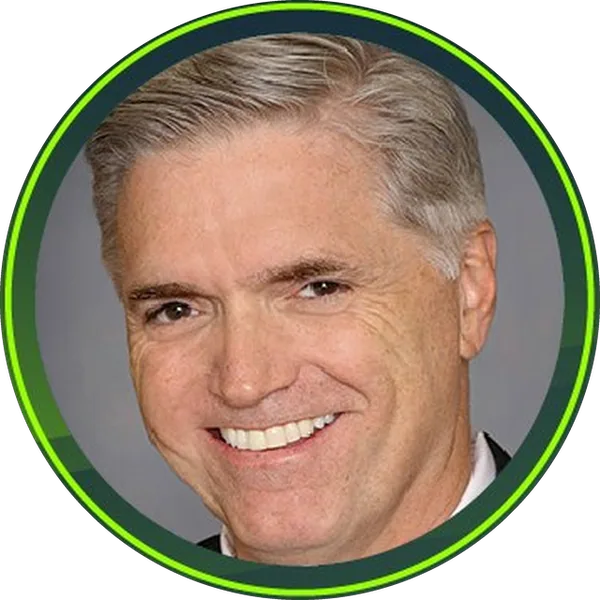
Pete Miller
Pete Miller from The Institutes shares his expertise and insights on the critical shift towards a predict and prevent strategy. Learn tips and tricks on how emerging technologies and resilience efforts can help transform this vision into reality.
Pete Miller isn't just leading - he's reshaping the future of the insurance industry. In this episode, he dives into why shifting to a "predict and prevent" strategy in risk management isn't just important; it's essential. For anyone curious about what's next in insurance, Pete's insights into predicting and preventing risks, rather than just reacting to them, offer a fresh perspective on the industry's evolving landscape.
Pete emphasizes that this strategy is more than just about reducing losses - it's about creating real value for customers by minimizing disruptions before they even happen. As he explains, advances in data analytics, artificial intelligence, and machine learning are making this proactive approach possible. These technologies help insurers not only anticipate risks but also take action before issues arise, resulting in better outcomes and greater customer satisfaction.
The full episode
Press play for the whole conversation.

From the conversation
Of course, no major shift comes without its challenges. Pete candidly discusses the hurdles - like data governance, privacy concerns, and the industry's natural resistance to change - but also offers practical ways to navigate them. His advice? Embrace continuous learning, stay adaptable, and don't shy away from integrating new tech.
This episode is a must-listen for anyone interested in how the insurance industry can move from a reactive to a proactive stance. Pete Miller's thoughts on the "predict and prevent" strategy aren't just timely - they're a guide for anyone looking to stay ahead in a rapidly changing environment. By embracing technology and rethinking risk management, insurers can better serve their customers, cut costs, and set new industry standards.
Stay tuned for more insights from industry leaders on The InsurTech Geek Podcast!
The full transcript
Transcribed automatically from the episode audio, so some names and terms may be misheard.
James BenhamOn this episode of the InsurTech Geek podcast, we're talking about the critical shift towards a predict and prevent strategy with Pete Miller from the institutes. The InsurTech Geek podcast is all about technology that's transforming and disrupting the insurance world. We'll be interviewing guests and doing deep dives into specific tech we see changing the industry. We're taking you on a journey through insurance tech, so enjoy the ride and geek out. Terra, this week's episode sponsor, is revolutionizing the world of workers' compensation claims and policy management. Terra's cutting edge platform empowers insurers with comprehensive benchmarking tools, robust management systems, and an integrated ancillary services marketplace.
Discover how Terra is driving innovation and efficiency in workers' comp at terra.insure. That's terra.insure. And we are back with another great episode. With me, as always, my illustrious cohost, my fellow Texan,
Rob Galbraithmister Rob Galbraith. How's it going, Rob? It's going well, James. Going well. Finally got some sun. We had a a week of rain, which is kind of unusual in Texas in July. So happy we're getting back to our regularly scheduled programming.
James BenhamYeah. Just hot and humid. It's it's, been good, though. Lake Travis was super low, and they just released an incredible amount of water into it, which will be good. We had the Guadalupe overflowing its banks and we actually the area that got rain needed it bad. So I'm, I'm excited for for all our property carriers out there. I hope the flooding didn't didn't cause any any any significant losses on them. But certainly, we do have some private commercial property carriers that have private flood flood insurance.
So we'll see. We'll see what the hit is on that. But shouldn't be too too crazy. I am currently recording this from Providence, Rhode Island, where it's wicked awesome and wicked smart. And where I am hanging out here at ASCAP, the State Comp Insurance Funds Conference. I'll be speaking on Wednesday, so I'm here hanging out with them during the week, so excited to do that. With us today are our guests, I'm really excited about, the president and CEO of DeInstitutes, which sounds kind of nefarious. That sounds like an organization from a sci fi, like a dystopian sci fi movie that's like behind all of the changes in society, like de institutes.
They're from the institutes, run! But it's actually a really good, really great organization behind some of the biggest three and four letter designations that go behind your name and insurance. With us is Pete Miller. Pete, how are you doing? I'm doing well. Thank you. I appreciate the chance to be here. Absolutely. You probably weren't expecting a dystopian sci fi twist on the introduction, but I just because I'm a hardcore sci fi fan, I just had to bring it up. Had to bring it up. When I when I first heard the name, I was like, oh, yeah, that'd be a good that'd be a good institution name for sci fi.
Pete MillerYou're not the first person to think that, James.
James BenhamJust the first one to say it on the air. It's good to good to have you. Love your green screen, by the way. That's super effective. I'll have fun with that later. When we tone we tone out your background, we'll we'll put you in front of something fun. So where are you joining us from today, Pete?
Pete MillerPhysically? We are just outside of Philadelphia. Yeah, Malvern, Pennsylvania, just West of Philly. Okay,
James Benhamnice. And, you know, so not too far from me. You know, in Texas, if something's a three or four hour drive, that's close. So you'd be close by. But I remember one of my favorite REMS conferences was when we had REMS in Philly. Was a long time ago, it was several years ago, but I actually really, really enjoyed Downtown Philadelphia. And it was my first experience going to Geno's and Pat's and trying both of them and getting hurried to order up and ordering a provolone whit, which is my favorite, by the way.
Do you have a favorite cheese steak? Similar. I like Pat's. I know that's
Pete Millera big thing. Mean, actually downtown Philly, as you say, there's a lot there, right? A lot of history. We kinda say we're stuck between New York and, DC, and we don't get a lot of attention, but, there's a lot to do in a nice spot. And and that and it's a great an eagles I'm an eagles fan too. So I gotta I don't know the cowboys.
James BenhamSo don't know. I'm I'm happy to report that I'm not a Cowboys fan, so I don't care about the Eagles. I am a I'm I was born and raised in Louisiana. I'm a Saints fan till I die. So I really care about I really care about the dirty birds, the other birds, the dirty birds in Atlanta. That's who I and then and then those dirty bucks down in Tampa Bay, those are the ones I like to beat on a regular basis. Really don't care if if Jerry Jones, you know, wins or not.
I just don't care what happens in Dallas. Rob, we've talked about this from you. You you're you're not a you're not a Cowboys fan. Right? You're a lions fan. Right? I'm not. I'm a lions fan. Yeah. And it gets passed down to, my son. And,
Rob Galbraithso many years ago, I told him, I said, you know, the lions, of course, famously have never even been to a super bowl. I so guess we're one step behind the Buffalo Bills. Right? At least they've been there. But and, so I told him, I said, whenever they go, Ryan, I'll I'll pay up. And, I have to say at the end of for those of you that watch football, the NFC title game against San Francisco, the lines were up big at halftime. I was perusing prices on seat geek, and it was about $10,000 a ticket.
So I don't know. Would have paid for his college tuition. So it was kind of, you know, college or or Super Bowl trip, but, they ended up gagging it away. So,
James BenhamI feel bad about that. But on the other hand, I did save quite a bit of money on that, but, they're a favorite again this season. So who who knows? This is a new experience for me. I feel like college can happen in a year. Super Bowl only happens, you know, once in a lifetime. So I I think I know what what I think that should should be supported there, but, you know, it is what it is what it is. So so, Pete, you've been with let's let's we're gonna talk about the institutes and what they do, but we're gonna talk about you first, because you're actually a fellow geek, which I really appreciate that you're first a fellow geek, and then you're a fellow InsurTech geek, and, and a fellow insurance geeks, and you geek out on a lot of the same things we do.
You know, you started out your professional career as a consultant, but then you ended up, you know, in at the institutes, and then you, you really ended up doing some really interesting things on insurance. But let's let's go way, way, way back in your life to the beginning, like when you were growing up as a kiddo. First off, where did you grow up? Was it in Colorado? Because you went to Colorado State.
Pete MillerYou know, where did you grow up and what did you wanna do when you were a kid? Yeah. So actually, I have dual US Canadian citizenship. So I was born in Canada. My parents are American. So we went back and forth between Canada and The US. I did go to Colorado State, but actually, I was in the eighth grade, my father, who ended up running a mining company, he said, you know and so this is a long time ago. He said, it'd be really good if you understood business and you understood computers.
So my undergrad degree is in business. I got a master's in, system management computers. And then I got an MBA in finance, and I worked on a PhD in AI. I didn't finish the dissertation because I got my current CEO job and stuff like that. So, like, computers and business has always been always been very interesting to me. So I actually did work at in a workers' comp job for the workers' comp division of Cigna. And very early on, built an expert system for them, and then another system, a neural net.
If you recall, those were the two AI kind of flavors of the day when I was building this, which would have been in the late eighties, early nineties, and ended up with a with a neural net audit workers' comp bills. So it's been of interest to me. You're right. I mean, I've been an Oracle DBA, an Oracle developer, system manager, network manager, you know, app developer, stuff like that. So it's been fascinating. And, obviously, for me, for the institutes, we're in the knowledge business. And IT and knowledge technologies have certainly changed quite a bit.
So we leverage them pretty extensively. So I've had a lot of fun. And certainly, I think the insurance industry is awesome. It's taken me to 40 countries because we've done business all around the world. So I've been very lucky. A lot of great people have helped me along the way,
James BenhamI've had a lot of fun. The intersection of business and technology is a really fun place to be where you can actually try and understand business applications, business needs, how things operate, and then translate that into technology requirements. It's actually a really critical role. In the software company, you know, that translator is kind of the business analyst the the BA, and then the product owner, you know, they kind of sit at the nexus between you have SMEs, subject matter experts, we employ subject matter experts that twenty five, thirty year underwriters and claims adjusters that work for us.
And then we have our people that sit in the middle, and we have all the engineers over here that build things. But that's a really important
Pete Millermiddle ground. What led you getting into insurance and working for the institutes? Well, I had been an IT consultant after Cigna, and I had done consulting for insurance companies. So I think, I was very interested in the business. I think it's a fabulous business. I think it underwrites society. And, you know, it's funny when I travel around the world and talk to at developing countries, they all recognize that no economy, no modern economy can exist or thrive without some kind of risk transfer mechanism. And that's what this industry and risk management and insurance does, right?
It recognizes and prices risk so that entrepreneurs or others can can help sort of mitigate the you know, if something goes bad, then they don't get ruined. So, that has been that has been very fascinating to me. So so that sort of set of activities, risk management and insurance. And frankly, if you're in IT, if you want data, what a great place to go. And there's just mountains and mountains of data, and increasingly so. And and then I just think this is a noble sort of venture.
I really do. Particularly predict and prevent, but, all parts of it. Because, you know, I'm sure like you, I've been to, you know, years and years ago, I went to, you know, Moore, Oklahoma after a massive tornado went through there and watched companies and adjusters settle claims. You just watch the people and they're like, You're saving my life. And that to me is awesome. So it's like, how can you get a more interesting sort of activity, risk management and insurance, where the primary purpose is to help people?
And that, combined with the fact that there's just so much fertile ground for IT and technology, and particularly going forward, I believe, I just think it's fascinating. So a great purpose driven industry with opportunities for technology. And like you, I'm an, you know, I'm a geek and I love this stuff.
James BenhamSo it's a real good intersection, I think. There's the same reason I was attracted to it, right? I mean, it's a it's a data heavy industry that needs a lot more analytical and processing capacity. It's it does a really extreme social good. You know, that's why back in the day, the Babylonians came up with their bottom re contracts three thousand five hundred years ago, because shippers didn't want to ship things they didn't have some way of transferring risk. And so they started paying a premium on loans to have the loan forgivable if the ships sank, right?
And then you you get into, you know, the origins of modern insurance. And it's pretty fascinating to look at the needs that rose up and people were like, Hey, look, if I'm going to do this really dangerous thing, I need to have some, I need to have some shared risk with other people, you know, and then, you know, everyday life, you know, it's, it's amazing. It's not it's very similar to me, the bankruptcy law, like when, when as a society, they stopped putting debtors in prison.
And then they made bankruptcy a non criminal offense where it was like a, you know, you had basically your credit was ruined for a little while, you had to sit out of the financial market for a few years, but you kind of got put in time out, you didn't get thrown in prison. I mean, I think people forget that debtors used to get thrown in prison. And so that was a huge deterrent to people opening companies, like huge deterrent to entrepreneurship was that you might borrow money, not be able to pay it back and get thrown in jail.
And so you have risk transfer mechanisms, and the ability to mitigate risks are critical to creating wealth, creating a society. It's pretty awesome. Tell us about the Institutes and like how it was started. Like what was the origin story of this Marvel comic book called the Institutes and, you know,
Pete Millerhas it evolved till today? Yeah, so The Institutes was actually started in 1909. It was a group of local insurance societies in six cities throughout The US, plus insurance executives who said, you know what, there's no advanced knowledge or advanced degrees in insurance and risk management. Let's get together and create one. So the institutes is plural, and the reason is that was one organization. And then the second part was the CPCU part, which was actually started at the Wharton Business School at University of Pennsylvania in 1942, if you can imagine that right during the middle of World War II.
And and the charter property casualty underwriter, CPCU, that designation came from that organization. So that was then spun out of Wharton. It was combined in the '50s. And we've been laser focused on helping folks in risk management and insurance to, we say educate, elevate and connect. And we have 20 different business units. We reach about 1,100,000 people in the industry and we get a real broad perspective. So we do all parts of risk management and insurance. You know, we have a board that's pretty large. It's about 42 people.
So for me, it's a great chance to know where the industry's going. They're mostly CEOs, not exclusively. And they represent about 72, 73% of property casualty insurance. So for me, it's been great because I get to go around and talk to a lot of leaders. We're kind of Switzerland. We're we're neutral. So we're entrusted with a lot of opportunities to just really get into organizations and find out what we're doing and how we can help them. So I think one of the exciting things we're seeing when we go into these organizations is kind of the shift from repairing things to predicting and preventing things.
And
James Benhamthat's kind of one of the things that we're trying to do going forward. Yeah, like I like that. When you when you kind of make a make a shift as an organization, as a service offering to to print to prevention instead of instead of always, you know, fighting fires, you're trying to prevent fires, right? Like, that's the that's a, that's a big, that's a big shift in any business, including my own, you know, that I've had to make a few times where you say, look, hey, maybe it's time we, we put the tanker trucks away, stop fighting the fires and prevent them from getting started in the first place.
Rob GalbraithIt's a it's a big shift when you can start being strategic and not being so reactive as well, which I, really appreciate. Rob? Yeah, Pete. So, so I've known you almost your entire tenure, I think, as the CEO of the institute. So for those, that are visual people, you can see I've got my CBC diploma behind me. I earned my CBC designation in 2003 and, became a volunteer leader both at the local level, and I was on the the new designee task force way back in the day and had a variety of different leadership roles over the the years.
And so I've had the pleasure of of knowing Pete. Pete, one of the things that I think is just remarkable and that I admire about you is, you know, your role at the institutes, first of all, you know, your your service quite frankly, to our our industry. Right? You could have taken other roles in in to your point about being Switzerland and the institutes is such a resource, both from an education standpoint and then, networking and and connecting, you know, the professional community at all sorts of different levels.
But one of the things I've admired as well is that I feel like, you know, running the institutes, could be a somewhat reactive leader. And now I'd describe that as, you know, you've got a lot of member companies that you partner with that have education needs. You've got offerings like CU designation. I want many, many different offerings that are out there. And so you could certainly, you know, work with your board of trustees, make tweaks, kind of do more of the same, right? Just a lot of, incremental improvements, but you've gone well beyond that through some of your strategic, you know, acquisitions and growing it and and some of the things that I think you guys at the institutes have been leading for from the the front.
And so I wanna ask you a little bit about that mentality, and then I want you to talk specifically. You touched on it earlier, this mindset of predict and prevent, right, rather than kind of, you know, a a more reactionary model. That's something you've been on the forefront on. So, you know, is that something that you're hearing from your members, or is that something you see as the institutes, you know, you're not working of, hey. Let me help lead you guys there, right, to to to this more aspirational business model that, you know, we've we've maybe wanted to do in the past, but didn't have the data, didn't have the technology,
Pete Millerand now we actually can go a lot farther down that, path. Yeah. Well, first of all, Rob, I have known you a long time, and I've always been grateful for your work and your dedication. Certainly, you've done great, great things at the society, and I know in in various organizations you've worked with, and I've always appreciated the chance to talk to you. So thank you for that. I think it's incumbent and sort of a part of our mission at the institutes is not only to help folks with their knowledge needs today, but to anticipate and sort of be ready to help them for the next iteration of either their individual career or the next turn of the wheel of risk management and insurance.
So I view it as like an arc, right? There's two different arcs. And one is the arc of the business. Where is risk management going? And then the arc of our business, which is to plug in at future points so that we have products and services that are aligned with where people in risk management are at that time. So not only today, but also into the future. So to do that well, we have to anticipate change going on in risk management and insurance. A large part of that, frankly, is our board because it helps us look five, ten years out, right?
And one of the things that we've talked to them about quite a bit is this idea of predict and prevent. So it's kind of a, you know, it's a particular approach that says, Hey, you know what? From a policyholder, a customer point of view, the best loss is the one that never happens, right? So that being the case, certainly losses are going to happen. But we all know inflation is causing the cost of those losses to go up. Capital will always be restrictive. And increasingly more so, I think.
I think there's a confluence of technology and data that now make predict, and prevent more feasible. So there's a lot of different ways we can do that. But effectively, it's kind of like a point in time where there's a distilling of a lot of different factors. As I said, technology, costs, the ability of people to understand what their potential risks are and mitigate them and to be able to do that in real time. So there's a lot of different ways of doing that. We look at various lines of business, whether it be cyber with adaptive anomaly detection systems.
Certainly, have a device in my house that can monitor in real time spikes in the electrical current and send me a message. And actually, the vendor can then aggregate that across a geographic area so they can tell if there's a grid problem or if it's particular to my house and help avoid a wildfire. I've interviewed people who are commercial property owners and they have water sensors in their buildings because they understand if they can detect a water leak early, the difference between the cost of that detection devices versus the losses is pretty significant.
I've also talked to people in workers' comp, actually, that James works in to have devices that can say, ergonomically, are you approaching your job well enough? Or are you reaching over your head? Which would cause an increased chance of injury? So I think there's a lot of different ways. It's a fascinating time. You know, I mentioned, built AI systems years ago and continue to feel very fascinated and have built some sense. But it's always been the tool. There wasn't enough data and the tools weren't so great.
Now there's a lot of data and the tools are getting rapidly better. So I think this approach is pretty interesting. We see it all over society, I think. I mean, the NFL has a way now of trying to predict and prevent injury losses on you know, to NFL players and things like that. So I think it's a fascinating time. I think, you know, there's a there's a lot of opportunity to provide additional value to customers and policyholders. And there's a lot of economic reasons for that.
And for me, if you have the ability to do something like that, it makes sense to do it. I think you just make a happy customer, and it's the right thing to do. So let's talk about tech for a second.
James BenhamOther than AI, because AI is the favorite topic du jour, certainly web web three was a was a favorite topic du jour a couple of years ago. And before that, we we, you know, because we talked about mixed reality, virtual reality, blockchain, Bitcoin, that was all lumped under Web three. And, you know, we every couple of years we have a favorite topic. Now I'll say we are finally to the point, I'll agree with you, as someone who's been, you know, assembling and writing code since 1991, I'll say like, I've seen this come a long way in in data collection and aggregation towards actually useful, you know, in both in our personal lives and our professional life.
Like I have, you know, I have a fully connected house. I mean, everything in my house is connected. I got the flow. Most recent installation was after an insurance conference. Saw flow by Moan, you know, and it goes right on the water main to my house and it detects the water flow patterns and automatically shuts the water off of it thinks there's a leak. And you have to train it. You have to you have to do a couple of things to get it used to your house.
But I'm so freaking lutely amazing. It can can really save your bacon on a major leak that's going to destroy your house. And I have 63 connected devices in my house. So whether it's connected lights, locks, cameras, you know, TVs, speakers, the whole place is wired up. So I'm in a similar way. And it's not just wired up, it's wired up and integrated. So it's, it's all accessible in one voice command. It's like we're fine to the point where you can have that data, and then you can port it to your insurer.
And the same thing, like with health insurance, you know, Apple HealthKit has access to all of my records at all my medical providers and all of my testing clinics that I go to my annual physical, my annual physical blood tests, a regular, I'm typo negative, so I'm a regular blood donor. And, you know, I get blood tests and stuff all the time. And it all gets aggregated into health kits. So when I go to the doctor, and it's like, here's every piece of data on my health, including everything.
It's different ballgame now. And it's exciting as a computer scientist. But I wonder, sometimes, and my question for you is, other than AI, what are you excited about? And what do you think is really having an impact? Because in our client base of work cop carriers, TPAs, brokers, and, you know, some other some other carriers, AI is actually not the high value thing that they're having us work on. We're doing a whole lot of automation. We're just playing straight up workflow automation, and API integration. And, you know, we're trying to cut adjusters from having to do reentry work and underwriters too.
I mean, there's still a ton of manual reentry. So, you know, certify these underwriters. I mean, CPCU is the preeminent certification for certified parabolic and casualty underwriters. I mean, what do you think the big opportunity for them and your members is other than AI? Yeah, other than AI,
Pete Millercertainly I think the proliferation of data and the ease of use of analytic tools for decision making, I think is pretty significant. I do think workflow, would agree with you on that. I don't have 63 devices. I have somewhat less than that, but like you, I have all my stuff in Apple Health with all my providers. And it's pretty easy to write code to take it out of Apple Health and make your own sort of reports and stuff. But I think workflows, I think that's pretty exciting.
I think you can cut things and cut time and cut expense. I think there's a bunch of different technologies. AI, as you mentioned, I don't want to answer it, but it's in a hype cycle for sure, just like blockchain and Web3 was. So I think we'll see that kind of come to earth. I can say some of those tools, like for IT, we have a way. You mentioned business analysts. We just developed a way to basically take an interview with a business owner and through a series of steps, create wireframes and code.
So that can cut a lot of time. We don't need to go through that whole exercise. So I think, you know, that's pretty significant. So I think there's a number of tool, analytics tools, workflow tools, office automation tools. Certainly we've seen here huge increases in office automation, and those kinds of things. But I do think AI and particularly Gen AI, if you look at it, I don't think people are looking at it correctly in many cases, but if you look at it, I think there's a lot of opportunity.
It just depends on sort of your perspective.
James BenhamYeah, I've actually been using pretty regular suite of BI products for parsing and analyzing our data. I'm a big Power Apps and Power BI fan for sure, because it allows me because I don't actively code anymore. It's but I'm certainly technical and I did it for years and years and years. I'm certainly technical and I do want to use Power BI and Power Apps and build my own solutions, build my own dashboards. And my CFO is too. We've got two eighty people, two forty of which are engineers in our company.
So we have plenty of people that can hard code things, but it's actually really nice that my business users who aren't coders can go in and build their own analytical capabilities out of the box really easily. And so I think, I still think there's huge upsides in BI for insurance companies. And I really do. I think they still under utilize it. They don't connect enough of their solutions together. Right? Because you really can't if you if you integrate your data sources and you give people just do some basic setup in Power BI and Power Apps, you can give them the capacity to get off of Microsoft Excel for sure.
And to get into something that's, know, enterprise grade, more secure, more accurate. I think there's a lot of upside there. But I mean, look, I'll be honest, I mean, I use the hell out of Copilot and Chat2PT. And, you know, I love the ability now that you can upload structured data sets. I love, I love, you know, managing and pulling insights out of out of data. And it's it's fast, it is easy to use. And so there's there's I mean, is really, it is really fast, and it is really easy.
And it has been very insightful. For me, I love, you know, throwing 20 documents out of it and having it parsed for me. There's something immensely powerful about that, considering how much unstructured data there is in insurance.
Pete MillerYeah, and I think we've made a lot of use of GenAI recently, even I may have mentioned to the point where we developed a system in our accounting area to apply cash to invoices using GenAI. Well, that is a manual process that takes a long time, and we can automate that. So I think if you start looking, that Gen AI is rapidly getting better, especially start using RAG on it. If you can use that in combination with a generalizable model, I think that there's a lot of headroom on that.
And that's, I think, for a lot of people in risk management and insurance, I do think there's a lot of opportunity to do that. What I find, and maybe you have, but the experience I have, particularly in our risk stream collaborative, which is our organization that gets companies together to build apps where they're sharing data, If people understand that and the economic model for that and can get it into their workflow, I find organizations have a pretty static workflow. And if you want to sell new solutions into into that, the change management around that workflow, tends to be a barrier.
But I think that a lot of those things are coming along and and the and the technology's pretty exciting. I think a couple things that we found in Predict and Prevent, you mentioned data for sure, data governance. If you can take data obviously privacy is always a thing. If you're using AI models, the ethics, are you using a representative training set or is there bias in the training set? Those are always pretty big issues. But then for us too, the availability, you'd taken like, AI systems are pretty good on unstructured data.
They're a lot better on structured data. So we're finding even a little ETL helpful because we get much better results against, for us, content or for data that has a like we use JSON a lot. And if you have good, well structured JSON versus unstructured data, the AI engine pulls back a much better result. So I think governance around data is gonna be a big thing. Structured data certainly makes makes a lot of these systems, including GenAI, much better. And and I think you'll get you'll get much better much better answers.
Rob GalbraithYeah. Pete, great conversation. I I kinda wanna, circle back to what one of the things I consider the core competency at the institutes, right, which is this, lifelong learning, this kind of continual professional education. So maybe can you talk about, you know, some of the conversations that you're having, with both your current members and then maybe some prospective members? I know training development's been obviously a huge issue for a number of years. We talk about, the brain drain, right, the the number of retirements that we've seen, and we'll continue to see in the industry bringing new talent into the industry, but may not have the experiences, and maybe they don't need all the the same knowledge sets, right, particularly as they're armed with new technology.
And then curious, like, as you talk about kind of the evolution of continuing education and and and lifelong learning, what are the technological components of that? So I know you may be kind of teaching about technology, but then you're using technology to deliver the the the education. So it's a bit of a recursive, you know, thing here going on. So we just kinda love your broad thoughts on what you're seeing, in terms of trends here. Well, my advice to anybody is do what you did, Rob, because you're a lifelong learner and and you're a great exemplar of that.
So I think,
Pete Milleryou know, I you know, in a time of change, and I think change is gonna accelerate, continuous learning is the key, right? Learning how to learn is one thing. But also upgrading your knowledge base, I think is gonna continually have to happen to make sure that the average person in risk management and insurance is ready for what's coming. So again, we use some different reports. Deloitte says you know, organizations that have a skills based approach that look at skills and you and try to catalog and use those are much more are 52% more likely, to innovate and 98% more likely to retain high performers.
There's a World Economic Forum, pretty good report, I read it, on the future of jobs. And it says over the next five years, 44% of workers' skills are gonna be disruptive. So, and it varies by industry. In our industry, it's gonna be very high, I think. So I think the need for continuous learning is critical, even maybe more so than in the past when business cycles and actual sort of the way industries work didn't change as rapidly as it does today. And I think that highlights the need for continuous learning.
And that's what we try to provide, right, obviously. From a technology point of view, as you said, Rob, was really interesting for us because we're kind of subject to a lot of these technologies and we use a lot of these technologies to provide products and services to the people that we serve. So one is some of those are digital transformation. All of our materials for our designations are available online, and it's a multimedia experience. We really don't print anything anymore, which Rob, you probably took them when there were books.
And then so did I. I even took them when you had to write the answers, Rob. That's how bad that was. So it's much more flexible. It can be in a time, manner, and place of anybody's choosing. And that's generally true, I think, for most knowledge based organizations who have products like ours. One of the things I'm excited about is personalized learning. Because if you and I try to get a new set of knowledge, if you know 80 of it, why do you need to go over the 80%?
Just go right to the 20%. And if I know 50%, I should get 50%, not the other 50%. So I think that's pretty exciting. I think you're gonna see more of that, right? As we can get more and more data on a person, we can certainly have better learning experiences and, in fact, kind of do a predict and prevent. Predict based on their job, how many years they've been in the industry, what they would need to know for either a current job or a future job, and then present them with the learning.
It's good for us because we do things and we call them learning objects, which from a tech point of view, all I basically did years ago was take object oriented programming and apply it to content, so it's very flexible. I think a lot around collaborative learning, we see that the tools are increasingly available and good to do that, either in a peer to peer or in an instructor classroom, if you will. So the, you know, social media and other sort of versions of that, make that really easy.
And then another that's very interesting to me, I bought an Apple Vision Pro because I was very curious if you could make simulations that were immersive. Right? And so there's now a development kit that I've been messing around with to see, because it wouldn't it be cool if many insurance companies, for example, homeowners companies will buy they have warehouses where they burn a house to see what it looks like. Well, what if you get a VisionPRO with an immersive experience? It's a lot cheaper, and you can get a pretty good experience.
So, you know, I think those technologies, digital, personalized learning, collaborative learning, and then some of these immersive technologies, I think, you know, are really gonna help folks interested in lifelong learning. And I think lifelong learning is gonna be even more important as we go forward.
James BenhamI love that the CEO of the institutes has a development kit and a vision pro and is actually building stuff. That's amazing. First off, nerds rule the world. Secondly, hacking is cool. Thirdly, so glad you're in the club. It is it is super exciting. And like I love revision Pro, I own two HoloLens. The first one, I thought they were really transformative. I owned the the Oculus Development Kit, one Development Kit two, then the original Oculus, the Quest, you know, I've had a bunch of these headsets, and we built a bunch of prototype software for all the different versions.
The Vision Pro is by far the best one I have used. And it's both right, it can it can do a VR fully enclosed environment, or you can go to transparency mode, and you can drop objects on other objects. And you can anchor objects to virtual physical items. I mean, it's really, really amazing how they took the time to build the perfect device and for version one, holy crap. I can't wait to see what they do next. Really amazing. And I think that's really remarkable. I'm excited that y'all are, as well as you're adapting to the new educational environment,
Pete Millercertainly a new insurance environment. I was just gonna say I didn't have all the versions of the different things. Had an Oculus. And now and I agree with you 100%. This VisionPRO, there's something there, right? I mean, it's and the version one or the development kit is pretty good. I'm waiting for version two and three, right? That'll be pretty cool. So Well, yeah. Well, they they they've announced the what the the features that are coming into the next development kit, and I'm like,
James Benhamwow. I mean, it was already it was already got super exciting. And just how big it's it's it's incredible. And if you're a trained commuter, being able to throw that on the VisionPRO on and have a full workstation, a full office, and I mean, wow. I'm fired up for the future. I'm fired up for the now. I think we live in the future, you know. This is a exciting time. I don't think that the pace of change has actually accelerated. I know that's I think it's I think it's been fast for a long time.
You know, my grandfather was born 1903. So there were no there was no such thing as an airplane when he was born. And then it was, you know, successfully tested by then by the Wright brothers, you know, within a few months of his birth. But I think that generation actually had to absorb more change because they had telegraphs and wireless telegraphs and electricity. Then they went from horse and carriage to cars and trucks, they went from no, no powered, you know, heavier than air flight to, to going to the moon in his lifetime.
So I would argue there was actually a greater pace and change in the earlier 1900s. And that a lot of the stuff we're doing is pretty incremental now, compared to the transformational change. So I actually think that we're capable of dealing with this because our grandparents were capable of dealing with it. I think we can handle it too. We just have to maybe take a better historical perspective on things and say, Hey, you know, we're in an incremental change at this point. So it's pretty exciting.
I'm excited about the future of the Institutes, too. So thanks for joining the show with us. And where can people find out more information
Pete Millerabout the Institutes? Yeah, please. You can go to theinstitutes.org, and that's our website. And you can find out
James Benhamall about us there. That's the best spot to go. Thanks a bunch. Really appreciate it, Pete, and we'll talk to you soon. Rob, as always, thank you for
Rob Galbraithbeing the world's best cohost on the show. Appreciate it. Great conversation. Thanks for so glad to have you on, Pete. And, James, thanks for pulling all the remote shifts on these Intritech. Conference, this is always great to see we don't know where you're gonna come from next.
James BenhamHey. Hey. You know what? You know, our guests are remote and it's conference season. You know? It's conference SCN. Right? I mean, I'm speaking here at ASCIF, I'll be speaking at WCI, I'll be speaking at National Comp. I've a pretty heavy schedule on speaking. If you wanna check out my speaking schedule, it's at jamesbenham.com, and you can see what conferences I'm gonna be at and meet up with you there. But yeah, it's exciting to be hitting all these, hitting all the conferences and seeing all our friends.
I mean, is a very social industry. So I always enjoy the social part of it. And this is definitely, definitely a good one. So again, thanks for tuning in today to geek out our interview with Pete Miller from the institutes. We'll see you on the next episode. The InsurTech Geek Podcast is all about technology that's transforming and disrupting the insurance world. I've been your host, James Benham. That's jamesbenham.com with co host Rob Galbraith at endofinsurance dot com. We're taking you on a journey through insurance tech, so enjoy the ride and geek out.