 YouTube
 Spotify
 Amazon
 iHeart
 Apple
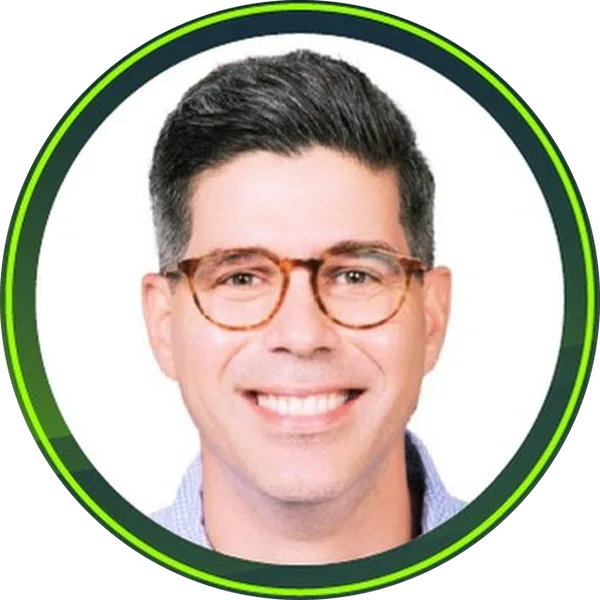
Basilios Manousogiannakis
Basilios Manousogiannakis from AMERISAFE shares his expertise and insights on leading digital development and distribution in high-hazard workers' comp. Learn tips and tricks on exploring alternative distribution channels and adapting strategies to meet the unique needs of this sector.
Workers' compensation insurance is challenging enough in low-risk industries, but imagine covering sectors like construction and logging, where the risk of severe accidents is much higher. In this episode of InsureTech Geek, Basilios Manousogiannakis from Amerisafe explains how his company not only insures these dangerous industries but also partners with them to make their workplaces safer. Here's the story of how Amerisafe is redefining the workers' comp landscape.
The full episode
Press play for the whole conversation.

The Challenge: Insuring the Most Dangerous Jobs
High-hazard industries are fraught with complexities. Unlike low-risk businesses, companies in sectors like construction, logging, and transportation face higher injury rates, making it much harder for insurers to underwrite policies. Amerisafe tackled this challenge head-on by focusing on two core strategies: safety management and digital innovation.
The Safety Solution
Amerisafe has built its business model around the idea that the best way to manage claims is to prevent them. Basilios explained how Amerisafe integrates deeply with clients by providing concierge-level safety services. These services include on-site risk management and safety evaluations, which help policyholders avoid costly accidents. The results speak for themselves: Amerisafe boasts some of the lowest combined ratios in the industry.
The Role of Technology
To complement their safety programs, Amerisafe employs cutting-edge technology, from AI-driven data analytics to virtual risk assessments. Basilios shared how these innovations streamline the underwriting process, making it faster and more accurate while improving risk prediction.
A Bright Future
Amerisafe's success in insuring high-hazard sectors has not gone unnoticed. The company continues to grow, even in a softening market. Basilios attributes this growth to the company's focus on customer relationships and ongoing digital innovation. Amerisafe is looking to further expand its reach through alternative distribution models and tech partnerships.
Dive into the full episode to learn more about how Amerisafe is shaping the future of insurance!
Stay tuned for more insights from industry leaders on The InsurTech Geek Podcast!
The full transcript
Transcribed automatically from the episode audio, so some names and terms may be misheard.
James BenhamOn this episode of the InsurTech Geek podcast, we're talking about leading digital development and distribution in high hazard workers' comp with Basilios Manuso Yanakis from Amerisafe. The InsurTech geek podcast is all about technology that's transforming and disrupting the insurance world. We'll be interviewing guests and doing deep dives into specific tech we see changing the industry. Taking you on a journey through insurance tech, so enjoy the ride and geek out! Terra, this week's episode sponsor, is revolutionizing the world of workers compensation claims and policy management. Terra's cutting edge platform empowers insurers with comprehensive benchmarking tools, robust management systems, and an integrated ancillary services marketplace.
Discover how Terra is driving innovation and efficiency in workers' comp at terra.insure. That's terra.insure. And we are back with another great episode with me as always, my illustrious cohost, the most interesting man in insurance, my main man with the plan from San Antonio, Rob Galbraith. Rob, how's it going, buddy? It's going well. It's going well. Temps are cooling down. It's a beautiful time, of year here in Texas. We don't have the the the cooler temperatures
Rob Galbraithcompared to Northeast or the leaves turning, but, yeah, it's still nice. Anything
James Benhamthat's in low nineties as opposed to hundreds is good here. But you know what it smells like and feels like football, so it's all good. There we go. Good. I mean, you know, it's always always interesting. It's always good being back in football season, hey. You know, all the pumpkin spice fanatics are out ordering ordering pumpkin spice muffins, pumpkin spice lattes, pumpkin spice everything. Now with us is
Basilios ManousogiannakisBasilios. Basilios, how are you doing, buddy? I'm doing well. And and and feel free to call me call me b. And and I was you know, I'd like to joke. Rob's the most interesting man in insurance. I'm gonna go ahead and tag myself as the least inter interesting man in insurance. Alright. But I'm doing well. I'm I'm I'm really, honored and humbled to be be on here. I mean, you both are, like, titans of industry, so thanks for having me on. Well, Beau, thanks thanks for joining us.
You and I got to meet,
James Benhamthrough the kids chants tournament Yeah. Which which, like you know, I've been in I've been building software for insurance. I started my company in my dorm room twenty three years ago at Texas A and M and got a new insurance three years later, like most people by accident. I I did not intend to get into insurance. I landed a client who was in insurance and then fell in love with it. And then and then a few few years later, I got into workers' comp, and I'm just so mad at myself for not knowing about Kids Chance and and what what a great job they do, what an amazing thing.
That's how we met, and we're gonna talk about that Yeah. Towards the end of towards the end, but that's just your little teaser out there in listener land that we're gonna talk about Kids Chance and Kids Chance Florida. But before we talk about that, we're gonna talk about Amerisafe. And before we talk about Amerisafe, we're gonna talk about UB. Okay. So let's look as we you know, look. It's a technology show about technology and insurance, but we're we're gonna lean heavily into talking about the people behind it.
We do that, you know, for hun for literally, like, 147 episodes. Yeah. We've been talking about the people behind technology and and insurance. And so tell tell us about yourself. Like, where were you born and raised? And then what led you career wise? Like, what you know,
Basilios Manousogiannakiswhat'd you intend to go into for your eyes, and how'd you end up in insurance? Yeah. Yeah. No. So, I'm a native of Northeast Ohio. So I was, born and raised in Akron, Ohio. So home of LeBron James. LeBron James. Yeah. That's that's in the rubber industry at some point. So I think I can hit on that a little bit. My actually foray into insurance was was by design. So to to one of the carriers credit, they did a really good job recruiting straight out of college.
And so my first job and my life has come really full circle within insurance was inputting first notice of loss for workers' compensation and then evolved throughout. I was really lucky and this is something that why Kids Chance speaks to me and some other areas that I try to find time for is I had a very passionate mentor early on that kind of guided me through the journey of insurance, talked about the three legs of insurance. You soon realize it's much broader than three legged stool of insurance, right?
Sales, underwriting claims. And as you grow, you realize, oh man, there's IT, there's audit, there's regulatory, there's compliance, all sorts of things. But he really planted the seed around, B, spend your first half of your career just kind of exploring all facets of insurance and then decide on where you want to spend your time in the second half of your career and become a deep expert into it. And I'm not calling myself a deep expert by any means. I'm still very junior building my muscle but that's kind of how I ended up where I am today.
A lot of it being luck, a lot of it being I think some by design too. But it's been a very rewarding career for me. And so I like to share that story that while it may not be the sexiest industry, it is it is something that can be very rewarding and fulfilling.
James BenhamYeah. Absolutely. I mean, I certainly, I think both Rob and I can attest to the same thing, the rewarding, fulfilling, interesting, complex. You know? For sure. I I I I thrive on complexity. I I think it's fun. And when people when when when there's a lot of complexity, there's a lot of challenges, and that that that makes for fun times for a problem solving personality type, which, of course, is what a lot of us are. In particular, if you have any involvement in technology, you're typically, a problem solver.
Basilios ManousogiannakisYou you live in Tampa now. Correct? Yeah. Yeah. I live in Tampa, Florida. My my wife is from from the area, so we have two young kids, and that's where we decided to plan our roots. Yeah. And you've been you've been at Amerisafe for about a year as vice president of alternate alternative distribution. What does Amerisafe do? So Amerisafe is a publicly traded monoline work comp carrier. We focus on what we'd call high hazard, so that e, f, and g. Also hard to place at times in industries such as, like, construction, logging, transportation.
I I actually love the story of Amerisafe itself because we talk about innovation, and I I I would argue that miss Amerisafe is a story of innovation. So it started out as an independent insurance agency, and in a span of thirty years transformed into a publicly traded listed on the Nasdaq, a rated admitted carrier. So I think to accomplish that in a span of thirty years is pretty transformational and pretty pretty darn innovative.
James BenhamYeah. And rare. Right. I I I would argue it's rare to see someone, you know, make the leap from agency into full fledged public carrier. Oh, for sure. For sure. Like, you know, usually, they'll just acquire more agencies. Right? That's usually the growth path or, at best, become an MGA. But I I haven't seen I I know that that some make that leap, but it's it's just difficult. I mean, it's difficult. Obviously, when you when you go public, you can raise the capital necessary to have the backing to to become a carrier.
You know? But that's that's you know, obviously, it's really challenging. It's a really challenging path. Now you you worked in a in a whole a whole variety of jobs, and we don't have to go through all of them. You you know? But you've been you you were in Columbus for a while. You were in DC for a while, but your whole career has been insurance. And you started in in the area that I I've really been spending the most time on, which is claims.
Basilios ManousogiannakisRight? Right. You you started as a as an actual adjuster. Right? So I actually take it one step back. I was actually just kinda at that time, the role was called, like, a benefits administrator. Truly admin role taking in those first notice of loss as those comp claims were being reported and then, slowly progressed to litigated claims. And then when I was in claims, you go, oh, wait a minute. All these underwriters are getting all the glory. What's that all about? And then and then and then moved into underwriting.
And then your next job. Yeah. And then when when I went into underwriting, go like, wait a minute. These sales folks are, like, driving some really nice cars. So so then I went into sales. But, you know, behind all that was was it was the guidance that that my mentor Dick Smith had given me, and that was to kind of just explore the three legs of insurance. Right? And then when I was in sales, that's when I like to joke I caught the InsurTech bug and then kind of that role kind of evolved into this.
I kind of forced my own hand to say, alright. I need to pivot a little bit. And so, stepped away from the carrier side for a bit and worked at Applied Ivins, which is a vendor to the insurance industry to try and learn that side of side of the house. And then ultimately was called back to the dark side of insurance and worked for the carrier again. What I learned is I love commercial lines and I love like you said, insurance is is complex. While I love, like, that analogy of, like, giving an Amazon like experience, it's far more complex than Amazon in many capacities.
Right? We should strive for that, but it's not it's far easier said than executed.
James BenhamYeah. Far easier. Far easier. I I would argue far easier for sure. I mean, look, I I've I I I I've built software. IMI team. Right? We have 280 people here at at JBKnowledge, but we built software. Probably 70% of our software we built for workers' comp. And then a good bit for property and then a good bit for health, life, and disability, which was when I that was an area I did not expect to go into. Landed a customer there. Fell in love with that too.
I'm like, man, they're like this is like, this industry never gets boring. Like, there's always, like, another corner. There's something else to do. And, of course, what you did is you you kind of wound your way through a lot of these different these different areas, which I think is really cool. And, you know, you're you're in a particularly interesting area of work comp. Again, work comp is my main area of focus, and that is high hazard. Like, basically, if if you can blow you up, burn you, cut you, you know, I mean, if it can do something really bad, that's what you insure.
You insure the stuff that's particularly dangerous. Right? Yeah. Yeah. Like, our our kind of pitch is if if they show up in hard hats, safety goggles, and steel toed boots,
Basilios Manousogiannakisclimbing cell phone towers all the way to the bottom of the ocean, we're we're your carrier of choice. And I think, earlier on we talked about how difficult that journey is to go from agency to carrier, but then you think about on top of it all, being a carrier for high hazard, hard to place comp. That is severity based outcomes, generally speaking, when something happens. So it is a very unique product. Think we are a hidden gem in the marketplace, but to be able to post combines in the eighties and the nineties consistently in this segment of business speaks to the focus that our company has around the customer, risk management, claims handling, building those long term relationships with our policyholders and our agents.
James BenhamYeah. Absolutely. Rob?
Rob GalbraithYeah. So, Bea, we, had the opportunity. We've we've, touched base a couple times along the way about when we first met in 2019 when I was on my, book tour in Chicago, if I'm not mistaken, at a NAMIC, event. I believe so. Yeah. Yeah. So we were just reminiscing, prior to to hitting record on that a little bit. So, you know, I'm really curious. Obviously, a lot of I think at that time when we first met, we both shared kind of an enthusiasm for technology, for its possibility in insurance, for for innovation.
You obviously have have seen multiple sides of kind of now in Intrutech over the past, you know, ten years or so, however long we wanna kinda use that term. So, yeah, just kind of curious your thoughts, you know, five years on from that initial meeting of where have we been? Maybe what what have you been excited about seeing? What surprised you? Maybe what we haven't seen or what's taken a little bit longer and kind of, like broadly, what are kind of some hopes for the future?
Basilios ManousogiannakisYeah. Man, that's such a loaded question. I think relatively speaking, I would I'm really surprised at the pace that we have accelerated. So where we were five years ago. And I'll probably talk more specifically around distribution, because that's where my passion lies. How do we find the customer where they wanna be met or don't know yet. And so I think when we look back five years ago where the marketplace was within commercial lines, was pretty early in its journey. And where it is today, we're now talking about embedded insurance and being planted into an ecosystem or a platform where that end customer who is typically a business owner is interacting and making more important decisions.
So you look at that and you compare that against where personal lines, if you were to, like, kind of overlay the road map, took longer to get there. Right? And so, there's been there's been a fairly rapid, acceleration in commercial lines. I think the journey to move upstream is probably gonna take a little bit more time because it does become a lot more complex. It's not as transactional in nature. So I would say, you know, back to when we met in 2019 to where we are today, that is really what's that stood out to me.
I know there's much broader things that have happened, but I have been kind of somewhat laser focused in in digital distribution and digital platforms. But I would say I've been pleasantly surprised to see how how much progress we have made and how many entrants we've seen in in the marketplace to to help support that.
James BenhamThat's awesome. Let's talk a little bit about about the company for just a second. Now I I I'm gonna I just wanna talk about this for a second because I'm from Louisiana. Okay. I was I was born and raised in Baton Rouge. I have been to DeRidder, Louisiana. Okay.
Basilios ManousogiannakisHave have you been to headquarters? Oh, yeah. No. I'm there I'm there I'm there frequently. So, I mean, I so I didn't realize you're from Louisiana. This is pretty awesome. I think my folks, you know, our folks will get excited as they listen into this podcast even more.
James BenhamYeah. So I I have been to DeRitter. I've been all over the state. I mean, I I was born and raised in Baton Rouge. My dad's from New Orleans. Mom's from Houma. My uncle lived in Shreveport or or or as they say, Shreveport. My my my ophthalmologist was in Alexandria or was, as we say, Ellic. So we we have all of our little funny things that we do in Louisiana. De De Ritter's about as it's a Louisiana town if there ever was Louisiana. Oh, for sure.
I mean, it it it screams Cajun culture. Right? It does. You know? And in, like, the most awesome way. And I'm For sure. I'm, like, I'm half French. So, you know, my my my my mom and them, as they would say, are from the Bayou down in Houma. No. So and the the the the French immigrants from the seventeen hundreds. You know? And and so it it's interesting, but this this this little company in DeRidder goes into being a a public company that's writing 285,000,000 a year in in gross premium, which is not a small amount of premium in this in this space.
You know? And and doing it, you know, 47%, looking at your annual filings from 2023, 47% of it in construction. Right. And and I I spent twelve years in the construction industry building software for construction while I did the insurance stuff. This is not an easy business to nail nail down. No. No. For sure. And we're I mean, we're So no. My go ahead. Go ahead. No. Yeah. No. Go ahead. My first question is, you know, the the whole industry, we're seeing premiums compress. Right? Like, you're seeing in in in work comp.
Premiums are coming down. But y'all had y'all had growth from 2022 to 2023 in premium written. So you're expanding in a contracting market on premium, and you're hitting some phenomenal combined. So, like, what's the what is what role is technology playing in this, and what role is just amazing, you know, really good underwriting and claims handling? Yeah. So, you know, I I have to be delicate and diplomatic in how I answer this question, right, because we're a publicly traded company. So
Basilios Manousogiannakisso I think, I I go back to the focus piece of it. The other aspect too is, you know, we've we've we've built our expertise on these specific verticals. Right? We have about seven that we really, really focus on construction, wood products, which includes logging, that's kind of where we bit our teeth, USL and H or the wet business and several others. One component that we are you'll see it in our filings and our earnings reports is our intensity in a good way around safety and safety management and claims management.
So when we partner with our agents and that customer, there is a concierge level focus on safety that we believe they're generally getting underserved in other markets. So that helps us better underwrite the business as we bring it in, understand that profile. I would argue that it comes to the expertise piece. The talent, I mean, we have folks at Amerisafe that have been there twenty years and have a depth of knowledge that we might not experience at other companies. And so I would I would call back to the focus piece of this all.
James BenhamAwesome. And and talking about technology, like, what what are the top pieces of tech that you think have really contributed, in the work workers' compensation space to to helping companies like yours be successful?
Basilios ManousogiannakisYeah. I think I think, again, a lot a lot of my folks will probably be around distribution. Right? I I can touch a little bit on underwriting because when you bring in the product right, you wanna make sure that the product performs. Claims is probably an area that I have the biggest blind spot, at least as of recent, just because that focus has been around distribution and in partnering with underwriting. You can't ignore the call to data. You can't ignore the call to automation and AI.
I mean, there's intensified pressure to improve speed to market in the space. Going back to that expectation set from agents and policyholders of like, why can't I get something in a matter of minutes or in a matter of days? Why does it take several weeks? So leveraging that tech and the data driven technologies that can help support fast tracking that, I think is probably where a lot of carriers are spending their time, particularly in workers' comp. Right? Getting the right insights to make more informed decisions, better pricing.
You you had called to the the rate driven environment. Right? That makes that challenge even more challenging because that you have a call to grow at a higher clip than you you do maybe as some other carriers that have their lines hardening in property and GL, etcetera. So it just this there's a there's a level of discipline, particularly for monoline comp carriers that I think not many others have to experience. And so it's been an interesting challenge. I've only been about ten months in this role, so I'm still still still learning the Amerisafe way and the culture and how we've built such a center of excellence for workers' compensation.
James BenhamYeah. Awesome. Rob?
Rob GalbraithSo, Bea, I really wanna kinda get to the heart of alternative distribution and getting to our kinda listeners and viewers, you know, what is that and and what does that mean specifically to you? You know, we talked a little bit about technology, right, and kind of going to personal lines first and then that migration over to commercial lines. And specifically, when I think about, you know, distribution, I think about, like, the small business sector, the stuff that looked a little bit more, you know, quote unquote, like personal lines, right?
Right. That you could either, you know, sell online or be part of some marketplace or whatnot. But obviously, high hazard work comp is not the one that kind of immediately, I guess, leaps to mind as one that would do that. So, you know, what is your traditional distribution? I assume that's kind of the agent brokers. And then what does alternative mean to you? I know some companies that have that agent broker foundation, they're worried about channel conflict or the perception, right? Or are you going direct around this?
What does it mean for our commissions, etcetera? So maybe you can just kind of talk about the way that you've typically done business from a distribution standpoint and then what alternative distribution means to Amerisafe.
Basilios ManousogiannakisYeah, yeah. So I mean, our distribution is built on the back of agents, right? And brokers and that will not change. I think when it comes to alternative distribution, it's really trying to figure out, can we expand our reach beyond those traditional channels? So that focus that we're trying to build and develop is around digital platforms and partnerships, and are there other innovative solutions that can help us get our product either into underserved segments or help improve our shelf space within our existing channels, including agents and brokers.
So we see this emergence of agents continuing to leverage technology, and so we wanna make sure we're there. Right? The m and a aspect of this all too is, right, as as agents are are selling or getting acquired, there is an evaluation that's being made at the senior executive management level that says, hey. Does Carrier do x, y, and z? And so in that decision tree sort of, you'll see this aspect of, like, are they tech enabled? Is there an ease of doing business? Right? And so we wanna make sure that if one, you know, one of our largest partners were to ever make that decision that that we can be we can be positioned in a way that says, They meet all the markers that we want to continue this relationship in the future.
James BenhamThat's awesome. Well, let's let's talk about let's talk about submissions and renewals and all the data you have to gather to actually to actually produce quite like have there been innovations there that have allowed you to more rapidly get all this information together and and do your job better? Like, what what what me through what tools are really making a difference that you see making a difference? Yeah. Yeah. And, know, I can't, again, I can't speak to Amerisafe specifically in some capacities. Right? Not it's not about Amerisafe.
Yeah. This is about the industry in terms you you've been you've been involved you've been in all this for years. So
Basilios ManousogiannakisI think Where do you see this headed? Yeah. So for sure. I mean, I think some of the, like, low hanging fruit, you know, classifications continue to be a challenge in the space. Right? And so you see a lot a lot of strong solutions out there that are looking to solve for that. And and it's it's also it's also been feedback that we've been that's been brought to our attention by our own agents, right, as they're bringing in new workforce that classificate, hey, how do I particularly in high hazard and then recognizing subcontractor exposure, things like that.
How do I how do I handle that and and identify that? So, you know, come come time when there's an audit, I'm not slamming my customer with, an AP, right, or additional premium. But in terms of the the tech that is capturing my attention in the space, one is going back to classifications. Second is the AI and automation. There are some really neat, I would say earlier stage providers out there that are leveraging either virtual surveys or CCTV to kind of gain insights and layer that into, hey, based on what we're seeing, can we identify if this is a preferred risk?
Or here's some insights as to how to mitigate some of the vulnerabilities on a on a job site or or at a client. So it is it is comp is interesting too because in certain segments that I I my personal view is the data's not matured yet in some capacities to give meaningful insights. I can't tell you how many times in my career that we've tried something and one of two things generally happens. One, we didn't do a great job of scoping it, Or second, we did a pretty good job of scoping it.
And then when we go to leverage the solution, we find out the accuracy is not at a low a confidence level that we need it to be to continue to invest in it and get a return. Right? And so I'll pause there because I feel like I I went a little long winded on that one. Oh, no. It's awesome.
James BenhamI I actually, I'd love to kind of do a slight pivot and talk about talk about software specific solutions in particular, you know, in construction. You've spent a few years, at least according to your LeanTen. You've spent about five years advising a construction software company. Right. Specifically, I mean, what in are are there innovations occurring? Of course. I spent a lot of time in construction software. Yeah. Yeah. Like a like an excessive amount of time and ran a construction technology podcast for several years. So I have my opinions on this, but I'm interested in your opinions on what's going on in construction software and how that's impacting, environmental health and safety
Basilios Manousogiannakisand and, you know, incident rates, severity, etcetera. Yeah. Yeah. So I have an I have an opportunity, so, to to sit as as an adviser on a company called Siteform. Also happens to be a really close friend of mine that that we've grown close friends since our days in college. And so a lot of the areas that I that I help support is more focused around go to market, right? And how to distribute. It is very interesting to see like the adjacencies of manual and paper that we experience in insurance and see that happening within construction too.
And I would probably argue the How do I frame this? It's probably even more magnified. And you probably have more risk walking onto a job site and and relying on someone checking off a piece of you know, a box on a piece of paper. Right? And so so I'm still very much learning that, you know, that space. But as I understand, James, I think you've probably were really successful in that space and even had an exit on on on that space. So I'd be curious to get Yeah.
James BenhamI was super involved. Were were are you are you buddies with Andrew Barker? Yeah. Is that Yeah. Okay. Alright. Cool. So I I was I I built a bidding software company. So I got super involved in bidding software, prequalification, subcontractor management, compliance, certificate compliance, and then, you know, got got hooked up with some really great folks at, at AXA and and worked with them. They they built a a really cool construction ecosystem. And what they found and what we found in general is that construction companies that heavily leverage modern technology stacks for managing people and projects and processes and safety and inspections, oversight, they they have a they have a lower incident rate of claims.
Not just work comp claims. We're talking about they have a they have a lower failure rate on their lower default rate on Yeah. Failure rate with with bonds. They have a you look at all their builders risk policies and their general liability and their property and then their auto the commercial auto is another really big problem for them as well. You you can kinda look across all lines when they when they really heavily leverage technology. They move away from paper, and they have an auditable process for for how they oversee their operations, and they they have a way to tell if it's being done right, being done on time.
And it turns out they're safer and better risks as well. And so there's a there's a there is a true correlation, at least we found it. It doesn't mean maybe it's it's across the entire industry, but across the datasets that we were able to look at. Isn't that crazy? Like, if you care about your business and you're proactive about preventing claims, you actually perform better? Like Yeah. That's a wild concept. Right? It was it was actually a, it was actually like a double double, though. Yeah.
Because what would happen is they would be making more money because the projects themselves are more profitable because they're making fewer mistakes. Like, stupid you know, the big stupid mistakes in construction are having to redo work. Like, rework is just a killer. Right? Right. Building the building the right thing in the wrong place or the wrong thing in the right place or the wrong thing in the wrong place. Right? Those are kind of the big three. That happens a lot, unfortunately. It's usually because they're on the wrong version of plan files or the wrong specs or they didn't collaborate or coordinate properly or the models aren't coordinated well, and so you have a you have a pipe intersecting a wall.
Mean Yeah. So it it turns out that, like, if you if you really dial over the digital strategy and you connect all the data elements together, you connect your BEM, your three d model with your two d plans and your specs, and then you you tie it all together. And you then then you integrate it with your environmental health and safety management, which is the the big the big catch. If you manage people, process, and technology, you can actually have a much more profitable project. And then you also have fewer claims, which then drives your profitability even higher because claims are so expensive.
Like, fatalities are unbelievably expensive. Right. Right. They can cost tens of millions of dollars for a single fatality, where comp claims aren't much better. They can be really, really pricey as well. And so, you know, it's a it's a really interesting correlation, and that's why I think it's, you know, good carriers and TPAs are getting very interested in their clients, their insureds, adopting digital strategies. Because it turns out if they're a better run company, they're a better risk to write. And I've got another example. If you ascribe to lean, you know, the the system pioneered by the Japanese in in reducing the number of steps in manufacturing and improving efficiency and eliminating waste.
If you ascribe to lean and you study a a construction site, you'll find that one of the best things you can do is reduce the number of steps workers have to take between where the materials are, where the bathroom is, which sometimes can be a mile away, and where the job faces that they're working on. Because the average construction worker is only working at the job face, like, less than half the time. They're actually doing work work. There's a lot of waste. A lot of wasted time just walking around.
But it turns out when you reduce the number of steps they take walking around, guess what you're also doing? Reducing the incident rate of slip, trip, fall Right. Collisions. So it's really a it it's really super connected. And so that's that's, I guess, why when I saw that in your resume, I'm like, man, he's got he's got the the combo. He's like, he's got construction software and comp.
Basilios ManousogiannakisI think I think you're giving me too much credit, but I you know, I I it does tie into, I think, what's what's been, you know, an opportunity for our industry is is recognizing, reaching the customer in more important decision points or framing the solution in a way that matters more to them versus talking the insurance speak. So far too often we say, we can save you X, Y, and Z, but James, just even how you framed it right around, like, how is this going to actually help me run my business more profitably and create more success?
Like if we can improve margin, if we can improve revenue, if we can improve customer experience, that's what you're looking for and how to position that versus the tried and true. Well, we can save you a little bit of money on your insurance. Right? Like, I know, like, within workers' comp, like, when a claim occurs, I don't think the family is going, thank god I saved 10% on insurance and I'm getting a terrible claims experience. Right? They're going, thank god. I got a carrier that is bedside with me in the in the moment that matters.
James BenhamA 100%. A 100%. And to to kind of conclude our discussion today, I wanna talk about kids chants because you talk about being Yeah. You talk about being bedside, and you talk about really walking with people through the muck. I don't think it gets much better than the mission of kids chance. So what what now Rob Rob was in comp for for quite a while when he worked for AF Group. I've been obviously working in comp for a long time. Tell tell us about Kids Chance and what its mission is.
Basilios ManousogiannakisYeah. No. It's it's it's even just the way you frame it, I get a little I get a little teary eyed because it just it is it is so powerful. Right? So Kids Chance at its core is a national organization. We have chapters across every state. Ultimately, we do is we provide scholarships to children of workers who have been seriously injured or fatally injured in the workplace. And so you think about that impact to that family, if they have children, that financial support gets really stressed now and giving that opportunity or opening that opportunity for access to education is at our core, our mission.
Kids Chance of Florida specifically is one of the younger chapters. We started in 2015 and since our inception, we've awarded about 85 individual scholarships totaling over $375,000. Right? So you're talking a meaningful chunk chunk of support for these students. And and, James, I'd be remiss not to call out and thank you and Tara for your support for at the recent golf tournament. Huge success because of partners like yourselves. But you got to experience firsthand, right, having one of those students share their story. Gab Gabriela talking about her aspirations to become a physician and how we helped her.
We were honored to help her on her journey to going on to medical school on top of it all. And so Kids Chance just isn't about giving financial support. We're alongside with those students throughout their entire journey. So it's not just the money. It's also helping them, providing care packages as they go off to college, giving them mentorship. It is an organization that I think continues to focus on building awareness. I know for us in our chapter, that's something at our core that we'd like to do.
But, yeah, I'll I'll pause there because it it is it is something near and dear to my heart. Yeah. No. I think, I think it's a a wonderful organization. Rob, I'd love to hear your thoughts.
Rob GalbraithI've heard of it, but I I wasn't as familiar with their work. So I'm so glad that you guys, had the ability to kinda share the story and and get involved. And James, I know you mentioned there's a chapter here in Texas. So, if people wanna know more about Kids Chance, what's the best way they can kinda learn more and and maybe some ways they can get involved if they choose to do so?
Basilios ManousogiannakisYeah. I think I think your the first step would just go to the national chap the national website, and that's kids chance dot org. And on there, I think there there is a I don't have it in front of me, but there is a a section to get involved. So I would think that's your very first step. Right? Get connected to the local chapter, see how you can either be an ambassador or volunteer or sponsor. Every chapter is unique, and so each chapter has their own way of approaching and supporting the students impacted in in their local markets.
For us, one of the cornerstone events that we host every year to raise funds is our annual golf tournament that that proceeds one of the largest workers' compensation events, and that's the the WCI annual conference in Orlando, Florida. So we've been we've been really lucky to be alongside them. And so we've hosted that tournament for four years now. We've sold out every year. And this year, we raised in in just on that event alone, $82,000. Wow. Yeah. So so it is something that is fundamentally a part of our our organization.
And just a shout out to every volunteer, every sponsor, every participant,
James Benhamjust a sincere thank you. It's it it means a lot. Yeah. That's a super fun day too. So I if I can just say, like, it's just a it just all all all around good thing. You know, insurance, when we we've talked a few times, Rob and I have, about just the the moral good and that that insurance does when done when done ethically. Right? Of course, there's always that condition. Right? But that we we do have an obligation to fiduciary obligation to policyholders to fulfill the promise.
Right? Right. To to to to truly indemnify them, to restore them to the original state. And there's a lot of there's a lot of activities on this planet that wouldn't occur if there was no insurance for them. You know? As referenced by when markets dry up for insurance, activity in that business sector or personal line sector can dry up too. If people can't get home insurance, they might not buy those houses anymore. I mean, you're in an area Yeah. Yeah. Yeah. That's experienced that in Florida.
And so there's a moral good that insurance does because it helps restore people. It's run privately, not by the government, although they're obviously are are are government backed insurance companies. But there there is there is a, a really great thing to do. But when when insurance folks come together and say, hey. There's still a need that's that's not listed in the policy. You know? Sending their kids to college is not an item that's covered in the policy. Right? Yeah. No. It's You you know? But but this is something so I I just wanted to call it out as something that's really cool.
It's really amazing. Get getting to hear from her and the impact this had, not just in the money, not just in the scholarships, but also the the emotional and support and having a team behind her, and it's all volunteer. It's just just it's just a great deal. So I can't say enough about it. Go to kidschance.org. If you go to WCI, sponsor the kids chance Florida tournament. Yes. Yes. Yes. Thank you. So, I mean, that's an easy one. Like, the the whole damn industry goes to Orlando in August every year.
I don't and by the way, I wish it was a different month, but it's August. Oh, man. So it's a funny I'll I'll share a funny story around that. Right? So the first year we hosted it was, like, coming right out of the pandemic. And so I think that year,
Basilios ManousogiannakisWCI had hosted it in December. And so, like, the weather was, like, perfect. And so, I was newer to the chapter, and so I had thought that that's when that happened every year. And so I said I gladly volunteered myself. I hey. I'll go ahead and and cheer up the tournament and then come to find out, oh, no. That was the one off. We hosted every year in August, and I'm like, oh, boy. Talk about, like, the hottest month. Right? But we we do our we do our best to to to make it enjoyable, keep everyone entertained.
The one thing I just wanted to close with with Kids Chance in particular, and you hit on this, James, is the the moment that stood out to me when I was a claims rep, and and I was handling litigated claims is I had one case in particular that just ultimately broke my heart. And I remember being in that moment saying, what else can I do? Right? And I didn't know I mean, I didn't know this organization existed. Right? It didn't exist yet in in Florida, but it did exist in other states.
And I look at that moment and go, man, if everyone just knew about us and other organizations that are are, you know, adjacent or serving similar purposes to be that here's the additional thing that I can do. Right? That's not covered on the policy terms and conditions, but goes above and beyond. Because, ultimately, while our our industry may not be sexy, I would argue it's probably one of the most meaningful industries because we are in we are there for the customer when it matters most. Right?
James BenhamYeah. It's incredible. Well, Rob, any closing comments?
Rob GalbraithNo. It's so great to to have you on, Bea, and, hear a little bit about your career and your experience, your work at Amerisafe, and obviously for sharing the story of of Kid Chance. So, great to to catch up. Glad to have you on the podcast today. Yeah. Thank you again. It's been it's really been an honor and a privilege, and I hopefully,
James Benhamdid did you both justice on this podcast. Absolutely. And be I'll be, I'll be hitting you up my next trip to Tampa. Come down a good bit down there to Tampa. And or I guess it's being called now Tamplando since Tampa and Orlando, they appear to be merging. They appear they appear to be in a very slow m and a activity between the two. It's kind of like Austin and San Antonio are just barely slowly converging into one giant metropolitan area, which it looks like Tampa and Orlando are.
So I'll definitely hit you up next time I'm down there. But appreciate you on the thank you for being on the InsurTech geek podcast. And to our listeners and listener land, thank you for tuning in today to geek out our interview with, Basilios or Bee from Amerisafe. See you next episode. The InsurTech Geek podcast is all about technology that's transforming and disrupting the insurance world. I've been your host, James Benham. That's jamesbenham.com with co host Rob Galbraith at endofinsurance.com. We're taking you on a journey through insurance tech.
So enjoy the ride and geek out.