 YouTube
 Spotify
 Amazon
 iHeart
 Apple
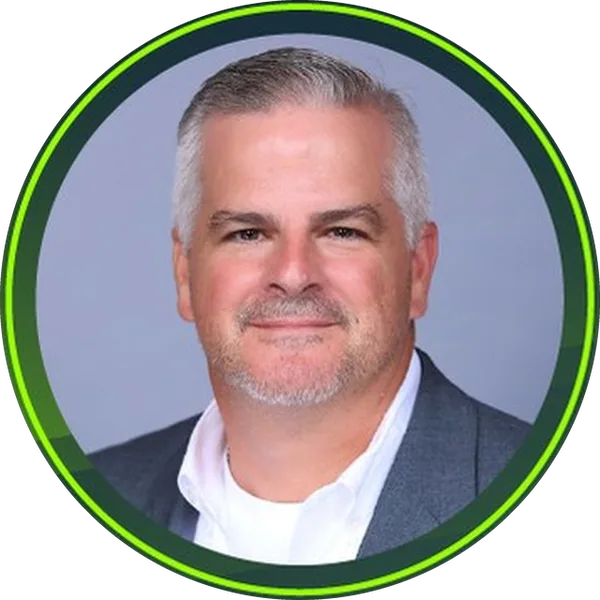
Greg Nichols
Greg Nichols from SPNet Clinical Solutions shares his expertise and insights on how technology helps drive better rehabilitation outcomes for injured workers. Learn how data-driven approaches and innovative service models are transforming the delivery of physical medicine and improving efficiency.
In this episode of the InsurTech Geek Podcast, hosts James Benham and Rob Galbraith talk with Greg Nichols, EVP at SPNet Clinical Solutions, about a transformative shift in workers' compensation. Greg shares how his experience in physical therapy, combined with data-driven insights, is reshaping rehabilitation for injured workers. This episode delves into the evolving role of technology in workers' comp, balancing innovation with the need to stay focused on patient care.
Greg's journey from treating individual patients to developing large-scale solutions has given him a unique perspective on how technology can impact recovery. While digital tools like AI and data analytics have immense potential, Greg emphasizes that workers' comp should always prioritize the human element. He describes the delicate balance between leveraging advanced data insights and preserving the personal connection that's so essential in physical therapy.
The full episode
Press play for the whole conversation.

From the conversation
One of the key points Greg discusses is how comprehensive data can help improve outcomes and shorten the recovery cycle for injured workers. He shares his excitement about SPNet's recent partnership with MedRisk, which combines the largest physical medicine network in the U.S. with robust medical bill review capabilities. This partnership, he explains, creates one of the largest data repositories in the industry - an invaluable resource for enhancing patient care while managing costs effectively.
For anyone interested in the intersection of healthcare, technology, and workers' compensation, this episode offers a fresh perspective. Greg's passion for improving the workers' comp experience, from claim initiation to recovery, highlights the potential of technology to support - not replace - the essential human touch.
Explore how Greg and his team are transforming workers' comp with innovative, people-centered solutions. Listen now to gain insights into the future of rehabilitation, where technology enhances care without losing sight of the human touch.
Stay tuned for more insights from industry leaders on The InsurTech Geek Podcast!
The full transcript
Transcribed automatically from the episode audio, so some names and terms may be misheard.
James BenhamOn this episode of the InsurTech Geek podcast, we're talking about how technology helps drive better rehabilitation outcomes for injured workers with Greg Nichols from SPNet Clinical Solutions. The InsurTech Geek podcast is all about technology that's transforming and disrupting the insurance world. We'll be interviewing guests and doing deep dives into specific tech we see changing the industry. We're taking you on a journey through insurance tech, so enjoy the ride and geek out. This episode of the InsurTech Geek podcast is here thanks to the support of JBKnowledge.
JBKnowledge creates custom solutions for P and C insurance companies of all sizes. Learn more about our services at jbknowledge.com. And we are back with another great episode of the Insured Tech Geek Podcast, always geeking out on insurance tech and insurance in general. With me, of course, I'm your host, J. Wizbennum, CEO of JBKnowledge and Terra. With me is the most interesting man in insurance. That's right, mister Rob Galbraith. What's going on down in San Antonio, buddy?
Rob GalbraithHey. Just enjoying this time of year. The weather is gorgeous down here. Not too hot, not too cold. So as it gets a little chilly, the leaves turn up north. We're still getting some real nice temperatures so you can be outside here. Nice. So you're gonna put some Leaderhosen on and go to Oktoberfest up in New Braunfels? You know, it's funny. I'm not, but we just signed the permission slip for my daughter to her German class is gonna go there. So, yeah, it should be a good time.
James BenhamTell you what, buddy. I I was thinking about it because I went to Germany and Austria this summer, and I might have happened to get me a pair of Leader Ozen that I'm extremely excited about. They they are they are they are genuine and authentic along with the shirt, and I have the full get up. Like, have the full on get up. I got I got the whole get up, including the hat, the shoes, like, all, like, handmade in Germany by real Germans. You know? Wow.
Wow. So I'm just saying I'm pretty excited about it. Oktoberfest.
Rob GalbraithYeah. My wife is German and she's from Berlin and later moved to Dresden. And so a lot of the the Lederhosen, Oktoberfest, like, it's really more Bavarian, you know, kind of Munich and in around that area. So I I was trying to explain to my daughter because she's like, I said, your mom and I, we went like when we first started dating, but she never really wanted to go back. My daughter was trying to understand why. I was like, well, it's like being from Michigan and then moving to Texas.
It's just a whole different side of the world, even though it's the same country. Yeah. Yeah. It's it's it's weird. I was in Munich,
James Benhamso and definitely my travels in Germany have been in Bavaria, so, they're definitely super into it. With us, a guy who would probably be right there in the leaderhosen with me because, man, this man loves dressing up, having fun. He loves cutting loose. You know, you you never know what you're gonna catch him in. It's my buddy Greg Nichols. What's up? What's up, Greg?
Greg NicholsI'm still trying to get the visual out of my head. I mean, it's really disturbing. I mean, I'm really working on that visually to eliminate that, but no, thanks for having me. I, I'm super excited about being with the energy of this group and, but James, you gotta let me get that out of my head so I can refocus on some of the the the the the talk here. No. No. I will be showing you a picture of us. No. Please. Please. Don't reinforce it. Not not not only I need positive cognitive behavior, not negative cognitive behavior.
Not not only are you not gonna get the visual out of your head,
James Benhamyou're you're not gonna unburn it from your eye. Oh my gosh. Because I I wore it all over Switzerland, and they're like, and everybody's like, oh, are you German? I'm like, nope. From Texas. The bag? Why you why are you wearing the? And I'm like, because when in Rome
Greg Nicholsslash Be like the Romans. Yeah. Yeah. Exactly. I mean, I'm just saying, man. Hey. Take your time. Take your time. You don't need to pull that up. I I I yeah. Okay. That's enough. The legs the legs are not you need to have a look. I got an exercise program for you. I know you got two bad heels. We'll make it look a lot better.
James BenhamSo, Greg, you know, I wanna talk about background. I want to talk about your company. I want to talk about innovation. I want to talk about physical therapy. I want to talk about how critical rehabilitation and innovation rehab is for outcomes of workers' comp injuries. There's a lot of things I want to talk about. But before that, I want to talk about you. You're an Alabama guy. Now, you didn't go to University of Alabama, but you are an ardent supporter. And so we're just not going to talk about football.
It's just not the year. It's a it's a rebuilding year. Although, you know, there are no rebuilding years anymore. They don't exist because of the transfer portal. There's no such state as a rebuilding year. So, I don't know what this kind of football is, but it's not Alabama football. But I'm sorry for your loss of your season. But, but I am but, know, maybe you'll beat I I think you'll beat Auburn, but you never know. You know? So you went to University of South Alabama. You got a Bachelor of Science in Physical Therapy.
And you also, interestingly, being a PT, you played baseball for Jeff Davis Junior College in Mobile. And I'm a huge college baseball fan, like big time college baseball fan. Like, I care 10 times more about college baseball and what goes on in Omaha than I do about the World Series. Oh, so, did your did did you decide on a career in PT from all the injuries you saw from people playing baseball? Like, what was the what was the origin story here? So, you know, it's interesting.
Greg NicholsPlayed played a lot of ball. End up end up building a baseball academy to help at risk youths get into college and actually have one guy in the league right now that was MVP last year as a rookie in the league for Baltimore, which was part of his journey, not the complete part, anyway, but ironically I got into PT, because my brother when he was nine had a tumor in his spine at his T12, which pretty much paralyzed him from below and so we went through three years of trying to figure out a diagnosis to surgery, to he's going to die, to he's never going to walk, till all of a sudden he's playing ball again, right, within a four year period.
So I watched my my little brother go through and my family go through the whole process of the low of lowest to the high of highest, and at the very end of the high highest was a PT that told us it was going to be okay, that brought us through those dark moments and so, you know, you've been given gifts, certain gifts and you know, maybe my gift is to help people through tough times so I started treating and I knew what I wanted to do before I got into high school.
So kind of rare, you you don't really have that path laid out and my first job was, I drove an hour and a half to work three days a week in Birmingham at UAB in probably the worst environment in PT, which is the burn unit. So, yeah, so it's kind of a crazy story and, you know, I can't be more blessed to be given the skills I've had. And then all of a sudden, I got into X spreadsheets. So I don't know what the hell happened along the way.
But, yeah. So I I kinda come from the bottom up in the in the ecosystem when you think about it. But what a great
James Benhamwhat a great origin. Like, what a great reason for doing this. And I I find the human you know, I've I've been podcasting for this podcast about five years now, if you can believe that. And then before that, another several years. And I've gotten to interview hundreds of hundreds of people. And the human experience is the most interesting topic of all our conversations, you know, like what drives people to do things, what motivates them, how they redirect an entire lifetime based on something that happens to them.
I mean, you might have ended up being an attorney or you might have ended up being an engineer. You might have ended up being a lot of things, except this horrible thing happened and you saw the power of physical medicine
Greg Nicholsand you're like, yeah, I wanna I wanna give my life to that. I mean, it's amazing. Yeah. It's crazy. My first patient is a student, which, you know, you're on this euphoria. You're about to graduate. You're trying to get a license and stuff. She was 29 years old, she had a three year old son named Zach and I'd become very close with her and she had something called myosthenes gravis, which is a demyelization of some tissue in the brain and nervous system. And I remember just going, this is awesome, and the last day I had her, she threw a clot and died.
So then I'm like, is this really for me? Do I really want to be in medicine because I've spent this enormous time? But then I just was like, how do I defend, create walls within my own emotions to go out and deal with death every day because I was in an acute care, I grew up in the hospital. Mean, I was the best butt wiper, that's how I got through college. I went to school at night, wiped butts in the day and did everything I could to grind away and when you think about medicine, it's very expensive, so you deal with a lot of money, you deal with life or death.
I mean, those are the two most intense things that you have to deal with and I try to teach some of these younger people that, oh, I see the money in medicine, there's no real money in medicine. It's just a service that everybody should have an access to and so it's just, I don't know. It's been an interesting journey for me. I have no idea how it ended up on the Insure Skeep podcast. Right? So how am I here when I was treating patients, you know?
So
James Benhamwhere was the pivot then? Because you were in physical medicine. You were a staff PT doing rehab work. Then you were a manager PT at a regional medical center. And then you co founded PT Plus
Greg Nicholsunder and did that get acquired by hospital, by HCA? It was a JV that I did with HCA back in the day. Columbia was what it was before, and, that's when the pivot happened is that, the hospital said there's something about you. We're gonna get rid of a CEO, which in a small hospital settings you typically turn your CEO every eighteen months just because you're dealing with such a small group of very powerful physicians that control your ecosystem and they said, hey, we want you to lead us and still treat like we were running an $800,000,000 operation and so I became COO and still ran the clinics and that was my pivot into corporate medicine.
I just fell in love with corporate style systems and I worked for ACA, which is the biggest hospital company in the world at that time, Happened to get investigated. Had a little issue with some of the politics. Then all of a sudden, I jumped on to HellSouth a week after they indicted their CEO who happened to be from where I was from and was part of a team with some of the Marsh guys to rebuild it and then that's when I got in product design. So the pivot happened somewhere in there when I started enjoying boardroom meetings and understood that I could build products that could impact greater populations than just what I did in my clinics.
So, but that's the comp side came in because the clinics I took over from HealthSouth, we had this new car company called Hyundai, they came to America and I did some back end, we were using Six Sigma analysis back then, but I did some back end data drives and really started trying to understand in 2007 how data could be used to help the general population, whether it's comp, whether it's commercial, So, and then how does it bridge to what I actually do in the clinic? Because that's the gap right now.
Right? So When when when was the last time you saw a patient yourself? I still work with, some pro athletes that'll come back in the offseason that wanna be tuned because I I had a great exposure for some guys up at Health South that were on Andrews's team back in the day of, you know, what's the thing we do? So I'm big baseball guy. Again, I own a baseball academy, and I'd bring these guys in and tune them. And then my my youngest daughter is a big time gymnast, and so I kind of work with them but I've never, I haven't been inside of a clinic.
I did renew my license this year, just because I'll never wanna give up on it, but, haven't been inside a clinic in six or eight years.
James BenhamWhat where where does your, is this,
Greg Nicholswho who who's your daughter? What's her name? So my my baby girl's name is, Ava. She's 13. My oldest one is 28 and it's it's still the same wife. So and I travel a lot, so I'm still trying to figure out
James Benhamhow Are it both of them gymnastic?
Greg NicholsGymnasts? The oldest one is now has a child and and she is out, obviously. And she she lives in the Southeast, and my youngest one is is a gymnast. And then my middle one plays college baseball. So he's playing college baseball still. Wow. My son. Yeah. That's my son.
James BenhamOkay. That's amazing. Well, that's that's that's awesome. So two gymnasts and a baseball player Yeah. As the as the children of a PT. I love that. Yeah. It's,
Greg NicholsI don't know. I I keep asking myself why, but whatever. I think it's their mother. Their mother's the driving force. So I just say, yes, ma'am, and you keep going. So
James BenhamThat's awesome. Yeah. So so once you started in the clinic, I'm in, then you got into physical therapy for for injured workers, and that's where you had the connection with work op. So it's really like the last twenty years, twenty plus years. If you actually wind all the way back, you're really back to like twenty, twenty seven, twenty eight years. You know, we love talking about technology and innovation. When did you start noticing a real connection with technology and how it could be used in the system to drive results?
Because you and I have worked together on some really neat projects. And one in particular that's really fascinating. And and and so I was just curious, like, where that where where your love and and affinity for technology came from. So so the original exposure was studying reserves and,
Greg Nicholsyou know, history of claims with the car industry and can I convert the data point to something I can see clinically because in my space, medicine is really, I don't know, people talk about medicine as old, in my space, medicine is not a science, it's an art? Like what I feel with my hands are different from what someone else will feel and your pain levels between you and Rob could be extremely different. I'm sure you're kind of weak minded, so James got low level pain. Rob's got high level pain thresholds, right?
So no, tying data, which is consistently available in our system back to something in the clinic that I could do something with. So ironically, in a car industry, seventy eight percent of your claims calls happen between your shoulder and your fingertips. Well, let's eliminate one of those joints from being injured and we can have a tremendous impact on cost, right? So that was the first thing we did is I worked with some companies and built some models on how to screen incoming employees to be optimal you know, game day players.
And so we set reserves and we never touched for the first five years, were under like 20% of the reserves that were set by doing this. That led me to product design that now has us where even you and I and our companies are working together on some, what I think is next generational evolution of how we manage the, think about the injured worker as a life cycle. The injury is the beginning of the life, returning to work is the end of the life. How does technology change the experience of that life cycle, whether it be injured worker, whether it be claims professional, whether it be a payer.
That payer could be an employer, a carrier, a TPA, whatever, but how do we change their experience to shorten that life cycle? That's that's the only two things we're here to do. Take someone who's hurt, afraid, and isolate, get them back to work, and do it at the most cost effective. That's it. There is no other goals in our system except take someone who's hurt and do it at the lowest cost. That's the most efficient way to do it. Once you once you make your goals really simple, getting there seems to be technology, in my opinion, is going to be one of the key drivers going forward.
James BenhamI noticed you said hurt, afraid, and isolated. You're adding in there's some there's some mental combinations of this in particular, in workers' comp. You know, we talk a lot about return to work, we talk talk a lot about it. And we talk a lot about getting the worker back because there's a huge psychological impact on being in, but just being injured in general. But then being injured to the point where you can't work can be really negative, really detrimental. And so your physical therapy, you guys are the front line.
Aren't you having the most contact with injured workers as a general rule of thumb? I will spend the most time
Greg Nicholsface to face with the injured worker. I will and and if you think musculoskeletal, which is about eighty plus percent of all injuries associated with work, you've got a large percentage of those going into physical medicine, so I'm spending the most time with that population of patients. And this is where I just get frustrated in my ecosystem is that everyone at the executive level has been making these decisions, has never held a guy's hand who's six foot four longer, who's got four kids, and he's crying because he's blown his back out.
He knows he doesn't have an education to go get a desk job, and he's not gonna be able to take care of his family and he's sitting there crying in front of you as a therapist, my job is to remove barriers and get him back to work. So as we make decisions in these boardrooms about how we adjudicate claims and shave time and do this, there's still a human being to this that has to be the center of our world and again, that's where you did a nice review a couple weeks ago with a guy that that has affected me as he sees affected you, and, I think that when you have the balance of how much is too much on technology versus taking leaving the human in, that's what we're still all trying to figure that out.
We're trying to figure it out and it's gotta be figured out by each of our domain expertise. I'm a domain expert in just physical medicine. Who's the domain of claims? Who's the domain of the physician point of entry intake? Know, so that's the exciting part is bringing our domain expertise to it. That, I don't know, I get on a diatribe about the human being because I grew up in the early two thousand when the world said, hey, the most important thing in healthcare is the patient, so now all of sudden you had patient reported outcomes being driven.
This was an early legislation in 2000 that was talking about a pay for performance model and the the patient dictated how you perform, which I think about that, not your cost, you know, so, I I'm a huge advocate of of patient claiming experience.
James BenhamAwesome. Rob, your your your question.
Rob GalbraithYeah, Greg. So I I love the fact that we have you on the the show because so many of folks that we do have either come from the insurance industry itself or come from technology startup, etcetera. I don't know that we've had a lot of providers, if any, on the InsurTech Geek podcast before. So I'm curious, your relationship with some of the carrier partners, what you've seen from somebody that certainly works alongside the insurance industry, but I don't consider part of, right? Because you've got your own domain expertise as you just mentioned.
So maybe you could just talk about the evolution of insurance carriers, providers, your experience as somebody that's looking to innovate in your space, how receptive have they been, how easy to work with, and has that changed over time or are there still some elements where you think there's opportunity?
Greg NicholsWell, there's always opportunity. I mean, you're on an advisory board for a group that does nothing but educate about our space, right? Really curious as I research them, you know, I'm looking for clinical influences from their side to train our counterparts, right? How do they marry that? And again, I think it's interesting. So in my world, the way I think about it is there's three, participants in the ecosystem. There's obviously the claimant, there's a claim professional who's trying to support the claimant and then there's someone that pays the bills, that's it, there's three, you've got the provider in the claimant world, so claimant adjuster and provider are trying to support the claimant.
We think and what we are seeing is that, and we've had some very influential industry leaders give ideas about how we can all get better to service the claimant. The claimant in our world is a patient, I'm not a big fan of claimant, like the word patient, but we've seen whether there are TPAs or carriers or providers all try to get to the table to be part of the solution. In the past, you had bridges that didn't connect the provider world to the payer world, right, or from the payer world to the employer world.
So these bridges didn't exist, and they didn't exist because in each of those domains, you had different language that wouldn't translate. Well, ironically, the data in workers' comp is enormous. One of our mentors talks about it. The data that we have between the two domains or the three domains is enormous. We just didn't share it across the bridge, right? So now if people are more open to sharing their domain expertise and translating that data in a way that I can ingest it as a provider and do something with it, that's really powerful.
That's extremely powerful. Claims are down across the country. People are working safer, but the claims that I'm seeing have a much higher acuity value, much higher. That means that you got an aging workforce, that tweaked knee on a 60 year old is different than a tweaked knee on a 25 year old, right? The comorbidities as you age compound the recovery process. But I might not have the comorbidities as a provider when you walk in my clinic, but the adjuster does. So to bridge that over in a way, it doesn't have to be a list of, I mean, it just has to be, I'm worried about this claim because of some factor and as a provider, I want you to be aware of it and provider needs to reverse engineer that back.
So if we all work together, a vehicle one way instead of out from each other, then I think we're gonna get the recovery cycle to be much shorter in time. Right? So if that all of sudden becomes our ultimate goal as an ecosystem and we all agree that we're going to share information, then I'm seeing it at the TPA, the biggest TPAs in the country. I'm seeing it at the biggest carriers in the country. I'm seeing the largest provider who I came from, some of the largest providers in the country going, can I have a place at the table to where I can understand the problem better?
That's very exciting to me and then you validate it with data, you have to validate everything with data, not it feels good, great, I mean that's great but I need it in data so I can meet the outcome of financial fiduciary responsibility as well as life cycle impact. So I'm robin, you know, the way I responded, but if it does that make sense?
Rob GalbraithNo. Absolutely. And I I think to your point, the big communication challenges before, right, where everyone had their own language for things, and I know that's a big thing that I, you know, work with clients on is just trying to understand that translation, right, of kind of, you know, what does frequency mean? What does severity mean? What metrics are you measured on in your world, honestly, is kind of a lot of it and then, okay, let's see how that translates and see where there's overlap and where there's potential synergies.
I think that bridge, it sounds like is the data itself, right? So now before it was like, the feeling the elephant from different sides and try to describe it when you're blindfolded right now, it's like, okay, we have a common language in some senses as the data and it may mean different things or how we interpret it may be different, but at least we have a core thing now that right, is talking about patients directly tied to
Greg Nicholswhat their experience and their outcomes, etcetera, that then we can now try to interpret and share and be that lingua franca, right, that common language among all the parties. So I think that makes a lot of sense. Yeah, where I like to hear James talk a lot about is we all have our own description of data and how we use it, but what really fascinates me about listening to your podcast and how people approach this is how does the technology help you use the data more efficiently, right?
So how does technology give me an insight quicker that I can react to that change in the data? We, a company really, three years ago, we had a CEO that came in who is data driven. He has a background, higher level education in statistics and economics and stuff. And he came in and he absorbed as much clinical that we could push in front of him, and then he formulated this idea of no one's ever tried to use data to support an output in our world that gives us an action item.
It's all been rate, it's all about your rate and that's such a small part of the experience of all the stakeholders. And so we've invested substantial dollars in getting larger data and and, again, protecting that data. It's specific data to a cloud that we can't just it's open. It's but we can use some of the some of the line level type of details to better understand how something's going to turn out. Right? And so it's very fascinating. And the way I always talk about this is, you know, I've been traveling for twenty years discussing these things and, you know, I used to print maps off.
Now I know through a website that my my direction of going to my target is on track. I know what time I'm gonna get there. And, oh, by the way, I'm gonna alternate you around. So think about the life cycle, it's a trip from point A to point B. If I could tell you that point A, your first step on your life cycle will get you to the end of your life cycle quicker, and then if I could tell you the combination of that doctor, this therapist, this hospital got you to your point of end quicker by using data, why don't I just create a Google Maps or an Apple Maps program for a real life cycle, right?
So our data lake now is tremendous, and we have tremendous medical insights on what's out there. We talk about this all the time. This AI, this new technology at COP is a race. If you're just now starting the race, the marathon is almost over. I mean, it's you you needed to be in this race years ago, and so we assimilate a team that's been looking at it this way for the last eight years, and we're really, really excited about what we think we can do with having conversations, to your point, with other stakeholders who are thinking about the life cycle differently.
So
James BenhamI don't know. I I again, I go off on an I get so excited about this stuff. But Yeah. Well, you you all y'all are pulling together something unique, and I wanna have my final closing question around this. SPNet is part of Medrisk. Medrisk is a multibillion dollar company. Now, if I'm correct, you guys just acquired the preeminent bill review software and services company in the country. Correct? So that was it was part of Conduit and it's called StrataCare. And so now StrataCare is part of Medris.
So now you're combining all of the medical bills and bill review with the largest physical medicine network in the country, the largest physical medicine network in the country with the largest medical bill review provider in the country. That's about more than just aggregating revenue. That's one of the biggest data repositories in the country that allows you to, again, drive better outcomes. Right?
Greg NicholsYeah. If it's if it's used, with, some discipline and we continue to use it to evaluate the life cycle, it's it's a great we're in a great position to rethink about how we provide insights, how we guide the recovery process, and we're beyond excited about it. Our board saw the vision and gave us the opportunity to go make the investment, and we're really, really excited about what we can do with this to help people make these decisions. Ultimately, it's the class decision. Right? It's the claimant's decision.
But it's just like, again, I go back to following a dynamic map on a road trip. You can choose to go the shorter route or you can stay on the long one, but the option is you have a choice. And, you know, we are very excited about what we can do with this. We've been studying it in our domain, in the physical medicine space for years, and we tapped into a way to give those options to our clients. And some of them, some of the largest carriers just said, look, you know better the choice than why are we making this choice?
Why aren't you making this choice based on your data? So we're really excited about where we think we can go with it. And we've got partners at all levels in the ecosystem that are now walking with us on the journey. So it's okay, it's not okay if one of us decides to jump forward and everybody else stays back. We have to as an industry start to move our way forward to change the experience of the injured worker, the desk level, and the payer and the provider.
So I I I find it's gonna be a very fascinating next eighteen to twenty four months, and we'll you'll see some things from us that we're really, really excited about.
James BenhamYeah. As you should be. You know, when you strategically acquire a group of companies that are highly complementary, it becomes much more the whole of that company becomes much more than the sum of the parts. It's much more than just summing up revenue. It's about being able to provide insights for injured workers and the employers that haven't been driven before. I mean, it's just plain and simple. So I'm I'm excited about what y'all have going on there. Certainly, love I love working with you. Y'all have been a foundational member of our Terra Connect initiative to securely electronically connect workers compensation adjusters with the medical providers so that we can exchange data in a secure environment.
Obviously, place the order so they don't have to email things, don't have to log into portals. It can all just be seamless. And so I appreciate all of your all of your brains and your your effort on that. But also I love what you what are which I have going on with bringing bringing bill review into this country's largest physical medicine network. The thing I like about you most is that you actually still still work with patients. You still care about the heart of what brought you into this industry in the first place, that's healing people.
Had just to close out with I had a wonderful, wonderful physical therapy experience, a guy named Michael Perkins here at College Station. He heals people. You know, he's a he's a healer. And he sat down with me. He took time to get to understand me and my injury. You know, he got to know me as a person and he brought me back from two ankle surgeries and a spine surgery that were pretty serious for me. Mentally, I went through that trough of all those feelings you talked about.
And so I asked when you said that it brought me back to that place I was at when I couldn't move, couldn't walk, couldn't sit for a while. That was really painful, you know? And so I really appreciate that you're you're at the heart, you're a healer, that you love people, and I appreciate that you're in this industry. So thanks for taking the time to come on the show, brother. No, man, brother. I really appreciate you. Hey. I got one other thing I was gonna share with you because,
Greg NicholsI'm a a loyal listener and stuff. And so you talk about one of our mentors and you have this, you know, us thinking about this guy all the time. So I was gonna give you my little thing is that every six months with, he was your second participant on on your original show, and then he just did one three or weeks three or four weeks ago. And, I know he's gonna watch, so I'm just gonna show him something because he keeps me he's unbelievably powerful, he keeps me in the right mindset, but you gotta think about what he's going through.
So every six months, just so you know, James, he and I take this little glass, we fill it with some type of wine, and we drink and celebrate six months. And you'll know what I mean by that. But, I keep it on my desk to remind me why I'm here, what I do, and how much I love this industry and what it does for people who are are really hurt and afraid. If you don't think about someone who, we always think about the injury and you just talked about your recovery, you never described one time anything clinical to me.
You talked about how he knew you, how he knew what kind of person you were. Even in that little snippet, you never said a word about the type of injury, you talked about what he did for you emotionally and so that's where the passion's gotta come from. These are people, some of them try to take advantage of system, I get it, right? Such a small percentage, but these are people that are trying to navigate a system that has 51 different ways of doing things because it's in every state different.
It's kinda crazy, but, no. I appreciate what you're doing. The more we can bring awareness to what our little ecosystem's like and and challenge people to think outside of it differently. You know? It it it's crazy stuff.
James BenhamIt is. It is. And we're talking to he's given me permission to disclose that. We're talking about Skip Brechtel, of course. He and I shared a stage at National Comp and cancer he's a cancer survivor. He gave me permission to talk about that on the show and, just an amazing guy.
Greg NicholsYeah. He left your stage and came to mind the next day. Yes. Did. Yes.
James BenhamYes. He did. And we love him and he's a great guy. Yeah. You know, it's it's it's awesome. Well, thank you so much for bringing that up. I appreciate that. I love that tradition. Absolutely. And Rob, as always, thank you for cohosting.
Greg NicholsAbsolutely. Pleasure to meet you. Yep. Great to have you on, Greg.
James BenhamAnd to all of our listeners out there, again, my name is James Benham. I'm your InsurTech geek. This has been the InsurTech geek podcast. Enjoy the ride and geek out. See you next time. The InsurTech geek podcast is all about technology that's transforming and disrupting the insurance world. I've been your host, James Benham. That's jamesbenham.com with co host Rob Galbraith at endofinsurance.com. We're taking you on a journey through insurance tech. So enjoy the ride and geek out.