 YouTube
 Spotify
 Amazon
 iHeart
 Apple
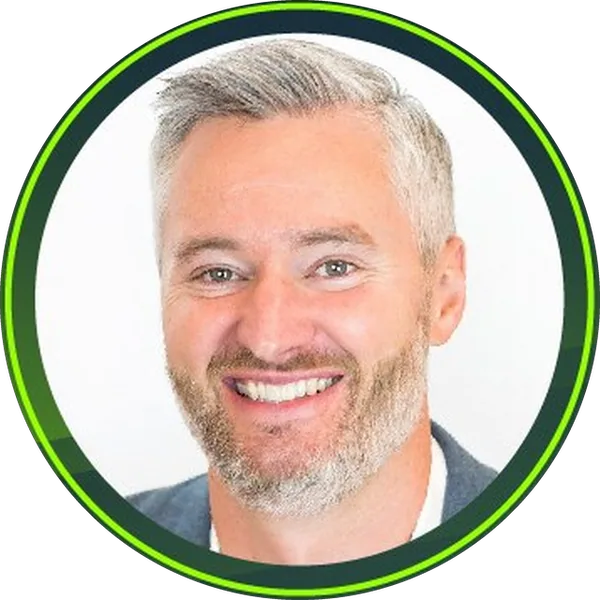
Porter Leslie
Porter Leslie from Ametros shares his expertise and insights on revolutionizing insurance fund management and the healthcare experience. Learn how innovative solutions are transforming post-settlement care, simplifying compliance, and improving outcomes for injured individuals and insurers alike.
Navigating the complexities of insurance settlements and healthcare fund management can be overwhelming for injured individuals. Ametros, led by CEO Porter Leslie, is changing the narrative by bridging the gap between technology, healthcare, and insurance. In Episode 151 of the InsurTech Geek Podcast, Leslie shared insights into how his company's flagship product, CareGuard, is improving claimant experiences, easing compliance burdens, and delivering value to all stakeholders involved.
The full episode
Press play for the whole conversation.

Managing Post-Settlement Healthcare Funds
For many injured claimants, receiving a settlement is just the beginning of a daunting journey. From managing medical expenses to ensuring compliance with Medicare's stringent reporting requirements, claimants are often left without support. Mismanagement of these funds can lead to lost benefits, financial strain, and unnecessary stress.
This is where Ametros shines. Recognizing the challenges faced by claimants, Porter Leslie and his team have developed innovative solutions that simplify fund management and ensure long-term sustainability of healthcare benefits.
Ametros' CareGuard: A Game-Changer
At the heart of Ametros' success is its CareGuard platform. This service acts as a health plan for claimants, providing tools and resources to efficiently manage settlement funds. Key features include:
These capabilities enable claimants to focus on recovery instead of worrying about financial or regulatory pitfalls.
Benefits for Stakeholders
Ametros doesn't just benefit claimants - it delivers value across the insurance ecosystem:
Ametros and the Future of Insurance
In the podcast, Porter Leslie highlighted Ametros' role as a "tech-enabled service" company. By leveraging technology to create efficiencies, the company addresses both practical and emotional challenges claimants face.
But the innovation doesn't stop here. Ametros' recent acquisition by Webster Bank opens new possibilities for scaling their services and integrating financial tools that further benefit clients.
Why This Matters
The challenges faced by injured claimants are not unique to the insurance world but represent a broader need for human-centered technology solutions. Ametros sets a powerful example of how technology can be used to empower individuals while improving the efficiency of insurance processes.
As the industry continues to evolve, companies like Ametros are leading the way by focusing on people first. The CareGuard platform demonstrates that when technology is aligned with the needs of users, it has the potential to transform industries.
Whether you're an insurer, attorney, or someone passionate about the intersection of tech and healthcare, Ametros' story is one to follow. Listen to Episode 151 of the InsurTech Geek Podcast for an in-depth conversation with Porter Leslie and gain a deeper understanding of how Ametros is reshaping the future of insurance settlements.
Stay tuned for more insights from industry leaders on The InsurTech Geek Podcast!
The full transcript
Transcribed automatically from the episode audio, so some names and terms may be misheard.
James BenhamOn this episode of the InsurTech geek podcast, we're talking about revolutionizing insurance fund management and the health care experience with Porter Leslie from Ametros. The InsurTech Geek podcast is all about technology that's transforming and disrupting the insurance world. We'll be interviewing guests and doing deep dives into specific tech we see changing the industry. We're taking you on a journey through insurance tech, so enjoy the ride and geek out. This episode of the InsurTech Geek Podcast is brought to you by Terra. Learn more about our cloud native risk management information system at t e r r a dot insure.
And we are back with another great episode of the InsurTech Geek podcast. I'm your host, James Benham, the InsurTech Geek. With me, the most interesting man in insurance, Rob Galbraith. Rob, how's it going? It's going well, James. Going well. It's, definitely cooler temps here in Texas, and, yeah, holiday season is around the corner. It's beginning to look a lot like Christmas. I mean, it actually got close to freezing. It got down to, like, 40, then it got to 38, and then I was like, oh my gosh.
We're in December. At but, you know, it it it manages to get up into the fifties and sixties every day because it's still Texas. God bless Texas. Love being here. But, with us today, a guy not in Texas. He's, up with a wicked smart, the pack, the car, and the yard, with us Porter Leslie from Ametros. You in Boston today, Porter?
Porter LeslieYeah. Hey, guys. Up here in Boston, I think we cleared 32 degrees. So it's a it's a good day up here in Massachusetts.
James BenhamYeah. It's a balmy balmy 34 or whatever it is over there. I I just got off the phone with another friend from Boston, like like, right before this podcast. So I'm I'm feeling very Boston right now. Oh, yeah. Then you gotta you gotta acknowledge it's sweater weather up here. The sweater weather. It's sweater weather. We're gonna have some clam chowder.
Porter LeslieThat's right.
James BenhamYeah. It's it's gonna be it's gonna be a good winter. It's gonna be a good Christmas. Exciting times in insurance, exciting times in in in technology, and it's been a it's been a wild year. It's been a really I I I don't know if it's just you always you know, when I grew up, I always heard older people saying, oh, the, you know, the years fly by, the older we get. But the older I get, the the the faster the years fly by. I cannot believe twenty twenty four is coming to a close.
I cannot believe we're at the end of this year. I just I don't I remember New Year's Eve like it was yesterday, but it wasn't. It was it was three hundred and thirty days ago. So we're we're wrapping up a a calendar year. For many of us, we're wrapping up a fiscal year, and it's it's a crazy time. Porter, we we know what you do right now. You're president. You're CEO of Ametros. Started. You weren't president for five years, and you became CEO. We're gonna talk about that in a minute.
But before we we do, I wanna talk about kind of where were you born and raised? Let's just go back to your childhood. Like, where were you born and raised and what'd wanna be when you were a kid?
Porter LeslieThanks, James. Yeah. I don't think I ever dreamt of being an insurance or certainly insurance settlements fund management. That one's usually not on your dream board as a kid. But I would tell you, I'm from the South. I'm from the Virginia, North Carolina area and then the Deep, Deep South. So at the age of 12, moved with my family down to South America. So lived for a while in Uruguay and Brazil before coming back to The US. And then after that upbringing, spent a lot of time I've been in nine different states in The US, but most of my time has been in the Northeast.
So, I went to school up in New York and now I'm hitting the decade mark in Boston. So, I had to convert to Celtics and some of the local teams up here, really get into it. Well, is Sports City USA, is it not? I mean, they are fanatical about their pro teams in Boston. Oh, yeah. Yeah. It's and and it's fun. I mean, it makes it makes it a blast to go to the games and yeah. Pretty much around the office, we always have a good time talking about sports.
I'll give you an example. We when Tom Brady was still at the patriots, our office threw him a fortieth birthday party. Now he didn't show up, but but we just had clips of Tom Brady running all the way down.
James BenhamSo just to celebrate him at the time. Just he, like, he didn't show up. I mean, we, know, you we, like, dropped into his DMs on Instagram and and on and on X. And He was invited. Of course. You know, there were there there have been some amazing I I I always like to talk about, like, these grand slam years of of a city winning just a whole bunch of titles. But, like, twenty eighteen twenty eighteen, the red sox win the world series. The patriots win the Super Bowl.
Like, there's some crazy things that have happened in Boston where they'll have something like that that that goes on where they'll have so many you know, the Celtics won the in the in 2008. The Bruins won in 2011. I mean, you're you're looking at, like, the last fifteen years, every major sports team in Boston has won a national championship or world. Sorry. Championship, which you gotta gotta laugh when you say that. If we count Canada as another country, and evidently, it's gonna be the fifty first state.
If you didn't know that you didn't hear this week that we recently extended an offer to Trudeau to be governor of the fifty first state of The United States. But but, I mean, it's a it's just a wild city because there's always something going on there. Like, 18 what? 18 major universities there too. I mean, that's Totally. Yeah. Some great schools.
Porter LeslieYeah. The Celtics, they just won. And just some great tradition too. And I I know, James, you mentioned your daughter's looking at school up here. Right? Yes. Yeah. We yeah. We just went and did she's a musical theater major and at a boarding
James Benhamschool right now. She's senior, and so she's, applying to musical theater programs. And Boston conservatory is one of the oldest and and best in the country. And so we did auditions there, two weeks ago, and, you know, we'll see. Oh, they only take 1% of applicants. One one oh, my god. Lonely 1%. So there's a 99% shot. She doesn't get admitted, but, she she is exceptional, and we'll we'll see where she, where she ends up. But, you know, it it was a fun process, and of course, I love coming to Boston.
Let's let's, how did you I mean, certainly, I don't think any kid maybe like two or three kids. Like, I wanna meet the kids that wanna be in insurance. I wanna I wanna, like, I wanna know about them, like, what as a child has occurred that made them wanna be in insurance because, you know, like, I I wanted to be well, my dad has had an engineering degree, but he owned a Teflon company. But I heard he was an engineer, so I thought that meant that he drove trains for a living until I was at least 12.
And I then I understood what he did, like, when I was 11 or 12. I, you know, I thought, man, I could drive trains. I wanted to be a pilot, which I am, but not a pro pilot. I wanted to be in the military. I wanted to be a you know, everything that that that little boys wanna be. Right? Like, you have the the standard list of things that you wanna be. Insurance is never on that list. So how did you wind up in insurance? What was the path?
Porter LeslieYeah. It's funny you mentioned that, James. So my dad actually worked in insurance for the first part of his career, and then he was an athletic director. He taught well, he coached tennis and had some tennis and soccer teams he coached. But I never thought I would That actually would have steered me in the other direction because you never want to be your parents, right? It's like those progressive commercials. You're training not to be your dad. But he really had no impact on me getting involved in Ametros and what we do.
I credit that to one of my best friends and really what I've tried to steer my career around is just joining up and working with great people. So one of my good friends from undergrad got involved with Ametros and it was a startup. And so I joined forces with him and really at the time I had been working in banking. So I knew a little bit about banking and some healthcare. That was my background. And he knew a lot about insurance and some of the things we do with Medicare and compliance that come with insurance settlements.
That was kind of the meeting of the minds when I got involved with Ametros back in 2015.
James BenhamYeah, Mike, just short summary of what Ametros does.
Porter LeslieYeah, so we are the largest player in the country that manages medical funds from a settlement, from an insurance claim settlement. So we're typically partnering with the insurance carriers, the payers, they could be large employers, also with the attorneys, the plaintiff attorneys. When they've got a claim that's chronic or severe and it gets to the point where, and these are bodily injury casualty claims, where they wanna move the claim on and settle it. So about three quarters of what we do is in the work comp space and the other quarter is general liability, auto accidents, slip and falls, things like that.
But when it comes down to, you know, the mantra in insurance you hear a lot is a good claim is a settled claim, right? So they can move it off the book. I think what we realized in our early days is that sounds great for the payer, but for the injured person, how do they navigate now taking on all that healthcare burden on their own? And so that was the genesis for Ametros. Our product's called CareGuard and we built up a lot of tools to receive the settlement funds for the injured person And then we look and feel almost like a health plan for them where we're helping them spend their settlement monies on things related to their injury.
So if they had a knee injury and they get $150,000 to settle the claim, we're setting up an account that pays for all their prescriptions, doctor visits, surgeries related to that knee injury. And that's really where we plug in. What got us going in this direction is Medicare, the federal government came out in the early 2000s and said, Hey, there was a GAO study. They found that they had lost tens of billions of dollars to people who got a settlement. Then used their Medicaid or their, yeah.
Exactly. Spent it on something and then they billed Medicare. And so Medicare said, Enough of that. If you get money from other coverage, it's fine that you settle, but we'd like to know the amount you got. And then what they did that really created the need for our service, said to the injured person, we wanna know every year how you spent that money. So, if you got $150,000 for your knee, every year you need to show us now do you have 140? Where did that 10,000 go?
Because they said if you run out of that money, then Medicare should pick up coverage. So it's almost like you have this big deductible from your settlement. So we looked at it in our early days and said, that's just crazy. Somebody could be one day working in a factory or driving a truck or in a hospital working as a nurse and the next day, for the next thirty, forty years, they accept a settlement, they're gonna report to the government, this specialized type of reporting. And if they screw it up, it's not just like you screwed up your taxes and you file an amendment.
If you screw this up, Medicare cuts off your benefits. Won't pay your next bill for that injury. So it's a really drastic
James BenhamYeah, it's a major deal. Yeah.
Porter LeslieSo that was kind of the seeds that were sown early days for us. And I think over time, you know, James and Rob, we realized we had a great opportunity to build a great member experience, we call the injured person. The better the member experience is when they get their funds from the settlement, the more likely they are to accept the settlement. If I can tell you, rather than just getting a check-in your mailbox and having a couple 100 pages of reporting to do it, what if you got 20 somebody you can call who understands settlements?
What if you just show an insurance looking card to the doctor and we as a professional organization review your bill, make sure there's no duplicates, get you a savings and pay on your behalf. You can check it in your online app, your portal. You can chat with us, text with us. Everything we built along the way was making that experience better and that really made for both sides, the payer or the attorney or the injured person, made them more willing to think about settlement as a plausible way to move quickly to a better state of mind, a better position, and not to be in this kinda you know, conflicting arena with the insurance company at times.
James BenhamAbsolutely. Rob?
Rob GalbraithYeah, Porto Sur, it sounds like there was this new kinda market that was created from the regulation. I don't know, were there preexisting companies? And then after this move by Medicare, were there other competitors leaping into the space? Maybe you can just kind of talk through maybe some of the strategic decisions from an early days standpoint that you know, Mitra's kind of had to make, and I'm sure some of that tied back to technological decisions that you made as well.
Porter LeslieYeah, great question, Rob. I think like the first beating heart, like mission driven differentiator we had, there were a couple mom and pop companies that were trying to offer the service, whether it was a law firm or someone who kinda knew about Medicare. But I think if I were to join your podcast and tell you that I've got a great Medicare compliance solution for insurance companies, I might get a little traction with you guys, right? This is the InsurTech Geek podcast. But what we realize is for an injured person, that means nothing.
They have no idea what helping Medicare or secondary payer compliance has to do. In our early days, was about CareGuard, that's the product, it's about caring for you and protecting your benefits. And we built around that and our focus was on making the member's life easier and everything we kind of oriented ourselves to this day is all about making that healthcare journey easier. So we kind of had a good North Star, which we keep in mind. And then the benefit of, I think, a couple of things lining up for us is we had a couple of private equity funds that expressed interest and invested in the business along the way.
That gave great just institutional knowledge and capital as we scaled up. And then in January, we were acquired by one of the top 25 largest banks in the country, which is Webster Bank. And that's kicked us into a whole another gear of growth because they saw this market, they saw the service we were providing as really the dominant player. And they said that it fits well with their mission and it also is something that they've done before. So they're the largest health savings account administrator as a bank in the country.
And so they kinda understood this healthcare insurance combination and that it can produce a lot of great deposits for a bank. So, I think it's a mixture. First, you gotta have the North Star, but then you gotta have the resources and the partners that can really help you execute on it. I left out probably most important too is great people within the business. And so we went from a handful of folks in our early days serving a couple 100 people who had settled their cases. So now we're about two fifty employees and we have about 30,000 settlements that we're managing.
So you gotta get some of the right people in early and then over time get those folks who wanna innovate and really make the company better. And you actually pay this out over the lifetime of the claimant, right? So this is the rest of their life. You
James Benhamhave to manage and report on this and pay out?
Porter LeslieExactly, yeah. So the average settlement we get usually somebody in their mid 50s to 60s, there's about a twenty five year lifespan remaining. But to your point, James, we get somewhere, it's somebody in their 20s or 30s, it might be fifty years, where they've received either a lump sum of a couple 100,000 and said, Hey, manage this for forty, fifty years. I always like to challenge people, what if you got your annual paycheck on January 1? Do you think you'd be looking come November, December? Would you have money left or not?
So it's a huge amount of time for these folks to think about and we had to make sure we built to gain the trust of not only the members, the injured folks, but the industry is something super robust, right? Everyone needs to know you're gonna be around in a few decades as these settlements are still being spent over time.
James BenhamOkay. Cool. I mean, you know, are there a lot of people that don't have a manager for this? I mean, is is this really or or or does everybody have somebody that is is there an Ametros competitor that covers everybody that receives these now because the reporting is so complicated?
Porter LeslieNo, so it's still early days for our space. And we think we're capturing in a given year, maybe 10 to 15% of the folks that are getting settlements that have Medicare compliance needs. And we're probably 10 times the size of any other player in the space. So we're by far the dominant player, but there's still a ton of folks getting checks to their mailbox and not getting any support. And I think that's one of the other things that always drew us to this space is we estimate there's over $20,000,000,000 being settled every year out of the insurance ecosystem.
So, you factor in work comp and general liability settlements And for most of the executives in the insurance field, they think that's like a happy end of the rainbow, right? They finally got the claim off their books. What we realized is that's the beginning of the journey for a lot of folks. They get an amount of money there. They're faced with a whole another set of problems. They're kind of on their own. And so there's tens of thousands of these settlements every year happening and billions of dollars moving.
You know, so that gives us hope. When we know our work's not done, we could be five or 10 times the size of the company and still just be scratching the surface on this massive settlement space.
James BenhamAnd all of their benefits are at risk. All of their medic All the folks that are underserved or unserved are all putting their benefits at risk long term, their federal benefits.
Porter LeslieYeah. If they're not doing the reporting properly and there's these Medicare They're called Medicare set aside settlements, then they can really get tangled up. They can definitely impact, especially the body parts that are getting reported. But yeah, it can just become a whole set of frustrations for them, which ripples back to the attorney that represented them and ultimately to the carrier, right? They can come back and say, Hey, I didn't understand this, or I wasn't equipped to navigate this, so you need to reopen my file or we need to talk about this and it creates an administrative hassle for the payer.
Are you a technology company or service
James Benhamcompany or both?
Porter LeslieBoth. We use a lot of tech tools to interact, but I'd say maybe tech enabled services, kind of where we land. We have over 100 folks on the phones talking to our members and we had to build some unique proprietary tech, like a rules engine, a claim system, and some consumer facing portals. But we weren't naive. We didn't try to recreate the wheel. We used what was already out there and just had to kinda optimize it, tweak it for our use case.
James BenhamCool. Rob?
Rob GalbraithYeah, Porter, maybe you can walk through a little bit at a very high level, right? What does your tech ecosystem kind of look like? Because the way I'm imagining it, so you've got every member, right? And they've got some type of account and almost like a policy administration system, right, or that kind of equivalent or a claim system that an insurance company might have. I'm sure you interact with the claim system. So I don't know if you've got some type of APIs or you work with each partner, maybe connect the law firms as well.
So maybe you can just talk a little bit high level about what your tech ecosystem looks like? You kind of mentioned it sounds like a combination of kind of build versus buy, and then like how has that evolved over the last ten years or so?
Porter LeslieSure, yeah, Rob. So, you described it pretty accurately. We realized that where there's already a great system built, let's not go recreate it. The unique thing about our space is there's never been another at scale administrative settlement funds, right? So when we went out and we talked to different claims system folks or folks in the insurance space and said, Hey, can you set up a system that receives money, has a very specific set of injury codes and benefits that it'll pay per every member, not a policy for thousands of people, just every single individual And then can you spin off a consumer facing portal that looks and feels good and that interacts with them to explain it?
We were always left kind of high and dry. So we felt like there were different components that were out there in the ecosystem. So we built a homegrown core system, which we call our care hub that really processes, if Rob, you had a settlement that we're administering, what are the injury codes? What are all the benefits? What's the amount of money you have? Lot A of these settlements get funded over time with an annuity, so we have a lot of checks to make sure we got your funds and there's some banking functionality around that, rendering your balance to you, all that good stuff.
And then there's rules decisioning around should we be paying this bill based on Rob's specific injury? You might have injured your left knee and we get a doctor bill in and it's your right hip, that's gonna flag for us. All sorts of things when it comes to your medications too. So that's really our homegrown kind of secret sauce. Around that we built typical type of CRM setup. We have Microsoft Dynamics managing a lot of our contacts out there. We have a homegrown app and portal which was just some of the functionality we had to bring out of our core that we built.
I think over time we might navigate more to something that's out of the box there. Yeah, some of the secret sauce is in that rules engine. And then the way we interface with our clients, at least on the payer end, Rob, you might have been alluding to, is some of that are claim systems. We have connectivity where we can pull in data with file feeds or APIs. I guess what I'll share with you guys what we learned along the way is you can field of dreams it and build a lot of things and believe that they will come.
But I think we've really waited for our clients to say they will use it because sometimes you build an interface and you think this is awesome and then six months go by and your client hasn't even looked at it, right? There's so many things that grab their attention. If you can't unify your value prop and your service into the one or two things they log into and they care about, it can be a challenge. So we've built what we needed to survive in our ecosystem and then we tie in almost where they dictate, hey, this is how I wanna get you data and this is what I want back from you.
So whether we're feeding them some stuff in Snowflake and they have their own data analysis or giving them Power BI or they just want a PowerPoint that breaks it down for them, there's a bunch of different ways we can engage and we try to follow their lead.
James BenhamSo let's talk about tech for a second and and what are the future of your platform. Certainly and, you know, I use artificial intelligence to analyze code, write code, build software, you know, analyze documents, generate images. I mean, there there's there's just a there's just a a plethora of solutions now out there in artificial intelligence. A lot of what you do, you know, needs a human touch. And and then some of what you do can probably be automated. Like, what's what what are the what are the big sea changes you see that are coming right now in your space?
Because there's many underserved claimant are out there that need a solution like yours. It looks like, you know, you you guys have a a truckload of upside potential there. Mhmm. So which I'm I'm sure Webster Bank is excited about as your as your your your acquirer. What what what do you what do you think is coming that really changes the game for y'all and for the industry?
Porter LeslieYeah. A couple of things get me pretty excited. And I I think there's this vision that like the AI could do everything. Right? But like you mentioned, James, there there needs to be humans in the loop or engaged in certain parts of the process. We've realized there's some just routine stuff that we can offload, whether it's document scanning, grabbing certain parts of the process and putting them in our system. Some things that before we were using like robot process automation for, but now the AI can do it more intelligently.
James BenhamWell, technically still RPA. It's just a super advanced form of RPA. Yeah. Yeah. Exactly. If you look at like the latest feature from claw you know, Clawd AI Anthropic, you know, you you can actually use Clawd and Anthropic in in computer mode where it it essentially will operate the computer application for you, which is a total disruptor to the entire RPA. Like, if I were Blue Prism and UiPath, I'd be freaking out right now because now Claude now Claude can actually use your computer and do all the tasks for you.
Porter LeslieYou nailed it. That stuff is totally converging, which made me made me feel good that we started with process automation and then I think AI, some of the AI tools are gonna get there faster than some of the existing incumbents. Like we had spent time with UiPath and some of other guys. Yeah. So some of the basic stuff, which hopefully most of the folks in the industry are doing in terms of document scanning, records retrieval, that type of stuff, just organizing things is like table stakes.
I'd say our clients on the carrier side, at least in the work comp space, I think a lot of them are still in the security, how do we ring fence this AI tool zone? Because when we talk to them, I don't see a lot of them really deploying it yet. And what fascinates me about the tools, they're out there and everybody's kind of aware, but it's like, who's using them? What we see is, and there's folks like us that are kind of partner vendors, We can move a lot faster and experiment.
Of course, we're letting our clients know and we have security docs and all that. In the settlement space, the plaintiff attorneys, they're just standalone law firms. Some of them are grabbing AI tools and having them analyze accident records and medical records. And so, they're less concerned about a bajillion levels of security. And so, in some places, I think it's creating a bit of a mismatch of who has the advantage or who can move faster. So, that's kind of fascinating. I mean, for us, we do have this whole kind of bill pay or claims management.
So, there is this, the organization piece. What I get excited about too is some of the sentiment analysis. You can have the AI letting you know how your rep's doing on a call. Some of the sales practice with some of the voice AI is pretty phenomenal right now to have your agents work through test cases or test sales prospects, that's pretty neat. So that's some of the stuff we're experimenting with right now. I think in our space there's so much upward growth that we're budgeting to grow our employee count another 30% next year.
But I'm excited about the effectiveness. It might feel like we grew 50% because if we can get some of these tools going, then for us, it's not about replacing job. It's about getting higher level, higher output from everybody who's on the team.
James BenhamYeah. Same same people, higher output. Right? I mean, it's at the end of day, I think as an economy, we'd just say we're looking for a higher GDP per capita is really what we're looking for. We're not you know, you you don't want people to be unemployed. Actually, you want everybody to be gainfully employed, and you don't want everybody there's a there's a huge hazard to putting everybody on universal basic income because they stopped trying because common failed every single time it's been tried. So that's yeah.
Like, you you you really want everyone productive in a society. You want them to be able to work and produce. You just wanna hire GDP per capita because it results in a just a better quality of life. You know? It's it's I I that's kinda what that's kind of how I that's how I view the the problem. Maybe I'm over oversimplifying it. Rob?
Rob GalbraithPorter, I'm just curious. My mind's going in a ton of different directions, and obviously, we wanna, you know, still keep the the listeners and the viewers out there because I'm sure we can have probably a two, three hour conversation. So, you know, being mindful of keeping it, you know, somewhat concise, but, you know, just curious, like, some of your thoughts on, you mentioned already some directions you're thinking about going. I think about natural language, processing natural language understanding, fraud detection, chat capabilities. Do you have texting relationships with folks or do they still Is it just that level of care that you still need the call center agent kind of person that's not Maybe doesn't lend itself to that or virtual assistant, things like that.
So yeah, just maybe any quick hitters on any of those topics that you see promise in or are actively using today?
Porter LeslieYeah, great question, Rob. There's a few areas that we think are like low risk where we're using some automation or some AI. So say for instance, we get doctor's offices asking us when is their check coming, right? We don't need a human responding to that. So first they can go to a portal, but if they really want to call us, that's really just somebody checking a screen and telling you the check's in the mail or matching up the claim and saying, yeah, this one's in the queue.
So what we've done is experimented in low risk areas where we see high reward. Our service, it is super unique and it's pretty high dollar settlements in general. So we want to have a real white glove touch to it and we want them to get a real human. I can foresee down the line some of the easy requests, either making it self-service, and that's a big theme, right, in the industry is just how much can you push self-service or self-service with the AI bot. I think some of that would be powerful.
I want it to be really, like they understand. I think our member base and our clients expect us to deliver really high caliber service. And so I wouldn't want folks to think they're talking to a human that's actually a robot that doesn't understand them. Those are some of the pitfalls I think we're naturally trying to avoid. But yes, your comment on texting is huge. We find on emails it's like two to 3% response rate. On texting it's like 10 times, like 30%. And a lot of our members now, they just wanna text with us or they just wanna chat in the app.
And so if they have a basic question that flows through there, then that does look like low hanging fruit that we can start to automate. But we're being super mindful and prudent about when and where and how we disclose if that is a robot on the other end.
Rob GalbraithAnd, Porter, I have a follow-up. Just for our audience, your members know that everything's coming from a metros or are some of your solutions white label where they think they're working with their law firm or they're working with the insurance firm's claims settlement? I'm just curious, like, aware are they that they're interacting with the Ametros versus other parties that are probably involved?
Porter LeslieYeah, so we control all the branding that it's in Meetros and CareGuard. We haven't done any white labeling. The challenge for us and now on the other flip side, kind of the strength that we've developed out of it is when both sides come together and it can be contentious, you know, the insurance company and an attorney firm, they're looking for a neutral, trusted third party that would receive these monies and help this person on their way. We really drive towards that position of neutrality and being, once this is all settled out, we're helping the injured person.
So everything we operate is under our own brand. And so at first that was a big obstacle because, you know, Amitrios, most people can't understand it or pronounce it. So maybe we didn't take Oops. It starts with an A, which has an advantage in the alphabet, but we gravitate in a market more towards CareGuard. And at first people did not know or understand what that was but over time as we become the dominant player then a lot of times people say, want that CareGuard thing or that Ametros Or sometimes they even say, Not CareGuard, Ametros.
And we'll say, That's the same company. Of course, we're over here waiting for you. So yeah, we have steer clear of going deep in any sort of white label direction and just trying to continue to compound the interest on our own brand.
James BenhamAwesome. Well, let's wrap with a little personal chat. You played basketball for Columbia. Is that right?
Porter LeslieThat's right, James. You're
James Benhamyou're digging up on me. And and and and and Columbia is having a a little rare moment in in athletics right now.
Porter LeslieIt is. It's pretty exciting. Know, I have to talk about it because usually Columbia is kind of the whipping boy of college sports. Know, we had like one of the longest losing streaks in football. When I played hoops, I was a walk on. I didn't play much, but I was on the team. We had a rough season and then we turned it around a bit. But yeah, in the last couple of years, so the women's team for hoops won the league, went to the tourney last year.
Megan Griffith, the coach over there, she played when I did. She's awesome. And then the men's team for football just tied first for the league. And the men's basketball team this season, They were one of the few undefeated teams in the country. They just lost the other day. So I was hoping we'd get this podcast done while they're still undefeated, James.
James BenhamThat's okay.
Porter LeslieI think now they're eight-one but, you know, you go and you play sports at some of these schools that are kind of mid level or low level D1 and a lot of it's just for the love of the game and the network and the joy of playing. So it's awesome to see, like, the level of the game at any level in college has gone up so much. And then to see, like, your alma mater have a little bit of success, you know, you gotta you gotta get fired up about that.
James BenhamYeah. You do. I mean and and look. It's it's, it it's all it's all good, man. I'm an Aggie. Obviously, I we fell off the cliff on the end of our football season. We Oh, yeah. Sorry about that. We were riding high, you know, and, you know, lost two games we should have won against, Auburn in South Carolina and then then, you know, 17 to seven against University of Texas. So, you know, it's, it's tough falling off the pedestal, but look. The Ivy League, there's there's a lot of good sports played in the Ivy League.
Good games, a lot of good players. So I'm I'm excited for you. I I toured Columbia's campus with my daughter when we were looking at other colleges in New York. Columbia doesn't have It doesn't have a musical theater college. So we, you know, we weren't there to look at musical theater. But I said, look. This is where I'd really like you to to go to business school for your MBA. And I know you're a Wharton guy. I know you're a guy, but I was like, you know, Columbia would be an an an excellent excellent choice for your NBA.
But, you know, it's it's it's always good to see your alma mater do well, especially if you played sports for them like you did. So congratulations
Porter Leslieon that. Totally. Thank you. Well, you guys being in Texas got some great football. So, James, I won't tell anybody if you just went in the closet and grabbed your UT hat after that also. I know. Right?
James BenhamI I will look. I will be supporting them in their run for the national title. They you you know, they're they're a fellow Texas team. So, will be I will be supporting them, for sure. Just much to my chagrin. So it's all it's all it's all good. It's all good. Well, look. It's been a great conversation, Porter. I appreciate you appreciate you being on the show. Appreciate you talking about this this space in general. I think a lot of us don't think enough about medical spend.
Just in insurance, we don't we don't think enough of what a huge component of insurance it is and how it can so easily go wrong. It's obviously we didn't even talk about really, like, what the problems it creates for the insurance company if the if the claimant blows through all their settlement money and they can't do their health. There's all kinds of problems with the insurance companies too. So, you know, you solve a pro claimant, a problem for the insurance company, a problem for the government, and a problem for society as a whole.
So I think it was a a good conversation to help people understand the the breadth and depth of this really multi trillion dollar issue. If you if you sum up all health care payments, all settlements over over a twenty year period, I mean, you're you're really looking at a a a massive monster financially and appreciate you explaining that to all of us.
Porter LeslieYeah. Well put. Well, I'm really grateful to be on with you guys. You have a lot of cool guests. So I was humbled by the invite and I'll definitely continue as a listener.
James BenhamAppreciate I that. And, Rob, always, always good to see you, my friend. And, you know, no no comp Rob, no no conferences for you coming up anytime soon?
Rob GalbraithNot not to the end of the year, you know, starting up again. Ari's talking about 2025, shoulder season kinda, you know, springtime. But, yeah, get to kinda, you know, just enjoy time at at home with the family over the holidays. So looking forward to that.
James BenhamYeah. We've we I I'm I'm all done with, with conferences. I had my last, this past week and but well, right before Thanksgiving, and I'm I am Fanito with conferences until, consumer electronics show in January. I'll be headed out to Vegas for a couple days to go check out CES and look at the latest and greatest in consumer tech and what, what it what it means for us. And then, the bookings have started for for, 2025 for me. Was at was at, around 20 conferences this year.
It was a really busy 2024, and, got to attend an exhibit and speak at a whole bunch of places, hang out with a lot of great, listeners and and insurance guests out there. So I'm looking forward to that. To all of our listeners in listener land, thanks for tuning in today to geek out our interview with Porter Leslie from Eitros. See you next time. Enjoy the ride and geek out.