 YouTube
 Spotify
 Amazon
 iHeart
 Apple
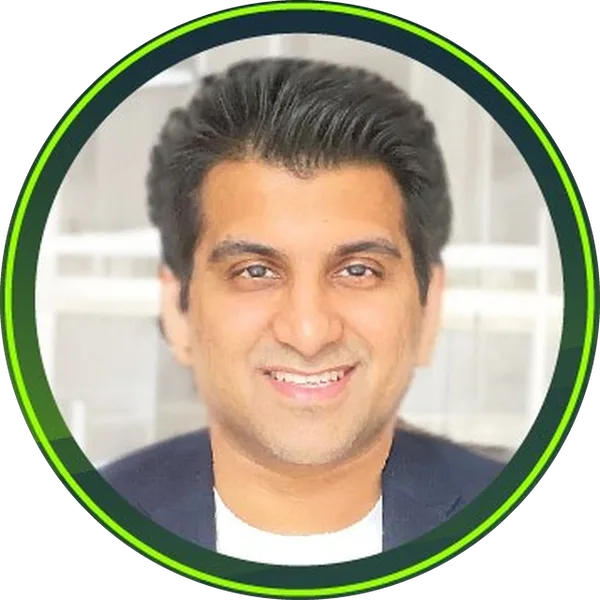
Rohan Malhotra
Rohan Malhotra from Roadzen shares his expertise and insights on building the next generation of auto insurance with AI. Learn how Roadzen is leveraging advanced AI to make auto insurance fairer, safer, and more accessible for all drivers.
Auto insurance is evolving at lightning speed, and at the forefront of this transformation is Roadzen. Led by CEO Rohan Malhotra, this AI-powered platform is reshaping the industry by integrating cutting-edge technology across underwriting, claims, and road safety. Serving 14 countries and counting, Roadzen is setting new standards for efficiency and innovation.
In this episode, we explore the story behind Roadzen's remarkable growth, their game-changing use of AI, and what their expansion into global markets like the US and UK means for the future of auto insurance.
The full episode
Press play for the whole conversation.

A Story of Growth and Purpose
Rohan Malhotra's vision for Roadzen was born out of a desire to simplify auto insurance and improve road safety. Starting in India, the team worked tirelessly to create an AI-driven platform capable of addressing the inefficiencies of traditional insurance systems. Their technology combines telematics, AI, and machine learning to predict risks, streamline claims, and enhance customer experiences.
Today, Roadzen's platform is embedded directly into vehicles, providing real-time accident prevention and claim management tools. This integration represents a leap forward, making insurance not just reactive but proactive.
Game-Changing Technology
Roadzen's secret sauce lies in its ability to innovate across the insurance lifecycle:
Overcoming Challenges in Global Expansion
Scaling an AI-driven solution to international markets isn't without its hurdles. Rohan Malhotra shared insights into navigating the complex regulatory environments in countries like the US and UK. Roadzen's ability to adapt and localize its platform has been crucial in building trust and credibility with insurers and regulators alike.
The Road Ahead
As Roadzen continues to expand, the US market represents a significant opportunity. With its large insurance sector and appetite for innovation, the US is the perfect testing ground for Roadzen's AI-driven approach. Future plans also include deeper collaborations with auto manufacturers and further advancements in telematics technology to enhance safety and efficiency.
Whether you're an insurance professional, a tech enthusiast, or simply curious about the future of driving, Roadzen's story offers valuable insights into how technology is transforming industries and improving lives. Tune in to hear the full story behind Rohan's challenges, and vision for the future of auto insurance.
Stay tuned for more insights from industry leaders on The InsurTech Geek Podcast!
The full transcript
Transcribed automatically from the episode audio, so some names and terms may be misheard.
James BenhamOn this episode of the InsurTech Geek podcast, we're talking about building the next generation of auto insurance with Rohan Malhotra from Roadzen. The InsurTech Geek Podcast is all about technology that's transforming and disrupting the insurance world. We'll be interviewing guests and doing deep dives into specific tech we see changing the industry. We're taking you on a journey through insurance tech, so enjoy the ride and geek out. The sponsor of this InsurTech Geek podcast episode is none other than JBKnowledge. JBKnowledge's insurance technology services provides technology solutions for the insurance industry specializing in the property and casualty insurance sector.
Learn more about JBKnowledge at jbknowledge.com. And we are back with another great episode of the InsurTech Geek podcast. I'm your host, James Benham, the InsurTech Geek. With me, the most interesting man in insurance, Rob Galbraith. Rob, what's going on, brother?
Rob GalbraithHey, James. How's it going? Yeah. It's back to sweater weather here in Texas after we had a one kind of glorious day. We're setting record temp highs, kind of flashback to summer, but now back to the chill. Still, we'll take it over most of the rest of the country hour.
James BenhamAbsolutely. We will. And also, know that warmer weather is always just around the corner here, so it's never it's never too far away. So good to good to see you. Glad we're both able to be on the day with Rohan. That's exciting. And with us from New York City. New York City. Rohan Malhotra. Rohan, what's going on, buddy?
Rohan MalhotraExcellent.
James BenhamWell, delighted to join both of you on the podcast today. Yeah. Glad to have you on. It's you had two two Tex Texans, but, you know, we won't we won't be too hard on you about all of your fellow New Yorkers that have fled the state for Florida and and Texas. We'll just talk about insurance and tech. We can talk about how fast cars drive here and how much risk they have in Texas when your speed limit's eighty eighty five, then they they tend to go a 100 and a 110 miles an hour.
That's a routinely a track meet down in down in Houston. I I think the other day I was I was I was cruising pretty fast. I'm not gonna disclose how fast. And and and then I got blown blown blown by. So, you know, for a guy who's in auto, I think that you would find driving on Texas roads really interesting, Rohan.
Rohan MalhotraI did. I was out there like maybe a month ago. And yeah, beautiful country.
James BenhamYep. Yeah, it's really, really a lot of fun. So let's talk about you and then we're going to talk about your company. You were well, you're currently in New York, and you're currently CEO at Roads Inn. But tell me where where you were born and raised and what you wanted to be when you were a kid. You when you got a bachelor's in electrical engineering, and it looks like you got that in India. So walk me through, like, where'd you grow up and what'd you wanna be when you were a kid?
Rohan MalhotraWell, I grew up in New Delhi in India and you know, I would say partly by choice and partly by, kind of the natural forcing function, which is that if you're smart in India, you gotta be an engineer. Got into engineering, but I developed a real love for, building systems that scale. I studied electrical engineering, but with a focus on robotics. And I was like, that's probably 2004, 2005 in my undergrad. I was enamored with the idea that, you know, eventually, the systems will take care of a lot of the menial kind of tasks, and that you can scale them rapidly.
And then, you know, AI wasn't as big then. Then I decided I'm going to go to Carnegie Mellon and study AI and robotics, which I did. And so I came to The US when I was 22. And basically I've been building AI products for the past fifteen years. And, one thing that I never wanted to do was insurance. So I got into this by chance. One of my friends had an accident, in India and India is kind of very interesting because the 2% of the world's cars are in India, but 13% of all accidents happen in India.
Oh my gosh! So disproportionate risk. But, I was trying to help my friend to get his claim filed and stuff. And it just felt really backward to me that I made like 20 phone calls. I was on the road for four hours trying to do this. And I felt, wait, there must be technology we can build to solve this problem. And basically that night I decided we're going to build a company that will do AI and insurance. And that's kind of what Road Zen has become over the past.
Today, it's almost nine years since we founded the company. We started with three people in India. We're now 400 people across the world. So it's been a pretty interesting journey. Sounds like it. Yeah. And tell everybody what it does. We are focused on building the best vertically integrated platform for auto insurance anywhere in the world. And we believe that AI will have a significant impact on the four things that you must do in insurance, especially in auto. You got to underwrite with precision, right? I want to make sure I can measure the risk that I'm underwriting.
And today, most of this is done on demographics. So we think you can make this precise, granular, real time. The second is we are an insurance broker now with licenses in 14 countries around the world. So we can not just control the tools for underwriting, etcetera, but we can also sell the policy and provide the best customer experience to our customers. We then built, I would say the deepest kind of technology bench for claims management. We're doing claims from accident detection to FNOL, to roadside, to claims loss adjustment, to payment in under two minutes.
So using computer vision, using AI to adjudicate these claims. And finally, we focus a lot of our energy on road safety. The best policy is one where you don't have an accident. And it makes sense for insurers, it makes sense for fleets. And so we've built kind of this single integrated platform that spans the entire value chain from underwriting distribution claims and road safety. And we are now deploying it across the world. We have seven global offices. San Francisco is where we are headquartered. We have offices in London, Paris, and a large chunk of our technology team is based out of India.
So that's kind of like been our journey so far.
James BenhamYeah. And did you build a full core policy underwriting billing quote, buying pay suite as well as a full claims management suite for auto?
Rohan MalhotraYes. We built not just, we built a telematics suite, we built a policy administration, claims binding, all of it. And we did it in modules. So now you can pick up single modules from us for one thing that you want to do and then pick us for another thing and another. So there's a tremendous opportunity for upsell. Now the important thing is we're not, number one, we're not an insurer ourselves. We're a technology company. And we have two kinds of models for our business. We either sell the tech to car companies, to insurance companies and to fleets, or we act as a broker, we use our own technology to underwrite, to process claims, to sell, etc.
And we collect commissions from our insurance partners. So that's been the idea.
James BenhamYeah, and what percentage of the business is brokerage versus technology licensing?
Rohan Malhotra55% brokerage and 45% technology licensing. And, you know, kind of varies year on year depending on the contracts that are coming in, etc. We did, we grew 4000% in revenue. We went from a million dollars of revenue to 46,000,000 last year. And we're looking to go, know, again. So from 2020 to '24, we went from a million to 10,000,000 to 13 to 46. And that coincided with kind of entering The US and UK markets. And the interesting kind of anecdote that I always give is the average price of a policy in India is $65 In The UK, it's $700 In The US, it's $1,500 So, you know, as we've kind of expanded our business to these global markets, we see the acceleration both in revenue, but also on margin.
James BenhamAnd are you having to build a lot of hardware integrations with in car systems like OnStar from GM or the BMW in car system to get all the telematics data? Because, I mean, certainly, like, in in my car, if it gets in an accident, it it collects all the information. It collects video footage automatically. So you have all the telematics data plus the video data from all the cameras around the car. Yep. Are you snapping into the auto manufacturers' data systems like that?
Rohan MalhotraSome of them, we are integrated directly into the car. So when the car is coming off the line, our technology, our software is embedded into the car itself. So we get the data. We are basically the middleware. So the car companies today, they all have connectivity features. They are all, you know, they're building kind of the base layer. We provide the algorithms for driver scoring, for accident detection and all of that. And we put it in the firmware of the vehicle itself. So for several OEMs, we work directly with them and we integrate into the car itself.
And then for others, are working on, you know, app based, tools. So essentially you don't need any hardware, you just download an app and you will get the same kind of technology. And we are working on video telematics, integrating directly in cameras and using computer vision to essentially not just record, but prevent accidents before they happen. And that's been a big part of, you know, what we've been doing. Well, know, best claim is one that never happens. And that's, certainly,
James Benhamwhat everybody in insurance, that's when when everybody wins, right? Is, the carrier wins, the client wins. Everybody wins when there's no accidents. So that's a major part of this.
Rohan MalhotraWe just completed a billion kilometers of video based computer vision based driving data, largely in India. But now we are expanding all over the world. And our accident ratios are 85% lower than kind of human drivers. So we think this in the next ten years, what you'll see is that most of the claims that are human distraction claims will go away through technology. And I think that's a very powerful idea. I mean, that's the hope. Right?
James BenhamRob?
Rob GalbraithYeah, Ron. Really fascinating. And I'm curious, maybe you can talk a little bit about the geographic kind of rollout. I believe you said you're in 14 countries now. So, you know, how did you get started? What are some of the difference you mentioned? The the cost differences, of course, right, country to country. But I'm just kind of curious about, like, the risk profile. Has your business model changed? I mean, the fundamentals of just like the vehicle, the driver, right? You'd think those would remain somewhat similar, obviously, conditions, driving conditions, you know, the laws like James is kind of referring to right here in Texas and habits, right, that communities have, I could see being different across geographies.
But yeah, just kind of curious, like, where did you start and then how did you expand and what did you learn as you expand to different areas of the world?
Rohan MalhotraYou know, we started in India with no strategic move. And my friend had an accident there. So I was just trying to solve the problem. And we started from India. Within the Indian context, we found that there was a tremendous willingness to forego legacy systems because there were no legacy systems. This is insurance in India. Private insurance companies were introduced in 1991. So it's like a thirty year old market. So there was a tremendous willingness to go mobile first. At that time, there was no real AI at the time.
But go mobile first on everything. And so we started then. We saw that the tremendous amount of difference it can make when you make it seamless, when you make it available on an app on a customer's phone. And the customers can now interact with their policy, file claims, do video for the claims, do all of this and do it within seconds. And we found tremendous success in that idea. So for the first five years, we just focused on the India market, growing the business out there, expanding relationships with carriers.
And we started processing claims. We got our brokerage licenses. And the interesting thing that I found was there are so many claims every year in that market. And the data is so noisy. In fact, it's an incredible breeding ground for training AI algorithms. The thing that I always say is if you trained a driver to drive in Palo Alto, he can drive in Palo Alto. But if you trained a driver to drive in New Delhi, he can drive anywhere in the world. So that's kind of the idea with the AI algorithm.
So we focused on the India market at first. We developed kind of the underwriting tools, the methodologies, the claims management expertise, telematics. Then we said, look, India is a great market, 25,000,000 cars, 10,000,000,000 of premium every year, but we wanted to play in the bigger markets. And we then focused on The UK and European market. 2022, we started doing business in these markets. And again, what we found is that most of the insurers are very slow moving. They take a lot of time to adapt. But once you get the contracts, things move very rapidly.
And, you know, one of the other things about being in Europe is that the large customers are all there, AXA, Allianz, Mercedes, BMW, Generali. So we find a lot of large players who have global businesses, but really operate out of Europe. So that was a big learning there. And then 2023, when we entered The US market and we found US is the best place to do business. There are 2,300 insurers in The US. There are 23 insurers who write auto in India. So there's 100x difference.
The tail is so long. But also it's a very complicated market. In most other places, even in Europe, through passporting, once you're registered as a broker in one geography, you can passport into like 10 different countries. In The US, it's 50 regulators, 50 different states. So massive opportunity, but a lot of complexity. And which is kind of weird because you would think it's easiest to do business in The US, but actually in the insurance industry, it's kind of hard. And, we've been kind of navigating that landscape now.
Thankfully, we've been able to grow our business in The US.
James BenhamYeah. That may have been a topic of conversation a few times in this podcast. You can imagine we're only in insurance and primarily in The US and, you know, having having 50 regulators plus DC plus plus plus because there's a couple of others. It's it's it's very interesting, doesn't it, Rob? Absolutely.
Rob GalbraithAbsolutely. Yeah. No. Right? Fascinating
Rohan MalhotraLike, you would think it's harder to do business in India than it is in The US, but it's actually the opposite.
James BenhamFair enough. Rob?
Rob GalbraithRon, I'm curious, like, so you mentioned, right, you can be act as a technology company, you can act as a as a broker. Right? So you've got some backing. But, you know, you're really kind of, I guess, you know, eating what you cook, right, in terms of leveraging your own technology for, you know, the underwriting, the the claims processing, etcetera, etcetera. And that broker model, you work with OEMs and you also work with insurance carriers. So I'm kind of curious, like, what are the differences? Particularly, I would love to hear what are OEMs looking for and how does that relationship look vis a vis your relationship with carriers?
Rohan MalhotraWe have three core client types at Road Zen, insurance companies, car companies and fleets. And these are broad generalization. I'll walk you through kind of what we do for each. Car companies, what they want is they want to introduce more F and I products. They don't just want to sell a car. They want to sell now the entire package. They want financing, leasing, insurance, extended warranty, roadside assistance. They also want that when there is a claim, the car should come back to the workshop because that's where they make money.
So there is like, what we do for them is we provide the white labeled insurance product. So let's say a BMW wants to launch a BMW Protect. We have the licensing capability, we have the reinsurance backing, we have the technology to be able to produce those APIs that can go into their POS and integrate seamlessly. So that's the first thing we do. The second is we help them manage their claims. Car companies don't really have direct claims management expertise. So they use our technology to do that.
The third is they want their cars to be safer. They want their customers to know how am I driving, where, when and all of that and we give them the telematics software that they can integrate into their vehicle. So those are the three ways we engage with the car companies. With fleets, the fleets are kind of the most interesting audience for us because what do they want? They want safer vehicles, they want lower insurance premiums, and they want faster claims in case there is a claim.
And Road Zen provides kind of all of these for them. And finally, the insurers, we have kind of a two way relationship with the insurer. On one end, we are providing the tech where they use our tech for claims, for underwriting, for policy admin, etcetera. On the other hand, they are a supplier to us. As a broker, we are working with them. We are underwriting using our tech on their balance sheet and we are selling more policies for them. So we have a two way relationship with insurers, but that's kind of like the breadth of the relationships and what we are doing with our customers.
And today I think we have 105 enterprise customers, some of the largest insurers, car companies like BMW, Audi, Mercedes, we're working with them. We're working with AXA, AIG, SocGen, Allianz. We're also working with large fleets like Amazon. So we've been developing the business through these enterprise relationships. Yeah, but they're keeping like their core Guidewire system, whatever they're using for their core processing, right? Correct. We as intelligence because they'll have dozens
James Benhamof lines. So you're stepping in and you're bolting on telematics analytics, like you're not replacing their core claim system in those cases. We don't
Rohan Malhotrareplace the core systems usually because the idea here is we are intelligence. Those are systems of record. We are a layer above that. We are providing the intelligence on actually adjudicating the claim, on the driver behavior, on the actual underwriting algorithms. So we kind of like step one level above and we integrate with EBAW, with Guidewire, with, you know, many Duck Creek, many different, core systems across the value chain.
James BenhamOkay. That makes sense. What's the, if you had to like point to the secret sauce that you think you're doing that no one else is doing, because certainly telematics aren't new, and telematics combined with auto insurance isn't new. There's quite a few carriers around here doing that. OnStar automatically sends telematics data to partnered insurance companies already long before long before you. So you're growing leaps and bounds. So obviously something's really resonating. What what are you doing that's your absolute unique that no one else is touching?
Rohan MalhotraI think there are a couple of things that we were doing, which we think is resonating in the market. Number one, we're a full solution. We're not a point solution. We provide underwriting, distribution, claims, telematics in a single integrated platform. And our clients love that. They don't have to bolt on five different integrations to go live. They can just choose Road Zen. And that makes a huge difference in terms of speed of execution, but also for the client to be able to make a choice in your favor.
The second thing we're doing is we are continuously building new AI models that are better than what other people have. And now that we work with 100 plus carriers, you have 15,000,000 vehicles that we touch, we're able to collect fascinating amounts of data. So we're doing AI agents for KYC, for fighting fraud, for loss adjustment, for computer vision, for road safety, for damage recognition, stuff like that. And the idea, I think, is that we believe these AI models will eventually end up being the operating backbone of the insurance industry.
And then people see us, Okay, they can't just build one model. They're not building one thing. We can ask them to solve this problem for us, and Road Zen should be able to do that. And I think those are the key things. The other idea, which I had very early on at Road Zen is most of our clients are global. Look at Mercedes, look at Audi, look at AIG. They have global subsidiaries. So if you built a business that was matching their business globally, what would happen is eventually they would say, these guys did a great job for me there, why don't I take them to me in another area of the world?
And we think that has been quite successful for us as well.
James BenhamAwesome. Rob?
Rob GalbraithI'd love to have you expand on the idea of Road Zen as not just a point solution. Right? And then how you work to, I guess, maintain competency. And right. So the reason those point solutions exist in my view, right, very simplified, I guess, description is that it's very hard to become a domain expert in all of those. And the landscape is still, you know, the technology continues to evolve. Right? AI, we're still in, you know, relative infancy. I mean, we've made a ton of progress, of course.
Right. But we're still iterating like we were we haven't. So sometimes I'll I'll see a company for a year or two. Right? And I'm like, they're now the the emerging market leader in in, you know, telematics or in fraud detection or in, taking a photo, right, and doing the claims adjustment, you know, from that. And then it feels like, you know, every year or two, like another company kind of leapfrogs them and kind of goes back and forth. Right? And that might become some new insights, some new piece of technology, some advancement in AI, etcetera.
So that's the challenge. And it's a challenge, right? If you're a partner, whether you're an OEM or a carrier like a large company, been around a long time, like, you know, selecting the right partner, right? I've been in that that space. It's very challenging because of this leapfrogging effect. So I'm kind of curious, obviously, Roads End, you guys have been around for a while, right? You're having this massive growth and you're doing it in a in a number of different dimensions that, you know, you're mentioning bringing it all together as being one of the real differentiators.
So how do you maintain that over time, I guess is my question.
Rohan MalhotraI think that's the constant battle is there's probably a startup doing one thing and only one thing, and we got to outcompete them on that one perspective. But then there's another idea that telematics is not just useful for underwriting. Telematics is something that is spans across the value chain. It's incredibly important for claims, for FNOL, for claims reconstruction. It is incredibly important for accident detection or accident prevention, right? And that these things, they work together. So actually taking a myopic view of just one aspect of the value chain, actually you lose the touch with the other things that are cascading effect from it.
And we think that our clients and partners understand that. And they want to choose a partner that can work with them through multiple stages of the customer experience. And we think that's kind of, that's our bet. Now, I'm not at all saying that point solutions cannot succeed, But I do believe that, you know, if you can build a great platform play and I can tell my partners to go live within weeks from scratch, I think a lot more players end up taking that decision with us.
James BenhamVery cool. So, let's take our last couple minutes and just talk about what's what geeks you out about what's coming up. I mean, sir, I certainly, I get really geeked out about modern telematics. I get geeked out about some of the new large language models that are coming out that I use every day. Know, new machine learning models that are deployed, new robotics and hardware, sensors that are really being everything's kind of coming to maturity at the same time. What's really getting your engine turning since you're in auto insurance?
What gets your engine cranking?
Rohan MalhotraI mean, I've been waiting for this moment my entire life is where AI becomes real, right? Like, because AI was kind of a theoretical view of the world. And because of the advancements in computing, it's become real. And what we're excited the most about is real world AI. And specifically, vision oriented applications that can transform different parts of the value chain. Look at how much information do we absorb using text or language models versus how much information do we absorb by seeing. 95% of our decisions are made by seeing.
And we think computer vision is going to transform not just the insurance industry, but almost every industry in the world. And you can do better driving. You can do safer driving using vision. You can adjudicate claims. You can do KYC. You can do a lot of different things purely using vision applications. And I know the current hype cycle is about language models, but what you're gonna see is that vision oriented applications will transform industrial architecture, insurance, finance, actual industry, production, manufacturing, and that's gonna happen all over the world.
And I think that's the next big wave in AI.
James BenhamYeah, I mean, teaching computers how to see and interpret everything they see is is really remarkable. I mean, actually, that's one of my favorite features on my new and since for those of you who are video subscribers on on on my new metaglasses that I have, I love that I can ask it what I'm seeing and it can identify everything in front of me. I mean, is amazing how good it is at vision.
Rohan MalhotraThat's exactly what it is, to interpret the world using vision. And I think,
James Benhamyou know, we're just scratching the surface. Oh yeah. This like version one point zero. I mean, is the second version of these glasses and I still feel like this is the beta equivalent of vision analysis.
Rohan MalhotraYeah.
James BenhamAmazing. Yeah. But they baked that same functionality into ChatGPT. Can run the app and it turns the camera on. But what's hilarious is that that's not a large language model functionality. Yeah. They're incorporating other AI models. So it's not all LLM. Right? I mean, they've got a computer vision model that does the image recognition. They're using their LLM to describe it to form the text. Right? But
Rohan Malhotrathat's not I think all models are now multimodal. These guys are recognizing one of the things that almost all of the big guys have recognized is all the text that can be consumed is already been consumed. The the models are already trained on the entirety of text on the internet, right? And so how do we get more data? How do we make them better? You need multimodal models to be able to make them better. You need interpretation of the world around you. You need to go into specific knowledge sets, specific vision sets to make like what they call AGI happen.
But yeah, that's kind of like the next big push, isn't it?
James BenhamHuge. Yeah. But multimodal is such a great user experience. That's why I'm that's why I'm so geeked out about it. Right? I'm geeked out that I can use the same app to write code, deploy code, craft a strategy, generate an image, analyze real time video and photos. Like, it's all there. It's one it's a you know? And, you know, and Claude with Anthropic and, you know, ChatGPT are those are customer facing applications. But, I mean, you can you're you're obviously multimodal as well. I mean, you you you're gonna have It's to all of multimodal.
And the idea I think that,
Rohan Malhotrayou know, in enterprise workflows matter. What ChatGPT isn't doing is customizing the workflow, getting in there. We are taking this foundational intelligence that is being produced by OpenAI, by Anthropic, and we are using it in highly specific ways that affect the insurance, the mobility, the safety of a car. That's kind of what's super exciting to us at Roads Inn, but we're obviously excited about the broader landscape of AI becoming more and more powerful and helping us do a lot more. Yeah,
Rob Galbraithsame here. Rob, we're at time. Closing comments? Yeah, I know. Fascinating. Rohan, thank you so much for joining us. It's great to meet you. It's great to learn about Roads Inn and yeah, just kind of getting excited. I mean, you've accomplished so much, right? But yet it also feels like tip of the iceberg type stuff. So really congrats on your success to date and look forward to, you know, how it how it progresses over the next decade.
Rohan MalhotraReally enjoyed being on the podcast, both James and Rob. I mean, I love James' excitement around the meta glasses. Wear these things blew up the conversation.
James BenhamThese are amazing. I'm an airplane pilot. So when I fly, I wear these, and I I use it to take photos, record videos. You know, if I've got if and I have a Starlink Rome. So I've got a Starlink dish, so I can have Internet. I mean, you you can do some crazy stuff if you combine a couple of modern tech I mean, you get a modern satellite connection and these guys, and you have a really powerful user experience. And, I don't mind that there's no screen displayed to me on on the glasses.
You know? That's actually I I was an early adopter of Google Glass, if you remember those. Oh, yeah. And and, you you look like an idiot. You know, you just look like a moron walking walking around. And these these are, like, pretty standard Ray Bans. What I love about them is that they look like actual regular glasses, except they're they do they do way more. So, yeah, it's exciting. The coolness factor. Those gloom glasses look too dorky, the way Oh, yeah. They looked way These guys look cool.
Yeah. They they looked way too dorky. I can attest to that because I wore I actually wore them around, and I was like, okay. I know I look dorky, but I'm just gonna suck it up and deal with it. So Rohan, again, thanks again and congratulations again on the grant, the rampant growth rate. I'm excited that you're pulling off a global scale deployment that's so hard to do what you're doing outside of just one country. I mean, you know, it's it's it's it's hard enough inside The United States with effectively 51 countries that we have to deal with here inside of one.
So kudos on on cracking the nut on on scaling and distribution. Thanks a lot. Really appreciate it. And, Rob, as always, thanks for joining me as my most fabulous, cohost.
Rob GalbraithAppreciate it, James. And, yeah, very cool look with the glasses.
James BenhamAnd thank you out there in listener land tuning in to geek out our interview with Rohan Mehrotra from Road Zen. Enjoy the ride and geek out. See you in the next episode. The InsurTech Geek podcast is all about technology that's transforming and disrupting the insurance world. I've been your host, James Benham. That's jamesbenham.com with cohost Rob Galbraith at end of insurance dot com. We're taking you on a journey through insurance tech, so enjoy the ride and geek out.