 YouTube
 Spotify
 Amazon
 iHeart
 Apple
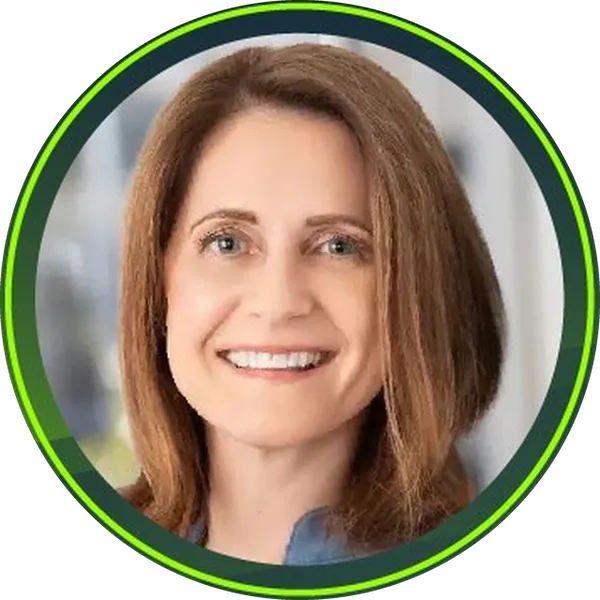
Ramona Tanabe
Hosts James Benham & Rob Galbraith are joined by Ramona Tanabe from Workers Compensation Research Institute (WCRI). Ramona shares his expertise and insights from the nation's largest workers' comp research database. Discover how WCRI's innovative research is shaping the future of workers' compensation, addressing key challenges, and driving data-informed decisions across the industry.
The full episode
Press play for the whole conversation.

Ramona Tanabe from WCRI
Ramona Tanabe from the Workers Compensation Research Institute shares her expertise and insights from the nation's largest workers' comp research database. Discover how WCRI's innovative research is shaping the future of workers' compensation, addressing key challenges, and driving data-informed decisions across the industry.
Workers' compensation might not grab headlines, but it's a cornerstone of the insurance landscape, affecting millions of workers and employers alike. In this episode of The InsurTech Geek Podcast, Ramona Tanabe, President and CEO of the Workers Compensation Research Institute (WCRI), joins us to explore the pressing issues and groundbreaking innovations shaping the future of this vital system. From addressing healthcare talent shortages to harnessing the power of AI, this conversation is packed with insights that policy makers, insurers, and business leaders need to hear.
Bridging Healthcare Talent Gaps
The healthcare sector, a critical partner in workers' compensation, faces acute staffing challenges. Ramona highlights innovative solutions and collaborations that aim to develop a more robust workforce.
AI and Data Transforming Claims Management
Artificial intelligence is revolutionizing how insurers process claims, from predictive analytics to automated decision-making. Learn how WCRI's research informs the adoption of AI while ensuring the human element remains central to care.
Streamlining Workers' Comp Systems
Every jurisdiction has unique rules and regulations for workers' compensation. Ramona discusses how data-driven policies can improve efficiency, fairness, and outcomes for all stakeholders.
The WCRI Mission: Credible Research for Impactful Change
WCRI is dedicated to producing high-quality, nonpartisan research that fuels informed decision-making in workers' compensation. By fostering collaboration among policymakers, insurers, and employers, the institute serves as a vital resource for driving improvements across the system.
A Fresh Perspective on Workers' Compensation
In her conversation with James and Rob, Ramona humanizes the complexities of workers' comp by highlighting its people-centric focus. From healthcare providers striving to deliver quality care to insurers grappling with evolving risks, this episode shines a light on the system's intricacies and opportunities.
Whether you're an industry veteran or just curious about how insurance adapts to the future of work, Episode 154 is an eye-opening dive into the intersection of technology, policy, and human resilience.
Stay tuned for more insights from industry leaders on The InsurTech Geek Podcast!
The full transcript
Transcribed automatically from the episode audio, so some names and terms may be misheard.
James BenhamAnd we are back with another great episode of the InsurTech Geek podcast. With me, my fellow nerd slash geek. Of course, I'm your InsurTech Geek, James Benham, fellow nerd slash geek, mister Rob Galbraith, most interesting man in insurance. What's going on, Rob? Hey, James. How are doing? I got my nerd glasses on today. And Oh, yeah. Remember I managed to start out the new year by by losing my AirPods, so I got my my earmuff headphones on as well. So yeah. Not off to the best start, I suppose.
I got mine on too. Of course, you know, I've got this little little board. And when I when I when I plug the big headphones in, I can hear myself speak, which, you know, it's at first, ten years ago when I started podcasting was kind of weird. Now I'm, like, addicted to the loopback voice. It's like, I have to have it. So I understand. It's fine. My AirPods are somewhere. Thankfully, I got the new ones. They're a lot easier to find because Apple realized that we we lose our AirPods all the time.
So now you can find the case and the little cool buds a lot easier because, those little suckers go missing. They go missing. With us today, a fellow work comp geek, which I'm excited about because I'm work comp geek. Been doing work comp for a long time. Rob Galbrae has been doing work comp for a long time. Ramona's got us both beat. I just wanna say she has us both beat. She has more years in workers' compensation than both of us, and that's super cool because she's got incredible experience levels.
She's joining us from Boston
Ramona Tanabewhere they're wicked smart, and they pack the car in the yard. Ramona Tanabe. What's going on, Ramona? Good morning, James and Rob. It's nice to be here. Thank you for inviting me to join fellow geeks.
Rob GalbraithIt's a pleasure. Yes.
James BenhamPresident and CEO of WCRI. Again, it's Workers' Compensation Research Institute. We're just going to call it WCRI the rest of the show for brevity's sake. But, Ramona, we're we love talking about technology. We love talking about insurance. Rob and I really like geeking out on a work comp, which occasionally we get to do, which we're gonna do today. But we also love talking about the people behind insurance because, you know, insurance is a a business about paper, contracts, right, policies, claims, all these documents, and all this money that moves around.
But at the end of the day, it's people that run it, and you're one of those people. So we're gonna talk about you for a second. Let's go back back into time, way back, back before your undergrad. Where were you born and raised and what did you wanna be when you were a kid? Oh,
Ramona Tanabeboy. I was born and raised in well, I wasn't born in Chicago. Was raised in Chicago. I grew up in Chicago and what did I want to be? If you would have asked me from when I was four until about 10, I would have told you a firefighter. Nice. And now today I cannot tell you why I had that as an answer. I was probably parroting somebody, but for whatever reason that's where I ended up. As I got into high school, I realized I wanted to go into law so that's where I landed and I have a law degree, practiced law in Chicago for a number of years and was happily underwriting municipal bonds in Chicago when my husband took a job here in New England, and I landed at WCRI.
James BenhamNice. Yeah. So, I mean, from from, you know, from your time you went to, you know, Governor State University, you got a BA in education. Did you wanna was the original goal to be a teacher or what what was the what was the pivot to to the JD at at University of Illinois Chicago?
Ramona TanabeI was when I was teaching, I did my student teaching and when I was they had a sign in the teacher's lounge that said come to the AFT NEA meetings and I thought, oh, what's that? You know, the unions for teachers and the school I was student teaching at happened to have both unions represented so I thought I'm going go listen to one of those meetings and see what they do. And so there were people lined up at two tables, representatives for the teachers, representatives for the district and some lawyers And I thought, well, everybody seems to be deferring to those lawyers.
They seem to know what they're talking about. And so I kind of got interested in that and ended up actually working at the law firm that was sitting at that table that day in school, municipal law. And I specifically worked on financing.
James BenhamAin't it funny how that works? It is. Like, all these little twists of fate. If you hadn't gone to that one meeting that night, like, how different would your life be? Like, I always that that kind of stuff drives me crazy when I think about it. And I'm into science fiction, and then there's a lot of sci fi movies about, you know, branches and decision trees and and what what could have been. So, yeah, it's it's it's wild that it works out. So you go you go to, you know, University of Illinois Chicago School of Law.
You practice at Klein, Thorpe, and Jenkins for, looks like, six years roughly. And then and then your, you know, your husband gets this job in Boston. You go out there. And had you even heard of work comp just just tangentially, or had you actually practiced in work comp a little bit before that? I had not practiced in work comp, because
Ramona Tanabethe firm that I worked for represented school districts, was, you know, on occasion we would have a question from a district about somebody filed a claim for workers' compensation from one of the teachers or school employees. And so I remember looking into it then and thinking, good heavens, rules, there's so many different regulations. They call it so many different things. They have their own language and happily moved on to another project at the firm. Yet I found myself immersed in it when I came to WCRI.
James BenhamYeah, it was it was your whole life at that point. Absolutely. And you jumped straight into being EVP and general counsel? I did not.
Ramona TanabeI can say that in the almost three decades I've been here, I've probably held almost every job at the institute. I started as the administrative assistant to the CEO at the time. So it was good. I got to answer the phone and listen but I wasn't actually responsible for anything. So I got to kind of figure out what we did, figure out the lingo and then moved on to different roles within the organization.
James BenhamThat's wonderful. I mean, I I that's how I feel about my own company. Like, I I've done I I have about, you know, 260, 70 teammates here, and I've done pretty much every job in the company because I I was the only employee when it started. And, you know, so I I did coding and project management. I kinda I worked through all the jobs. When I talked to my teammates, I'm like, remember, I've done your job, and I know what it's like. So you almost have the same thing.
Like, you've you've worked in all the little aspects of WCRI,
Ramona Tanaberight? Yes.
James BenhamYeah. So tell me more about your journey at WCRI and what led to you being the leader of this esteemed organization? That's a good question. I think
Ramona Tanabeas I took on more roles, I learned in different areas of what we do. I've done research. I'm by no means a heavy qualitative researcher but I have several publications here at the Institute. I'm fortunate to be surrounded by a number of colleagues that do fabulous work and do it way better than when I held those jobs. I had a hand in building the database that we have so understanding how that was put together and the needs of that. Now if you remember when I started at the institute, email was just coming into existence.
James BenhamWow. And
Ramona Tanabethat was a different world and how we communicated with each other and the whole idea of electronic documents versus paper. So as I moved through different roles here, I ended up with a, being in house counsel with my legal background but also taking on management roles of different projects and then when the last CEO was considering
James Benhammoving on to something else, I was asked if I would be interested in the role. And, of course, I said yes. That's awesome. Yeah. Absolutely. Right? Like, why wouldn't you jump at that opportunity? Yeah. So you you've you've had the kind of the distinction now of being in the seat, the CEO seat, president, CEO for the last year and nine months. Like, how what what's it been like to to to lead this organization and work with its members? Well, like I said, I'm fortunate to be surrounded by an extremely talented group of people, and I couldn't do any of it without my team
Ramona Tanabebecause they're the folks that number one make me look good and number two make a lot of what we do happen. So I have to give credit to all of my colleagues and our members. None of what we do would be possible without the members of WCRI. So it's been a fabulous experience so far and I can't wait to see where I go next. That's awesome. Rob? Yeah. Ramona, so maybe you can share with us a little bit about, you know, WCRI.
Rob GalbraithWhat do you guys what is your primary mission? And I know that from a you you're looking at a lot of external challenges. Right? Like, it might be talent gaps, climate events, obviously, in the news, particularly with the unfortunate tragic wildfires in California. And, obviously, we'd love to talk more about technological advancements, and I know you guys are, gonna be publishing a study on on AI, so interested to dig into that. But just broadly, you know, what is w c I WCRI, and what are some of your key areas of focus at the moment?
Sure.
Ramona TanabeWe were started in 1983 as a nonprofit and we don't take positions on any of the issues that we study. We just study the issues and we don't make recommendations. So our mission is to be a catalyst for significant improvements in the workers' compensation systems by providing credible high quality research so that when there is a public policy debate, there can be research to support decisions that policymakers make. So that's kind of our mission. We also study the benefit delivery system of workers' compensation. We don't study the financial side of things.
Rating bureaus like NCCI and any of the other state bureaus do that work better than we ever would. So they study the financial pieces of that in the market and we study when a claim occurs, what happens to it during the system? How is it different in all the different jurisdictional systems because they all have their own rules and regulations and so that's some of what we study. You've also asked me about some of the upcoming things and the work and the challenges that are facing the workers' compensation.
I think the talent gaps in healthcare, they're outside of the realm of workers' comp because workers' comp is operating within an existing healthcare system and attracting workers to the healthcare industry starts with educational institutions and those are being challenged by capacity. Can they bring in enough people or train enough people to meet the demands that we see coming down the road? And I think there have been some creative strategies such as health systems building their own or acquiring educational facilities for training and credentialing or entering a joint venture with an existing educational institute to develop a pipeline of those health care workers.
James BenhamYou know, was interesting. I was in, physical therapy yesterday. I I have a I tore my right hamstring. It's like just yeah. It's a little partial tears. It was a silly thing. I'm an active guy. I was playing kickball with my friends a year and a half ago. Okay? So it was it was it was dumb. It was dumb, but it led to an injury that I've gotta deal with. And, I was sitting there getting a dry needled by my physical therapist, and I was looking around the PT clinic yesterday, and I've done dry needling.
It's, like, super painful, you know, but it's it it it gets the job done. And I have a great physical therapist. I mean, she's amazing. And the owner of the of the PT clinic who I I've been to four times now because I keep getting injured, amazing guy. Like, these, they love their patients. They're incredible. They they care about your recovery, and they do a lot of work comp. And and I I I was talking to her because I said, well, she asked what I did.
Well, I wanna build work comp software. And she she's like, ugh, I hate work comp. And I was like, really? Let's talk about that. And we kinda walked through that. I'm like, this is like the best PT clinic I've ever been in. Like, you know, I I love these guys and they love their patients and they're so they they love the patients, but they hate dealing with work comp. And and I was like, you know, what what how does that way like, why do you think why do you think that these high quality physicians we're talking about medical talent gap.
Why do you think that they hate dealing with comp? Why do they say stuff like that? Because it's not the first person I've heard it from. I've certainly talked to a lot of medical doctors and primary care and intake, and, you know, there's a lot of different medical professionals that work with comp. Why would they say stuff like that, and how do we change that perception? We've talked to
Ramona Tanabehealthcare providers too when we're doing this research to kind of find out what is that differential that makes people say they dislike comp. And some of it boils down to the administrative burden, the paperwork that's extra pieces that are involved and perhaps treating a patient differently than you would otherwise. For example, different treatment guidelines or treatment protocols that are involved or specific authorizations that are required rather than what they were trained to do which is treat specific illnesses in the way they were taught to treat.
I think there's little bit of a disconnect with some of those and the industry is making that better by looking at those things and trying to streamline those and as systems are improved for healthcare providers with electronic billing and all the stuff that comes with it, that's easier too, I think.
James BenhamYeah, one of those things I was thinking about, like if we you know, if we're worried about medical talent, we're worried about them. Like, we we wanna make it attractive to work with us. And I think, you know, maybe some of the frustration I hear from them is you have non non doctors directing medical care, right, for patients. And I think that's where they get they they can kinda get frustrated, or they have a procedure manual they have to follow and they can't, you know, do the the the the care schedule they think is actually best for the patient.
Or, you know, I I think it's a real I think it's a really complicated question, but it's something I think that we have to we have to think about because especially as we get in to, you know, AI driven, you know, recommendations and decision making and, you know, we start to actually quantify a lot of this into an AI model, like a machine learning model that makes recommendations on treatment and makes recommendations on treatment limits. We have to remember that the that at the other end of this, there's doctors with a patient on a table, you know, with their hands on the patient trying to actually get them better, you know, and and we I don't think we would don't wanna lose the the human touch of that.
So that that can be a big a big challenge as well. And have you have you all done a lot of have you all done a lot of research around, around the medical professional and how you can improve relationships with them? When you're talking about talent gap and talent shortage in medical, has the research largely been around that? The research that we've looked at is really how is the medical workforce changing? So
Ramona Tanabelooking at who's providing the care and we see a larger, an increase in physician's assistants and nurse practitioners that are providing care in lieu of physicians. That's been a shift over time but I think generally the research not specifically by WCRI or in workers' comp but in healthcare is the declining participation in the physician pool or in the nurse pool and kind of trying to make that attractive. At the same time, you mentioned people not liking comp and I have to give a pitch to anybody who's a new grad and you don't know what to go into.
Workers' compensation will forever provide you with many interesting things to look at, not just in research but in the insurance industry and you've all been in this area for a long time too. There are many, many interesting things and it's not something that we
James Benhamfell into and we couldn't get out of. We're here because we like doing it. Oh, I love comp. Like, I wake I wake up every day thinking about return to work strategies and how we can how we can use technology to get people better faster and, you know, deal with the claim faster. It's it's it's like, the complexity of the challenges are are are so big. You can have a claim that's a 120 years old. I mean, how how many lines can say that? Right? Like like, you know, because they can be the the the injured worker plus their their dependents.
Right? So, I mean, you can end up with a 120 year old claim. You can it's it's so complex and so big and so challenging, and there's so many moving parts that yeah. I think it's I think it's super, super exciting. I agree with you on that. Rob? Yeah. Ramon, I wanna talk about the the technological
Rob Galbraithadvancements, and I know you guys have done some research on that. So curious what types of issues in the technology realm have you looked at? And then specifically, we've mentioned it a couple of times, artificial intelligence, any any work that you guys have done in that area and and would be curious to hear what you found. Sure.
Ramona TanabeSo because you're in the industry, you know some of these things already that the technology growth has really been embraced by insurance and workers comp. You know, since I've been here, eliminating paper, creating online apps for providing information and contacting injured workers so that they can get their information more easily. I think people are more willing to log on to an app to get a status than they are to make a phone call and wait in line and push all those buttons to get to the right person.
So I think a lot of those changes have happened within the industry. We're currently working on a study that's going to highlight both the promises and the challenges of expanding AI for workers' compensation stakeholders. It's currently underway and a couple of questions that I will address. The first one being how do they define AI because depending on where you're sitting in workers' compensation, it will mean very different things and how do they see its role in the industry overall, specifically the workers' compensation system and how prevalent is the use of AI tools in their work, what types of tools are being used and for what purpose, what are the common concerns expressed with adoption of generative AI tools and how are they mitigating these concerns.
So we're looking at those and gathering that information to publish a report, kind of showing those challenges and promises.
James BenhamYeah, I don't think most people inside and outside of insurance understand how long we've been using AI. Like, it's it's at over a decade now that we've actually been using machine learning models. And I mean, when you actually go down, like, computer even computer vision, there's subsets of AI, you know, speech to text, test to speech, text analysis, you know, large language models are the new advent that that have, you know, kind of taken the world by storm. But we've been using AI a long time in insurance for, you know, severity prediction and reserve recommendations.
And this is not a a new thing. It's just accelerated in adoption. So I think it's also helpful. I like that you try to define it. When I when I I speak at a lot of work comp and and insurance conferences and I always start by defining artificial intelligence because most people can't even define it. You know, that it that it's Right. You know, computer systems that are designed to perform tasks typically reserved for human beings. Typically reverse and and that that gap is getting, you know, narrow and narrow.
You could really just call it all computer science. You know, at the end of the day, you know, the the big goal is AGI, artificial general intelligence, or a a software that can think, reason, and learn and process the way a human can or better. I mean, the reality is that the IQ level on modern AI systems has already exceeded humans. And so you have the most intelligent question and answer bot ever created in human history in chat GPT, and it's it's starting to, like, to develop some crazy abilities.
Right? So I I think it's interesting. What did your what you you guys did a a a survey, a study on on AI. Right? And is that published? Has that been published or? It's currently underway. It's currently underway, yeah. Currently underway. When do you think that'll be published? It should be before the summer,
Ramona Tanabesometimes And early this I think, it's what you said that it's everywhere and it's such a useful tool and it will do things more quickly and find patterns more quickly than people can but it's a benefit and a tool for researchers. I'll repeat this because my staff always hear me say this that my personal belief is that AI knows everything and understands nothing because it does. It takes an enormous amount of information and gives you the relationship pieces that maybe it would take you a month to figure out on your own and it does it very quickly.
So I think there are enormous benefits to it and I can't wait to see what comes next.
James BenhamMe too. Like, if the if this is version one point o because I know it's not version one point o. I know it's four o and o one and like, but the reality is for the general public, this is really the one o version. Mhmm. I'm I'm I'm I'm super fired up. I mean, because my my my life has changed. You know? It's it's I mean, it, like, materially has impacted my life now, which is, which is pretty pretty remarkable and amazing. So I'm I'm super geeked out about it, but I get geeked out about pretty much everything technologically speaking.
I mean, I'm the guy that goes to Best Buy once a week and just hunt for all the new stuff to buy and go try out. And I have a Total Tech subscription so that I can return things forty five days later if I don't like it because I have to buy everything in the store. So, I mean, I'm just saying, like, I'm I'm that guy. But, yeah, I'm I'm I'm with with you on the same page. I'm gonna read your your AI report. I can't I mean, I'm I'm actually really super excited about that.
You know, I if I can also mention this. In the era in the post truth era where, you know, all all truth is relativistic and it's very challenging, I am very impressed and super appreciate that that your institution produces research without recommendations. You you you literally collect the inform that is so rare to it's it's like the the only news I like to watch now is, like, BBC and Reuters because they just report what's going on and they don't opine on it. I I don't want I I I don't watch Fox, and I don't watch CNN, and I don't watch NBC.
I don't watch any of those. I I I just like, look at Reuters every day and BBC because they manage this report what's going on to me and then let me make interpretations. And I feel like that's kind of like you're you're like that of of insurance because you're you're not taking a position. You're saying, look, here's all the sides on this issue and here's the the cause and effect. Do you think that gives you an edge when you're publishing that you can be the kind of the arbiter of observation, so to say?
Ramona TanabeI'd like to say that it routinely frustrates some of the stakeholders in the system, specifically policymakers because they will ask us what kind of results will these give us, which one is better and better is a judgment that 's their role. My role is to provide the information so they can make an informed decision and I do believe that being able to be impartial and neutral on an issue is important for a constructive public policy debate. Yeah. I think so too.
James BenhamYou gotta have everyone needs to be able to point back at the this report and and then not be able to pick it apart because they don't they don't like the recommendations. Right? If there's no recommendation, they can just say, hey. Look. Here's let's all discuss the observable facts and and what's going on there. And if you if you stay away from positions, then you can you can stay neutral. And, of course, you know, everything's a political third third rail now, so you kinda have to stay away from those so you can just maintain your your role of of, you know, observer and writer.
Yeah. Yeah. So I think I think that's a really special role you play in WarComp, and I I super appreciate that is there. Rob?
Rob GalbraithYeah. Ramona, I really appreciate you kind of walking us through WCRI, your mission, what you do, and, particularly providing that high quality data driven research is is so valuable as as James kind of alluded to. So I'm really curious, what can we expect to see from WCRI this year and then are there any key areas of focus you have? Sure.
Ramona TanabeSo I already mentioned the AI study that we're working on. We've also done a few studies on climate events looking at does the climate events, do those change the frequency of injury, specific types of injury? We're also publishing later this year the impact of the aging population on utilization of medical services. We're doing a study on the impact of recreational marijuana laws on workers' comp benefits and we publish an inventory of workers' comp laws a periodic publication jointly with the IAIABC and that will be published early this spring too.
For future work, we're exploring areas in medical care delivery and costs, things like access to care, the shifting care landscape that we talked about a little bit earlier but including like on-site facilities and urgent care and walk in clinics, kind of alternatives to traditional office visits or emergency. There are these kind of in between locations now too. How are those playing out in workers' compensation? Also post COVID trends in care delivery including telehealth which was common as we all hunkered down after March 2020. We also look at external factors to workers' comp so looking at business and economic cycles and minimum wage changes and we'll continue to report on those and specific workers' comp system features such as drug formularies, Medicare set asides, some of the things that are important in affecting workers' compensation claims.
James BenhamYeah. That's awesome. I I have a feeling I could spend a couple hours a week reading y'all stuff and still only scratch the surface. I it is it is it is impressive and and certainly appreciated. I I wanna wrap with with this. What what technology are are y'all I mean, we already talked about large language models. You say that they're they're phenomenal for researchers. Y'all are researchers. Sorry. You guys are researcher. I don't know what I I I forget the you plural that you use, and and you you can tell I'm from the South when I say y'all all the time.
What what what major tools are you using, and what do you think is the most useful for research? Is it is it LLMs, machine learning, etcetera? What do you geeked out about technologically speaking for research?
Ramona TanabeAnd it's not specifically what we're using in house, but I think the availability of data that is when you think about the information that used to be coming in in paper form that has been converted to an electronic form and then also not just an electronic form as a picture but an electronic form where you can use it and organize it in some fashion. So those tools that do that conversion, will have a huge impact over the over the coming years, for comp.
James BenhamAwesome. Rob, any closing question or comments?
Rob GalbraithNo. Ramona, I know you've got an event coming up, March in Phoenix, Arizona, your twenty twenty five issues and research conference. So happy to have you give a a quick, plug for that and kind of for those that might be interested in in either attending or finding out more about, what WCRI has to offer.
Ramona TanabeYeah. In addition to, our conference, which you just mentioned, we also have webinars that we post occasionally so folks should feel free to attend those as well. Our conference as you said is March in beautiful Phoenix, Arizona and there will be presenting original research from WCRI, also research from other researchers in the workers comp world, panels of specialists and industry leaders on important issues that are out there. We have a couple of keynote speakers that are going to talk about the effect of the presidential election on health care policy, the trend of rural hospital closures and their impact and then networking.
You know, the most important thing is the people that are involved in all of this, the people that affect the lives of injured workers. It's when we all come together and share information and it's a place for us to connect and share ideas and grow together. So come see us in Phoenix, come hang out for a bit, explore trends and
James Benhamthe shaping of the future of workers comp. I like that. Awesome. Well, thank you so much for joining us, Ramona. It has been a delight to to meet you and to get to know you and, the mission at WCRI. Super appreciate you joining us here on the InsurTech Geek podcast. Thank you for having me. It's been a pleasure. And thank you out there in, listener land to tuning in to Geek Out today with me, your InsurTech Geek, James Benham, and my cohost, Rob Galbraith, most interesting man in insurance,