 YouTube
 Spotify
 Amazon
 iHeart
 Apple
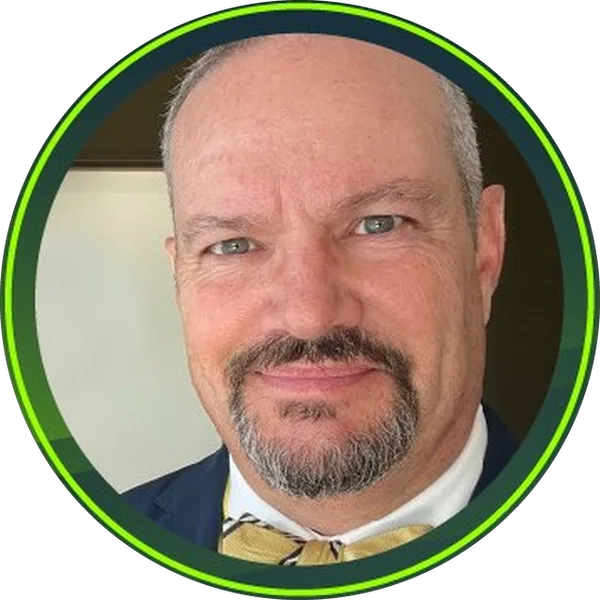
Jason Gross
Jason Gross from TruStage joins James at InsurTech NY to share his expertise on rethinking enrollment from the strategy seat. Discover how emerging technologies are reducing friction in the enrollment process, and how those improvements connect to larger goals like access, equity, and long-term customer value.
The full episode
Press play for the whole conversation.

A Strategic Shift in Insurance
Enrollment season - a time of decision-making for employees, HR teams, and insurance providers. But what if we reimagined this annual process not just as a routine task, but as a strategic touchpoint for deeper customer connection and value?
In Episode 159 of the InsurTech Geek Podcast, we sit down with Jason Gross, Chief Strategy Officer at TruStage, formerly known as CUNA Mutual. Recorded live at the InsureTech New York Conference, this episode delivers fresh insights on insurance enrollment, digital transformation, and the evolution of strategy in the financial services space.
From Political Campaigns to Insurance Boardrooms
Jason's journey is anything but traditional. With a background in politics and public policy, and family roots in insurance, Jason eventually found his way to the insurance sector. As he tells it:
"Figure out what type of life you want. Where do you want to live? What's important to you?"
This practical wisdom led him to Des Moines, Iowa - where insurance isn't just a career, it's an ecosystem.
What is TruStage?
Formerly CUNA Mutual, TruStage has deep roots in the credit union world. With a wide array of offerings - including life, annuity, personal lines, and wealth management - TruStage is what Jason calls a "multi-multi-line company." Their mission-driven model, aligned closely with credit unions, positions them uniquely in the financial services landscape.
"The reason we changed the name was to better reflect our broader vision - serving people at any stage of life."
Despite being a $4B company, TruStage maintains its mutual ownership structure and continues to evolve to meet the demands of modern consumers.
Enrollment as a Strategic Touchpoint
Enrollment is evolving - from paperwork-heavy drudgery to intelligent, tech-enabled customer experiences. Jason breaks down how automation and data-driven decision-making are changing the game.
"We finally have the tools to summarize these large documents, compare options, and deliver real insurance insights with AI."
Think embedded insurance within HR platforms, predictive analytics for plan recommendations, and conversational AI guiding users through tough decisions.
Why Brokers Still Matter
In an era of automation, Jason offers a firm defense of brokers:
"I love my broker. Because they help me identify gaps. That's real value."
Rather than seeing digital tools as a replacement, Jason views them as enhancers - giving brokers and customers the tools to make smarter, faster choices.
Advice to Startups: What VCs Really Want
Having served in both carrier and VC roles, Jason shares what makes or breaks a startup pitch:
"Don't tell me what you can do. Tell me what you're doing."
Focus, clarity, and relevance to a carrier's top 1-2 problems are essential. A product that solves a "problem 12" won't cut it.
Conclusion: What's Next?
As AI, automation, and mission-driven innovation converge, the insurance industry is on the cusp of a transformation. Leaders like Jason Gross remind us that customer focus, strategic clarity, and tech integration are no longer optional - they're foundational.
You might also find these posts interesting
Want to hear more? Check out our related episode
Episode 107 - Revamping the Insurance Value Chain with Data Science and AI - Niki Kouri from Prudential Financial Discover how advanced analytics and artificial intelligence are transforming the core functions of insurance operations, enhancing customer experiences and streamlining strategy.
The full transcript
Transcribed automatically from the episode audio, so some names and terms may be misheard.
James BenhamOn this episode of the InsurTech Geek podcast, we're talking about rethinking enrollment from the strategy seat with Jason Gross from TruStage recorded in person live at InsurTech New York. The InsurTech Geek podcast is all about technology that's transforming and disrupting the insurance world. We'll be interviewing guests and doing deep dives into specific tech we see changing the industry. We're taking you on a journey through insurance tech, so enjoy the ride and geek out. Terra, this week's episode sponsor is revolutionizing the world of workers' compensation claims and policy management.
Terra's cutting edge platform empowers insurers with comprehensive benchmarking tools, robust management systems, and an integrated ancillary services marketplace. Discover how Terra is driving innovation and efficiency in workers' comp at terra.insure. That's terra.insure. And we're here for another episode, this time live at Insurtech New York in beautiful
Jason GrossNew York City at Pier 60 Chelsea Pier. With me, the illustrious Jason Gross. Jason, how are you doing? I'm doing great, James. Great to be here on your podcast. I've been a fan for a long time of you and Robin and InsurTech Geek, and really happy to be here with InsurTech New York Spring Conference. Like you, many of us go to a lot of insurance InsurTech events. As we were talking before the show started, there's really kind of two seasons. There's the spring season and then the fall season.
And to me, the InsurTech New York Spring Conference, it's the kickoff of the spring conference season. And I don't think I've missed a year. The crew here, David, Tony, and Sure Tech New York do a great job. So I'm thrilled to be here. Yeah. Me too. It's
James Benhamit's fun to be in New York. Now last year is a little warmer than this year. It we got some unfortunate cold, wet, rainy weather. Well, we always love New York. New York in the rain and the cold rain, it's it's not quite. It's not quite the same. I I I of course, I live in Texas where it's now already almost 90 degrees and feels like summertime.
Jason GrossSo, And I live in Iowa. So, yeah. You've had snow. We've had snow. We've had, you know, already I've golfed, you know, in 75 degrees and then the next day it'll be 45. Yeah. So you just have to be, ready for the roller coaster. It's neurotic in the spring and then you have tornadoes as well, which Fortunately, we haven't had that issue yet. Being in the insurance industry now for twenty five years, we all like to talk about the weather, but storms, cat events has certainly become a lot more of my vocabulary than I ever thought it would as a a young guy.
I bet that they have. Bet that they have. Now you went to University of Iowa. Go Hawks. Yeah.
James BenhamYou of course, I I had to I was at Texas A and M in the late 90s, early 2000s, we were in the Big 12 with Iowa State, but we never played University of Iowa. Yeah. You guys are Big Ten? Big Ten. Yep. Yep. Now like what, 16 teams in the Big Ten? I've lost track.
Jason GrossI mean, it's it's almost ridiculous. I mean, you know, USC, Oregon now. I thought it was crazy when Rutgers and Maryland joined. So the fact that we still call it the big ten, I don't know, but, it is a great conference. And even though it was, just a year ago that the Iowa women made it into, the national championship with Caitlin Clark, I'm still just reeling on that high. Good. We enjoy that. That was a pretty special moment for, for the Hawkeyes. Yeah. The Aggies just keep getting close, but no cigar.
You know, we
James Benhamthe Aggie men's baseball team went to the finals in Omaha Yeah. And lost in the in the game in the last game seven. And then the so we came in second. Uh-oh. So, yeah, second place is, first loser, I guess.
Jason GrossBut it's the nature of sports and competition. And while I live in Des Moines, I grew up just outside of Omaha, across the river, just outside of Council Bluffs. So some of my earliest best memories from, a sports perspective were going to the the college World Series,
James Benhamevery year in Omaha. I've landed some brain. I've landed some planes over there. Yeah. So, I'm a pilot, so I like to fly around and, there's a there's a very active flight training field over there across the river from In Council Bluffs.
Jason GrossI know that. Anyway, I learned something. I was pretty
James Benhambusy over there. So I was talking about the people behind insurance and buying insurance technology. Obviously went to Iowa and then you went to grad school.
Jason GrossActually, no grad school. James, like many people, I did not have a direct path to insurance.
James BenhamOkay, I'm sorry. Saw two education. Oh, was a Executive
Jason GrossEducation. A formal graduate program. I'm just trying to give a shout out on my LinkedIn profile to the Dreif being in the home city and talk about another great insurance school between Dreif, Grinnell, University of Iowa, even Iowa State and others. We're very fortunate to have a high concentration of some really great programs insurance, actuary, risk management across those programs, even if I am a little more partial to the Hawkeyes and the Mon Institute of Insurance and Risk Management, which I happen to serve on the advisory board for.
And we have a team competing in the student case competition here at the conference, in about an hour. Really looking forward to that.
James BenhamNo, I that. I saw it last night. Yeah, know they're here.
Jason GrossI'm a big proponent of bringing the next generation into our industry into these conversations. A couple of years ago, I co chaired the Global Insurance Symposium in Des Moines and created a student case competition. And it's now one of the highlights of that event. Dave and Tony with InsurTech New York like, hey, can we borrow that idea? There's nothing unique about doing case competition. So this is the first year at the conference. They're doing kind of the final four. So I think it's, Yukon, St. John's, Florida State, and, the Iowa Hawkeyes competing this afternoon.
You know, I I spent How awesome is that? I saw amazing. I spent a lot of years in construction technology. I know you did. Yeah. And, they had case competitions at every construction conference. Yeah. All of them. I mean, all of them. The associate ABC,
James BenhamAGC, CFM, like all of the major trade groups, all the subspecialties like mechanical, plumbers, electrical, they all did case competitions. And I taught for five years. I talked to A and M as an adjunct in construction science, actually. Taught in technology. Oh, so in that fixed some teams and sent all over that. I got to advise them. I was an adjunct, so I wasn't their their their their main sponsor, but it was just such a great, it brought great energy to the conference. And it did wonders for recruiting as well to bring those students in.
Jason GrossYou didn't get recruited into insurance. Actually went into policy. Yes, yes and no. So my dad spent most of his career in claims and, he retired as a claims executive. I was good at math, so I was kind of recruited by him to be an actuary. But you're right, James, my first love, my first passion was, my first career was politics and public policy. I had a grandfather serve in the Iowa legislature, so I was a kid out knocking on doors, know, wearing the t shirt vote for my grandpa, and I just thought that was so cool.
So yeah, I spent about almost a decade working in politics, public policy, considered running for office one time myself, but I always knew at a pretty young age that that was going to be my first career, but that wasn't the lifestyle that I would want to have because I also dreamt of being a husband and a dad and doing the family thing. So I always, I like to say, I always knew that someday I'd settle down and get one of those air quotes, real jobs. And, I mentor a lot of young people and I always tell them, you know, figure out what type of life you wanna have.
Where do you wanna live? You know, what's important to you? And I decided pretty early on that I wanted to be in Des Moines. I love Iowa. Now I get to travel. That helps fulfill the wanderlust that I had at a young age. Same here. But if you want to be in Des Moines, Iowa, and you want one of those real jobs, it's probably gonna be an insurance and financial services. Yeah. Because that's where so many of the jobs are. So, it was a bumpy transition from politics to insurance.
I'll be honest, it probably wouldn't have happened or certainly not as it did if not for nineeleven. Prior to nineeleven, I'd been running a grassroots kind of think tank organization for a national organization. I ran the Iowa office and it was right around that time, the world changed and they shut down my office, which normally not a big deal. My phone would always ring with new opportunities, right after nineeleven, nothing. No one was hiring and certainly not
James Benhamanything in special interest. I started my business 04/16/2001. I was here in New York, 08/23/2001. Went and visited my friends who lived in Battery Park City, two blocks from the World Trade Center. One of whom worked in the World Trade Center, then I went and visited the towers. Have a picture of myself.
Jason GrossReally? The days before.
James BenhamBefore. On the top with the communication tower behind me. And we had just endured the .com collapse in technology because I'd started obviously this company, a software company in my dorm room. And the software economy had collapsed. The dot com bust really hurt everybody. After Y2K? Yes. And we finished all the Y2K work. The Y2K work evaporated 01/02/2000.
Jason GrossA lot of people don't realize just how much change society, economy, industry was going through in those couple years. Then nineeleven certainly changed the lives of so many, and in mine you know in a very indirect way but it still had a meaningful impact. So, I like to say if you go into the insurance industry in Des Moines, you either work for one company for forty two point five years or you work for three. And if you've only on your second one, just means you haven't made your next turn yet.
So I started off, with Principal Financial Group, then went to Nationwide, for twelve years and then EMC Insurance. And so I got my three, I thought it was done. And then, you know, three, four years ago, I had this really amazing opportunity to go to an early stage venture capital firm focused on InsurTech and Fintech. And so I'm like okay well I'm done with the carrier life, I'm gonna go do the BC thing now. Never say never as they say and so yeah last July I moved over to TruStage as their new Chief Strategy Officer and it's been been a fun and a wild ride as you can imagine.
What does TruStage do? So a lot of people in the industry probably still remember this company as CUNY Mutual. I've had to explain that several times. So two years ago, CUNY Mutual became TruStage and CUNA Mutual, CUNA was actually an acronym for the Credit Union National Association. Quick history lesson here. A lot of insurance carriers, but especially mutuals, were formed out of trade associations or membership clubs. So like, before Nationwide, was part of the Allied Insurance Organization. Allied was formed out of the Allied Automobile Owners Association or club because people were buying cars.
There was no one offering insurance like they are today and certainly no internet or anything else. So what car owners would pool their risk together and formed an insurance company. Nationwide insurance, their roots are still the Ohio Farm Bureau. Many of their board members are still farmers from Ohio. EMC insurance where I worked was formed out of the Iowa Manufacturers Association when the state of Iowa passed legislation protecting workers injured on the job and they needed workers' compensation insurance, and there was no provider of workers' compensation insurance.
So they created their own company. So TruStage, formerly Kuna Mutual, was formed out of the credit union space. Now where mutual companies have similar origin stories, what's really unique about our company is that to this day, we are still very much associated with and partnered with the credit union movement. And that's pretty rare. The only other insurance companies that I can think of that formed out of a small group would be like pharmacist mutual, jewelers mutual, church mutual that really have kind of stayed through that course.
With credit unions, we were their insurance company. So anytime they needed something, we said, yeah, we can do that. I'm paraphrasing here. So in the insurance world, there are monoline companies, right? That maybe sell one line of business, workers' comp, whatever else. There are multiline companies, P and C company that also sells life or whatever else. And then there are a few, what I would consider multi, multi line companies, and that's what TruStage is. So we have a whole suite of individual products. We're fourth or fifth largest direct writer of life insurance in the country.
We sell payment protection, or debt protection, as it's sometimes called, final expense or pre planning. We sell property casualty. We directly, through our partners, write commercial lines. We have a growing program book of business. And we still sell personal lines but through partners. So we've been partnered with Liberty Insurance for twenty five years to sell personal lines through credit unions. We also have a whole series of wealth products, annuities, retirement products and executive benefits. So we are literally a multi multi maybe even multi line company.
The difference being is that the other companies you might think of that have that breadth are probably ten-twenty exercise. So we're about a 4,500,000,000, 4,000 employee, organization and we do all those things. But here again, it gets back to our roots and our history of supporting the credit unions, either what they needed for their institutions or for their members.
James BenhamWow. Yeah, I mean, for a $4,000,000,000 company, that's still a lot of lines. I mean, that's It's a lot of lights. I mean, it's I mean, it's hard to really be good at everything. Well, and that's certainly In general, in business, it's difficult to be good at a bunch of things. Yeah. You know,
Jason Grossor you just have to be really, really good at servicing and serving your customer base. So actually, the reason they changed the name to TruStage, which was combination of trust and stage, two words put together, trust and stage, offering financial services and products for people at any stage of life, was reflecting that about ten years ago, we started making our products available through other distribution channels and to consumers who weren't necessarily members of credit unions. Also, credit unions are still very much our core, we were, I was just in DC a few weeks ago.
Wait, let me pause there. They're your core distribution channel? Core distribution channel, most of our customers. But increasingly, a lot of our growth is outside. The credit union space has changed dramatically over the last fifteen years, not unlike what happened with banks earlier on significant consolidation. So there are thousands fewer credit unions than there were, say, fifteen years ago. There are actually more credit union members than ever. That consolidation because for them too, just like with banks, scale
James Benhammatters. Yeah, and compliance. Compliance scales and compliance and the technology and everything else. Data security and compliance, I mean, the regulatory environment, a lot of things changed and became much more difficult for
Jason Grosscredit unions. But for those who don't know, there's several important distinctions between banks and credit unions. For starters, credit unions are not for profit organizations. And so they are not taxed the same way that banks are. Now that's under threat right now with the federal government. And so like I said, I was just in DC lobbying with them to maintain their nonprofit status, their tax exempt status. But because they are nonprofits, they tend to have much, much broader underwriting guidelines, not only for providing accounts, but also loans.
And I didn't realize this until I went to work at TruStage. But PureCourse being around InsurTech and Fintech and so many founders over the years, I've had so many of them come to me and say, Jason, when I first set up my company, I tried to go to a bank and I couldn't get, you know, even like the standard accounts you need, like a checking account or whatever else. But I went to a credit union down the street and they were able to provide me those services that I needed to run my company.
I wouldn't be here today because you can't really run a company if you don't have some basic financial accounts. You got to have it. And so they really serve a very important purpose in our economy for small businesses, farmers, founders, but they're also so often in communities that were otherwise underserved by banks and other traditional financial services. So, the thing that probably appealed to me more than anything else was it's very much a mission driven culture. And I'm at that point in my career, know, I could do different things.
I would love what I was doing. I wasn't looking to lead the venture space, but this was such a unique opportunity with such a unique organization. And there's really something about,
James Benhamwell, we will talk. Did TruStage take on capital?
Jason GrossWhat's that? No. No. So is it still? So just a 100% mutual company. Still 100% mutual. So we are owned by our members. Yeah, owned by our holders. I
James Benhamjust didn't know if they, you know, you've seen conversions, right? You've seen mutual conversions. Back and forth. Yeah. Back and forth. Yeah. And then we, you know, we've seen conversions from, you know, segues to mutuals and like there's, there's, there's a lot of that. You know, so my, yeah, my last company, EMC Insurance, mutual holding company,
Jason Grossand about 10, 15%, of our business was in a publicly traded, but it's not something we were really using. So I was there when we actually did a going private transaction and bought that stock back. So you spoke here about making enrollment more seamless.
James BenhamSo just going a little bit deeper on that across the industry, what tech and digital capabilities are actually helping, like legitimately helping remove friction in the enrollment process?
Jason GrossYeah, the enrollment process, I think, is really kind of fascinating for a number of reasons. And it makes sense, especially for employers who are trying to provide really sound financial and insurance products for their employees, why do they do that? Well, because it's a good thing to do and they want to attract and retain good talent and so offering a good suite of benefits. But I remember when I've joined the workforce, it was largely just one or two health plans and a dental plan and a vision plan.
That was about it. You look at what is now being offered through both voluntary and involuntary benefits. It's really pretty amazing. So one thing I think even just the industry leveraging technology is bringing so many more financial services products to market than was ever possible before.
James BenhamSo you're talking about like cases with my company, use a PEO. Yeah. And so when we go through our enrollment period every year and we have to re enroll, they have a whole menu of financial products that we can tack on right there inside the Yeah. Annual re And so that's the kind of tech you're talking about.
Jason GrossEmbedding it in the HR systems. It's both sides of the coin. That part, yes. The other part is and this is kind of why we've seen such a boom in InsurTech and FinTech. It's a lot easier, a lot less expensive to start a company than it was twenty years ago before when you had to buy your own servers and set up all that hard where to start a company. Cloud computing has enabled access to data and automated tools to even do basic underwriting. So think about a lot of the products that we have.
Back in the day, it was humans manually calculating rates. And so you couldn't afford to do that for a lot of products that we now have today because we have greater access to data, predictive analytics, and automation. So I think also it's the process through enrollment, but we also have, thanks to technology, been able to bring a lot of new insurance products to market that were not feasible before.
James BenhamYeah. It was just the administrative Yeah. The administrative load to get them enrolled is too much. Yeah. You couldn't explain it easily. You couldn't enroll them easily. There's too much reentry, or it's all paper based forms processed. Exactly. It's a total game changer. But it's almost like in Insurtech, we're reaching a lot of the same things. I I when when drones hit really big, I said, what you're witnessing with the the d DJI Phantom one, for example, I mean, I've owned all of them. I own Phantom one, two, three, four, maybe maybe Pro, maybe Pro two.
We were talking about gadgets and I consider myself a gadget geek, but James, you're a whole another level. It's the problem, you know, you're like, not gonna buy that. I go to Best Buy and I just clean them out, you know? And it was a convergence of a whole bunch of technology. Yeah. Right? It was it was Yes. It was Wi Fi, Bluetooth, optical sensors All that the same time. It all it all hit the same time. It all hit simultaneously. Yes. Like every chipset got super cheap.
Yes. Wireless became super pervasive. Sensors became like like 50¢
Jason Grossinstead of $10. But so many these things are cyclical. Like I get asked, you know, being an innovation, a bit of a futurist strategist all the time. What's the one thing that excites you, Jason? And it's never one thing. It's not AI, whether any flavor of AI, whether it's generative AI, large language models, machine vision, machine learning, blah, blah, it's some type of IoT sensor or this. It's how all of those things work together.
James BenhamAgree. My current answer to that is I'm most excited about automation, intelligence and integration
Jason Grossbecause And you could probably have given that same answer five years ago. Yeah, maybe.
James BenhamBut the thing is now, the intelligence that we're using is delivering real results really fast. And before we were constrained to some machine learning models. Now there's just so much happening simultaneously. But but, yeah, it's always a convergence of multiple technologies. And then for some shake out, like, I got super excited about wearables. I got super excited about I've got one, two, three, Yeah. So ring, you know, my Apple Watch is in my in my bag, but, you know, the the the most exciting wearable, and you and I both have a pair.
The Meta. Meta Glass. Meta Ray Bans. You know, and I owned Google Glasses. I was a I have too many of those out there. I was a glass hole. The you know, I and, you know, and so I I I love I love Your words, not mine. Yeah. These are my words. And and because they looked idiotic, they they looked terrible. They they weren't prescription. Didn't Meta really Ray Bans.
Jason GrossThey're so functional.
James BenhamYes. Out of the box. Yeah. Music, talking on the phone, taking pictures and video,
Jason Grosslarge language model embedded in the lens. I mean, it's amazing. All of that. And not just for you know, us who maybe need readers, you know, but I've talked to a woman who is in the industry. Her husband is sight impaired and he is taking great advantage of those. It tells you what you're looking at. Tells you what you're looking at. It's like, oh my gosh. But we can now finally see it's not too much further down the road before they can also project something on the lens.
So we can have a bit of an augmented reality. I think the next game changer for the glasses before geeking out on gadgets. My first Apple Watch, I liked it. It wasn't like irreplaceable until it had its own cellular connection. Yes. So I could actually do things on my watch without having to have my phone. The fact that we still call them phones is crazy, but my my little mini supercomputer in my pocket, once they had a cellular connection to the Metaview It's game over. Then it's that's that's the big thing.
Although I I do say I love my Oura Ring a lot more than I thought I would. Everyone who has one says that I have held off on buying an Aura. I'm doing it when I get back because you're the second person in two days that have raved about So much more than I thought. But here's, I'm going bring this back to We'll bring it back to enrollment. I'm going to talk about specifically about enrollment processes, but also really enrollment is just a way to access customers and to sell them products.
And so the unique thing and the pro and con about enrollment is typically happens once a year. Yeah. Whereas most of our products were almost doing an enrollment like process, but instead of employee employer, it's member credit union. Here again, we have other distribution channels as well. I still think one of the biggest challenges so many people face when they're going through their enrollment options is figuring out what they need and being able to compare one plan to the next, especially with healthcare which is so complicated.
So on one hand enrollment really makes it a lot easier because it's maybe the one time a year, maybe a couple actually sits down and talks about, okay, what do we need? What do we need for, you know, additional life insurance? Or do we want to have our kids covered? Or do we, how are we doing on vision and dental and pet insurance or legal insurance? All these other things that are now offered through. But you mentioned automation and the intelligence. And that's where I think we are on the cusp of some really exciting new customer experience options and interfaces.
James BenhamWell yeah, I could actually explain in plain English what a policy document says and help me understand what do I need in between this one and that one. And the side by side comparisons for enrollment platforms and insurance are not that great. They really And pushes people to have to get a lot of outside help. And again, I'm not a big champion of disintermediating insurance brokers because I think that insurance brokers help you identify. I love my broker. Me too. Use a broker for everything because I use them for gap analysis.
Like where are my gaps? Where am I not covered? Anyone in Des Moines, Iowa, Jason Grahams, shout out.
Jason GrossFormer underwriter, former nationwide, Jason Grahams. Bishop White Insurance, He's my guy. He should be your guy too. There you go. Wow.
James BenhamStrong plug. My You know, I gotta gotta get some props here and there. Yeah. Mine yeah. Mine's Tyler with Higginbotham Insurance and then in Texas, you know Texas, you're covered. Yeah. Exactly. So I mean, there's some real room for improvement, but we finally, again, about that convergence of technologies, we finally have the tools in place to summarize large documents, summarize complex information, plain English comparative analysis between coverage options, and even gap analysis, I mean, the ability to actually do it. It's remarkable. I've uploaded policy docs into Claude and Chad Gboty, and they do a wonderful job of explaining them.
And that's not something that most
Jason Grossbuyers
James Benhamare doing today. No, not yet. But the early adopters are. What the early adopters are.
Jason GrossAnd in my role as a strategist, and like I said, as a bit of futurist as well, I always like to play the game, James, of, Okay, this is pretty cool. But what's next? What's the next turn of the crank? So we're already seeing people stopping using Google. They're not Googling things nearly as much. I barely use it. Exactly, because now we're doing generative AI, we're looking to LLMs. And so from a strategy perspective, here's a random thought. Organizations like my current employer, prior employer spent a lot of time and energy on SEO, search engine optimization.
I don't hear a lot of people talking yet about GAI or prompt engine optimization.
James BenhamWe're doing it.
Jason GrossEveryone's trying to figure that out. I'll tell you what,
James Benhamvery we focused
Jason Grosson how You should be. On how we get How do you show up? Of the major LLMs to recommend and talk about us in there. Because that's the exciting thing. It's also the challenging thing, you know, also from a, you know, as a citizen or a concern who controls the LLMs
James Benhamwill control the the narrative. He he who controlled the search engine control the narrative. Always has been. Always has been. I think Google really shot themselves in the foot in multiple ways. By the way, tangent alert. They loaded up the responses with way too many ads. Yeah. It was my my my search results feeds now are are half ads, and it's really annoying. Yep. They junked up the interface. Google was brilliant because it was simple. They junked it up, and then they rolled out Gemini prematurely, and it's LM results for crap, and they're getting better, but I tell you what, they've already lost me.
So it's interesting. So let's wrap up with this. You've been on the venture side of InsurTech and Fintech as well. You just left that actually. I did. After, again, your three refired stops in Iowa. Yeah, I hit it. Check, check, check. Check, check, check, and now you're on Stop 4, which is a violation of the rules of Well, I think, you know, after being out for a certain period of time, you're allowed to come out. Okay. So it's like term limits. Yeah. Term limit is out.
You could you you're eligible for an hour. Set. So, let's talk about your time in venture side, in venture and insure tech and fintech. What did your experience there teach you that makes,
Jason Grossabout what makes a startup truly successful in insurance? Yeah, and I was very fortunate to see the investing side from a couple different perspectives. So started doing venture investing for my prior carrier, EMC and Des Moines. We didn't have a separate CBC, but, we were fortunate to get a sleeve, from, the board for, you know, alternative investments. And, we were very specifically investing in what you can call strategic investments. So companies that we either had or intended to have a strategic partnership with or commercial agreement with.
That's actually how I got to know the team at Manchester Story. One of the companies that we had invested in at EMC was a company called BetterView that started in the drone space and then became one of the leaders in the aerial imagery interface. Of course, they were just acquired by Nearmap last year. But so we were interested in investing in Better View. We were a customer and Manchester Story, is based in Des Moines, led their series A and we were able to get into that deal.
Little did I know, a couple years later, I go to work for Manchester Story, which now has well over $200,000,000 across three funds. They have 24 insurance carriers and brokers that invest through their funds, early stage InsurTech, FinTech, even some health tech. And so I've had the benefit of seeing it from a couple of different lenses. And James, if there were a clear x-ray machine for investors to tell which ones are gonna win and which ones aren't, we'd all be doing something else right now on a beach, because it's always that combination.
I can give you the stock answers that every investor says. It's about the people first. It's a people bet. Yes, they need to have the technical chops and understand what problem they're trying to solve, but it's still around the people but here's my advice to them. And I'll start with what was the biggest red flag. When I would have a founder come to me whether at the VC or at the carrier and say, hey, this is what we can do. Is there anything else that we can help you solve?
That was my biggest pet peeve because I don't want to know what you can do. I want to know what you are doing Cause I have no doubt that a talented couple of people with some good engineers can solve just about anything given time and money. I don't know what you want to know what you can do. I want to know what you are doing. Have you really gotten crisp at what problem you're trying to solve? It's that old, you know, there was a lot of solutions out there looking for problems.
I don't see as much of that, but there's still a bit. Oh, it still happens. The other key thing for founders who are selling into carriers to keep in mind is so many of them saw their solution as a product. But from the carrier side, I saw it as a feature. It's that whole product versus feature cycle. So here's an example years ago, had identified through an innovation team, a business opportunity, business problem we were trying to solve for. So I go out to the conferences, I got my shopping list, I'm trying to find a solution for this and there isn't one.
But I'm like, oh, I could take the data set from this company and, the APIs and the interface from this company and you know, some analysis tools from that company and I can piece together these four different InsurTechs to solve a business problem. What carrier is going to want to do that? We don't have the time, the energy, the resources to put daisy chain four different solutions together. Now there are some out there that are trying to do that for us now, but, it's just too much and also too much risk.
One place of the chain falls out, how do I easily put something else back in? And so, it's really about that time and place and are you solving a big enough problem or should you be from the get go looking at who else has the other pieces of the puzzle to solve that bigger problem? So I'm working with one, not with four or five. But that's why I'm still very bullish on investing in InsurTech and FinTech. I just think the nature of a lot of those investments are going to start shifting.
I think we're going to see a ton more consolidation and financing rounds that are actually intended to, hey, we're going to go out and buy this other InsurTech, this other FinTech to round out our solution set.
James BenhamYeah, I'm an LP in four VC funds, even though I'm a militant bootstrapper with my own businesses. Obviously, wrote a book called Be Your Own VC.
Jason GrossThank you for the copy, the way. I'll leave my word to reading it. My pleasure.
James BenhamBut I wrote it as much for a manual on capital efficiency for venture funding companies as I did for companies who never want to raise. And I say that in the beginning of the book, it's not an anti VC because I love my funds that I'm in. We've had some great success together and it's a remarkable ride. And so that being said, there's a fairly high failure rate. And I look for, you know, do you solve your prospects most important problem? Oh, that's a great point.
Like, are you solving their number one or number two problem? Yes. If not, you're going to fail. I used to tell founders all the time,
Jason GrossI love you. I love what you're doing. And I have no doubt you can help me solve a problem. But the problem you can help me solve is number 12. Correct. And if I can get the first one or two done in the next twelve to eighteen months, that's a freaking grand slam in and of itself. Yeah, I want them all to read a few books, but one of them would be The Unicorn Within, which is all about open pain point discovery and identifying that top one or two problems.
Because
James Benhamwe've spent an incredible amount of time at JBK over the last twenty four years solving clients' specific problems with custom development, which is they, hey, tell me your problems and I'll solve them, right? That's honestly pretty easy. If you're a good engineer, it's pretty easy. What's more difficult is, hey, I'm gonna plow investor money or my money into building a product that solves your number one or number two problem. And I think that's the big thing. If you wanna achieve product market fit, you have to solve their number one, number two problem.
I couldn't agree more.
Jason GrossToo many It's really about understanding the customer. I don't care if you're a technology selling into a carrier or a carrier selling a financial services or insurance product to an individual. I don't know how you ever get
James Benhamto a measure of success without putting the customer first. And their number one problem first. Yeah. Right. Not the number 12 problem. Jason Gross, it's been a pleasure talking to you. James, I enjoyed it as well. Out of Des Moines, Iowa. I'm guessing people can reach you on LinkedIn because that's what I have up in front of me right now. Probably the easiest, best way. So it's J A S O N G R O S S, Jason Gross. He's with TruStage, and he's been there since July 2024.
So you're coming up on your one year anniversary. Congratulations on that. Still drinking from the fire hose. Still drinking from the fire hose. I'm excited. I know where the bathroom is now though. Excellent. Well, I'm excited for what you're doing there. I'm excited for what you've done. I, for one, appreciate your commitment to this industry. As somebody who's committed the last two decades of my life to fixing things out. Thank you, James. Yeah, it's great to hang out with other people who are committed to solving big problems in the world.
Without insurance, the world doesn't function. And so it's exciting. And good luck to your team. I hope that Iowa does well in football this year in the Big Ten. Yeah. And hopefully the student case competition does well at the conference as well. I hope they win. You, my Aggies aren't here, so I'll root. Thanks, James. Appreciate it. Thanks to all of our listeners out there in listener land. As always, this has been another episode of the InsurTech Geek podcast. This has been our interview with Jason Gross from TrueStage.
See you next time. The InsurTech Geek podcast is all about technology that's transforming and disrupting the insurance world. I'm your host, James Benham. That's jamesbenham.com with cohost Rob Galbraith at endofinsurance.com. We're taking you on a journey through insurance tech, so enjoy the ride and geek out.