 YouTube
 Spotify
 Amazon
 iHeart
 Apple
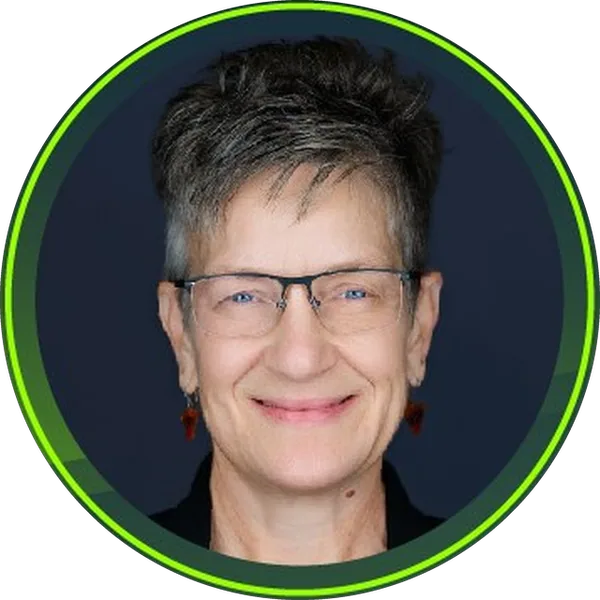
Denise Olson
Hosts James Benham & Rob Galbraith are joined by Denise Olson from K2 Insurance Services, LLC. Denise shares her expertise on how analytics is rewriting underwriting. Discover how data is transforming risk evaluation, streamlining claims forecasting, and shaping the future role of the underwriter across diverse insurance programs.
The full episode
Press play for the whole conversation.

Denise Olson from K2 Insurance Services
Denise Olson from K2 Insurance Services shares her expertise on how analytics is rewriting underwriting. Discover how data is transforming risk evaluation, streamlining claims forecasting, and shaping the future role of the underwriter across diverse insurance programs.
In Episode 162 of the InsurTech Geek Podcast, James Benham and Rob Galbraith sit down with Denise Olson, Chief Underwriting Officer at K2 Insurance Services. With a remarkable career spanning actuarial science, underwriting leadership, and tech transformation, Denise offers a compelling look into how analytics and AI are redefining insurance underwriting. From her early days at CNA to a long tenure at Zurich and now her role at K2, Denise is an exemplar of adaptive leadership in the fast-evolving insurtech landscape.
The Power of Program Business
At the heart of Denise's career journey is a deep-rooted passion for program business. For over 20 years, she has gravitated toward this model for its specialization and problem-solving richness. According to Denise, program underwriting "lets you really understand unique risks," breaking away from the bland predictability of standard lines.
At K2, an MGA aggregator with 35 business units, she now helps a diverse portfolio of niche operations grow through strategic capacity partnerships, tech enablement, and centralized actuarial and exposure support. The Midwestern Insurance Associates case - growing from $20 million to $120 million in workers' comp premium - is a prime example of K2's effectiveness.
Analytics in Claims and Underwriting
A standout portion of the episode focuses on how predictive analytics is revolutionizing catastrophe claim handling. With massive data from quake, wind, and wildfire exposures, Denise explains how models assess claim severity at the first notice of loss. This allows insurers to decide whether to send adjusters or simply issue payment, helping speed up resolutions while maintaining the critical human touch.
"We can now predict claim severity right from the first notice of loss," Denise states, emphasizing the importance of quick, empathetic contact during major events.
The Human Side of Change Management
Transforming underwriting with tech isn't just about the tools - it's about people. Denise provides a masterclass in change management, underscoring the importance of empathy, listening, and testing.
"You've spent months with the solution; they're seeing it for the first time. Take the time to walk them through it," she advises. Her approach to introducing underwriting tools? Map them to specific user pain points, respect tech-averse personas, and build pilot groups to foster co-ownership.
The Next Wave: Claims + Underwriting Collaboration
Looking ahead, Denise champions one transformative idea: tighter integration between claims and underwriting. She dreams of a real-time loop where claims data directly informs new underwriting decisions, unlocking opportunities to price and cover risks previously denied.
"If we're denying 20% of claims for a certain risk - should we write that risk better instead?" she asks. Her call is clear: move beyond a file-by-file mindset to a portfolio-level strategy that leverages data for smarter, broader coverage.
Denise Olson's episode is a must-listen for anyone in the insurance industry navigating the shift from legacy processes to data-informed decisions. It's a forward-thinking conversation grounded in practical wisdom - one that showcases how people, processes, and platforms come together to drive meaningful change.
Past Episode Recommendation
The full transcript
Transcribed automatically from the episode audio, so some names and terms may be misheard.
James BenhamOn this episode of the InsurTech Geek podcast, we're talking about how analytics is rewriting underwriting with Denise Olson from K two Insurance Services. The InsurTech Geek Podcast is all about technology that's transforming and disrupting the insurance world. We'll be interviewing guests and doing deep dives into specific tech we see changing the industry. We're taking you on a journey through insurance tech, so enjoy the ride and geek out. Terra, this week's episode sponsor, is revolutionizing the world of workers' compensation claims and policy management. Terra's cutting edge platform empowers insurers with comprehensive benchmarking tools, robust management systems, and an integrated ancillary services marketplace.
Discover how Terra is driving innovation and efficiency in workers' comp at terra.insure. That's terra.insure. And we are back with another great episode of the Insured Tech Geek podcast. I'm your Insured Tech Geek, James Benham. With me, the most interesting man in insurance, Rob Galbraith. Rob, how's it going? Look. The shelves are looking a little thinner over there. Definitely,
Rob GalbraithJames. Yep. In the process of, actually, these are all show books. All the real ones are packed. These are are duplicates that I have that I'm gonna eventually sell half price books, but they're they're here for display purposes per our realtor. So this is how they we're showcasing the home as part of the sales staff. Staging the home. Staging the home. You got it. So, yep. Painful process. So we're there. We've we've still got stuff shoved in some nooks and crannies, but, for the most part, it looks looks, beautiful.
So and of course, your home always looks the most beautiful when you're about to move out. Yeah. Remember we talked about this. You're doing that punch list and, like, now you're not gonna wanna leave because you actually finally fixed all the things you should have fixed the last few years, dad.
James BenhamCome on. That's Okay. It's alright. I I do have a policy because I've, you know, I've bought and sold a few different houses over the last twenty five years and I do have a policy like I just always hit my punch list and get it done now because I went through that where like didn't want to sell it when I was done because I finally did my punch list. Anyway, it's a it's a it's a happy sad moment. Glad glad things are going well for you though.
And with us today Denise Olson from K2 Insurance Services. Denise, how are you? I'm doing really well. Where do you join us from today? So I'm based in Omaha, Nebraska,
Denise Olsonand it is. It's been a gorgeous day today.
James BenhamI bet you it has. You know, Omaha, Omaha in the spring is a pretty place. Omaha, Omaha in June is the best place. You know why? College World Series. College World Series. That's right. It's my favorite time of year. It's the most wonderful time of the year. And because now back in the day, it's when we made our annual pilgrimage to Rosenblatt. Now it's I guess it's still called TD Ameritrade Stadium.
Denise OlsonYes. Yes, I think so.
James BenhamIt just doesn't have the magic, Denise, You know? No. It's big. It's corporate.
Denise OlsonI I It's it's still it's still a great place to watch baseball, and it is you're right. It's the best two and a half weeks in Omaha
James Benhamof the year in my opinion. And then other other than maybe the annual Berkshire Hathaway Investor Summit.
Denise OlsonYes. Which but for those who live in Omaha is not the best weekend. So Exactly.
James BenhamBecause it's like it's not fun like baseball, but everything's too crowded and the flights are too expensive.
Denise OlsonSo Exactly. Exactly. So you just hunker down at home and and and hope that it doesn't impact your day. Although, you know, now that the the Oracle of Omaha is retiring.
James BenhamWondered what that's gonna be like, you know? Yes, that will be really interesting to watch and see. Yeah, the magic fairy dust is not gonna be there, so we'll see. We'll see what happens, but thank you for joining us from beautiful Omaha, Nebraska to talk about tech and to geek out on insurance. I'm going to start talking about you. Now you and I were on a panel at Insurtech New York. We had a lot of fun. I was like, I need to have this person on my podcast, so thank you for being on.
I want to talk about you and your career. You you built a pretty impressive career across actuarial science, underwriting program leadership like you've you've really done quite a bit, which I love that you've you've been on a move through different key roles in insurance over the years, the way back to your role as an actuary director at CNA in the early nineties through your time at Zurich, where, you know, you were at Zurich for quite some time, twenty years, to K2. What what drew you after being with some really big companies at CNA and Zurich?
What drew you and and really inspired you to take on the the chief underwriting officer role at K2?
Denise OlsonYeah, it's been it's been such an interesting journey. And you're right. I've been I've been blessed to be able to do a number of different things. I think where my career led me as I as I moved from the actuarial role and then into an underwriting role. And I was the head of product development for a couple of years, and I did some systems implementation, business lead for systems, systems implementation roles. The thing that was a theme throughout all of it was program business. I have so been in the industry over thirty years.
Two thirds of that time has spent been spent in the programs world specifically. And I just love the model. I love the program model. I love the the specialization. I love the the fact that you can get different kinds of risks and really understand them. And plain vanilla risks are they they're called plain vanilla for a reason. So not super interesting, But the more interesting risks are the ones that I I just love. I love problem solving. I love I love figuring something out. So, when I when I left Zurich, I became eligible for early retirement, I started to think, you know, I could stay here for another five, ten years if I wanted to, but feel like I've kind of done what I need to do here, and I would love to be in something that's a little more challenging, a little more risk that's involved with it.
Get to do something that, you know, frankly, is totally different, but still within the insurance field, and within programs. So, a friend of mine let me know that they were looking for a CUO at K2. I know the business leaders at K2. I knew them from my time in programs, and it really was a pretty easy decision. You know, K2 is a holding company. They have 35 different business units across the country, and we insure almost anything you can think of. My role really is to be that person who helps them think about their business from the carrier perspective, and not from the broker perspective, or the producer perspective.
And of course, responsible for their underwriting, and they're fantastically, you know, adept at it, and understand their particular niche, whatever that niche is. But my job then is to really think more broadly than that niche, because they're really laser focused on that, really, that that segment. I can bring that perspective across more segments. Have you thought about it this way and think about things in a in a different way than they can? And then I also have responsibility for the actuarial team and the exposure management team.
So it's just been a really great fit for me.
James BenhamThat's awesome. And tell us about the company, like for those who aren't familiar with K2, like what makes it unique and different than its competitors?
Denise OlsonYeah, I won't do as good of a job as our CEO, Bob Kimmel, would do, but the company was formed really to be what we call ourselves as an MGA aggregator. So we have a number of different MGAs. The business model is that if we've got an MGA that is looking to grow their business, that doesn't have the capital to do that necessarily, or maybe they don't have a succession plan in place and they're getting ready to move on. K2 is a great place for them.
So, K2 will take the majority interest in their book, make an investment, And so they'll take, you know, say 51% of that of that portfolio. The person or persons, the management team in charge remain in charge. They remain running their business as they as they're still invested in it at that 49%. K2 can bring things to the table that they they might not have. So technology solutions, the back office things like H. R, legal, all those things that really the smaller business owner doesn't want to have to deal with.
K2 can bring that resource and then help them grow. And so a good example is we have a workers' comp book of business, and when that it's called Midwestern Midwestern Insurance Associates. And when they came in, came on, they were writing workers' comp for transportation risks in I think it was Kentucky and Tennessee. It was maybe I'm going to get the numbers wrong, but let's say 20,000,000 in premium. It's about 120 today and is countrywide. And being able to have that just bring resources to the table that they might not have.
The other key thing that we bring to the table is capacity. The partnerships we have with capacity providers. I think we have over 60 different capacity providers. Again, I'm probably getting that number wrong. I might be low on that. With relationships across across the Lloyd's market, across The U. S. Market, bigger, smaller fronted. We have some fronted deals. We have some some that are more traditional. It can really bring all of those things to bear. It's it's really interesting how we how we bring solutions to the business units.
James BenhamAwesome. Rob.
Rob GalbraithYeah, Denise, it's great to meet you and great to have you on the the podcast. So obviously, you're an industry veteran. Really great to hear a little bit about your journey and and, you know, your current role. So you've spent a career kind of interfacing either directly or indirectly with technology in the various roles that you've had. So just would love you know, I know we'll dive in a a little bit more specific in a minute here, but just kind of your broad thoughts on what you've seen so far and where you think, this kind of insurance technology relationship is heading?
Denise OlsonSo, I've been reflecting on this a lot. Know, you, when you're in the industry as long as I have been, and you tell people what it was like when I started, and you know, it's almost mind boggling. We worked on mainframe computers. We had a terminal that we got to use. You'd go to the row of terminals, and type in your code, and then you'd print it out on the dot matrix green bar reports, and you'd select your development factors, and then you'd go back and key those in, and run it, and hope that it worked.
We had, I think, maybe one PC on the floor at the time, and that's where you'd do your, you know, word perfect memo to see how much more how much more effective I could have been if we had the technology we have today. I I really think about that a lot, and I think about the students of today, the actuarial students that are coming through. I'm on the advisory board for the University of Nebraska and the actuarial science program, and I just love seeing the kinds of projects they're working on, and how much more effective they can be.
So the data that's available and at our fingertips, the amount that can be processed, and how that's changed. You'd lock up a computer back when I started. If you tried to process the volume of data we have today, you'd get a call from I. T. Saying you shut down our machines and nobody can nobody can process anything. So I just think that that's that's so interesting. And even watching how the information that's available to underwriters today, that wasn't available before. You know, it's the instant access to certain things, even, and through publicly available.
Google Maps, when that came out, you could see an image, and ask a question, what's that in the back corner of the building? You rely on them to take pictures in the past, or a physical loss control visit. Those are all the things, all the ways that things have changed, and that's just a fraction of it as I think about just everything that's available today that wasn't even even fifteen years ago.
James BenhamYeah, it's a I I do retrospective sometimes and, know, go back to where I started with TRS eighties and, you know, really old desktop computers in the early nineties and writing code and processing data. And, of course, what we have now where we've got supercomputers at our disposal at a whim. We have all all the sum of all human knowledge available within a single query. I mean, it's it's quite staggering to think about about how how how how much it's there's the impact has been. At the InsurTech New York conference, we spoke on a panel together.
We talked about that beginning of the show. We talked about predicting claims behavior with analytics. And I always like to just kind of summarize the difference between predictive analytics and AI. Predictive analytics is mathematical functions. We've used predictive analytics for a long time in insurance. And we're using common math functions to look at probabilistic outcomes, right? We're trying to this. This is stuff you've done since your stat classes in high school, right? We're we're to identify correlation and causality and we're using math to do that.
And of course, what AI does is is it can simulate something billions of times, and it can run through every possible permutation. It's a little bit different. But using analytics, using AI, we've been able to start predicting claims behavior. You talked about using data to forecast claims severity and to detect fraud across K2's diverse programs, and you said there's a high diversity of different programs there. Are there any techniques or models you found that, like, really worked well across the different
Denise Olsonniche areas of the company that you have? Yeah, as I spoke with our claims department about it as I was preparing for the conference in in New York that we attended. And what I thought one of the places I thought was most interesting is when we do a lot of catastrophe business. Have we have quake coverage, which thankfully, where's the wood, right? Knock on wood. We haven't had a big quake recently. And then, of course, we write hurricane, tornado, winds, you know, all the severe convective storm risks, wildfire risks, and that produces a large volume of claims in a short amount of time.
And so one of the key places we can look at it is looking at that first notice of loss, looking at the description, being able to predict, is this a small claim or is it a big claim? Should I assign this to someone who has less experience or someone who has more? Should we send somebody out? Do we need boots on the ground? Or should we just process a check for it? This is to be covered. It might even be able to tell us when there's some fraud that perhaps is involved with it, or is there even coverage for for this?
So the catastrophe one, I think, is the most interesting because you really do want to get out there as quickly as you can make contact with that insured. If there's there's anything we've learned, I think the the, you know, the flip side of all the technology is that human touch can get lost. And a claim somebody who suffered a claim, they want they want a phone call. They want to know somebody hears them. They don't want to go with the chat bot and interact that way, and then wait for five days to get a phone call back when they've got something damaged in life.
And so I think the really cool thing about the predictive models for claims really is making sure we're calling the right people at the right time and making that claimant feel secure. Somebody's got me. Somebody's paying attention to what's going on, and it's that right level of coverage and touch. So I thought that was a really neat example.
James BenhamThat's awesome. Yeah, I mean, we've been using it pretty heavily in work comp, and we have a pretty, pretty specific set of tools that we use to predict claim severity, recommend treatments, to even calculate the predictive ROI on a treatment. So we can actually predict what the ROI based on historical claims and the machine learning models that learn from those outcomes, we can predict, know, hey, look, this will be a 2x ROI if you get a nurse case manager involved right now. So there's some really cool things you can do, as well as assist in, of course, reserve setting.
And fraud fraud detection is is is also equally interesting where it can look for patterns and data that we don't necessarily see ourselves. So, yeah. Go ahead, Rob.
Rob GalbraithSo, Denise, I'm curious, in your experience, particularly, you know, you talked about being a holding company, all the different companies that are kind of under your umbrella, all the different partners that you work with. Anytime you're rolling out kind of a new technology, right, whether it be a predictive claims platform or something else, there's gonna be some change management involved. There's probably gonna be some cultural and structural hurdles involved. So I just you know, if you have some best practice for our audience, in terms of rolling out a new change of any kind, and I'll I'll leave it somewhat vague, you know, particularly if you've got some examples or or, you know, one or two that you'd love to to use to kind of elucidate maybe some broader, principles or concepts or best practices that you've identified.
Denise OlsonYeah, sure. I think I've done a lot of a lot of change management over over the years, and particularly when I worked on this large project at Zurich that I talked about, there was I learned a lot about change management. Probably the most important thing that I learned is the solution that you're bringing. You've spent a lot of time with the solution. You know what it is. You're excited about it. You're bringing it to somebody for the first time. You have to get them to where you're at.
So you have to take a step back and really help them to learn about whatever that solution is. And before you can do that, you have to understand their world. So what are the problems that they're facing? Do you really understand to have a good grasp of what are the biggest pain points and really understand their process from beginning to end? And is the pain point of this person the same thing as the pain point of this person? So I like to go and say, okay, we've got this.
We've got five underwriters. We'll use that as an example. We've got five underwriters. I've got this new cool tool that I think is going to help them to be able to underwrite more quickly. That's what we care about. I don't want to spend time on files that are going to waste my time. I want to spend time on files that we can bind, we're more likely to bind, and I want to get to the issues within the risk as quickly as I can, and I want that in front of the underwriter, the person who has that knowledge to be able to deal with those risks as quickly as I can.
I have to know what that process looks like. Who's, so in risk situation, who's the intake person? What do they do with it? What does the next person do with it? And if I can then elicit what are those pain points, then I can go to the solution and say, Okay, now I can map the solution that I have with the pain points, and be able to demonstrate to them, Here's how I think we can solve for it. And not bringing the solution, right? I'm not saying it's going to solve your problems, but it could.
I think this might be a good thing for us to try. Are you willing to try that with me? I think another piece is really understanding how does that person feel about technology. If an underwriter tells me in the first couple of minutes that AI is never going to take my job. There's no way you could build any tool that could do as good of a job as an underwriter does. That's a red flag for me. Okay, this is a person who's tech averse, and has a little bit of fear that maybe it's going to take over part of their role.
And so, I'm going to approach that person differently than somebody who is an early embracer and adopter technology. Well, they're them, I'm going to show the cool tool, and I'm going say, look what this can do. This is really exciting. So you have to know your audience. It's all part of that change management. You know, you can't ignore it. You can't wait for the can't say, oh, well, we're just not going to do it because you're scared of it. Right? That work, but you have to be a little bit more careful.
And I'm a big, big fan of test and learn. Hey, let's try this. Can you try it with me? And Try to break it for me. Find all the problems. That way they are engaged in that solution and finding out, you know, Hey, this doesn't work as well. Alright, you are right. That's not working. Let's find out why not. Let's see how we can talk with whether it's a vendor or we developed it internally. Let's see how we can solve for that issue. And then and then the last piece is, of course, making sure that you're that you're measuring.
Is it actually helping? And what's that return from the business leader's standpoint? You know, they're not the ones doing the work, but here's what we saw in the proof of concept. Here's how much time we think we can save you. Here's how it turns into from a dollar standpoint, and that there's a there's a positive return that's really important to be able to demonstrate. So, you know, it's that it's that knowing your audience thing.
James BenhamVery cool. So let's let's kind of wrap with this question looking ahead, because right now AI is the now. I got I got to say I feel like I got a new Tesla Model Y with the full full self driving. I never touched the steering wheel ever. And so I'm a little weirded out because I feel like I'm in the future and and the other cars in the road are in the past. You know what mean? Like, I feel like I'm in in the future now.
Like, it's full self driving will just blow your mind because that's something that you saw in every sci fi movie. So just acknowledging that large language models, machine learning, self driving cars, all of these things are here. Fully smart houses. They're all here. That's the now. That's not the future anymore. That's current tech. What trends do you think will shape underwriting? Because right now we have predictive analytics and we've got machine learning models for underwriting. We have pricing models and we've got risk models and we've got all of these things, right?
What do you think is going to most shape underwriting looking forward the next few years?
Denise OlsonWhat's going to most shape it? I'm going to go with what I hope most shapes it, because I think I talked about this a little bit at the conference, and I'm going to continue beating on this drum. I really would love to see a closer relationship between underwriting and claims. So I would love for there to be real time claim trends being sought out of the loss descriptions, Pulling those things out, saying, here's what's coming. Here are, like, for example, and it can be something on the underwriting side, too, but let's say that we denied coverage for this particular type of risk, you know, 20% of the time.
All right. Well, could we underwrite for and price for that risk and have a coverage around it? That's that's something that we that I would be interested in doing. Right? We we talk a lot about avoiding avoiding losses, but that's not actually the business we're in. It's pricing for and appropriately understanding what those risks are and then paying those losses when they happen. Certainly, we don't want losses that are, you know, that can be controlled by the insured. It should be fortuitous, all those things. So I think that's a really big opportunity.
I think the same thing could happen on the underwriting side. If you are, let's say that you're declining 50% of the risks before you even bother to quote them. They just don't fit the model. Okay, what do those 50% look like? Is there another market there for us? Are we turning away good business or business that we could write, but maybe with a different capacity partner, or in a different way with a more limited coverage? So I think there are a lot of ways for us to really think from a portfolio standpoint rather than the risk by risk standpoint, and bring that have more people thinking about it.
I think we get very, very involved in individual risk underwriting, and that's great. That's what underwriters should do. I also want to tap into their brains and pull them back and and think more broadly about the about the product and about the risks that we're writing. That's really hard at the individual underwriter level. But when you collectively pull their knowledge together, like, then they start feeding off of each other. Like, oh, yeah. And I do see this quite a bit. You know? And I I think that I would love to see the technology bring those conversations to the forefront and and really enhance the quality of those conversations.
James BenhamAwesome. Okay. Wonderful discussion. Rob, any closing comments?
Rob GalbraithNo, Denise. It's great to have you on, and I love that last response just talking about kind of the individual underwriter. I think about the individual claims adjuster as well. Right? And, you're right. Like, so many times I've seen in the past from from, you know, working at carriers where it's just like next run-in the queue. Next one in the queue, next one in the queue. Right? And so you do get kinda laser focused on it, and you can gain some type of, you know, efficiency and and, you know, you're you're self sustaining, I guess, and and somewhat.
Right? But you're right about, like, the forest in the trees, right, of, like, hey. If we all take a step back, and when you do have those kind of team meetings or you do kind of force those conversations between underwriting and and claims, sometimes they can be really awkward. But to your point, I I feel like that collaboration between underwriting and claims is kind of a holy grail a lot of folks across the industry have have tried to make, but, you know, I definitely think there's a there there.
I haven't met anybody that's really perfected that yet, but, as more, you know, thinking about AI, right, and others, it's technology is able to do some of the more kind of basic, and I don't wanna, like, it's it's all, right, basic freeing up, right, some of these individuals to do some of that higher level thinking or whatnot. Right? I mean, and the way we think about technology. And James, like, you're talking about the self driving. You know? It's like, oh, it's freeing you up as well.
Right? And we think of driving as the simple task. Well, we know driving is not simple, but yet, you know, the more technology it can take. Obviously, you're gonna use that time in the car for other things now. So just thinking about that, Denise, I I love that you kinda mentioned that of of, you know, in essence, right, redeploying people and kind of actually getting the most out of, you know, their their brains or expertise and allowing them to think maybe a little bit more creatively than in the past.
Great.
James BenhamWell, excellent discussion. Denise, thank you for joining us. Yes. Thanks for having me. I appreciate it. And thanks always to Rob. Good luck with the, the house sale and the mood, Rob. I appreciate it. Yep. Absolutely. Yeah. The the the one, good side about, holding a little bit longer is we get a few more dips in the pool in that 100 degree weather. Nice. I like it. I like it. And thank you to all our listeners for tuning in today to geek out our interview with Denise Olson from K two Insurance Services.
Remember, enjoy the ride and geek out. See you next episode. The InsurTech Geek podcast is all about technology that's transforming and disrupting the insurance world. I've been your host, James Benham. That's jamesbenham.com with co host Rob Galbraith at endofinsurance.com. We're taking you on a journey through insurance tech. So enjoy the ride and geek out.