 YouTube
 Spotify
 Amazon
 iHeart
 Apple
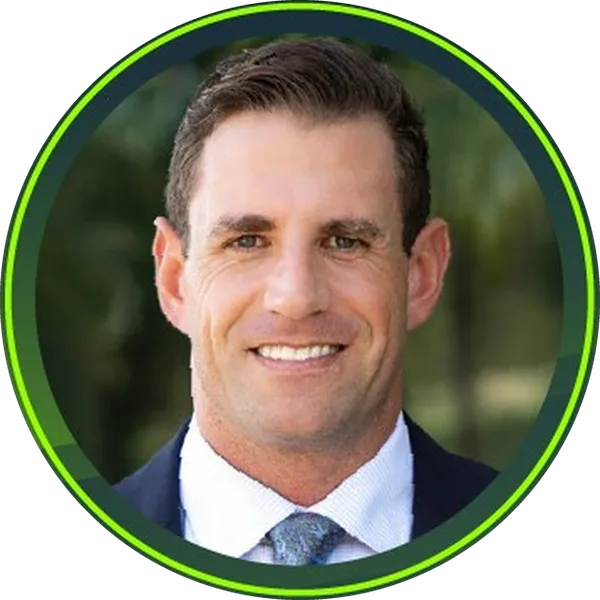
Matt Crum
Matt Crum from Frank Winston Crum Insurance shares his expertise leading with purpose in insurance. Discover how leaders can tackle industry challenges, strengthen workplace culture, leverage technology like AI, and prepare for the future of work.
In a time where digital transformation and generative AI dominate headlines, few voices in insurance strike the balance between innovation and heritage like Matt Crum, President of Frank Winston Crum Insurance. In Episode 166 of the InsurTech Geek Podcast, Matt joins James Benham and Rob Galbraith to explore how a third-generation family business is thriving in one of the most regulated and rapidly evolving industries - by leading with purpose.
The full episode
Press play for the whole conversation.

Building a Legacy from the Ground Up
Matt Crum didn't plan to lead his family's insurance business. A hockey player at heart, he considered a career in finance before embracing the opportunity presented by his father after the passing of his grandfather. What started as a summer job at Frank Crum evolved into a mission: to scale a family-run PEO and insurance company into a modern, tech-driven insurer.
"There are a million different paths in insurance, and that's what makes it fascinating." - Matt Crum
Frank Winston Crum Insurance has grown from insuring only PEO clients to becoming a nationwide carrier offering workers' compensation, general liability, and soon, commercial package products.
Innovation with Intent: Embracing AI and Tech
Matt is candid about the challenges that come with balancing compliance and innovation, especially across 50 states with vastly different regulatory environments. But his company has taken a proactive approach to embracing AI.
"If you're not evolving, you're going to die." - Matt Crum
The company uses AI to streamline underwriting, enhance training, and improve claims processes. A recent proof-of-concept impressed Matt by pulling third-party data to accelerate agent quote turnaround time - showing how even incremental innovations can make a major impact.
"AI is the most transformational technology since the internet." - Matt Crum
Human-First, Tech-Enabled
Despite being an innovation advocate, Matt reinforces a foundational belief:
"We're using technology to enhance the human experience, not replace it."
Whether through AI-powered chatbots or internal training tools, Frank Winston Crum Insurance uses technology to remove friction, empower employees, and support customers - not eliminate the people who drive the experience.
This perspective resonates deeply in an industry built on trust, relationships, and service. Matt's leadership shows how digital transformation can support, not disrupt, a people-first culture.
Leading a Family Business in a Consolidating Industry
In an era marked by consolidation, Matt's decision to remain privately held allows his company to stay nimble and mission-driven.
"My dad, sister, and I are the shareholders - being privately held gives us freedom." - Matt Crum
This structure lets them fend off acquisition pressures while maintaining strategic focus and agility. It also allows them to cultivate a company culture rooted in transparency, open communication, and collaborative innovation - values rarely prioritized in large corporate structures.
What's Next?
Looking forward, Matt is most excited about the impact of AI on underwriting, claims, and customer engagement. He predicts rapid transformation in the next 18 - 24 months, particularly as the barrier to entry for using AI tools continues to shrink.
"The world is going to look very different in 18 to 24 months." - Matt Crum
For insurance leaders navigating a volatile and tech-heavy landscape, Matt Crum's story offers a blueprint: start with purpose, embrace innovation, and never lose sight of the people.
Past Episode Recommendation
The full transcript
Transcribed automatically from the episode audio, so some names and terms may be misheard.
James BenhamOn this episode of the Insurtech Geek podcast, we're talking about leading with purpose and insurance with Matt Crum from Frank Winston Crum Insurance. The Insurtech Geek podcast is all about technology that's transforming and disrupting the insurance world. We'll be interviewing guests and doing deep dives into specific tech we see changing the industry. We're taking you on a journey through insurance tech, so enjoy the ride and geek out. Terra, this week's episode sponsor, is revolutionizing the world of workers' compensation claims and policy management. Terra's cutting edge platform empowers insurers with comprehensive benchmarking tools, robust management systems, and an integrated ancillary services marketplace.
Discover how Terra is driving innovation and efficiency in workers' comp at terra.insure. That's terra.insure. And we are back with another great episode of the InsurTech Geek podcast. I'm your host, James Benham, your InsurTech Geek. With me, my illustrious cohost, the most interesting man in insurance, my fellow man in Texas, Rob Galbraith. Rob, how are doing, buddy?
Rob GalbraithI'm doing great, James. Doing great. Still, dealing with the heat down here as I'm sure you are in South Texas, but I did read that in my beloved Michigan,
James Benhamthere was snow in the Upper Peninsula this week. You gotta be kidding me. The UP, seriously? It was I was just in Chicago last week for three days, and it was chilly. It was down in, like, the low sixties. So it does not surprise me that, you know, another 10 degrees north of there. It was I mean, the UP, the Lake Superior gets so cold. You know? Those folks up there, youpers, you know, youpers and trolls, if you don't know the difference. The trolls are below the bridge.
The youpers are above the bridge. That's the Mighty Mac Bridge, and and, those youpers are a unique bunch. You know? You you get to Marquette, and it's just kind of a different world up there.
Rob GalbraithYes. It is. Yes. It is. It's beautiful in the summer. I've been there for the summer. Beautiful. But nine months out of the year, it's
James Benhamyeah. Yeah. Probably a little bit. And with us today, a true southern gentleman, a southern Floridian, a man who thrives on heat and humidity and swamps and water and boating and all kinds of stuff. A good a good friend and the president at Frank Winston Crum insurance, Matt Crum from beautiful, Tampa, Saint Pete Clearwater. How you doing, today, Matt? Outstanding. Glad to have you on the podcast. Super exciting to have you here. You know, we're gonna we're gonna talk about insurance. K. We're gonna talk about what's going on in in y'all's world because, you know, not not everybody is familiar with Frank Winston and Crown.
We're gonna talk about what the company does. But before that, I wanna talk about you because this is obviously a show about individuals as well. You've really kinda built your career in a multigenerational family business, right, in insurance. And so that there's a lot of dynamics and a lot of things to navigate in a multi generational family business, and then that that's really common in construction, not nearly as common in insurance just because of how much capital it takes, and, you know, the private equity public nature of insurance companies.
I'd love to know, like, obviously, it's a family business, but, you know, you you're you're a you you went to school for economics. You got your MBA at University of Tampa. You're a hockey guy. I mean, you've got a lot of other interests than this. Was it always gonna be the family business? Or when you were growing up, was it gonna be the NHL? Like what what was the what was the plan when you were a kid? Well, of course the plan was to go to the NHL.
Matt CrumThat plan, I, you know, gave it my all. It didn't work out, but I was okay with that. I finished my college hockey career, and it was kind of I had two paths to take, and just I was banged up, and it was time to kind of hang them up. And I actually thought I was going to go, I went to a Trinity, it's a big feeder for Wall Street. And I've always loved finance and thought I was going to go work on Wall Street. And obviously, company was always there.
I'd do summer jobs at different departments within the company. And, you know, some summers I would work in a hockey pro shop sharpening skates and selling sticks and pads. And, other times, I'd be working for the company, moving furniture or filing or doing little odd jobs here and there. And my grandfather passed, a couple years before I graduated college. And my dad and I or my dad started getting me a little bit more involved in kind of decision making and not like that he was asking my opinion, but he was involving me in kind of the upper level decisions of the business, and it piqued my interests.
And, you know, we actually have several companies within the Frank Crum enterprise, and he's actually never run the insurance company. And the president that he had running it was getting towards the end of his career and they needed a succession plan. And so my dad proposed to me, Hey, why don't you come down? You know, you can be the insurance guy in the family and, you know, start at the bottom of the insurance company and work your way up. The plan would be, you know, for eventually to take over as president.
And, I had done a summer internship in, in the insurance company and I absolutely loved that side of it because there's so many dynamics to insurance that a lot of people don't fully appreciate. I think when they find out you're in insurance, they ask you if you can help them with their homeowners or personal auto. And my answer's always no. But there's, you know, there's a million different paths within the insurance space, and it just always fascinates me, and it still does today. So, wasn't always the plan, but I love that I fell into it.
Yeah, but it became the plan. What
James Benhamdid Frank Wichtenkrum do originally, and what does it do now? So,
Matt Crumso we own a PEO, a professional employee organization, which does HR outsourcing, workers' comp, benefits, tax administration, compliance, etcetera, for small businesses. Our average client size is anywhere from five employees to wheelhouse is probably up to 100. And we are one of the few insurance or PEOs that owns our own insurance company. So, in the early 2000s, we capitalized our own insurance company. Usually PEOs go buy their workers' comp through another carrier. We decided we kind of wanted to take our destiny into our own hands, capitalized our own insurance company, and that's all we did at the time.
We just insured the PEO customers. And the company has evolved pretty significantly since then. You know, we now write a lot of most of our workers' comp actually outside of the PEO business. We write, you know, casualty, we write general liability, we write excess liability. In a month almost to the day, we're going to roll out a commercial package product and kind of keep on rolling from there. But the company is very different today than it was, you know, almost twenty years ago when I joined.
Yeah, it's a full fledged insurance organization and most of the insurance business is outside the PEO. So Yeah. It's a it's a rare
James Benhammost, you know, most PEOs just partner with insurance and then make make a split on it. You actually built your own insurance company, and the insurance company got to be bigger than the PEO. Right? So, unique it's path in, but a really cool one. Is it all called Frank Winston Crum, the PEO two? No,
Matt Crumit's a blessing and a curse a little bit, the branding. The PEO is called Frank Crum, and that was actually a rebrand back in 2005. We kind of used a marketing firm and they came back with a bunch of different recommendations. And we actually put it out to the employees like, hey, of these three different, you know, three or four different options, what do you like best? And they love, you know, Frank Crum, one word. And so we've got Frank Crum, Frank Crum Staffing, and then it's the insurance company actually started out as Crum National Insurance.
And there were some issues with Crum and Forrester. They were getting our mail and claims. We were getting their mail and claims. They're a bit older than we are, so we changed our name. And so, yeah, so Franklin Crum's the carrier. We got Frank Crum General Agency is the MGA. We've got a retail shop as well.
James BenhamSo and we've a holding company. Wow. What a what a what a great story, though, about a family guiding something that that long. It's hard to survive that third generational jump. You hear about that all the time is grandfather to father generally happens pretty smoothly, but in you know, it's it's very it's really neat to see it and make that next leap, which is usually the hardest is a leap to you. You know? So that that's exciting. What's going Rob?
Rob GalbraithYeah, man. So, yeah, I echo everything James just said about kind of multigenerational, family business. And, you know, in in past lives, I've worked with a lot of insurance agencies that were also multi generational family businesses, some as much as six generations, which is just incredible, right, over one hundred years. But I've also seen a lot of consolidation, like some of those businesses have really struggled to keep up. And so you have some of these larger entities kind of swooping in and purchasing them up and leveraging you know, some of the more modern technology, right, to really kind of get a foothold and become a large organization.
So, Matt, I'm just kind of thinking, you know, obviously, you're here on the Internetsch Geek podcast, we're going to talk about tech, we're going to talk about innovation. So, you you work in this world, it's highly regulated, complex, especially in Florida, right? But how do you balance just kind of running that daily business, keeping up with, I'm sure, stuff pops up on your plate every day with this kind of tech and innovation side?
Matt CrumSo you're asking about regulation. I mean, regulation is nothing new for insurance. And, you know, we're one of the most regulated industries in the world. And the biggest challenge with insurance, I would say, and this isn't new, is we're regulated in 50 different states. You know, we're nationwide. We're not international, but we are nationwide. And we've got, you know, California wants different things than New York, Florida, than Texas, and, you know, everything in between. And so, it's a constant balance and creates challenges, but regulations are there for a reason, you know, to keep everybody in check and put guardrails around what we do, because it's important what we do to have that regulation.
But there's often friction between that regulation and technology. Technology, not surprisingly, typically goes faster than we can as an insurance industry utilize it. Know, and it's over the years, you know, predictive modeling came about, you know, ten, fifteen years ago. And it was, you know, the data was there and carriers were using data to make better underwriting and claims decisions. But it was, how do you get that into your rate filing? How do you get that approved through the regulators? And so it's a constant balance between leaning into, in my mind, and the way we run our company is leaning into technology and innovation, because I firmly believe that if you're not evolving, if you're not changing, you're going to die.
And managing through kind of compliance and regulation. So, I think in family company, it's the same. I think you absolutely, in the insurance space, you absolutely have to have scale. I think, you know, you brought up consolidation. I think every industry is experiencing consolidation. I've got a guy I know who's brought in by a private equity firm to run. They're consolidating HVAC companies, and they're gobbling up. If you've got a certain amount of EBITDA, they're gobbling up and consolidating that. That was an industry, if you'd asked me ten years ago, I have ever thought that there'd be consolidation there?
It wouldn't seem the obvious choice, but you're seeing it. Think technology and the cost of technology, the benefits that you get from leveraging technology and, you know, at scale are tremendous, but the cost of entry to leverage that technology is sometimes out of reach for the smaller, you know, competitors and, you know, pick your industry. You know, there's that challenge. And I don't think it's exclusive to insurance by any means. You know, we're privately held. We got three shareholders, my dad, my sister, I, and, you know, we've grown it and we've been very blessed and fortunate to be able to do that today.
And we're just big enough to where we feel like we've been fighting off those pressures and we don't really have a desire to sell at this point. Know, I like being my own boss and kind of dealing with the family and I don't know what I would do if I retired. So, I like where we're at. I
James Benhamdon't know either. You know? I I I have when when I sold SmartBed in 2018, some some folks have to ask if I was retiring. I'm like, I was 38. I'm like, I'm 38. What do you what do you mean? Like, I I don't know what I do. There's only so many hours in a day you can have hobbies. Like, I you know, a good good good friend of of mine and somebody you know, Skip Brechtel, just just, you know, passed on after a long battle with cancer.
And, what was interesting about him is even when he he knew the end was gonna he still worked. Said, why are you working? He goes, James, what else am I gonna do? He goes, I I'm already playing all the golf I can possibly play, and I hang out with my friends as much as I want. There's still at least eight hours a day. I I gotta have something to do. And so yeah. I did. I I think, you know, for those of us who really enjoy work, it's a it's a it's a joy to be productive and to do that and be involved.
And, you know, as long as you have your time you you coach your kids in hockey now, actually. So you're you're full circle on hockey, aren't you? I do. As a matter of fact, right, when we get off this, I've gotta head to the hockey rink. It's it's practice number one for the new season, and so my little guy got three kids,
Matt CrumI've coached them both, but my little guy, he's actually joining his big brother on his team. And, he's a little nervous, because he's seven and he's playing 10U. And so, today will be the first practice, so it'll be interesting. But yeah, that is one thing that I absolutely, will not compromise on. You know, I can get real busy and other things in my life will drop, but try to be there for all the kids' sporting events and because they play other sports that I don't coach.
Hockey, I'm like, feel like I'm qualified enough to be out there coaching them. Other sports, not so much.
James BenhamYes. That that's awesome. And good good for you, man. I think that's great. Do you like being a a coach more than a player? Is it different? Is it totally different? It's
Matt Crumtotally different. It's hard to tell because my kids are so young at this point. You know, I still play too. But I enjoy watching as of today, I enjoy watching them way more than I like playing. There's something gratifying when your kid finds success in something. I think you find more gratification than something if your kid finds success or, you know, overcomes a challenge or does something than if you do it. So in that way, I would think probably coaching.
James BenhamWell, short question for you is what are you most excited about right now in the future of insurance? Whether it's a a new product line, then that's the technology. It can be AI. It can be technology in general. It can be completely unrelated technologically. It can be some market condition. You know, what are you really geeked out about right now with insurance?
Matt CrumJust insurance, like in general? And business, business and insurance. Yeah, yeah. It's probably cliche right now because I feel like every conference I go to, every conversation I have with peers, it's AI related. But I think this technology is so transformational. You know, back when Insurtechs, you know, really first started showing up in the marketplace, I remember there was a lot of friction and just concern, you know, it was kind of us versus them. The Insurtechs were like, you know, these old crusty insurance companies, not going to know what hit them.
They're living in the past. And, you know, the insurance companies are like, you guys don't know what you're doing. We've got, you know, tons of data. We've got years of, tens of years, decades, you know, centuries of history in some cases. And there was this clash and it was kind of, at first it was almost a winner take all conversation. And then it evolved into InsurTech's, you know, carriers leveraging InsurTech's and kind of the InsurTech's melding into the insurance ecosystem. And I think this AI, what I've seen in the proof of concepts that we're using, we're openly embracing AI and what it can do to help our teams and to help our customers.
We're just barely scratching the surface and it's super exciting. Some of the things, you know, I just got demoed a proof of concept. We got a company that a third party that was going to try to help us pull some third party data to help streamline our underwriting process and help our underwriters make better decisions and get our pricing back to the agents quicker and remove some of that front end friction. I was little, I was open to seeing it, but I wasn't super optimistic that they were going to bring anything real.
And I'm pleasantly surprised. And that's just one example. Seeing it across the board, board, know, helping our teams internally, you know, helping, you know, training videos and training content and, you know, helping on the claim side of things. It's just, I don't think there's, I hate to overstate it, but I don't think there's anything in our lifetime that is other than the internet that has been this impactful.
James BenhamI couldn't agree more. It's, that's why we're talking about it so much, right? It's, yeah, because now it's getting real and it's getting into our hands. Rob, any close closing comments or thoughts?
Rob GalbraithYeah, Matt. Just because as a follow-up. Right? So I'm imagining you've got a pretty strong, you know, company culture that's been built up, right, through generations in your family. And at the end of the day, we know insurance is about relationships, right? So when you're evaluating tech, right, how do you try to balance that? Like, don't know, maybe you can summarize your approach when you are you proactively looking at pain points? Or you're getting customer feedback? And you're like, we'd love to improve on this? Or are you more opportunistic?
You go to a conference, or you see a vendor demo, and you go, hey, I think maybe we could use this here. And then what type of feedback are you getting from your staff? It sounds like you guys have really embraced technology where, know, quite frankly, lot of companies, you know, the employees have this kind of this too shall pass mindset, right? You know? And so, yeah, I just would love to hear your thoughts about identifying technology that's right for you guys and then your process in terms of looking to incorporate that so that it's successful.
Matt CrumI look at technology two ways. One, I am in a defensive manner. I'm always looking at what's out there that can disrupt our business. You know, cliche example of Blockbuster and Netflix. And so I'm constantly just out there looking, not in a paranoid manner, but just looking at technology that can be disruptive and or help us get better. And so there's that. Then proactively, regularly working with our team, you know, finding out where there are points of friction, where there are pain points, whether that's in our internal operation or, you know, the user experience for our agents or our insureds, and then dissecting those pain points.
And you put them in a hierarchy and say, where's the biggest pain point at this moment? And do we leverage technology to fix that? Do we change processes? Usually it's a little bit of both. And then you try to leverage it. And we've been, I think moderately successful in doing that. I'm not saying we're perfect. We've got challenges that the technology usually isn't, always what it's, you know, supposed to be. And, know, you roll something out and it's got bugs and challenges and, and you're constantly working on that, but that's, that's the goal.
And, and that's the intent. And, you know, how, how, how we deal with change management is, is we're just very open and honest at what we're trying to do. And we're kind of no secrets really with the employees. We share like with AI, we're like, we have town halls and that was a topic of discussion at our last town hall. We've got AI training. And this is just general training on AI, like helping the employees understand how to use ChatGPT, how to develop a prompt, how do you use it in your day to day life.
And so we're constantly just trying to get them more comfortable with the technology and that, you know, we are a people business at the end of the day. You know, it is a financial transaction, but, you know, people do business with people that they like. People, you know, whether that's inside the company, whether that's our agents, they like their underwriter, they like their business development manager, they like their claims, you the claims adjuster, they like their customer support person, they like their risk manager, and same things with the insured.
And so we can, technology is, again, is cliche, but we're using technology to enhance the human experience and the insurance experience, not replace the human piece of it. If we can get that right and really let the, remove the unnecessary administrative burdens on our employees and let them, you know, do what they do best and take care of their customers, that's a pretty good recipe for success.
Rob GalbraithYeah, I love that answer. And I love just the thoughtful way, right? That you're, you haven't, you're always curious, right? You kind of want to know, like, than just going by what you read in the headlines, right? Or the business press either the hype or the horror stories. Right? And then, clearly communicating. I love the town hall, right, and just being very open and honest. And I also love I mean, one of the reasons I mean, maybe it's relatively minor relative to the power of the technology, but one of the reasons I feel like chat GBT and generative AI took off so much.
Was like one of the few technologies that a CEO or C suite leaders could directly use like right off the bat, right? And get the power of right intuitively rather than having some salesperson or IT person that I come to you and try to explain through a bunch of PowerPoints or charts or whatever, And use a lot of buzzwords like blockchain, I would say is kind of in that category of like, maybe this will help but like, it's pretty complex, you know? Like, it's kinda dense.
I gotta get through all this to see what a potential application, could be. So I wanna I wanna ask you one more, Matt. Just, you know, crystal ball, looking ahead the next ten years, like, what's got you excited in terms of the possibilities of technology? Where do you see it evolving? I'll leave it a little bit wide open. Then just from a leadership standpoint, right? How do you continue to guide Frank Winston and Crum Insurance through this massive technological change that we're in the middle of?
Matt CrumYeah, I think the companies, I would say in general, pick your industry, whether it's insurance or not. Companies that, with some limitations, companies who embrace technology are going to just be able to reduce costs in the system and reduce frictional costs and just make any transaction or process better. And I think the companies who do that effectively gonna, they're gonna create distance between those who don't. You know, if you look just, just being excited about just narrowing down to insurance, like the insurance has always had insurance companies in the industry, if we've got a wealth of data, we've got more data than, you know, most industries have.
The challenge has always been, how do you get that data boiled down into something that a claims adjuster can use or that a frontline underwriter can use on a day to day basis? I mean, we leverage it, but how do you do And AI can really theoretically, again, I think we're early days now, but AI can really bridge that gap. And, you know, whether it's underwriting, making the underwriting process faster, claims, customer support, you know, whether it's, you know, right now someone can get ahold of somebody on the phone, but it's difficult, you know, if it's after, you know, eight to five AI, you know, with chatbots will allow someone to be able to, make an endorsement on their policy or pay a bill or do something, file a claim, you know, twenty four hours a day without necessarily having a call center in, you know, another time zone.
You know, internal, like I said before, internal data and information, something that we've been, it just, it's been amazing is like training videos. So we used to, we're big in training, you know, our other, our sister carrier is the PEO. And so that's, you know, HR outsourcing. So we're big into training both internally and our clients. And we've spent a lot of time and resources, you know, developing training videos and training resources, best practices, things like that. With AI, oh my gosh, it cuts the time, you know, into a tenth of, you know, what it costs to disseminate information out there.
And so, I'm really looking forward to it. I think we're just, you know, scratching the surface here truly. Think it's going to be, the world is going look very different in eighteen to twenty four months. I truly believe that. That's an amazingly,
Rob Galbraiththat's a relatively soon timeframe, right? You're talking about eighteen
Matt Crumto twenty four months Think about how fast, think about how fast, like I first started hearing about ChatGPT two years ago and it was, I was like, what is this thing? And, and now a day doesn't go by when I don't use some sort of AI and it's, and it, I mean, think about just eighteen months ago, even AI, how much it's evolved in eighteen months. And so I, I think there's why you hit the nail on the head, why it's good for people like me.
So I'm not a technology guy. I don't have a technology background. I have to depend on my CIO and my technology team to tell me, Hey, we need this technology. And I'll be like, Why do we need this? And what's it going to do? And there's a lot of frictional costs of implementing that technology. And, you know, it takes a long time and it's very, you know, very, it's difficult sometimes like where the, you know, eighteen to twenty four months, we're really gonna see the benefit of this technology.
Oh my gosh, that 's difficult to tell, you know, a CEO, well, you know, if load ChatGPT on your desktop and tell them to use it. I mean, it's the frictional cost of using AI is dramatically lower than, you know, other previous technologies. So we'll see.
Rob GalbraithYeah, exciting times. So Matt, if we've got folks in our audience that want to connect with you, what's the best way to reach out? Sure.
Matt CrumMy LinkedIn, I'm on LinkedIn at Matt Crum, president of Frank Winston Crum Insurance Company. My email address is mattcfrankcrumb dot com. Yeah, those are probably the two best ways to reach out and get in contact.
Rob GalbraithFantastic.
James BenhamThanks for being on the show. Thanks for having me. The InsurTech Geek podcast is all about technology that's transforming and disrupting the insurance world. I've been your host, James Benham. That's jamesbenham.com with co host Rob Galbraith at endofinsurance.com. We're taking you on a journey through insurance tech. So enjoy the ride and geek out.