 YouTube
 Spotify
 Amazon
 iHeart
 Apple
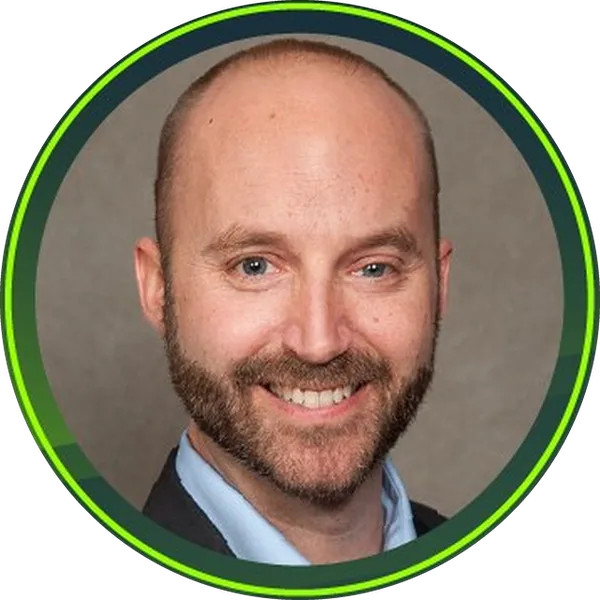
Steve Kappel
Steve Kappel from Safety National takes us inside the CIO's lens on data, AI, and industry change. Discover why innovation from within matters, how global strategy conversations shape technology leadership, and why educating the industry on AI and data has never been more important.
In an industry often viewed as slow-moving, Steve Kappel, CIO of Safety National, proves that internal innovation and agile thinking can revolutionize how insurance companies operate. In Episode 167 of the InsurTech Geek Podcast, host James Benham sits down with Steve for a deep dive into how tech leaders can bridge legacy systems, evolving customer expectations, and digital disruption - all while ensuring operational stability and business value.
This conversation offers a masterclass in modern CIO leadership and how to turn innovation into a culture, not just a buzzword.
The full episode
Press play for the whole conversation.

The Backstory: From Intern to CIO
Steve's journey began in St. Louis, Missouri, where a planned career in physics morphed into computer science. His first role was at CPI Corp., where he rose from help desk intern to VP of Application Development. But as digital disruption overtook traditional retail photography, Steve transitioned through public-sector consulting before finding his true calling in insurance tech at Safety National.
Today, as the Chief Information Officer and Corporate Senior Vice President, he's not just managing systems - he's shaping the future of a $2B+ specialty insurer.
Innovation Through the CIO Lens
Steve emphasizes that true innovation starts with perspective.
"You can't spend all your time on technology R&D, nor all your time on business capabilities. Balance is key."
In the complex world of commercial insurance, IT leaders can't afford to isolate innovation from operational excellence. That's why Safety National integrates innovation into daily operations through:
Spark Tank to Code Wars: Culture-Driven Innovation
One of the standout initiatives at Safety National is the Spark Tank, a company-wide pitch program where employees can present new ideas to a leadership panel. Winning ideas then get prototyped during Code Wars, the company's internal hackathon.
"Technology is about delivering value - not just chasing the next shiny object."
This structured yet inclusive approach keeps innovation grounded in business value while democratizing the idea pipeline.
Lessons on Complacency and Comfort
Throughout the episode, Steve cautions against the dangers of becoming too comfortable.
"Success will breed complacency."
Insurance companies, especially those with stable recurring revenues, are at risk of stagnation. Steve's approach? Constantly question workflows. Empower everyone - from frontline staff to architects - to challenge the status quo.
The Weight of a V1 in Insurance
When it comes to launching new tech, Steve is clear: there are no true prototypes in insurance.
"There shouldn't be prototypes in production - there are just V1s."
With regulatory, cybersecurity, and data accuracy demands, insurers must treat every release as production-grade. Steve explains how they plan across environments - Dev, Test, QA, and Prod - and enforce strict security, scale, and QA protocols.
Global Perspective: Tokyo Marine's IT Synergy
As a member of the Global IT Committee at Tokyo Marine, Steve collaborates with peers from 70 global companies. What makes it work?
"We provide the most value to each other when we're willing to show our warts and ask for help."
This culture of honesty and cross-border collaboration provides Safety National with best practices, technology synergies, and shared intelligence - all without losing autonomy.
Continuous Improvement at the Core
Steve embodies the Two Second Lean mindset - daily incremental improvement.
Even well-established insurance workflows are ripe for rethinking. From streamlining Excel-based approvals to automating routine claims processes, Steve's philosophy is clear: if it's inefficient, fix it - no matter how small.
Key Takeaways
Innovation needs perspective: Understanding all business and IT functions allows for strategic, balanced improvements. Comfort is the enemy: Organizations must continuously evaluate and reimagine their processes. Build culture, not just code: Hackathons, pitch sessions, and product ownership empower teams at all levels. Tech = strategy: IT belongs at the decision-making table, driving real business outcomes.
Related Past ITG Episode
The full transcript
Transcribed automatically from the episode audio, so some names and terms may be misheard.
James BenhamAnd we are back with another great episode of the InsurTech Veek podcast. I am your host, the InsurTech Veek, James Benham. With me, our special guest, my good friend and chief information officer of Safety National in beautiful Saint Louis, Missouri. Steve Capple, what's going on, Steve? Not much, James. Thanks for having me. I'm looking forward to it. Glad to have you on the show. We've known each other a long time. You you've known for a long time that I'm a I'm a podcaster. It's glad to glad glad to have you on and chitchat about tech, about work comp, about insurance, about all things geekery, as you know that I like and you like.
Steve KappelAbsolutely. No. I've I've been, you know, I've been waiting, James, for how how long it's been since I've been in Years.
James BenhamYears. I'm glad I finally made the cut. I know. I'm a terrible friend. It's it's yeah. We've Steve and I, for those of you out there in listener land, Steve and I have co presented together at conferences. We most recent one was this year, had a great time. And, we really enjoyed talking about technology around IT policy, AI, and just the whole world. I mean, you know, insurance is a data business, And so tech touches every corner of it as a as a result of it.
Before we we really dive into some of those topics, I always like talking about the guest because at the end of the day, this is an industry made up of people and the people are are certainly the key component. And so I always like talking about people and their background. Steve, you've got a you have a varied background before you got to safety. You really, you know, worked in a couple of different areas, but but mainly mainly two and really one one particularly long job at CPI corp.
Now, tell everybody what what know, because you didn't well, before that, only to say you're from St. Louis. You went to St. Louis University. You got a degree in computer science. We are we are we are fellow educational nerds. We we both studied technology and software in college. You stayed there locally. I mean, you're you're you're a you're a St. Louis guy if there ever was a St. Louis
Steve KappelYeah, absolutely. I like to tell people, I'm all Billiken, you know, I went to St. Louis University High School, the junior Billiken's and then went on to St. Louis University and became a full fledged Billiken. But yeah, no, I love St. Louis, I've got deep roots here, lots of family, lots of friends. My mom is one of seven children on her side, I had 20 cousins on that side of the family alone, and I thought I had a big family until I met my wife, and her family's even big.
Her dad is one of 11, and she has, well, I'm gonna get this wrong, but I wanna say north of fifty first cousins and like most of us are all still in the area. We talk about geometric progressions when we're talking about the amount of family we have around these days. And yeah, we've outgrown most houses. When we all try to get together, we're renting somewhere. So,
James Benhamyeah. Yeah, you're renting an event center.
Steve KappelSo, but it's great. No, I love this town. I'm never upset or feeling isolated with in terms of the communities that we have available to us. I'm part of a couple of different CIO groups here in town. It's just a wonderful community and
James BenhamI always like, I like staying here, I like giving back to it. That's really great, that's really great. I I've I've come to really love and appreciate it through all my visits to St. Louis to see you and see safety and and hang out, and it's it's really, really amazing town. Of course, a really great food scene, which is is real really you know, people don't typically associate going to St. Louis, the food scene. Always have a fantastic meal out whenever I go out wherever it is.
I mean, you got a
Steve Kappellot going on there. I'm not gonna lie, James. I mean, come in town, sometimes you're introducing me to places I haven't found yet.
James BenhamWell, I do I do enjoy a good restaurant. So so let's talk about the the career goal and the career aim. You you studied computer science. So obviously, you enjoyed computers. You enjoyed software and technology. Otherwise, you wouldn't have started studying it. Like, what was the first thing? Was it was it gaming that attracted you to computers? Was it programming for the first time? What what got you into technology? Yeah,
Steve KappelI mean, simply it's the latter. I, you know, I joined, I went to St. Louis University to to get a physics degree. That's why that was my major as a freshman. You know, it was not a large program at St. Louis University, so it got very hard very quickly, and I realized that, you know, as I'm studying and struggling through it, had taken a couple of programming courses along the way just as part of the normal curriculum there, and, you know, was thinking about it more and more, I was like, man, I really enjoy I really enjoy just like being able to solve problems with the computer.
And I just started gravitating towards that. I started taking a little, a few more classes than I needed to in computer science area while continuing my major in physics. And then junior year, you know, I just reached that point. I started thinking about what am I really wanna do now with this degree that I'm killing myself over? And, you know, I started looking at the different places I could go with it, and none of them sounded as much fun as being a software developer. And so I changed majors and went full bore into computer science.
I went on the engineering school and, you know, really rounded out a math minor, which I basically had just by the virtue of physics to that point. And, you know, then in summer after my junior year, I landed an internship at CPI Corporation that you mentioned. And for those of you who were born in the twenty first century, you have no idea what I'm talking about. But CPI Corporation was a corporation that was traded on the New York Stock Exchange, headquartered in St. Louis, Missouri, had an office downtown, we had three floors of manufacturing, and what we manufactured were pictures for the stores that we supported.
We supported and owned and operated about, at its peak, over 3,500 photography studios that were stores that lived inside of Sears, and inside of Walmart, and inside of Babies R Us. So we did retail photography for families. It was really great, I started there, my internship was on the help desk, service desk. I was actually staging computers and getting them ready for Y2K. I remember that.
James BenhamYeah, a companies lot spent a ton of money on Y2K prep and it made a lot of partners at the big five accounting consulting firms doing doing doing doing all the Y two k implementation work.
Steve KappelSo, stayed on with them, continued my internship into senior year, they knew I was a developer, so my internship turned into more of a development internship my second year, and then they liked what I was doing, so offered me full time. And then I stayed on there for a long time. Like you mentioned, I was at CPI for fourteen years, started as an intern, and by the end of it, I was heading up their application development. So I had moved into a vice president role in fourteen years where I had re architected and built teams to support their point of sale, their sales system, you know, like how you take your pictures and then you sit with the parents and you make them black and white, you put them into a greeting card, you make collages out of them.
So we built all of that from scratch on the dot net framework. That same framework then powered all the digital manufacturing systems that we had running floors here in St. Louis, and we focused a lot on our web presence, you know, I mean, is early 2000s. We started talking about, you know, e commerce was, you know, what it was called back then. And so we thought we had something. It's an interesting story of disruption, honestly, because you know, I was there when we were making the pitches for, Hey, we've got something here, and like, you know, we had a, I'd say easily two year head start on the Snapfishes, the Shutterflies of the world, and we said, you know, hey, there's something here, and if we, you know, we can invest some money into this, we could, you know, build up the amount of storage we would need, and the functionality of it, and it was met with leadership at the time of, that's not us, that's not on our mission, you know, their mission was we sell portrait studios to moms in malls, and I think, you know, I think about this a lot, and had their mission been, you know, we preserve family memories for a lifetime, that would have fit right in.
In fact, more so obviously than the model that we were following. So it was great, I'm surprised that Simon Sinek hasn't written about CPI because it's such an obvious use case, and
James Benhamit was Yeah, mean, a follow-up to start with why, you know? You should Yeah. Yeah. It'd be a great follow-up. It did give us, though, some amazing photographs that have continued to last through time. And for those of you who who are for those of you who might be, you know, looking at this this online, you'll see you'll see my background change in just a little bit with with some examples of some photos that came from these these fantastic mall studios. Of course, this is this is just one that I, you know, I just wanna wanna mention here.
But, you know, when you when you get the denim on denim.
Steve KappelYou got to find the ones we were really proud of James were the ones where we had kind of the double exposure. When it was done with film, know, kind of like you and your and your partner looking off in one direction and then looking at the camera and the other one. Mean, some real classy stuff.
James BenhamYeah. Oh, well, okay. Yeah, I got I got a couple here that will that will bring up. But yes, that's great. So what led you, obviously the downfall of that entire business model, you know, led you to look for something else. How'd you land over at safety?
Steve KappelYeah, so, you know, guess I didn't even sew that up. Yeah, so CPI Corp went bankrupt in 2013 after a series of kind of venture capitalists and takeovers of, you know, capital investment firms that wanted to come in and they thought they could fix it, But eventually it went bankrupt. And so I stayed on. I formed a small consulting firm with a buddy of mine. We continued to support- there it is. We continued to support some of the e commerce stuff that they were doing, some of the sales systems that we had written, and then I found a really interesting job at the Missouri Botanical Garden, again, still here in St.
Louis, and I was brought in to lead their participation in a UN sponsored project called the World Flora Online. Super cool stuff, really interesting, I was part of a consortium of about 12 other botanical gardens around the world, and we were charged with making this one stop shop online for all flora across the entire planet. It was 2013, and the due date for that project was 2020. So not exactly the pace I was used to, everything was a little slow, there wasn't very much demand. So I think had I been there, started there when I was in my mid fifties, I'd probably still be there or I'd be retired by now.
But really cool stuff, really cool subject matter, amazing people, you know, being a part of that type of an organization, I mean, talk about giving back to the community and participating in something larger than the individual, had all of that. I just, it just wasn't very challenging, and every time I tried to push the envelope, I kind of got met with a lot of resistance around, well, I don't even know the right word for it, corporately. I'm always trying to figure out how to squeeze every bit of efficiency and profitability out of everything I do, and that's a currency that absolutely just does not matter in that sector.
And that's what I learned. So everything was more about, you know, getting your name on publications and things like that. And I was trying to figure out how to make it the bigger, better deal all the time. So when a recruiter called with a leadership position available at an insurance company here in town that I'd never heard of, I was interested because it sounded challenging and it sounded fast paced. There was a new IT leader in at the time that was very energized and ready to go, and it was a good fit.
So that's how I ended up at Safety National.
James BenhamAwesome, and so tell me what the job looks like today. Like what exactly, and this is what I'd love to know, because I don't think a lot of people actually know daily life and what a CIO does. I mean, just the breadth, depth, scope, scale of that job.
Steve KappelSure. And again, well, what I would say, I'd caveat it with, I think every person I've ever met in a CIO role, their job and their level of responsibility is a little different, you know, and it depends greatly on the organization that you're working for. There's always, it's easy to understand that you're probably leading the IT organization, but what is in an IT organization these days, how much influence you have outside the IT organization varies drastically. And, you know, for those of you who've, you know, looked me up or followed, you know, kind of my progression through the ranks here at Safety, you know, you'll see CTO, VP and CIO, and now most recently, CSVP and CIO.
But for a lot of that time, I've been doing the majority of the same thing, which is running the operations for an infrastructure and operations department, a software engineering group, a data management and operations organization, desk, all of that type of stuff. But as I moved into the CIO role, that was really when I took on more department head duties. I was getting a lot more face time with our executive team and influencing decisions there. And then most recently, the move to CSVP at safety, for example, I mean, that has less to do with the department you're in and more just to do with the people that are going to be leading an organization at a corporate level, like driving larger decisions than just at a department level.
And so that was a tremendous vote of confidence, first time somebody in IT has really been put into that role. And so it was, I don't know, it felt important to me as that vote of confidence from Safety National to really understand the importance of what IT does, how integrated it's becoming with everything we do, and how we've been able to truly enable true business value over the last ten years, so.
James BenhamYeah, is a big deal, and obviously I've been involved in the organization quite a long time, and to have a seat at the executive table making strategic decisions around the company, not just around technology is a is a is a change, and it's a major it's a I think it's a a big vote of of, of confidence too in the future of of, that company and its interaction with technology, like how critical technology is to the strategy. And, hey, we wanna wanna roll into x y z lines of business.
We're on x y z stage. Hey, we wanna expand in this area. We wanna contract in this area. All of those decisions have like deep consequences in the technology department. You know, it's a daunting job. I'd say, you know, being being a CTO and then obviously a CIO is a very, very difficult job because if you do your job really, really, really well, there's absolutely absolute silence, generally. And any any mistake can be, like, catastrophic for the business. Right? Like, you you if you have any kind of out time, it can downtime, it can be catastrophic for the company.
If you have any kind you know, leak or if you have any kind of data security issue, anything that goes on, the consequences are severe and catastrophic. If everything goes well, you know, the engine's humming along under the hood nice and quiet. And so I think it can be it can be a very emotionally challenging position to be in because of that because you're you've you've got a whole bunch of engineers keeping this, you know, changing the wheels out on the machine sometimes while it's rolling down the road.
Ask ask any CIO around, you know, budget time when when you're trying to to
Steve Kappelto talk about how to get money for, you know, new capabilities and the things people want and, you know, driving that true innovation and new business value, you got to look right back at what it costs to run the business. Nobody likes hear how much it costs to run an IT business. And, you know, so it's so incumbent upon us to constantly be looking at the best way to do that. Are we really optimizing our costs as much as possible to make room for the new innovative stuff and to, you know, to start to show how you can self fund a lot of what we're trying to do without just constantly being, you know, additive when you're trying to do new things.
You can't just keep doing what you're doing forever in the same manner and expect to be able to do new things too, because the world's, we don't have infinite money no matter how profitable we can be. Well, let's let's kinda let's kinda it's
James Benhameveryone has constrained resources. Right? And, you know, in in technology, certainly, we're we're often asked to do do more with the same or even more with less and which which can be can be very challenging, in particular when you're in expansionary mode. Safety is pretty big company now, obviously part of Tokyo Marine, but I mean, what exactly for the for the uninitiated, what does Safety National do and how big is it?
Steve KappelSure, so Safety National is a large specialty commercial insurance P and C carrier. We grew up for the first probably seventy years of our existence in the excess workers' comp space, About, I'd say sixteen years ago, we really started branching out into more large casualty areas, looking at large deductible primary workers' compensation, and then the accompanying lines of, you know, large commercial GL, large commercial auto, and then since then, we've also, you know, we've branched out into specialty excess and surplus insurance, where we've offered up our professional services lines, professional liability lines around like educators, legal and public officials.
We have a large presence in, you know, many industries, but, you know, our biggest ones are kind of healthcare, construction, retail, and a lot of public entities, which is where those specialty lines really came into play to round that out. So, we do about, I don't know, somewhere between 2 and 2 and a half billion dollars in revenue a year these days, and you know, we write in all 50 states plus Guam, Virgin Islands and Puerto Rico. It is a, you know, we're heavily regulated. And Washington, and Washington DC.
James BenhamI've been instructed to say, always say, and Washington DC. So anyway, you know, we
Steve Kappelwrite very loss sensitive things. You know, our whole deal is, you know, our clients are those who are truly partnered in risk management for us. Those are our clients, large organizations that are looking to free up some capital that they might have to spend on primary comp lines, and they wanna be able to save some of that and invest it back in themselves. And in order to do that, they take on large retentions that they self insure themselves, or large deductibles that they have to pay before we come in at very high layers.
But that's really the bread and butter of, you know, how we do it. We don't write high volume, we write low volume, high complexity. We have policies that span all 50 of those states, you know, it is a very large, complex, big organizations.
James BenhamAwesome. Well, let's move on to the kind of the next topic here, and I, again, safety is a fascinating topic and a great great place to learn so much. I mean, your role touches everything from IT structure, strategy, infrastructure, cybersecurity, digital transformation. With you have when you when you have that big of a lens, when you're looking at that many things, what has it shown you about why innovating inside your own company matters? And then how do you try to encourage that kind of innovation at Safety National?
Yeah, that's a great, great question.
Steve KappelYou know, one thing that I think about when it comes to innovation and what I've learned at safety, especially given everything you just mentioned, innovation, it's all about balance, you know, and it's hard to have balance without perspective. And so understanding all of the different areas you just mentioned, as well as then the entirety of kind of what the business is, you know, you can't spend all your time on technology driven R and D projects and you also can't spend all your time on just focusing on business capabilities and adding functionality and you know, ignore technical progress in IT and ignore security and privacy needs and the things that you've got to do to stay on top of the products you already own.
You know, another thing is that I've learned that success will breed complacency, and that's both on the business side and the IT side. You know, I've seen so, I've been shocked more times than I can count, you know, in talking with business users and they walk me through a process that we've had here, and you know, it is not the end of the world, but it's just so easily solved or automated, or there's an easier way to do it, but it's just like, that's, it's fine, you know, and it's like, it's fine.
This isn't gonna keep us from making our, you know, getting our bonuses, this is, you know, it's fine, I'm happy to do this, I did it yesterday. And so you've got to start really encouraging that type of innovation. And to the second part of your question, I guess that's really what we try to do here every day is we challenge, you know, we empower people at different levels, you know, whether you're a subject matter expert, just an end user on the team, whether you're a product owner or a product manager, and somebody in architecture, you're empowered to challenge the status quo at all times and think of, is there a better way to do this?
You know, we made a large, safe transformation over the last couple of years in terms of the Scaled Agile Framework for Enterprise. It's just been a tremendous fit for us, both, you know, as an organization. It's not just limited to how our agile teams work and how we deliver things in IT, it's also about the business understanding how to be agile as well, and how they can continue to challenge that status quo and how they can continue to innovate, how they need to think about their business in terms of the goals they want to set for themselves in the next three, six, twelve months.
But so, you know, in agile team meetings and backlog refinements, product road mapping, the business is truly involved, that's where we try to encourage innovation, you know, just on every day, what's gonna move the needle the most for the cheapest amount in shortest amount of time. Another thing that we've done recently was we stood up our business architecture department, quite honestly, which does not report to IT, but is instrumental in, I like to, when I've talked about this a lot internally about our safe transformation, and we spent a lot of time on the delivery and the agile teams within IT for a long time, that was kind of the first twelve months, and so it's like, I refer to that as kind of like the engine, you know, or think about it as a, you know, the rifle that we've now built, to be very precise and predictable in terms of you're going to get the same result now.
When you ask for something, we say we're going to do it, we're going to be predictable and accountable on those types of things, versus now on the business side, we gotta aim that, we gotta know that we're pointing the gun on the bull's eye and not off target, you know, and so bringing that accuracy back in for our investments to use this now well oiled machine and get those predictable results, let's make sure we're pointed at the right thing, and that's where we've really encouraged that type of innovation on the business side to really think about not just what's top of mind today, but have a plan.
You know, what are we really trying to get to? How are we trying to improve the operations in your area in the next, you know, twelve months? And let's keep those goals in front of us and make sure they're aligned to a higher level corporate goals. Then the last thing I would say is we do have a couple of like very specific innovation led events that we put on every year here at Safety National. One is at a corporate level, had an innovation committee that had started the idea of Spark Tank, which is just a blatant rip off of Shark Tank, but the idea was that people could propose new ideas and try to get them, you know, funded or approved by executives who would say, yeah, this is a great idea, let's kinda bump this up the list a little bit, and put a little resource behind it and see what happens.
And so that has then, we've changed that a little in recent years to now feed into our more technology based innovation conference that we have each year called Evolve, and this is, we take, you know, three mornings out of the year to basically share what we're doing with each other, take time to really come up with new ideas, and like we have idea jams, and it all culminates in with, you know, kind of the capstone event of the ad conference every year is Code Wars, which is our internal hackathon.
And so recently in the last, or maybe it's just in this last year, the winner, the winning idea from Spark Tank is then what teams that participate in Code Wars then actually try to produce something for. So they take the idea that got executive or shark approval in Spark Tank and actually get to take a week to try to build something that accomplishes what that was set out to do. So it's been great, you know, I mean, the innovation and safety has really taken off in the last five to seven years.
Yes, it has. Yeah, but it starts with,
James Benhamyou know, first, you mentioned it a couple minutes ago when you're when you're talking about, like, it starts with saying there's gotta be a better way. Right? Like, it starts with, like, a statement. Like, there's gotta be a better way. Like, no matter how we've done it, we have to constantly question and evaluate all of our processes, processes. The way that we underwrite policies, the way that we adjudicate claims, the way that we manage finances, the way that we collect payments, the way that we issue payments, the way that we integrate with our vendors, the way we integrate with our TPAs, way we integrate with our regulatory partners.
Like, all of that, you have to question all of it, like, all the time. You know? And I'd say you you but you also made a statement that I thought was really, really selling out the I'm gonna summarize it, though, but but, you know, being profitable, you know, making money, it almost makes you very comfortable, and comfort be the enemy of really progressing to that next level because you get to a stage where, you know, things are going pretty well, and things have gone very well, right?
And for a lot of insurance companies, things end up going pretty well. You have a have the thing that most businesses want, recurring revenues. Right? Premium comes every year. And if your outgo exceeds your income, you know, your upkeep is not your downfall. Yeah. It it depends. You know, your if your if your outgo does not exceed your income, I mean. Yeah. If your outgo does not exceed your income, then your upkeep is not your downfall, and then things are things are pretty good because you can make money, and you can have a profitable venture.
But then it can can kinda make you a little complacent. You step back and say, okay. Oh, okay. We survived those early hard years. Okay. We survived the great recession. Okay. We survived COVID. Okay. We survived whatever the latest trauma is. And then and then I think sometimes is people, I think we just get tired. Right? And we want some predictability. But the I I think that's that's part of what a great CIO and a great technology arm and and really great, great company leadership, and you do have great company leadership says to say, hey, look.
You know, how do we get 1% better every day? You know? Every day. Or to quote my fave my favorite book, two second lean, which studied the the guy who wrote two second lean went to Japan and studied Toyota. And, you know, he read Toyota Way, went there and studied Toyota, met with the Japanese. Of course, they pioneered lean for a long time. Then he brought it back to his manufacturing company, and then he perfected it through 1% improvements through two second improvements every day. And he still does two second improvements every day.
He still posts videos of improvements they find. And you'd think that if there's a guy that has squeezed every inefficiency out of his process, it's that guy, and he's still publishing videos about the things that he's improving around the office and his house. After a decade of doing it, he's still finding waste because it turns out humans are twenty four seven waste generators and waste kind of I think, you know, it kinda waste kinda creeps into our process, doesn't it? Like, gets it introduced and it it gets introduced as a temporary Excel spreadsheet that we're only gonna fill out and model the prototype this one time, and then it turns into a permanent workflow item.
Right? The old MVP.
Steve KappelThat's and it's all you never it's all you ever end up getting sometimes, you know, because it's that's the whole point. Sometimes it doesn't, and then you got a little technical debt.
James BenhamYeah. MVP turn MVPs turn into technical debt all the time because because you're like, okay, let's just do a prototype. I always I always kinda cringe at prototype because generally, when people mean prototype is that I I want it to be just as reliable as that thing that's in production, but I want it to be delivered in 80% less time. With all those same nonfunctional requirements,
Steve Kappelyou know, it's got to be available, it's got to be secure, it's got to be performant, it's got to be resilient.
James BenhamIt has to be low, it has to be load tested, scale tested, it's got to be, you know, completely secure, pen, pen tested, you know, as all of that has to happen. And so that's why I I almost think that there aren't prototypes. There's just be ones, you know, because no one really in insurance especially because the consequences are so severe if there's mistakes. There's really no such thing as a prototype in insurance. There's there's there's just a v one.
Steve KappelThere definitely shouldn't be a prototype in production. No. Under that under that definition.
James BenhamNo, shouldn't. It shouldn't because everything in production this is the challenge, especially, again, in insurance where you have a lot of cyber risk. You have a lot of financial transactional risk. You've got the you know, you you're making promises and commitments to your customers with, you know, the rating rating engines and algorithms that you might have to own up to for eighty years. I mean, think about that. Right? Like, you're you're making eighty, hundred year commitments every day by writing policies, and I think this is something that has to really you gotta say, okay, well, that means everything's gotta be fairly bulletproof before it goes into prod.
We just gotta chop down what v one is. You know, we gotta chop down to the to the bare minimum functionality knowing that it's gotta be load tested, scale tested, security tested, pen tested, all those things. It has to go live and then it's gonna have unit tests and it has to have regression testing and automation and all the math formulas have to be verified with that continuous QA audits. We've gotta have continuous integration, continuous deployment, and the deployment pipeline has to be built for it, and then they then we have to have four environments for everything we built.
Right? Dev test, QA prod. I mean, that's the I think that's the the the flip side of it. You can do I'm using a new product now called called v zero that I really like, and it allows you to generate an interactive, Next. Js React, JavaScript. And that's it's true prototypes. There's no database behind it. So it's just an interactive. It has dummy data that it it loads in an array like we used to code back in the day where you like loaded a an array in the code.
And what I like about it is it allows you in like minutes to AI generate a prototype, like an actual prototype. You know, just like no data, no connection behind it, and and then play with it so that you can try and get users. Do you find that it's hard to get users to really look at mock ups and screenshots and, like, you end up getting a lot of the feedback after you go live?
Steve KappelOh, a 100%. You know, we've been fighting with this since day one, you know, and it's not localized, it's it's not a safety national problem. I fought with it at CPI too. Honestly, at CPI, the first thing that really gave us a little bit of avenue to do that quickly and still have it usable was Windows Presentation Foundation. I mean, it was very easy to quickly spin up UI and have it actually be clickable. It wasn't super easy, but it was at least a step in the right direction.
And here, we actually, we built something out that would, you could, it was almost declarative to build functional prototypes. You could very quickly create a working clickable user interface, it didn't have anything behind it, but you could at least, you could mock it through, which was very helpful in getting that in because everybody's like that, you know, that's why they say a picture's worth a thousand words, you know, I mean, if you explain something, people are going to interpret it differently and they're going to have a different picture in their head than the person sitting next to them.
I mean, by really drawing it out, pictures have been, I don't know, that's one of the things I think that is part of my success here, is, you know, over the course of a core systems replacement that I was brought in to help lead in like the mid teens, teens, that's all I did. I just tried to close that gap and explain between business and IT, what was actually happening between business and vendors, what's happening and clearing up confusion and between vendors and IT. It's just constantly closing those gaps and blurring those lines between, you know, these old traditional silos.
That's all I did, you know, and that's what I continue to do is try to blur that line between business and IT as IT becomes just embedded everywhere.
James BenhamYeah. Yeah. Absolute absolutely. Now you're you're also on Safety National's operating committee operations committee, and you're on Tokyo Marine's global IT committee. Those bring together experts from across these really large enterprises. How how has that played in? What's been the the value there, and, how has that shaped the way you think about the role of tech in business? You said operations committee, right, as well? Yes, yes. Yeah, that's
Steve Kappelthe operations committee, know, that actually was started while I was here, I was not on it to start with. But that came out of a large consulting engagement that we did here with a consulting firm, that we were just trying to basically do a business process management exercise, you know, identify our weak points, and there was a, you know, a binder about this thick that came out of it. At the time we were in a core systems replacement mode, we knew we needed to do something differently and, you know, that a whole lot of stuff got thrown into, well, we'll fix it in the core systems replacement project.
But also born out of that was this operations committee whose charge was to follow-up on a lot of the pain points that came out of this discussion, you know, really figure it out, like what are we doing? And so ultimately now, you know, I don't know, seven to, oh man, I almost did the thing that the kids are doing these days that drives me nuts. I said I was going seven, I wasn't six, seven, but I have too many teenagers, man, way too many teenagers. Anyway, so about seven or eight years ago this was formed, and since then we are really just charged with helping the COO, manage the efficient operations of our organization.
And part of that now is, you know, it's learning and having a wider perspective, it's people who are on this committee are expected to think outside of their individual areas and think more broadly about the operations of the company as a whole, understand that things in their area might not be as important as things in other areas and help guide those decisions in terms of our lean portfolio management process to really make sure that we are focused again, we're aiming that rifle at the bull's eye, because that's what it's about.
I mean, technology is about delivering value. It's not about chasing that next shiny object. It's, you know, our responsibility to kind of really understand new technologies, that we know where we can apply the new shiny object if we see a good opportunity for it, but it is about delivering value, you know, and that's what the OC has really provided, and I think it also has really helped by always having an IT leader, you know, in a role on the OC. I think it's really helped other leaders in the organization understand what all we're doing, you know, so that they don't, you know, otherwise it's a what have you done for me lately kind of relationship, but having people understand the breadth that we're supporting and how we get the work we do and how we accomplish it has been a really big help to the organization.
From a global standpoint, yeah, Tokyo Marine, they acquired Delphi Financial Group in 2012. Came and so Safety National is owned by Delphi Financial Group, and then Tokyo Marine owns Delphi Financial Group in 2012. So I think the GITC started around 2014, right when I started, but I wasn't involved at that point. I think I started attending in around 2017, 2018 maybe. So I've been, I'm actually one of the longer tenured members now on GITC, but it is a tremendous resource, not just for myself, but for the global group.
You know, we're advisory to our global CITO on basically how best to operate and or support IT across 70 different insurance companies that are within the group. Myself and about seven other CIOs from the larger insurance organizations, we are the ones who sit on this committee. You know, we talk about, you know, how do we identify synergies, you know, without removing the independence and the federated model that has served us well so far. It is just a tremendous group of CIOs. We're all tackling similar issues, we're in similar industries.
Well, I mean, we're in the same industry, but similar lines of business. Everyone bends over backwards if you ask for help. I've always been very shocked and impressed with that group just because it'd be so easy for a group like that to be just all posturing and territorial and defensive, but this group, you know, we provide the most value to each other in this group when we are just willing to show our warts and ask for help from one another, and you will always find it there.
It's just been a tremendous, tremendous experience for me, and I'm always proud of that when anybody asks me about
James Benhamthe global IT. It's it's something that works, you know? I mean, people like to people like to to razz on committees. Right? But but these two, and I've seen them work, you see them work, you're you're a member of them. I've only gotten to be be a witness to the outcome. Right? But, but they they're functional. Like, they work. They actually help the members. They help the member companies and the member, people. So it's I think it's important for others to note that you can have successful committees.
It's just how you form them and how you run them. It's all in the it's all in the it's all in the operations of those committees. So I certainly not I'm not a believer in having too many committees, you know, because then you get bogged down in too many meetings all the time. But but, you know, it it it's, it can be really quite remarkable, how how the how the information sharing can help all the people get get better. So that's awesome. Well, Steve, we we're we're at time.
I I can't thank you enough for coming on the show and for sharing your best practices, talking about a really fascinating career and and certainly a a great company that you work for. So thank you for coming on the Insurtech Geek.
Steve KappelOh, my pleasure, James. Always a pleasure, and thanks for having me.
James BenhamAnd thank you in listener land to coming on and tuning in to geek out our interview with Steve Cavill, the CIO from Safety National. See you next time. The InsurTech Geek podcast is all about technology that's transforming and disrupting the insurance world. I've been your host, James Benham. That's jamesbenham.com