 YouTube
 Spotify
 Amazon
 iHeart
 Apple
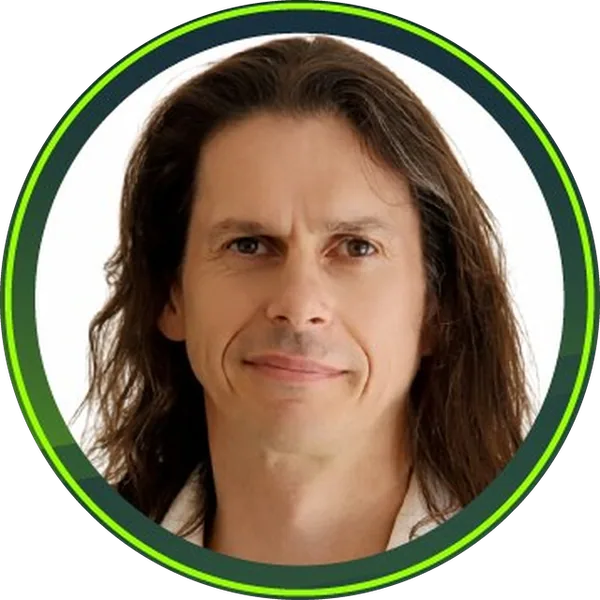
Dominique Roudaut
Dominique Roudaut from Dai-ichi Life Holdings, shares his diverse career spanning global underwriting, strategy, and cutting-edge innovation, Dominique brings a powerful, experience-based perspective on the current and future landscape of insurance.
In this episode, hosts James Benham and Rob Galbraith explore Dominique's career journey, from a childhood dream of living overseas to holding leadership roles at AIG, Chubb, Hanover, and now Dai-ichi. They dive into how anthropology, agentic AI, and startup partnerships are reshaping the way insurers approach risk, relevance, and resilience.
The full episode
Press play for the whole conversation.

Innovation Beyond the Buzzword
Dominique argues that true innovation isn't just about automation, it's about autonomy. While automation improves operations, the next leap involves agentic AI: technology that can independently assess needs, make decisions, and even sell insurance through conversational interfaces like ChatGPT.
He envisions a near-future where underwriting is frictionless. Rather than endless questions, insurers could leverage profiling based on existing data to deliver quotes instantly - an evolution that redefines trust and user experience.
"We need to go back to profiling. I know enough about you to give you a quote at that moment in time."
Climate, Nature & Insurance's Expanding Role
A major takeaway is Dominique's belief that insurance must evolve into a risk management partner. As climate change accelerates and biodiversity shrinks, he urges insurers to pivot toward prevention, mitigation, and assistance services.
His call to action? Focus on nature insurance - solutions that buffer climate shocks, build societal resilience, and fill the ever-growing protection gap.
"More than half the global GDP depends on nature. What are we doing about it?"
From Risk Manager to Innovator
Dominique's background in law, business, geopolitics, and anthropology - alongside real-world underwriting - offers a unique lens on transformation. He views strategy and innovation as the natural extension of deep operational experience.
He filed a patent in 2008 for a BI tool that transformed underwriting analysis from three days to three clicks. That experience sparked his fascination with innovation born from real business pain.
"Innovation started for me when I owned the P&L. I needed better tools to be more efficient and more relevant."
Why Partnerships (Not Just Disruption) Matter
Dominique dismisses the obsession with publicizing flashy partnerships. For him, impact outweighs headlines. His approach is to launch quietly, prove ROI, and support startups deeply - from product design to investor talks.
"I help my startup partners in every way possible. If they go under, my whole strategy has to be rebuilt."
Key Takeaways
Agentic AI is the future: Insurance agents powered by AI can redefine customer interactions, reduce friction, and enhance personalization. Nature insurance is critical: Climate risk is systemic. Insurance must focus on sustainability, biodiversity, and resilience. Startups need more than capital: They need strategic champions inside insurance firms who believe in them, back them, and protect their execution runway. Transformation is cultural: True innovation is only possible where leadership dares to redefine what's possible. Anthropology and empathy matter: Understanding human behavior is key to building products that resonate with real people.
You Might Also Find Interesting
Related ITG Episode
The full transcript
Transcribed automatically from the episode audio, so some names and terms may be misheard.
James BenhamTerra, this week's episode sponsor, is revolutionizing the world of workers' compensation claims and policy management. Terra's cutting edge platform empowers insurers with comprehensive benchmarking tools, robust management systems, and an integrated ancillary services marketplace. Discover how Terra is driving innovation and efficiency in workers' comp at terra.insure. That's t e r r a dot I n s u r e. And we are back with another great episode for InsurTech Geek. I am your InsurTech Geek, James Benham. With me, my illustrious co host, the most interesting man in insurance from San Antonio, Texas, Rob Galbraith.
Rob, how are doing, buddy? Doing well, James. Doing well. Yeah.
Rob GalbraithThis may be my very last meeting of 2025. We'll see how it works out, but, I'm kind of excited.
James BenhamYeah. I kinda hope it is for your sake. You know? Like, I I hope it is for my sake. Like, I want I want something to be my last meeting. That'd be amazing. I'm I'm tired, man. I'm tired. I've I've had a I've had a lot of meetings, so I'm I'm ready to I'm ready to have a little break from them. But it is our last as we record this, this will not be when it's published. As we record this, it's Monday, 12/22/2025, not when this is gonna actually be published, but it is it is Christmas.
With us from beautiful San Diego, California. And I I hear that's a German word for a whale. No. No. It's not. It's it's actually it's actually a Spanish word, but with us from San Diego, originally from Brittany, France, mister Dominique Rudow. Dominique, how are doing? Doing good. And you? Having a great day. Having a great day. I'm ready for Christmas. It's it's Texas, so it's warm. It's in the seventies. You know, you go outside and you sweat. It's it felt like Christmas for, like, a week, and then it went back to Texas weather.
So I'm doing good. I'm I'm good. Prefer the heat. Glad to have you on today, Dominic. You know, we'll we'll we'll jump straight in to our discussion, and, I'd like to talk about what your company does. But first, I wanna talk about you because, you know, this show at the end of the day has has always been for the I think Rob and I have been doing this now for, like, six years. We knew the show for quite a while. Feels like it was yesterday, but we we've interviewed some of the most interesting people in insurance.
And, you've got a great, great background that I'd like to cover and really understand, you know, where you made the decision to jump into insurance and then, you know, what brought you to The United States and you know, because you had a a pretty fascinating background when when you when I looked at this. And then then, you know, looking at all all the different you've worked for some huge insurance companies and some really critical roles. And so let's let's go way back back in the time.
So you're you're you're growing up in Brittany, France. What did you envision yourself? And it could be anything. What did you envision yourself doing professionally back when you were a kid? Did you want to be an astronaut, a race car driver, a soccer player? What was it that you wanted to be back in the day? I wanted to be overseas.
Dominique RoudautWhat to do, that was not very clear to me, but at least I knew I wanted to be overseas.
James BenhamSo more than anything, it was just about where you were working, not exactly what you were doing. Yeah. That remains to be defined. But, yeah, I wanted definitely to be somewhere else. Did your did your parents, like, have you travel a bunch and that's what had your your fixation with travel? No. I took my first plane. I was 25, so I didn't have a chance to go very far when I was younger. Okay. Well, that that makes sense. I mean, I it's funny because I'm, like, the exact opposite on that curve.
My mom and dad were both private pilots, so I grew up in airplanes flying everywhere and was, like, obsessed with travel as well, but for, you know, a different reason. They they they, like, mainlined it to me and got me hooked on it. And then I then I just I couldn't get enough. Like, could never get enough travel. There was never enough. What did you go to school to study?
Dominique RoudautSo I have five degrees. So a bit of everything. I have two degrees in law, so law school. Then I have a degree from a business school. Then I got a degree in geopolitics, and the last one was in anthropology.
James BenhamAll in France? Between Paris and London. Okay. So you stayed in Europe for all your education. Yeah. Five degrees. No. I I did two, and I thought that was you know, I was, like, burnout, ready to be done, but, five how
Dominique Roudautlong did that take you? Was that several years? Well, I've done some together. It's the same year, so I was pretty busy. And the last one I took a year off to do it. It was a few years ago when I left my position in New York to go back to London to get that degree in anthropology. My thinking is, at the time I was a chief and running officer globally in H for CHUB, and my thinking was, we don't really know our customer. And at best, it's an unknown.
At worst, it's an annoyance. And so I thought, well, there ought to be something we can do here. And so I decided to get a degree in anthropology so I could understand that are the needs and wants of the people we insure. I already had a certification in risk management, so I didn't feel the need of doing that again. I didn't know design thinking at the time, so I went full hardcore, one year degree to do that. Today, would not do that. Design thinking would be good enough.
Yeah. I
James Benhamget that. So your work career, at least the one you post online, you started at Marsh at a broker as a risk analyst, and then you go to looks like you were actually
Dominique Roudautin the Air Force Reserve. Is that right? So, yeah, I spent almost two years in the Air Force. I was based on the Eastern Front in Finland and Estonia. And after that, I joined in the insurance industry. So I started first before I joined the Air Force, I was working as a political risk analyst, placing political risk insurance policies out of the Marsh office in Paris. And when I came back from the Air Force, I joined the reserve, but then I need to get a job.
And that's how I joined AIG for a regional position where I was an underwriter for accident and health for Western Europe.
James BenhamAmazing. Did you fly planes in the Air Force? No, I didn't do that. Okay. Just thought we were gonna bond over that for just a second. It's all good. It's all good. Yeah. The French have some amazing airplanes that the Swiss the Swiss do as well. Right? So The Swiss have American airplanes as far as I can tell. Yeah. But the Swiss, from a from a general aviation, Pilatus is a Swiss aircraft company that's absolutely For sure. I I flew I flew in Zoos for skydiving.
Yes. Yeah. It's they're they're amazing airplanes. And obviously, just, you know, Dassault, and there's there's some really good French French aircraft manufacturers as well. So I just thought we'd talk about so then you jump into AIG for eight years, then you go to Chubb for almost seven years. And and then you you you get out into, you know, advisory strategy, then you go to Hanover for two years. Like, what was the what was the the the the thread that pulled through your whole career among some of the the largest insurance companies on the planet?
So I started as an operator. I was an underwriter and then an underwriting manager and then chief underwriting officer.
Dominique RoudautIn between, I've done my last position for AIG in New York, I was doing internal consulting and underwriting management audit. And it was in 2008, AIG went down. And that day, when AIG went down, I was in Argentina to do an audit, and I got a message from somebody from Ace telling me it's a good time to talk. I didn't know what he was talking about. I didn't go to the office yet. Then I get to the office and I see the mayhem and people crying, what's going on?
What's the company's going under? Both calling me, Don't worry, we have your plane ticket. You can come back. Okay, I'm not worried. So then when I came back to New York, I had lunch with that person from Ace and I say, well, look, nothing's happening to me. I'm still being paid. I still have a job. I still believe I can contribute to AIG. So at least I have another year there. So I'm fine. Maybe I won't have a bonus or whatever, but I'm still working here.
I can still contribute. So I'm okay where I am. And a year later, after I've done three years with that last position at AIG, I told him, well, now I'm ready to move on. And then he asked me, where do you want to go? What do you want to do? He has he had three positions, and I took the one that's to me appeared to be the most meaningful. That's how I joined Ace and moved back to London as a chief underwriting officer for Europe, Middle East, Africa for Ace then now CHOP.
Amazing. So what tell me about what you do now. So now I am with Daichi. I'm the head of the innovation lab. And so maybe I need to do the connection between starting as an underwriter and then working more into strategy and innovation and investment. So so I start my career at Ace Chubb in London, then I become the global chief running officer of ANH in New York for Chubb. And then I'm looking for something else. I'm looking to be innovative. When I was in Europe, I was very innovative.
I had a chance to really transform operations years before digital or Insurtech was a word. I had done that already at Chubb. I filed my first patent as an inventor in insurance in 2008 for a product I had created in 2005. And and I was when I was with Ace slash Chubb, because I own the p and l and I could see I can't do a good job. I don't have good enough tools. I can't tell what is wrong with Italy and what is wrong with Germany for that specific product segment.
I just don't have enough information. So we need to spend days and days of manual work to pull out the data, understand what's going on. And so I came up with a tool that was a BI tool. And so with a quarter, we managed to design it the way we wanted. And so then within a year, what used to take three days of manual work took three clicks. So a huge revolution for the company started just with a couple of guys in a garage doing something that nobody even asked for.
Then we deployed that in every country in the region, and then it blossomed from there and all the lines of business and all the regions took over the tool as well. That started my interest in innovation simply because I own the P and L, so I want to find ways to be more efficient so I can make a better book and to be more relevant so I can grow the business. That got me to really think about how can we be more relevant, how can we be more efficient, and that's got That really got me into innovation.
And so when I left my job in New York to go back to London to get a degree in anthropology, then I didn't get a job as an adventurer in residence at National Geographic, which was my goal.
James BenhamNo more of insurance. Woah. Wait. Hold on. This exists as an adventurer in residence? This is my dream job. Yes. Exactly. So it's Oh my god. Tell me about this job. And so current
Dominique Roudautadventure in residence was the National Geographic, at least a few years ago, last time I looked at it, was a PhD in anthropology professor in some university. And so I said, maybe the way to become that is to get a degree in anthropology. And so I got my degree, But then I never got that adventure in residence gig, so I had to go back to get a job, a real one. And I started to work with startups in Asia. I spent a few months in Myanmar, then I was working with a cyber startup in Singapore.
And that led me back into Hannover Re, where I was in charge of strategy innovation and the head of the consumer line p and l. And from there, I moved on to California to join VC firms. And I'm now with Tai Chi.
James BenhamAmazing. I I really Rob,
Rob GalbraithI'm gonna turn this over to you for the next question. But don't you I don't you wanna be an adventurer in residence? You I I know you all all the all the follow-up questions are all gonna be a job that he didn't get. I know. I know. I know. Yeah. No. No. I'm not I gotta I gotta get myself unfixed off of that. Path not taken, but yeah. So so, Dominique, I I'm fascinated by your background. Thank you so much for kinda walking us through that.
There's so many different directions we could go, but I'm kind of curious, you know, just based on, you know, the number of really large insurers that you've worked for over the years and then the parts of the world that you've lived, how would you maybe compare and contrast in terms of innovation cultures that you've seen, attitudes? Is there anything that you've taken from all of your experiences that you now, right, in your current role with Daiichi, like you're bringing kind of this wisdom or experience? I'm just curious if there's
Dominique Roudauta couple of insights or moments that you've had that our audience would benefit from. Because I've done P and C in life and health, I can compare the two and I would say on the spectrum of the challenge to be an innovator in an insurance industry, the toughest challenge is to be on the life side for a Japanese life insurance company. That will be the toughest challenge. P and C tends to be more on it, quicker to adjust, but on the life side, you may be on risk for twenty, thirty, forty years.
So it makes you think 10 times over before you do anything. And then you have the Japanese culture, which is also about making sure that everything is processed, well done. And innovation requires leadership. It requires heroes able to cut through. And some organizations that have a culture more prone to than than others.
Rob GalbraithAnd Dominique, how many times have you been brought into an organization with a mandate for change, right, in some aspect. And then as you start pursuing that, you're told that's not the way we do things here. How did you maybe overcome some of that? That's a good question. Every job I got was a transformation job.
Dominique RoudautWhen I jumped from AIG to ACE, it's because they had many underwriting problems. So they need somebody to jump in and deal with it. And I would say if you are an underwriter, you are blessed if you have underwriting problems because then you have carte blanche to fix it. If everything is running smoothly, it's very hard to convince people to take tough decisions and do what needs to be done. So I would say if you are an underwriter and you have a book that is being threatened, good for you.
Now you can provide values on the writer and most likely they will let you do your job. So that's a good thing. Now, after that, when I joined Hanover, the same ideas, even I wanted to grow the business before me, they had a new manager that lasted a year, a couple of times. They wanted to really get innovative, to do partnerships. Perfect, no problem, I'll do that for you. So in one year, we did launch 27 innovations with as many startups across the world value chain of insurance and across different products that belong to the consumer lines.
And so we've done that, and and then I was told I had done too much. So I thought it was be it would be opportune then to to move to California and work with a VC firm because most likely, I won't be told that then. And so that's how it happened.
James BenhamCool. I mean, you did too much. I've been in that situation before. I've I've had some strategy consultant consulting gigs and, like, implementation where, like, actually we actually went too far with automation too fast and got backed off.
Dominique RoudautBut this is where it all goes back to how do you define yourself as an organization. And the way that my employer was defining themselves, it was logical based on the way they define themselves. They were telling me we are a one digit follower, pure play, cheap reinsurer. And so if you define yourself like that, that's all you can ever be. And I remember discussing with them when they were telling me, we keep jacking up our cyber insurance premium by two, by three every year, tightening the wordings, more exclusions, lowering the sentence insured, putting aggregate prevents.
Still, we can't make it work. And so then I told them, how about I can make you the cheapest cyber insurance company and the only one making money? How about that? So how do you go? How can you do this magic? Well, I I have a service that I launched within my cyber insurance product with a startup where I can provide prevention, mitigation, and assistance services if anything were to happen to the consumer or the SME. So I have the whole gamut of solutions at every step of the risk chain so I can be relevant for my end user and I can monitor on a monthly basis or on a weekly basis if I want to, how the resilience of my insured is improving over time.
So basically, I can nurture my insured, my policyholders to be more resilient, and therefore I improve my risk profile. And all of that pays for itself. And so if I am able to do that, then I can be the cheapest insurer, and the only one making money in the process, a win win for everyone. And I provide value on a daily basis for my policyholders. What's not to like? I was told we are a one digit follower, cheap pure play reinsurer. So therefore, you could not fit within the way they thought.
And so I would say it works for them as it is. So long you have a scarcity of capital, they don't need to reinvent themselves. People will always come to them. The day you have the bonanza of capital, that would be another question, but that's not what the future is trending to. So it's all about, do I have the right solutions for what I'm trying to achieve based on how I define myself? And this is where you get to see organizations that are more or less open minded to innovation, Because innovation to me has to go beyond insurance.
If you innovate only on the pricing, only on the optimization, you will gain a few points of margin for sure. You do a better job, you'll be faster, and that's good service as well for your customer. But you may still be irrelevant. And the only way to be relevant is to work with people who bring you something that you cannot do, and those are partnerships.
James BenhamAwesome. So let's talk about tech for a second. Because I I I I I'm a bit of a nerd. Like, I actually still write code and deploy technology, and I have a a a good team of engineers that does that too. So, like, walk me through technologically what what's your the most excited about right now and what use what you see providing some real value in production. I would say what is the most exciting right now,
Dominique Roudautmaybe I will sound very predictable, is agentic AI because you mentioned tech, I'll give you the tech, agentic AI. Don't talk about the optimization or all the things we can do. Yeah, sure, fine, can do that. But what's interesting is to move from automation to autonomy, That gets us into agentic commerce. What if I could buy my insurance from ChatGPT? Yeah. That's interesting. And that gets us to rethink entirely how do we position ourselves? How do we enable such a sale? And so if I'm thinking about it, and we have already movement, we have Amazon has a buy for me feature where you can use this buy for me by Amazon, and they're going to buy stuff for you on all the websites on Amazon.
And they use the supply chain from Amazon, they have your address, have your banking details, they use all of that. And when we look at Mastercard, Stripe, and PayPal, and Visa, they all are equipped now for payment within the agent ecosystem. And so not much is missing to just get to sell insurance regulation allowing. How do I do that? I will still have a friction in between, which is underwriting. And so if we don't underwrite, we are losing money. If we underwrite, we may lose a customer.
And so my answer to that is we have to go back to what I call profiling. I know enough about you to give you a quote at that moment in time. I don't need to ask questions about your risk profile because I have all the data I need to be able to make a decision. Here you go. You have your quote. And so then that gets me into, if I were to sell an insurance on ChatGPT for instance, ChatGPT may know a lot about me. Can I have access to that?
So then I don't have to ask questions, and I can be as frictionless as possible. So all those questions will have to be answered by insurance companies. And now we don't sell anymore to people, we sell to agentic agent. So how do we do that?
James BenhamWe need to have the tech in place, but we also have to rethink our business model. I think I think agents are we're we're in, like, we're in, like, the infancy. We're in, the little cradle of a of agentic AI. Like, I'm I'm using agents on a regular basis now to build code, to deploy solutions, to design ideas, to work overnight on a on a task for me. But, you know, turning an agent into an agent, like, that's that's pretty, well, you know, an insurance agent.
Like, that's pretty how long do you think before I'm sorry. Actually, I'm gonna hold my question. Rob, what you got? No. James, why don't you keep going, and then I've got a a follow-up that might take us a little bit different direction. So Okay. I'd rather you keep going, and then I'll long How do you think until a reg yeah. Cool. Cool. How how long do you think until a regulator licenses an AI bot as an actual licensed agent to sell insurance? So that would be the lengthy part
Dominique Roudautbecause, you know, regulation time is not business time. So I don't have an answer to that. We already see regulators catching up barely with AI. Now you have the New York DFS, you had Colorado a few years ago. So these are starting catching up about the regulation around the use of AI. And that came a few years after AI was live already. So it's coming, that's for sure,
James Benhambecause there's an interest for everyone to be a player there if we can. Yeah. I I think it's happening. I mean, you they're they're already showing that AI agents can can beat humans on all these all the tests, like the adjuster licensing test and the agent test. And so if they can if they can handle the test and they can and then they can handle all the questions, I I I I think we're I think we're inside of five years before we start life. That's that seems reasonable.
Yeah. Yeah.
Rob GalbraithAlright, Rob. Take us down whatever whatever other direction you got, brother. I was just thinking AI insurance agents or mass self driving cars. Like, which one are we gonna get to first in terms of AI? But I'll leave that aside.
James BenhamOne day, unsupervised self driving is next year, man. With the model y. I've got the model y. They said next year. Next year.
Rob GalbraithSo, Dominique, you know, on you've mentioned, right, your previous work with a VC, and you've, you know, advised a lot of startups. So, you know, you've been your career basically overlaps entirely, right, with this Intertech kind of movement, right, following on from fintech. It's been now a a or longer. We've had lots of ups and downs along the way. What would you say the current state of the startup landscape is? What's the health? It feels like we're talking a lot less disruption than we were back in 2015 and a lot more about partnerships.
I hear incremental improvement rather than, you know, fear revolutions. But yet some of the ways that we're talking about the latest technology absolutely have that more disruption, you know, revolution type feel. I'm just curious. What's your current assessment of kind of the startup landscape and where where it's headed?
Dominique RoudautSo yeah we're not longer talking about disruption. You still have those players out there and they still can't make a net profit. They are improving. And after ten years, they become a $1,000,000,000 company, is in ten years becoming a $1,000,000,000 insurance company is certainly impressive, but not yet at a net profit. It depends on what you sell. If you go die to consumer, it's always so expensive and that's why you may be profitable on the grocery side, but not profitable on the net side because of those acquisition costs.
Now when we look into the partnership side, many partnerships have been signed with many startups and many insurance companies. Then we don't hear much. Love
James Benhamthe strategic pause. Yeah, we don't hear much. Go ahead, please. So we don't hear much after that because maybe that's
Dominique Roudautday to day, so there's no need to talk about it. It's embedded within our operations, so there's nothing new anymore. It's just the way we operate business for now. Maybe that. So I don't quite hear as to what happens after an insurance company may be partnering with Starlabs. What I can tell you for all the partnership I have signed, I had ROI that was substantiated before I start, and then it was proven once we were alive. I need to wait for a few months or a few years before you get to that.
But for me, for what I worked on, so long as I could sell it, it was working. Amazing. Yeah. Ain't that the case too with most technology partnership announcements?
James BenhamLike, there's a big announcement and then nothing for, like,
Dominique RoudautLike, crickets. And and so me, I'm exactly the opposite. I would never announce the partnership I signed. I would only do the business because then if I announce who I'm working with, I'm giving the keys to how to be successful to everybody else. So I never announce who I'm working with. I'm just doing the job, And then eventually, it pays for itself, and we are happy, and we keep doing it, and we keep improving. And then what I'm doing, I'm helping the start of every which way I can.
When they ask me, can you talk to our investors? Yes. Of course. I can talk to your investors. Can you help us with this product design? Yes, of course, I can do help you with with the co design. I'm here to help the startups be successful because that's my partner now. What if they go under? All my strategy has to be redefined again. And so I have ways to deal with that. I much rather make the start up successful in every which way we can, and I'm helping them any any ways they may ask me short of making an announcement.
James BenhamYeah. I like that there's I think there's a couple strategies on, like, when to announce something. Like, if to announce it at all, and then if so, when to announce it. Like, I like I like I mean, obviously, I I run an insurance an Insurtech. Right? Like, we we are a policy we are a core system for insurance. So and then I I have a services company too. The services company, we announced almost nothing for because we exist to serve our clients. Right? So I'm not gonna announce who all my clients are, and I'm not gonna announce all the initiatives that we're working on.
I mean, we'll do very selective case studies, and that's it. With with the platform, yeah, we'll we'll announce a partnership if it really matters, and we're gonna be using it in our public sales literature. If I don't mind the whole world knowing about it, then we announce it. But there's definitely I I I agree with you. There are some things that are, like, highly highly important to our strategy that we don't wanna be public yet, so we just keep it under the hat. Right? Yeah. So the I I try and walk a line with that on announcements.
I see I see most people announcing things years in advance of it being in production and ready, and then half of half or more of them never go anywhere. What's interesting is how much energy and attention and time and lawyer time goes into the partnership arrangement structuring and announcement. Like, tons of time and money and then, like, just falls off because there's no real champion after it's announced.
Dominique RoudautSo that's key. You always need to have a champion to make it happen internally.
James BenhamYeah, you have to, don't you? Rob?
Rob GalbraithSo Dominique, we haven't really talked about your current employer, Daichi Life Holdings, and you running the Innovation Lab. I think we even teased at the intro kind of some of the things that you guys are focused on with respect to climate climate driven risk and global uncertainty. So maybe you can just share with our audience a little bit about what what is your current focus?
Dominique RoudautSo Daichi is predominantly a life insurance company, but we also have some consumer P and C and some commercial P and C as an appetite for more. We start from the life space, but we are open minded to do more in the P and C space. So my interest is two things. First, how can I be more efficient all across the value chain of insurance underwriting sales distribution, claims operations, governance? And then how can I be more relevant? So that gets me into prevention, mitigation, assistance, empowerment for my end user.
The way I like to share that with my colleagues, I tell them it's called Daichi Life Holdings. It's not called Daichi Life Insurance. Let's not be shy. Let's get into the services. Let's get into what we need to be more relevant to provide value for our end user on a daily basis. And that's valid whether you are a life, health, or P and C insurance is valid for everybody in the activity of insurance.
James BenhamWell, we're we're at time. So any closing thoughts on on on what really gets you excited about the next year? You know, we're right now, we're either we we we you know, depending on when when this drops, when it hits people's feeds, it's either the '25 or the '26. So what's your hope? I'm not gonna say what's your, resolution for '26. Let's just say what's your hope for 2026?
Dominique RoudautAnd so for me, I would like to address one key problem we haven't mentioned yet, which is nature. And so more than half the global GDP depends on nature. And what are we doing about it? As insurance companies, in terms of insurance products, there's a lot we can do in that space to be more relevant and provide value to society. When I look at climate change and nature, they are both coming together. With every degree of global warming, I have more biodiversity loss, and I have more loss in terms of nature based services that can be useful as a buffer for cat event.
If you're asking me, how do I see 2026 and beyond? If I refer to the World Economic Forum, the main top risk for the 2030 or for the next ten years, the top four are all about climate and nature. So if there is one thing, only one thing we all should be doing, it ought to be able to provide an answer, a positive answer to nature insurance.
James BenhamOkay, cool. Yeah, I mean, you gotta deal with realities, whether the cause of the the regardless what the cause of the the change in nature is, it's actually kind of irrelevant to debate the well, it's relevant to debate the cause only to the extent that we can change what we can control. But, it's it's it's also just super important to observe what's happening and then start changing risk models based on what's happening and not be in not be in denial about things that are changing. Because I feel like sometimes when you descend into the minutiae of of why, then you get into a lot of hypotheses that are heavily debated, and then you lose sight of the fact that you still have to plan and mitigate for a different climate than we had before.
So let's say that let's say it's volcanoes releasing c o two, or let's say it's massively increased solar activity, and you you know, you can see there's a increased frequency of coronal mass ejections that are impacting the planet. Or let's say it's carbon emissions from human activities are are through the roof. Regardless of what's happening, if the temperature's going up and the water's warmer, we're gonna have more hurricanes. I mean and they're gonna be stronger. Like, warmer water makes stronger hurricanes. And we got super lucky.
Property sector got super lucky this year. Florida got super lucky. You know, we somehow, the hurricanes just didn't didn't go into The Gulf this year. And so we've, you know, we got very fortunate that that that happened. And it's a it's a welcome respite, but it doesn't mean we can stop planning for forest fires and hurricanes and everything else. And that makes me think the future of insurance is prevention.
Dominique RoudautPrevention mitigation, to think like a risk manager, and basically to provide risk management as a service, or maybe longevity as a service if you're in the life and health space, because otherwise, those risks are becoming more and more systemic. They are becoming uninsurable, Already for the past ten years, the top 19 reinsurers pulled back half of their exposure. We have all the examples of insurance companies pulling out from some states in The US. Therefore, the only way forward is to extend the remit of the insurance company to consider resilience, and therefore prevention and mitigation provides this risk management value, so we can ensure better risk.
Me, my risk is not so much to get insurance if my house is burning down, it's more to make sure that my house is not burning down in the first place. That's the job to get done. So some insurance company would understand that, some would not, and would just focus on the insurance and go after the market segments the next morning and just do that, and they will shrink more and more over time, leaving space for others. And we can see that already today, and the protection gap keeps increasing.
So that does raise a question of the relevance of the whole industry.
James BenhamOkay. Very well, Rob, any closing comments?
Rob GalbraithYeah, Dominic, my final thought was just simply insurance as it stands today, like the foundation is losses, right? And then obviously, you've got actuarial science to figure out what the premiums are. You've got underwriting strategies, reinsurance strategies, etcetera. But to the extent you don't have losses right now, if you are shifting to that predict and prevent model, you've got to come up with new products, new services. It's an entirely new way of doing business. So I assume that's kind of partly what you're working on, Daiichi Live Holdings.
Yes, indeed. Excited to see what comes out. So it's been a blast having you on and going through your career. Very fascinating and
James Benhamthrilled to have you on and looking forward to where you go next. Thank you. Alright, Dominique. Thank you so much for joining us, and thank you to all of our listeners out in listener land for joining us. We got another episode of the InsurTech Geek podcast. Thanks for tuning in and geeking out. We'll see you next time. The InsurTech Geek Podcast is all about technology that's transforming and disrupting the insurance world. Hosted by James Benham at jamesbenham.com