 YouTube
 Spotify
 Amazon
 iHeart
 Apple
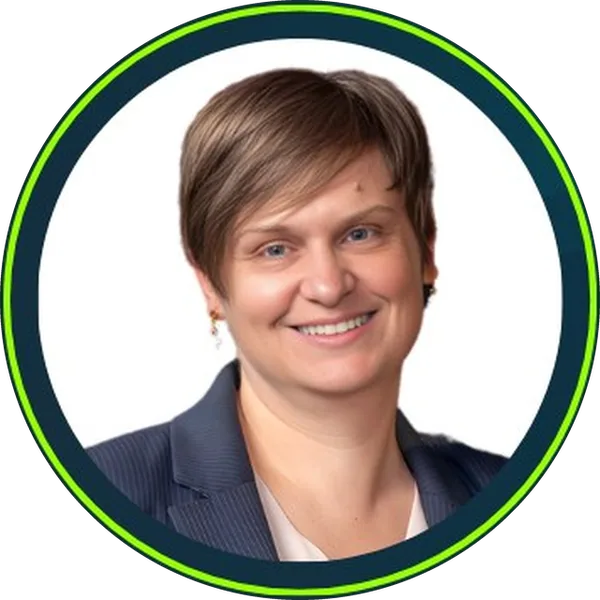
Holly O'Dell
Holly O'Dell is the President & CEO of Montana State Fund, the state's largest workers' compensation insurer, covering more than 60% of the market in a fully competitive environment. She brings a rare combination of credentials - a BSN from Oregon Health & Science University, a JD from Lewis & Clark College, and an MBA from the Wharton School - that she's deployed across careers in public health nursing, workers' comp litigation, corporate strategy, and executive leadership. Before joining Montana State Fund in 2022, Holly spent nearly 17 years at SAIF Corporation in Oregon, rising from trial attorney to Vice President of Strategy, Government Relations, Legal, and Procurement.
Holly O'Dell, President & CEO of Montana State Fund, joins host James Benham to discuss how systems thinking, people-first leadership, and strategic clarity are transforming workers' compensation - from inside a mission-driven organization that competes and wins in a fully open market.
The full episode
Press play for the whole conversation.

Risk Tolerance: The Foundation No One Talks About
When Holly O'Dell arrived at Montana State Fund in 2022, she didn't bring a technology roadmap or a digital transformation initiative. She brought a philosophy: you cannot build anything worth building until you've built a culture that's genuinely comfortable with risk.
"I'm not into norming. I'm into storming," Holly told us - a phrase that captures her instinct for finding organizations at inflection points and pushing them through change. For Holly, risk isn't the enemy of good insurance practice. It's the product. "Risk is an opportunity for gain or for a loss," she said. "That's what I think is beautiful about insurance." Applying that insight internally - building the cultural permission to make mistakes, challenge the status quo, and question how things have always been done - was the prerequisite for everything else that followed.
This reframe has practical consequences. Holly described a moment where Montana State Fund was canceling 27,000 policyholders per year - more than their entire customer base - for failing to submit payroll reports. The instinct was to reach for a technology solution. Pay-as-you-go had been discussed. But research showed pay-as-you-go had a 9% adoption rate among exactly the small businesses that were getting canceled. The real solution was simpler: stop requiring midterm reporting and estimate payroll automatically instead. Cancellations dropped to a third of their previous levels. "Cancel cancellations," as Holly put it. The willingness to question a long-standing process - to accept the risk that estimating might be less precise than auditing - is exactly the kind of cultural muscle she's building at Montana State Fund.
People First, Technology Second
One of the most striking data points Holly shared was the transformation of Montana State Fund's workforce since she joined. Claims turnover was at 40% when she arrived - a number she describes as a symptom of an organization that was tightly focused on compliance and quality assurance at the expense of human judgment and professional trust.
The fix didn't require a new HR platform or a compensation overhaul. It required changing the permission structure. Holly's team created rover roles so that employees returning from leave didn't come back to a pile of work. They opened pathways for claims professionals to work on IT and underwriting projects. They gave people permission to say yes to their customers without routing every decision through a QA checklist. "We got out of the way of being kind to each other and putting people first," Holly said. The result: turnover fell to 4.5% and has stayed there. Gallup Q12 scores climbed to the 90th percentile among financial firms with more than 100 employees.
That foundation - employees who feel trusted and connected to mission - has become the fuel for Montana State Fund's technology ambitions. Holly described CEO listening sessions where employees express genuine FOMO about innovation projects. Nurses are volunteering to use AI for medical record analysis. IT teams are collaborating with claims on Guidewire integrations. "All we had to do is get out of our own way," Holly said. The cultural groundwork she laid first is what made that appetite possible.
Strategic Clarity in the Age of Shiny Objects
Holly is direct about the risks of technology-first thinking in insurance. "Technology could be flipped sometimes - we're at risk of having a solution in search of a problem," she said. Her antidote is what she calls being strategic: making an integrated set of choices about where to play and how to win, then pursuing only the initiatives that serve that strategy - even at the expense of things that seem appealing.
Montana State Fund is using Guidewire for claims and recently completed a cloud migration that Holly described as on scope, on schedule, and on budget - a significant achievement by any measure. They're exploring AI for medical record analysis, cybersecurity training, coding support, and analytics. They've partnered with Gradient and WiseDoc pilots through the ASKIF network of state workers' comp funds. Holly's honest assessment: "Nobody's nailed it yet." But the strategic intent is clear - narrow the use case, understand the problem deeply, and let the technology serve a defined need rather than generate one.
Perhaps most striking was Holly's description of building a workers' comp regulatory sandbox with the Montana legislature - possibly the first of its kind in the world - specifically to create a protected space for insurance innovation experiments. That's not the action of an organization waiting for the industry to change. It's an organization trying to lead the change from the inside out.
"Nonprofit is not a business model." - Holly O'Dell, Montana State Fund"
Holly O'Dell
The full transcript
Transcribed automatically from the episode audio, so some names and terms may be misheard.
James BenhamAnd we are back with another great episode. I am your host, the InsurTech Geek, James Benham. With me, my illustrious cohost, the most interesting man in insurance, Rob Galbraith. Rob, how's it going? It's going, James. We've survived the winter weather, and I know everyone's had some winter weather down here,
Rob Galbraithin The States. So ours is not. I'm not comparing it, but, we did get a little ice, little sleet. So but we're back into the normal
James Benhamsixties and seventies. So Uh-huh. All the bread is still gone from the grocery stores. All the water's been bought out. It has. Temperatures drop below 32 for two days in a row, and, we're having an ice freak out. That's right. We we do have a guest with us that's, in, Montana, so I don't think she's gonna have hee. Sympathy at all. With us today is our illustrious guest, the president and CEO of Montana State Fund, Holly O'Dell. Holly, how are you? It's so great to be with you too.
You know, I was in San Antonio last week on Thursday, and,
Holly O'Dellit's something's wrong when the Montanans are, fleeing Texas for snow. Right? Like, that's not the way the world usually spins.
James BenhamYeah. It's it's not like a fun cold down here. Mm-mm. Because we don't have snow, like real snow. So you can't, like, cross country ski or downhill ski or like, we don't have outdoor ice skating. We don't have all the fun stuff. You can't snowmobile. All the roads shut down. We don't have ice equipment. We don't have de ice. We don't have snow equipment. So everything shuts down. Yeah. You can't go out to eat. You can't find anything at the grocery store because everybody freaks out and buys all the food out.
So it's a it's a little bit of a problem, Texans. We're a little gun shy from 2021. We had that grace icepocalypse, and those of us who lived through that five years ago did not forget. So it's a little challenging. So sorry sorry you had to witness our crazy. Right. Just a bit. It's always good to see you down there. Yeah. Exactly. I mean, San Antonio is fun, though. Rob lives in a super fun town. And usually and I think too in San Antonio, the Riverwalk has been drained right now, and it's undergoing a whole bunch of rework.
So it's it's not even a good time to go to San Antonio because there's no river walk, and it's shut down. And you need to come back couple months. Everything will be back to normal. We'll have a great time. Excellent. Sounds good. How is it? Is it, super cold and, windy and, wintry snowy? Warm
Holly O'Dellwinter, but when it snows, it's gorgeous. You know, they open the golf courses for cross country skiing and people take their kiddos on a trailer and it looks like Santa is skiing outside your front door and there's deer that fit right in with it. I mean it's gorgeous and it's dry and fluffy so come on up.
James BenhamWow. Wow. Amazing. I really enjoy Montana. I have a a soft spot in my heart for Great Falls, because that was one of my early, early, early clients was the Great Falls ad club or ad federation of Great Falls. They they do this annual Centimeters Russell art auction up there in Great Falls and Western art. It just it was amazing. You know? I got to got to go prairie dog hunting when I was there. That was that was cool.
Holly O'DellThey pipe in Christmas music in the winter downtown, and it's snowing and, like, it's totally romantic. Yeah. It's amazing. It's really nice place. And that was, you know, even without the,
James Benhamyou know, Yellowstone factor, still really cool. Mhmm. Still really cool. We were the OG cool. Yeah. Super super OG super OG cool. So, thank you for joining us today. We're gonna talk about insurance because it is an insurance technology and insurance show. And Rob and I are both kind of insurance slash tech people. So, you know, we're gonna we're gonna talk about that. But first, we're gonna talk about you and your your background. You, went to Wharton for your MBA, Lewis and Clark for your JD.
So you you got a law degree, got an MBA, went to Oregon, for a nursing degree, and which which is really amazing. I I I thought that was, like, a a fantastic resume for being in workers' compensation to have a nursing degree, a law degree, and an MBA. Like, I'm not sure I've seen a more complete educational resume for someone for an executive in workers' compensation. But why don't you tell me, like, where did you where were you born and raised? Like, where did you grow up?
Was it out in Oregon, or where where was it? And let's just stick to your childhood. Where were you born and raised and what'd you dream of being when you when you were a kid? Awesome.
Holly O'DellBorn and raised in Portland, Oregon, and I went to the Health Occupations Magnet School and, an hour on the public bus each way. And I dreamed of being a doctor. Right? So something to do with medical initially and, got to be a CPR instructor in high school and a dental assistant, and, you know, design teeth.
James BenhamNice. I went to the engineering professions magnet school when I was a kid, middle like, high school, really. And so I it was like a bunch of nerds. It was like, it was like fame. You know? You remember? Because you're you're about my age, so you we graduated college about almost the exact same time. Remember the remember fame. Right? Absolutely. Yeah. We're gonna live forever. Okay. So my high school was fame for nerds. We didn't sing in the hallways. We just compared pocket protectors and calculators, and it was super nerdy.
We all did computer science. I was really nerdy.
Holly O'DellBeing a nerd is cool. We have fake plastic babies that we did CPR on, and we diapered them for fun at break time. Exactly.
James BenhamExactly. Super nerdy. So then you, you know, you actually got a degree in nursing. Did you did you actually go, practice nursing before you went to law school? Was that the two years between nursing school and law school? Yeah. Worked in public health and
Holly O'Dellno doctors on-site and so I had all kinds of protocols that we could order meds and measure babies. Women's health specifically, so prenatal and family planning and people came to me until the day they were ready to deliver and it was mostly in Spanish. And I liked the education bit, right? So like partnering with somebody about what's going on with their body and what they are up to. And I think that led into the law a little maybe like just being curious about what's around us and what we can know about it.
James BenhamYeah. That's great. I mean, absolutely. That's really cool. Was that was that in in Oregon where you were nursing?
Holly O'DellYeah. Yeah. That was in Salem. And Great. Public health is a fun field. So what led you to go into the law? As a hobby. So I wasn't going to go into the law. I was going to go to law school at night just for kicks to learn more. You know, at the time it was ACA and there's rumors like, well, Obamacare is illegal. What even makes a law illegal? And I don't think I read the constitution. And it's like, yeah, let's find out what these things are so I can participate in these discussions a little bit more fully.
And and then once I went, I'm like, yeah, we could try this out. And hence insurance. It's a really cool cross of medical and law, I think, and many other aspects as you both know.
James BenhamYeah. Like, it's like it's it's like, you know, my my youngest daughter's in the Dungeons and Dragons, and it's like her 20 sided dice. You know? Like, that's what I feel like insurance is. It's like, are you gonna be a lawyer today, a technologist? Are you gonna be a risk manager? Are you gonna be a nurse? You know? What are you what are you dealing with today? Cause it's, you have to deal with everything, right? Yeah. And you can make a huge difference. Like all of those fields are people who wanna contribute
Holly O'Delland make change in their community. And insurance, you just have this huge influence to make change in your community. I mean, these businesses that we're partnering with, they want to be reassured and confident that their risks are handled and, and their employees wanna be assured that they're going home safely and healthy at the end of the day. And like you need all 20 careers on that dice to take care of those folks. And what I like is that we don't have to put people in a box based on that career.
They can try on all pieces of insurance because they did something cool and they're ready to contribute.
James BenhamSo let's talk about SAFE Corporation, SAIF.
Holly O'DellWhat did you do there? Yeah. Lots of roles. So started as a legal intern, go interns, and then a trial attorney, appellate attorney, led the appellate attorneys, led the legal team. I think it's one of the biggest law firms in Oregon. In house law for workers' comp. Did strategy and biz dev, started the first strategy team there, led government relations. So it's kinda all that back end stuff that is really important and doesn't always get to be totally customer facing. And I think that's fun of of connecting the dots.
And I mean, people who are lawyers or nurses can contribute to projects or new functions or things we've never thought of doing.
James BenhamNice. Well, I mean, after seventeen years at SAFe Corp, what led you to move to Helen, Montana and take over as presidency of Montana State Fund? Yeah, I got a call and,
Holly O'Dellyou know, the recruiter called my boss, media prior boss and he called me, he's like, well, you know, I recommended them to you but you'd have to wear a really big belt buckle. I was like, bring it on. Because you pick up all these tools in your toolkit. I'm a Gen X and we pick tools. So if you can do different things and contribute, let's go. Montana is an amazing place full of incredible people and passionate about doing things well.
James BenhamYeah. Has it been a a transition for you to to get used to the I mean, Montana is a very different place than Oregon. I mean, it's it's beautiful, amazing, great people, but it is very, you know, different geographically, culturally, temperature, climate. Has that been a has that been an adjustment in addition to having adjust being being the chief at, the Montana State Fund? It's so different.
Holly O'DellCulturally, weather. I googled so many times, you know, how to figure out the snow, and I bought a I bought a castle built in 1870, sight unseen. Has turrets it came with geese living inside and chickens So in the it's really, really different. And half of my family is from the side of Oregon that would like to be absorbed by Idaho. So I feel like I can straddle cultures and that was really helpful. And people everywhere are passionate about making their communities lives better. But Montanans like Montana's special people dedicate their time, their energy.
I think it's the most generous group of humans that I've ever met. Most engaged with like everything in our community. And, and when you do stuff like homeschool your kids or whatever, it's it's to a very specific end of making the world better. And so I think it's