 YouTube
 Spotify
 Amazon
 iHeart
 Apple
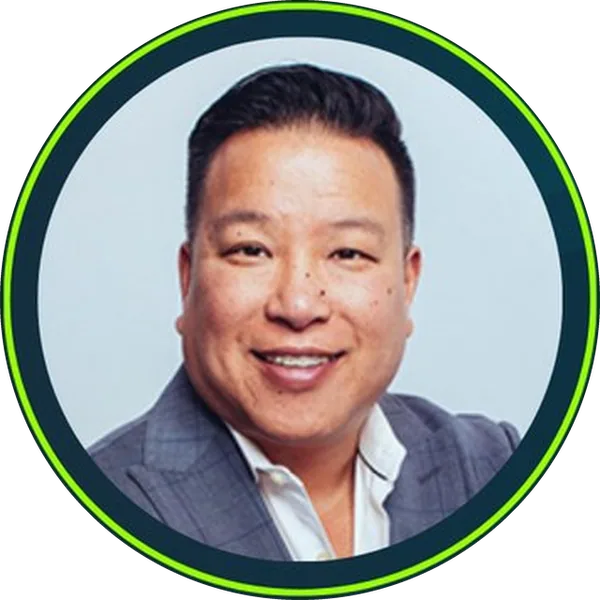
Rick Wong
Rick Wong is Head of Insurance at Parametrix Insurance, a Lloyd's coverholder specializing in parametric cyber, SLA, and enterprise risk. He joined Parametrix in 2022 after nearly a decade at Hiscox USA, where he served as Northwest Regional Executive and Head of US Broker Relations. Under his leadership, Parametrix was named Cyber Underwriting Team of the Year at the Intelligent Insurer Awards. Connect with Rick on LinkedIn or learn more at parametrixinsurance.com.
The cyber market is changing faster than the products designed to cover it. Rick Wong, Head of Insurance at Parametrix Insurance - a Lloyd's coverholder writing parametric cyber, SLA, and enterprise risk - sat down with James Benham live at RIMS 2026 in Philadelphia to explain why the standard tech E&O form wasn't built for the exposures that actually matter today, and what parametric coverage solves that traditional policies miss.
The full episode
Press play for the whole conversation.

Standard Cyber Policies Weren't Built for Data Centers
Data centers face a specific set of exposures: SLA contractual liability, infrastructure dependencies, power generation failures, and cooling system breakdowns. Standard tech cyber forms carry blanket exclusions that simply don't map to those risks. The contractual liability exclusion doesn't cover SLA obligations. The infrastructure exclusion misses how deeply power and cooling are woven into the technology. And the property damage exclusion is absolute - even when it's the technology itself that failed.
Parametric structures address this differently. Coverage triggers on a defined event, not a disputed claims process - which is exactly why it fits exposures the standard form was never designed to touch.
Parametric as a Financial Tool
For mid-size companies, the speed of payment after an operational disruption often matters more than the size of the policy. Rick describes parametric products increasingly being used for cash flow protection, attracting financing, and backing product warranties - not just traditional risk indemnification.
That reframing - insurance as a financial instrument rather than only a risk-transfer mechanism - is a big part of why parametric structures are finding demand well beyond the classic cyber buyer.
"An outage is like a farmer not getting rain. It's a big deal."
Rick Wong
The AI Threat Is No Longer Theoretical
Multi-billion-dollar criminal organizations are now leveraging large language models, and nation-state actors are backing these operations. Voice synthesis is making phishing harder to detect, and AI-powered security research has already surfaced 25-year-old zero-day vulnerabilities - flaws that went undetected until a model found them in hours.
Quantum computing adds another layer of urgency. If encryption infrastructure isn't upgraded before quantum-capable hardware becomes accessible, today's protection methods break.
"I'm scared. I love AI, I use it - but the same tools we love are coming to a threat actor's desktop."
Rick Wong
Building a Winning MGA
Parametrix was named Cyber Underwriting Team of the Year at the Intelligent Insurer Awards, and Q1 2026 already hit roughly 60% of all of 2025's written volume. The differentiation, Rick argues, doesn't come from being everything to everyone - it comes from better data, a sharper underwriting approach, and products that reflect how companies actually operate and get hurt.
Key Takeaways
The full transcript
Transcribed automatically from the episode audio, so some names and terms may be misheard.
James BenhamAnd we are back with another great episode of the InsurTech ePodcast. I am here live at REMS twenty twenty six here in beautiful Philadelphia, Pennsylvania with me, head of insurance at Parametrix, Rick Wong. Rick, how are you? Good. How are you doing? Awesome. Great to have you on the show. We're in a little Great to be here. For for context for our listeners, we're in a little sound booth here hanging out. And so On the conference floor. Exactly. So the exciting thing is we've got a bunch of bunch of stuff going on in the whole conference floor.
And thanks to rims, we've got a little setup here for us to record in. Super excited to be here. Super excited to have you on the show. And, Horace, we make sure all things insurance all things insurance tech. Mhmm. But first, I always like talking about the people behind insurance because, as you know, this is a trust industry. Yeah. Like, at the very definition of it, it's a trust industry, and so it's always interesting hearing how different people got to be where they're at. So let's talk about you.
Where were you born and raised?
Rick WongNew York. New York. Grew up in Chinatown in Manhattan. Born there. My parents grew up there. So I actually didn't leave the New York area until I was, like, 28. Went to NYU. Yeah. I was a real city kid for a long time. And then when I joined Hiscox, they moved me to San Francisco the first time. Where'd you go to high school? Oh, so that was interesting. My parents moved us to Jersey because they were really worried about the high schools in New York and, like, how dangerous they could be.
So for high school, we went out to Jersey, grew up there, did, like, four years at Old Bridge High School, and then right back to NYU. So you so you didn't you didn't go to, like, PS thirty four or PS one twenty eight or I went to PS one twenty four for elementary school. Yeah. In the building that... Like, it's basically attached to the apartment building I grew up in. Wow. Yeah. So, like, I didn't even really leave the courtyard. Like, it was
James BenhamThat's wild to me, like, how how urban the schools are too. Yeah. Yeah. My daughter's in NYU right now. Oh, awesome. So I I go every month and visit her and hang out in West Village. So what'd
Rick Wongwhat'd you study at NYU? So I did a double degree. I got an associate in arts degree because I didn't really know what I wanted to do. And then I transferred over to Stern and then got
James Benhama double major finance and information systems. Wonderful. It's a similar kind of combination to what I did. I went to Texas A and M. Mhmm. I got a degree in accounting, a master's MIS. Yeah. It was a five year undergrad master's program. Oh, Stern's a phenomenal school. My my daughter's in Tisch. She's she she's she's a acting major there. Wants to be on Broadway.
Rick WongYeah. Stern's an interesting place because it's not like a normal college experience. Like, I think my first day I went to school, like, class in, a hoodie and sweatpants, and there were kids in, like, full suits and ties going to internships at, Yeah. Goldman Sachs right after class. And I was like, oh, this is not what I thought it was gonna be. It's nothing nothing like other college campuses. No. It's, like, right in the sand... Center of the city. I mean, it's a lot of fun, and you get
James Benhama different but more expensive college experience. Yeah. It is. Yeah. Yeah. Like, frat parties are in an apartment building somewhere. Yeah. Yeah. Just... The nicest apartment I've ever lived in was my sophomore year door. Yeah. It was like... It was... It's like right on Water Street, two walls of windows overlooking the Brooklyn Bridge. It was It was nice. Bad, Yeah. Yeah. Yeah. She... Her dorm was great. Overlooked Washington Square Park. Yeah. Yeah. She's no longer there, but, I mean, class... Last day of classes today. Oh, nice.
Yeah. So what'd you dream of doing when you were a kid or in college? Did you have a did you have a plan or a goal? No. Like, it was... Insurance is something I fell into. My parents actually do title insurance or they did before they retired.
Rick WongBut, so I grew up working in my Fidelity National Title. Like, in the summers, I would intern there, gopher, typist, all these, like, random small roles. But I never really wanted to get into insurance. Kinda just fell into it. I didn't really like... You know, it's like this general business. Like, I didn't wanna be a doctor. I knew it was too much. Lawyer was too much. And, like, those are, like, classic Asian tropes. Like... But, like, my parents did, like, just, like, operational work, and I was like, oh, yeah.
You know, I learned early on that I could make money no matter what. Like, pretty successful as an intern with those companies. So, yeah. I went to school. I thought I was gonna go into banking. Graduated in o three.
James BenhamBanking market wasn't great. No. It was not.
Rick WongYeah? Yeah. Wound up at BNP Paribas. Hated every minute of it. And then I had a friend who had a friend that was hiring at AIG into the ops team. So that's how I got into insurance. Yeah. And it seems like AIG is the entry point for a lot of people. Especially back then. Yeah. This is pre pre financial crisis. I was there from 2003 to 2008, and then 2008 was a real interesting time. Yeah. You don't say.
James BenhamDid they... Did you have any problems around there? Yeah. Yeah.
Rick WongWe were in the buildings that they were, like, all the the cameras were stalking, and, like, we were just... They were just like, don't say anything. Just keep walking. Keep walking. Yeah.
James BenhamWild. Did you leave during the global financial crisis? I did. I left it... Well,
Rick WongI left in November of that year. So the team I was on was basically the private nonprofit middle market d and o team. And, I was I was in operations at the time. I wanted to transition into underwriting, but, you know, the financial crisis happened that kinda put a hold on everything. Yeah. So part of the team... Executive team went to Allied World. Part of the executive team went to Hisscox. The Hisscox team was like, we'll make you an underwriter, and so I did that. Yeah.
James BenhamSo what was your... What were your jobs at AIG then if you did underwriting and HISCOGS?
Rick WongSo I was the DIV thirty nine operations manager. I did all budgeting, financial reporting, reconciliation,
James Benhamstuff like that. So what was it like going from ops and finance into underwriting? It's... So
Rick Wongit was a good transition, I think, mostly because of what I was doing. I went into D and O underwriting, which is, like, a lot of financial analysis, and it kinda just, like, transferred over really well. But a lot of, like, insurance, like we were talking about before, is, like, relationship based and, you know, trust based. And I think I do that really well, build trust. So... And get along with a lot of people. So it was easy transition. Yeah. Plus it gave me a lot of, like, skills that you don't really get just in underwriting.
Like, I can manipulate an Excel sheet really well. I can go through financials really well, like, going through all the budgeting. I remember I did the first cut of the budget that year. It's, like, in March. It was, like, 900,000,000, and then financial crisis hit. Did another cut of budget in September for, like, 400,000,000. Wow. Yeah. Wow. Yeah. So it was a That's a dramatic change. Yeah. That's called extreme budgeting. Right? It was it was a interesting time. Like, global calls every day. You know? Just like no one really knew what was gonna happen.
You would get, like, these emails that, like, Zurich hired a 100 people out of the New York office in a single day. Like, it was even Hiscox when I went. I think they started 13 new product lines that... In that August to November window. They, like, they were always big in The UK. Right? A €100 company there, but jumped into The US market pretty heavy right around then. And, like, they went, like, 13 product lines right away, and, like, most of them started from AIG people.
Yeah. So, you know, from pain comes opportunity. Right? Yeah. Yeah. So it was a lot of fun.
James BenhamSo from Hiscox and being an underwriter, what was the path to Parametrix?
Rick WongSo starting on writing D and O at Hiscox. It was a brand new team. I was the only... I was the first underwriter, only underwriter. And then as that grew, we hired, like, three or four people in New York. And then Hiscox had this, like, push to go to these, like, regional offices, and they sent everyone from New York New York office out. So got the opportunity to move to San Francisco and ran the DNO team there for a while for the West Coast. And then, yeah, just continued to grow.
Went there, went back to New York, ran the East Coast team for a while, then started the broker relations group. Then went back to San Francisco. And then went back to San Francisco and ran all lines for the Pacific Northwest. Then the pandemic hit. They just wanted to shrink their their footprint and wanted me to move to Atlanta, and my wife was like, absolutely not. For San Francisco. No. No. Yeah. Yeah. She's like, there's no way. All our friends are here. Like, find a new job.
And I was like, okay. Are y'all in the town? Are y'all in Yeah. We're in San Francisco proper in Nob Hill. So it's at the top of the hill. Nob Hill's great. Yeah. Until you have to walk home, and then it's like... Like, I... My walk to work is, like, fifteen minutes. My walk home is, like, forty because it's downhill versus uphill. Yeah. It's a big difference. Yeah. Yeah. Especially in San Francisco Hills. No trolleys going up Nob Hill? There are, but, like, get the exercise and, like, the trolley's, $9.
Like, so Really? Yeah. It's that much? Yeah. Unless you buy, like, a monthly, and I don't take it enough to buy a monthly. So... Yeah. Yeah. You know, I I grew up in Baton Rouge, Louisiana.
James BenhamMy family all lives in New Orleans, and they have a a great trolley. Yeah. There's no hills in New Orleans. So so it's kind of a a a crapshoot. It's a... It's it's not $9. Yeah. It's it's a lot less. That's Yeah. The bus is, like, 2 something. If it was 2 something, I might take the trolley because I That's Cal inflation for you right there. It runs right past our house. Yeah. So it's not too bad. So tell me, like, what what led you to to join Parametrix, and and what does it do?
Yeah.
Rick WongI get that question a lot, especially, like, when we're interviewing people because we are a start up. Right? We're an InsurTech start up. I always give the example or, like, the reasoning is, like, you're... I worked at 200 year old companies, AIG and Hiss Cox. Right? And when you're at a large company, if you wanna do something new, it could take a lot of time. And if you go to a new company, you try to... You generally do something old. Very rarely do you get to go to a new company and do something new and, like, have that kind of impact on the culture and the the hiring and, like, how the product looks and how the product acts.
So that's what attracted me to Parametrix. At the point I joined, I think it was, like, a two and a half, three year old company. Right? It started off with a cloud downtime product, and the whole ethos was basically like, we think that there's a better way to ensure technology companies. And to do that, it was like, we needed some technology to apply on our own. So, you know, we basically built a tech stack that monitored the cloud. And so we were basically running cloud services and built...
Gathering data and built this cloud downtime product. It was basically a way to bring parametric insurance from the property market into the commercial insurance space, and we did it by quantifying downtime. So So if I have all my infrastructure on Azure, you'd you'd monitor the uptime of Azure? Yeah. Azure And AWS you'd pay me out the second it goes down? We have a waiting period, but... Yeah. And it's So it's like a disability policy. Like, you you have to wait before you get paid? Yeah. So, like, I mean, our waiting period is, like, two or three hours on the cloud product.
But, yeah, basically, we quantify what you stand to lose upfront on on an hourly basis. And then when an outage happens, we're monitoring the system anyway. You let us know when the outage is over. You were down for eight hours. You had a three hour waiting period. We give you the hourly compensation for five hours.
James BenhamYeah. No That was product number one? That was product number one. Yeah. And did you primarily sell it to technology companies like mine that are hosting in in the cloud? Yeah. So we had a couple of programs that did, like, small startup tech companies that
Rick Wongreally, you know, didn't have the balance sheet that large companies have. So, like, any kind of business interruption really helped them, really hurt them, and this product helped. And then we worked with a lot of brokers to get into, like, the larger companies and started getting into, like, retail, SaaS companies, you know, online gambling, online gaming, stuff like that. Really? You'd write that. Yeah. Yeah. Cool. Like, almost everything... At the time, it was like, you know, the pandemic had just... Was going on. Right? I joined basically, over...
A little over four years ago. And so pandemic was kind of still in the middle of it. People were moving to the cloud. Cloud growth was accelerating, but, you know, everything was new. So, like, technology still fails, and so we're able to, like, find... Provide solutions for that. Yeah. Alright. So what lines do you offer now? So we basically have, like, three verticals. Right? We have what we call our critical system outage policy, which is... Incorporates the cloud downtime product, but it can be any first or third party named system.
And then we have our tech cyber product, which incorporates Parametric BI. And then we have our data center SLA product. So we basically become the financial backstop for data center SLAs. Yeah.
James BenhamSo the the data center then uses you? Yeah. So the data center buys the product. Yes, they're they're laying their risk off on their SLAs. Yep. Exactly. They literally just hand you the contracts to the SLAs and and then Then we match it. Then you you match and cover it. Exactly. Yeah. Yeah. I've used a lot of data centers in the last twenty five years. Yeah. So I had one in Louisiana, then I had one in Dallas, then I had one in Bryan, and Mhmm. Now we're a 100% on Azure.
Yeah. And Azure goes down. You know, Azure's got a big problem right now. They're out of space in the East data centers. Did know that? Yeah. Yep. Yeah. And they're they're adding... Every one time, the investment is gonna Not fast enough. Yeah. That's the problem. Like, you really can't get capacity in the East Region.
Rick WongThat's... But they had East too. They have Oh, the East too. They have Central And Midwest. Yeah. So they have a bunch of It's just wildly that, like, you don't think about that, like, that there... That you would literally not be able to provision a resource. Yeah. Yeah. And especially with the the cloud and with how fast it's growing and the expansion of data centers, but, like, data centers take couple years to build. Right? And so, like, everyone is building a data center now, and it's like, are you gonna be colocation, hyperscaler?
Like, there's a lot of growth happening in the space, but with gross... Growth and fast construction comes issue. Yeah. Comes risk. Yeah.
James BenhamSo best loss ratios, can you can you say?
Rick WongI mean, our our cloud product is probably running around 20%. Like, all of our other products are fairly new last eighteen months, so we don't really have too much of claims history. Like our tech cyber product launch in October, our data center product launch in, like, August. If we had, like, really bad loss ratios or any loss ratios would be really bad for us right now. It would be... Yeah. You would... It would've been... You would've gotten Yeah. Catastrophically bad losses immediately. Yeah. Especially, like, on the data center side, we're putting up anywhere from, like, 20 to 150,000,000,
James Benhamyeah, per risk. So Oh. Yeah. It could be pretty bad. Yeah. It could be pretty bad. Okay. Do you have... Do you ever go... Out of curiosity, do you ever go and inspect the risk yourself?
Rick WongWe we have done data center tours. You know? Like, we have a team that focuses on data centers, and they've gone and looked at a couple. We're really good at, like, reviewing what's on paper and taking the submission information just like any other risk, but we do occasionally go and see more because they're just interesting. Right? Like I love days in the course. Yeah. I've been in them a long time. Yeah. And, like, all these new ones. Right? Like, Meta's building one the size of Manhattan in Louisiana.
Like, that's gotta be interesting to see. Like, how do you get around that? Like, how big will that be? Exactly. How many robots does it take to run the facility? Yeah. There are some crazy stuff with robotics to run these facilities too. So Exactly. It's pretty neat. Yeah. So we have a team that goes out and sees. It's not part of our underwriting, but, like, it's definitely something we do. Yeah. So explain parametric insurance to the uninitiated. Yeah. So parametric insurance started in the property space.
Right? Weather related risks. So it's easy to think about in that space because it's like, if it rains, you know, if the wind blows x miles an hour, right, you get y. If if you get x amount of feet of flood, you get z. Right? So it's very quantifiable risk. Everything's done ahead of time. So, like, you quantify the exposure, you you name the trigger, and you, like, name the payout, and the terms happen that that fast. So we're just trying to take that concept betting.
Yeah. Or It's it's a little little bit less because, like, it it behaves much more like a betting book. Right? Yeah. I mean, we we use our information to model it, but, like, insurance is is betting. Right? Like, you're Yeah. But parametric is really like betting. Because in, you know, in in betting, there doesn't have to be a loss event. Just that the event has to be triggered. Right? Correct. And in parametric insurance, like, you... You're not even gonna spend time calculating what their damages are.
You're just gonna pay out what you owe based certify that there is a loss, a financial loss. Right? But they don't have to quantify it. They don't have to quantify it. And that's the beauty of the product. Right? Like in some instances, like if we're saying you're gonna get a $100,000 an hour, you might have lost 50, but you might have lost 5,000,000. Right? But like You're still getting down the path. Yeah. You're getting that agreed amount upfront. But those agreed values are upfront. Yeah. And so you get the certainty, and you don't have to go through forensics, right, like which, you know, on a cyber claim, if you're a SaaS company and you're revenue subscription based, how do you prove an actual loss?
It's very difficult. Yeah. And so what you're trying to do is, like, eliminate all that confusion and, you know, difficulty.
James BenhamYeah. So what tech have you enabled? What tech have you implemented or built Mhmm. That's been a game changer for you? So for us, it's really our ability... How we started was building a tech stack to
Rick Wongmonitor the cloud. Right? So we have... Our original technology stack was monitoring AWS, Google, and Microsoft Azure. We basically run every service in every availability zone in every region for those three cloud providers all day every day. So Oh, you do on your own in your own account? Yeah. And so we we have accounts with them. We... Like, if we're spinning up a virtual machine, we're spinning up a virtual machine all day every day on every one of these availability zones and and data centers. Just so you're pre validating if it's actually down or not?
Yeah. So then we'll know... Like, if if if we can't spin up a virtual machine, then we'll try to spin up 10. If we can't spin up 10, then we'll try to spin up a 100. Wow. And that gives us the ability to see when downtime is happening Wow. Before it may may be announced. Right? And so our monitoring system is very strong. Like, that was our original tech stack. And then That's amazing. And, you know, there's there's a lot of those type of events that go on.
Yeah. And we have our cloud outage risk report that comes out every year, and we analyze the trends and let everyone know, like, what what everything's looking like. And it's like we've done it for three years now, but our monitoring capabilities have expanded a lot. We're now monitoring, like, 7,000 other companies. Wow. We either pay for the service and do it like we do with the the cloud where we're we're running the service. We might use the service. Like, so we're using for it or you pay for it.
Yeah. But we're already using, like, Salesforce. Right? So we, like, use Salesforce, and so we have insight into, like, how that's running for us. We get public data, and we buy data as well. Right? So it all feeds our our... I'm honestly... And, like, when we have... Like, now that we're in the tech cyberspace, we see more of what, like, the digital supply chain looks like for certain companies. So we'll see, like, oh, certain companies are relying on Salesforce, and we'll monitor. We'll we'll note that in our our system.
And so then maybe, like, alright. Maybe it's time we built a monitoring system for, like, Stripe or Salesforce or Square, and so we can see what that looks like and add to that data so we can really look at the full digital supply chain. That's pretty amazing. It... It's really cool. Like... And we... That's how we model and build and price our products. Yeah.
James BenhamSo do you also do security scans and security sweeps and configuration scans? And, like, if someone, if you know, they have... They've misconfigured to their system Mhmm. Are you telling them, hey. You you have to remediate this as a condition of our policy coverage? No. So, like, now that we have, like, a tech cyber policy, we're starting to get into using vendors for a lot of that, like, standard scans, like, you know, like Coalition does a scan, Appia does a scan. Like, the... We'll we'll
Rick Wongdo... We don't wanna build that technology in house. We wanna focus on our our monitoring technology.
James BenhamOkay.
Rick WongBut we'll we'll add that to it and continue to grow our our services in that regard. But we wanna monitor more companies, more services. We wanna start doing more monitoring in, like, the AI space. Like, you know, there's four main large language models, and, like, how many companies are built off the backs of those companies? And so, you know New ones every day. Yeah. And so for us, it's not, like,
James Benhamhow good or inaccurate those comp... Those models are. It's how available are they. If they fail, how many companies are gonna go down from Yeah. True. Yeah. Because each one of them could be 500 companies. Yeah. Exactly. You can have knock on... Big, big knock on effects. Yeah. One data center can take out 500 providers, and then those 500 providers would solve... Conserve 500 companies each. And you you... Now, you know, now you're edging towards a quarter million effective people for now. It's just a pretty big deal.
So are you are you doing a full cyber e and o? Like, are you, like, straight up head to head against coalition? Yeah. We're doing a full cyber e and o policy.
Rick WongWe were writing on the Markel three sixty form. We wrote our own form, to incorporate our parametric BI. So, basically, instead of, like, a standard liability BI policy where, like, you have to file a claim, you'll go through forensics, you have to justify the loss, We'll do a pre agreed daily BI amount. And so if there's a BI event, then it meets our four hour waiting period. It... They get access to that daily BI amount. No forensics. We pay our claims in twenty five days once the outage is over.
Wow. So, you know, it's much quicker, much cleaner process. And think, like, when things happen like ChangeHealth or CrowdStrike or, the CDK outage, some of these companies don't have the balance sheet to weather those outages and make Most of Yeah. And so liquidity Yeah. Becomes
James BenhamSo I'm a tech company on coalition. Now in a different carrier, we actually just moved, but, know, am I the ideal customer profile? A SaaS tech company in insurance that has,
Rick Wongyou know, a bunch of cloud providers and Yeah. Yeah. For us, it's like SaaS companies are uniquely...
James BenhamWill uniquely benefit from our policy because You know, we don't... None of us call ourselves SaaS companies anymore. We weren't. Yeah. We're we're just all AI company. Yeah. Everyone's AI. Yeah.
Rick WongYou just gotta get the right buzzword. But, like, I'm assuming you run on a subscription revenue. Sure. Right? Like, so proving a business interruption loss for you would be very difficult because, like, you're still making the money over time, but, like, it's gonna cost you something. Right? Like, who's gonna cost you eight months later on renewal, or it's gonna cost you And so how do you quantify that with a standard forensic process where in our policy, you don't have to.
James BenhamYeah. And Is that's the fundamental difference in your policy docs. Right? Yeah. Your policy documents specify a trigger event Mhmm. And a trigger payout. Yep. That is that accurate? Yeah. Yeah. Exactly. We we really tout the, like, the ease of using our our claims process. So what I have noticed is that insurance carriers and brokers and others are putting higher and higher and higher limit requirements on their tech vendors' E and O policies. So how are you dealing with that?
Rick WongHow are we dealing with Yeah. What's the biggest policy you'll write? I mean, on a on a tech E and O policy, we have the pen for up to 15,000,000. Right? So that's a... But on our business interruption policy or our data center policy, we're putting up anywhere from, you know, 20 to a 150,000,000. And we have one data center account where we're trying to build a $500,000,000 tower. Yeah.
James BenhamThat's a lot. Yeah. You gotta you gotta think about how many hundreds of thousands of companies
Rick Wongand slash millions of people are affected by a single data center outage. It's just big. Right? And so what we do is, like, we match... Our data center policy will match the terms of the SLA that they provide to their renter, whether it's a hyperscaler or a colocation. And so, you know, that's what they stand to lose. So we're basically protecting their revenue, making it just like a better asset to either invest in or just own. Right? Like Yeah. As you streamline the revenue.
James BenhamYeah. That's really neat. I mean, as a regular buyer of techie Yeah. So you're you're embedding the errors and omissions policy with the cyber policy? Yeah. Yeah. Our techie and o policy and cyber come as one. It's all it's all a combination package just to everybody else. Yeah. Except you're different. Is there... Are there any other parametric players in the in the tech
Rick Wongcyber, you know, package base? I think there's one out of, like, France Descartes, but, like, in The US, I think we are the only one right now. Nice. Yeah. Is business good? Business is good. Yeah. We finished q 160% of what we did in all twenty twenty five. We're projecting to be Yeah. Over 200% growth this year. So your distribution partners are catching on to this? Yeah. It it took some time. Right? Like, you know, Parametric as a concept was very popular in, like, property and construction, like...
And very well known, but, like, getting it into, like, you know, the commercial side is is... Took some time. And not only that the brokers have to understand, like, the clients have to understand too. Right? Like, it's Yeah. That they have a risk, that they can cover it Yeah. What it means. Exactly. Yeah. What a combined e and o and cyber policy does for you. Mhmm. And, like, our standalone BI policy sits next to the the tech cyber policy. Yeah. So have you implemented a lot of proprietary tech?
Like, do you do you port scan all of your clients every day? Are you going doing automated pen testing and vulnerability assessments? Like, how far are you going with this? So, like, again, like, for for what we do on, like, the tech side, it's really investing in our monitoring capabilities and our and modeling capabilities. So it's really just, like, what can we... How can we expand that to improve our dataset to add new products to add
James Benhammore coverage. Right? Yeah. What code have you written versus licensed? Like, where where where have you really had... You don't have to get you don't have to get super granular with me, but you can just speak in generalities.
Rick WongI think all of our code is written in house. So you've built everything? Yeah. Your policy system, your claim system, your underwriting, billing? All built in house. All built in house. Our CEO is very very much in the the frame that, like, if he builds it... If we build it in house, it adds to the value of the company. We just built our policy administration system this year. Right? We were using Salesforce as a kind of a policy administration system, and it it wasn't really working for us in that regard.
And we shopped around to different vendors, and our our engineers were like, we can do this in eight weeks from the... For for the first cut. And then we have, like, a two year window of continually adding different features, yeah, in growing the product. But, yeah, everything is built in house. Monitoring systems, policy administration, claims. Yep.
James BenhamYeah. It's I mean, I've built a bunch of ground up systems. Yeah. I mean, a bunch. Yeah. Twenty five years of it. Yeah. I've I've I've been been around... You you and I are almost the exact same age. You're 43, 44? 45. 45. Yeah. Oh, I'm 46. Both are 47. So we're two years apart. Yeah. Graduate College in o one. So, you know, you and I both been around the block long enough, we've done this a few times. Yeah. Got got some scar tissue and some battle wounds.
Right? Oh, big time. Yeah. Yeah. I I honestly... Look. For for me, the joy is in the building. Mhmm. I I I try really hard to not let that be preconceived paradigm that I can't escape. Right? Like, oh, I have to build there. I have to build everything. Yeah. Like, sometimes it does make sense to partner. But
Rick Wongwhen you know how to engineer a product Mhmm. You know? And our engineers are great. Like, we did a policy administration system at Hiscox, and I I... It took forever, but we didn't have our own engineers. Right? We outsourced that, and it was, like, a lot of gathering the information and and then handing it off and them going to build it. Whereas, like, here, we have a team of engineers, project manager, our
James Benhamtech cyber lead, Sandy, for where she's like, this is what I want. They come back, and she's like, change this. Change this. Change this. They do it. And, you know, six to eight weeks later, we had a we had a policy administration system. I was like, that was amazing. Yeah. Doesn't always work that well. Yeah. Especially when you're... When you have an older established organization running lots of programs. Mhmm. It takes a lot longer. Oh, I And that's the problem. Right? When you're when you're de novo, man, it's a pair...
It's a it's a heyday. Right? Yeah. It's fun starting from a blank sheet. Yeah. Alright. So kind of kinda closing out. Mhmm. What are you most excited about? I think you're you're like, you're doing some cool stuff. Yeah. Am I a little jelly sandwich? Yeah. Sure. Am I gonna get a quote from you? Yes. Yeah. Okay. Like, we're gonna talk. Yeah. What are you most excited about the future?
Rick WongOther than the fact that, like, a lot of tech guys like me really like the idea of a product like this. I I think for me, it's really about, like, doing something different. Like, we're not we're not trying to stay in a lane. Right? Like, we think that if we can build some technology and get the right data, that there are things we can innovate. Even on our tech cyber policy, like, what we're doing in the data center space, like, data centers are growing like crazy.
But from a tech cyber standpoint, the exclusions on a standard tech e and o cyber policy don't really fit the needs of a of a data center. Right? Like, there's a contractual liability exclusion. You know, how do they... How does that cover SLAs? Right? There's the infrastructure exclusion. How does that work with all the power generation that data centers use? Right? There's a property damage exclusion, which, you know, it's absolute, but cooling systems fail, fires happen. That's part of the technology of a data center. Right?
So we think that there's ways to in... Continue to innovate even within the products that we have, and that's what's interesting to me. Like, not standing still, continuing to change, continuing trying to bring different data to improve coverage, and be more focused. We're not gonna be everything to everyone. And, like, even our products, like, if you're meta, right, and you sit on 700,000,000 in cash, do you really need, like, a a quicker payout on your business interruption policy? Right? Probably not. But if you're a midsize company, it's great.
Right? And and you need that liquidity. But if you're Meta, you probably need our data center policy. Yeah. Yeah.
James BenhamYeah. That's cool. That's why that's why I'm I'm excited about that too. Yeah. Well, this was a really fun conversation. You know, you opened my mind up to, honestly, an area of Parametric that I hadn't thought about putting Parametric in, which is my own. Yeah. Which shows you how locked into our our own Thought processes. Own thought, how how locked in we get on our own stuff. We don't think, hey, maybe I should have Parametric insurance on this. Yeah. For me, an outage is like a farmer not getting rain.
That's a big deal. You know? Yeah. And that's... You know, we've been... We're out there. We're trying to get people to understand what we're doing and to understand the exposure.
Rick WongRight? But, yeah, it's been a really good ride and really excited to see where we're going next. Yeah.
James BenhamI mean, you're worried about the... You gotta be worried about the extreme prevalence of bad actors using AI. That's for for any cyber exposure. It's it's gonna be a problem. Yeah. This is a really scary deal. Yeah. And I'll be honest. See, I've been riding coach since I was 11. Mhmm. 1991. Yeah. '92. Mhmm. '93. '94. I started Ricoh before the Internet. Mhmm. And we would hack our friends' computers. Yeah. We would fake a login screen. One of my favorites was faking a login screen and then loading it on all the computer lab computers and then logging all your friends' passwords.
Yeah. Like, that was a fun one. Yeah. Hacking used to be fun and jovial. What we're dealing with now is multibillion dollar criminal organized rings that are leveraging large language models. They're backed by nations. They're backed by nations. They're protected by state actors. Yeah. And they're synthesizing voices. They're mimicking numbers and text numbers and phone tone, and this is serious.
Rick WongIt is. Yeah.
James BenhamYou know, and then I I think there's... We have this really weird existential threat of of quantum computers. Mhmm. Like, if we don't upgrade hardcore our encryption techniques, I mean, quantum computers can hash. They can break all of your Everything. Yeah. Break everything. Even with the news, was it
Rick WongAnthropic
James Benhamdidn't release their most recent I don't It's good? It's too good? Yeah. They had... They had found... Okay. You saw all the stuff? It found twenty five year old Yeah. Vulnerabilities that no one's ever exposed. What the hell is this thing? I mean, is it the greatest hacker that was ever created accidentally? Yeah. Probably.
Rick WongYeah. But, like, EDR companies will get better, like, more tech to. Yeah. They're gonna get better or they're gonna get hacked. I mean, this is serious stuff. It is. And then it's it's, you know, why insurance exists too. Right? Like, if if you need that protection.
James BenhamI know. I'm just curious how you quantify that in your models.
Rick WongI mean, for us, you're underwriting to as much information as you have. Right? And you're taking all that, like, data that's out there in the marketplace and understanding that nothing's gonna be perfect, but it's a portfolio. Right? And some things are gonna win and some things are gonna lose. I'm scare... I'm I'm I'm nervous sided all the time about the future. AI is scary. It is. Yeah. Yeah. This is coming soon. But they have the, I mean, I guess, foresight or or... To to not release it.
And this is why I'm like anthropic. Yeah.
James BenhamDid you know that with with the exception of one person who was at Meta Mhmm. All the other major founders all worked at the same lab at Google together. Really? Yes. I did not know that. All of them. That's wild. They all worked on the same project at Google x... Google x. Wow.
Rick WongThat's a question. I want you to, like, wrap your brain around that. That's a lot of brainpower.
James BenhamThat that the original large language model Uh-huh. Was written at Google. The original paper Mhmm. That was published and the speeches that were given afterwards, they introduced the entire concept of LLNs Mhmm. Was at Google. Wow. And they they told the world about it. They didn't keep it to themselves. Yeah. Sam Altman, one of the major cofounders of Claude, they ended up being at OpenAI. Yeah. All the roads come back to one lab one lab renewal and one paper. Wow. That's so impressive.
Rick WongLike, I mean... And it was only fourteen years ago. Yeah. People talk about the PayPal mafia. Like, this is the AI mafia.
James BenhamYeah. This is different. It's that group. Wow. Yeah. This is like... And what if that doesn't happen? Like, what if that paper never gets written? Right? Like, anyway, it's just... It's wild to me. Just how quick too. Like, OpenAI just kinda hit the scene, and then it was like everyone else popped up, like, within a year because they were all at the same lab. They're all working together. Sam Allman didn't... He wasn't unilaterally building this. Yeah. Yeah. You know? And then some of them joined him.
I... You know, it would be really interesting. You know, the the results, I have not seen them yet. Mhmm. Because I don't think they've ruled on the lawsuit Elon against OpenAO. Oh, yeah. Mhmm. But that's gonna be a pretty monumental... Has the potential leave. Money. Yeah. Had to be monumental. Yeah. Now I personally am a clon fanatic. I think that the the way they approach things is is amazing.
Rick WongYeah. We were a big open AI company, and now I think we're using more Gemini than anything. And then... Like, our engineers use everything. Like, they use all of them. No. We use all the above. Yeah. Yeah. You know, for data, you have to abide by customer restrictions on Yeah. What you can do with their data. Mhmm.
James BenhamWell, this was a cool conversation. I appreciate you. I appreciate your background. I appreciate your passion for insurance technology.
Rick WongThank you.
James BenhamParametric sounds like a great company. Yeah it's great and we're growing. And I'm really excited to see what you guys do and when you get a submission across the desk with one of your underwriters Yeah. And it says JBK,
Rick Wongjust just take a just take a take
James Benhama favorable look at it. Yeah.
Rick WongSend me a note. I'll make sure they they do it right. At it? Yeah.
James BenhamThis is... For all my listeners out there and listening now, this is a live interview. We do these every so often. This is a live interview with Rick Wong.