 YouTube
 Spotify
 Amazon
 iHeart
 Apple
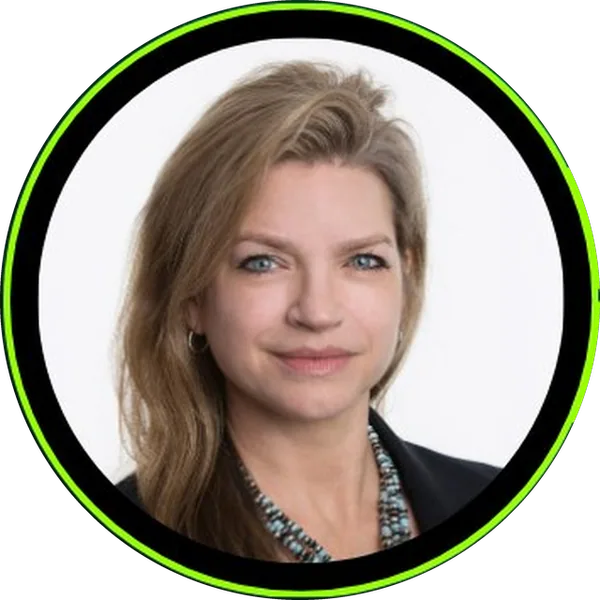
Dawn Miller
Dawn Miller, Chief Commercial Officer of Lloyd's and CEO of Lloyd's Americas, joins James Benham to define what an insurance ecosystem actually is, why a 338-year-old market with a license network in 200 countries still has to fight to be understood, how Lloyd's Lab turned a ten-week accelerator into a pipeline that keeps almost all of its alumni in insurance, and why the industry should start describing itself as a resilience industry that happens to sell insurance.
The full episode
Press play for the whole conversation.

From Saving the World to Risk Transfer
Dawn grew up in Georgia and went to university in Washington, D.C. with a specific ambition: run the United Nations. She wanted to save the world through diplomacy. Instead, her first job out of university put her in front of political risk insurance at the Overseas Private Investment Corporation, now the U.S. International Development Finance Corporation, and the diplomacy turned into risk transfer.
After graduate school she moved to Willis, still in political risk, at a moment when governments around the world were issuing guarantees so foreign companies would come in and help rebuild their economies. That intersection is what hooked her.
Twenty-five years followed across Chubb, AXA, and AIG, with a detour to Prague where she spent about two and a half years building a company that helped North American investors read the infrastructure opportunity in post-Soviet Eastern Europe. She calls that business marginally successful before they sold it on, but the lesson it taught her is the one that shows up everywhere else in the conversation: own your narrative, understand the context of the place you are in, and create transparency.
"I just found that absolutely fascinating, how you could have an intersection of commercial need, true infrastructure, public need, diplomacy, and finance all together. And all of it stitched together with insurance."
Dawn Miller
What the Corporation of Lloyd's Actually Does
Dawn took the Lloyd's role because it was a transformation challenge attached to an institution with 338 years of history, financial strength, and a license network that trades in 200 countries. Her framing of the job separates two things people routinely conflate: the Lloyd's market, made up of more than 100 syndicates and the investors behind them, and the corporation of Lloyd's, which is the group of people whose job is to make that market work.
She reaches for a gardening metaphor. Colleagues in performance management and oversight make sure the gardeners are fit for purpose. Her teams make sure the landscape everyone is standing on is fit for purpose: clearing roadblocks, working the challenges, creating the conditions for managing agents and syndicates to write the business they want to write. In practice that means teams working with regulators every day, interfacing with brokers and intermediaries, running the brand, handling education, and attracting new capital.
All of it converges on one question, and it is the same question that Prague taught her.
Lloyd's is proud of the coffee house origin and proud of the longevity. Neither one explains to an investor or a client why participating in the marketplace solves a problem they have. That is a narrative job, and Dawn spends a large share of her time on it. James makes the point from the other side: he has spent 25 years in insurance, has never worked at Lloyd's or a syndicate, and still finds Lloyd's hard to explain to friends outside the industry - because it is somewhere up in the transaction stack of nearly every carrier he has worked for. Dawn's response is immediate: see how hard it is? This is about the narrative.
In March, the executive team reset the strategy and announced a new purpose statement to the market.
Two words in that sentence do a lot of work. Risk-takers can be defined broadly, which is deliberate. And global shows up twice, which is also deliberate: Lloyd's is headquartered in London, but 60% of the market's premium comes out of North America, and it is growing fast across Asia and other emerging markets.
"We can't just say we started in a coffee house. We've been here 338 years. That's not enough."
Dawn Miller
"We bring together the world's leading risk-takers to advance global progress."
Dawn Miller
Defining "Ecosystem" Without the Buzzword
James pushes Dawn on the word itself, on the grounds that a lot of people in insurance throw around phrases they cannot define. She agrees, and admits people are allergic to this one because the industry overuses it. Her definition is about interconnectedness - multiple stakeholders and multiple needs converging in one place, all of them supporting and contributing to each other. Marketplace almost gets there, she says, but reads as purely commercial.
The distinction she draws is between a network of connections and a system where you can watch value move through it, cell by cell. And insurance forces that behavior in a way most industries do not.
You have to treat everyone as critical, Dawn says, because they actually are. That is also why Lloyd's guards its neutrality: convening only works if everyone can operate together according to their strengths. James raises the natural follow-up, which is that Lloyd's is one of the few players that can genuinely diagram and track transaction flow across its own ecosystem, because it holds the data. Dawn confirms it, and is candid that the market is not maximizing that data yet, that centuries of historical records are not as digitized as an outsider would assume, and that Lloyd's has committed to being smart about the data it collects for the benefit of its members first.
"Ecosystem is the only word that gives a sense of a bit of a heartbeat to the center of it."
Dawn Miller
"We need everyone operating together, according to their strengths, to solve those challenges of tomorrow."
Dawn Miller
Lloyd's Lab, Seven Years In
Lloyd's Lab started seven years ago as an answer to a challenge: keep an entrepreneurial spirit alive inside a market known for writing the first policy in most lines of business - the first directors and officers cover, the first cyber, the first space, autonomous vehicles. The early version rode the wave of InsurTech excitement with an open invitation to come use the power of the marketplace.
About three years ago they made it structured. The flagship program is a ten-week accelerator running two large cohorts a year, and each call for applicants is now oriented around real risk issues drawn from the own risk and solvency assessments that managing agents run on their own businesses. In other words: the themes come from what the market is actually worried about. Lloyd's layers in geographic themes and partners - the Bermuda Monetary Authority, the government of the United Arab Emirates, currently the Irish government - and is equally specific about the mentors it brings in. Companies come in for ten weeks and stay part of the marketplace permanently, usually walking out with test capacity or a proof-of-concept service contract.
The numbers are the argument. 95% of Lab companies are still in the insurance market today, and 85% still trade at Lloyd's. Sixfold ran a fundraise on the NASDAQ. Predacap was acquired. Testudo is pushing the envelope on generative AI. For participants who provide services rather than take risk - roughly half the cohort - Lloyd's has the ability to invest from its central fund, kept deliberately separate from the risk-taking side.
What Dawn is proudest of is less the exits than the methodology that comes with them: define the problem statement, build a method for testing and learning, and treat no as a legitimate answer. Fail fast, learn, succeed faster.
A Resilience Industry That Happens to Sell Insurance
Asked what she is most excited about for the year ahead, Dawn points at scale. Data centers, energy, large infrastructure - there is enormous global pressure for large-scale solutions right now, and she believes the Lloyd's market is set up for exactly that, whether through facilities or new entrants. Layered on top is generative AI making both the corporation and its underwriting organizations more operationally efficient, pulling tedium away so underwriters can concentrate on genuinely complex problems.
She is careful about the transition, though, and pushes back on the scaremongering in both directions. The work will change and the required skills will change. What matters is that while that happens, insurance is competing for talent against every other industry chasing the same people, in the middle of a demographic crunch, with every carrier she knows short on underwriters and adjusters.
Do that, she argues, and the talent follows, because it is genuinely an amazing place to be. The industry just needs to broadcast it a little more. And some of the roles that conversation will be about in three or four years have not been invented yet.
"Talk about us as a resilience industry that happens to sell insurance."
Dawn Miller
Key Takeaways
The full transcript
Transcribed automatically from the episode audio, so some names and terms may be misheard.
Dawn MillerAnd with me is Dawn Miller. How's it going, Dawn? Really well. Thank you. Fabulous energy here today. Right? It is. Really good. Some great conference. It is. It is. It turns out the Brits know how to put on a conference.
James BenhamThat, I think they do. That's right. That's right. You know what's really funny is the majority of conferences that are put on other than InsurTech Connect IGC that you you look at the majority of the rest of the conferences are all one out of England. I don't know what it is about those Brits, but they can't they can't not do global. We like to convene just like Lloyd's. Right? We like to convene. We like to bring people together and share. Yeah. It's really fun. And you you live in London, and you obviously...
With the role you play at Lloyd's, you're at the mother's show. Yep. I just got back from my very first visit to maybe we call it the Insurance Mile in in London. Right. It was eye opening, incredible. I'm interested. It? It is. I've been in insurance twenty five years. I never imagined there would be a place where everybody worked in insurance. 50,000 people all in that space just moving and ebbing through. Fantastic. It's incredible. Yeah. All from a coffee shop. Yep. And all the... Think of all the things we can solve.
I know. Together and we do. Yeah. It's exciting. So we're gonna talk about that in a second, but I just... Real brief, like, where are you from originally? Where were you born and raised? I'm from Georgia. I grew up in Georgia. I went to university in Washington DC. I wanted to become the next head of the UN, and I wanted to save the world. And turns out I'm not saving it necessarily through diplomacy, but through Through risk risk transfer. We like transfer. There you go. Exactly.
But, you know, as all all young students do when they're on... In Washington DC at university,
Dawn MillerThey carry on. They do their internships. And I... The first job I had out of university was at OPIC, now DFC. And so there, I was exposed to political risk insurance. And then after that, after graduate school, went to work at Willis in political risk. And, really, it was at a time, this confluence, when all of the governments around the world were offering guarantees. So foreign companies would come in and help them rebuild their economies. And I just found that absolutely fascinating how you could have an intersection of commercial need, true infrastructure public need, diplomacy, and finance altogether.
And all of it stitched together with insurance, so I've stuck with it ever since. Nice. I did have a brief moment as an entrepreneur for a couple of years in Eastern Europe. Then what? An entrepreneur
James Benhamin Eastern Europe? No. No. You you can't skip over that. You did. I did. I did. Where in Eastern Europe? I was based in Prague, and I was there for about two and a half guess Prague. Yeah. I went to Prague in 1997. Yep. I stayed in the first Western Hotel built after the fall. Okay.
Dawn MillerI had to shortly after that. I had the craziest
James Benhamexperience in Prague. I ended up introducing mosh pitting to Prague back back when... I mean, I mean Yeah. So I mean, it was... I like... I I like to go to concerts. I like to go, you know, dance. I mean, I love to go out. And Prague was the coolest
Dawn Millerplace. Was It's It's It was like... You had that feel of capitalism coming in and this new energy of the West. I mean, very cool place. No. Absolutely. And I think my first trip there were probably in in 1990. And then when I went over there with my little company, it was in, like, '96. So... And we were just highly focused on North American investors coming into the infrastructure space and how can you help them Yeah. Have a clear view of of the opportunity. And we worked in collaboration with many of the big consulting firms there.
So What a what a time to be alive. Right? Sweet time. But, again, what it what it really taught me, what I took from that moment... Like like so many businesses, many fail, many succeed. This one was maybe marginally successful, and then we we sold it on. But but what it it shared the importance of owning a narrative, understanding the context of place you're in, and creating transparency. Yeah. And that's something that I think applies across any career.
James BenhamSo let's talk about what what led... I'm always interested in the path to Lloyd's Mhmm. And the path to chief commercial officer. Like,
Dawn Millerthat... That's a big deal. So help me understand what what kind of led to you wanting to do this. Yeah. Sure. So, again, I've spent the last twenty five years in the commercial insurance markets all around the world extremely grateful to have worked for some of the most incredible companies that are out there. Right? So for Chubb and AXA and AIG, incredible companies with incredible learnings, and been with them through the through the good times and the bad. What made me look at the opportunity at Lloyd's and say, this is something, is that we're looking at an institution, right, that has got a legacy of three hundred and forty three, three hundred and thirty eight years behind it.
It has an opportunity to shift as financial markets are shifting around us as protection gaps are becoming stronger around the world, and I saw it as a huge opportunity and transformation challenge. And when you look at what Lloyd's has, and maybe we'll talk about a little bit later in the podcast, but when you look at this... Our financial strength, our licensed network, we trade in 200 countries around the world, the timing that we've been around all of this time, the learnings that we have accumulated, the data that we have, and the incredible ability to convene, mixing all that up creates an opportunity to absolutely contribute to to solving tomorrow's challenges.
James BenhamAnd I wanna be a part of that. Yeah. Yeah. It's... I think a lot of us do. A lot of us wanna be part of something really big. Yep. Meaning is something I think all of us look for in our careers and doing something that afterwards you look back and say, yeah, made the business community and the world and my industry better. And I I think one thing I love about insurance and why I've really dedicated my life and career to it is that without it, stuff doesn't happen.
Correct. I mean, without it, like, people can't buy homes. It's incredible, isn't it? And we're really... In the... In that respect, we're in the resilience business, and we're helping communities grow and families grow and economies grow and helping them figure out ways to pivot. When a risk becomes too big, how can we share that? And I just think that is incredible. Yeah. And it's it's no it's no surprise that the Babylonians three thousand five hundred years ago started adding premium to their loans to forgive, you know, ships if they sank because without it, we wouldn't have had global commerce back then, and we wouldn't have that right now either.
Exactly. So you're you're chief commercial officer. You're CEO of Americas, Lloyd's America's. You oversee market development, global commercial strategy, Lloyd's Lab, which, of course, I've covered... It's so cool being with you because I've covered Lloyd's Lab a bunch of time from those podcasts. That's
Dawn Millergreat. That's great. I'll try not to talk about it too much. I know. I I love it. I am super proud of it and all of its... Everything that it's from its creation to where we are today. And I try not to fanboy out on the on the Lloyd's how we do at the end. Yeah.
James BenhamMany of the initiatives that are shaping the whole marketplace, not just Lloyd's, what is that role?
Dawn MillerBecause you you have two roles. Yeah. You know? What's it look like? Yeah. What does that look like day to day? And, like, where do you spend most of your time and attention right now? So myself and my team's all around the world. I mentioned we have the the 200 trading rights. We have 25 offices around the world. We've got three insurance companies. We've got a we've got a lot a lot moving. And for us, we are at that frontline. That front door, whether it's actually a physical front door one walks into or the narrative one has about Lloyd's or the education they receive or a new entrant coming into the marketplace, or we're working with regulators, clients on the ground that have issues, etcetera, and most importantly, our investors and managing agents.
So we are accountable for making sure that that landscape that everyone's operating on is is fit for purpose, that it is... We are clearing the roadblocks out, working on the challenges, and making sure that the conditions for success are there. And so that is what our teams do. It's it's... When you think about a landscape or a garden, right, my colleagues who work in performance management or an oversight, they're making sure those gardeners or those players are fit for purpose. We're making sure that landscape that everybody's operating on allows our managing agents, our insurance companies, and our syndicates to to write the business that they they want to as they've gotta perform.
They've gotta carry on and and be part of our market, but we're creating those conditions for success. And so that means that I've got teams working with regulators every day. We've got interface with brokers and intermediaries. We're working on our brands. We're working on how do we show up from an education standpoint. How do we also attract new capital in the market? All of that converges on the point on being super clear about what is our narrative. So it kinda goes back to what I said earlier.
What is our narrative? How do we show up? And is on us to make sure that that others understand the Lloyd's market. We can't just say we started in a coffee house, which we're super proud of. We've been here for three hundred and thirty eight years. We're large and global. That's not enough. We are complex, and we're simplifying as the days go on. But we have to make sure that that our story is clear and that it's... People can understand that by investing in our marketplace, by participating in the marketplace, they can take the risks and solve the challenges they want to.
So a lot of time on the narrative. What do you do personally? What I do, I spend an enormous amount of time, working with our teams, helping them figure out how do we keep pushing pushing the edge of the market. How do we... Who do we Does mean... Does that... Does the edge of the... Pushing the edge of the market mean covering uncovered risks? What does that mean? What it means is going out to new parties to say, have you... How are we working? How could becoming part of the Lloyd's marketplace, whether you're placing risk into Lloyd's, okay, and we do that in collaboration with brokers, or whether you're investing in the Lloyd's marketplace, how does that help solve a challenge?
Whether it's a balance sheet challenge at a at a large carrier Yeah. Whether it's creating a reinsurance captive, whether it's helping a new business thrive that is that is that is tackling topics around resilience or large infrastructure, etcetera. So I spent a lot of time on the front line working with prospective and current investors. And when I say investors, I mean risk takers in our market. Is the goal of Lloyd's to be part of every insurance transaction on Earth? That would be quite lofty, and that would assume that every transaction on Earth is going to produce the performance that we need to get the right return on capital for our investors.
But our aspiration, in fact, new purpose statement that we've just announced to the market in March, As an executive team, we've reset the strategy for Lloyd's, and I can talk about that in a moment. But our aspiration and our purpose, because we realized it was a little... It needed some refresh as we move forward, something very, very clear, is that we bring together the world's leading risk takers to advance global progress. So there's a couple of things in there. Right? Risk takers can be defined in many ways.
Global and world mentioned twice. I think that's incredibly important. We may be headquartered out of out of London, but 60% of our revenues or the premiums for the marketplace come out of North America. We are growing hand of our fist in Asia and other emerging areas as the change in their marketplaces are experienced. So we wanted to make sure our purpose statement reflected that, but also was about the corporation of Lloyd's. What is the corporation of Lloyd's, those of us that work there? What are we doing to make sure our market can thrive?
And then that marketplace is part of what you saw when you were just in London. Right? You know, our 100 plus syndicates that we have and all the investors behind.
James BenhamThat's cool. Yeah. I was I... When when... Because I talked to a lot of my friends that aren't in insurance. And and I tried to explain, like, what... How Lloyd's is very different than anything else they've ever looked at. And I'm like See how hard it is? This is about the narrative. It is. It's actually it actually It's a challenge. And I never worked at Lloyd's or a syndicate or
Dawn Milleranyone, but I but I work for a lot of insurance companies who have Lloyd's somewhere up in that tower. Yeah. Sure. There... There's there's a syndicate Yeah. Somewhere in there. Yep. And that's why I always I always feel like even... I almost feel like Lloyd's is the invisible hand at some... At some point because it's a... It's it's somewhere in the transaction stack. And we're very proud of that, that our... That the that the talent that is in our marketplace, that our managing agents and our our insurance syndicates can write those risks and attach to those risks.
And the invisible hand, I would say, is is the relationships that we have with governments and regulators all around the world, helping them understand what good looks like from a resilience perspective, helping them what understand what dealing with protection gaps could look like. We have many governments and regulators come to us to say, you know, what are some steps we could take to make our environment more attractive to the underwriters in your in your market? Very cool. Well, let's talk about ecosystems. Yep.
James BenhamYou know, you're speaking here Mhmm. About ecosystems. Yep. And you feel... You really think about why why those define the future of insurance and also, like, tackling questions, the biggest ideas in insurance and what they are today. But, like, I I really wanna talk about ecosystems because a lot of people use the word ecosystems. I'm not sure they know what it means. I agree. It's it's just like I... And I'm I'm really big on defining words Yeah. Because my English teacher was British Yeah. And senior of high school in Southern Louisiana.
Yeah. And it's amaze. That's that's like a Wow. Okay. Georgia. Another podcast. You're Georgia. Yeah. You're not from, like, Calhoun Georgia, are you? I am not. Like, one of my best friends is from Calhoun. Yeah. No. I'm not from there. Okay. So Farther north. It's it's... Oh, farther north than Calhoun. Okay. Oh, okay. Gotcha. Almost Tennessee. So I'm actually going to North Georgia tomorrow... Sunday to drop my daughter off for camp. So Very good. Love that. Way North Georgia. Yeah. Jasper. Oh, right. Okay. Yeah. Yeah.
So I... I'm thinking about ecosystem. I'm thinking about word definitions because a lot of people in insurance throw phrases around they don't understand. Mhmm. So please define ecosystem for me.
Dawn MillerWell, I'm not sure I have the exact Webster dictionary. There is no web definition. There is no right definition. Yeah. Exactly. But to me, when I... You're right. A lot of people are allergic to the word ecosystem because we use it all the time. And I... And and to me, it just... It's a way to describe the inter... The multiple parties' inter... Interconnectedness and the intersection of multiple stakeholders and needs into one place, that they're all supporting and contributing to each other. And and whether it's...
You know, marketplace sort of gets that, but not quite because that seems very commercial. Ecosystem is the only word that, at least in my mind, gives a sense of a a a bit of a heartbeat to the center of it. Right? Yeah. You're trying to connect the dots to try to then squeeze out something and grow something even more improved. Yeah. Well, insurance is an interesting beast that way. I I... I've worked in a few industries
James Benhamoutside of insurance where I had to build, you know, software projects or technology initiatives or... I'm a politician as well. So I'm I'm currently chairman of the board of Texas Southern University. Governor Abbott put me on that six years ago. And and so I do have to lead a public university, which is a very, very, very different And a fascinating type of ecosystem. Right? It is. It has its own set of invisible rules and pace. There are. Universities truly are ecosystems, and then the group of universities is an ecosystem in them...
And themselves. Insurance is really interesting because, you know, at... And and you and you also have to be really you have to be really careful in insurance because your competitor one day could be your partner the next day, could be your vendor the next day, be your client the following. And so I... Be careful. You have to always treat everyone as if they're really critical because they actually are really critical Yes. Of
Dawn Millerwhat goes on. So And we very much feel that we are very proud of our ability to convene, and we very much do take that neutral sense. Right? We need everyone operating together, right, according to their strengths to solve those challenges of tomorrow. Also, with an ecosystem, I think it's... You... When I think about ecosystem too, I almost feel like you can almost see the cells moving through. You know? You can see the value moving through, you know, versus maybe just a connected network, which your university example is a little bit of that.
Right? Yeah. Yeah. It's interesting. You have the ability to actually
James Benhamdiagram and track transaction flow through an ecosystem, though. Right? I mean, you actually have the data on the ecosystem.
Dawn MillerRight? Yeah. We do. Something that's kind of unique. It is. It is. Our... Well, I'm not sure we're absolutely maximizing it right now as much as we can, and we certain... Certainly would never look to maximize that in a in a way that is is not for the benefit of of those that are the members. Those are our clients, right, first, but, we definitely have the data. Right now, I believe that we've been collecting a lot of data over the years. So what we have committed to our market is to make sure that we are astute and smart with the data that we're collecting and see how we can peel back from a little bit of that.
Have you all scanned in
James Benhamand transactionalized all of your historical data from the beginning of Lloyd's to now? We're in the process of working to see how to do that. But but but it's it's certainly not as advanced as one might think that we would have done. Yeah. It's really interesting. Lloyd's is known for being kind of old school in some regards where people still come into the office and work together, and they kind of... You go around to the different desks and you, which I I love and appreciate because, I mean, insurance is about risk transfer Yep.
And sharing risk and get the edge has a human in the loop. Right? Because you're making a promise.
Dawn MillerAnd and I think we... We've gotta provide that infrastructure and this place to convene, but there's going to be that human in the loop even as we see more AI come into. But what's been cool for me is that you have this very traditional...
James BenhamAnd by the way, impressive because I don't know of any other company that's been around three... This long, three hundred and thirty Eight years. Yeah. That's that's mind blowing. Yeah. The statistical probability of that happening is one thousandth of one percent of surviving that long. Right. So kudos. Yeah. You have Lloyd's Lab Mhmm. Which is doing some of the coolest stuff I've been covering for the last seven years on the podcast Mhmm. Inside this very traditional Yeah. Very buttoned up experience.
Dawn MillerTo those that started it, right, when it got started. Yeah. So how did it get... Or just tell me the origin story and what it's doing now. Yeah. So Lloyd's Lab started seven years ago, and it was really an answer to the call to make sure that we were challenging ourselves to innovate. Our our marketplace is known for the first of most policies and both... Sorry, most lines of business that you're... They're familiar with, the first D and O, first cyber, first space, autonomous vehicle, all of that.
And we wanted to make sure that we still had a place where we could curate that entrepreneurial spirit and continue to test and learn and sometimes succeed, sometimes fail, sometimes both at the same time in some ways with new product. So when the lab started seven years ago, it was... Let's... That was aligned with a lot of the InsurTech excitement that was out there. Come in and use the power of our marketplace. Use the power of our marketplace to have mentors, to walk out with capacity, to to ensure that that you have everyone guiding you along.
So many of the people I see walking around here today are Lloyd's Lab alumni, and they have gone into the lab in that ten week accelerator program with one idea and come out with another, possibly with capacity and contracts. About three years ago, we reset the lab a bit to say, let's be more structured. Let's... Each call that we make for the two big cohorts a year... There are many programs in the lab, but the the flagship is the accelerator. So let's make sure that the call for applicants that we have twice a year is a bit more structured.
So we oriented it around the... Some of the risk issues, the ORSAs, the own risk solvency assessments, sorry to be so technical, that the syndicates do, the managing agents do on their businesses, what's on their mind. So that feeds into the themes. We put in some geographic themes. We often have a partner. We partnered with the Bermuda Monetary Authority, UAE government, with Irish government right now, and what's on their mind. A lot of times, it's resilience, a lot of access to data, mapping, and we we...
We're very specific about the themes. And then with that, we also are very specific about the mentors we bring in. So the companies come in. They're with us for ten weeks. They're part of our marketplace forever, and they have as many or as few mentors as they'd like. And they ebb and flow their business, and they generally walk out the other side with some test capacity or a, you know, proof of concept service contract. And 95% of those companies are still in the insurance market today.
That's... That is seriously, that's the success rate on this. Yeah. And 85% are still in the Lloyd's space. We've had some great fundraisings on NASDAQ. Sixfold, I'm just gonna see them later today. They did a bit fundraise on NASDAQ. The... We've also had some great acquisitions, Credicat being a great example of that. We have others like Testudo who are pushing the envelope on Gen AI. So it's it's... We feel very proud because with that also comes a methodology around finding... What is the problem statement? What is the methodology for testing and learning?
And it's okay to say no. It's okay to fail fast and learn from that and succeed faster. But when they go through Lloyd's Lab, does Lloyd's keep a piece of the equity of all those companies that go through the lab? We do have the ability from our central funds, so we really keep that separate to... For those that are not going to be risk taking. They're just providing services, which is vital. It's about a fifty fifty split. So some of the operational efficiency teams, there is an opportunity for that investment.
Amazing.
James BenhamSo last thirty seconds that we have. Yep. What's... What are you most excited about with Lloyd's for the next year
Dawn Millerlooking forward? Yeah. I'm excited about... As we push our strategy forward, there's so much going on in the world right now related to a need for large scale solutions. Data center needs, energy needs. There's a lot of pressure around the world, and I think our market is completely set up for it. And and and whether it's through facilities, new entrants, etcetera. So that plus bringing in the power of AI to help us be more operationally efficient in our own business and also the business... Also our underwriting organizations, seeing how AI is helping them move some of the tedium away so they can really be focused on these complex problems.
You know, I've been writing software since I was 11. I'm 46 years old, thirty five years building software.
James BenhamAnd I said that's...
Dawn MillerPeople have a a lot of doom and gloom around AI. And I'm like, look. Honestly, I I think this is gonna be the best thing ever for getting rid of all this menial stuff that we hate doing. Exactly. And a lot of this... I think we're in a transition, though, so I'm hopeful that we're resilient through the transition. It's it's... There's a lot of, I think, some scaremongering about will this allow... Will we... Will people be out of a job? It's gonna change the jobs that are required, change the skill that's required.
And what's super important about our industry is while that's happening, we are competing for talent with so many other industries. So the faster that we are proud of our industry, stand up proud about our industry, talk about us as a resilience industry that happens to sell insurance, we're going to attract that talent because we're an amazing place to be. We just need to broadcast a little bit more. Yeah. The ADP hiring report came out yesterday, and it was super strong,
James Benhamway stronger than expected. Like, we're multiple years into LLMs being adopted, and we're still seeing strong hiring demand. New types of roles and new types of thinking. And we also are in the middle of a demographic crunch. And we... And last I checked, every insurance company I work for needs more underwriters and adjusters and qualified people. Some of the roles of, say, if we were having this conversation in three or four years, some of those roles haven't been invented yet. Correct. And they will be the roles that resources of today will fill.
My whole industry didn't exist seventy five years ago. There you go. Excellent. Dawn, thank you so much. No. It's been so Appreciate your time. And thank you out there in listener land for tuning in today to geek out our interview with Dawn Miller from Lloyd's. We're here at Insurtech Insights New York twenty twenty six. Enjoy the ride and geek