 YouTube
 Spotify
 Amazon
 iHeart
 Apple
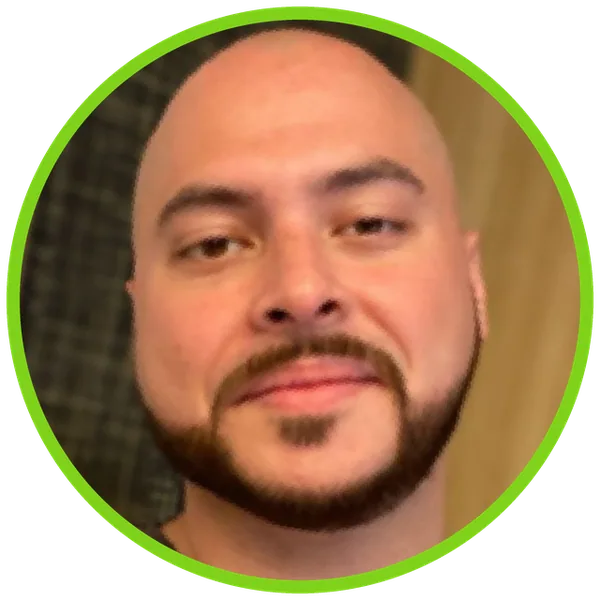
Nestor Solari
Nestor Solari from Sigo discusses their mobile first auto insurance platform and why Sigo's primary target market is the Latino Community!
The full episode
The whole conversation, straight from the show feed.

INTRO
On episode 26 of the InsurTech Geek Podcast, Talking about Car Insurance From Your Phone With Nestor Solari from Sigo.
INTERVIEW
JAMES: We are back. We are back. We are back. Rob Galbraith from the hotter than Hades, San Antonio Texas. It looks like you are sweating indoors right now, Rob.
ROB: I am James. Yeah. I was just telling our podcast producer, Jim Greenly. So, shout out to Jim, that the fan in my office was picking up on the mic so, I had to turn the fan off. So, I have a beautiful office, but it feels like a sauna right about now.
JAMES: Yeah. This is when you call your air conditioning company and go, can you please come balance the system out because this room gets way hotter than the other ones. They are like, okay. I am sorry, sir, that is just the sweatbox room and you are going to have to deal with it. Or spend $4,000 on a new unit. Or cut a hole in the wall or, well it is a nightmare. It is interesting. I will tell you this, Michigan's in a cold snap right now. Lake Michigan. The water temperature is in the low forties. So, they actually issued a warning for people to stay out of the water because it was too cold. So, weird deal. So of course, when the water's that cold, the air gets colder. And so, it is nice and cool up here but, Nestor Solari, where are you joining us from today Nestor?
NESTOR: Good to be here, guys. I am speaking to you from Harrison, New Jersey. Home base over here.
JAMES: New Jersey.
NESTOR: Born and raised in Northern New Jersey back home after 15 years away.
Connect with Nestor Solari
The full transcript
Transcribed automatically from the episode audio, so some names and terms may be misheard.
James BenhamOn episode 26 of the InsurTech Geek podcast talking about car insurance from your phone with Nestor Solari from SIGO. The InsurTech Geek podcast powered by JBKnowledge is all about technology that's transforming and disrupting the insurance world. We'll be interviewing guests and doing deep dives into specific technologies we see changing the industry. We're taking you on a journey through insurance tech, so enjoy the ride and geek out. We're back. We're back. We're back. We're back. Rob Galbraith from the hotter than Hades San Antonio, Texas. Looks like you're sweating indoors right now, Rob.
Rob GalbraithI am James. Yeah. I was just telling our podcast producer, Jim Greenleaf, a shout out to Jim that the fan in my office was picking up on the mic, so I had to turn the fan off. I have a a beautiful office, but it feels like a sauna right about now. Yeah. This is when you call your air conditioning company and go, can you please come balance the system out? Because this room gets way hotter than the other ones. And you're like, I'm sorry, sir. That's just the sweat box room, and you're gonna have to deal with it.
Or,
James Benhamyou know, spend $4,000 on a new unit or cut a hole in the wall or it's it's a nightmare. It's interesting. It's not a I'll tell you this. Michigan's in a cold snap right now. Lake Michigan, the the water temperature's in the low forties, so they actually issued a warning for people to stay out of the water because it was too cold. It's a weird deal. So, of course, when the water's that cold, the air gets colder, and so it's nice and cool up here. But Nestor Solari, where are you joining us from today, Nestor?
Good to be here, guys. I'm speaking to you from Harrison, New Jersey, home base over here. New Jersey.
Nestor SolariBorn and raised in in Northern New Jersey back home after after fifteen years away. As they say on Saturday Night Live, New Jersey.
James BenhamYeah. You know, it's funny. I I've I've been through New Jersey. I think I think it applies for anybody. If you fly to if you wanna go to New York City, go to Newark. Yeah. You're briefly in New Jersey, and and then you're on, but there's some beautiful parts of New Jersey. Gorgeous. Gorgeous. Don't judge it on Trenton. Right? Like, go go to the Jersey Shore. Which is right across the right across the river from me here. Yeah. Newark is what I was thinking of. I'm sorry.
Yeah. Don't judge it off Newark. Go go to the Jersey Shore. Are you a Jim Tan laundry kinda guy from the Jersey Shore, or are you back up? You might be able to tell from my tan. The introvert in me tends to tends to stay inside, but but it it it is a familiar a familiar saying around here. Yeah. GTL. I used to watch Jersey Shore back in the day. I was like, what do we do? GTL, gym tan laundry. Awesome. So you're a Jersey guy.
Your your family though your your your family's from a part of the world that I'm very familiar with, and I have a deep passion for South America, Uruguay, and, you know, such a beautiful part of the world. I go to Argentina all the time. Uruguay is just right across one of the largest, one of the widest rivers on the planet, which is really crazy. You cannot see across the river. It's over
Nestor Solarithe horizon. Yes, yes, it was great. Growing up, I got to go to visit Uruguay a lot, visit my family. Most of my family still lives there. Started university down there actually and lived there after growing up in New Jersey for about two years. Really enjoyed the time there. It was great to solidify my Spanish and and spend a lot more time with with my family when grow up down there. Yeah. That's awesome. That's really great. And, of course, Spanish is really useful. My parents took me to Mexico my entire childhood,
James Benhamand then I lived there in '95 and '96 for a few months, a year, and and just soaked it all in. They they played the let's make the gringo cry with spicy food. They literally, that was the name of their game. And so my friends in Mexico would bring me, like, the spiciest food they could and just watch me sweat and cry. And I fell in love with just the people, the culture, my grandmother. My my father's mother was born in Nicaragua and immigrated to The United States when she was a a kid.
And I I just lied. I love all of Latin America. I I really enjoy going down there. Before we keep talking with you, because I wanna I wanna jump into insurance and then technology and how it's transforming auto insurance, I just wanna remind everybody that you can subscribe to the InsurTech Geek podcast by texting geek out to 66866. Make sure you never miss an episode. You get that you can get signed up for our weekly email newsletter, and it'll, you know, summarize what we talk about.
We actually transcribe all the show notes so you can read through and peel through the articles, and there's some really cool stuff that we can talk about. So just make sure you text geek out to 66866. Back to Nestor Salari. Nestor, you know, school wise, got a bachelor finance from Penn State,
Nestor Solarithe the Nittany Lions, I believe. What what is a Nittany Lion? A Nittany Lion is a type of mountain lion that was indigenous to Pennsylvania. I believe they're all extinct, if I remember correctly. But definitely, today, Indian lion is a Penn Stater, I guess. I was gonna say, man. Because the right answer there. Yeah. It is. It is Penn State. I mean, it's a great school.
James BenhamA lot of proud traditions. Then you went to UPenn for your master of arts international studies. You got an MBA from UPenn. I mean, from the Wharton School, which is, like, a really great school. I mean, I I I did my undergrad and masters at Texas A and M, which we all know is the number one institution in the world. We can't be there, but that's okay. No. I'm just kidding. It's not it's actually not. No. MBA, it's not number one in MBA program. Wharton's way above Texas A and M.
You know, when you were going through your educational path, in particular your undergrad, you know, what did you envision yourself doing career wise? And how'd you wind up in insurance and technology?
Nestor SolariIt's funny, because every time I've heard anyone get asked how they ended up in insurance, they say I fell into an accident. But before I get to how I got into insurance, honestly, I came back, I'm the first one in my family to go to college. So when I landed in State College, Pennsylvania, I kind of just started doing as much as I could. I got two jobs and just started going to class and tried to get good grades and figure out what job can I get where I can feel financially secure after graduating?
And at that point, all signs were kind of pointing towards finance, so I started studying finance and was very fortunate that early on I got connected with a couple of mentors that really helped guide my career. And that's how I ended up on Wall Street as my first job. I had some great, great people that really took an interest in me and my career and my education that helped me land that first shop in investment banking at Goldman Sachs. And from there, really got to learn from some of the smartest people I've ever met and build some skills that ultimately led me into investing and entrepreneurship, which ultimately was the reason I fell into insurance.
Reason I fell into insurance was because I saw several of my family members struggling to get auto insurance. And I was really confused because I remember going to GEICO or Progressive when I got my first car and it was pretty straightforward. I compared a couple of prices, but that wasn't the case for several people I knew that ended up going to brick and mortar and had a terrible experience and continued to pay extra. And so when I started doing my research, and this was when I first arrived at business school with the intention of founding a company, I started doing my research and kind of trying to understand my aunt's experience, my cousin's experience.
And I came to understand that in The US, you have a meaningful portion of your immigrant and low income populations that are grouped into something called non standard risk. And so that's largely anyone that's buying your state minimum limit liability policies. And for those people, their options are surprisingly limited. And so that's kind of where we came in and where I thought, hey, this is something I can fix. And that's how I ended up in insurance. Yeah.
James BenhamBecause you really spent a you did a nice path through the investment community before you got into this. And you got to, I'm sure, work on all kinds of transactions and deals that exposed you to a lot of different industries. You know, Goldman Sachs, you you started there at a very interesting time right after the financial collapse, and Goldman got nailed like everybody else did. And, you know, they thankfully, you know, were able to climb out of it. You know, everybody except Lehman climbed out of it because it's like, Lehman's the sacrificial lamb.
We can't save them. Everybody else, you get a pass. And then you you really spend a lot of time in developing world markets, which I thought was really interesting because I had not really done a lot of research on developing world markets before this interview. And I was impressed at the the global reach and and the the, you know, true know, really staying true to the mission of investing in developing markets. When you look at who the where the markets where they don't invest in and is is, you know, really Western Europe and North America and, and some Asian markets, but there's really a a a whole several billion people out there that that that really need investment and need some mentorship to get businesses off the ground because it's just not ingrained in them.
And in fact, there's very few schools of entrepreneurship that you can find in a lot of these markets as well. It's not just money and capital they need. It's also the mentorship and instruction. Right? Yeah. Absolutely. And and it's I appreciate you calling out out DWM. I think it's it deserves a lot of credit for being one of the first and or kind of one of the pioneers in the impact investing space and really taking microfinance
Nestor Solarifrom this idea that was kind of a nonprofit idea early on and really investing in the commercialization of these productive credit resources in emerging markets and really seeing the potential in places that have been overlooked. And I think that was an incredible experience, not just because I was fortunate to get to travel to dozens of countries, but further than that, I got to work with some of the most inspiring people that were very mission driven. And ultimately why I ended up landing at developing world markets and spending so much time there was because I I was looking for something that I found meaningful and that I found impactful,
James Benhamand and I found a group of people that were very like minded. Yeah. It was great. Yeah. And they're really beeline focused on their mission there, and I I was impressed by that. It's interesting. Let's let's talk about Seagull for a second. Now you did the same thing I did. I started JBKnowledge my last year of grad school. So 02/2012 was when I was finishing up my master's in in business, and and you did the same thing basically while you were at Wharton. I I'm I really wanted to dig into, first off, what it was like to start this while you were in school because I know what it was like for me.
Just tell me about what it was like. What was the the premise behind behind Seagull? And by the way, before we go into this question, I have the perfect car that I want you to wrap in a advertising wrapper. I want you to go buy I want you to go buy a Chevy Nova because Seagull needs the car Nova. If you don't know the story, the Chevy Nova was a wild success in The United States. They they went to the Mexican market, nobody bought it because Nova in Spanish means Nova, which means it doesn't go, and so people didn't buy it.
So I love that the company that says, yes, go.
Nestor SolariI think you need a Chevy Nova. I love it. I love it. That's a that's a great introduction to business school as well. That's that's kind of one of the quintessential business school cases. Right. Yeah. Of not having that cultural context. Right. Yeah. And look, I got to school with with the mindset that I'm going to use my time here to to build this business and research and find resources. And I think it was unbelievably useful to be surrounded by my peers that had a ton of experience and a ton of diverse experience.
It really helped me kind of tighten the feedback loop early on and get a lot of feedback from a lot of different people on the idea, on the storytelling on the pitch, on where the gaps were. And I think it really was invaluable because by the time we were ready to launch just over a year ago, we had done a lot of the groundwork that made that launch a lot Yeah, that's awesome. Rob? Hey, Nestor. So glad to have you on. I got to meet you a couple months ago at the Insurtech Hartford Innovation Week, where I was fortunate enough to be a keynote speaker and you were one of the startups.
I think there was what, 14 or 15 or overstated that were given pitches. Was boom, boom, boom, boom. And, you were one of the winners.
Rob GalbraithSo congratulations on that. So glad we can connect back here on the podcast. So, you know, when you were talking about your aunt and your cousin and some of the difficulties they had and versus, you know, your kind of experience with, oh, I think this problem is solved. Right. There's Geico, there's Progressive, there's so many companies out there, right? Fifteen minutes to say 50% or more, whatever. You know, James is typically based in College Station, just down the road in San Antonio. So here in Texas, it's very common to go in South Texas to see so many kind of, you know, almost like roadside stands or in a, in an HEB or in a gas station or whatnot, right.
Where they're selling you coverage and they're selling it very, very cheap. Signs are all in Spanish. Right. And there's some companies that specialize this. But to your point, like they're really
Nestor Solarithere's a lot of expense there. And I've always worried that they are taking advantage of just getting you that that ID card basically, but there's really no coverage there. So maybe you can just talk a little bit more about what is the experience like for the those that are kind of speak Spanish first and how does he go different? Yeah, look, everything you said is absolutely on the nose. I think when you look at the experience of of my cousin who was looking who only speaks Spanish and has a foreign ID.
Right? Maybe she that at at that point, it made sense that she may be struggling, that it might be a little more difficult than someone with a US license. But then someone my aunt who's has a US driver's license, owns her house, owns her car, has never been in a car accident. It didn't make sense that she struggled because she was also she preferred to speak Spanish. She didn't mind doing stuff in English, but she got quoted some outrageous prices online. Ultimately, the experience for most people that fall outside of this traditional bucket and really for most people that are buying your kind of basic liability limit policies, a lot of them are starting online but pushed to offline.
So a lot of these customers will Google online, actually 70% of all auto insurance research is started online but purchases, 70% of purchases are offline. And so a lot of people are trying to do this online and end up getting pushed to brick and mortar, end up getting pushed to the phone first largely. So to give you a sense, my aunt tried to do this over the phone on the internet first, she couldn't. She tried to call someone after that, she couldn't. She waited on the phone, she got a bad price.
Ultimately, she did everything, but she still had to go in person because she had to get her car inspected and because she had to sign the paperwork and they had to get a look at her ID. And that just seems so anachronistic to me. It's so archaic and so expensive, right? You need a storefront, like you said, you need a storefront and you need staff, bilingual staff that can really address all different iterations of kind of customer interactions, right? And so when I heard that, I also thought, man, that's expensive, and ultimately that's why a lot of these brick and mortars have to end up charging a lot of these fees that may not be so upfront, right?
They may be getting charged fees when they come to make a payment or upon renewal, they may get an unexpected fee, but ultimately you have these brick and mortars that are really the only ones that are effectively acquiring and servicing this customer, and they have to charge these fees because they can't operate without them or else they wouldn't be profitable. And so they do have kind of this broken market and broken experience that I think with technology today and with the adoption of technology, can finally fix.
Yeah, you're so right. That's right. And none of those feeds add value, right? For the customers. I mean, that's just added costs. It's not providing them any more protection, any more service. Right. They're not really getting anything for those expense added. I'm just curious, like, I want to say one estimate I saw a few years back that said one in eight auto insurance customers here in The United States is a Spanish first customer. It doesn't mean that they're, they're, you know, strictly Spanish only, but prefer Spanish or are Spanish only.
Does that kind of jive? And what do you sense the size of the market is? Yeah, that does. And I think that's probably that number might be a little stale at this point. Cause when you look at The US Latino population, we're talking about 60,000,000 people and three quarters of that population prefers to speak Spanish. A quarter of that population only speaks Spanish. And so what you have is the second largest Spanish speaking country in the world after Mexico. And so it's funny because you think of this kind of quote unquote niche market, but it's really an ocean of opportunity.
And so it really measures with what we're seeing because we're seeing some great kind of cost synergies on the acquisition side, just because the ability for us to reach customers in Spanish language online,
Rob Galbraiththis isn't kind of effectively served. Yeah, and so for those of you that go out to your website, which is www.seagoseguros.com, you'll see that it pulls up in Spanish first, but there's a button to switch to English, right? Whereas many of us are used to the English first and then the Espanol, right, could be the the translated version. So I love that focus. James, back to you. It's cute when you say Espanol. It sounds super Sorry. My gringo. I know. Super gringo y. I I sound as wide as I like.
James BenhamNo. We're not gonna do this in Spanish. I would love to we're gonna do a separate Spanish version of this one time. Not today. Not today. What what do you think is really and and and look. You you've you've predicated your your your marketing messaging on the website as eliminating the broker fee. I mean, it literally says, cut the broker fee. Okay. So this is obviously you obviously did some pain point studies. I imagine you did a lot of customer interviews
Nestor Solariwhere you talked to them. Was this literally one of their top pain points? Was was it the speed to write, or was it all these extra fees just really upset them? There's there's a lot of stuff that's upsetting about the experience today. Right? But to give you a sense, we've done several 100 customer interviews, and and those customers all identify costs as as the only driver of them kind of making a decision. Obviously, that that's probably when you go into subconscious, maybe there's trust factors and things that we also wanna take advantage of.
But this is very much a pain point that this customer is conscious of and looking for solutions for, but ultimately is stuck without option. And so to give you a sense, our very first customer that just renewed for his second time, he called us and because we're selling insurance over the phone at that point, and his first question was, Hey, I heard you guys don't charge a broker fee, is that true? I said yes, and he converted there. And so this is very much where we built this product and this experience around our customers' pain points and have started from kind of ground zero selling insurance over the phone and then automating it piece by piece to figure out how to make this experience low cost and enjoyable, as enjoyable as buying insurance could be.
Yeah. Because, I mean, you're really so this is a very price and if they're worried about broker fees, it's a very price sensitive customer base then. I think you're also the the issue is that broker fees are such a high percentage of this upfront payment because we're talking about up to $400 upfront in this no value add broker fee like Rob was putting it in California. And in Texas, it's a little lower, but when you look at these heavily Latino populated areas that are these kind of big nonstandard auto hubs, you get these fees that are really kind of a challenge, a hurdle for getting insurance in a lot of these places.
Yeah. What I noticed when I was going through and quoting, because I ran myself through the engine,
James Benhamthat liability insurance was the default selection, which is it different, you know, because when you go and you write quotes on the big, you know, the big ones, State Farm, Allstate, GEICO, they load up your policy as the default policy. Your default policy is actually liability only.
Nestor SolariSo is that what most of your customers are coming to buy? Are they coming to buy a liability only policy? So this is a great question. I think that's where all our customers are starting from a price comparison standpoint. I think one of the cultural things that we get here is that insurance, regardless of income level among the Latino community is very much seen as a nice to have. And whether that's a lack of trust in certain institutions or just kind of the fact that you can't touch it and feel it, but the second you need to cut your budget, insurance is oftentimes kind of one of the first things that might go.
And so when we're working with a customer that starts with this, what's the basic, what's the lowest I can pay? And if I want more coverage, then I can add it. That's how this customer's approaching this sale. And that's how we're kind of presenting it to them. And so with that said, the majority of our customers choose to add comprehensive and collision on top of that state minimum limit liability. And so most of our customers are expanding their coverage despite seeing that price for us. And do you have like a data advantage on this?
I mean, you tapping into more public data than your average car insurance company? Good question. So today, what we're working with is our carrier partners. So we're operating as a brokerage and we're a technology solution that's distributing insurance for our carrier partners. What we're working on is is now what we've realized is that we do have a data advantage that we're not necessarily tapping into public data that anyone can tap into, is that we're getting clean data that touches a customer for the first time on things like foreign ID by type, cash payments.
We take cash payments online through corporate accounts and using other networks, and so what
Rob Galbraithwe have is a data advantage at that point that we're looking to build a product around or build a product with a partner. Awesome, Rob? So, I don't want to get you in trouble with any of your carrier partners or anything like that, but I guess the natural question is kind of what does the future hold? Are you guys going to go full stack at some point in the future or kind of what's, what's on your horizon? You're off to a great start, but obviously,
Nestor Solariyou know, a long way to go to kind of achieve, I think the scale and market position that you want, if I had to guess. So yeah, just kind of curious what your twelve to thirty six month roadmap looks like. That's a great question. Look, I think we're very straightforward with all our partners. And so I hopefully nothing they hear will differ from what their expectations. But I think the way we're looking at what we're really building is what we wanna do is solve this customer's problem, right?
And I think this customer, when I say this customer, our community in California, Texas, Florida primarily, you look at those markets and there's some tough insurance markets there. And when you look along the coast as well. So I think what we're really looking at is building a solution for this community and adding value where it makes sense. So somewhere like California and Florida, our brokerage, our technology that we're building on top of our carriers is a great way for our carriers to partner and reach this customer, and for us to be able to manage this customer at a low cost.
I think to start integrating that data somewhere like California, where there's tight restrictions on what you can and cannot underwrite on, that's why we're looking at possibly doing that in other places. We're planning to launch our own product in Texas in 2021, which we're really excited about. That's kind of full speed ahead. We're speaking with some carrier partners today that we're selling insurance for in Texas as a brokerage about how to work that. But we're really excited to get our own product out there and be able to use that data that we're starting to collect.
And ultimately down the road, really see this kind of going somewhere in between kind of full stack and MGAs, a lot like your lemonade structure they may be offloading the majority of the risk, we wanna share in that because I think we're really gonna be putting together a better underwriting guideline for this customer and we're excited to take it back. And then just as a follow-up, how are people finding you? Kind of where do you advertise? What's your go to market strategy? Yeah, I mean, the go to market strategy broadly, think we're still putting it together because we're still looking for the bottom on the channels we're using.
So a lot of our customers are finding us online very effectively. We've seen really low cost clicks on Spanish searches, which really makes a difference for our customer because I think that the difference between having a website that's translated that a customer can toggle between and just landing on a website that's in Spanish, there's a different feeling that you know where you're landing is kind of built for you. And so I think that's really helped keep our costs low there. And then we have a meaningful portion of our customers that are coming through word-of-mouth.
We're having family members referred, customers are adding cars and coverages. And so that's the most exciting part. We're expanding our relationships with our customers and seeing them renew as well at a higher rate than expected. Yeah,
Rob Galbraithhearing you talk previously and hearing you talk today, I feel like there's this combination. This is, guess the way I say it to you, correct me if I'm wrong, that, a, right. You're brilliant and you've really set this up, but B and maybe as overwhelming, if not a little bit more is to your point, this is an absolutely untapped market, right? So without a major heavy lift, it sounds like on your end, you're reaching people. And then that word-of-mouth, right. Really kind of growing
Nestor Solariorganically before you're even in the throes of, you know, you're not having to throw so many dollars to drive the traffic that you're generating, which to me just validates your premise that this is a very underserved market. I think that's right. And it's funny to talk about untapped and auto insurance, right? But I think one statistic that's interesting is that you have tens of thousands of searches for auto insurance in Spanish in The US monthly. And the click through rate is less than 10% on a lot of those.
And customers aren't finding what they're looking for, which is almost hard to believe when someone's looking for auto insurance, right? And so I think we're really addressing that and really building technology and lowering the cost of service to this customer, which is really exciting. Awesome. James, back to you. Yeah, so I gotta ask the question because I got a degree in accounting,
James BenhamI like to follow the money. If you're not charging a broker fee, how are you making money?
Nestor SolariGreat question. So we get a commission paid from our carriers today, on average 10%, and in varying terms, we usually get paid on renewals as well. And so once we acquire a customer, we get paid while they remain a customer with our carrier partner. The idea is that with this technology solution, so instead of having one person answering the phone and calling customers and staying at the storefront, we have a technology platform where customers can sign up and self serve and lower that cost, and so we just pass those cost savings on to the customer.
We're still making our money off our commissions, and then those cost savings that we're saving by pulling the human out of the loop and building technology,
James Benhamthey're getting passed on to the customer in in form of note. Yeah. And then and the traditional auto brokers that you see all over the place in Bryan College Station where I live, you know, they make the commission, plus they make their broker fee they add on top of it because the commission simply is not enough to cover their their fixed cost because then, you know, they're it it's it's challenging to make it in that environment, but they they feel and and there's again, cash payments are a very important part of servicing this community, you know, that people like to come in and pay with cash.
You know, you you go in, and it's the the same community when you go into a a Sprint store or an AT and T store is walking in paying cash for their bills. So they they're very, very cash heavy. So you've dealt with that, right, by allowing them to essentially pay with cash online.
Nestor SolariRight? Yeah. Yeah. Exactly. So fortunately, you you have these cash payment networks like your Buddy Graham's, like your Western Union's that you can take advantage of. And I would caveat that I don't think they like to pay in cash. I think they have to pay in cash oftentimes. And giving them that option to pay in cash, I think is the difference here. And the thing I'll add about the brokers, the brick and mortar is an expensive model. You have to have a store in the right corner of town staffed with people.
And so you have to charge these fees or else you're gonna go under. And so our challenge is really, you hit it on the head, is really hitting that scale and building this low cost solution that can service a lot of customers at scale to do that properly.
James BenhamIs your strategic competitive advantage that you've integrated with the cash payment providers, You've targeted the audience. You you're span because, like, I can't find a Spanish version of the GEICO website. Crazy. Right? I which which blows my mind, right, when I was getting ready for this. I'm like, okay. I'm just gonna go and see if everybody else has Spanish. Because, like, surely, is not you know, and you go to GEICO. I can't find an an an Espanol button. You know? Like, I can't find it. If it's there, maybe they they they hit it.
And you go to you go to State Farm and they do. State Farm does have a Spanish version, but they have a really extensive and expensive broker network. And, you know, you're really paying quite a premium to have the level of handholding and customer service. They do have Spanish speaking agents. They do have Spanish speaking brick and mortar,
Nestor Solaribut you're paying through the nose for it, right? Yeah, that's absolutely right. And you kind of hit on this, kind of the differentiation, right? I think when you talk about Spanish language and marketing and branding, that's really where we're strong right now because that's our team, right? We're from the community and we're looking to service our community. And I think ultimately that branding is how we're wedging our way in. But look, I think you fund another all Latinx and black team like we have, and you might be able to build that branding and messaging app.
The next layer of differentiation is really the technology we're building here. So we're automating all these little kind of touch points that make this customer expensive to service. Those are getting automated on our side through our website and through our mobile app. Like for example, when my aunt had to go get her car inspected, on Seego's app you can just take pictures and that's how we're handling that. And so the idea is that as we lower that cost, our customer benefits from that. And that technology is something that we're building with a lot of nuance and a lot of understanding because like I said, we started over the phone.
And so that's how we've built our technology. And then the deepest layer of differentiation is really gonna be this data that we're collecting for the first time because we are going end to end with this customer that today has been lost behind a layer of brick and mortar. Awesome. Rob, your closing question. Yeah, actually,
Rob GalbraithI don't have one. I guess where can people find out more about you guys? I know we were kind of out of time and need to wrap. So if folks want to find out more info, how can they get in touch with you, Nestor? And how can they find more about Sego?
Nestor SolariYeah, to learn more about Sego, you can see our website, like Rob said, segoseguros.com or segoinsurance.com works as well. And and anyone that's interested in in connecting reach out to me directly. My email is nester@sigosegudos.com and that's n e s t o r and would would love to connect. Feel free to reach out. Yeah. And that's sigoinsurance.com
James Benhamfor the English speaking listeners out there. Sigoinsurance.com or sigoseguros. Thank you for joining us today. So thank you so much for joining us on the podcast. I appreciate it. Pleasure. Thanks for having me, guys. And Rob, as always, great to see you. It's been a been a fun discussion and always always interesting contacts you have with people doing really cool stuff in these corners of the insurance business that are not small corners, big multibillion dollar corners of the insurance business. So thank you, Rob. You're welcome.
Great to see you again. And, this has been the InsurTech Geek podcast powered by JBKnowledge, Dave jbknowledge.com. It's all about technology. It's transforming and disrupting the insurance world. I've been your host, James Benham. That's jamesbenham.com with cohost Rob Galbraith, endofinsurance.com. Thanks to Jim Greenlee, our podcast producer, Kara Daltonaro, our creative producer, and thank you for joining us today. We're taking you on a journey through insurance tech. So enjoy the ride and geek out. See you next time.