 YouTube
 Spotify
 Amazon
 iHeart
 Apple
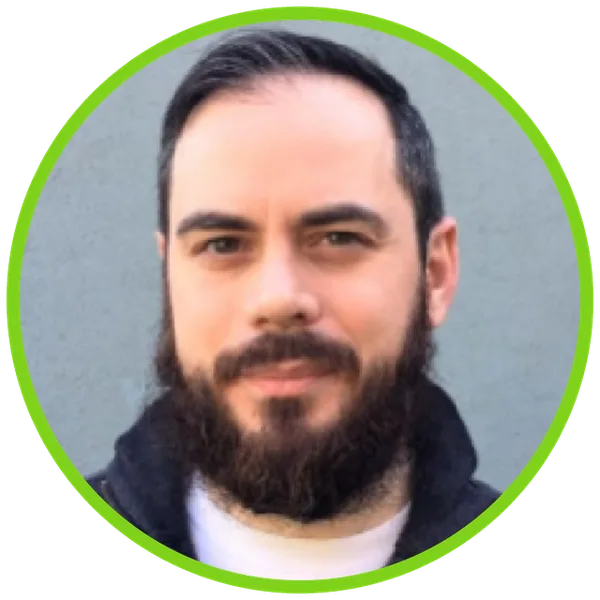
Daniel Weisman
Daniel Weisman from Motion Auto Insurance discusses how motion auto approaches car insurance and what progress can be made in the auto insurance industry.
The full episode
Press play for the whole conversation.

The full transcript
Transcribed automatically from the episode audio, so some names and terms may be misheard.
James BenhamJamie Knowledge Podcast Network. On episode 46 of the InsurTech Geek Podcast, talking all about Motion Auto Insurance with Daniel Weissman from Motion Auto. InsurTech Geek powered by JBKnowledge is all about technology that's transforming and disrupting the insurance world. We'll be interviewing guests and doing deep dives into specific tech we see changing the industry. We're taking you on a journey through insurance tech, so enjoy the ride and geek out. And here we are. Another beautiful day. Another beautiful Friday as we record. This is Friday, 01/08/2021. 2021.
That's right. 2020 is behind us. We are onward and upward, at least we'd like to believe so. And with us today, we've got, the most interesting man in insurance himself, my my fellow Michigander,
Rob GalbraithRob Galbraith. Rob, how's it going? It's going well, James. Interesting start to our year here in 2021.
James BenhamI mean, what the heck? Yeah. Right? Nothing's going on for me. I don't know what you're talking about. No. It's it's it's good to see you and glad to have you on board. Of course, with us, Daniel Weisman. Daniel, what's going on? I'm doing great. Thank God. Yeah. Good. Where are you joining us from today, Daniel? I'm joining from St. Louis, Missouri. Beautiful St. Louis. Now you in West County or are you actually in St. Louis? I am in University City.
Daniel WeismanSo Yeah. It's it's West.
James BenhamI spend a good bit of time in St. Louis and have have had many, many meals, many lunches, many dinners, gone to the hill a whole bunch of times. Of course, spend a lot of time out in West County, beautiful place, but gets a little cold this time of year for this Texan. I will say that. It's been lovely for me so far. The coldest day we had was 10 degrees. That was a bit of a shock. But for the most part, it's been 30, forties, easy to bundle up.
Yeah. Man manageable. Well, we're gonna we're gonna come back to you in just a second. Just a reminder to all of our listeners out there that, of course, you can go to InsurTech Geek.com. You can sign up for our weekly email there. You can also just sign up by texting geek out to 66866, and that gets you your weekly email along with the, show notes and links to any articles that we talk about for the InsurTech Geek podcast. Just text geek out to 66866. Back to you, Daniel.
We're gonna talk all about parametric insurance. We're gonna, you know, deep dive on we're gonna go all over the place. Right? We're gonna talk about usage based insurance, parametric insurance. We're gonna talk about all kinds of stuff, but before we before we do, I wanna talk about you for a second. You've had an interesting background in in telematics and then a firm called GoMango. You had you've worked at a family foundation. I mean, you've you've done you've done some interesting things. You have an interesting background.
You got an econ degree from Columbia, Philosophy, which of course I love anyone who studies philosophy because you can have some like super deep, really obscure conversations with them about stuff that just twists your brain into a pretzel. So let's talk about you for a second. Where'd you grow up?
Daniel WeismanWhat'd you envision yourself doing and how'd you end up in insurance? Yeah. So first, I want to make a quick correction. I actually did not graduate from Columbia University. I'm a little shy of my degree. I had some personal matters that came up and I had to take care of those. And then I got some job offers and things. And one of these days, technically, I'm still on extended leave. So one of these days, I might just get those last few credits.
James BenhamNice. Well, you still went. So philosophy is always a is an interesting
Daniel Weismanpractice to study. So where where were you where were you born and raised? What'd you where'd you grow up? Yeah. I was born in Los Angeles. I grew up mostly in Los Angeles, but I kind of bounced around all over the place. I lived for six months in Moscow when I was 10 years old, 92, just after the fall of the Soviet Union. It really got me thinking about economics, for example. I had a bunch of cash in my pocket. I wanted to immediately change it all to rubles because of the buying power disparity.
And my dad was like, no, you can get more rubles for your dollars next week. Mine was low. What does that mean? Right? And those are the kinds of things that that shape a young brain. I actually started out at Cal State Northridge. I was in their prestigious NASA CSUN Care Program, which was a paid work learn relationship on NASA GPL grant GPL grants. And and then I transferred to Columbia University. I started out in physics, but then I got really interested in some of the behavioral economics stuff that was just coming out at the time.
And so I switched my majors. I kept a philosophy background because I was really studying philosophy of science and I saw a lot of overlay. So if you talk to me too much, I'll start bringing up scientific determinism, has interesting relationships to insurance and Laplace's demon as a kind of early concept in that. I can bore everyone tears. Sure. We
James Benhamcan deep dive on self determinant morality versus externally determined morality. We could, we could go into moral hazard and how it impacts decision making in business when governments bail companies out for making bad decisions. I mean, there there's a lot of philosophy in the insurance business because of course insurance is about assigning a dollar value to human behavior. Right? I mean, it's At the end of the day, you're betting on behaviors, both from humans and from the planet. And so there's a whole lot of philosophy involved.
Daniel WeismanYeah. And that's definitely true today. I'm not sure it's going to be the same in thirty years. Right now, behavior is definitely the most important aspect. But maybe in thirty years, it's going to be more like property insurance where the behavior matters less. It's still important. But we might see a shift there too. So for sure. So what got you into insurance? That is an interesting question. So I was looking for an opportunity after the crash of 2008 in the real estate space. I was working for the number two mortgage originator in the country after Countrywide called GMAC ResCap, General Motors Acceptance Corporation, the residential capital division.
It had just been bought by Cerberus Capital. They had just bought ditech.com. And I was one of the smart young people that they brought in to manage the Ditech technologies and try to migrate it over to the gene macros at parent company. And that's kind of where I cut my teeth in the tech world. And it was a great experience. And after that, I decided I would try something on my own. And I was looking across the world, and insurance aggregators were making really good money in Europe and Australia, The UK.
But in The US, they weren't doing as well. And so I decided I would create a insurance aggregator, which was Gomega. And we actually got to market and we were comparing 70 insurers in three states, Arizona and Utah and Nevada. And that's how I met my co founder. He actually got me that data. That data came through a relationship with FSC Stone River. And just to put the technology space in context, that data was still encoded in Visual Basic. It was legacy from the time when they were physically mailing floppy drives to insurance agents every two weeks and updating the rates that way.
And there were maybe a half dozen carriers that had APIs for rating, and we wanted to provide a lot more diversity than that. So I've been asking around trying to get, you know, the real data as best as I could. And Jason, after I met him with a single phone call, two weeks later, we had we had the FSC store and reaper data at reasonable rates. The hard part was extracting that data without using their software. So my head of tech at the time was former unit eight thousand two hundred, which is the, you know, computer science division of the Israeli military.
And he found somebody that had a lot of experience, and we hired them. And then we were able to to figure out what that included data actually meant in terms of race. But at the time, the primary customer acquisition methodology for a lot of these aggregators in The US, because there weren't APIs, because The US adopted technologies a lot earlier than the European counterparts. So everybody in Europe had an API already. But that wasn't the case in The United States. They were still on these legacy systems.
Because of all that, the primary customer acquisition strategy in the aggregation space was enter your info for a chance to win a free iPad. And, of course, that leads to awful quality leads. And then trying to sell leads, trying to tell insurance agents and or carriers, hey, we're better than the competition because this is a real quality lead. They know the race. They're actually interested. They put in all their information. Yeah. The the going rate was, like, $5 a pop back then. Whereas, meanwhile, the, you know, GEICO was spending $50 pay per click on Google.
And and we kinda stuck in this in between. So, you know, we made a good run. We were there for two and a quarter years. And of course, the market is totally different now. But I mean, I met a lot of great people, made a lot of great relationships. And that's how I got into insurance to begin with. And then I kind of left insurance for a while. I was doing some telematics consulting. And I was also working for the foundation in real estate primarily. And I didn't take a paycheck for a year because everybody else always came first towards the tail end.
And I was able to make some money, buy a house, and kind of get myself financially back on track. And then two very interesting things happened in my life which caused me to go back into insurance. The first one was that my wife was in an absolutely horrific accident in January 2015. She was bedridden for three months and couldn't work for a year. And the circumstances was that she was taking our our infant daughter to to the hospital for pink eye, and somebody had stolen a vehicle and was fleeing from a cavalcade of police and tried to take a corner too fast and completely took out the front of my wife's car.
I spun it, caused whiplash, and all sorts of awful things. And and that was the first thing that happened. So we, of course, had good insurance. We valued that sort of thing. And, of course, the person who sold the car didn't make the best decisions in life in general and didn't have any insurance nor any assets or anything else. And our insurance provider really refused to acknowledge the severity of the accident for the most part. And of course, we saved up all of our receipts and expenses and took a year to settle and it wound up being a max claim.
But that's what insurance is for. And the irony was if they had the data, you know, they would have known it was going to be a max claim. And then maybe they would have tried to stop me from going to an attorney who wound up taking a third of the payout. And maybe they could have saved, you know, 25% on the claim and we would have gotten more because we wouldn't have been paying an attorney. And maybe we wouldn't have had to borrow from friends and family for a year to cover our living expenses while we went from a two income household to a single income household, etcetera.
So that was the first thing that kind of got me thinking about insurance again. And then the moment came two years later when a friend of mine had a whole side hustle on Turo. Turo is like Airbnb for cars. He had seven Toyota he had seven cars, mostly like Toyota Corolla was, and he's renting them out for months at a time. He's got the 169 lease special, he's renting them out for $500 a month primarily to people who can't handle the long term contract or don't necessarily have the best credit.
And there's a commercial policy in force by Turo per their arrangement for the renters. And and he called me up and he said, hey. I am paying full fare insurance on all of these vehicles, but they already have a commercial policy. Is there any way I can get a discount for the fact that they're not even really in my possession at all? Seemed like a pretty reasonable question to me. Yeah. The risk is relatively low. Maybe you can get a discount for that specific use case.
And and I asked Jason, and we both looked around the we called some very prominent people at some very prominent insurance companies that we have relationships with. And the answer was no. This kind of product absolutely does not exist in any way, shape, or form. And then a light bulb came off that, you know, there's this hybrid commercial personal universe and this graying of the zone in between. And there's probably a lot of gaps in the market. If we build an insurance company from the ground up, perhaps we can start addressing some of those gaps.
James BenhamThat's awesome. You know, and it's pretty powerful, right? It's a pretty powerful testimony that I'm sorry you had to go through such a painful life experience to have to learn those lessons too. I'm hoping that everybody's better now.
Daniel WeismanYeah. Yeah. It took a it took a year for full recovery and, you know, physical therapy and and, you know, just therapy in general for a while. Anytime she saw the car that she had when she got into that accident, you know, caused flashbacks.
James BenhamSure. Yeah. That sort of stuff. That's traumatic. Well, I'm glad that that that people are recovered now, but it also led you to start a beautiful business model where hopefully others won't have to, endure the, really the silliness that you had to endure for an outcome that was fairly certain. Right? And you have a max claim, you know, if they would have taken a minute, they could have seen that a max claim. They're gonna saved everyone a whole lot of time and trouble and heartache. And you know, the, the, the, the mission and insurance is not just to make the insured whole, but to do it in a way that does not further harm them.
Right. And there's, I think that's the other really important part of it. Rob, your thoughts.
Rob GalbraithYeah. So, Daniel, it's great to to see you again. And, you know, we were fortunate enough to have the opportunity to connect at InsurTech LA event back in July 2019, where I had the honor of being the the guest of honor from. And we had a great conversation about my book, the end of insurance as we know it. And it You sound so strange. Yes. I did. And, yeah, there was actually some wonderful photos of us at that event and others. And that feels like such a long time ago now that we've had the pandemic and the idea of in person gatherings now, right, seems so foreign.
I certainly hope that at least later this year, once the vaccine is widely distributed, we're able to to have those type of moments again. But I was sharing with you, you know, right before we we started the podcast that I I still have your original pitch deck that you had shared with me at the time. And so I won't go through it with folks. But and, what I love about it, the original time you talked about car sharing, you talked about vehicle subscriptions, advanced safety technologies, gig economy, and the future of mobility.
And just as you were articulating a minute ago, I think, you know, there's so many well established names in the auto insurance space. It's such a mature market that many people kind of overlook auto insurance when they think about opportunities within the industry. But because of those personal experiences that you had, you saw opportunity. So would love for you to tell us a little bit about Motion Auto. You you'd share with me right before we jumped on that you sold your first policy a couple months after that meeting in in Los Angeles.
And so it's been about a year and a half now. I know you've made some tremendous progress. And I also know that your path was not straight and linear along the way. So we'd love for you to kind of share with us motion. You shared a little bit about, I guess, the genesis of the idea, but tell us a little bit about the journey you've been on the past couple years. Yeah. So we
Daniel Weismanwe structured ourselves as an MGA, but more along what you might call full stack MGA. And we did that so that we could build core architecture for those types of use cases and experiences that that we had just mentioned and that I had pitched a year and a half ago when I handed you that pitch deck. And we sold our first policy in September 2019. And then we noticed that we had a few things that we needed to clean up. You know, we had a couple of things that broke.
So we paused, and we didn't sell another policy for another month and a half, right, just to make sure that everything was in order. It is a highly regulated space. And then we started selling. We started selling, in many ways, a very traditional insurance policy with the telematics component. And we've been focused mostly on just improving that core underlying architecture and proving out that we can acquire customers at a reasonable rate with very standard market. And part of the reason for that I'll give with kind of the Turo example.
So we've actually designed a product, at least conceptually, we've mapped it out where if you have a commercial policy that really covers and therefore the personal side is redundant, we can drop the policy to state minimums and maybe add a few extra coverages for gaps. And our analysis shows that if we were to do that, we can save a customer anywhere from 15 to 55% depending on their original coverage levels for the duration that their vehicle is rented out with a customer. But when I looked at the Turo market, the vast majority of their posts are in California.
And we're not live in California yet, right? We're live in Arizona and Utah. And while California is very much on the roadmap, it's a state that should be approached relatively cautiously, etcetera. And so we're not going to get to that kind of a product for a little bit later. And some of these opportunities really make much more sense when you have a very large multi state footprint from a geographic perspective. And so we invested a tremendous amount of effort and technology in building out our ability to roll out new states cost effectively and quickly.
And the first state is always the hardest. But even the second, third state, a large incumbent insurance carrier will throw 200 employees at rolling out a new state. We've got 30 in the whole company and five of those are customer service related. Just to kind of put things in perspective. So in order to do that effectively, especially when you have a very large surf filing like we do that's over 1,800 pages, you have to build a lot of core underlying technology that makes that rollout process a lot smoother and a lot more reliable.
So, you know, we sold our first policy in September 2019. We went live in Utah in October 2019. So it's quite span later. And then we're going to launch Tennessee at the January or early February. And then we've got a huge state rollout where we expect to be in 80% of The US by market by the 2021. So there's a lot of technology that kind of has on that end. We built our own policy administration system from scratch. We built our own rating engine from scratch.
All the really hard, boring stuff that a lot of people don't necessarily get, but really, you know, excites me and float my boat as an insurance geek. Right? So that's kind of just the core of being able to sell any policy at all and being able to roll out and build the architecture so you can address these new opportunities. And now that we are live and we're solid, we're trying to get a lot smarter on the telematics side and doing a lot of things that really excite me from the perspective of attacking these niche opportunities.
We should be rolling out our first commercial policies in the 2021 in Texas. And then with the commercial on one side and the personal on the other side, we can really start carving out that gray zone in the middle where a lot of these things kind of reside and rest in the on demand and mobility space. That's awesome. Just tremendous progress and love hearing about
Rob Galbraiththe journey. James, turn it back over to you. Yeah. And this is really
James Benhama kind of a fusion of technology and contracts. Right? Because you're having to rethink the contract because as I listened to this, you know, you're you're rethinking the contracts because some of the contracts just kinda stink. Right? And then you're saying, okay, you know, modern modern cars are shared, modern houses are shared. I'm an Airbnb host. So, you know, I I've had to deal with this in in my policies and my broker on my very first Airbnb property got the wrong insurance policy. He got a he got a non short term rental policy, which you know, left me completely hanging in the wind, right?
I mean, I, if I would have had a claim and I didn't, thank goodness. It was, it was uncovered. Right? I mean, because it was, it was long term rentals only. I mean, there, there, you have to rethink how you look at a car and how you look at a house and what that means. Because now we have technology that, you know, these these market, these things have always happened. You've always lent lent people your car and sometimes even would do a private lease, but but now you've turned these assets into commercial operations and, you know, it gets much more complex.
As I was looking through your technology, because, you know, I'm a software developer, right? I like looking at, I like looking at exactly what are you doing technologically that is unique and different than what is on the market. I would like to hear from you what you what you think is really because you have you have an app. Right? And you have to to have to have the coverage, you have to you have to have the app on? You have to have the app on. It has to have the permissions.
If you disable the permissions, then you don't get the telematics discount,
Daniel Weismanis baked in After we collect enough driving data, you know, your rate can go up or down. We keep the band relatively low right now because we don't have a lot of claims data to check it against. So we're utilizing benchmarking from other companies. And and that yeah. That's very much it. We are also getting a lot of very interesting third party data related to mapping and plan on getting data directly from OEMs as well. A lot of them have programs where you can license that data.
And then we're also seeing regulatory shifts, for example, where the state of Massachusetts wants to make the customer the owner of all the telematics data. And the law that just passed with regards to the service, but the telematics they threw in there as well. And they don't want any individual insurance company necessarily to be able to benefit exclusively from the telematics data. There's a tremendous amount of change and there's a tremendous amount of opportunity. And yeah, it's like the Wild West right now in terms of available data and then trying to generate insights from that data and what that means for the actual consumer.
Sure. And, you know, inevitably,
James Benhamconsumer privacy advocates step up to the plate and and, of course, you know, like your your credit scores have been used for your insurance for a very long time, and there's a lot a lot of things that have been used, but but this allows you to really if if you're a good driver, and I'm not a good driver, you know, you can you
Daniel Weismancan I'm an impatient driver. That's my problem. When was the last time you're in an accident? Maybe you're not giving yourself enough credit. Right? Yeah. Let's
James Benhamrethink this conversation a bit. I'm a I'm I'm I'm a decent driver. So I use I have a Chevy Silverado, and then I've got the, you know, their their satellite service. Jeez. Why did this run out of my head? That's, that's tapped into the, to the telematics telematics for the truck. I used to use automatic, but then, you know, automatic went out of business and automatic gave me a driver score and it was so, so, and then I started using OnStar. That's what it is. Started, I started, I went back to OnStar once I, by the way, if you have a telematics OBD two dongle plugged into your truck, OnStar can't read all your data because it's all being flowed through to the OBD two port, which creates a problem for them.
So OnStar started scoring my driving because they had all the telematics data. They just weren't doing a score. So they started emailing my score. So there there's some really interesting things going on around OnStar as well, where you don't really have to be a hardware manufacturer of motion auto anymore. If you, if you got a Chevy OnStar is collecting and aggregating and analyzing the telematics data already for you. You just gotta see if you can partner with them. But you just chose to to go for the app.
So That's not entirely true. So first of all, we we are talking with companies like Almstar
Daniel Weismanand working and getting data, and there's a tremendous value in being able to compare the app data from the actual vehicle data. Yeah. Yeah. That's being generated by OnStar. You could do normalization. You could start pairing the actual phones to the vehicles. You can start getting a sense of who's actually driving. There's a lot of really cool stuff that you can do when you have both datasets that you can't do if you only have one. There you go. That's
James Benhamwhat I wanted to drive towards is just kind of understanding which one's gonna be more accurate. Now I personally like the idea as an insured. I like the idea of you connecting with my OnStar account more than the idea of you installing an app on my phone because of the obvious, privacy issues. Although Apple, I will give them credit, has done an amazing job in their recent software releases of requiring an incredible amount and number of opt ins on all the different types of data you share with the app manufacturers.
And it's been and of course, it took them thirteen years to do this, but now you can choose all the different data sets you're sharing with the app manufacturers. Great. You know, you can even choose specific photos or all photos. I mean, there's, you know, for a while you had to enable your apps to basically have access to all your data to function. Now you can really carve it out. And that becomes a big part of this discussion in particular with, you know, the California consumer privacy rules being really looked at across the country, it's gonna change the way we we look at this and this utopian
Daniel Weismanfuture of usage based insurance may or may not happen and achieve lift off because of the counterbalance of privacy. Right? I it's a really great point, and it's something that I spend a lot of time thinking about. Number one, the last thing that I want as a cofounder of insurance companies to get a request from the Department of Justice asking for GPS coordinates. Was this prospective suspect in this area at this time on this date? I don't want to have to deal with that. But more than that, I I don't wanna be that company either.
Right? So step number one is you absolutely have to be completely responsible with data more than anything else. And then outside of that, I think we really have to look at regulators, number one, recognizing the value that this kind of data can mean to a lot of people who are potentially paying insurance at much higher rates than they would otherwise deserve, just off of the basis of the fact that all of the traditional underwriting factors are data proxies for something else, something that is more close to proximate risk.
And that is a very blunt cudgel. And and if you really wanted to do it for a tremendous amount of people, getting allowing that data to be accessible in some way, shape, or form is step number one. But just because you have that data doesn't mean you have to be irresponsible about that data. There's a data set, for example, that we're looking at that has medical procedure cost. And me, based off of my wife's experience, I'm thinking, well, what is the nearest hospital? What is the cost of ambulances in that area?
And can I start looking at what triage, etcetera, would cost in high impact accident at the local hospitals? Maybe I can build that into the trip risk score. But they don't allow us to get enough data to tie that to individual accidents that we have from the Department of Transportation. And you know what? I'm cool with that because all you have to do is do some fuzzy matching. And you don't have to know exactly that this person had this medical procedure because of an accident that happened at these GPS coordinates.
We're already working on the loss of very large averages as an insurance company. We're just gonna get better. We're gonna get more accurate. We can strip out a lot of that sensitive privacy stuff
Rob Galbraithas long as we have enough data in aggregate to really get those insights that we need. Awesome. Rob? So, Daniel, I'm really interested. You know, we were talking a little bit about the the app and the sense I get of of kinda where Motion is at today, but the the app is really central to your value proposition, you know, the ability to, you know, quote coverage through the the app, buy coverage, service your policy through the app. We're actually not quoting through the app. Do know why?
Daniel WeismanYou know why? No. I'm curious. So, like, 90% of our customers are actually buying from mobile web. It's ridiculous. But Okay. We're not doing quoting through the app because if we do quoting through the app share share with Apple. To share with Apple. To share with Apple. To share with Android. They they're so focused on getting their cut that if you go through the quoting process and you transfer them somewhere else for the payment, can you imagine what you'd have to charge for insurance in order to pay Apple their 30% cut?
I mean, yeah. So I mean, look, if if there were less drama about it, if the exceptions were really well known and there was a really good way to do something that was fair and equitable, you know, like a normal you know, payment processor of some sort, then then we'd be totally down. But, yes, James, you're completely right. That's Yeah. That's why. No. I know. As soon as you said you don't do, I'm like, I know why.
James BenhamYou gotta share that cut. I mean, it's amazing to me that that percentage has lasted this long because of the sheer size but hey, that's a big part of how they monetize the one of the world's most valuable companies.
Daniel WeismanBut in insurance, I mean, after you count for your loss ratios, there's nothing left if you give me 30% to Apple. I mean
Rob GalbraithYeah. I mean, most loss ratios are less than 30% in the auto space, right, overall, and that's including all in loss adjustment expenses as well as customer acquisition costs and, you know, keep the lights on all that. So so, you know, after the purchase post purchase, right, it's kind of central to, I guess, the the customer experience. What have you learned from that? You know, I I I'm just curious. So many, right, companies of agents and brokers out there and and and websites and whatnot where, you know, the app can maybe, you know, provide you your auto ID cards, which I know Motion does as well.
Like, there's kind of some neat features, but I can't think of another company that's made it essential to the experience as Motion Auto. So just kind of curious, you know, the receptivity to to customers, whether they found beneficial,
Daniel Weismananything difficult or challenging. What's that experience been like? Yeah. So I'd say the vast majority of our customers are 40, and they all would rather not talk to somebody and just take care of it themselves. And everybody's always got their phone with them. Again, something like 90% of our sales is coming through mobile web anyways. Right? That means that they're buying on their phone. It's just what people expect today more than anything else. Outside of the telematics piece, we did it for the data. We actually assumed that people would be buying over, you know, the website on on their laptop.
That hasn't really happened. Right? So you think you know sometimes, then you really don't. And and these touch points are are absolutely essential. But then, you know, eliminating the touch points as much as possible, making these things, you know, automatic endorsements. Wouldn't it be cool to go to a dealership and you trade in your old car and that automatically drops from the policy? And you buy the new car and it's automatically added to your policy. And then you just drive off. It's just seamless. Right? That's really where we have to get as an industry.
And yeah, mobile is kind of stepping stone to that. But it's absolutely essential. You have to meet customers where they are and their expectations are mobile first
Rob Galbraithtoday for sure. Yeah. And then I'm curious particularly on the claims side. Right? We see a lot of companies are enabling the ability to, like, take photos, have it analyzed by AI, give you an estimate, decide whether to dispatch a tow truck or tell you, you know, what what body shop to take it to, etcetera, etcetera. But just curious what your experience is. You know, how many of your customers use that? Do have another alternative if somebody didn't wanna do that, or do they have to to go through that app for the claims process?
And
Daniel WeismanWe meet customers wherever they're at. Right? I can't tell you that it's surprising how many have decided just not to download the app even though their discount is tied to it. And then it's like, no. You gotta download it if you wanna keep the discount. So, you know, it's surprising that some people want to chat over intercom and some people want to call in and speak with the human, especially when it's a high stress situation. Like, I just got into an accident. And and there's a surprising diversity of range of behavior in that regard.
So I think we're going to see more and more inside the app. A Jarrow Swoop is who we're using for the roadside, and they have excellent APIs. And a lot of customers just want to call it from their mobile app. And why not? And there's a tremendous amount of really great providers stepping in both on the claims and the roadside assistance side from a technological perspective. If I were advising another insurance NGI, I'd say, yeah, leverage. Leverage everything you can That's out there. That's good. And then some things you just you just need to build yourself just because it's not gonna do what you need it to do.
So we we have our own layers over our TPA from the previous perspective because they don't have the same technological architecture that we have, But we wanna have that kind of experience for a customer. And those things matter a lot too. So it's just you know, sometimes it's a little foogy and sometimes, you know, like with the Jiro Swoop, you know, they kinda hit it out of the park from the technological perspective. And
James Benhamand certainly, the whole industry is going that way. Yeah. Fascinating. James? No. It's it's been a really great discussion around around insurance. Know, Zurich came out with some news this week that they're doing parametric insurance for weather. So they're just gonna, they're gonna pay out whether it is for the construction industry, they're gonna pay out the claim, whether you had damage or not. If the, if a weather event occurs in at the job site, then they're paying out. They're they're they're tired of arguing about whether the the claims are not.
So you're they're essentially turning into a bookie, right, where they're just betting on weather and that they're just paying out odds on weather events, whether you have a loss or not. Because I mean, you know, insurance is technically supposed to, you know, indemnify you. Right? You're supposed to you're supposed to make them whole. In this case, you're just laying down bets and running an options market. But that's that's really what that's really what what Zurich's doing. And I think we're gonna see I think we're gonna see that with with personal property as well at some, at some level and with, you know, then then usage based insurance.
I mean, we're really looking at is, is usage based insurance the only way you're gonna buy insurance? I don't know. I think it's gonna end up being kind of an even split. Like you said, some people like chatting, some people like calling in, some people like using mobile web, some people like using their laptop, everybody has their preferences. You know, I, I, I just said, I know Rob and I love talking about the future, you know, what's, what's next, what's in the future Because we're already at usage based insurance.
We're already at parametric insurance.
Daniel WeismanSo what's there left to be tackled? Well, parametric is really hard in the auto space and I really, really want to get there. But when you go into the complexities, for example, of a bodily injury case, that might be something that takes a long time before we get parametric payouts for bodily injury because there's just so many variables and just the physics involved, etcetera. I think we'll get to vehicle replacements and or budgeting a lot quicker between photo, video, and the car sensor data and what gets disabled or not disabled.
We could be a parametric really quickly for that potentially. And think about just how much goes into the administration costs associated with auto claims. And, you know, I'm not sure if Zurich is actually going to pay out everybody with the weather event. I think you still have to file a claim. And then they look over and then they send out the check. At least that's how some of the hurricane parametric insurers operate. You still have to file that claim. So so there might be some elements of that, of course, if you know that that's how they do it, you can assume that everybody's gonna call, say, hi.
Have a claim. Knowing that nobody's coming out, there is that moral hazard concept going. But yeah, I really, really do think that that's where we're going to get to as an industry eventually. I would certainly like to see it. It would have been a very different experience for my wife and I if we had just gotten the check-in the mail instead of having to wait a year, for example. Knowing that, Okay, this is how much we have to budget for physical therapy and all these other things.
But actually, it's been less stressful. We're going to give you three months of physical therapy or six months of physical therapy and these are some providers maybe that we can recommend to you or go through your insurance, whatever it is. But we're not there yet. Is a major data science problem to tackle. Even then you need real cooperation from OEMs and you really need to do a deep dive on the health costs with local providers and things and we will get there. But you know, I'm just surprised today that a lot of environmental factors that we now tackle with the parametrics, for example, isn't being utilized in the auto cycle.
They're not looking at the parking garage at your condominium at on the beach in Florida. Maybe they should, right? Maybe there's an increased flood risk in that parking garage the way that they designed it. Don't know. But yeah, there are going to be some really, really interesting data sets out there and there's a lot of opportunity with regards to how we carve these up and assess risk in the future. And ultimately, the winners are going be everyday consumers.
Rob GalbraithAnd we want to be the company that gives that to them. Awesome. Rob, any final questions or comments before we move on to our news stories? Yeah. So Daniel, you know, you mentioned the conversations that you're you're having with OEMs. And I I I we talked a little bit right before the podcast about some of the exciting possibilities that you're exploring there. So kind of open it up to you. I think one I'm particularly interested in is being able to leverage some of the infotainment systems that are in cars and and how OEMs are are looking to leverage that and that there may be an opportunity for an insurance play there.
So I'm just kind of curious, I guess, where you see the future going for motion and what are some of these exciting possibilities that you're exploring that you can share with us. So number one, yeah, we're talking with OEMs.
Daniel WeismanAnd one of our major investors is a company called Telenav. They're a tier two provider for OEMs. They do infotainment systems primarily, and their big thing is in car commerce. And that's part of their strategic investment in us. One of the things conceptually that they've been working on and already have piloted is you cross into the parking lot of Starbucks and your order can come up and you push a button. They handle the payment for you, and then you walk in and get your drink. You know?
And that's a pretty cool customer experience. And we're working with them, you know, about developing safe driving routes. You know, that thing with my wife, maybe if she had just been on a different road, maybe a road with slightly less risk, maybe that whole thing would have never happened or wouldn't have been so bad. And the idea of being able to provide a discount for driving on safer road and letting customers know, hey, if you were a Motion Auto customer, you would have received a discount for driving on roads like this as opposed to the fastest route, which is what my wife got when she put in the navigation.
So it's a tremendous opportunity. I think more and more insurance is going to be embedded. I think OEMs recognize that there's a lot of being careful from a rollout perspective and who you partner with and what you're going to do. I think that our biggest gap right now is just in the number of states that we service. You know, Arizona and Utah are approximately 4% of the total US market. That's why we have such a big push for 2021 in terms of just increasing our footprint because then these things become material in a much more meaningful and earnest way.
But, you know, Metromile and Ford had an announcement. Ford has some pretty good open APIs that you can pay for to get, you know, that GPS access. There's there's all sorts of really interesting stuff happening. I do believe that embedded insurance at the OEM level is going to be a major game changer. And having the ability to write those policies from an architecture perspective and being able to do meaningful things with the data is what is gonna separate the winners from the losers in that sense.
Yeah. Fascinating. Fascinating. So we look forward to to hearing,
Rob Galbraithyou know, what's next, how your your geographic expansion goes in 2021, and what, you know, some of the the new possibilities that you're able to achieve going forward. So it's been a pleasure having you on, Daniel. Thanks for joining us. Yep. And, Rob, just a couple of news stories that came up. This was an interesting one from propertycasualty360.com.
James BenhamAnd and this is just an investment report. Willis Towers Watson reported in their quarterly InsurTech briefing q three twenty twenty that InsurTech companies globally raised $2,500,000,000 across a 104 different deals, substantially more than q two. And so this might mind you, this is, you know, middle of the pandemic and there is a record amount of funding flowing into the Insurtech space. They and this is their their quote. Insurtech is challenging the existing insurance model and will force insurers to develop different digital platforms and and to acquire merge the IT companies perhaps outside the insurance field.
And so there's some really interesting thing just from the deal flow. Right? And and we we've seen it, we've made a lot of announcements on it, but it's interesting to look at the aggregate numbers when you look at, you know, the third quarter middle of a pandemic and
Rob Galbraiththere's 2 and a half billion dollars being deployed to try and to try and really shake things up. Of course, it's a insurance is a massive market. So I thought that was interesting. Yeah. That's fascinating. And you're right. I think what we saw was kind of a dip in q two, obviously, as the pandemic hit and people were kind of, you know, unsure, but funding recovered very, very quickly. And and like you said, kind of back at record levels. And, you we've talked before on the podcast, James, about all the successful exits that the companies have had both from an IPO and an M and A standpoint.
And I think Lemonade's IPO really kind of kicked things off in the second half of the year. And so I expect it's it's a full steam ahead for 2021. Who knows what's coming, of course. And I can glad to report that my my dad, my 86 year old dad got his first shot of the vaccine yesterday. He called me to to let me know. So, yeah, hoping to to get back to, you know, some semblance of, of what pre COVID life was looked like. My news item this week is really actually just a recap from a firm called Efma.
They're membership based organization based in Europe actually, but they focus on digital banking and insurance. They recently had kind of a compendium called innovation insurance, the end of insurance as we know it. And yes, they did give my permission to, to use that. And so I actually wrote kind of a summary of, you know, where things stand post COVID and the insurance and innovation space. And so if you go to their website, you can download the the paper for free. And they also have a series of executive interviews with, I believe, 20 executives or so really kind of on, you know, how has COVID changed their business model and and what do they see going forward?
You have to be an FMM member to access the interviews, but anyone can access the white paper that I kinda wrote the introduction for. So encourage folks to go out and do that and check it out. And we'd love to hear anyone's thoughts on, you know, LinkedIn and or elsewhere kind of responding to that.
James BenhamThat's awesome. That's awesome. Well, I'm glad that you had to participate in that and that's always good to see the the the quintessential necessary tome of InsurTech, the end of insurance as we know it, being being promoted out there as well. So that's that's great. Well, look, Daniel, thank you for joining us today. I really appreciate you being on the show. It's my pleasure. And anything for Rob, so let me know. Awesome, man. Of course, Rob Galbraith. Good to see you, sir.
Rob GalbraithGreat to see you, James. Happy New Year. Let's hope 2021 is,
James Benhammore like 2019, less like 2020. And Daniel, of course, great to catch up. Yeah. That's that's absolutely I'm gonna try and get my I'm trying to get my dad on board the, vaccination train as well. That would make me feel a lot better. He's he's in his eighties as well, so I'm hopeful that, that'll happen soon. And thank you out there, to everybody in listener land for listening into this episode of the InsurTech Geek podcast powered by JBKnowledge. It's all about technology that's transforming and disrupting the insurance world.
I've been your host, James Benham, jamesbenham.com, with my cohost, Rob Galbraith, endofinsurance.com. Big thanks to Jim Greenlee, our podcast producer, and Cara Dalton, our our creative producer. And thank you for joining us today. We're taking you on a journey through insurance tech. So enjoy the ride and kick out. See you next time.