 YouTube
 Spotify
 Amazon
 iHeart
 Apple
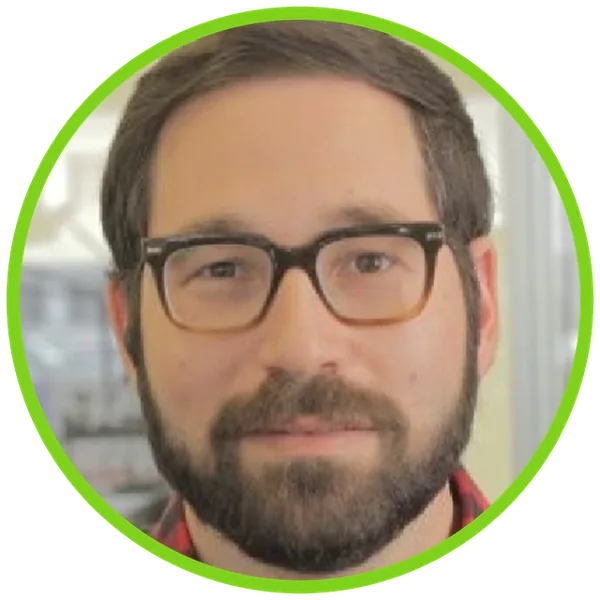
Alan Ringvald
Alan Ringvald from Relativity6 discusses Industry Classification, why it matters, and how Relativity6 is using Machine Learning & AI to provide accurate Industry Classification.
The full episode
Press play for the whole conversation.

Insurance Tech News
7 Major Cyber Insurers Form Company to Coordinate Cyber Analysis, Risk Mitigation
Is Insurance Missing Out on the Crypto Opportunity?
The full transcript
Transcribed automatically from the episode audio, so some names and terms may be misheard.
Rob GalbraithJBKnowledge Podcast Network. On episode 61 of the InsurTech Geek podcast, we're talking about AI driven industry identification with Alan Ringvald from Relativity six. The InsurTech Geek podcast powered by JBKnowledge is all about technology that is transforming and disrupting the insurance world. We'll be interviewing guests and doing deep dives into specific technologies that we see changing the industry. We're taking you on a journey through insurance tech, so enjoy the ride and geek out. All right. Right. All right. It's another wonderful summer day that we are recording this.
We do not have our James Benham, our esteemed founder and original host. You're stuck with me, the cohost, and, I'm very excited. So this is the first time I get to read the intros and outros. So for you loyal listeners, you'll notice that there's a change there. So, hopefully, I do it as well as James, and he always starts with the r. Alright. Alright. Alright. So I I have to, give you the the tribute there, James. Hope you are doing well. We will hold the fort down, as I'm sure you're enjoying a wonderful summer in off of Lake Michigan.
But I'm excited today, for our guest Alan Ringwald from Relatively Six. And Alan and I have crossed paths a couple of times on a couple of different continents. So it's great to, finally have you on the podcast. Alan, how are you? Thank you, Rob. I appreciate it. Doing well.
Alan RingvaldChecking in from sunny and wild, fiery Los Angeles. Excited to chat with you today. Yeah, I,
Rob Galbraithof course, with all of the travel restrictions now, haven't left the beautiful state of Texas in over a year. But LA was actually where we were planning to do our family vacation last summer before everything kind of collapsed. So I definitely hope to to get back out there again soon. And we're having very un Texas like weather here. We're talking with, our producer Jim Greenlee right before we jumped on that, it's been raining here. Usually, this is the time that it's, sunny. It's like a broken record.
Guess a little bit like LA where we don't get the rain for, three months. Typically, it's hotter here where it's the the only question of the weather is whether it's gonna break a 100 that day or not, but it's always in the nineties. We're kinda hanging out in the pool, and we've been struggling to break eighties. And, you know, I don't think that I would call this a marine layer where I'm sitting in San Antonio because we don't have a a body of water close by, but it's it's kinda felt like that.
So it's been, very strange. Before we get started with our interview with Alan, don't forget that you could subscribe to the InsurTech Geek podcast by texting geek out to 66866. That's geek out to 66866, and make sure you never miss an episode. So back to Alan Ringwald from Relativity six. And for those of you that, again, are loyal listeners of the podcast, you know that we'll be talking all about Alan's startup and who Relativity six is, what they do. And I'd like to talk a little bit about their evolution because Alan and I have have been chatting about that.
And as I've mentioned, we've connected at points kind of along this journey. But before we do that, we always like to get to know a little bit about our guests in terms of their background. So as James would ask, you know, give us your background. Where are you from? Where did you grow up? And what did you think you were gonna be doing? I'm gonna guess it was not being in the insurance industry. No. It was a pleasant surprise to to me and everyone around me,
Alan Ringvaldthat that I'm here right now. But, yeah, long story short, I'm a Boston guy. So I grew up on the East Coast. Kind of wanted to do, like, entrepreneurial stuff. It's I know it's cliche, but, like, you know, as a kid, you kinda know when that's kinda your path. So growing up in Boston, I had a snow shoveling business, of course. I was selling candy to kids in in my, like, elementary school. It was just all those little signals of, oh, man. This guy's probably not gonna be able to work at a company one day.
So I had that progression growing up. And, yeah, got myself into an entrepreneurial thing, like, for real. Like, right when I was a freshman, sophomore in college, I just I just couldn't wait. So I just, like, right right right off the bat, went out and started my first actual company. And it was funny. It was absolutely nothing to do with insurance. It was actually I was sitting there in my dorm room and realizing just how many different delivery services and services in general all the kids around me were were using and realized there was no centralized system for that yet.
This I'm dating myself, but this is, you know, 2000, 2001. So that, like, ecommerce really hadn't been a thing. Platforms really hadn't been a thing. So I went out and built a platform that connected all, like, the laundry vendors, food delivery vendors in my college town to actual students and kinda cut caught the bug there. It's one of those, like, classic cases of your first startup, does well and you think it's easy kind of a deal. Like, we we grew really quickly, grew to 15 schools within, like like, a year and a half.
I sold the company, like, was able to pay for my college education from it. It got me my next job. So I was like, oh, man. Like, this is I could do this. Like, no problem. So you know? And I sold the company when I was 22. So I was like, you know, pretty sure I knew I knew what I was doing. And, boy, was I wrong. But yeah. So I started there, spent the next five years at Google, actually. So it's kinda like my first corporate y experience.
And this is Google, again, dating myself 2006. Right? So o '6 Google, you know, had just gone public, was kinda figuring itself out. I kinda liken it to, like, a teenager going through puberty kind of a thing, like, growing like crazy, not really sure, like, what to do with your limbs kind of a thing. Like, so kinda I was around for the explosive growth, which meant was cool because I got to do a million different things. So was still very entrepreneurial in that sense. But literally, like, every week, they're hiring thousands of people.
So, like, you the layers of bureaucracy just increase, increase, increase. So, you know, five years in, was I was kinda ready to to leave. But what happened was I got a phone call from and and this is I moved to San Francisco for this. But I got a phone call from this guy in Boston who said, I'm gonna I I I'm so upset by the way that corporations are especially, like, in the confection industry, like, what they're doing to kids. They're, you know, they're feeding them corn syrup.
It's awful. Like, there's so much poison out there, but it's marketed in a way that makes kids want it. Could we build a brand, and a and a confection company that competed with Snickers Reese's M and M's, but was very sustainable, like sustainable ingredients, like good for you stuff, like actually add fiber to Snickers type bar, like crazy stuff like that. And he convinced me to quit Google, within like a week, I I moved back to Boston and, you know, started this this candy company, which was a really kind of interesting experience.
Did that for about two years. We actually grew to 30,000 stores, so we got into a lot of locations. It was my first experience with celebrity and celebrity branding and all the crazy things associated with that whole world. Because what we did, our strategy was instead of having a huge marketing budget, we tried to get as many, I guess, famous people as possible to be a part of the brand for discounted equity. It was kind of the the idea. And it was just a really interesting way to go about it.
It did not do well for a while. We raised yeah. Kind of a kind of a nightmare. We raised a lot of money. We got into a lot of stores, but the second we got into the store, nobody bought the product, which was a whole different lesson. But, you know, I had to learn through that. So can you give us Yeah. Yeah. Some of those celebrities? Absolutely. So I I don't can you can name drop here, but I can and I'm I I feel horrible doing it.
It's not me whatsoever. I don't know any of these people personally, by the way, so it's not it's not me being cool. But, like, honestly, like, it started with Tom Brady, and Tom asked his wife to join. Giselle. Giselle happens to have an ex boyfriend named Leonardo DiCaprio. He joined on. You know? Yada yada yada. Like, Matt Damon came to Walmart and pitched for us. Giselle went to Target. Like, Tom Brady went to CBS. Like, it was like that. And, like, you know, you bring a celebrity into a room and, you know, into a CBS buyer, it helps.
It helps. So that was kind of the the the strategy, and we got distribution. The thing we didn't realize was the battle actually starts when you get into a store. There's so much competition. You really need to do a lot of marketing and awareness before the consumer steps in. You can have all the great placement in the world, but if no one's familiar with you, then it's harder. And this is at a time when social media was not a thing, really. It was YouTube and a little bit of Twitter.
But we went digital, social, but it was a little early, actually. So but totally crazy random experience. I didn't last too long there. Left after two years. And a really interesting thing happened. So we worked with a lot of, like I said, celebrities, a lot of professional athletes. There was one athlete who was on the, like, on the roster that, you know, became became friendly with. Not a huge name at the time, but he was a a player on the New England Patriots, a wide receiver.
Really nice guy. And he was basically, you know, he came to me, and he was like, look. Like, you know, my agent doesn't really do much for me on the marketing side. You know, no one really knows who I am. Do you wanna do something? Like, is there anything you think? And so, like, that it was a really interesting moment because that started a company called Superdigital, which what we did there, the core insight was even if you're not Tom Brady, if you're a starting wide receiver on, you know, on a National Football League team, you probably have seven or eight, nine million people who do know who you are, who care who you are.
But you need to and this is cliche because it actually is what the world is today, but created unique platforms for this player to connect straight to the fans. Because at the time, he was, you know, he was getting you you would laugh at the money he was getting from his from his traditional, shoe deal. It was nothing. So going from that to exponentially more and having a community and building and monetizing was novel at the time. And everyone does it now, but that's what I did.
We built a roster of athletes. So I did that for a while, about two and a half years, and then decided to go off to grad school. I went to MIT, which is a place I'd always wanted to go, always admired from afar, from Boston, but literally didn't even know anyone who went there when growing up. It's just not a thing for for normal people like me. But had the opportunity to go there, and that's how I started, Relativity six. And apologies for the long winded, intro there,
Rob Galbraitheverybody, but that's me. Yeah. And it's great, Alan. And and I think people love hearing the stories. They love hearing that various backgrounds. I am feeling very, you know, impostor syndrome y a little bit because, you know, I was at a carrier this whole time. Like, so you're having all these amazing career experiences and I'm going from, you know, under to senior eventually managing the team. Yeah, it's it's like, wow, you know, the the diversity of experiences that you had is is pretty amazing. It it feels like, Alan, one of the threads is that you were really early on to things.
Right? I mean, the the the delivery experience you mentioned college bellhop, right, the the the unreal candy and kinda influential marketing and then super digital. Like, all of these were in a lot of ways kind of ahead of their time. Right. Which are common. Think about DoorDash and Grubhub now and everything. I mean, you just needed a pandemic, I guess, to really probably go even bigger. So, yeah, just a really amazing, I guess, timing and kind of impressions on your part for your career and intentionally or not unintentional.
Alan RingvaldNot not on purpose.
Rob GalbraithTake take full credit, take full credit everyone else would. You're such a modest guy, Alan. Tell me a little bit about so you mentioned, you know, eventually, right, you you end up at MIT, for your grad study, get your MBA, an entrepreneur in residence, and then Relativity six comes from there. So maybe you can share a little bit about the genesis of Relativity six. Yeah, absolutely.
Alan RingvaldYou know, I was always excited about MIT just because of the level of talent, the people that they bring in there. It's incredible, honestly, the professors, the students, all that. So knowing that coming in, I kinda spent the most of my time. Yes. Class was important. No doubt. I did go to most of my classes, but I spent a lot more of my time meeting people, making friends, and not just with students, with professors, just having conversations, having coffee, like really exploring. I kind of saw it as like, know, I'd been in in the field for so long.
It was it was pretty, like, pretty heavenly to be able to, like, sit in a classroom and, like, talk to people and explore. And so it's the ultimate luxury if if you can do it. I got a lot out of it, and that's where I met my my co founder, Abraham, who's this brilliant data scientist. We got along, like, immediately. He's also an entrepreneur. So we kinda we we connected on that level, and we ended up nerding out on of all things, you know, one minute, you know, doing Tom Brady stuff.
Now we're nerding out on lifetime value. LTV as a marketer, as a product person, it's the holy grail. It's something that everyone talks about ad nauseam, right? Executives love to talk about it. Marketing people love to talk about it. Salespeople love to talk about it. But it's very rarely actioned or accurate, right? It's kind of one of those nebulous kind of topics. So we wanted to take that on. We thought LTV was broken. And Abraham being a great data scientist, we thought, could we apply machine learning to this problem in a way that actually added value?
It's kinda like the theme of of a lot of the stuff that I do is, like, is it cool and does it add value? And if it's not both, it's probably something you shouldn't, be spending your time on. So it's always, like, cool. Like, LTV is really interesting, but where is where is the value out of this? Right? Like, can AI ML add value to what we're doing here? And we built a platform. And honestly, Rob, like, based on all this other startup experience, I did not wanna get into another one.
I really didn't. Like, it's too hard. It's too uncertain. It's, like, too many challenges and a lot of times not enough reward, really. You hear about the, you know, if you're not in it, you hear about the success stories. But in it, you see all your colleagues not have success a lot of the time, but work harder and be more talented than anybody else and still not make it. So so I didn't want it, honestly. But we wrote this thesis, and, man, like, I'd never gotten such a great response from companies than when I was researching this topic and seeing if we could be helpful here.
And, you know, right in school, we had huge companies give us all their data, like, you know, twenty, thirty, forty years worth of their transaction data to try to help them figure out LTV a little bit better. So I was like, wow. You know, it was a really interesting thing in writing this thesis with Abe, my co founder, and then seeing the reaction got us excited that this was a real problem to solve. So probably shouldn't have, but went for it at the time. You know, you you have student loans, then you probably get a job, but did not do that.
Took that road. And, yeah, we we had this LTV platform. What it did was predict retention, like the propensity for a customer to to to stay a customer, and also the propensity for a customer to buy more stuff, basically. Like, simply put, was the expression of the platform. Didn't start in insurance. Our first customer ever was an aircraft manufacturer, aircraft OEM. Actually, got us our first huge contract. We beat out a lot of big companies to get it. So it's kinda like a huge moment right when we started.
And, you know, it started and that that win got us the the first angel investment. So it all kind of started going from there. And we went out to market with a lifetime value platform. We worked in a lot of industries. Two years into the company, we found, this company that I'm so sorry, Brent, for saying this. I'd never heard of Willis Towers Watson. It's obviously, it's a huge broker. But, you know, from not being in the space, I was like, oh, cool. Like, these guys wanna work with us.
And those were the guys that, like, sat us down and said, like, you have no idea how valuable LTV is for the broker world, the insurance, like, insurance the carrier world, the broader insurance world. Let me teach you the ways. So they were kinda like our Jedi masters of, like, teaching us everything about insurance, building a product specifically for Willis Towers Watson. So it kinda got us momentum in insurance. And then we spent year two years just working with carriers and brokers with LTV. And that yeah.
And I can stop there because it's the story does change from that spot.
Rob GalbraithSure. I I wanna get to some of the the pivots that you've made along the way, but I you just quickly Yeah. Reflect on remember actually trying to tackle this problem at USAA in 2008 because not only did they have the insurance company, but they had a bank and an investment company. And so you're looking at people, right? They're maybe really profitable credit card consumer, right? But then they keep having losses on the insurance side. And, you know, USA customers relative to others are just phenomenally loyal, right, because they've got this affinity with the military.
So customer acquisition costs kind of amortitated over the life of the customer is just pretty amazing. And I know it influenced underwriting decisions that we were making. You mentioned being in Los Angeles and some of the wildfire threat that you face. And it's pretty remarkable looking at some of the statistics to say, hey, I'm not just underwriting their wildfire risk today, but I'm actually underwriting their wildfire risk thirty years from now because there's a fiftyfifty probability that that same customer is going to be with me for thirty years.
Most companies don't think that far out. It's pretty remarkable. I am curious. You mentioned, obviously, Willis Towers Watson, you know, huge, broker, very, very well connected. But I I you know, mentioned both on the the kind of the agent broker side and the carrier side. So Mhmm. Maybe you can tell us the difference as you kind of discovered both and and how did they because I could see that they might view lifetime value and and how they perceive their customers differently. I'm curious to see hear your perspective on that.
Yeah. No. Totally. And when I went into this, I I didn't even know the difference between it all and, woah, was I like you know, it's it's a whole world in there. You know, complex
Alan Ringvaldrelationship and all that. I'd say, like but but even, like, putting that aside, like, the broker carrier relationship, Willis was really, I think, honestly forward thinking. So they kind of met us on the same level, which going back was very rare. It's kind of similar to my success with my first company ever. My first experience ever in insurance was with Willis Towers Watson. It was extremely positive. It was like, we're on the same page. Yes, they're brokers. So you'd think like they wouldn't care as much about a lot of the things that we brought to the table.
But in their case, so they were working with small business. So this is back in 2018 before you know, small business, everyone's talking small business. They knew small business was a core piece of their business. They had, you know, just a couple small teams focused on these small business accounts, and it's grown a lot since, since they've levered our leveraged our technology. But the problem with small business is everybody knows it's fickle. Right? It's it's hard to predict the behavior of a smaller company. It's much easier to to know what LaCoste or Coca Cola is gonna be doing, but the mom and pop could be transitioning, could be on the verge of going out of business, could be there there's a lot of lot of variability in that segment, which is why they brought us in.
They said, we you know, we don't have as much of a hold on it as we need to, so we need to bring in some advanced technology to actually start predicting when these smaller accounts have a propensity to do something. And not only are they gonna when are they gonna leave, but what else can we do to to make their lives easier? Like, what's the next best product that that actually makes sense in the right moment in time, not just when our boss thinks that we should make more money?
So, like, they were truly about serving the customer, and they took it from that perspective. And they understood the challenge of this before we got there, which I think is the rare piece. Because, you know, in my experience, everybody wants to talk about artificial intelligence and machine learning, but they don't want to talk about data cleaning because that's not fun. And they don't want to talk about operationalizing because that's also not super fun. They just want AI. They want to predict. But Willis actually understood the whole picture, and they took a longer view.
Right? A lot of a lot of the companies I work with now or have in the past, they want it, you know, they want it quick. They want it perfect. But they don't even know why they want it, really. So a lot a lot of my job has been talking people out of working with us, if you can believe it, when we were doing the LTV work because it's it's a huge commitment. And if you're not willing to commit, like, you're not gonna see a result, and we're gonna look bad as well.
So, yeah. So I'd say they really they really were prepared for us at a time when a lot of others were not. Yeah. I
Rob GalbraithI can only imagine. Right? So I know folks have talked about lifetime value, but it's always been, I guess, a little bit more, right, theoretical. And I remember at some of the conference events that we ran into each other, I think, beginning in 2019. And your pitch is being compared to a lot of other startups that are out there and their pitches. And there's just gonna be, like, a new revenue stream, right, a new product or new class of customers or, you know, efficiencies. Right? So you're gonna help, you know, reduce expenses operationally or, you know, fraud detection and things like that.
And and here's this the kind of lone guy. Mean, the good news is, right, nobody's necessarily directly competing with you in this lifetime value space. The bad news is, like, it it feels like it's out of left field relative to, you know, that value prop that everyone else is is pitching. And so, you know, you kinda have some competition in the marketplace on that. So and and I would imagine too that the view of AI and ML to solve problems like then versus now has gotta be, you know, quite different.
So, you you mentioned the data sets, Twenty, thirty, four years of data like, a, and I imagine that's gotta be pretty messy to your point about like data cleansing and all that. Do you need that much data? How did people, I guess, think about your technology then and how has that perception maybe changed over time? Yeah.
Alan RingvaldIt's night and day. But, you know, it's never been a lack of enthusiasm. Like, I got into all the rooms and, you know, you know, I went to all the conferences. Like, you know, I'd run into you somewhere in the world, you know, like, we're I was there because they were excited. Right? Like, everyone's excited about, like, let's bring this advanced technology to what we're doing because it'll solve things. It'll fix things. But the reality is, you know, we're just a tool. Right? Like, you have to know you first, you have to if you don't have the clean data, like, to your point, like, even ten like, five years of data is can take a year to clean because, you know, at a large carrier, talking about, like, a huge huge amount of customers, a lot of transactions.
And and and there's, like, a honestly, rather, there's, a truth to where AI is at the enterprise level today from my perspective, and it has nothing to do with predictions. We're like, we're not there like, we're not in the prediction era yet. Like, we talk about the prediction era, and that's where you see the presentations. The money and the action and, like, where it all is today is actually the data engineering side, like the data cleaning, like the data understanding, the data organizing. This concept of a data lake is newer to the insurance space, but it's kind of like table stakes for AI where the idea of the lake is it's just this really large repository of your data that's clean that you can that you can pull out at any time, that you can actually do machine learning on quickly so that you can see because to do ML well, it has to be real time.
It has to keep moving. You have to always get better from your mistakes. And without a lake, you're doing it on lags, and it'll never ever be as good as if it's real time. So one example of an infrastructure problem. So that's really where AI, it's not fun. It's almost like a I use the analogy of a restaurant where it's like, there's the front of the house and it all looks great and everyone's prim and proper. Then the back, the kitchen is a mess. And that's where this really is.
We're in that messy kitchen. Like, we're on the line. We gotta clean this data. We gotta put it in the right place because if you don't do that so what happened was, you know, we you do you know, the the carriers and and the brokers are are are rushing off to do pilots, but they're not thinking, how do we structure this correctly now? And then how are we structuring ourselves for success after? And so long story short, back then, and it's still today, like there's this huge rush to innovate and use cutting edge technology.
If it's not AI, it's crypto. You know, whatever. Like, it's what's the next flavor that's gonna help me? But if you're not holistically thinking about the problem and how to solve it in a valuable way, then it's a disaster for us, the startup, and for the champion and the carrier. Yeah. So it's changed a lot in that there's still enthusiasm, but now a better there's been more scars from bad experiences. But it's still just the reality check is we're not as far as people think we are.
And AI as a term, I think, is really dangerous. Think, you know, being more specific is better. But, you know, I've had to learn this over the years of actually, like, failing a lot with with a lot of these companies. So Yeah. No. I think, you know, they always talk about, right, this, the hype cycle. Right? And then you hit this trough of disillusionment.
Rob GalbraithAnd then over time, right, you actually eke out some some hard won gains, and it kinda proves out over time. So I I'm interested, Alan. So, obviously, right, AI and ML has become really big in the insurance space. And it can be applied to a number of different use cases, not just lifetime value. And I know you, at Relatively Six, have kind of ventured into some of these other use cases like industry classifications and others. Maybe you can just talk about, you know, I hesitate to call it a pivot really because it's really just enabling additional use cases.
So how did you come across those and what are the types of problems that you're solving today relative to v six? No. Absolutely. And I know industry classification does not sound exciting
Alan Ringvaldwhen you say it, but it's actually really, really interesting. So here's what happened is COVID hit, those conferences went away. So, Rob, we weren't seeing each other in Australia or wherever, random places. Right? And Sorry. Actually, a lot of the the energy that we had around that carriers had around innovation did go away for that period of time. So we weren't as busy with the projects as we'd had been in the past. So we spent the time to really dig in and, like to your earlier point, try to really understand what's going on with brokers and carriers.
Like, you know, what are some what are some common themes that we're seeing here and have seen over the years? And how can we apply our technology in a way that can be used where we don't have to fly out and meet with a customer? We don't have to take their data. We don't have to, like, go through a twelve month procurement process. Like, how we change things up a little bit based on what we've already built? And we kept coming back to this idea that the insurance industry has a really hard time understanding what a business actually does, and that creates a lot of havoc within the whole value chain.
So simply put, the concept is an agent or broker at the time when they're talking to, let's say, a small business insurance prospect, they ask that customer, what do you do? And right there, that actually biases everything because the, you know, the the customer will the prospective customer will say something, but it might not be actually what matters from an underwriter's perspective. So the broker doesn't really you know, isn't gonna, you know, triple check, quadruple check that. They're gonna take it, give it to the carrier, and then, you know, now the underwriters now the onus of the underwriter to go in and check all that.
And it sounds simple, but, man, it's hard. If I gave you five business names and addresses and told you to match them to the six digit NAICS code that's most likely related to that company, that could take you some time. Like, that's not a simple ask, actually. And one of our, like, little secrets within our LTV platform was always classification. If you don't know what a business does, you'll never be good at understanding a lot of things about their their lifetime value. Right? So we've always had this technology embedded within our platform, but we realized that it was so valuable to take it out and API it and make it its own offering after spending so long in the in the industry.
So that's kinda what we did. We we we created an API that, you know, you take a name and address of a business, and we'll find, you know, through our platform, through a lot of cement semantic analysis. Right? So we run it through our natural language processing engine to understand the naming conventions. We'll search the web based on the address. We're looking at all the like, not not only just the metadata, but we'll go into all the websites and start reading paragraphs, contextualizing, looking at images, Google Maps searching, all these that we put in our data lake, which has about 6,000,000,000 external data points.
At this point, we've been building it for years. And what we output is a really accurate, quick way to detect what what a company does. So it's a it's a classifier with over a thousand variables, which is really cutting edge and difficult technology. But more importantly than all of that, it's really valuable to a carrier mainly. So we focus on commercial underwriting, specific small businesses where the value is really seen. Again, like, we all know what Lacoste and Coca Cola, like, they do, but, that mom and pop store could be doing a lot of different things.
Like, Carpenter could be jumping on the roof, fixing something. The the barber shop could be serving whiskey to to the to someone while they're waiting, and that could be something valuable to know. But it's only on a Yelp review from, like, you know, 2016 that someone said the whiskey here was good. So there so it's we finally found a spot where we're adding, a lot of value. We have an API, so it's very quickly, integrated, and useful, and we no longer need ten to forty years of historical transaction data to to add to do our jobs and add value.
So it's been exciting. You can call it a pivot. You know, it totally is from a business model perspective. I guess the caveat is from a tech perspective, it's something that we've just been building since we started the company. We just had no idea not being in the space that it was something that on its own could be so impactful.
Rob GalbraithYeah. I love that story, Alan. And I've seen this a lot actually during the pandemic where companies have, I would say, you know, one or more core capabilities, but they've really rethought. Right? Like, how do we deploy that? What is our true expertise? And, you know, I've seen, like, you know, companies that have hardware offerings, but they're able to push new software upgrades, right, that's kind of enable that hardware to do more and and things like that. So I I just I tell people that when I talk to founders, like and I'm always just amazed, right, having never really been a a founder myself.
So I I'm always respectful of those like yourself that are really taking the jump. I appreciate you being very candid about some of the risks and even kind of knowing, right, as you started relatively six as a co founder, like having gone through the highs and lows before, right, as a serial entrepreneur. It's the same with writing a book. People ask about a second book and I'm like, well, I know how much effort and time and effort the first one was. It actually makes me maybe a little more good to to The second one, but the problem like a founder, I don't care.
And I've talked to hundreds, right? Maybe even thousands by now. I don't think once when they've articulated the basic problem, that they're trying to solve, I don't think I've ever once said, you know, that's actually not a problem. Like, that works fine today, but it's the solution. Right? And, how do I solve this? Or what is the challenge? And how do I create a viable business out of this that, you know, whatever you go in with, I don't think I've ever met a founder that they got it right first time off the bat.
No challenges, no obstacles, no twists and turns, right? And so it's always a journey. It's always some hard earned lessons learned. And I think Relativity six is no different than that. But I mean, I applaud you for both the innovation that you've done from the very beginning, but then also recognizing that there's different ways to deploy capabilities. And you've still got that tech core, right, which enables everything, but it can be applied in different ways to solve different problems within the insurance industry. So just kind of wrapping up, I'm curious, like, how can people find you?
And what's, I guess, on the horizon for Relativity six now that we're kind of getting out of our pandemic funk here, now that in person events are starting up, and obviously, you're able to interact with more? I don't know if you have any thoughts for kind of, you know, what the the future looks like in the next one to three years. Yeah. No.
Alan RingvaldExcited I for in person events. Actually found out this week. So totally off topic, but I actually haven't been able to walk all year. I've had a problem with my leg. But I finally figured out what it is. I have a torn labrum, so I'm getting that stitched up. And I will be stitched up and ready to go for Vegas, for the big conference course. So, yeah, no, excited for all the in person stuff. I think it really matters. Even though we have an API and you never have to talk to me ever to to see value in what we do, I think and so there is there is a people element even to, an API business, a data provider business.
It's still really important. Use cases matter a lot. There's there's always reason to do that is what I found, which is cool. You know, I thought that might go away. But yeah. And then, you know, in terms of, like, other ways, like, would love to connect with anyone. My email is alan@relativitysigs.com. Always go to our website. Always down to talk to anyone interested in in in learning more about this. And yeah. I mean, the but in terms of just the future and where we're headed, I think it's it's the discipline to stay away from the buzzwords, I think, is the key here.
Like, yes, AI is valuable, but what does AI really mean in the context of underwriting, in the context of, you know, a lot of different things? I think the the carrier and broker counterparts are getting much savvier than they were just even, like, 2017, 2018 in how to interact with these companies. So I I honestly think the future is bright, but the caveat is there does need to be a reality check of what's feasible and what's not. And, you know, everyone does need to do a better job of kinda getting on the same page and and investing, not just like not just like you know, in ecommerce, like, you can try a million different things and, like, plug them in and out as you go.
But in insurance, it's you know, there's a longer cycle. You have to work a little bit closer with your startup counterparts, I think. And the behavior is getting better, but there's always room for improvement, I think. I'm really excited to see what we can do, I think, moving forward. I think everyone's got the energy to go back and do it now that we're reemerging. Yeah, a positive outlook, Rob.
Rob GalbraithThat's awesome. Injury, definitely time to get that healed. Know my wife's been dealing with knee issues and then kind of limping in and trying to And get it looks like she's got some surgery in her future that she found out this week. I definitely appreciate, but it's yeah, it's it's you don't like to do it. But on the other hand, it's like, you know, you'd rather get back to where you could be rather than kind of being half of, you know, what you're able to do.
So, good luck on that, and, it's been great to, catch up here. For our listeners, I've got a a couple news items this week that I wanna wrap up with. The first one, comes to us from the insurance journal, and this is kind of exciting, news. We'll see what comes of it. But seven major cyber insurers have formed a company to coordinate cyber analysis and have risk mitigation. So with cyber taxes, we know we've talked about previously on this podcast and insurance claims on the rides.
Leading cyber insurers AIG, Axis, Beasley, Chubb, The Hartford, Liberty Mutual, and Travelers have formed a company to pool their data and expertise and take collective efforts to enhance cyber risk mitigation efforts across the industry. So this new entity is gonna be called CyberAccuView. I I don't know if I like that name,
Alan RingvaldAlan, your thoughts on on a marketing I know. Think we should we should do a branding workshop on that one. But anyways, yeah. Yeah.
Rob GalbraithI'm not loving the name, but what do you think of this idea? Yeah. I think it's necessary.
Alan RingvaldI think there's, you know, there's a bit of flying blind with all this stuff. There's, you know, it's being led by a lot of perception, I think for years, you know, companies have done really well with these types of products. And But I think it is coming to a head a little bit, and these companies understand that they're getting in front of it. They just need more data, right? There's not enough information out there clearly. This is a reflection of that. So I think it's
Rob Galbraithit's an interesting signal that carriers are getting more serious about it, but that it still hasn't clearly, it still hasn't been figured out, which is interesting. Like, as an entrepreneur, that sounds like an opportunity, honestly. Yeah. I've been seeing a lot of, chatter on on Twitter and elsewhere just about insurance's role in a lot of these ransomware attacks. And are we now enabling this bad behavior by offering these types of solutions? So there's some ethics and moral aspect to it. And I know this government has certainly encouraged a little bit more sharing among parties.
And so it's, it's definitely a difficult challenge. It is not going away. The other item this week for news. This comes from our friend, doctor Robin Cura, who we previously had on the podcast, an article that he wrote for the, insurance innovation reporter. Is insurance missing out on the crypto opportunity? So I encourage you guys to go check out that piece, and I would love to to hear your thoughts on this. You've probably, you know, heard all about the the the crypto mania. We've seen, you know, the crackdowns on mining in China.
They're actually coming out with a central bank digital currency, and I, read a book, by Richard Turin called Cashless. It's all about that effort, which was quite fascinating. So I recommend that read. But, I personally am not, interested in in crypto. I actually read the Kings of Crypto, which is about Coinbase as well, which is an excellent book. So I love the idea of crypto. I don't like the roller coaster of crypto. I'm very interested in the central bank digital currencies, and, I I know that, some companies have have said they're gonna start taking premiums in in Bitcoin and others.
Alan RingvaldCurious your thoughts, Alan, where do you stand in the crypto world? What are your what are your broad thoughts here? No, I mean, I think it's it's interesting. Like you said, it's really, really interesting to see companies actually accept premiums in Bitcoin or or whatever it is. But it's kinda like AI, honestly. It just it feels like the same story. Right? Like, a lot of hype, a lot of people talking about it. Where's the value and how is it implemented? And, like, you know, I see a lot of I see a lot of pain ahead if you try to try to implement without really, like, holistically understanding what the tech does and how is it actually gonna, like, help the operation or help your customers, which is not as exciting as just thinking about crypto in general.
So I'm, like, apprehensive. I agree with you. I'm not a huge, like, crypto head. I try to kinda stay away because of all the volatility, but it is incredibly interesting. And I think it's it's just gonna be a long time. It's gonna be that take a lot longer than people think.
Rob GalbraithYeah. I I definitely think there's utility in some of these. I'm very interested in Ethereum and smart contracts. And, you know, they were even saying with the central bank digital currency that has the ability to, actually implement negative interest rates to where your your money and your crypto wallet could, decrease in value over time if you don't spend it. And and so, anyway, there's a very or that could be limited to what you could spend it on and and kind of avoid some of the I need that.
Criminal activities and things like that. So yeah. Right. We all need a a little bit of a budget, but you can't spend it at the fast food. You've gotta only spend this up when you're inside or something. So anyway, I'm sure we'll we'll talk more about that, but I definitely think there's some intersections with the insurance world and kind of look forward to hearing listener thoughts. And I'm sure it's a topic we will come to often as the we have future episodes of the podcast. Well, with that, I wanna thank, again, Alan Ringwald from Relatively Six.
It's so great to, catch up with you. Best wishes, for now the rest of the year, and, hopefully, we will be able to see each other in person in Las Vegas. So we'll have to make sure that that happens. Looking forward to it. Thanks, Rob. And thanks to all of you out in listener land. This has been Rob Galbraith flying solo this week. The InsurTech Geek podcast is powered by JBKnowledge at jbknowledge.com. It's all about technology that is transforming and disrupting the insurance world. I've been your solo host, this week, Rob Galbraith at innovateinsurance.com.
You can find my esteemed, cohost James Benham at jamesbenham dot com. Thanks to Jim Greenlee, our podcast producer, and Cara Dalton Ara, who's our creative producer. And thank you for joining us today in listener land. I look forward to talking to you soon. We're taking you on a journey through insurance tech. So enjoy the ride and geek out. Have a great week, everyone.