 YouTube
 Spotify
 Amazon
 iHeart
 Apple
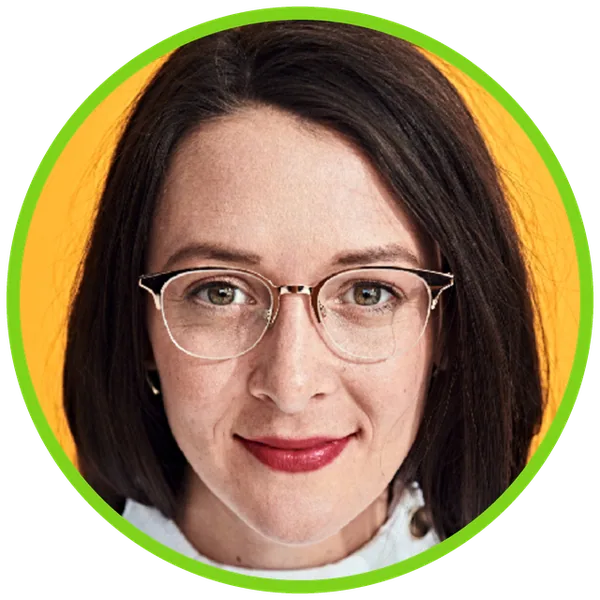
Carey Anne Nadeau
Carey Anne Nadeau from Loop Insurance discusses Direct to Consumer Fair Auto Insurance and how exactly Fair is defined when concerning Car Insurance.
The full episode
Press play for the whole conversation.

Insurance Tech News
Amazon reveals massive insurance partnership
A-to-Z Guarantee to cover property damage and personal injury
Connect with Carey Anne Nadeau
The full transcript
Transcribed automatically from the episode audio, so some names and terms may be misheard.
James BenhamJamie Knowledge Podcast Network. On episode 63 of the InsurTech Geek Podcast talking about fair auto insurance direct to the consumer with Carrie Ann Nodeau from Loop Insurance. The InsurTech Geek podcast powered by JBKnowledge is all about technology that's transforming and disrupting the insurance world. We'll be interviewing guests and doing deep dives in specific tech we see changing the industry. We're chain taking on a journey through insurance tech, so enjoy the ride and geek out. Damn, man. It's August 13. It is Friday the thirteenth. Tell you what.
I don't think that date was ever, like, a bad date until someone made a movie of Friday the thirteenth, but maybe it was. It's probably rooted in ancient Roman times. I'm a bit of a student of history, Rob. I I love historical books, historical podcast, historical TV series. I love studying history because I feel like if we're not students of history, that we're victims of history. And so I spend a lot of time reading and listening. And I find that, like, so many of our traditions originated in ancient Greece and Rome, and, like, we still do them.
And we don't even know where they started. It's pretty awesome. For maybe Friday the thirteenth is one of those things. Maybe it's not. But it is Friday the thirteenth in August. School is starting. What? Get out of the house, kids. I mean, seriously, I don't know about you, Rob, but by the time school starts, I am ready for them to to leave
Rob Galbraithand go to school for the day. Yeah. Same here for sure. Summer's actually gone by pretty fast given how little, I guess, there was to to do for kiddos and all that. And so,
James Benhammy youngest is actually starting middle school. So for the first time in fifteen years, we will not have a child in elementary school. So that's definitely a big change. She went to Cub Camp yesterday and is super excited that she's now one of the big kids. Oh my goodness. Yeah. So my youngest also starting sixth grade going to middle school on Wednesday of next week. And so yes, same here. It's been a it's been a a trek. Now we have we both kids have lockers and class schedule changes and all those things.
Of course, middle school in the 80s and 90s was a pretty brutal experience. It's a it's a it's a nicer, kinder, gentler version now, but still traumatic because of course their entire bodies and lives are changing. And so they decide to take that out usually on their parents, but it's okay. We are excited about school starting and you know what I'm really excited about is that this is an all Texas podcast because we have with us our recent Texas import,
Carey Anne NadeauCarey Anne Nadeau from beautiful Austin, Texas. Carrie, welcome on to the show. Thank you. Thank you for that wonderful Texas welcome as well. You couldn't keep me out of here. It's so wonderful. It is.
James BenhamTexas is so cool. So I'm in college for those who don't know. I'm in College Station, Texas. That's home of Texas A and M University. Rob Galbraith is in San Antonio, Texas and now Carrie Annadeau in Austin. That is all a nice little triangle from each other all within a couple hours drive. Millions and millions of people. People have no idea how big San Antonio is. You know, millions of people live in San Antonio. Millions of people live in Austin. They're not small towns. It is super cool.
I did get to go to your town, Carrie Ann, and I would have called you. I didn't even know you were there. I would have told you. I'm involved with a group called Capital Factory there in Austin. And so I was visiting with them and went to this amazing, amazing show called Austin City Limits. And if you haven't been watching ACL for the last, oh, four or five decades, Some of them anybody who's anybody in music has played at Austin City Limits. And so I got to go watch I'm from Louisiana, and one of my Louisiana natives, Jean Baptiste, who is believable.
He played what I would consider to be one of the greatest live shows ever played at Austin City Limits, and I got to experience all of it there in in the in the great city of Austin. So it was it was super cool, but I'm glad you're there to to experience the greatness and, of course, the horrific traffic that is Austin.
Carey Anne NadeauWorking from home has its benefits. So now we get to not do the commute and enjoy all that Austin has to offer. Some live music, great tacos. I'm coming from New England originally by way of Washington, DC. So just like getting used to and excited about the culture that's here, getting to explore places and build community around us. We actually just wrapped up what we call Founder Fridays. It's like an event we host every other Friday at a local cafe in Austin to just bring other founders into our ecosystem.
It's
James Benhama really cool new adventure to meet and to adventure to a new place. I'll just it was like Texas is like the Borg. Remember, assimilation is futile. So, you know, assimilation is an is inevitable. Resistance is futile. Tech Texas will change you. It's a it's a great place. You will learn to love everything in a taco. I mean, everything. We put everything in tacos.
Carey Anne NadeauI did recently go back to DC to visit some friends. We were deciding on dinner, and one of the options was tacos. And I was like, you know, I'm good on tacos.
James BenhamGet three times a day for the last few months. There have been days Yeah. There have been days where I've had breakfast tacos, like egg, bacon, potato, cheese. Then I had the lunch tacos, like brisket or bacon, like, you know, barbecue. We love putting barbecue in tacos. And then you have a dinner tacos where you're getting, like, steak, bulgogue, you know, like, I literally ate seven tacos today, and that was my entire sustenance for the day. This is like a Mhmm. This is a problem. Is it a problem?
And I don't like, I don't know.
Carey Anne NadeauYeah. Tacos unfortunately don't come with nutritional But facts on the we, we are starting a startup company called Loop. Just launched a company called Loop, and there's a taco truck in our backyard just over the fence at a local restaurant. And so for all the fellow entrepreneurs out there, you'll know that convenience sometimes trumps
James Benhamoptions or availability. So we've been eating a lot. It does. I got like they're not low calorie. And and so, you know, you'll learn really quickly to switch to corn to try and sustain your habit because that's a that's a good calorie reduction going to corn tacos. And then and then you'll start getting like lean tacos. Like if you go to Torchy's, they give calorie counts. And so Torchy's, is like amazing tacos in Austin and the best queso on the planet. Enough about that. We're gonna talk about Insurtech because technically that is the topic for the show is Insurtech.
And the last time we had you on was super fun. It was episode 19. We had you on back in 06/11/2020. We were in the early days of the pandemic. Now I'd say we're in the mid to late. You know, we're in like the later middle section of the pandemic. We're entering our third big wave of infections and all kinds of stuff. We're not gonna talk about COVID. We're actually going to talk about insurance because insurance has continued to evolve like even more rapidly. And you went from a B2B play that you were at last time we talked to you to now you're a digital MGA and you you've pivoted into direct to consumer insurance.
And that is what is so exciting, Is that you're doing a direct to consumer auto. Walk me through the progression from B2B into Loop.
Carey Anne NadeauYeah, absolutely. I think like a lot of folks during COVID, we found that we had a little extra time on our hands. So with that, we decided to launch a car insurance company. And over the last year went from not having a car insurance company to being fully licensed, reinsured and ready to go live on eighteighteen, which is this coming Wednesday in the state of Texas. So a lot, a lot has changed since June. But when I first joined the podcast, I was running a company that built predictive crash models.
We were figuring out where car crashes were likely to happen using publicly available data. That data is super powerful because not all car crashes are accidents. A lot of times, they're just in the wrong place at the wrong time. And I felt like insurance companies should really give a damn about that sort of information, part because they should want to take care of their customers. They should want to know that people are safe on the road. And if we have information that can make them safer, we should be giving that to them.
But secondarily, of course, for their own profitability, their own self interest in making money off of writing car insurance business. But I got a lot of doors kind of closed in my face, lot of no's, and I maybe needed to hear it 100 times before I realized that I had the ability to, if I believed in this as much as I do, bring it directly to consumers and Launch Loop along with my co founder John Henry, who, if you don't know him, I refer to him as the modern baroque who grew up on social media.
Right? He is an incredible social media wizard and community builder really beyond anything else. So sort of joining forces with a AI technologist geek like me and a social media marketing marketing and and community community driven driven kind of founder together sort of joined forces in Captain Planet style and brought Loop to life. And that has been a crazy journey, an absolutely epic journey filled with tacos, as we mentioned, simply because we've been working around the clock to not just take what, you know, insurance looks like and has looked like for the last one hundred years, not just, you know, you mentioned at the top of the podcast, Greek tradition, I think some of what insurance does is perhaps also based on Greek tradition, it goes back just as far.
But to like, go into the history books and peel back the pages and ask important questions about like, why is it that we do this this way? Is this the right way we should be doing this? And are there better technologies, more advanced data, advanced capabilities that can help us deliver a better product, a better experience to drivers, while also delivering on this promise of more fair and more equitable car insurance for more people. And just I'll say that the response thus far, we're going live, we haven't sold a single policy, we're going to sell a single policy, we're going to sell tons of policies on 08/18.
Right in three days, we're about to blow up the insurance market. But the response that we've gotten in the community that we've built around this product from folks inside the insurance industry and folks who just own a car and and know that they feel a little unsettled when they buy insurance, because they're not really sure why they're getting ripped off, but they don't feel good about the experience. Those folks are coming together to like lend a lot of support and a lot of enthusiasm and a lot of positivity around what Loop might be able to accomplish, when we get into market on 08/18.
So super excited to be back on the podcast right before lunch. Maybe we do this again in a year and we talk about progress again, but, excited to share these updates. Yeah. And actually, the show, we're recording it on the thirteenth, but it's going to air the nineteenth. So you're going to be launched.
James BenhamSo as as as you as you you and listener land are out there, if you want to check it out, it's at ridewithloop.com. I noticed you went with the co CEO model. Last time I saw a big time co CEO that was with BlackBerry. You know, there's they they had co CEOs. It's a it's a challenging business model to pull off, but, obviously, you and John Henry obviously have some chemistry there that's allowing this to really work. Yeah, absolutely. Going the co CEO model was a
Carey Anne Nadeauvery intentional choice between John Henry and I. When you start to look at how to operationally run an insurance company, there's really two core domain expertises you need. You need the underwriting diligence on the back end to make sure that you're not driving this car off the side of a cliff and into a dumpster fire, much like some of our competitor Insurtechs have. And you need somebody on the front end who can spread the mission, who can tell other folks about what we're selling, why we're selling it, who we are, and really get folks excited about what we do.
We each wear one of those hats and we think together combined those two capabilities get us a lot farther than if one of us were, for whatever reason, feeling like we needed the executive title to sit above in some artificial hierarchy. We really believe that both of those things are really necessary
James Benhamto really be quite successful and grow this to a very big business. Awesome. And for the folks out there walking through what, you know, what states is Loop operating in and what lines are you covering and how are you doing it differently?
Carey Anne NadeauYeah, great question. So we are going live in the state of Texas, which luckily everyone on the call here, 100% of people on the call can become Loop customers as of eighteighteen. One thing we were surprised to learn was folks that may already have insurance don't realize that they can get a refund on their insurance. We've been telling folks, actually, you sign up for a loop will actually cancel your previous policy for you. Get a rebate back to the day that you had earned that policy.
So if you've only had a policy for a week and you paid for a full year, you get everything back minus a week, which is a pretty important thing to note because a lot of people feel stuck in their current car insurers. And even though we're a better option, don't realize that they can switch. You can switch to ride with Loop today or as of 08/18, which would have been yesterday, and sign up and start driving and get your money back from your previous insurer. What we do is sell car insurance.
We are selling similar policies of what you might have, your bodily injury, your property damage, your comprehensive, your collision. You'll see things like gap coverage if you have a loan on your vehicle. You'll see things like rental car coverage available for $7 a month, like really typical car insurance product on the front. On the back end, though, we've completely overhauled what goes into your price. So a traditional car insurer, they may not ask you your credit score, but they are most definitely pulling your credit score on the back end.
And I think consumers are really surprised to realize that that's happening, one, and the level of penalty or level of surcharge that individuals get because of their credit. So if you have credit of about 700 even, that's really great credit. Probably buy a home with 700 credit score. You're getting surcharge anywhere between $2.50 and $300 a year for your car insurance just based on not having perfect credit. Other things we looked at, your occupation. Our blue collar occupations were penalized in some of the traditional insurance way of writing auto insurance.
If you didn't have a college degree, you couldn't benefit from some of those additional discounts and if you didn't own your home. So we're looking at folks who are renters like myself, who have maybe a little bit of college debt for getting advanced degrees, who may be working in creative industry jobs that are blue collar, quote unquote, but earn a decent living and are decent human beings and importantly, great drivers who are being penalized left and right. And all of those penalties stack up onto each other to a level where insurance just isn't as accessible or as fairly priced for some people than it is for others.
So we wanted to fix that at Loop. We completely overhauled the back end so that your price accurately reflects how great of a driver you are. And throughout the entirety of your policy, what we're doing is not just overhauling the back end, but actually the experience as well, which hasn't been touched also in hundreds of years. This idea that you can engage a customer in a digital platform, in a mobile phone application or on social media, I think terrifies incumbent carriers who are led by people who didn't grow up on this technology, don't know how to authentically connect or to communicate.
You'll see Loop on ridewithloop is our handle across all social media platforms. We're on TikTok, Instagram, we're on Facebook, we're on LinkedIn, we are on Clubhouse every Wednesday night out in the community asking people and engaging with our customers just to have face to face time with the people that we serve and to hear their questions, their concerns, walk them through the process of buying insurance, what they're buying. So we create a just more personable experience, more actually like you feel good when you leave the experience with Loop.
I kind of equate insurance today like going into a car dealership. You go in, you think you're everything sort of feels like a negotiation. How should I answer these questions to maybe get a good rate? But when you leave, you still feel sick. At some point, somebody's gonna tell you how you got ripped off, and you don't really know why or how until somebody's like, Oh, well, if you had put this, you could have got a better rate, right? That feeling like you need a shower when you're done.
Exactly. So like, if I can make a customer feel great about buying insurance, which they should because it's going to connect or it's going to protect them and their family and then continue to deliver value by engaging that customer over the entire duration of their policy with insights about how they're driving safely and where they might want to improve to improve their own safety, put that power back in the hands of the consumer. That's going to completely revolutionize. It will. It has already completely revolutionized the way insurance carriers build a relationship with their customers, which to me is just as important and delivers on the promise that we we developed in the back end of like treating our customers fairly kindly as if they were our own family.
We want them to be priced that way and we want them to be treated that way as well. Yeah. And, you know, underwriting guidelines, and we're going to talk about the word fair,
James Benhamright? Because, you know, when talking about fair, you got to talk about justice, you got to talk about equality. All of these are words that warrant looking up the definition of the word and then thinking about it and then looking at, know, taking some pretty hard introspection on how we as individuals or we as an industry have contributed to unequal treatment, right? And what you'd like to do, because if insurance is really about improving society, because I mean, the big picture of insurance is that it enables people to do things that they can't do otherwise.
I'm a pilot, I wouldn't fly if I didn't have insurance. There's too much risk. It becomes too risky of an activity if there's no market available to cover me. Self insuring, you know, I would drive less if I didn't have auto insurance. I would have to be, you know, insurance allows you to do much more. If there was no such thing as home insurance, I would be less likely to upgrade or improve or enhance my house,
Carey Anne Nadeauwhich, you know, is bad for society. I mean, there's a lot of, you got to really think about the societal impact and why insurance was created by the Babylonians with their bottom re contracts in the first place, right? Yeah. We think about all the ways that our customers use their car. I don't know if you remember or you can think back to the first car that you bought, but the reason I bought my first car was because I got a dog and I wanted to be able to bring our dog to the dog park or to the vet.
A lot of my friends got their first cars when they had their first child and they needed to bring a kid back from the hospital with a car seat in the back seat of their car. Other people I know, it's just you want to be able to get groceries from the grocery store, go to Costco and fill your trunk with a 24 pack of toilet paper. You're going to need a car for those things. And for a lot of other people, a car is their connection to work.
It's their connection to be able to get to and from job opportunities where they can advance their career, whether that's a job opportunity or even an educational opportunity as well. You might need a car to get to school and back All of these things, if you don't have a car, if you don't have car insurance or can't afford car insurance, really limits your physical mobility and your upward economic mobility as well. So we do think about that quite a bit and how we're not just selling car insurance, we're selling people the dream that they have for themselves and enabling them to get there.
Rob GalbraithYeah, awesome. Rob? Karion, it's great to have you back on the podcast. It's great to see you again. I guess you talked a little bit about the pivot from a B2B to B2C, and I'm sure there's a lot that goes into that. But I think of them as really being, I guess, three differentiators and I'll have you expand on each one. So one, what I remember from our conversation before is you have some unique insights. Your background is in the use of open data, public data sources.
I've seen you pitch in many different events in the past about where do accidents happen. We think about the driver and we think about who is at fault. We get things like age and gender and mental status and all these variables that you kind of talked about, right? We talked about, well, how many miles is the car driven? Things like that. What kind of model is it? What's the make? But what we're missing is the road, right? Hey, there's a lane closure that always happens here.
You live in a city that's notorious for bad traffic in Austin. There's a lot of accidents there in other places, right? And that's a key insight that most insurance companies have never had. I think, you know, previously, right, you were trying to convince them that, hey, this is a missing piece that you have. So you have insights, number one. Two, you have technology. You talked about the digital social media distribution, the bubble app, the website. And then third, this values, this mission that I think has been a consistent theme throughout, even though you're making this pivot, the focus on fairness and equity.
I know I'm throwing kind of those three things at you, but I feel like those are the things that are really kind of separating Loop out and have been there for quite some time. So even though Loop itself is new and obviously you're just launching, is really building for some time on some core foundational principles that you've had the entire time. Is that correct? Yeah, that's right, Rob. Nothing
Carey Anne Nadeaufor sure is an overnight success. And I'll tell you all of the ways that we tried to bring this to market because the mission really does come above and ahead of everything else. Then the two other pillars of our organization are that technology and the data that sits behind it. So you kind of nailed the three pillars really of our organization and how we think about bringing a new product to market. But certainly this has been a long time coming. I've spent my entire career building a really specific domain expertise.
I followed a rabbit hole to the depths of Wikipedia pretty much on measuring where car crashes are likely to happen. And as you mentioned, reframing the insurance in the idea that insurance has always used a lot of data to question who is likely to be involved in a crash and who's not. And so I always thought, okay, more data and particularly relevant data. I'm not talking about data just for the sake of collecting it. I'm talking about data that any driver knows or any kid that's ever sat in the back seat of the car knows there are some roads that are unsafe and there are some roads that are not.
And if we can collect data on that, that the insurance, the body of insurance, the actuaries out there always had my back, always said, absolutely, this is exactly what we need to be doing to stay true to the core of insurance. The challenge was actually convincing executive leadership to be able to make a very difficult and very painful transition from the way things always have been done. Now, the mission comes back in here because at some point we need to say to ourselves, okay, at what point is my personal pain and potential profitability as a organization trump the pain and anguish and the, for lack of a better analogy, foot on the neck of the people I sell insurance to.
I'm making it a lot harder for other people to afford insurance and to get to where they need to go. And so I always thought at some point, insurance companies would come back around and say, you know what? It's worth it because the impact of doing this differently will mean a lot to people. It'll mean a lot to communities. It'll mean a lot to my mom, to my grandma, to my neighbor, to my husband, to my kids who are just getting on the road. Now that never happened, unfortunately.
I think generally the insurance industry is accelerating their interest and focus on diversity and inclusion, but we haven't yet felt a lot of the pain enough to transition into a modern era. And that frustrated me so deeply because you can see the opportunity. It's right there. It's not hard to see and to understand why it is that insurance should be priced this way. But when you have an insurance company that has rules on the books and has to go back to a regulator and has to explain why they want to change things, who has to reframe their entire relationship with the customer, who has millions of dollars in advertising and marketing spend, things don't turn on a dime.
Things don't happen quick enough. Society moves much faster than the insurance companies are able to transition their own internal processes, their own internal decision making and their own external presence in the world. Now, that's a huge opportunity. There's a reason why Loop is not only excited to launch, and it's also why investors are coming to Loop and saying, wow, this is an industry that for the last one hundred and fifty years hasn't changed, hasn't adopted new technology and customers dislike the experience. Talk about something that's ripe for disruption.
So I like to say, insurance companies essentially said no, but they left the door open for me to take a run up to the throne. And I realized that I had the power and the ability and the team, brought together the team really to be able to take a real shot at challenging some of the incumbents because of those kind of things that they don't stand on that are not pillars of their organization, which is technology, data and mission, we can win on all three of those fronts.
James BenhamWe're excited for it. You can still run a profitable insurance company.
Rob GalbraithYeah. Rob? Yeah, no, just following up. You kind of mentioned several times the word community. You talked about John Henry and his savvy with kind of social media. I mean, I think one of the biggest challenges for any new startup auto insurance company in particular, right? It's a humongous marketplace. You mentioned millions. I mean, we can actually save billions of dollars going to advertising each year, right? We are just bombarded every time I have been watching a lot of the NBA Finals and sporting events and others.
You can't look twice without seeing a State Farm or a Geico or Progressive. I mean, it's just saturated really with ads. And so I think the biggest challenge has been how do you go up against these big incumbents being the brand name awareness is out there. You've been going around Texas on what I would describe as kind of a listening tour, You've been down here to my hometown in San Antonio. I know you've been to other places throughout the Lone Star's sake. Meeting with people, felt like very much like a grassroots effort.
So maybe you can just talk a little bit about how those conversations went and, how do you kind of raise awareness with,
Carey Anne Nadeaufolks that LOOP is out there? Cause I do think that's the toughest part. Yeah, absolutely. So I think a lot of folks realize that this is a challenge, but maybe aren't as interested in launching an insurance company that has to compete with incumbents like GEICO and Progressive that have incredible ad spend, incredible distribution, who saturate the airwaves. I joke because I'm starting an insurance company, I don't get any other commercials other than insurance. Big Brother thinks I'm wanting to buy insurance every single day. Go to friends' houses and I'm like, Oh, that's a funny commercial for some cereal or something like that that I've never seen.
That's been apparently on the market for years, but I'm just getting straight insurance commercials. Insurance companies go a mile wide, but an inch deep. They don't build deep relationships with their customers. I've reached out to many on Twitter, on social media and don't get a response or get an insufficient response. They don't take time to talk to people and to get to understand why they need auto insurance and what they do and how they live and who they are. Our philosophy, we have a mental model.
It's sort of like a bimodal distribution, two different kind of ski slopes on both sides. And as a startup company, you start in the middle. On one side you have like and the other side you have love. And you don't build love for your brand by going up the like hill, you actually move farther away from the love hill when you start just trying to get people to like you and doing cheap tactics and stunts and, and buying commercial ad space or big billboards that don't really resonate or feel like they're connecting to a brand, right?
You can choose that path or you can go up the harder steeper hill of love, which takes more work, takes more effort, takes more on the ground conversations, takes radical transparency and accountability when people ask uncomfortable questions or don't like you, don't actually want to become a customer. You're facing those people and convincing them that in fact, this is for their best interest and the better interest of society. We've brought people to love us. While we'll start with a small group of people who love us, it's that virality that comes from word-of-mouth that we believe is one of our greatest metrics of success is how many people tell other people about the great experience they had at Loop and how many people we retain at renewal.
So we're not here to give you the lowest price at initiation to get you to like us. We're not here to give you cheap discounts. We're here to give you an accurate fair price at point of sale. And then six months later, or actually, and then a day later, giving you insights to be better drivers to understand where you drive that's unsafe so that you make it home safe. And then at renewal, be honest and transparent about how your price may change or how your price may improve on your driving.
Our goal is to have people love us and be in a relationship with us where they feel good about about, you know, continuing to ride with Loop at renewal. So it's that mental model that really does guide us that we have to be careful to avoid gimmicky things and instead do the harder thing like rent a mom van. As you mentioned, I packed seven people, we've got our co CEOs, we have our head of content, we have our events manager, and we have our CTO in a mom van.
And we drove to Austin, Houston, Dallas, San Antonio. And we met with people. We hosted town halls where we had a conversation where people brought up really important issues, things like their data privacy and security, that they cared to understand how we were being thoughtful about how we were making sure not to abuse the data that we were collecting about our drivers to talk about their experiences with insurance, their claims handling experience, their customer service experience, so that when we built that in house at Loop, we can actually have our experience reflect what they need.
It was helpful not just for me as a CEO, but also our CTO. It was so important to have him there because it's not just me saying, oh, it's a great thing. It's that it needs to be embedded and built in and infused through the entirety of the organization and come through the decisions we make around technology and accessibility, come through in the decisions that we make around data. So for example, our technology. Most telematics based phone apps, these are the phone apps that track where you drive, how you drive, how you behave.
We've all gotten the commercial. Right? They'll display all of your trips going back forever. Well, we talked to people in our community who said, I've been a victim of domestic violence. That's the last thing I want is my phone to have information about where I am and how to find me at all times. Now are the executives in the ivory towers of the insurance companies even aware of these issues that face women and people of color more disproportionately than others? No. They're just building technology to deliver your routes back to you without any thoughtfulness about how to actually build for the people that are gonna be using it.
So again, going up that love ramp while it is harder, and while we will start with fewer people that love us,
James Benhamover time is our strategy to win. Yeah. Well, let's talk about kind of wrapping our conversation up. Let's talk about the actual tech. A brief conversation on what about the actual technology is different. Did you build your own policy system? Did you build your own claims system? Tell like what you actually built as part of this. Yeah,
Carey Anne Nadeauso great question. So in about a year, have accomplished quite a bit and have built partnerships for the things we couldn't take on straight out of the gate. But we built our own technology to measure what roads are unsafe. So first and foremost, at the point of sale, instead of using like your zip code and these aggregate statistics like credit score, we look at what's the probability of a crash in the places you're likely to drive. And at renewal, we do the same thing. We look at what were the probability of the crash on the roads that you did drive.
We think that's much more fair and accurate for drivers, a reflection of their probability of being in a crash. So that is built entirely in house. It is monitored regularly for systemic bias. We found that actually people of color are five times more likely to benefit from this type of pricing schema. No surprise renters also huge benefit from this type of alternative approach to pricing. Then we built all of the back end engineering to integrate a policy administration partner. We did not build the complete policy administration system in house, but we built all of the KPI dashboards to monitor our performance in real time and collect information from a mobile application that is on everyone's phones for our drivers to collect where they're driving.
We connect those two systems, all cloud based technology, incredibly secure on the back end. And what we deliver back is we're calling it a driver digest to start. We'll share just like your Apple Watch shares. Did you get your 10,000 steps in today? We've built an experience that tells you how long have you spent in the car. What is the probability of a crash on the roads that you drive? How many safe miles did you drive? How many miles did you drive where you were going within 15% of the speed limit?
Right? So you can gamify your own experience without us wagging the finger at you and telling you to slow down or stop braking or doing all these awful things. Right? All we're trying to do is make you a healthier driver in a way. And we continue to engage our drivers. We've built our own content system in house. So we manage across multiple platforms, but we are using third party claims handling as well. Separately, we've built our own customer service organization in house. So it's phone based, chat based, telephone based, email based.
Also will control the experience that our customers have with us directly, but work with partners that can help us manage things like all of the complexity of adjusting a claim, having relationships with different auto body repair shops, things like that. But we're working very closely, obviously, in hand to manage the customer experience, which is important to us. That's awesome. Well, I I really appreciate it. I'm excited.
James BenhamIf you're listening to this show, it'll be airing the day after Loop, goes live. So if you're in Texas, the great state of Texas, go to ridewithloop.com to check it out. We've got a couple of brief news stories, and then we're gonna wrap the show. Carrie Annando, always good to chat about that. Rob, I know you got a couple of new stories. What do you have this week? It's actually just one big story, James, and that is that Amazon
Rob Galbraithhas announced a partnership that involves a lot of players. In fact, some that we've talked to. So they have a new digital insurance network called Amazon Insurance Accelerator. They're making this as part of their new A to Z guarantee that sellers of Amazon can buy product liability coverage, but it will also provide some injury coverage and other liability. They're partnering with Marsh, the large broker, to, bring this together. There's new mandate that Amazon is gonna require third party sellers to secure product liability coverage after they reach $10,000 in sales in one month rather than three months.
And so sellers can purchase the coverage on their own, but they can now go through the Amazon Insurance Accelerator, which has small business sellers, and it's gonna have several name insurers, including Chubb, Liberty Mutual, Hiscox, Markel Travelers. And these policies are being made available digitally through Bold Penguin, and we've talked to Bold Penguin previously, as well as Simply Business. So really fascinated by partnership of traditional entities, such as Amarsh with startups, such as a Bold Penguin and Simply Business all connected to Amazon to sell insurance that is typically needed right for businesses, but through people that exclusively use, Amazon as their platform to And I certainly think this may open an entryway for other insurance products to be purchased through Amazon in the future.
Yeah, it's an
James Benhamimportant step. And this is again yet another sign of the maturing of Amazon and they're gonna also push their marketplace to mature and actually carry the insurance they should have for making things. I mean, you just, you know, if you're in business, you should have insurance, but so many small businesses that turn into medium sized businesses don't have insurance for things that are really, really critical, like product liability manufacturing. I mean, these are really, really crazy important. I'm sure this arose from lawsuits and claims that people are making against Amazon for products that are sold through Amazon that are actually the responsibility of the manufacturer.
So it's it is and that yeah. That's what's so cool is you have you have one of the world's largest corporations partnered with one of the world's largest brokers partnered with a bunch of start ups to pull off something that's going to certainly reduce risk for Amazon, but it's also going to reduce risk for these folks that are making goods and selling them, and it's going to protect them whether they like it or not. It is going to protect them. I'm sure they're not going to like having to pay a premium, but that's a part of running a business.
And so I'm excited about the partnership. Carrie Ann, I know that this has got to be cool to see such a diversity in InsurTech's working with large companies. Yeah, absolutely.
Carey Anne NadeauAnd I think it's also a signal that big data can really revolutionize opportunities to deliver products to customers as well. Like we're seeing Amazon take this leap because they have a lot of data to make really good decisions insurance space. So if insurance companies don't wake up to that, it's more players like Amazon are going to step into the space and say, just like Loop, we can do it. Yep. And that is our show today.
James BenhamThank you, Rob Galbraith, always most interesting man in insurance. Good to have you on the show. Pleasure having you on. Love it. Rob, by the way,
Carey Anne Nadeauco founder wants to be known as insurance puppy. Since he is Dominican, we could take the most interesting man as insurance, but
James Benhamwe're gonna brand it. Insurance poppy, like big poppy, but insurance poppy. Who's Dominican. Exactly. Yeah. Yeah. You gotta love it. You gotta love it. I love it. And and Carrie Anne the Dough, it's so wonderful to have you back on. Welcome to the great state of Texas. We're so happy to have you. And thank you and congratulations on ridewithloop.com. Go check it out. And Carrie Anne, thanks for being on. Cheers. Thank you all. Have a great afternoon. Yes. And this has been the InsurTech Geek podcast powered by Jimmy Knowledge at jimmyknowledge.com.
It's all about technology that's transforming and disrupting the insurance world. I've been your host, James Benham with co host Rob Galbraith, endofinsurance.com. Big thanks to Jim Greenlee, our podcast producer, Cara Daltara, our creator producer. And thank you for joining us today. Look forward to talking to you soon. We're taking you on a journey through insurance tech. So enjoy the ride and geek out. See you next time.