 YouTube
 Spotify
 Amazon
 iHeart
 Apple
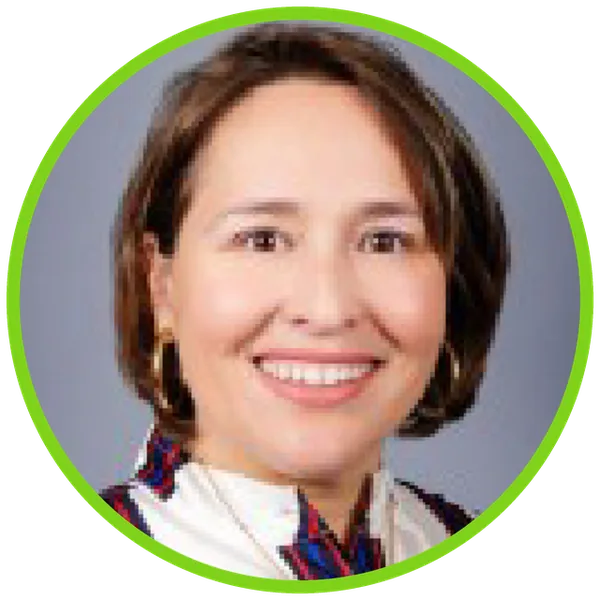
Gloria Guntinas Vanzo
Hosts James Benham & Rob Galbraith are joined by Gloria Guntinas Vanzo of Pouch
The full episode
Press play for the whole conversation.

Insurance Tech News
Take Our Listener Survey! Let us know how we can bring you a the BEST podcast.
Auto InsurTech Loop inks $21m financing to expand into new US states
USAA to Acquire Insurtech Noblr to Offer Its Members Usage-Based Auto Coverage
The full transcript
Transcribed automatically from the episode audio, so some names and terms may be misheard.
James BenhamJamie Knowledge Podcast Network. On episode 66 of the InsurTech Geek podcast talking about streamlined insurance for businesses with Gloria Vanseau from Pouch. The Insurtech Geek Podcast powered by JBKnowledge is all about tech that's transforming and disrupting the insurance world. We'll be interviewing guests and doing deep dives into specific tech we see changing the industry. We're taking you on a journey through insurance tech, so enjoy the ride and geek out. And we are back again. Good to see everybody. October 1. It is Friday, October 1 as we record this.
It's a beginning of a rainy weekend here in Texas, but, it should be, should be a good one. Of course, we have all of our usual fall favorites. And, of course, since it's October, that means it's officially pumpkin spice time. That's right. It is time for pumpkin spice lattes, pumpkin spice coffee, pumpkin spice butter, pumpkin spice pancakes, pumpkin spice everything.
Gloria Guntinas VanzoGloria, you like the pumpkin spice? Not as I mean, I I enjoy it, but it isn't, you know, as important as they asked to be. So I probably need to fix that. People are super into pumpkin spice. I mean,
James Benhamevery coffee shop in the country is the advertising hashtag PSL right now.
Gloria Guntinas VanzoAnd it is. I mean, I do get my excitement out of my trader job trips out of it. Right? I go and I look for my pumpkin things, but but it's not the center of the universe for me. I understand for some people is three months. Some people But a girl's but a girl's gotta have some spots somewhere. That's mine. That's fine. Yeah. Yeah. Pumpkin spice, big deal.
James BenhamBig deal in this household, pumpkin spice. Of course, pumpkins don't actually make a spice. The irony is this is a mix of spices that happen to come around when pumpkins are harvesting and somehow some marketing genius called it a pumpkin spice. And And it's a really genius American spice combination. You only find that in The US most place. So you know what? It it is it is incredibly valuable. Yeah. It is valuable. Of course, I'm I'm a fan of Moroccan spices. I like I've made my own Moroccan spice blend.
I think that's pretty amazing, but you don't see a whole month for Moroccan spices. I think there should be. I think there could be a revenue opportunity there. I think you're missing our window. Yeah. So Rob, as of a month ago, you moved on to your own thing. Tell everybody what's new in your job world.
Rob GalbraithI am. Yeah. Thanks, James. Yeah. So I am officially licensed as an insurance futurist. Yes, there is such a license. I'm I'm kidding. But no, I'm excited. I've been sure that I'm I was gonna say, no way. I'm a CBCU and insurance futurist license. CBCU CIPCUIF. That's right. No, I, you know, I've been just supported by tens of folks over the past two and a half years since the book launch. It's something I've wanted to do for a long time. The pandemic kind of interrupted, as you might imagine.
And now with the return of in person events and business travel and everything, it was time to launch my own thing. So, happy to connect and share more with folks. But I do a lot of things from obviously give keynotes, I actually facilitate innovation workshops. And I do a lot of mentoring. Do a lot of work. It's kind of bespoke for clients small and large. So it's an exciting time after twenty five years of working in corporate America, and many big companies. I've also worked for the government, the Environmental Protection Agency and Federal Reserve Board in the past.
So it's a huge relief to actually be out on my own. So very exciting times here. That's awesome. Congratulations.
James BenhamThat's really great. Yeah. So con congratulations. Of course, studio audience is really excited for you and excited about your new launch. If you want more information, course, go to endofinsurance.com. You can get ahold of of Rob Galbraith and talk to the most interesting man in insurance. He can he can be yours for a fee now. So you can you can you can consult with him and and have have a have a chat. Now with us, joining us from the Dallas Fort Worth Airport, and we're so thankful that she squeezed us into her busy travel schedule.
It is so good to see Gloria Vans. So Gloria, thank you for joining us on the InsurTech Geek podcast. She's co founder and COO of Pouch. Gloria, thanks again for joining. Thank you, guys. It's a real pleasure to be here. Yeah. We had a Texas triangle. We got San Antonio, College Station, and Grapevine. Of course, you're in DFW, which most people don't know if you're not from Texas, that it's its own city. They they they legally incorporated the city there. Of course, Gloria is just a few minutes away in beautiful Grapevine, Texas.
My friends, by the way, the Bonarigos have a beautiful wine place in Grapevine. They have a it's called Messinahof. It's Texas Texas wine on the other side. Yeah. We're we're right inside Grapevine. So I know I know exactly where that's at. Yeah. Yeah. Go go check that out if you want some good Texas wine. That's right. Texas makes wine. Texas makes everything. Don't ever forget that. And we have highlands and lowlands and hill country and flatlands and coastal. Remember, it's a thousand miles across, thousand miles up and down.
It's the eighth largest economy on the planet, and, it is the place that the three of us call home. We are glad to have Gloria, on the show, and we're gonna get back to her in just a second. A reminder that before we get started with our interview, that you can subscribe to the InsurTech Geek podcast by texting geek out to 66866. Make sure you never miss an episode. Just text geek out to 66866. Back to Gloria. She did go to Virginia Tech. She got a master's in business from College of William and Mary, a very, very, very old school here in The United States.
But she has a fascinating background before that in athletics. And so I just actually wanted to start there because it's all I I think there's a lot of lesson life lessons learned in athletics that we take through the rest of our lives. So tell me about your childhood and kind of what led you to be a pro athlete and go to what is now called IMG Academy. Tell me about that journey. Yeah, for sure. So I,
Gloria Guntinas Vanzoyou know, I wasn't any different than being the youngest child in a family who was hyperactive. And when we were all little, our parents made decisions to put us in sports because that was a good outlet. And so, my oldest sibling played tennis. My mom said, go right in there. And it turns out that I have really good high neck coordination. And so, I picked up the sport pretty quickly. Tennis is an interesting sport because it does happen between the two ears more than any other.
And it is often underestimated because it is a very lonely sport. So you do get to troubleshoot all by yourself, which is by far the most unique skill you need when you decide to do entrepreneurship. There's just you yourself and maybe one more person. And so I think if I look back at my history and that journey, and it's still the other thing that's so great about Tennis City is a lifetime sport. I mean, I still play it all the time. I still have people that I've known for thirty years.
The community extends up to your 80 years old. You can still play nationals, which is just so remarkable to get to learn from these people. So I troubleshoot well because I've been doing it for twenty five years. Yeah. One of my favorite books on learning is The Inner Game of Tennis written in the
James Benhamseventies, I believe, by a tennis coach who realized that the less he said, the better of a coach he was and Yep. Really taught people how to learn by observing and then letting your body, your second self, as he talks about, respond to that. And, certainly, I I learned a lot about how to learn, from a book about tennis. Yeah. Tennis is really just an amazing sport and it is one thing. Now, I'm currently down for the count with an ankle surgery, so I can't play tennis right now.
But I also love I I go to I grew up going to Latin America my entire childhood and I and I have been operating in Argentina for twenty years. And
Gloria Guntinas Vanzoand so I I love this crazy game called paddle that I'm I'm like a hardcore addict of. Have you had a chance to play paddle? And if so, what do you think? I like it. I like it a lot. I play pickleball as well. Yeah. So because in in Texas and grapevine, pickleball is a great thing. Yep. So and I love it. It it does bring a third dimension. Yep. You know? So like I said, if I've been fortunate, my hand eye coordination just lets me get away with everything.
So I've enjoyed it. We it's just the paddle in Dallas is only one club that has two courts. Yep. Same here. Actually quite quite limited. So that's why it's like tennis or pickle. And then pickle is a great way to be part of my community. You know, Gravevine, like you were mentioning, for those folks who don't know, Gravevine is the Christmas capital of Texas. So we have a very, very tiny community. And so pickleball is how I get around with my neighbors. And so there's a text message going around.
We all get together. We have we have tournament courts, which I think is huge luxury,
James Benhamand we love it. So, pickle is my alternative because it is hard to get paddle here and down. Yeah. Yeah. And I gotcha. I love pickleball is super fun. So let's let's jump in. After your undergrad in economics and your master's in business, you jumped straight into a product role at Progressive Insurance. What about in the insurance industry attracted you to go there? Obviously, with a econ degree and an MBA, you can go into pretty much any field. What attracted you to Progressive?
Gloria Guntinas VanzoSo I think it's just the people. This story is always fun for people to hear. So my first interview was Kay Terry, the founder, the co founder of Surround Insurance. And my second interview was Steve McKay, which is my co founder of Pouch. So that just gives you a sense of what that place was like. There's just an amazing group of talent at the Richmond office. I met these people and I fell in love with them. And then I also understood that I was what I call or refer to as the late bloomer in my education.
When I was a professional athlete, I did swing a tennis racket to pay for my school. And so athletics and academics were sort of weighted equally, but, you know, academics were not my number one. It was one and one or like, you know, whatever we're going to call it. And so when I got out of there, had the opportunity to realize I was actually quite quantitative. And I did have a passion for data. And at the time, Progressive was leading the world when it came to underwriting sophistication and operating model.
They had the general management model set up and it was really great. So I hit it off with Kate. She was my first boss at Progressive and I worked for her. And then that's really when my journey between technology and insurance got
James Benhamgoing and I haven't looked back ever since. That's awesome. Yeah. I mean, that's really what hooked me on insurance too was the people I met, the relationships I formed, the friendships I formed. Had one of my life life mentors in insurance was just over here in College Station this week, you know, visiting visiting me and my partner and it just it's just what we do. Right? We go see him all the time. He comes and sees us. We travel together. You go end going on trips with people.
I mean, it's a very, very, very people centric business because you're, you know, building systems that carry risk for the planet. Right? And risk requires trust and trust requires relationships. It it just it kinda the nature of this business lends it to be if you're really into connections and relationships and people, it's a wonderful business to be in. You you went through a few other, places like Dry Factor, Acceptance Insurance. You are a product leader at Lightspeed. Then you went over to USAA for a couple of years.
Then we got into risk management solutions at Solara. So walk me through those progressions. Like what were you looking for? What did you learn along the way in those different stops?
Gloria Guntinas VanzoYeah, for sure. So my experience at Progressive was rather unique because I actually got an opportunity through Steve who said, Hey, don't you have a life in retail with sending people devices now? This is back when Snapshot was called my rate, right? So it wasn't even Snapshot yet. And so I realized there was this world where technology needs product and there was a delivery mechanism. So after Steve transitioned out of Progressive to find Steve said, Hey, do you want to come and do product here? So DriveFactor was actually founded by Steve and Matt, and it was a telematics provider and what I tend to refer to as the first wave of InsurTech.
Those were the companies that were primarily B2B and they were primarily providing support and products to insurance companies as they were looking to enhance. From there, I realized that having grown up at Progressive was a huge luxury, but that running an insurance company without the degree of telemetry and machine was going to be a different animal. And I really learned that through our customers at DriveFactor. So, I went and had an opportunity to run a small carrier, add the product team at a super regional carrier, and it was an exceptional experience.
So, really getting an opportunity to do product in a non standard just teaches you so much both about claims and underwriting that you really don't know as much because Progressive has this amazing machine that just generates rate, right? Because they have so much accuracy and so much fidelity. And so, I learned that to my customers, I needed to get some more of that. Then there was a need in the market. The data that was coming out of, you know, Lexis and Verisk was super fragmented and I wanted a ninety second quote and I needed to buy like nine products and like spend disgusting amount of money to get to a really fast quote.
I went to Verisk to build Lightspeed, which essentially empowers you to do a ninety second quote. Again, use that data to make the world better in a simple way. And then from that, there was this opportunity to go and really enable what could have been a vehicle ecosystem at USA. This is an aspiration the organisation had for a very long time. And since I had experience with the various data exchange, I had experience at DriveFactor, taking the data from raw to normalize and delivering that for insurance.
It was a really nice opportunity to bring that together inside an ecosystem. And we were able to advance USA's aspirations to have a safe driving program with telematics. So, Safe Pilot program was part of what the team that I was a part of built. And then I got really frustrated with claims. Claims didn't make any sense. The more and more I played in the claims phase as it related to what I did, I realized that there was a lot of fracture in the workflow and that a lot of the waste that was engaged in claims associated with port service was actually fractured workflow.
That the customer didn't have the proper handoff points because there were so many hands touching different things and there was no connectivity. So, at Solara, there was a huge opportunity to take Captor as a workflow solution across the entire life of the claim, all the way from prior to even FNOL, which is bringing telematics data in, all the way through salvage, if there was a salvage claim. So I have chosen my career path to learn the entire flow of insurance, which certainly has been intentional. I think we have lots of specialisation in our industry.
There's some amazing experts, but we are unable to serve our customers as effectively as we can. We don't understand their journey. So I've spent a lot of time in my career pulling data forward at different spots in the journey. And at some point I realized, okay, we can't continue to do this in a decoupled way. We need to be able to bring experiences that are both coverage centric and experience centric for the customer. And so that's kind of how you see the demarcation in my career.
It's actually been functional roles outside the organization that have enabled me to kind of tie all the pieces together. Yeah. And I know Rob was at USAA and he's there in San Antonio. I think he actually has a question related to y'all's mutual former employer. Sure. I do, Gloria. It's
Rob Galbraithfunny just as a quick aside. So USA has over 30,000 employees, of which I think half of those have worked in offices in San Antonio. So inevitably, right, run into folks at HEB, which is our local supermarket or other places, Oh, do you know so and so? They're like, Yeah, there's a 99.5% chance. I don't know that person. So, yeah, it's kind of funny we overlapped for a year's time and never had the opportunity to meet. So it's great to finally meet you even though we were teammates unknowingly back in 1718.
But speaking of which, I actually just spoke with somebody that may work there earlier this week and enjoys the company and all that, but has had an opportunity to make the leap, has an offer an opportunity with an InsurTech and was just kind of asking me, you know, my thoughts on kind of the the pros and cons. So, this is a a question that happened to be with this gentleman, but, you know, I do get, quite a bit. And so, you know, based on your experience working both for some large insurance carriers, but then also for some some smaller companies and now, obviously, you know, with your startup, maybe you could just share with the audience if there are folks out there that are working for traditional incumbent and and thinking about making the change.
I I there's pros and conscience that there are for any decision. So, yeah, I just kinda would love to hear your thoughts on somebody that's out there that whether they're thinking about starting their own firm or going to work for a startup from an incumbent, and what are the pros and cons as you see it? Yeah. So that's a really great question. And that's a question I get very often offline as well.
Gloria Guntinas VanzoSo thank you for the opportunity to kind of answer it. I'm going talk about the way that I weight this personal experience. And then I'm going to give advice to folks who might have grown up in a more traditional corporate American environment. So I'm an immigrant, I'm the children of immigrants, and my father was an immigrant. So I did not realize that my dad did not have a paycheck until I was 28 years old, where he actually asked me, so how does that work? How do you get a paycheck?
And that was a really surprising conversation because I had taken for granted the fact that I had grown up in that household. I think many of us do that. We don't realize that. So I would say, do an analysis about what your background is, and that your individual truth might be there, about what your true appetite might be. Right? I chose to do corporate America actually, because I got tired of being my dad's daughter. My dad was a very successful man. And so, I actually wanted to create my own path and a burden my own family to then just go back and do what we do.
And so I think this is a really honest way to say to yourself, wait, this is always something I've been passionate about. There's some people who are amazing and pick that up right out of their family. But that's just, that was my weird journey to get there. And it was always in my DNA. That's the short story. The second piece is what you're passionate about. I think for me, recently, I spoke in another podcast, speed of delivery and solving the problem is probably one and two for personal satisfaction for me when it comes to my career.
And so, you have to rank what your personal satisfaction is about. Now, it doesn't preclude me from wanting to work with amazing people. But I think in a corporate environment, those two things are just naturally not as prioritized, Because there's a sheer size and volume of people that need coordination. So, if you find that the coordination exercise, and if you find that that support system inside corporate America is providing you a great deal of satisfaction, then that's not something that you can easily trade off. And people don't have that conversation openly because what happens is in the other side of the equation, whether it's a smaller company or whether it's an InsurTech, you're going to have to be independent.
You're going to have to lead more. So the counter is if you feel like you want more, if you feel like you want to lead, if you feel like you can put more pieces of the puzzle together, then definitely Insurtech is incredibly satisfying because anybody in my shoes needs anyone to do nine different functions. And so if that's what gets you going, if you're one of those people that have the multi puzzle thing and you find yourself like, oh man, wish I could do this person's like thing.
Or if you find like helping this person in your office doing their role because you're excited about it and you want more, I think that's a really good demarcation to continue to have the conversation. Insurtech is not as risky as it used to be anymore. Like when I went to DriveFactor, man, our budget was tight. I remember that there was a lot of things. We have very established InsurTechs now. And so I think the risk threshold profile is different. And if you can have that conversation openly with your family, I think the risk profile looks different and you should do it.
And last but not least, new is not bad for me, but it's very unpredictable and I thrive in it. Unpredictable stuff is great, great things I can thrive in. Maybe not so much for other people. So, if new is complex or if new is not your thing, then perhaps Insurtech might not be the way to go. Yeah, I think that's terrific answer.
Rob GalbraithYeah, like I said, there's definitely pros and cons. And I think it's important, right, to ask the right questions because not all startups are are equal. They're at different stage of maturity. They have different cultures. I think sometimes a startup, right, you can be working some very long hours or you can be working, you know, more traditional hours that might be compatible with what you're doing on your incumbent. So, yeah, I definitely think it's not for everyone, but it is for certain folks, and it's just another avenue rather than a lot of the traditional incumbents.
Quite frankly, if you go from a progressive to a USA or whatever, it's actually not that different a work environment. But certainly, if you go to a start up, it can be. And, you know, the final thing I've kinda mentioned is the the stigma. Right? I think folks like myself, it's like, hey, you grew up, you kind of had this lifetime employment. And I do think that a lot of incumbents quite frankly kind of taken for granted. You know, USA and San Antonio is a big fish on a small pot or was for many years, but there's so many more opportunities now, folks working remote, etcetera.
I think a lot of incumbents need to rethink their talent strategy because quite frankly, some of their more talented people are the ones that are gonna be more inclined to leave. And so it's like, okay, we we have this retention problem, and it goes both ways. A, we're losing good people, but b, the people that are staying with us actually may be our least innovative, our least creative. And, again, that's a blanket statement. That's not true for everyone. But who's walking out the door? Is that some of your your, you know, future leadership that, you know, in the past, right, staying with the company thirty years, you know, would have made it up to a senior level?
So I think a lot of incumbents haven't really come to grips yet with, hey, it's not a bottomless ocean of folks out there and you actually do have to compete for talent.
Gloria Guntinas VanzoThere's one more thing I'll add to that, which is investment banking is having to pay more and improve environment to compete with the tech firms. I think that's pretty alarming. And I think that's a really good signal. The second one is there is a misunderstanding between having a piece of party and having their workmen involved. You know, we get a lot of talent who work for us because we do keep good hours, but we have highly engaged senior staff with training and educating team. And that's what people are looking for.
They want mentors at their jobs and they want to grow. And so I think that that whole idea of come to be in a meeting at the end of the week and you've got it done, that's
James Benhambecome incredibly old style and it doesn't really fit the need of the new employees. Yeah. Yeah. It's a good good discussion. Let's let's pivot now and actually talk about what you're doing different. What makes pouch and and this company? What makes it Insurtech first off? Like, why is it not just yet another insurance company? I mean and the line between insurance carrier and Insurtech is getting a little blurred because so many mainline carriers are adopting so much technology to come to combat startups. So help me understand what makes Pouch InsurTech and what have you done there that have that really is
Gloria Guntinas Vanzodramatically different than others in the space? Yeah. So I think I'll start with the back of the house first. So we have an open platform implementation for SaaS, and we have six different SaaS interactions together that took a month and a half to put together. So I think speed of delivery makes us ensure tech by definition. Our tech stack is also connected to four individual telematics connections. So as in tiny insignificant MGA, we have more telematics connections than the large carriers. And we're really proud of that, but that's because of the way we built it.
I think we're also different because we're using technology that's already in the market that consumers value. For example, a relationship with the product line for by Movio, which is already purchased by small business owners to track their vehicles. And we don't ask them to change anything. Just give the customer the product and we take care of the data. So they manage the customer experience and we use the data embedded. And I think that makes us InsurTech as well. This is not generally how it's done in telematics.
The carrier wants to put its brand forward. It wants to sort of say, this is Ford Telematics app, or this is our telematics products. We're breaking that convention. In commercial auto, that's rather easy to do because companies like Geotab, Verizon, Ford, everybody's got commercial connections already existing. So it wasn't hard. We didn't have to convince customers that they needed the product. They're already buying it. So I think that makes us different. And then last but not least, we have aspirations of coverage flexibility. So we are building the coverages that we believe are needed in the market on our paper and our fronting and our reinsurance capacity.
But we're also partnering with companies like Coterie and Symbol to provide a flexible bundle irrespective of where the relationship is born so the customer gets the coverage that he needs. So I think for us, it's coverage, it's technology, and it's as well as approach. And you're starting with only coverage in Arizona and Illinois. Is that correct? That is correct. And we are now fast follow. It takes us about six weeks to get us paid out. So now we're gonna do Georgia and Texas now. Nice. That's good to see you coming to the great state of Texas.
Obviously, I know as a resident, wanna see that happen as well. Yep. What's the experience
James Benhamlike for the client? Because I I mean, I you know, I'm a business owner. I've got two I've I've got 253
Gloria Guntinas Vanzoemployees. I have people that drive. I've got you know, so I've had to buy commercial auto for a long time. What's the experience like for me different than what I do right now? Well, I think there's a couple of things we have to acknowledge about commercial that perhaps is the curve of maturity that we're looking to bring forward. So small business owners with under 10 vehicles have a distinctive need. They're about 52% of the commercial auto premium was defined them as light local. Those guys sometimes the need for what we call a light package.
So, it's sort of a simplified package. As you move into property, you have that bob need. So, it's different for you because we do have what we call the guided experience. It takes about three minutes from buy from pouch, about a minute and forty two seconds or forty three to get a quote. So, really simple, easy coverages to understand, very simplistic way to execute, very simple way to put in your credit card information and purchase. But when we launched, we went B2B as well. So, agents have the same access and the same visibility as we do for B2B.
So, we decided that was really important. So, when we go to a state, we go to agents and we go direct. And then third, if you have an existing relationship with Geotab or your Movio customer, you do have access to our coverage and we pay for your software. So I think part of what we're trying to do is those who bring additional value. A charter for me as a founder, is I want to move insurance from past rating to forward rating, and I want to use real time data to begin to do advice on safety and prevention.
And so I think for me, that's a big component of what we're building at Pouch. And so it's easier, you get free software and hardware to track your your vehicles. You know what your vehicles are at. And there's a host of features, by the way, you can tell your next customer you're coming. You can do maintenance alerts. You do all kinds of things that these amazing companies have already built, and customers love the product. Yeah. It's about safety and prevention, and it's easy to buy. Yeah.
I love it. I mean, I love I, of course, as a lifelong software developer, love the fact that you're bundling in the software and hardware suite. Did you write that software and hardware suite? Are there are you No. No. We partner with companies. We and that's the four connections. Like, if anybody's got good product, customers are buying it because we have the experience from Drive Backers to take raw data and normalize it and utilize it for an insurance score. And we have our own scores. We just did it.
There was this moment where everybody was waiting for the cataclysmic event that all the data was gonna be normalized and and it was going to look like credit. And we're like, dude, it's been fifteen years. Like it's not going to happen overnight. And so we decided to have unique scores by data type because not all data is being produced the same. But the rating qualifications are the same. We're still rough talking about the same five safety rating variables. So, we're also Our attitude is, I feel like when we started this, I don't want to say punitive, that is the incorrect thing, but it is about selection.
When Progressive started these programs, it was about selecting the best drivers and offering them the best rate to get rid of the fat. Right? For us, it's actually about safety and prevention and putting information in front of the business owner. I have spoken to a customer who has a brother-in-law who was a problem, but it was a difficult conversation that no longer is a difficult conversation because the data says so.
James BenhamYeah. Because it said he was a bad driver.
Gloria Guntinas VanzoIt says that his behavior was risky and it could cost the business money. And that's all we're doing. We're putting this information forward to help businesses operate. One of the things you have to be really careful with small business, which I'm not saying it doesn't happen for personal, but in small business, you're also costing that owner's ability to protect and give his family a literal meal. Like that's their earning if they're not in that vehicle. So, you have to be incredibly sensitive to speed. And so, if I keep a customer safe, it isn't just about their well-being, but it's also about what they bring to their families.
And that we're very passionate about that. Because when you support a business owner, you're also supporting their family. That's different than perhaps as we think about it in a personalized policy. Yeah, absolutely.
James BenhamWell, I gave some now questions. I know Rob has the next question.
Rob GalbraithRob? Hi, Gloria. So I I guess I'll package this kind of into two questions. So we'd love to have you talk a little bit more about, right, personal lines and then commercial. We've seen a ton of digitalizing in the small commercial space, particularly in the last two or three years. We've talked to several founders and startups that are in that. I'm curious, like, how much is kind of emulating perhaps that personal lines experience, and then what are some difference you mentioned, the distribution, right, supporting agent channel and direct, whereas a lot of folks like Progressive in USA, right, are primarily direct and of Progressive agents out there.
And then where do you see the future of small commercial? I know one of the challenges, particularly from an agent standpoint, is that, hey. It may take just as much time to really, you know, attract and retain those types of businesses as it does a mid market account or a larger account. And so, you know, from a commission standpoint, it just doesn't make sense. But yet, you know, if you give them the right digital tools, they can attract those businesses. And obviously, from a carrier perspective, these customers tend to be very sticky.
They tend to be very profitable. It's really just kind of, you know, acquiring them and getting them. So we'd love your thoughts kind of on where we're at, the evolution, and then where it's going. Yeah, for sure. So having had the fortune to have been at Progressive,
Gloria Guntinas Vanzowhere it had already had maturity and digitization, right? So I started working there when there was already a website in 50 states, like it was a thing, right? It was very important what I learned about what is digitization maturity, right? When I worked at Progressive, the problems that we were solving were next generation rating, which was telematics, while many customers, many competitors were still trying to figure out their digital journey. And so for us, right now, aspirations are match and meet the market when it came to digitization, meaning enabling a digital quote, enabling digital transactions for self-service, and enabling easy access to coverage.
We're just market matching because frankly, that's table stakes. That's how we need to see it. What we're passionate about, really excited about is two different things. First, is the right coverage for the right business class. So, you guys may have seen in my LinkedIn, you know, I don't know if you met her. Her name is Goody. She's our chief safety officer who happens to also be our mascot. I'm just gonna show I don't know if it's gonna show, but it won't, but it's on my LinkedIn.
And so, Goody just got a huge revamp and she is now supporting multiple business classes, which she's got a whole new wardrobe. And so, the whole reason of us doing this is because we know that an electrician has a different need than a carpenter. And we know that a carpenter has a different need than a landscaper. And we know a landscaper who lives in the North Sea has a different work profile as a snowplier than you would in Texas. And so, what we're really focused on is building the coverages around the dimension of the business so we can help them walk that journey as they evolve.
Another big component of this, which I'm super excited about, is how many people are part of the gig economy and what is it that the coverage that they really need for the weakened protection? So, you're actually going to see innovative policy approaches with personal lines and business inclusions rather than exclusions. So, people can have telematics and they can be on and off as needed. We need telematics for business so they can tell us, hey, I'm doing this gig this wedding this weekend, and I need additional limits.
And we're gonna be there for them for that window. And so you're going to see on and off coverages associated with that. We're going to partner with companies. You know, obviously, there's one that comes to mind that does very short term policies. And so we're going to partner with them to make sure that their customers get discounts and they get the right coverage, while also having a very inclusive personal auto policy. You're going to see us go there. We're really passionate about that. We're super excited by the way, because we just got the first draft and it's great.
I think the evolution has to be to guided experiences. So, I built Pouch, we didn't have a lot of time. We started building in January, we launched in May 11. That was really important to me. We wanted to do it really quickly and we wanted to do it very well. And we realized that everything we had built, we built for the agents. We just never even thought about it. So for example, today, if you're on your agent portal, you can email to the customer, the customer can finish the quote and pay and they even get the same permission.
No problem. And so we've built a lot of digitization for the agents on behalf of the agents for their customers. You know how to- We feel that's really important. So I think this hybrid supportive approach is also a big thing for commercial.
James BenhamAnd you know how it is with business owners, we don't buy one line at a time. No. We don't. That's not how that's not how business owners buy insurance. I sync all my renewal dates. In fact, I synced my personal lines and my commercial lines renewals so that because I use one brokerage for everything, all my personal lines, all my like and I have operations in in multiple countries. And so I synced at all the one renewal date. That's not 12/31, by the way. It's not a one one renewal, which is a nightmare of a renewal date.
And and so, you know, we did that so that we could buy everything at once. But I love the bill the ability to quote, but certainly, tailoring the Asian experience is important. And so it sounds like you licensed policy software, you licensed claims software, you licensed telematics, and then y'all did a month and a half of stitching work to pull it all together into a company and a product under an under an MGU. Is that is that about correct? Correct. So our fronting capacity and our reinsurance capacity comes from our investors.
Gloria Guntinas VanzoSo that's one of the big things that has empowered Pouch to be as effective as we are. And you're going to see now, and I realized, Rob, you may know more about Multiplies than James, but it's probably a good time to talk about it. So, a press release will go out on Monday about a new company that I'm leading. My relationship with Pouch is not ending. So, Multiply, spelled without the lettering, with a Y at the end. So, it's M L P, people really hate it, but it really works.
M L MLPPLI is going to be an accelerator. We are fully funded to both run operations and make investment capital. And our intention is to take seed companies to market in under six months. And very similarly, if Pouch were to look for a partner that would give a capital know how technology stack fronting capacity, as well as reinsurance capacity, we would be it. I've heard us being compared to the guys at Boots, which is a huge comparison. Please don't do that. Those guys are really great.
The difference is that we're making a strategic investment and we're also empowering this organisation to move on on its own, right? So, this is more of a strategic investment guide it, get it out the door, and then they can grow. And so, Multiply is already talking to two different potential investments that will be announced shortly. And you will see us, Pouch becomes a Multiply portfolio company. We already have another organization, Viva Segura. And then you will see the next portfolio company announcement come online very soon.
That's exciting. Where can we find out more information on Multiply?
James BenhamThe press release goes out on Monday. Website goes thereafter. That's awesome. That's great. So we'll make sure to push that out so you guys can go check that out. Super interesting. Rob, let's bring us home with our last question. Yeah, Gloria. So, I I I'm really fascinated,
Rob Galbraithby kinda everything you're doing, both at Pouch and and Multiply. Any final thoughts on kind of the the future since you've been, you know, an industry veteran, yet you're obviously obviously shaping the future of industry. It feels like you're creating kind of a, almost like a turnkey at Multiply. So I'm just curious,
Gloria Guntinas Vanzois this the way of the future? Are we gonna still have incumbents in ten years? What's your view? Of course, we will. Come on, we're a highly regulated space. So I'm going to tell you my aspirations are what I want people to talk about our industry, right? So if I'm part of a meeting and there's a banker who does like retail banking and there's a mortgage guy, And then there's a gal who comes from tech. And then there's me representing InsurTech. I want them to tell the world about our industry as in like, look, you guys get your act together and you started operating more efficiently regardless of your regulation.
You were really able to get some good ideas out to market fast and really make coverage a focus for customers so they have what they needed. I think from the pandemic, we all learned that customers needed protection that we have never contemplated, but it takes a long time. So I hope that in ten years we are operating as efficiently as other industries. I hope that in ten years we have the talent that is in insurance shining through because the environments are allowing them to deliver these things in a way that is efficient and highly gratifying.
And I hope to see more companies have the support of companies like Multiply, right? So, investors and entrepreneurs have a shore up ability that they have this sort of guided opportunity because everybody needs a system, everybody needs a billing system, everybody needs filing. So if we all need that, why do we need to go redo it? Let's go focus on solving the problem. And that's really what I want people to say. Like, you guys figure that out. You're highly regulated and you put that on a train track, And then you did some great innovation that was meaningful to consumers.
That's what I want folks to say about our industry. I think we're knocking on the door. There's many wonderful companies doing fantastic work. We have a really bright bunch of people. And I just don't think that perhaps they don't get the respect because we're highly regulated and complicated. But in ten years, maybe the banker will be like, yeah, that's right. You do guys do what we do in thirty days and like thirty seconds. So maybe they'll take us seriously and say, you're and investors are speaking, by the way, the investment into insurtech is heavy because I think we're hitting some of those pillars and stride.
I'm really hopeful for industry that my peers
James Benhamare going to make a big difference. It's awesome. Great feedback. Rob, I know before we go for the show, and this has been a great discussion with Gloria. Gloria, thank you so much for being on the show with us. Before we let you go, Rob, I know you had a couple of news items.
Rob GalbraithI do. Yeah. So biggest news this week is that, Loop Insurance and and we talked to their co founder Carrie Ann Doe not too long ago here on this podcast. They and they launched, in Texas in the middle of, August. They announced their series A $21,000,000. So, a pretty good sized series A. So congratulations to Carrie Ann, John Henry and the entire team at Loop Love to see their launch, and, I'm sure they'll have continued success. And then this is actually kind of under the radar for me.
I happen to see it on LinkedIn this week announced, but I kind of refer back to the insurance journal from June. But USAA, we've mentioned them, as a place Gloria and I both worked. They acquired InsurTech called Nobler, who admit I hadn't heard of, to offer members usage based auto coverage. It kind of ties into some of the work you've been talking about, Gloria. And I know that's something that we've talked about quite a bit on this podcast, UBI. And, you know, there's obviously questions about do you create your own or do you buy?
So this is obviously USA making a big investment in Nobler and usage based insurance. Some days you're sticking around. Yeah. They're saying, yeah, we're just gonna acquire that.
Gloria Guntinas VanzoNo. I mean, it's a $100,000,000 transaction for 13 states. Jason Prasher, who used to be at Metro Mile and another one of their founders. It's a Metro Mile kind of offshoot and Jason's a bright guy. So it was just a really good payoff to delivery for the time they started. So congratulations to them. They did a really nice business model And it was an easy buy, build buy decision, I think. Yeah. Awesome. Great stuff. Thank you, Rob. And thank you, Gloria. Appreciate it. A good discussion on Insurtech on auto on the future of commercial.
We
James Benhamspanned the topics today. And I wanna thank Gloria for joining us again from the airport, squeezing us into her schedule. And we, of course, appreciate that. We wanna thank you for joining us for the InsurTech Geek podcast. This has been powered by Javi Knowledge at javiknowledge.com, all about technology that's transforming and disrupting the insurance world. I've been your host, James Benham. This is jamesbenham.com along with my cohost Rob Galbraith. That's end of insurance.com. Big thanks to Jim Greenlee, our podcast producer and Kara Dalton are our creative producer.
And thank you for joining us. We're taking you on a journey through insurance tech. So enjoy the ride and geek out. See you next time.