 YouTube
 Spotify
 Amazon
 iHeart
 Apple
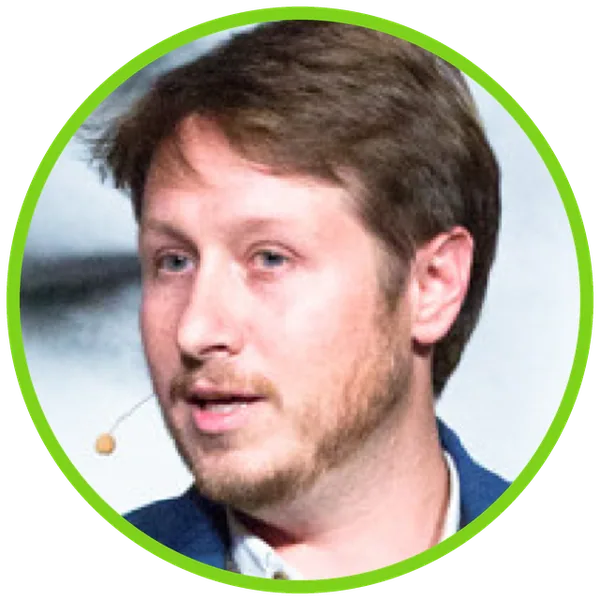
Nat Manning
Nat Manning from Kettle discuss balancing risk in a changing climate for a smarter reinsurance model and what role machine learning plays.
The full episode
Press play for the whole conversation.

Insurance Tech News
Take Our Listener Survey! Let us know how we can bring you a the BEST podcast.
InsurTech investment surpasses $10bn mark for first time
In Nature's Casino
Swiss Re to invest in Paytm's insurance business
The full transcript
Transcribed automatically from the episode audio, so some names and terms may be misheard.
James BenhamJamie Knowledge Podcast Network on episode 68 of the InsurTech Geek podcast talking about data driven reinsurance with Nat Manning from Kettle. The InsurTech Geek podcast powered by Jimmy Knowledge is all about a technology that's transforming and disrupting the insurance world. We'll be interviewing guests and doing deep dives into specific tech we see changing the industry. We're taking you on a journey through insurance tech. So enjoy the ride and geek out.
Nat ManningSpooky
James BenhamHalloween. That's right. One of my favorite times of year. As we record this, it's Friday, 10/29/2021, and it is Halloween. Hopefully, your kids are out trick or treating and not, trying to do it virtually over Zoom. Lame. Go get some candor. Go get some candy. Go have some fun. Even if COVID cautious, just you know, you got a great excuse to wear, what is it? Freddy Krueger had the mask or Jason. Was it that had the big full face mask? Jason. Yeah, it was Jason. There you go.
So, if that's what you gotta do, then, put the Jason mask on and go trick or treating, man. It's a great time of year. I've got my costume. I'll go ahead and announce what it is. I went ahead and went. Now, Top Gun was supposed to be out by now. The damn thing keeps getting delayed, but it's okay. I'm Maverick from Top Gun. I'm a pilot. Do you like to fly airplanes? And and so I thought it was an appropriate an appropriate costume. Rob, are you dressing up or are you just going to go in a 100% dad wear?
Rob GalbraithYeah. No. Great question. Good to see you, James. And so so here's the deal. So I I do not dress up every year. I just do the dad thing, and I have made a deal with my kids over many years. So my kids are now twenty sixteen and 11, so they're older. So I've told them, if they can all agree on a theme, I will dress up. So I thought my family would make, for instance, an awesome Luke Skywalker, Han Solo, and Princess Leia, and I would be, you know, honored to be Chewbacca, right, or a c three p o.
I think that'd be perfect. We've talked about Pokemon. We've talked about all sorts, and and they can never agree the three of them on a theme. And and now that my kids are older, it's only my 11 year old that's going out. So unfortunately, that that dream of like, hey, we're all gonna be on the same page, and we'll go all go out as a as a family with a theme is it's dead, man. It's sad. Dream
James Benhamis dead.
Rob GalbraithSo sad. It's okay. I thought that would be enough incentive. You know? Seeking out in a sleep costume. Mom agreed to it. You know, we could even get the pup pup dressed up. But Yeah. They're they're individual, you know, prioritize themselves
James Benhamover the team here. Yep. And they got it. They got that's it. They gotta learn the lesson. You know? My, my 14 year old now she she's pretty independent, likes to do her own thing, with dress up, but we always went out and, and, know, I always picked my stuff. My, my 11 year olds always, always wanted to match this year is the fur. Oh, this is, this is so sad. This year, she's not matching with me. She's matching with her special friend from school. He's he asked her if he asked her if they could match.
And so she's matching with him instead of me. That's definitely bad. Oh, God. But we she and I, she and I matched, she and I matched costumes for the last eight years. Like, I mean, we, we always live out together. So I'm Top Gun. She's a Harry Potter character. With us today, we've got Nat Manning
Nat Manningfrom Kettle. Nat, are you dressing up for Halloween? Yeah. Yeah. I am. And and good, I've got a three and a half year old, so we are doing a family a family look. You guys have ever read the books, Elephant and Piggy by, by Mo Williams for the little ones. Our three and a half year old loves them. So Awesome. We are pig, elephant, and, and pigeon. That is amazing.
James BenhamSo good job, dad. Awesome. Have fun, on on that one. Trick or treating is so much fun. First two years of trick or treating, my oldest one just cried the entire time. And once she turned three, she saw the point and she got with the candy racket and she started enjoying it. My younger one, who's now 11 has always loved a trick or treat. So we hope you out there in listener land are enjoying. By the time this airs, it'll be after Halloween. Hope you enjoyed past tense Halloween and have a wonderful time there.
Before we get started with our interview, don't forget you can subscribe to the InsurTech Geek podcast. Remember, of course we broadcast this on video on Facebook, Twitter, and LinkedIn, but in Vimeo, you can subscribe by texting geek out to 66866. You can also, you know, just go to our website at jimmyknowledge.com. But again, just text Geek Out to 66066 back to our interview. Our special guest with us this week, Nat Manning from Kettle. He's co founder and chief operating officer over at Kettle. For your reference, if you wanna watch the or look at the website while you're listening, it's Our Kettle, o u r k e t t l e, ourkettle.com.
Nat, thank you so much for joining us. Where are you joining us from today?
Nat ManningI'm in the Philly area right now. I've been in the Bay Area for the last eleven years and, recently, made my way over here to Philly, which is where I grew up. Awesome. So,
James BenhamPats, Genos, or other?
Nat ManningNo comment. I don't wanna get myself in trouble, isn't it? Oh, fuck. I knew I You're butterfly
James Benhamlane. Pick a lane. I'm a I'm a Gino's for sure, Gino's. I love Gino's. Their bread is better. I like a here. I'll give you a good nod. Yeah. I I like a provolone wit. A provolone wit. I always bring my cash. I order quickly, and then I shut up like they want me to. Going out to eat in Philly at any type of food place like that is is like the opposite of going out to eat here in Texas. They're like, oh, y'all come on in.
Let me tell you about the menu. What do you Let's tell me tell you all the great things we got. And at Pat's or Gina's like, what do you want? Well, I'm sorry. We got lots of people calling. What do you No, cash only. What do you want? Point the menu. I mean, it's like, I remember I said, well, tell me like, what's in the pizza? I'm sorry. This was so funny because I was like, what's in the pizza cheesecake? She goes, pizza sauce. You want it?
I mean, I mean, no regard for customer service, but phenomenal cheese steaks. Indeed. Phenomenal cheese steaks. You're back in Philadelphia. You sounds like you were Philadelphia born and raised on the playground is where you spent most of your days chilling out, maxing, relaxing, all cool and shoot some people outside of school. Did a couple of guys, they were up to go good, started making trouble in your neighborhood? Yeah. Something like that. Did you get in one little fight and your mom got scared and said you're moving to auntie and uncle?
Oh, I'm sorry. I just totally got on a Will Smith sidetrack there. So did when did you how how long did you live in Philly? I grew up outside of Philly. Was here until I was 18 and then and then off. Like King Of Prussia outside Philly or like where? Little farther
Nat ManningWestchester area.
James BenhamNice. Okay. So you go you go get your undergrad in religion and philosophy studies at Brown. Excellent school, Brown. Thanks. What led you to to studying religion and philosophy?
Nat ManningI mean, particularly, I mean, I it was about the big questions in life. Like, that's near and in college. I wanna understand, you know, very driven to kind of Eastern philosophy and, and existentialism
James Benhamwas just like, why are we here? You know, if we're if we're here, might as well ask the big questions. Yeah. Why are we here and what are we doing? What does it all mean? Exactly. What happens when we die? Those are the big ones. Those those are big ones. It's like, yeah, we've always asked like my favorite two topics are religion and politics and, which, you know, makes me a ball of fun at a party. Right. And
Nat Manningthere goes the hour we can talk about.
James BenhamThen half your friends. And, and, you know, I always, wondered why they are such hot button topics, you know, like, cause that for me, they're not, I just enjoy the top. It's for me, it's the two most important questions. Who governs you while you're here? Politics. And what happens to you when you die? Religion, right? Like, like what's the, what's this really all about? What's the end game about? And of course they're the two touchiest topics that no one wants to really talk about. And we're not going to talk about them today.
We're going to talk about technology. While you're doing this, you did this environmental in in international environmental policy and sustainable design. So it looks like you got, like, a a bachelor's and a master's kind of around the the same time. Is that right? Yeah. That's right. I mean, basically, the long story is study philosophy and say why we here. Actually ended up living in a Zen monastery for three months in Japan. Cool. Spent a lot of time in the cushion. You do that. I've recently,
Nat Manningright before that, essentially took a class in environmental science, learned about climate change, watched The Inconvenient Truth around that time, sat on that cushion for three months and said, This is the big problem that is facing humanity over the next, you know, hundred years. This is collective action. How do we, how do we solve this? And it's not looking good. And the science is the science. And, came off that coach and said, I wanna go dedicate the rest of my my life to figuring out if we can kinda turn around climate change as a as a Yeah.
Awesome. Awesome. So you jumped in immediately with the Clinton Foundation from o eight to 2011
James Benhamas a regional analyst and a financial finance associate. What was that like?
Nat ManningAnd what were you really working on there? Yeah. We were essentially working on I mean, the the theme was really clear. It was if you could make clean tech cheaper than dirty tech, we don't have a climate change problem anymore. So it was essentially how do you go about making, the mitigation? How do we actually reduce carbon, and make clean tech a lot cheaper? So, we were working on essentially as consultants. My bosses, my folks were all McKinsey, BCG type folks. One of the big projects I worked on was the clean energy plan for for Malaysia for the the, for the energy, department there.
We were working on how to build financial, instruments to reduce the cost of building large solar installations in Australia. So I was getting to work kind of all throughout Asia Pacific. In that time, worked on an off grid solar project in India, and it was all about how do you make different ways to to make clean tech cheaper. Very cool. And then from there, you went through First Solar.
James BenhamYou were director of as an energy and lead consultant, then you were CEO of Fellow Robots for a couple of years. Then you went to work as a special advisor on open data at USAID, the White House. That's pretty cool. Was again that kind of a continuation of all of this, of this this trajectory in your life when you worked at USAID?
Nat ManningYeah. Essentially, two things happened. So I was working on trying to turn climate change around, reducing carbon mitigation. Right? Clean tech. Also, I was working internationally. I came back to The US in 2011. Went to one of these programs in The Bay. I always had an entrepreneurial streak. Always wanted to start a company. Starting a clean tech company is very capital intensive. I'm still a young guy. Got more into software, moved to The Bay, which was, you know, obviously is San Francisco Bay Area is like the, particularly at that time, the hot butt hot spot for for starting companies in the world.
So in Silicon Valley. And and the other thing that was happening was it was very clear that, unfortunately, we were kinda losing this battle on on carbon mitigation and started came across this company that was doing incredible work around first response. It was built in, it's called Ushahidi. I went on, and you can see it in there as well, ended up running that organization. I joined the organization, and what we did was make the largest open source software platform for a community based crisis response in the world.
I was just really taken with the team, doing amazing stuff. I loved the open source software, the collaborative nature of it. So I joined that team, worked there for about a year, and then applied to this new program called the Presidential Innovation Fellowship. This was in twenty twelve-twenty thirteen and ended up getting it. So I went and was a special advisor, part of this PIF program, Presidential Innovation Fellowship program, in the Office of Science and Technology Policy in the White House, working specifically on open data for humanitarian response.
So, again, how do we open up government data? At that time, we built up data.gov. The US government, NASA, NOAA has made all this incredible data available in machine readable format. But there's all this other cool stuff that the US government that is sitting in PDF files. And so we said, hey, how do we actually bring some technical knowledge into, the US gov at the time and, and start making this available for for private sector? And between those two jobs, who is it that gets really interested in data, particularly humanitarian crisis data, is insurance companies.
So, I started having a bunch of insurance companies reach out, get interested in the data, say, Hey, could we get that? Both from Mujahidee and the US government data that we were opening up. And, and that just sent me down a rabbit hole of obsession with, with insurance, at that time. So that started my, my insurance passion. So I was working really on crisis response. There's a couple other stories in there. I mean, I was in, in FEMA during when Sandy hit the the Eastern Seaboard and kinda saw what happened there.
And that really was a turning point in my my history as well and and story. So drove drove me. I basically that happened and saw what happens. And and, I spent like three days literally sleeping on the floor in FEMA. I was like, Wow. I always thought about it this way. Had this kind of moment where if you kind of graph suffering over time in a crisis, you have this big spike at the beginning. The first two weeks, it's all about how do you save lives, how do you triage, how do you get people the help they need.
But then, of hives down. It hits more of a stasis. The news media and media move on. But then you have this long tail of people just getting their feet back under them, and it's really just them and their insurance companies for years. It's kind of this realization that the suffering under the long tail might be just as high as that suffering under those first two weeks. So, if you could improve the insurance industry, you can actually dramatically reduce human suffering from these acts of God, these crises that Yeah, hit absolutely.
Insurance serves a pretty deep and wide social good, right? It's a Exactly. It is it is a it is a safety net that, that protects a lot of people. Rob and I have had a lot of conversations about that. So let's let's take you up to today. What led to the founding of Kettle? And what does it do? Yeah. So Kettle, we're a reinsure tech, as we might call it. We we're the safety net below the safety net, and we use, advanced machine learning to better understand risk and and price it as such.
And and what we do is, we use machine learning models to actually do the, the actuarial predictions. And then we, we sell reinsurance. We are a reinsurer, but a tech first reinsurer. The founding of the story, as you kind of heard a little bit about my background, I got, I got obsessed with insurance. As we were talking about, I basically found this quite beautiful, elegant thing, something that most people don't use to describe insurance. But what are we really doing? It was like, okay, as society, we are all pooling all of our money together and basically saying, Hey, man, if your house burns down, I got your back.
I'll throw you $1 towards that. And if all of us do that together, we'll make you whole. Same thing, if it happens to me, you'll do the same thing. And that was this kind of incredible moment. Was like, wow, this is really a tremendous thing that's allowing millions, billions of humans to cooperate at large scale. And that's incredible financially. And it's really good for the economy as well. You don't have to keep all that money sitting in a bank. Instead, you can go put it to work.
So we got totally obsessed, realized insurance was also like the OG data scientists, had this technological background. But I had no insurance background. I came from technology. And so I was just kind of talking to everyone's ear off about it for years, saying, I want to figure out how to start this. A couple of classic things happened. One, my wife was like, Nat, get on with it already. Quit your job and go start a company if you're going to do it. Stop talking about it. And two, I was talking to a friend who's a designer.
He's got blonde hair down to his shoulders, lives in Hawaii, the coolest guy you've ever seen kind of thing, and talked to Xerox about insurance. He laughs and he's like, Nah, man, do I, do I look like someone who wants to talk about insurance for an hour? But let me, let me introduce you to this guy, Andrew. He's, he's the only other person I know that's made insurance sound interesting. So, you guys should meet, and he'd been introduced to us. This was three or four years ago now.
And sure enough, Andrew and I just hit it off. And he was completely brilliant, knew the whole space inside and out, and started off slinging policies from Allstate and moved all the way up to being the head of technology and digital at Argo Group, a big public, reinsurance and specialty reinsurance out of Bermuda. We knew the whole thing, and we had a blast. Then, in summer twenty nineteen, we said, Hey man, we want to quit our fancy jobs and start a company instead? Seems like a great idea.
And he said, yeah. So we we got to work, started building up the team, and, you know, like any good startup, iterated a bunch of bad ideas for a year, bootstrapped and self financed, and then came across realization that essentially climate change there's been a 3x increase in billion dollar catastrophes over the last ten years in The US. That's led to this 60% drop on return on equity for the reinsurance industry. What is reinsurance? It is insuring catastrophic risk, not that your house got robbed, your roof is leaking.
It is like there's a giant wildfire, there's a giant hurricane. That's the job of reinsurance, and those are being exacerbated by climate change. So, if you're in the business of reinsuring catastrophic risk, you're having a tough time over the last ten years. The industry is basically using the same exact models and process of understanding this risk that they were fifty years ago. It's kind of classic stochastic modeling. If you're trying to say, Hey, I'm going look at the data from the last one hundred years and say, This spot has burned down twice in the last one hundred years.
Therefore, it's got a one in 100 shot of burning down next year. That's just not the truth anymore because it's it's right there in the in the word climate changed. So you can't use the same data from the last hundred years to try to understand the next 10 anymore. And and so you need a much better model. Yeah. Like, what's does a one hundred year flood mean when three of them happen in ten years? Right? Exactly. Exactly. And you just have to kind of look out your window and see that.
All right? And so, if we can drive cars with AI and re land spaceships back onto earth, we should be using these tools to better understand risk. That's awesome. Rob? Yeah. I love your story. I love your background.
Rob GalbraithWe kind of have a shared passion in this space because for many years at USAA, I led the underwriting team that managed some of the underwriting guidelines. And I would always tell people, we're not making a decision today on whether we can profitably ensure this risk, but the retention was so high at USAA that there was a fiftyfifty chance that we'd still be on that same risk thirty years from today. And so I need to think about, is this an acceptable risk thirty years from now, not just today?
And that led to a lot of these conversations about climate change, quite frankly, that a lot of executives weren't really ready to have, I guess, I would say. You know, they were really worried about, you know, that year's profitability maybe a year or two out and led me to to do some modeling in this space and and wildfire and others talk to some of the cat models, talk to some of the the the reinsurer folks as well. So very I share your passion on this topic.
And, you know, you touched on this, so I'd love to have you expand. In talking to some of the scientists that I had talked to at the time, they basically said, hey, the the risk profile for something like wildfire between now and 02/1950, that's baked in. Like, we actually can't change that profile and that risk what it's it's gonna look like. You know, what we're talking about in terms of climate change, the Paris Agreement, things like that, you know, would influence the risk from 2050 to 2100.
And, you know, so they showed me statistical charts and paths and pretty good estimates of how that the exposure was going to change over the next thirty years that were eye opening and things that I was not seeing in the reinsurance space and the traditional catastrophe model space. So, you know, this whole idea of modeling not just the catastrophes and of course, wildfires are a lot more difficult than things like hurricanes. Nobody's actively putting out the hurricane. Nobody's actively putting out the earthquake the way they are with wildfire.
There's so many more variables involved. And then you add this climate layer on top. It makes it exceedingly challenging. I just would love to have you kind of expand a little bit what makes climate change in particular really difficult from an insurance perspective, and what are you doing to kind of, I guess, provide us with those better tools that you described? Yeah, absolutely.
Nat ManningSo, our first product to market is around wildfire, right? Particularly in California, but expanding to the West. And you're right, it's hard to model. Particularly, how are we thinking about how climate change affects this over time? It's really challenging because, as I said, if you're just looking at the historical data, you're only going to have a certain data set now, and it's right there in the change. How are you predicting what's happening in the future? So, you've got to bake a lot of that in. The way we go about it, one of the values of using machine learning in this case.
Machine learning is essentially artificial intelligence. What you're doing is you're training a model off of a ton of data, and they're running simulation after simulation to try to predict what the factors are that are going to create a fire. Now, here are a couple important things to know. Wildfires. Obviously, it's getting a lot more. Everyone reads the news. You can see it, right? There was a bunch of damage in twenty sixteen, twenty seventeen, 2018, and 2020. Let's use 2020 as an example. 4% of the state burned out of 100,000,000 acres, a ton of space.
But now looking at 11,466 structures burned out of 14,000,000. Less than 0.1 of the structures actually burned down. Now, there's smoke for a lot of the season. That's not enjoyable. But from a damage point of view, you're looking at not making light of 11,466 people even losing their homes and businesses. But it is actually quite a small statistical representation compared to what it might feel like in the space, That the whole state's burning down all the time. What we're doing in the models is we now have over thirty years of satellite imagery and longer than that of weather.
So, these machine learning models are looking at what is causing a fire to start and then how is it spreading. And the other thing to know is that those 11,000 homes that I mentioned, 98% of the damage caused was caused by 14 fires. However, there are over 10,000 wildfires a year in California. So what's really happening is, which are the ones that are going to get really big and really dangerous? Which are the ones that are going get out of control? Because we're actually really good at putting out fires.
There's tons of them, and we put most of them out. Now, this is actually a perfect system for machine learning because you have a good dataset. Okay, why is it that these 9,986 fires went out and didn't cause any damage? And what was it that caused these 14 to get completely out of hand and become a Caldore fire, you know, etcetera, tubs? And so what the the models are doing are looking at this data and saying, hey. I noticed that fires start all the time right next to this gray pixelated line, aka a road.
And that could be because that's where the electrical wires are, people throwing trash or cigarettes out the window, etcetera. But, you know, if it's right next to this giant other gray thing, a Walmart parking lot, the fire goes out. Nothing happens. But if a fire starts over here and you've got 20 miles of this dried out trees, right, canopy, and you have no access into this area, there's no roads to go put this stuff out, And the wind is blowing 90 miles an hour because it's that time of the year in the Santa Ana winds there, and it's October and it hasn't rained for eight months.
Now you've got that perfect storm. All of the variables are aligning in the wrong direction. And you have a situation where you're like, This is a high chance place for a fire to start. And then once it does start, this is where it's going to spread. And that's how the models are essentially thinking. And to give you an idea of just the other part the value of using these kinds of tools versus the old tools, as you might know in the space. Typically, what you would do is you run 100,000 simulations on historical wildfire data set to do a prediction.
That's the norm. It's called stochastic modeling or randomized modeling. What's the one in two fifty chance the spot's going to burn down? We run roughly 600,000,000,000 simulations per turn of our model versus 100,000.
James BenhamSo it's just a whole other level of brute force to understand every possibility of what could happen. So let's dive on the technology for a second because that requires a massive amount of computing power. So cloud computing, I'm assuming, is one of the key drivers that's enabling this because you can spin up far, far, far more servers to do all this modeling. Is that correct? It's a 100% correct. Yeah. After people, the next biggest bill is AWS. Yeah. So you're you're in AWS on Amazon Web Services.
And are you using a third party, machine learning model? Did you start with a third party model and develop your own? Where where are you at with machine learning? We have developed our own. We tested against
Nat Manningthird party models like the open source ones, like XGBoost, Random Forest all the time, as well as kind of the normal stochastic models. And then the way we work is we actually develop different models, and we're trying to compete them off of each other and figure out constantly which one's the best one. Much like a competitive data science competition like Kaggle runs, which is just a service that does that. Or very similarly, this is how hedge funds work. So, constantly trying to compete models to do prediction and see how you do.
That's how we do it. So we have developed numerous ones of our own. That's awesome. Which are the currently winning ones. Yeah, that's great. And what's been your biggest learning lesson from really diving into machine learning, developing your own model sets, working with AWS? I mean, look, half of the mean, but part of this is about insurance. The other part is about tech, right? So, you know, in the tech sphere, what's been the big painful learning lessons? You've to basically build the plane while you fly it, or rather, you're building the roads as you're driving them.
So, I mean, this really wouldn't have been possible, you know, ten years ago, which is what's incredible. You know, my colleagues who worked at some of these big this is kind of classic innovator's dilemma might ask, Well, reinsurers have a ton of money. Why can't they do it? But given a piece of knowledge, colleagues who worked in technology at one of the big reinsurers recently said, Hey, I want us to go from running 100,000 simulations to a million simulations. Team, what do we need to do to do that?
I said, Well, that's going to take about six months to build out the server infrastructure to do it. Like I said, we're running six fifty billion simulations at the moment on AWS. So, it's just that ability to build natively into a machine learning cloud based system versus having to handle twenty year old infrastructure. So, what else did we learn? The other thing, though, is while a lot of that's there, there isn't just plug and play systems. And so, you have to build the infrastructure that's cleaning all of this data, making sense of it, putting it through what we call ETL pipelines, building data libraries that then our data science team can just easily access, model, and improve upon.
So, it is an engineering feat as well and data science feat. And some of that work is just boring. I mean, we basically had to spend six months cleaning the data sets and putting them into the format that would make sense for us before we could really even get started, which is a great head start. A lot of this data is open source. It's my old job. We do have some private data sets now, we've been building our own, which is called downscaling. But the vast majority starts with the data that's been available by NASA and NOAA over the last
James Benhamthirty years, which is pretty incredible. Yeah, that is incredible. And thank the Lord we have satellites, right? I mean, satellites are what led to so much of the modeling data and satellite imagery data that you're consuming now. And of course, satellites are getting far, far higher resolution data than they used to, and they're putting a lot more sensor arrays on satellites. So the future is very bright in that regard. Rob? Yeah, it's really cool. I love the story and I love
Rob Galbraiththat element, right, that this was impossible ten years ago in the technological innovation and leaps. And I think this applies in many different aspects, right? Just that whole idea of cloud computing, software as a service, the ability to use AI and ML sensors, right, of streaming data coming in that we've never had before that are at a much more atomic or granular level than ever before. So I'm super excited that you're able to capitalize on some of these kind of broad trends that I've been talking about for a long time.
Let's talk about the reinsurance aspect about this. Kind of alluded to it a little bit before, so AIR, RMS, right? There's kind of these traditional cat modeling firms that have been in this space for thirty years or more but a lot of reinsurers, they're gonna look at their one in 100, one in two fifty, one in 500, you know, exceedance probabilities, things like that. And those are the basis of which they're evaluating their, you know, cedents, their primary insurers, that they're placing bets around the world.
You know, there's been some innovation. I think there's been some use of aerial imagery and, you know, things like detecting, you know, roofs that are in poor condition and things like that over time. But tell us a little bit about that reinsurance aspect. So you're not just doing the modeling, but you're actually providing capital, right, to kind of,
Nat Manningthese risks. Tell us about that aspect of it. Happily. I love getting under the hood on this stuff. So to back up a little, as you mentioned RMS and ARR in a lot of respect to them, It really came around about twenty, twenty five years ago and brought a lot of innovation to the industry at that time. These are the traditional big cap modelers. But a couple of things happened as they came up. They take a traditional SaaS model. They're essentially saying, Hey, we're selling you the modeling as a service.
The reinsurers, meanwhile, in twenty, twenty five years ago, they're like, Hey, we want to improve profit margins. How do we do that? All of big actuarial departments are really expensive. Hey, look, there are these new firms that are coming along selling it as SaaS. I'll start reducing my big expense on actuarials, and I can outsource more and more of this. Classic horizontalization of an industry, right? And our take on that is what has happened now is every reinsurer uses one model for fires across the entire state, which is not good from a competition point of view, or particularly when that model proves to be wrong, as we learned in 2016, '17, right, and '18, like that.
It's like, oh, this isn't right anymore. Now suddenly everyone's out. So classic horizontalization has essentially led to a a breakdown in innovation. And you can kinda see what happens there. It's like, It also creates this breakdown of incentives, we think. And so, what happens is if the RMS loses a bunch of money for the reinsurers one year, they still say, Hey, man, here's our bill. And they don't really have another option. They've to go back to them the next year right now. So, I think that's a problem.
We think you've to vertically integrate again, much like we've seen Elon do and Tesla and SpaceX and things, different industries. That's essentially been a huge part of the value chain there. Same thing here. If you can realign incentives, it's a better model. So, build an MGA first. And then we also are building a small balance sheet to invest directly alongside the big reinsurers. We say, Hey, look, man. We have skin in the game right along with you. If our models are wrong, we're going to lose, actually, proportionally way more money than you are to your balance sheet.
Therefore, we're putting our money where our mouth is, as they say. And similarly, one of the things we always say, too, is if you really developed a model that you thought could trend gold prices, why would you sell that for $10,000 a month to hedge funds? Wouldn't you put your own money behind it if you really believed in it? So, that's the place we take. And then look, the last part of it all is RMS just sold to Moody's, which is its own problem. It's sold for $3,000,000,000 They make about $300,000,000 a year.
That's the biggest player there is. Now, from a venture backed perspective, that's actually not that exciting. If the biggest player is getting to $300,000,000 a year in revenue, I would say I'm much more interested in the $400,000,000,000 industry sitting right behind it and making that a lot better. So, the reinsurance industry. That's some of our take on that space. I want to give them the respect they deserve, which they really improved a ton about twenty years ago and brought a whole new layer and level of modeling to the industry.
But I think this horizontalization has served its time, and we've got to build a different model. So, like I said, we went took the MGA approach. Now, we have our own small balance sheet as well. We're building that out at the moment to invest right alongside. That's great. I love that, Nat. I love that. Yeah. And to your point, there's actually a great article out there called In Nature's Casino that was in New York Times Magazine
Rob Galbraithback in 2007 by Michael Lewis, if you're Michael Lewis fan, and I think I've talked about this on this podcast before. We'll make sure we get a link in the show notes. He talks about the advent of catastrophe modeling from Hurricane Andrew. That's right. And if you can believe it prior to the early nineties, people just looked at, right, the historical occurrence of hurricanes. And if you didn't have a hurricane in the last five years, it wasn't in your experience period, then we kind of assume that there's, you know, not much risk.
And that's clearly not the right way to write catastrophic risk. That's fine for plumbing leaks and things like that, that are the law of large numbers occurrences, which you kind of referred to earlier. But it just feels like what you're doing is not the next generation, the next generation. You're not just doing the incremental improvement upon these cat models that we've had over the last thirty years, but you're actually taking it to a whole another level. Yeah, totally. I don't know if you guys have heard this before, but in the depths of the reinsurance industry, they're called the classes of.
So,
Nat ManningHurricane Andrew, you have the class of 'ninety four. I think it was 'ninety four, which is like RenRe comes about. Because after a big catastrophe, creates this dislocation in the pricing and allows for a new forum to come in and innovate. We can get into that. One of the main reasons we started in wildfire because there's been such price dislocation there. And then you have XL Cattlin after nineeleven, right? So, you have the class there, then you got the class after Hurricane Katrina. So, each time, I think, after 2008, you got Archmaiden in building out mortgage modeling.
You've got these after big crisis, someone comes in and goes, You know, I think we're not doing this right anymore, I've got a better way to do it. They tend to make a lot of money doing it. And even more importantly, or maybe, you know, as importantly, they bring Stasis back to the market that has gone, you know, haywire, bring stasis back to the pricing. It's fascinating. We never talked about category classes, but that is a it's a real thing. And it's
James Benhamcertainly, you know, catastrophe always brings about opportunity in all markets, by the way, not just insurance, you know, there's always a huge spikes and swings in the construction market after catastrophes because you have material shortages, then you have labor shortages, then you have rebuild, then you have repair. So there's certainly those cycles drive a lot of other business. And I mean, Harvey in Houston drove a ton of change and the insurance markets, the ratings, I mean, it created just a whole set of dislocation in Houston as well.
So fascinating. Well, Rob, you already covered one of your news stories. Nat, it's a good discussion about what you're doing over there at Kettle. Rob, you already covered your first news story. What else do you have this week? Yeah. So I've got one other one
Rob Galbraiththat caught my eyes. This is a Swiss Re. Speaking of reinsurers, it was announced as investing in Paytem's insurance business. So Paytem specializes in digital payment systems, ecommerce, and finance, but they're planning to leverage their existing customer base and start offering insurance products, developing new products and solutions. And so Swiss Re is making a, excuse me, a $123,000,000 investment. Ultimately, it's estimated that Swiss Re will own about a quarter of the company. And, you know, digital payments isn't something we've talked about a ton yet on the podcast, James, but it's definitely an area that's heating up.
Hear a ton in the payment space. We see a lot, of course, in the crypto front, as well as central bank digital currencies now are gaining a lot of press and traction China's issuing theirs and several other countries are looking at it. So I think we're going to see more and more kind of in this payment space. Buy now pay later is also super popular in 2021. So anyway, it's just a validation, I guess, of a trend that we've already been seeing from a a big player out there, Swiss Re.
And they're not just, you know, funding them. Right? But they're actually taking an investment stake. Yeah. Well, fintech and Insurtech are are inextricably
James Benhamintertwined. And buy now pay later is a massive deal right now. Wall Street Journal did a wonderful podcast covering it, explaining it, running into, you know, diving on each of the different pay, you know, buy now pay later, major players in the buy now pay later. And you can't talk about Insurtech without talking about FinTech because they're so tightly coupled and it's been really interesting to see what's going on there for sure, Rob. I had one this week, which I thought was pretty interesting. Insurtech investment surpasses $10,000,000,000 for the first time.
I was like, dear Lord, this is from insurtechnews.com. And it was a pretty staggering, covered this, Insurtech News covered it from Insurance Insider and Insurance Insider's talking about the massive amount of investment that has flowed in to the Insurtech space. Insurtech that they spelled I N S U R T E C H, and just to be clear, I am firmly in the I, in the E camp. Just want to say it. I'm in the E camp. Insurtech Connect has an E in Insure, I N S U R E.
InsurTech Geek has an E. So I'm in the E camp of Insurtech. One of these days, somebody's going to have to settle that, but I certainly hope they're in the E camp. I would just argue that since the largest event in the world has an E, it has got an E, but that's neither here nor there. Dollars 10,500,000,000 in the 2021, which is just a staggering amount of investment going in to Insurtech. And of course, you know, Rob, it's led to a whole lot of interviews on this podcast with new technology companies
Rob Galbraithand a whole lot of work for you helping sort it all out, right? Yeah. And I've spoke with of course, I I speak with startups all the time, but I I spoke to several this week that every single one of them, was excited about. Totally different, you know, value props, totally different geographies, different backgrounds. But, yeah, it's just the the floodgates are open,
James Benhamand I think it's gonna lead to a a ton more innovation in this space. Obviously, this is a a great capper with Matt and learning about what you guys are doing at Kettle this week. Yeah. And Nat, thank you for coming on and talking with us on the show. You know, it's really interesting. I mean, you said it best, right? If you can sell a small component to somebody for them to try and figure it out or you can do it yourself. And obviously you chose the, we're going to go into the market ourselves rather than just build tools for existing reinsurance providers.
That's right. Yeah, that's awesome. Well, Nat, thank you for being on the show today. And again, you can find out more information about Kettle, I'm guessing at ourkettle.com,
Nat Manningcorrect? That's correct. Yeah, thanks for having me. Really was a blast. Yeah, Nat, thanks for being on the InsurTechie
James Benhampodcast and again, check out Kettle and what they're doing with data and reinsurance. Rob Galbraith again,
Rob Galbraithas always, good to chat with you brother. Likewise, James. I can't believe it's already November headed to the homestretch here in 2021.
James BenhamAnd I gotta say, go Astros. We'll probably know by the time this is out, whether they win or lose the World Series, but go stress. Exactly right. As we record this, they're tied one and one. So let's let's see if our Texas team can beat up that Atlanta team. But it's all it's all good. And thank you out there for listening in in listener land. This has been the InsurTech Geek podcast powered by JBKnowledge at jbknowledge.com. All about tech that's transforming and disrupting the insurance world.
I've been your host, James Benham. That's jamesbenham.com with co host Rob Galbraith. That's endofinsurance.com. Big thanks to Jim Greenley, our podcast producer, and Cara Dalton, our creative producer and thank you for joining us. We're taking you on a journey through insurance tech, so enjoy the ride and geek out. Talk to you next week.