 YouTube
 Spotify
 Amazon
 iHeart
 Apple
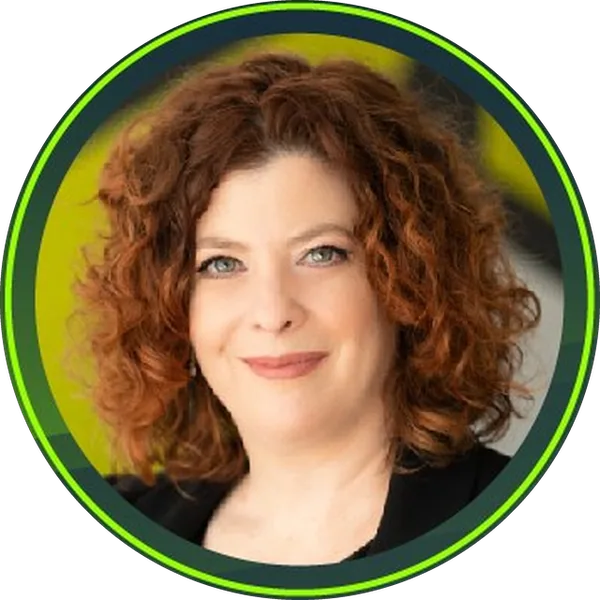
Meirav Oren
Hosts James Benham & Rob Galbraith are joined by Meirav Oren from Versatile. James, Rob & Meirav discuss data driven decision making.
The full episode
Press play for the whole conversation.

Insurance Tech News
ENEL X launches homix smart protection in collaboration with Neosurance and Net Insurance: the first on-demand and pay-per-use insurance plan to protect your home against theft
5 Trends to Watch in Commercial Auto
The full transcript
Transcribed automatically from the episode audio, so some names and terms may be misheard.
James BenhamJ. B. Knowledge Podcast Network. On episode 72 of the InsurTech Geek Podcast, talking about data driven decision making with Meirav Orin from. The InsurTech Geek podcast powered by JBKnowledge is all about technology that's transforming and disrupting the insurance world. We'll be interviewing guests and doing deep dives into specific tech we see changing the industry. We're taking you on a journey through insurance tech, so enjoy the ride and geek out. Friday. As we record this, it's Friday, December 3 now. It is beginning to look a lot like Christmas.
My I'm on a street, and I talked about this in my contact crew podcast. I'm on that street, Rob, that everybody has to have lights on or you feel like a real big outsider. And it's like a it's a six house cul de sac and they all go bonkers for lights. But, like, in particular, I have the neighbor. I have the Clark Griswold of the neighborhood across the street from me. And he's like the nicest guy on the planet, but he does do a heavy light show.
And so it puts a lot of pressure and so my daughters who are 11 and 14 were all over my butt last year. They were like, what the heck dad? We need more lights. So I did more lights this year and I'm like, is it enough? They're like, it's really great. I mean, it's not, it doesn't match his, you know? So I think I'm gonna have to go full on animated light show, Rob. Do people on your street do lights for the holidays? You're do, like, the whole Trans Siberia Orchestra
Rob Galbraithplaylist with all the flashing animated lights. Why not? Oh, it it it'd actually be the Aggie band, Aggie Warham. Okay. It could be more appropriate in in College Station, Texas. But do peep do people on your street go bonkers for Christmas lights? You know, nothing like that. So I would say we're a little bit the opposite on our cul de sac. We do have that guy. He actually he's a a good guy. He's my next door neighbor. But I would say that he has a moderate amount of lights, which compared to everyone else that barely puts up any just makes him look, like, standout.
But, I think he he's raised the bar enough that nobody wants to kind of challenge him. But around the other end of the street, basically, like, you there's kind of a right turn in the cul de sac on the other end.
James BenhamThat's where all the heavy hitters are. So that would be the equivalent in the hard. So we're kinda nice to be on the more reserved It's always a street, man. Reserved cul de sac. No, man, I'm on the street. I'm on the street. I mean, they're like, it's so bright that when I turn the lights off at night to go to bed, it's, I can still see inside the house everywhere. Like, that's how bright it is. More bonkers, we're cuckoo for cocoa puffs around here for holiday lights, Meirav.
Clearly. Do people Where are you joining us from today? The lovely Northern California. Yeah. Bay Area. So in the Bay Area, do they allow themselves to enjoy the holiday lights? Is that a thing where you live? Yeah, so I'm downtown
Meirav OrenLos Altos right now where our office is. On the street it's actually very well lit Nice. Since about two weeks ago. Yeah. And the shops are like really nicely decorated. Really does feel like Christmas. Yeah. Yeah. It's like time. It's time. It's time. Yeah. Yeah. My kids my kids love the lights anyway, so I think we decorated, like, two weeks ago. And they're, like Yeah. Just super happy about it. Make sure that it's What kids don't love lights, man? Seriously.
James BenhamIt's like super addictive, lots of fun. So big week wrapping the year up. It's always exciting and scary at the end of the year for a tech company. At least it has been for me for the last twenty years. We're always doing a lot of hiring at the end of the year. We're always setting budgets and you're looking at your sales goals and comparing to what you actually got. And then you're saying, I gotta reset next month and it goes back to zero for net new business for the year.
You're but so there's always always that part of the end of the year. But of course for me, I get really excited about the lights and everything else. And of course, college football playoff time this week in the big game. Texas A and was not in it like they should have been. It's Alabama, Georgia for the conference that matters. And and then of course, and in the great state of Michigan, Rob, you had a rough weekend last weekend. Now it looks like it's thing. I think Michigan's gonna go all the way.
I don't think they're gonna win, but I think they'll go all the way to the playoffs. I think it's happening. It is a little bit tough. I'm I'm trying to figure out. I think I'm in that terrible position where you have to cheer for your enemies so that we can get that New Year's six bowl game at Michigan State and all that. Yeah. So it's a lock. Yes. A locker this weekend. You gotta do it. Go big blue. Just say it in your head. Go big blue.
Before we get started with our interview, don't forget you can subscribe to the InsurTech Geek podcast by texting geek out to 66866. Make sure you never miss an episode. I also wanna say a big special thanks to our sponsor of the show, SMART Compliance. That's at smartcompliance.co. It's certificate of insurance tracking and collection, next generation product for certificate tracking. So go check that out, smartcompliance.co. Now for our interviewer, our special guests, Marav Oren from Versatile. I've had her on my podcasts before. And since then she's raised a 100 mil and US dollars by the way.
So she's been busy on the fundraising front and certainly on the growth and customer acquisition front. She is co founder and CEO at Versatile and also co founder and CEO of her homeschool, where she has been raising a lot of money, running a company and also homeschooling her kiddos. So she's been a busy bee. Marav, thank you for joining us again today. Thanks for having me James. This is a pleasure. Yeah. And of course, today is all about insurance and insurance tech and risk management. We're going geek out on this and let's just briefly talk about you and then let's talk about the implications of technology in construction on risk management.
You got a bachelor's in econ and management at Bingarian University. You got a master of laws at Barlan University, both over and then an MBA at Tel Aviv. So all in Israel. Yeah. It's been an interesting time. One of my best friends is Israeli and he lives here in Texas, but he goes back to Israel whenever he can. And he just got back from Israel and it doesn't look like he's gonna be able to go back over there. It looks like Israel just got locked down again.
Is that correct?
Meirav OrenI haven't been back for a while myself, so I'm trying to keep track. No, I don't think they're locked down. I think they did kind of like close borders again though, so. Yeah, they closed the borders. Yeah, and been it's it's interesting. He he was allowed to leave,
James Benhambut he's not gonna Gee. Thanks. He he was allowed to leave and come back to Texas, but he wanted to come he wanted to go back a month from now and it doesn't look like it's gonna happen. So you did a whole lot of work in education over in Israel, and then you were a business analyst, you did IT flex services, you wireless, you were at a mobile wireless group, you were a financial specialist and consolidator, were, I mean, had some really interesting jobs of your career, but you really became an entrepreneur about a decade ago now.
Just walk us through your entrepreneurial journey and what it's been like and what made you wanna start starting companies and
Meirav Orengetting involved in tech. I think I've always been an entrepreneur and at some level, Intel confused me just a little bit. There's something to be said about being promoted too often and your ego kind of liking it, right? So I don't think I ever thought I'll stay at Intel that long. Amazing business school. I've learned so much. I've gained incredible friends and relationships and most of my business knowledge, right? But probably wouldn't have thought I'll be there for that long. But in a way been good to be out, right?
Because anyone that ever knows me knows that I'm kind of like a classic non conformist that would look for different ways to do things and hardly ever takes no for an answer. So it was probably in the stars.
James BenhamIn different ways and creativity and business is not exactly a forte of a multi billion dollar global conglomerate chipmaker. I mean, it's, you know, I remember when I spent my brief two internships before I started JBKnowledge, I interned with PricewaterhouseCoopers employee number 158253. And, you know, a huge organization, massive, massive global organization, hundreds of thousands of employees, they did not appreciate the go get them entrepreneurial spirit that I took to everything. It was amazing. I must have set a record in my six months total there for the most number of official reprimands.
I mean, I got in trouble on a regular basis and not for doing like inappropriate things, but for just stepping out of the box, right? Like I was like, but what about that over there? I remember I was they assigned me to an airlines company. This is right before nineeleven. So they assigned me to an airlines company. I was at their headquarters and I wouldn't eat lunch with any of my coworkers. I went down to the company lunchroom and ate with the client. And so I just networked at lunch with a customer and then, you know, I was a 21 year old intern and I sold I sold work to a new division of the company that that they had never worked for.
And and they were like, What did you do? I went and sold work for you. Like, there's a problem over there, and it's more interesting than this problem we're working on that I don't need to be on. So can I go work on it? They're like And they got really mad. It was really interesting see. It's just, you know, you need to, you gotta play in the lines in big companies and the lines exist for safety, you know, big companies risk manage. So you did a decade at Intel, and then you've been, you've really been a public entrepreneur since then.
Pretty much. What led you to this point? Because you got really involved in, for the last ten years in entrepreneurship. What was the first steps and what led you to
Meirav Orenco founding Versatile? Oh, so yeah. Again, like entrepreneur at heart is always one. Unlike, I guess similar and then not similar to you, James, I kind of like found my way at Intel to actually innovate and break some boundaries and create departments that never existed or whatever. And they gave me quite a lot of freedom, which is probably why I stayed for that long. But it's things that I did later on. I started a school. I did a couple of things. I consulted on quite a few business ventures, including some in construction, but it was really an accident.
So, think I said this before, but a serial parent disappoint here. It's either my dad that always wanted me to be a superintendent because I'm a control freak and that really does fit well. For my mom, I couldn't get over me living in Intel. I just can't get this right. The bootstrapping company, whoever thought that was a good idea. Eighteen months of bootstrap will get your mom worried that your kids will end up in a cardboard box. And she'll constantly mention that, by the way. But kidding aside, my father is or was a general contractor and my brother, who doesn't disappoint parents as well as I do, is a project manager.
And a couple of years ago, he lost a worker on his job site. That's really the beginning of Versatile because that was a very different construction debate that night. I've had my share of construction debate Friday night family dinners. The realization that we're looking at a fragmented and non structured manufacturing process, non linear, if you'd like, and also knowing and wholeheartedly believing that the process can be controlled and the people that are building incredible, amazing human beings can actually be empowered to control their processes. If you could just give them data, by the way, do that without interfering with their workflow.
So naturally fit the workflow or be non intrusive and just add value, right? So that's kind of why our first product is CraneView because it fit that narrative that say, stay out of the way as you collect the data, by the way, make that data consistent and reliable and repeatable and stay out of the way. And the ability to add a ton of value just because of that position, the multi sensor approach that I could speak of. I think I heard you mentioned cameras before then.
Yes, a camera is a sensor. You better have more than one. One of many. One of many. One of many sensors. Yes. But fast forward, you know, just a couple of years, like it was probably three years ago when investors told me that construction is not an investable industry, right? Like they weren't just saying my business wasn't investable. They said the industry is laggard and antiquated and it's just not going to adapt fast enough. I remember just standing there saying like, you're so wrong. You're missing the point.
Given the right technology and that non intrusiveness at heart, really, it's our DNA. I think it's the first thing I said that night and it's in our nature and just providing value in that non intrusive way will catch fire. Like this is easy. And our industry is just as fast as any other industry. It's the tech providers that have it wrong half the time or more than half the time by providing tech that is hard to adopt, that is intrusive, that takes so much work to get something out of it.
That is not the way. Versatile comes up with a different way. It seems to be working pretty well considering the fact we have seen investments for both the Versatile and the industry as a whole that far exceeds what anyone ever said three years ago when we were non investable, right? So. How's
James Benhamadoption actually been though? Fast and
Meirav Orenimpressive, and it's not just adoption, it's the way our users are actually using the data. So that empowerment, that ability to drive your own decisions based on data that you can rely on has has been amazing to watch. It's what they do with it and how efficient processes become, how much time you can actually save, right? Like I actually measure it by, can I save the superintendent some time, right? Like I think there's perception about technology, especially in construction, that it's going to be a time suck.
How about twisting this around and actually saving them time? So I measure it by that. And as you save them time, they become, you know, in a way your best salespeople
James Benhamand boy, they do adopt. Yeah, let's dive a little deeper. Is a, so you say, and you even introduce it, CraneView as your first product, implying there'll be more products afterwards. Yes. And your own website describes CraneView and thought it was, this is why I thought it was relevant for for the InsurTech Geek podcast because, you know, it started with a fatality, which is a major loss event at a construction job site. The single fatality we had at Texas A and M's football stadium construction cost $53,000,000 once the once the lawsuit was settled.
So these are major events financially. They're major events morally as well. Yes. Your own self described literature describes CraneView as helping measure crane utilization, load details, locations, real time alerts, project progress, updating the model. There's a lot that it can sense. And the nice thing is it doesn't reduce the load utilization of the crane, right? So it's certified product. It's actual piece of hardware combined with a mess load of software that does this. What sensors other than cameras does this attachment
Meirav Orenhave on it? So starting with the load cell that actually runs through the device and a quick shout out to the Crosby Group. If you want to talk safety, that is for load bearing elements, couldn't have asked for a better partner. And everything about CraneView is the Crosby Group from the master link to the shackles, to actual hook and the load cell in between. But other than the load cell that would be unique, it's like, just think of a smartphone, right? Like it would have probably all the same sensors, but they're centered in the same location, right?
It's all under the hook. By the way, literally blue chip rigging certified under the hook device, right? So it doesn't change anything about your operations, including not your crane kind of like capacity or weight capabilities, but it provides data sets at pretty much every second, right? That allows you to not only understand what the crane is doing, but put this in context to your process and to understanding what else is going on because, well, it kind of goes back to how we onboard projects, right? And speaking of non intrusive, we do that just as non intrusively.
Just send us your data. We need to know what it is that you're building or manufacturing, if you'd like. Your schedule, obviously your bill of materials, a couple of data points that we ask for. And then when the devices are actually getting on the hooks, by the way, four seconds installation, I don't know if you've seen that video, but it is four seconds, we already know where we are, right? And we immediately start collecting that data. The magic, and we'll touch on what it does to risk as well, right?
Is the next morning when that data gets actionable, like digestible view on our daily digest. So if you're a superintendent and it's 5AM, you could go through pretty much everything that happened yesterday. And Craneview is a bit through like a keyhole, if you'd like. It does look at it from the Crane's perspective, but the Crane pretty much touches 80% of what you would want to know in terms of progress as well. Then you walk into your morning huddle plan of day, you already know. There are quite reduced number of questions like what happened?
Did you do this? How long did it actually take us? Which is a question that I don't think has ever been asked before, right? So those, A, the ability to just know what happened and B, put unbelievably accurate measurements on it. And we're talking seconds, right? So we know how long it really takes you to set up that column. We know how long it takes you set that steel beam in place. We know whether, truly know how you do your formwork. We could have discussions about jumping, right?
And whether that's good or bad. We know if it's installing or stripping. We absolutely know anything
Rob Galbraiththat the crane is either directly involved in in terms of installation or has assisted in delivering any of the materials for. So it's quite a lot of data that's structured in ways that you can actually use it. Awesome. Rob? Yeah, Marav. It's fascinating to to hear your story and your background and how you've kind of arrived at this value proposition of Versatile. So I'm I'm curious. Maybe you can expand. I'm I'm thinking back, James, we had an episode now is a while ago, but it was with Tom West of Make U Safe, which is a wearables company that, started actually with the exact same thing and unfortunate fatality.
And the founder Gabe Glenn said, you know, that scenario of somebody going to work and then not coming home, right, is just, like, really painful and really powerful to to say, we don't want this to happen again. We don't want this to happen to their partner, their their children, their loved ones. Right? Whenever you go off for your day of work, wherever that may be, right, you should have the assurances that you're able to to come home safely from that. And so I know that powered, their vision kind of for their startup and and and using wearables in the workplace and construction sites and elsewhere.
So love the the the vision at Versatile. Love what you've come up with, but can you maybe walk us through every time I talk to a founder, whatever your original vision is for your product or service, it it always changes, right, based on your actions with the customer, based on development. So I'd love to hear a little bit about your evolution and what lessons you've learned along the way. Sure. So funnily enough, I don't think much has changed because the foundations were keep it non intrusive and just add value, right?
And that drove the decision to go for the crane first. It drove the decision to offer those services to GCs and to superintendents
Meirav Orenspecifically. And the way we went about it is listen, right? Like we didn't assume we know everything to begin with. So I don't think we had too many things that we had to change because we're like wide open to understanding how what we already knew will be valuable data serves the people that we aim to serve. So in 2019, when we launched, this was a lighthouse program, but it was similar to what we're doing for insurers now. And I'm sure we'll talk about that, but that lighthouse was meant to say, we don't know anything, but you guys do.
Let's put this in your hands. Tell us how you're using this. Tell us what's not useful. Like we were trying to minimize the number of data points that we're putting in front of people. Data fatigue is not a good result, right? Like what is it? What's the one thing that actually makes a difference to your day? Let us put that in front of you and get rid of everything else. By the way, it's in the background. So the promise of those datasets remains the same whether we put this in front of you at 5AM or not, right?
It's still there and we're using it in different ways and the ways we'll use it in a year that will probably surprise me. But through that experience, we mainly learned how not to data dump and how to be very precise about what we show our users. I think our learning still proceeds today. We're definitely out of lighthouse, but the learning never stops. Our customer success managers are there to listen more than anything else and constantly trim what we're showing and only add if we have to, right?
So I think we've got a lot of validation and if anything proven right, including on the assumption that the industry can and will adopt good technologies, the ones that actually add value and emphasis on the ones that can stay out of their way while they're doing it. It's just, honestly, the biggest learning is how our users are using it and watching teams come back from shelter in place last year and gaining that time back. And trust me, I don't build, my company doesn't build. All we do is shed light on events and empower the people that do build, but we do that pretty well.
And just watching them go was probably one of the best experiences. By the way, tying this to risk, risk is not just safety though. I agree safety is a huge concern. It's actually been on time, right? It's keeping to budget. It's being able to do more with what is less resources if it's due to the pandemic and fewer people on the, actually in the field or simply because our industry is actually losing more manpower than it's gaining right now. Yeah, three people retiring for every one new trade worker coming in.
It's pretty tough.
James BenhamAnd I think there's a good deal of evidence that a more productive, more efficient and effective job site is also generally correlated to a safer job site. Absolutely. You know, if you reduce the number of steps workers are walking, let's just take that for because there's an incredible amount of waste in construction with walking time. I mean, like millions of dollars and you know, one of my construction technologists that came on that worked for a major multi billion dollar player here in Texas was able to drive over a million bucks a job by shortening worker walking time.
And if workers walk half the number of miles they normally walk, then you generally would get a lower incident rate on work comp injuries because you have, you know, fewer miles walked. Just like if you drive fewer miles, you're generally less likely to get in as many accidents because, you know, those type of incident rates generally occur, you know, per mile walked or per mile traveled. And so I always bristle it when people make an assumption that you can have a separate discussion about risk management than productivity.
They're one and the same, know, just if you're focusing on improvement, then you're naturally, well, not naturally, maybe not everybody naturally does it, but you're going to have to focus on safety through that improvement process because you don't want a faster job. I mean, Empire State Building, let's just use an example. This is a 100 year old example. Empire State Building was built in under a year. Six people died building it. Six. Which if you put that in modern terms, would be an absolute worst project of the century award.
Yeah. The Hoover Dam, over a 100 people died building the Hoover Dam. And, you know, and so if you, if you look at just worker fatalities, and by the way, that's excluding the injuries and the number of workers that got maimed. So you can have an, you can have a fast project. You can have a really efficient project that really sucks. I mean, I say this a lot from the stage, you can efficiently suck, but I do like that your focus is certainly on effectiveness and on efficiency and
Meirav Orenon safety. Hitting, you're trying to hit all three at once, correct? Yeah, so if you go back to my own kind of like where we started and my brother's accident, Craneview cannot save that worker. He fell off the scaffolding. He did have a harness and there was an anchor there. It's about changing sequences of events. It's about asserting control. I literally say that I wake up every morning to change sequences of events. And I wholeheartedly believe that he wouldn't have been there or he would have had that extra second or my brother would have had better control, right?
Over everything, the entire event wouldn't have happened. To your point, there is no productivity and efficiency without safety because one incident will set you back morally as well as from every other indicator, if you'd like. But if you cultivate a culture of safety, if you use data to actually drive better decision making in real time or in the next morning, or even informing your next project, this is a game changer. It literally changes the way events unfold. And yes, there's a huge interest in safety there that doesn't go through direct safety features that will harness anyone.
That's not what I would wanna do. Yeah,
Rob Galbraithabsolutely. Rob? So, Meirav, it makes sense from the construction industry standpoint, right? But I'm I'm interested in this insurance angle. I could see where it would definitely benefit insurers, but I also know that clients may be reticent to share some of this information with their insurance company, with their broker, with their carrier, etcetera. So can you talk a little bit about the value, that the insurance industry has found? Have you sensed that tension, or is there a willingness, from your clients to share this? Or insurance companies or or brokers, like, even offering CraneView as an added product or service to set them apart from the competition to their clients?
Meirav OrenSo, yes, I won't get into specifics or when it comes to names. I kind of more than hinted at the lighthouse program. So what we're going to do with insurance, acknowledging once again, that there's more than we don't know than what we do about how to benefit. First and foremost, by the way, the GC. So you're talking about data sharing. I want us to be collaborative, right? I want the data to benefit everyone. And it starts with the people that we already serve. So with that in mind, partnering with some of the top insurers, and I'm sure we'll set out some announcements soon enough, allows us to just observe exactly that, like what is shareable, what makes sense, how do we actually create a collaborative working stream around this?
And I really like the benefits are the same, the insurers as well as the owners are just as blind sometimes as the GC to how long things really take and how do you actually get accurate measurements out of a job site, right? What is it about our process that is best practice and what is it about our process? By the way, mind me talking process, not people or equipment. It's like double handling of equipment as part of a process. James, speaking of safety, it's not just how many steps, by the way, I have an analysis on that.
So the crane actually gives you some perspective about that too. But if you stop double or triple handling the same equipment, what does that do to your ability to keep a safer job site? And how do you price that? How do you put an ROI on that? I love ROI discussions, by the way. Think they're, especially in our industry, they're so non tangible and then real at the same time. But when it comes to the insurers, we start with our kind of like listening cap on, if you'd like, and understand what it does, but it's the measurements that enable everything.
Once you know how long things really take, you could start improving. Well, generally, I haven't seen any industry that improves without measuring, right? So that first basic step that says, I actually know more about my process than I ever knew before, is a starting point that I don't see how you get past that in automation and creating better safety, in creating better risk management profiles, right? So at the end of the day, it's the same data and it benefits, you know, the field and the superintendent, as well as the risk managers, the executives.
My goal, by the way, is for everyone to be the smartest person in the room and for everyone to shine in that ability to make decisions. So take Craneview as a great example, and that is the product out there, that hardware enabled software creates multilayer of softwares that serves different people in different ways. But it's the same dataset that you start from. And I think even on this show, you've heard people say before, it's like AI is almost a commodity now, but having consistent, reliable data sets is still very hard to come by in our industry.
We happen to have that, right? So build on top of that.
James BenhamNo, absolutely. Absolutely. This is it's a big topic. So let's talk about the let's talk about the future. Yes. You've made it clear. This is step one. Yes. You've raised $100,000,000 to go and execute this this stage, I imagine there'll be additional rounds later. Your ultimate goal is really not to sell out to another large company and then be Borg assimilated, but to IPO in this case. Yes. Your goal all along from the inception has been to IPO. Why do you want to IPO? What's the desire there rather than just do the arguably much easier path of, you know, raise money, you know, grow revenue, sell to somebody else and let them assimilate you and become a member of the Borg collective?
Meirav OrenIt's about your vision, right? And I've always said our vision is control over this fragmented non structured manufacturing process. We're probably 2% done right now, James. So I don't really see any other way to get to 100% than to be a very big publicly traded company that can execute on its vision and mission with no interruptions, if you'd like. And that's the way I've always seen it. There was a smart CEO really early on in my journey that said someone congratulated him on a very successful IPO and said something like, Congratulations on the exit.
And I said, What exit? I view IPO as high school graduation. And man, do you really want to pick at high school graduation? So I kind of took that to heart and I use it. I stole with pride. We cannot pick at high school graduation. So everything we do up until now is just, you know, getting ready for high school graduation. Life really begins after that. There's so much more that Versoill wants to do. There's so much more impact that it can have. And just the way we started and that DNA of nonintrusive and follow the value, just do what adds value and drop everything else.
I would refuse to do anything if I don't see the value it actually adds to the people that we serve, right? There's so much more. It starts with data, right? So you're saying that Touille Cordemosch and Procore are just going to college. Well, yeah. Yeah. Yeah. I do. By the way, think Tuohy will agree.
James BenhamI'll have to check that with him, but I'm pretty sure. Yes. You have to get you have to you have to ask him, but I mean, But that's the way I view it. Right? You're viewing it as an evolution of the company. And so what's the long play? Is it a suite of productivity, safety, and measurement tooling? Is it ultimately to become an ERP? Because ERP, that definition has gotten super fudgy lately, right? So what's the big goal?
Meirav OrenSo this is at the end of the day, it's a platform, right? It adheres to the same rules of that non intrusiveness and add value, but there's so many other ways CraneView is a good baseline and again, a first product, but there's speaking of the insurance, speaking of the same blind spots that we're seeing for developers, as well as some of the subs, there's many, many layers of information that allows this to be a true operating system rather than an ERP. Once you truly understand the process, there's more than you can do and more than you can unlock.
Not even mentioning the fact that even CraneView as a first product is still US only. Well, I'll say North America. We definitely serve Canada too. There's more to be done for this specific product globally, and there's more to be done in terms of the platform. By the way, no one has ever asked, but we will go beyond the crane, right? So that platform that I speak of and the ability to do an operating system requires additional data sources. The one kind of like caveat, if you like, or the one condition is we seem to know how to do this non intrusively.
It will stay that way. Anything Vercel will ever do will have the same DNA. That I can promise you. And it will all fit into an array of services that belong into a bigger platform. And we'll keep to our core and to the things that we do best, which is understanding those processes and shedding light on events, but not just necessarily through the crane. I also believe we partner well. It's not just the Crosby Group that we prove to be great partners with, but speaking of Tuohy, for example, there are more partnerships to be done in construction and it's easier to do that when you're actually big, when you actually had made an impact and made a difference.
So for Versailles, by the way, it's scale before anything else. And truly, and I think I've said this before, be on every crane in America as a first step. And we're not there yet. We're getting closer, but we're not there yet. Understanding what additional value this data that we have and that we're collecting more and more of every day kind of like creates and where is the most value creation and grow from there. So it's
Rob Galbraithalmost a simple plan and I will constantly tell you, follow the value, follow the value. We'll keep on doing that. Rob, bring us home. What's, what's your last question? Yeah, Marav. So we've got obviously a lot of folks in the insurance industry that listen to the podcast. Yes. What would your message be for those people and who are you looking to partner with? And if somebody is interested in reaching out, how would they do that? Perfect. So first of all, letstalkversatile.ai
Meirav Orenwould be the absolute best way to get to us, as well as our website, versatile.ai. And my message is pretty much to everyone that is either underwriting or kind of like deals with risk in construction right now. Wouldn't, speaking of the fact that I want to listen, I wouldn't limit it to what I think is best. We are speaking to large carriers, again, believing that's where the value is. And we're looking to enable the same measurements and reducing blind spots, as we're all slightly blind when it comes to risk in construction, I would love to have a conversation with pretty much anyone that thinks that they could utilize accurate measurements and understanding of processes in ways that were never possible before to unlock, again, risk management, better safety.
But again, like to us and where we started off is actually creating almost a predictable and definitely a controllable process on what seemed to have been a non controllable process before. Yep, awesome. Thank you so much for the discussion.
James BenhamAs always, I really appreciate We've your got just two brief news stories in InsurTech news this week. This relating to home property insurance, and this is pretty interesting because we've seen pay per use be done in auto insurance where you can get auto insurance by the mile. It's a little harder to envision it for home insurance, but someone's given it a shot. NELX, E N E L X launched the HomeX Smart Protection in collaboration with Neosurance and Net Insurance. It's the first, they claim, the first on demand and pay per use insurance plan to protect your home against theft.
And so again, we're seeing more and more of this parametric insurance instead of just paying for a general risk, paying for specific risk for utilization, which is pretty interesting. The report says that the smart home market is already worth 500,000,000 Euro in Italy alone, just in Italy, with of course security as a high reason for insurance. So it's interesting to me, Rob, seeing a smart home system comboing with an insurance company to offer parametric insurance on home insurance,
Rob Galbraithwhich is a pretty big model change. Don't you think, Rob? Yeah. A 100%. That is pretty fascinating. I'm I'm curious to know if it'd be proves to be successful or not. And you think that you'd wanna at least cap, right, your max premium somehow or whatnot as a as a homeowner. So it's like, hey. If you're gonna save me some money somehow, but maybe you you could see this for, you know, water detection or water leak devices or things like that. Water leaks tend to be upwards of 40% of of losses for homeowner insurance policies.
So I could see some scenarios where it it does make sense for sure.
James BenhamYeah. So it's interesting at this particular solution is only available for those with the smart home system and they get five free days of theft insurance on their home. You know, it's they're crafting the insurance policy in a very interesting way. Of course, tying it to smart homes, which is which is an interesting we might have to get them on the show to my show producer. We'll have to to look at at this provider and see if we can get them on the get them on the show so we can break down how they're gonna put Parametric Insurance on home insurance.
That was my new story. Rob, what do you have? Yeah. A couple quick items. So,
Rob Galbraithan article came out in insurance thought leadership this week on five trends in, commercial auto insurance, and, honored to be quoted as one of the voices in that article. So if you're interested in the commercial auto space, definitely encourage folks to check out that article. A lot of great insights from some some experts in the field. And then my other news story is from Covager. And this is Chime, which is kind of the digital banking startup. I know them as the people that advertise in the Dallas Mavericks jerseys.
But I'm sure many of our listeners may have heard of Chime or even use them. They have over 100,000,000 users. They recently valued at over $25,000,000,000 So they partner today with companies like Haven Life, Lemonade and others to offer insurance products. Guess it's kind of a platform, but they basically came out with announcements saying that they want to create their own insurance offerings, a quote unquote, from the ground up with the goal of helping their users increase coverage and save money. So they're hiring a product manager who's gonna kind of lead this effort to launch, quote, highly differentiated products and features in the insurance space.
It doesn't mean that they're necessarily gonna do it alone. They may have some partners in this space, but I just kinda found it fascinating that they didn't wanna just, you know, take kind of existing partners and offer the off the shelf products, right? Now you see this platform that's really looking to kind of break into this space, and it'll be interesting to see if they find a partner or if they end up being an insurance company. Yeah.
James BenhamWell, you know, the likely route, they'll find a partner, then they'll become an MGA, and then they'll go get raise money and become and get their carrier license. It's like the formula. It is. Then, Marav, maybe the side note for you to remember is you can actually bundle in your MGA, become an MGA. Of course, SafeSite's doing that right now. It was a safety mobile app and then they created an actual MGA, managing general agent. So they, you know, went to an MGA and then they, I imagine have on the roadmap to become a carrier one day because why not?
Right? And then you have to buy, use their app to stay on their work comp insurance on construction job sites. And it's totally different way of selling the software because you're not selling the software, you're giving the software away if they write comp with the provider. So I think we might see more of those creative type solutions, Robin. It could be an interest an interesting year ahead of us in in reporting on these. Yeah. I fully agree. I I will say James, I'm not I'm not ruling it out.
Yeah. Yeah. You can't rule it out. You you can't you can't rule out because that's where, you know, so many contractors make a lot of their money is in their insurance program. So it's it's impossible to rule out. Rob, thank you so much for for to the the news as always and for joining today. Of course. I have pleasure to be with James Maroff. Great to connect. Love what you guys are doing at Versailles. Keep it up. Thank you. And Marav, Vorin, always good to see you.
You know, maybe it was a $100,000,000 ago last time I spoke to you. Maybe it'll be 200,000,000 before the next one, but be be a good steward of all that investor capital and go go build great things for the construction business that also helps reduce risks. So thanks for being on the show. Thanks guys. This was a pleasure. This has been the InsurTech Geek podcast powered by JBKnowledge, jbknowledge.com. It's all about technology that's transforming and disrupting the insurance world. I've been your host, James Benham. It's jamesbenham.com with co host, Rob Galbraith, endofinsurance.com.
Big thanks to Jim Greenlee, our podcast producer and Kara Daltonaro, our creative producer. Thank you for joining us. We're taking you on a journey through insurance tech. So enjoy the ride and geek out. See you next time.