 YouTube
 Spotify
 Amazon
 iHeart
 Apple
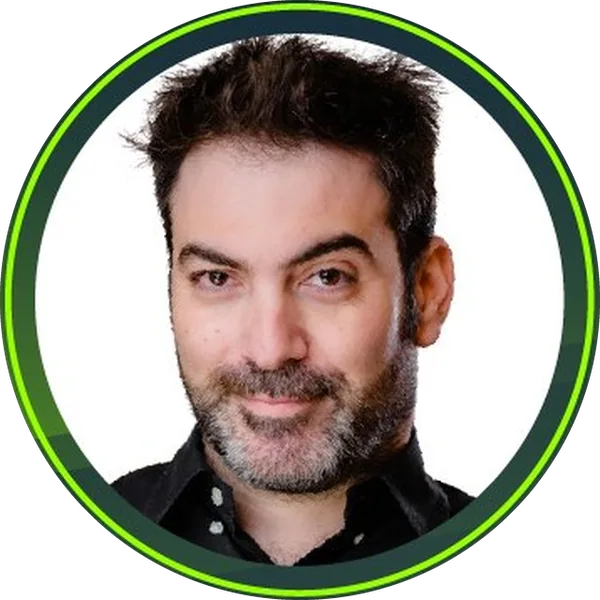
Yuval Man
Hosts James Benham & Rob Galbraith are joined by Yuval Man from DigitalOwl. James, Rob & Yuval discuss how his company is using tech and data to advance insurance.
The full episode
Press play for the whole conversation.

Insurance Tech News
FOXO to go public for modern life insurance
Cowbell and Trend Micro to offer cyber insurance
How Nirvana is bringing commercial insurance into the modern world
Does Insurtech 2.0 = Insurance 101? Root and Lemonade Struggle
Otonomi launches first-ever cargo delay index, Now Available via the Nasdaq Global Index Data Service
The full transcript
Transcribed automatically from the episode audio, so some names and terms may be misheard.
James BenhamJBKnowledge Podcast Network. On episode 79 of the InsurTech Geek podcast talking about individually rated insurance and claims with technology with Yuval Man from DigitalOwl. The InsurTech Geek podcast powered by JBKnowledge is all about technology that's transforming and disrupting the insurance world. We'll be interviewing guests and doing deep dives into specific tech we see changing the industry. We're taking you on a journey through insurance tech, so enjoy the ride and geek out. And I am here with my good friend Rob Galbraith on Mardi Gras Friday. If you can't tell, I am not in my studio in College Station, Texas because I am here.
There's the Superdome right there. There's Benson Tower. This is this is New Orleans. I am here from Mardi Gras. I am from South Louisiana, so I do come home to the mothership. Try to come home every year, go have some fun, go hang out with my cousins, my aunts, uncles, and all my friends. It's really a family reunion time for me down here in New Orleans. Went to the Muses Parade last night and then listened to some great Zydeco and local music all evening. And then I'm I'm gonna get to go see Diana Ross in Maroon five on Saturday at a at a at a at a really, really great concert and a ball called Endymion.
It's just a neat, neat, neat atmosphere, neat environment. So so And I am I am so excited to see all of you. Rob, of course, in beautiful San Antonio, Texas. What's going on, Rob? Not so beautiful this week, James. I don't know what the weather's like in New Orleans, but so we had beautiful weather. Monday and Tuesday, I got out, did a
Rob Galbraithamazing afternoon hike. I had not done that for several months. And then old man winter came back and so we've been barely on the freezing line the rest of the week. So, compared to other folks I've talked to throughout the country this week, I I definitely do not wanna complain, but, winter is still here. The bluebonnets are not quite out. So, we're almost there. Not quite. Spring's just around the corner. Yeah. It's his last throws of winter, but, I tell you what, here in New Orleans today, it is,
James Benhamit is about 53. It'll be a high of 73. It's a lot warmer. So we're we're enjoying some warm weather for the parades and having a great time. Joining us from Tel Aviv, Israel, Yuval Man. Yuval, what's going on buddy? Hi, thank you for having me. It's also winter here but I think what we call winter, you call like mid summer.
Yuval ManIt's last on the like, we have rain,
James Benhamif you can call it rain, but it lasts thirty minutes, and then we we have summer all over again. Yeah. It's a different ballgame over there when you're on the the coast of the Mediterranean and you're at the latitude that you're at. It's it's a good bit warmer, and I can't can't complain about that, man. Not at all. Yeah.
Yuval ManAnd it's, like, 7PM. It's 7PM here, so thank you. Now I have a a great excuse why I'm not at home helping my wife with the kids, you know, dinner and everything. So thank you for for helping me that. Yeah. Absolutely. Absolutely. Well, we're we're glad to have you on the show. We're glad to talk about insurance
James Benhamtechnology and geeky stuff. Before we get started, just remember that you can subscribe. If you're watching this on LinkedIn or on Twitter or on Facebook or on Vimeo, you can text you can subscribe to the audio podcast by texting geekout, g e e k o u t, geekout, to 66866, and make sure you never miss an episode. So, Yuval, let's let's just jump right in into the deep end here. You're cofounder and CEO of DigitalOwl. You live in Tel Aviv, Israel. You got a a bachelor in in law, and you you studied economics.
You had an interesting background before you got into digital. And and I'm gonna let you explain that. So help me understand. I'm assuming you grew up in Israel. So so, you know, what'd you wanna do when you grew up, and and what'd you study to do?
Yuval ManWell, so it sounds like I'm smart when you, you know, when you mention everything. So don't hate me, but I used to be a lawyer. I used to be a personal injury lawyer. I used to sue insurance company. Yeah, I know. I see your face. Thank you. But like in Israel, it's a big deal. It's like the Jewish mom's biggest dream is the son need to be a lawyer, know. It was a fantastic joke, guy became the president and people came to his mother and told him, congratulations.
And she told them, you need to meet his brother, he's a lawyer. So this is how we think about life here. Anyway I spent hours, actually like hours upon hours reading medical records when I tried to evaluate claims or submit claims, mainly bodily injury claims. And it wasn't that fun, right, if you ask me. And on a Friday dinner, know, with my family, my brother is like the smartest person on earth. He's a machine learning expert. We talked about, you know, hey, how was your week and everything.
And I told him, you know what I do at work? And he said, machine can do it. And I told him, what are you talking about? I spent five years, you know, learning how to read medical record and how to make some legal strategics. And he said, no, no, computer can do it. And the next week I sat at my desk reading medical records, and I thought to myself, you know what, machine can do it. So I pick up the phone. I mean, part of the work, you know, I'm kidding, you know, there's a lot of work for lawyers, but most of 80% of the work is repetitive, time consuming and reading medical records in order to understand the case, right?
So I pick up the phone and I called my brother and told him, hey, do you want to go, you know, into an adventure? Do you want to start a company? And he said, yeah, why not? And here we are. We started Digital Owl because we wanted to build a platform to automate personal injury lawyers work. But pretty quick, we learned that the insurance industry review medical records way more than personal injury lawyer because there is a way there is a lot of more line of business that need to review medical records in underwriting and in claim adjustment.
So we pivot to work with the insurance industry. And you know, if you asked me like five years ago or if you told me five years ago that I'm going to work with the insurance industry, I will tell you now, you know, me, but yeah, here we are having a blast with the with the industry working with, you know, with awesome carriers in Israel, The US and Canada and UK, very exciting time for us. Absolutely. So I found the light and I'm working with the industry.
Now what were your jobs before this though? Like you you was it all law? It wasn't all law. Yeah. You're leaving something. You're leaving out something that bothers me when people leave out gaps in their resume. So what did you do? Yeah. Yeah. Thank you. Thank you for pointing it again. So you can see this handsome face that I tried to be an actor and the gap from being an actor and being a lawyer is not that big, by the way. No, it's not.
James BenhamI know.
Yuval ManI know, least in movies. No, but but I studied, I have a bachelor in arts. And I tried my luck for a few years did some awesome things, especially mainly behind the camera. But you know, I grew up and I thought, alright, you need to do grown up people work. And actually, I'm having fun now more than my previous work as an actor. But I can send you a picture and and, you know, I can sign it if you want. Yeah, it'd be great. Yeah, just write them at the message.
Put the message in Hebrew because they'll be even even cooler for me. Like that. Exactly. So let's let's help me understand exactly what does digital owl do? And how does it make money? So you and your audience probably way more smarter than me when it comes to insurance. I don't need to explain too much. But for a life underwriter, for example, or disability claim adjuster, the only way to make decision is understanding the medical situation, right? The only way you can say what is the risk of this specific person to die before a certain age or how severe is the injury of this claim is by reading the medical records.
And medical records can be a nightmare. You have hundreds, sometimes thousands of pages scanned document, different layout, different format, different form. A lot of the information is irrelevant. Like many times, you know, many documents are about people going because they had, I don't runny nose or something, and you spend your time reading irrelevant information. And when you think about their work, it's almost like lawyers, 80%, 20%. 80% of their time, they read medical, repetitive, time consuming, boring work. And 20% of the time, they actually doing some strategic work and some claim adjustment and underwriting work.
So we had the idea to enhance the work, to take the 80% and to fully automate it. But the problem is that it's not that simple. The medical information is complex. And it's not just understanding, you know, this is a condition and this is a procedure and this is the name of the patient. There are actually more than 44,000 medical data points in the average record. And think about even if you only let's narrow on the conditions world, you have negated condition, condition, history condition, improving condition, person condition, it's all about understanding all this information.
So we develop an NLP engine from scratch. And this is kind of a unique thing. We didn't try to manipulate Amazon's or Facebook's NLP engines, we developed it from scratch for the insurance industry. And we have the ability to extract all medical information out of any medical record, not just digital EMR, EHR, APSs, scan document, hospitals, physicians document, whatever. And once you extract it, all the information, you can start and enhance it, right? So we extract the medical information, but we also apply the right medical field and the right body part.
So the end user, the underwriter, the claim adjuster can filter the information by medical field or by body part. So if I only want to read about a specific person cardiovascular issue, I can click a button and read only the relevant information and not spending my time on irrelevant tasks, right? But we also add severity. So if I'm an underlying a life underwriting, if I'm a life underwriter, I want to see on the first page, hey, what are the risk factor here? What are the severe medical information that I need to actually think about or consider while I'm working on this policy?
So this is where we started. We develop an engine that saves time and enhance the underwriters and the claim adjuster work.
James BenhamYeah. And and you're really doing an assisted review. Like, we I reviewed this type of technology in in construction law. There's some pretty neat
Rob Galbraithstartups there that that do assisted review, Right? They they, help you identify where you should focus and eliminate the noise. And here's the here's the claw. Here's the here's the part of the medical record you should look at. That's that's it's so powerful in saving human time. Rob, I know I know you've got a got a question on this. Hey, Yval, it's great to have you on and great to have you share a bit about what you're doing at DigitalOwl. So based on your website, one of the things that you talk about as a case study is that DigitalOwl is gonna find three times as many meaningful findings in a medical record when compared with a doctor's manual review.
So I'm just kind of curious, maybe just to tease this out a little bit. I think, you know, the concept at a high level we get, maybe just talk about that process of, you know, what is a claims adjuster doing today? What is an underwriter doing today in terms of their normal workflow as you've done discovery work? And then how would they use your tool? I know you provide some some summaries as you alluded to and others. So maybe just kind of give us what does today look like and then what would that workflow look like using DigitalOwl?
Yuval ManYeah, great question. So I'll start from the last question. We can deliver the information in three ways. We can generate a summary PDF, a clickable interactive PDF that claim adjuster and underwriter can read and dive into when they want to make decision rather than read 300 pages of medical record. The second way is we have the ability to export all the data point in HL7 FHIR format. And this is kind of machine to machine process, right? If you want to automatically populate rule engine, like reinsurers rule engines or manual for underwriting.
And this is an all new level of automatic underwriting. And the third version the third way we can output our information is a very sophisticated UI. A web app where you can navigate, you control the timeframe and everything and read all the information you want. So if you need the information in a specific way, we have the way to deliver it. Regarding the accuracy, so what leads us is this rule of thumb that the more you know, the less is the risk. And we did many battles between experts and trained claim adjuster or physician versus our machine in extracting the medical information out of the medical records.
We always win, but it always it's not fair. People can't handle or can't sit all day long and read medical record. It's boring, you lose your focus, you lose your attention, it's impossible, it's an impossible task. The machine on the other hand doesn't get tired, doesn't get bored, and she will read, the machine will read each word in the document, right? And this is how we surface way more information. So I can give you two actually interesting examples. One example was a disability claim. A lady that fell down the stairs had hurt her back.
She had something called kyphosis. I have no idea, it's a medical thing, right? I'm just a lawyer. But the physician, the claim adjuster actually who reviewed the file said, yes, there is a Kefosis, we need to pay and whatever. But when this carrier ran the case using Owl, in two seconds he realized that Kiphosys was already diagnosed before the policy actually started. So it was really, you know, and it's pay or not pay, it's all or nothing, right? And it's really, it was impossible for this claim adjuster to find that one appearance of Kyposis in the document because he has like 50 more cases he need to review the same day.
Same thing was with the Mad Mel case. A one line out of 10,000 pages was the reason why the claim need to be rejected. And it's important to say, you know, the insurance industry is not all about rejecting claim. This is not what we do. Actually many times they settle or they pay a claim fast just because they have all the right information in their hand, right? But many times people will hide some information and I don't want to say fraud, sometimes it's less than that, But we help to find those situations.
So the machine beats men or women in extracting medical information in accuracy and in speed. I think I answered everything right. Did I miss anything? No. I think that that that's perfect
Rob Galbraithand and very helpful. And I like the way that you talked about kind of the interoperability. Do you integrate with any claims systems? It sounds like you're gonna work independently either through kind of a SaaS platform, mobile app, but you talked about the machine to machine. So do you work with, say, Guidewire or other, claims
Yuval Mansoftware as well? Or have you have you because I know that those are platforms that a lot of claims adjusters, there's underwriting workbenches out there that they're accustomed to today. Yeah. So we are aiming to do to integrate with clients as simple as we can. So a client can use our portal as simple as drag and drop a file and you'll get in an hour or in two hours, you'll get the summary back. You can they can use our API and automatically send all the medical records into our system for analyzing and then automatically receive back the summaries.
We do have an API for a machine to machine. So it's getting the medical record, extract the medical information and inject them into the client's rule engine app they use. So we have a lot of ways. We also partnering with medical record retrieval companies. So we have clients that, you know, their main job is to fetch medical records and deliver it to carriers. So you can actually get today from from a few carriers the medical record with the summary already. So it's quite simple. And it's SAS and it's by the page.
And once you use it once you can, you can't go back and read medical records like you used to do.
James BenhamYeah, I I can imagine that being the case, man. I mean, it's a once you have a tool that revolutionizes an extremely tedious manual process, you don't ever want to not use that tool again. I mean, once I used an impact driver, instead of having to use a screwdriver to to to put a to put a screw in, I never wanted to use a screwdriver unless I absolutely had to. I mean, it's Yeah. It is what it is what it is, and these these are modern power tools.
Right? It it's just well, I I I like to geek out on text. So, I mean, let's just help me understand how this works. Like, what were the biggest challenges in training your machine learning model to actually analyze these documents? I mean, how did you go about that's a monumental task. How did you go about training the and building your own machine learning model on on
Yuval Manlooking at medical records with a insurance perspective? So the first thing you want to do is to get a very, very smart co founder, right? Then you're in a good place. Once you have that, you can start doing the work. So the process is annotating or what we call tagging a lot, when I say a lot, I I talk about millions of real medical records to train the engine to understand what are the specific entities. For example, is it the specific date in the document? Is it the admission date, the release date, the signing date, the visit date?
What is it? Or the specific condition here. Is it the patient condition or the family history condition, for example? So once you annotate and tag all of the document, we actually train the engine to understand the relationship between the different entities and the meaning of the entities in the page. I don't know how many medical record have you seen. There are a lot of different layout and writing styles and format of medical records. And they're all different. And you need to have an engine that can rule them all.
So the idea is to tag as many as medical records you can from different provider. And then you want to even go beyond the classical NLP. You want the engine to understand the specific section, right? What's the narrative? So that specific condition, is it the reason for visit? Is it part of the assessment? Is it the plan? Is it something else? Is it part of the history of present illness? So the amount of entities and section we tag is enormous. And we train our taggers more than six months, they're like mini claim adjuster, just to understand the different entities that the engine need to get in order to output everything out.
And then you encounter a new challenge. So it's relatively easy to extract movement limitation, right? But there are plenty of ways that physician can actually write or say movement limitation, movement limitation, limitation of the movement, can't move his knee, having trouble with the flexibility, for example. And things are getting even worse, like think about the sentence, the patient had trouble sitting down, his wife helped him enter the room, or please avoid heavy lifting. We had to develop a capability to understand or to turn those free texts into structured data, to understand that please avoid heavy lifting is limitation of work, or to understand that, you know, the patient had trouble sitting down is actually movement limitation or some maybe ADL information.
So there was a lot of blood and sweat and money invested in this process, and it took almost three years to reach the point where we are extracting all the information in an accuracy of more than 95%, which is sometimes hard for people to grasp, but when you take a person, a human, to extract the medical information, he reached an accuracy of about 75% because lack of time and everything. So reaching Fatigue, well, fatigue
James Benhamand Exactly, addiction exactly. I mean, there's there's a lot of criteria there. Yeah. So ninety five percent is a
Yuval Mangreat success. And, you know, you like geeky stuff, right? So let's talk about the future. So now you have this massive database, right? And when I say massive I mean it like when we take a medical record I can tell you how many times this person actually went to the doctor, how many times he complained about pain, how many times he refused the treatment, what the relationship between different condition along the years, how is BMI and blood pressure and medication that used to take has worked along the medical record and can take the medical record can be ten years, you know, back.
So you have this enormous, enormous database. And now you start thinking, can I leverage this database to build prediction engine? Can I look into the future by having this enormous information from the past? And the two probably most interesting use cases I can think about is think about disability claims, right? And let's be very narrow. People who hurt their back, why a specific injury is six months of disability, and another one or different injury is three years of disability? Can you can you look back and transform or to transform unstructured data into structured data from 10 thousands of disability claims that you already settled and develop a statistical engine that will predict when the next claim will arrive, how long is the disability period for this claim, right?
How it will affect compensation, how it will affect reserve. Same with life underwriting. Can you build, once you have this enormous database, new underwriting engines, new underwriting models, right, to predict mortality better based on the specific medical characteristic of a person based on his medical record, rather than putting people in groups of certain age and certain condition. This is the interesting part. So if today digital hour is heavily affecting and improving cost, we want to affect risk selection ratio and changing the way the insurance industry is managing risk.
Awesome,
Rob GalbraithRob. So you've all I mean, is terrific. I can tell you that I have some limited experience and I know how challenging this problem is, you know, just thinking about trying to focus on a term like surgery, right? Is that say surgery is not needed. Surgery may be called for physical therapy proves ineffective or, you know, surgery is needed immediately. So it's not just picking up on the term surgery, but that context, right? Handwritten notes, a variety of documents that you said, I know challenges even just reading standard accord forms, you know, and things like that.
So I don't want our listeners and viewers to, it's hard to give them a full appreciation for how challenging this problem is. And so I think you've done a good job, particularly with the tagging and there's certainly a competitive advantage once you've gone through all that hard work, once you've done that training and you've seen millions of records, right? Your model is gonna be better than anything that they could do from a homegrown solution or many other solutions that are out there. One thing I want to ask you about is some other elements, not just the technical challenge and how you deliver value, but compliance with HIPAA, I know you've been certified for compliance with that, privacy, GDPR, the sensitivity of health records, cybersecurity, things like that.
So there's a lot of other factors that weigh into managing this type of solution. I was hoping you can maybe share with the audience a little bit about how you're able to meet some of those requirements and maybe assure them if they have any questions around data privacy security.
Yuval ManYeah, it's actually it's a great point. So we are HIPAA compliant and we are SOC two type two certificate and it's fun. It's always fun going through the data security process and questionnaires but putting, you know, laughing aside, it is crucially important for carriers, reinsurers, TPAs, and also for company like us, Digital Owl, to put a lot of effort and allocate a lot of resource for data security. The last thing you want is a piece of paper, you know, leak outside and someone can read it.
So we have implemented all the needed tools and all the needed procedures, and we actually even implemented some procedure and tools that are above the necessary in order to comply with the SOC two and the HIPAA and to make everyone sure that information can leak out. But a lot of effort and money were put there in order to reach this point.
Rob GalbraithYeah. And just to echo your point, I know a lot of startups have not gone through that full process and and, you know, they're they may be intent on getting the SOC two. So fun is not the word that I would use to describe going through that process, but the fact that you've already gone through those links, know I that definitely gives you a leg up on many other companies that are kind of looking in this space, but have not achieved. Thank you for acknowledging it.
Not a lot of people know and understand
Yuval Manhow long is this journey to get those certification.
James BenhamThank you. Well, once you have and as Rob said, once you have the the trained dataset and you've spent and invested the years in training your model, tagging all these files, because that's you you can try and purchase tagged pre tagged datasets, and you you know how that is. So we'll try to accelerate this process, but they it it's not tagged the way you're building, intelligence around this process. Let's just wrap up with talking about what the end outcome is. Like, who buys this, and what's the end outcome for them?
Now you you talked about individually rated insurance. I mean, that's that's pretty heavy because insurance from the beginning of time has been about group rating because there we didn't have enough ability to actually to actually individually rate every single item or every single risk or every single insured. You go back to the ancient Babylonian bottom re contracts, which was the origin of all insurance. And then the modern insurance origin in the Lloyd's of London coffee house. You know, from the beginning of insurance time, it's been about group rating.
You you you lump risk into groups, and then you assign a rating to that group. This is a a fundamental change, which sounds to me like it would take a lot of work get people off of center to change their entire rating models. Yeah, so it is we always try to balance efficiency
Yuval Manand economics with get getting the best risk selection, or being most precise, right? And since it was, it's impossible to have hundreds or tens of thousands of people reviewing the entire medical record spending hours, know, taking breaks because they need to relax, and going back and read all the information and extract all the information and validate that they extract all the right information. It was impossible economically and actually, you know, practically to do it. The industry tried to find ways how they can be more efficient.
So they start writing by group, or they start using questionnaires, or they start looking for let's see if we can only underwrite people based on their Rx rather than entire medical record. But if you will ask the underwriter or the actuary and you will ask him, hey, what's the best way? If you have no issues, right, and no problem doing whatever you want, what's the best way for reselection? He will tell you, I want to read the medical record. I want to know everything. And the cool part is suddenly now it's possible.
Suddenly you can do it in a second. The machine can read hundreds and thousands of pages in a second. And suddenly it's very accurate. And it's not just extracting the information, we also applying we're enhancing the data point, right? What you need to see, what's important, what's less important, we're enhancing the information. And rating on a personal level can be achieved today and it will reduce premium, it will make the economic units better, it will make underwriting process faster, and it may take time to do it.
I totally agree. But now suddenly this path is clearer and suddenly it's you know in our reach to do it. And I hope that you know you guys will have me in two years from now again on this cool podcast and we can talk about hey you see it already started.
James BenhamCarriers are now doing automatic underwriting on the full medical record. You've got to wonder if the same thing is going to happen that has happened in academia with their use of machine learning. If you have not been following testing at the university level now and the way they do it with online tests, they use the camera and machine learning to identify the probability of an individual student is cheating, and it's had a lot of false positives, and it's led to a of challenges in the academic environment by the use of machine learning, analyzing every move of a person's eye.
And it turns out that sometimes people just look away from their screen and aren't reading a cheat sheet. I worry sometimes if we move to full individual underwriting that people will be erroneously flagged and and then not insured. But but, you know, that's I I think it's probably an inevitable part of the process. We're gonna learn through mistakes, and we're gonna have to correct the process, but it's such a more more accurate accurate way of of assessing risk.
Rob GalbraithRob, bring us home with our our final question. Yeah. You've also congrats on your success today. And I know that about a month ago, announced your series a round, very healthy of $20,000,000, and you've had, some key hires. I assume part of the funding is is going to that. So maybe just talk a little bit about kinda where you are. It looks like you're building out your team. I also know that you are going to be in The States at several events. We'll be at a couple together.
I know like Intritech Insights in New York City, a little bit before that Intritech Hartford Symposium and of course Intritech Connect later this year. So yeah, just kind of share what does 2022 look like for you guys as you build out? Wow, so 2022 is going to be
Yuval Manexciting time. So first of all, I'm relocating to The US, I'm going to move to New York around July. So I don't know if New York wants me, but I'll be there. We are hiring like crazy. We're enhancing the team on the dev marketing side, and we're building a very, very impressive team that can take us to the next step. We are also allocating a lot of resource and time on the prediction engine development that we're doing now with design partners, with massive design partners that can grant us access to data and educate us more about what they want to predict.
And we don't have a minute to sit down and even think about anything. We're just moving forward and forward and forward. And this is one of the best things in startup. We are agile, we work fast, we move fast, we adapt fast, we can develop fast. So it's and now when we have, you know, this fund in the bank and we have insight partners backing us with their center of excellence, a lot of, you know, knowledge is there. We feel stronger than ever and it's exciting time, very exciting.
Awesome. Well, welcome to America.
James BenhamWe're excited to have you. When you decide you really want to come to the coolest place in America, though, Texas will be ready to greet you. And remember, Elon Musk lives in Texas. He doesn't live in New York. So if if if if you wanna come hang out with all the cool kids, come on down to town of Texas. We'd love to hang out. Agreed. Awesome. And, Rob, look. Great great questions. Great discussion. I know you've got some news. I've got some news. Let's go with your news articles first today, and then I'll I'll wrap up.
Yeah. Perfect. So,
Rob Galbraithcouple items for this week. One is actually kind of an analysis done that was shared on LinkedIn from K9 Hurts, who's somebody that I overlapped with for a time way back in the day at USA and has done a lot of advising in the Insurtech industry and somebody that follows. He shares a post from insure tech advisors talking about insure tech two point o. Does it equal insurance one zero one and talked about the struggles of lemonade and and root lemonade? They both came out with a twenty twenty one full year reports to investors and the numbers don't look so hot.
The profit is missing. Guess the the where's the beef is kind of the for those of us a certain age is really the tagline here. And so he he does a good job really breaking down. Think why are these stocks struggling? Both of them together combined are about 95% below their all time high. And if the outlook is gonna improve at all, and it really comes down to as these companies grow, they're losing more money. I know that some people talk about, hey, you know, you figure out the business model, you grow first, and then you can figure out the mix of pricing and underwriting and achieve profitability later.
And we're just not seeing that with these two companies. So a lot of discussion about those online this week, a lot of other analysis that are out there, but I thought that one was particularly cogent. And then the other one is really just an update on a previous guest that we had. We had Jan Barbero from autonomy on earlier and they announced a couple of weeks ago that they are introducing the first ever smart contract powered air freight insurance index. So they talked about the Suez Canal blockage, some of the delays at the LA and Long Beach ports and saying that there's basically a lot opaqueness in terms of supply chains, air freight cargo.
And so they are trying to create a bridge between insurance capital capacity and crypto capital markets to basically be able to to trade on this index as a smart contract. So I'm not gonna pretend that I fully understand it all, but, it's very exciting. Sounds
James Benhamlike another form of legal gambling. You know, anytime you can bet on something you don't own, that's when it that's when it gets to be really interesting. Right? I always, I always wonder. I I I almost feel like we need to define what gambling is versus everything else. Gambling is when you bet on something you don't own. Everything else is an insurance product or a loan. I don't I don't know. Could be very interesting there, Rob. Yeah. I mean, I just you know,
Rob Galbraithjust seeing some of the creativity, some of the novelness, I know there's been criticism of the passive. Hey. Some of those startups are really not doing anything different than traditional incumbents. It is maybe better marketing, better digital platform, but fundamentally, they're not different. I don't think you can make that argument here with autonomy. And so there's there's many other we're really starting to see I'd use that word disruption,
James Benhambut it's starting to come. No. No. It's it's different. Yeah. It is. Well, in in my news, this is more insurance news. I got this from Fintech Global. FOXO Technologies, a technology company applying in the epigenetic science and AI to modernize the life insurance industry has entered into a definitive merger agreement with the SPAC, a special purpose acquisition company, Delwins Insurance Acquisition Corp. The combined company has an estimated enterprise value of $36,000,000. They're gonna be publicly listed and trade on New York Stock Exchange under the symbol FOXO, f o x o.
They're gonna accelerate development of FOXO's platform to offer saliva based epigenetic biomarker underwriting technology and consumer engagement services for global life insurance industry. Of course, this is, you know, a let's just say it, a a moderately controversial topic of genetic sequencing for life insurance. You know, sometimes you gotta feel like you're in in that movie Gattaca, where at some point, your your genetics is gonna preclude you from participating in anything in society. I don't know if you remember that movie, but, it it had a huge impact on me when I when I thought about what it implied.
Yeah. No doubt. I love that movie. Yuval, have you ever you ever see Gattaca? No. I'm afraid not. Yeah. I only saw Lord of the Ring. This is it for me. Oh, man. Yeah. So Rob, you you saw it. And I tell you what, you know, when when you start talking about genetic sequencing, it's a big deal. It reminds me actually, I
Rob Galbraithhad the opportunity to speak with, a class on the business of health insurance. A friend of mine, his name is Rob Collin, teaches, at Baldwins Wallace, which is in the Cleveland area. I was talking to the students about the use of wearables. And basically, they had a project to kind of say, is using wearables good or bad for health insurers consumers? And so we were talking about the trade offs between possibly earning your rate down, right? If you have some healthy behaviors, getting your steps in, that kind of stuff versus the privacy concerns, similar to what we've been talking about with you.
So, you know, this certainly on the genetic side goes way beyond kind of the use of wearables and, but we talked about group rates versus individual rates. And if you're a high risk individual rate or you're paying a higher rate, you don't have subsidized premium that maybe you would be willing to do some of these things to help, you know, get your rate down. So I know it can be kinda creepy, but, I definitely feel like there could be a market for these types of products out there.
Absolutely.
James BenhamSo let's let's move on. Kalbel is also from Fintech Global. Kalbel is an AI powered cyber insurance provider for small to medium enterprises. They partnered with Trend Micro to improve access to cyber insurance. Of course, Trend Trend Micro is a antivirus and and and a lot more than that Trend Micro, but they're mainly known for their antivirus. Caldwell Cyber raised $20,000,000 in their series a last year. They partnered with password manager NordPass. Then they're just saying that, you know, these managed service providers like Trend Micro are a gateway to a lot of SMEs.
They're working on distribution, which makes a ton of sense. The partnership say that it will enhance the ability for the to enable closed loop risk management for policyholders, the two companies will provide their mutual customers with actionable insights and and exchange data. So a good good example of insurance and tech coming together in a practical way on cyber. And the last article is, Nirvana, how Nirvana is bringing commercial insurance into the modern world. Nirvana Insurance is a tech driven platform that modernizes commercial fleet insurance. They have publicly launched its services on the back of their recent $22,000,000 series a, which is led by LightSpeed.
Nirvana said they're gonna use that funding to scale operations and grow team, invest in r and d. They use telematics data to really revolutionize truck insurance to help fleets mitigate risk. They said they you know, considering the supply chain crunch that their other service is more relevant than ever. This is that 90% of the fleets worldwide have fewer than 50 trucks nationwide, I mean, and that these business operates on greater than margins and could use access to this. Of course, they're connecting all the telematics data with their insurance platform, to try and make better underwriting decisions.
Again, going back to, like, theme of the show to individually evaluate risk, on on the actual truck that's being insured, not just on the entire fleet, and to do it at scale. So, interesting news as always. Rob, thanks for bringing your news. You all, thank you for joining us on your day off in the evening from beautiful Tel Aviv, Israel. We appreciate you. Thank you for having me. And I'd be remiss if I didn't mention today that The Ukraine is under a full scale invasion. We have a lot of European listeners that listen to this show.
If you're in The Ukraine, we are thinking about you. Same prayers for you that this will resolve peacefully for the rest of Europe because there's obviously a lot of other implications around Europe. If this is gonna become a and we're gonna enter a a land war phase in in Europe again for the first time in eighty years that there's been a land war in Europe. So we are we are hopeful that this will resolve peacefully. We're thinking about all of our friends in The Ukraine and across the rest of Eastern Europe, and we are praying for peace.
So I just wanted to mention that. As always, thank you out there in listener land for listening to the InsurTech Geek podcast powered by JBKnowledge, jbknowledge.com. It's all about insurance and technology that's transforming and disrupting the insurance world. I've been your host, James Binnum. That's jamesbenham.com. Co host, Rob Galbraith, endofinsurance.com. Thank you to Jim Greenlee, our podcast producer, Cara Dalton, our our creative producer, and thank you for joining us today. We're taking you on a journey through insurance tech. So enjoy the ride and geek out.
See you time.