 YouTube
 Spotify
 Amazon
 iHeart
 Apple
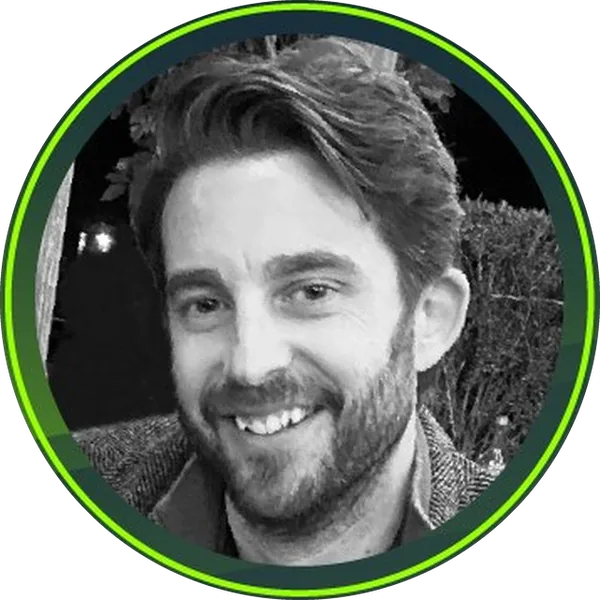
Gordon Malin
Host James Benham is joined by Gordon Malin from Elpha Secure. James & Gordon discuss cyber insurance and why it has gotten so expensive lately!!
The full episode
Press play for the whole conversation.

The full transcript
Transcribed automatically from the episode audio, so some names and terms may be misheard.
James BenhamOn episode 87 of the InsurTech Geek podcast, talking about cyber insurance pains and gains with Gordon Malin from Elpha Secure. The InsurTech Geek podcast powered by JBKnowledge is all about technology that's transforming and disrupting the insurance world. We'll be interviewing guests and doing deep dives into specific tech we see changing the industry. We're taking you on a journey through insurance tech, so enjoy the ride and geek out. And here we are. It's as we record this Friday, 04/29/2022, not 2020. We're still in the 2020 time warp bubble.
It's in the time space bubble along the time warp continuum. That that means that it actually has been two years since COVID hit. And and and and here and here we are. I'm your your your your your lovely cohost, James Benham, InsurTech geek in College Station, Texas, home of Texas a and m. That's where I am. But joining us from beautiful Connect iCut, otherwise known as Connecticut, I mean, my my main man here, Gordon Malin from Elpha Secure. What's going on, Gordon?
Gordon MalinThanks, Shane. Pleasure pleasure to be here. Good. Just enjoying a nice sunny spring day in in Connecticut. Yes. Yeah. Like, spring. Like, the spring spring has arrived.
James BenhamYeah. Yeah. The snow has melted. The creeks are flowers. The flowers are blooming. The blue the blue birds are singing. The butterflies are flying. Life is good. Life is good. You know? Like, you you survived another winter.
Gordon MalinYeah. We did. A cold one. Not too bad. But I don't know how you guys do it.
James BenhamI don't know how you do it. I mean, then again, we we we deal with, you know, seventy days of a 100 seven plus Yeah. Was asked. I don't know how you do that. Yeah. It's hot and humid, but it's okay. It's all good. Everything you know, everything's a trade off because even the places with really great weather all the time, they have crazy high tax rates that are just as painful. So it's like you can't you can't find that perfect thing. You know, it's either too hot or too It doesn't exist.
The porridge is either too hot or too cold or, you know, whatever it is. But we're not going to talk about the weather. We're going to talk about cyber. We're going talk about insurance. You are an insurance geek. I'll give you InsurTech geeks since you're running a digital investment. Newly converted InsurTech geek, but a long time insurance geek. Yeah. Long time insurance geek. That's good. So we have a lot to talk about in cyber because there's a lot to talk about. You need some of those.
Yeah. You need a lot of insurance geeks around a 100%. Let's talk about you before we actually jump into the topic of cyber. You are founder and chief operating officer at Elpha Secure. That's e just for the listeners, if they wanna pull their website up, e l p h a, not alpha. L alpha, alpha, like, alphabet. E l p h a secure. And we're gonna talk about that in a second. Let's go back back in the time. You you're are you you you're from New England?
Are you you from the area? Yeah. New York area. Born and raised outside the city. Kinda been here the whole time. Like like like New Jersey or or Connecticut?
Gordon MalinYou're from Connecticut? Right in the middle. Westchester. Westchester.
James BenhamConnecticut
Gordon Malinnow. Maine for a few years for college.
James BenhamAs far as I fly in, I fly into Westchester County Airport. Nice airport. I'll be there I'll be there a week a week from today. I'll be in Westchester.
Gordon MalinLittle lazier and a little more pleasant than LaGuardia. Everything's more
James Benhampleasant than LaGuardia. Like, seriously, it's all more pleasant than LaGuardia. So you're from the area. You go to Bates College, a little chilly up there in Bates College. Sure was. What what did you dream of doing and what did you get what did you study to do?
Gordon MalinEconomics. So major in economics and kind of always always kinda dreamed well, I say dreamed, but was very much, focused on getting into the kind of finance side of things. You know? Go back to the big city, you know, and eventually eventually found my way after a few years, of consulting, working for a small very small hedge fund. And that was kinda how my whole insurance career got got started. So it was a 2000 beginning of 2005, got hired by a small fund, that was focused on banks.
And I was gonna be the the the fourth banks analyst that they hired, and I was all excited. Gonna go learn banks. I was you know, I thought it was pretty cool, you know, going going work for a small hedge fund. And, in about a month into my month into my tenure there, they they decided to to broaden their scope and go beyond just banks and go broader into financial services. And they, they, you know, quickly looked at what are the next largest asset classes, and and there's insurance.
And they're like, alright. Who wants to who wants to cover insurance? And I'm sitting there looking around. I'm like, well, I'll do it. The only the only one the only one, you know, new guy on the bank side was, like, I'm gonna carve out my own domain here. So that was it. That was been a 100% insurance ever since that day. So I started teaching myself insurance, loss ratios, like, just every Whatever. Like, the basics? Like, basics. Oh, yeah. The basics. Like, what's an expense ratio?
What's a loss ratio? Capital charges? A AM who? What what's this organization that's basically the de facto regulator. And so you'll you'll recall 2005,
James BenhamI'm kind of about six months into figuring it out. Wait. I love well, hold on. Hold on. You and I are like the same age. So I love how you glossed over the fact that you endured the .comcollapse.
Gordon MalinOh, yeah. Nineeleven
James Benhamin New York. The economic collapse of the United States that was after that. Like, you just skip right over all of that. I mean, that was a wild time to be in financial services and to be an analyst in New York City.
Gordon MalinYeah. No. It sure was. It sure was. Yeah. We tried we tried to forget about some of Oh my gosh. I mean
James BenhamI was up on the World Trade Center August 23 o one visiting some friends of mine that lived in Battery Park City about a block away and was there visiting. I went up to the towers. August 23, man. Yeah. Like, I stayed for a week, had a great time, hung out with my buddies who are all financial analysts. I mean, I started my company 04/16/2001. And, you
Gordon Malinknow, we had no idea 09:11 was going to just you know, we had no idea what was what was gonna happen to the economy and everything else. It was just nutty. Nutty. Didn't know. It sure was. You navigated New York. And I lived I mean, I lived not well, I was in the wild kinda, you know, that lived kinda downtown at that point, and it was, like, feels like the world just kinda came to a to an end. It was Yep. It was it was it was terrible.
I was, like, a year out of school. I had no idea what was going on. Like, no idea, you know, life, and you're just and everything just changed. Everything just changed. Yeah. And and insurance, and I didn't realize it at the time, but that was, like, obviously, a devastating moment and terrible or anything. But, like, the insurance, like, that was that was a seminal moment for the industry as well. Yep. And it was and, you know, followed a few years later by Katrina, Rita, Wilma, and then then we got another financial crisis, like, three years after that.
I mean, it's a was a it was a rough it was a rough decade. We've been we've been very fortunate, and I I think there's a lot of,
James Benhamyou know, 20, 30 who have literally never seen a recession and don't understand what's going on right now, really. You know, and it's interesting to be on the other side of the coin and to be kind of the salty dog older guy who's actually been through two really bad downturns. And I even remember '87, '91, like, you know, because I was a kid, but my dad taught. He was a business owner. He talked to all about what was going on. It's we've been we've been do something So for a
Gordon Malinyou go ahead. Go ahead. I was gonna say, no. Was at I was at Citigroup in 2000 basically during the crisis. Yeah. The the second crisis. And that was you didn't you didn't know if your key card was gonna work that morning showing up. And it was I mean, what happened with Leanne in there just it was it was a wild it was a Yeah. It was a terrible
James Benhamtime. So you so you started covering insurance, and you actually stayed over in investment management. You were a portfolio manager for years and years and years. I was. Yeah. Yeah. Yeah. So I started off as an analyst,
Gordon Malinand that was it. So, you know, it was really, you know, Katrina hit, Rita hit, Wilma hit, and balance sheet. It's an amazing thing when you get you go into insurance, you're starting to learn about it. And what you quickly learn about is there's these things called cycles. And they usually last, I don't know, twenty years, and the majority of it sucks. They're soft markets, fifteen, seventeen years long, you'll endure one, and then something happens and it all changes. And that was KRW, right? Companies' balance sheets got destroyed and then new balance sheets got created.
You had a whole new coming class of markets. Bermuda had raised a bunch of capital. And this was four years, you know, right after five years right after nineeleven and the first kind of the class of 'one came in. So you have a whole bunch of new companies coming around and it was fascinating. Sidecars, ILS, and we'll come back to capital markets ILS, but that began to play its role in the insurance space and kind of being able to kind of watch that from from the beginning of it was I mean, that that's what hooked me.
I've always I've always been a global insurance analyst or portfolio manager, but, it's really property and casualty that's always that's always kept me kept me engaged. That's kinda where my love is. Life insurance. There's I know a lot of good people in life insurance. It's
James Benhamit's not for me. I'm a I'm a PNC guy. Yeah. It's interesting how, how the industry is bifurcated even though there's there's a there's a lot of companies that that write both PNC and There are. Health, life, disability. There's plenty of them. I mean, they're they're carrying risk. They, you know, they collect premium and pay out claims. And whether it's a death or a health event or a dental event or, you know, there there are companies that spread the line. But it's for me, long time PNC guy, I am doing work building technology and and health life, dental, supplemental health, not primary It's been a lot because there's already so much to learn.
I I I've been building software in PNC and working with PNC carriers DPAs for eighteen years. Yeah. And I still don't feel like I know everything I need to know. I'm like, I'm like really learn stuff every day. I know. I'm like Yeah. I'm like, where was this for the last eighteen years? You know, I mean, it's it's like it's a it's a bizarre thing because I I felt like in the I've I've worked in other industries, and I feel like you can get your hands around something in about five years.
You know, Malcolm Gladwell's old ten thousand hour rule. I I don't feel like that applies to insurance. Like, there's just it's too there there's so many there's so many little niches that are Yeah. That are like, you can spend the entire career in this niche. Like like like p like PEOs. You you can just do PEOs. Yeah. Right? And, like, and, like, you take a you take a standard PNC insurance person and introduce them to professional employment organizations, and What? Their brain will come unhinged.
Gordon MalinYeah. No. Well, that was that was it with with PNC for me. Really early days, but I realized I'd start start covering this space and go to all these conferences. And what I realized was there was like 10 of us who were dedicated to the insurance space. Most people that cover insurance were like, they covered all financials, different banks, asset managers, and like insurance was this red headed stepchild. So they're, like, kinda told they had to look at insurance, but no one wanted to look at insurance.
So there's only, like, 10 or 12 of the people that are actually dedicated to covering this space. Like, I could compete there. That's great. Mean, you think about you go back those days, like tech companies, hundreds and hundreds of buy side analysts focused on covering x y z company. How many people were actually dedicated and focused on AIG or Zurich? Like, a dozen. Right? Like, you know, it's like, what's your business model? Like, you could be the smartest guy in the room when there's no one else in the room.
So, I just started to dug dug in and that was that was it, you know, and I realized there's there's so much to learn here, but it was it was easy to stay ahead of other people who were only spending 10% of their time focused on it. Yeah. Well, you in in 2018,
James Benhamjust four short years ago, you founded, Mountain Road Advisors. You were founder and portfolio manager at Mountain Road Advisors. What what did y'all do there at Mountain Road?
Gordon MalinYeah. So as a global global insurance fund, long short public equity. So, you know, same honestly, same thing I've been doing for the last, you know, eighteen years, ten of it as a as a portfolio manager, just running long short public equity. So every public company, public insurance company on a global basis over and from, you know, again, Zurich, AIG, down to, you know, the Bermuda entry to Axis, Validus once upon a time before it got, you know, all the brokers, those are all my domain.
So, and I ran a portfolio, a few $100,000,000, again, dedicated purely to the space. Right? So I'd spend my day job was it'd be anything from meeting with a C suite executive, kind of going through quarterly numbers or talking about the strategy all the way down to line underwriters, brokers, what's going on in the D and O domain. That was it. And then you take all that knowledge and you figure out who's gonna win and who's gonna lose. And you know, through that lens, watched the InsurTech evolution, watched the evolution of the cyber insurance product, and kind of, you know, during my time at the road, met, my co founder, Pritam Dutta, who was at his time getting his PhD in machine learning and cybersecurity.
I'm like, all right. He's your kind of quintessential entrepreneur. And I'm like, all right, you know cyber insurance, knows you know, a brilliant guy, and we put our heads together. And, with my kind of domain knowledge of what the cyber product looked like and where I thought it was ultimately headed and his knowledge of actually how knowing how to build what we needed to build, out of that came Alpha. What
James Benhamwhat, did you just close down Mountain Road? I I did. I did. Yeah. And and so you obviously really to to shut down something like that that's going that well. I mean, you've got to really believe there's a real opportunity here. I
Gordon Malincertainly do. Yeah. No, it is a I think it's one of the biggest opportunities the insurance space has seen in in decades. Yeah. So,
James Benhamfirst off, tell me why why is the company named Elpha Secure, ELPHA Secure?
Gordon MalinWell, we like the elephant. There's lots of lots of of lots of reasons there. And alpha itself, so alpha with an A, you know, that's something that is, you know, it's alpha is important in anything. It's important when you think about loss ratios. Right? Like, we're very focused on loss ratios. So how do you generate a good business? Well, have alpha in your loss ratio. Have a better loss ratio than everyone else. From my kind of prior career, purely focused on generating alpha. As an investor, that's that's what you do.
So there is lots of things, lots of reasons why, why alpha worked. We like the elephant, the mind. You know? There is you know, it keeps, it's a it was a it was a basically, we it worked.
James BenhamSo is AlphaSecure a tech company or an insurance company? It's a great question. It's a great question. Or or or is that a trick question?
Gordon MalinNo. It's, you know, it's it's we're a tech company, but we're we're truly leveraging the insurance apparatus to deliver our tech. And so what do I mean by that? So we're an MGA, right? And you obviously know what an MGA is. So an MGA completely you leverage other people's balance sheets, right? Like, we don't have a balance sheet. We don't want a balance sheet. But you need to utilize balance sheets because you are generating risk, you're engineering the risk, or at least we are, and then we're placing it on other people's balance sheets.
Right? So we need to work very much within the confines of the traditional insurance apparatus because we work with balance sheets. We have phenomenal balance sheet partners, and they're very important to us. But really what we're doing is we're actually distributing to small businesses, which is our focus, tech software that solves for their cyber needs in this environment. And we're combining that with insurance, cyber insurance, also another critical tool that they need. And we're leveraging the traditional insurance distribution apparatus, brokers, to be able to access that small business, you know, at the at the beginning of their cyber journey.
Right? And that is and a lot of people are there right now. A lot of people are at the beginning of their cyber journey. Yeah.
James BenhamBut you're, you know, so so you you said some things that are kind of like trigger hot words right now in insurance. So first off, you said, you're working through brokers. So you're not pursuing direct to consumer. You're not pursuing pursuing direct to the end business. You you're only selling through distribution partners.
Gordon MalinWe are. We are today. Yeah. So
James Benhamwhy why not like, know, Insurtech Insurtech space, it's it's, you know, you know, it it it's it's super hot right now to to try and go direct to the end buyer. Whether that buyer is a consumer or a business owner. What was that line from Zoolander where he said that, oh, he's so hot. Remember that? Remember that? He's like he's like, he's so hot right now. It's it's hot. It is. Hans is so hot right now. It it's so hot right now to go direct. Why why work through traditional distribution?
Because
Gordon Malinwhen you when you kinda like you spend a lot of time focused on distribution as an insurance analyst. Right? And what we realized is if direct for small commercial simple BOP type policies works, when you get towards specialty type products, it's just that the demand isn't in the direct channel yet. It will be, like, definitely will be. And for cyber, just because it's kind of a digital type of you're already in that mindset, I think it might move more quickly into the direct line than or direct channel versus other lines of business.
But we're just getting to a point where simple small business policies are going direct. I mean, took years to get auto to go direct. I think the culture here, it's just little it's just taking a little bit longer than we'd all had hoped to go direct. And then you look at what's happened before, there has been cyber insurance MGAs who have tried to go direct and there's just no appetite. They're just the appetite isn't there. They've
James Benhamhad a hard time scaling.
Gordon MalinAnd most of them that have tried there have pivoted and gone back. In fact, cyber, I mean, you know how you got direct and you got retail and you have wholesale. Cyber is just coming out of the wholesale distribution channel and moving into retail. And so once you get you know, and it's it's a natural evolution. You know, you get the the retail once they actually begin to sell it, that that's when it'll move into
James Benhamdirect. That's the kind of the natural evolution. But but you you have done what others have done, and you have provided a suite of technology tools to go along with Yes. Insurance. It's required. You have to use your technology? Correct. If you don't, you you get nonrenewed.
Gordon MalinThat co correct. And and we build some of the the all the coverages to kinda tie the compliance to basically, ensure that
James Benhamthe the software is used. Yeah. Which we've now seen in multiple other lines. Right? Yeah. So there are auto insurance policies that are only valid if you're on, tracking either through the app or through the OBD two port in the car. You know, there there are home insurance policies that are tying IoT in, so you have to have some level of home monitoring. There's I mean, we we can walk through the the list of, of lines that are connecting. But this one, because it's a digital product, is is probably the best suited product to to tie to a technology offering.
It really is. No. It really is.
Gordon MalinAnd and the and the way the way we kinda think about it is is is only natural that cyber was gonna go there. Right? Because and Isn't it interesting that it didn't for, like, twenty years? I mean Well, you know why? I've had cyber a long time. Oh, yeah. Of course you have. Because you're a smart buyer and you probably paid for years, you paid 10% less for a decade if you were buying cyber that long ago. And what happened was there was always going to be this massive pie that was going to grow and be 10,000,000,020 billion $30,000,000,000 of premium.
But, God, five years ago it was barely 1,500,000,000 Like, it was still a pretty small line of business, but all the carriers knew it was going to be big, and they did what we do in soft cycle. They compete for market share and drive down the price and immediately throw out all sense of underwriting. And so controls were just not necessary, you know, until ransomware happens and all of a sudden loss ratios explode, margins go terrible, and the underwriters and c suites go, what? Stop. And this happened.
It was literally you could kind of pinpoint the bottom of the soft market. It was the January a year ago, and we're like fourteen months in. And sadly, it was like the last line of business to turn, like almost every other line of business in PNC turned before cyber did. It was really kind of ransomware off the back of the work from home movement that really just really changed it. Now you can't get a policy at all unless you have a ton of controls in place, right?
Just, they said it moved really quickly, like no backups, no FA, no insurance. And now it's soon gonna be no EDR and no insurance. Like and so the demand on small businesses for to have controls in place to even access the insurance market is getting harder and harder by the day. So
James BenhamThat's an Yeah. Understatement of the century. And Have you tried to fill out an RSA, the ransomware supplemental application? Yeah. Oh, yeah. I I had to fill it out for renewal. It's it's it's a lot. It's a yeah. It's a lot. I mean, Gordon, I told you before the show, I'm a little sore about this because my premium I know. Yeah. My premium has just tripled. And I'm I have been a responsible long term buyer of cyber. Yeah. And it's tough to see your premiums go up literally three x.
It is. It's tough. At the same time But admittedly,
Gordon Malinyou were paying way too little a year ago if you knew it. But who wants to admit that?
James BenhamWho wants to admit that? In particular, when it's when your when your E and O is bundled with your cyber because you're a tech company. So they have they really need to. It's Yeah. It's it's a it's a really interesting how soft the market was for that long. And,
Gordon Malinboy, frequency and severity just both pop through the roof, didn't they? So, you know, it's interesting. So a lot of people point to ransomware as, like, the culprit. It really kind of is causing your your triple and and whatnot. And it it was. It was kind of what got things moving. But, what really has defined the hard market and will continue to is the aggregation issue of cyber. And so, like, you you get to kind of the year end of 2020 and the attritional loss ratios are exploding.
Like, the industry is not probably quite at triple digits, but it was we were in a we were in a bad place. But it was then you have SolarWinds in December, and you have Exchange, the Microsoft Exchange vulnerability in January. You had these two back to back systemic risks where people like SolarWinds was, like, 18,000
James Benhamorganizations for It was in everywhere. I was everywhere. And I was so happy to not be a SolarWinds user. To me, that
Gordon Malinwas the moment. That was like the panic moment where people were like, oh my god, we haven't So ransomware, that's an attritional loss ratio issue, right? That wasn't systemic. It was just a massive step function and the attritional loss ratio, which by the way, we probably haven't seen that much of a step function in attritional loss ratios in any line of business in forever. But then you have that and then on top of that people realize, oh my God, I have cat exposure in cyber that I never realized.
I have 70% of my book is exposed to SolarWinds. Like, let's say that wasn't a vulnerability used for espionage, but used for actually ransomware, all of a sudden you go, Oh, my God, this is my book can literally explode on that. And that is what people realize the aggregation issue in cyber was it'll make property cat aggregation look like child's play. Just the limits exposed on the industry's balance sheet weren't large enough where people were that concerned about it. And now they're waking up to it and the demand is now for limit is growing so extraordinarily at such a rate that the industry itself does not have the ability to solve for capacity.
And that is why we're in this like hard market that started as a classic response to a loss ratio change, but then is only gonna be expanded on because people realize the aggregation issue
James Benhamis so severe. But what a great time to have a cyber MGA. I mean Timing is good. Timing is good to have a I mean, to have to have a big hard market come around about halfway about a year and a half into your your company. So are you what software are you writing and building yourself and what are you just using for other people? I don't need to know what languages, but just tell me what it is you say you do here to quote office space.
Yeah, no, absolutely. So
Gordon Malineverything we build is proprietary and we have some brilliant engineers. And so essentially what we did is we looked at the loss ratio for guidance. Kind of weird thing to build a tech company on, right? But you go, what are driving losses for insurance? Right? Because our business model is predicated on insurance carriers who are focused on loss ratios. Amazing concept. And so what was driving losses? Ransomware, right? So what was driving ransomware losses, which are about two thirds of the lost content, was all was basically ransomware.
So how do you solve for ransomware? Well, RDP, open RDP ports, was the attack vector that drove over 60% of all ransomware incidents. Build MFA to close your RDP port. Like, it's not crazy, but small businesses, they don't even know what an RDP port is. And they go try to price out Okta or you're like, what the cost of that? And the software was not built for, like, sub 1,000 endpoints.
James BenhamSo we built it. So let's so let's explain what this is to the average listener out here that, might not know what that means. RDP remote desktop protocol, that's when you, like, log into a machine remotely and see the screen of the remote remote machine on your machine. Back in the day back in the day, and I mean way back in the day, we there there was a time when servers didn't have firewalls in front of them. Okay? I'm just gonna lay this out. There was a time in the early, like, when when Gordon and I got our career starts that people just, like, plugged servers into the Internet.
And there was nothing protecting them. And then and so you could just like, you you would just go do what's called a port scan on IP address range, and you would just find all these open ports of all these machines that were listening on the Internet. And then you would start connecting to them. Kinda like the 1983 movie war games where you just dial the random numbers until you found one that picked up and you could connect. Right? Matthew Broderick, great movie. If you haven't watched it, you must go watch it because it's just it just keeps replaying itself over and over again.
So you have all this you have all this exposure with all these people who have all these old servers that are just plugged into the Internet, and they have, like, you know, pass through all these ports. And, they're just exposed to the Internet and open. They're not closed. And MFA, by the way, when he says that's multifactor authentication, which is pretty much a requirement now, on everything because it's so effective at shutting down attacks. It's a very, very shutting down ports and requiring multifactor authentication is incredibly effective at securing systems.
Gordon MalinAlright. Everyone, if you're listening, use MFA. Yes. But yeah. No. That's that's exactly right. So So we closed down a lot of the frequency by just putting MFA in front of RDP access. And then backups, right? Having an off-site segmented backup that you could access and restore from if, God forbid, you do get ransomed, is critical. Right? Because then you don't need to pay the ransom. Your business interruption costs go down and your data restoration costs go down. Those three insurance agreements were, again, like, comprised two thirds of the loss content.
So you kinda start with what's driving losses. And, you know, if you think about small businesses, they have they don't have any of that. Right? So it's like you're kinda like putting seat belts in the car. Right? And they don't need enterprise grade software. They can afford enterprise grade software, never mind install it, maintain it, configure it. So what we set out to do was build something that was very simple, very kind of make a small business be able to actually have hygiene, like build a proper security posture so they could kind of survive and thrive in this environment, but actually not inundate them with so much of a change in user workflow, kind of consume all their bandwidth, all all their RAM, etcetera, because they just don't have the ability to work in that type of environment.
So we built a very lightweight solution. It's an endpoint agent that sits there and gives you all the tools you need that you would otherwise in this environment have to go procure on your own and spend an immense amount of money to then have the luxury of going back to pay them for the premium. So we include all those within the price of the premium. So it's an incredible value proposition for a small business who doesn't have $30.00 to spend on EDR, backup, MFA, and an insurance policy.
You get it all from us for It's all bundled. Fraction of that. Yeah. It's all bundled, right? Yeah. So, and you think about, so the agent today is going to their insured with a quote from pick your pick your carrier. This quote, subject to the disclosure, you gotta install MFA across your organization, right? Our subjectivity is you gotta install our software. Our software that we're giving you is free. It's within the price of the premium. The MFA software that you have to install to bind with everyone else, you got to go pay money for that.
Right? Inherently,
James Benhamyou're pushing a bunch of cost burden onto the insurer. You are. You are. You're putting a much higher cost burden than just the premium. What if they already have something like Azure b to c? Like, they've got MFA and single sign on, and they've they've got all this stuff there. What Like, if your There's
Gordon Malinsoftware is two levels of that. There's guys that have all that stuff and are great risks. They're not for us. They're going to someone who does everyone else. We're really geared to that person who may have one tool, two tools. And our our our, our software works hand in hand. If you already have something, very easy. We're very adaptable. Like, it's not it's it's super simple to run side by side. Oh, cool. But most of these businesses have have nothing. Or if they have something, they're going, I could stop paying for this because you're giving me for essentially within my premium cost.
Like, so there's a lot there's a lot of that that's there's a lot of that that happens. Yeah. That's awesome.
James BenhamThis is a lot to take on. Right? It's a lot to take on to to build all the cybersecurity software and to run a cyber MGA well. Right? So I'm assuming because you're the insurance guy that you spend more of your time running the insurance operations and your technical cofounder is really focusing on the cybersecurity division? That's correct. Yeah. So how's how's it going?
Gordon MalinIt's going well. It's going well. Yeah. We launched we launched a few weeks ago. So we're we're we're very good. And we're Where are you writing business? We're we're writing business well, in The US, all 50 states. We have a a number of of agents who are onboarded, quoting policies, binding policies. It's good. We've really found our sweet spot to be that kind of that's small business who is like a lot of professional services organizations. It's five lawyers and they're like, they know they need to buy cyber insurance, but they literally don't have a single control in place.
Maybe they have antivirus on their computer. Like, That's where we win. That's where we're gonna win. Kind of meet them at the beginning of their cyber journey and then capture them for life and give them good product, good protection, both insurance as well as software. That's a great relationship. And you're aligned. The alignment is what I think is really exciting because you're aligned with your insured. You want to protect them, keep them from getting ransomed or any other type of incident. You're aligned with their capacity partners, right, because they care about their loss ratios.
Right? And so you have this kind of like procyclical effect at the front end where those insureds that are compliant, that respond will send alerts. You have out of date software. There's a bunch of critical security patches in this. Like, if they're quick to update, that's wonderful. That positively inform the renewal. If they never respond to the alert, that's a bad risk. Right? Price them up and out. Sure. That's eventually a claim waiting to happen. Put them on someone else's book. So you have this kind of positive selection that continues to grow as the portfolio firms.
The data is critical too, right? We're on the other side of the firewall helping them, but the data is very valuable from an underwriting perspective. It's telemetry data, right? Think about your snapshot for Progressive.
James BenhamWell, can sell them other insurance though too. Because once you once you're once you're on the other side of their firewall, you can say so are you bundling, E and O with your cyber? Not yet. Not yet. But on the on the road map. Yeah. Like, that would be the the next logical Yeah. It sure is. Right? Like, is is selling E and O. And then you could even dive into some more interesting sure. Like, what what once you once you once have a lot of data on what's going on in the organization,
Gordon Malinit it seems to me like there would be a few other lines that would be very nice add ons. I mean, think about, like, do think there's a pause do you think there's a positive correlation with how how seriously they take their cyber controls and with every other liability? EPL? Absolutely.
James BenhamWorkers' Absolutely. Comp, property. I mean, there's You know, D and O? I mean, like, I mean, there's a
Gordon MalinI you know, is it is it Yeah. We gotta we gotta walk before we can run. No.
James BenhamBut yeah. I I know. But it's but it's it's it's you're you're always looking for causation not just correlation right like causality not just correlation yes and so you know I'm a huge star trek fan and I'm always looking for the guy in the red shirt you know because in star trek the guy in the red shirt always dies And, you know, that's that's that's correlation. Like, wearing the red shirt doesn't cause death, but it just so happens that Gene Roddenberry wrote it that whenever a guy's wearing a red shirt in the original series, he's gonna get whacked.
And and so I always say, like, show me the guy in the red shirt, you know, like, if you can you know, I've I I know there's a lot of heat that that auto and home guys take over over collecting credit scores. Right? There's a lot of discussion around credit scores being positively correlated to risk outcomes on residential and and auto. I mean, they use it for a reason. Always. Yeah. Yeah. They use it for a reason. Right? I would think this would be another one of those really big ones.
You know? Because controls controls just controls in general. This is the guy who's I I my before I started this company, I was an intern. I was a controls intern at Pricewaterhouse. There go. Okay. Like like You understand controls. I spent a little time in controls. I was paid to break into things. And, it was interesting to see, if they had controls in one place, they often had them everywhere. Right? Exactly. And so that made them a better risk in general. And so, so I like the angle.
I like the angle a lot and I've seen, look, I've seen other cyber MGAs that are doing cyber level. Like I've seen, I've seen this, but, but I haven't seen them where they're, where they're building the entire suite of cyber software. You know, that's I think probably because it's such a big lift to build that much. It is a big lift and,
Gordon Malinand we're focused on, and we're focused on small and kind of medium type business for that. Right? We're Yeah. We're not gonna serve large. Right? It's a it's a different product. Large, you have a CISO. It's got a team and a budget. Yeah. And they procure their own software. Right? And that's what they're there for. But in small
James BenhamIt's manageable. It's manageable. What what about, like, intrusion detection and prevention systems? Like, are you building are you building a physical piece of hardware, or is everything you're doing software?
Gordon MalinSoftware.
James BenhamSo you're not you're not putting like, you know, back in the day, which is a Wednesday, we would buy an IDS system. It was actually a pizza box that you throw into your server cabinet. And, you know, all the traffic would be copied to that pizza box. So what are are you doing intrusion detection and prevention with, a virtual machine? I know. I know. I know. I promise I wouldn't get too technical.
Gordon MalinI'm sorry. No. What we're doing, so what we have is we basically have our telemetry tool, think of it as an EDR. So the kind of the endpoint detection and response, have all that functionality. To be able look for anomalous behavior Yeah. To be able to look for So you're you're you're doing packet inspection on the traffic? Absolutely. Okay.
James BenhamMan, that is a lot of code to write.
Gordon MalinWe got some we got some brilliant guys doing it. Yeah. So where is everybody located? Are y'all all over the country, all over the world? Where where where is the where is the team? Yeah. We're we're we're all over. We have kind of a I'd say there's a there's a core group around the in the Tri State area around New York, but we have a fair bit of tech talent up in, up in Canada as well. So kinda US and Canada, but all over. It's a you know, you kinda start a company in a virtual world.
You know, it turns out they're good at making more than just maple syrup in Canada. Oh, phenomenal. Yeah. I love Canada. Yeah. Like, I love I love visiting Canada. I miss visiting Canada. So
James BenhamIt's a good it's good place. It's a good place, man. It's a good place. Good talented people. They know how to endure winter like you guys. They do. They've got their their hearty. They're hearty. They all go to California and Florida for the wintertime. That's how they do it. Every time, every time I go to like Southern Florida, Southern California in the wintertime, it's filled with Canadians. I'm like, guys, you guys love, say you love your country, but you don't love it five months a year.
So, all right, last question, then we're done. Yes, sir. What's next?
Gordon MalinWhat's next? To me, what is next is continuing to, well, obviously build the business and evolve business, but I think what's really fascinating about cyber insurance space is kind of what I was alluding to earlier, just the supply demand, right? The demand is incredible. The amount of capacity on the P and C balance sheet to serve cyber is finite, and we're pretty much there. So that's why I kind of talked about this perpetual hard market. And the question to me and what we want to solve is how do you fill that gap?
You got demand going like this and you have supply that's massively under underperforming it. The only way to do that is via the capital markets. And so we've had this, and this is why you kinda go back to KRW. You learn a lot about how capital markets came in as that release valve to be able to supply capacity to a market that really needed limit, needed property limit and cat limit. And that is exactly what's happening in cyber. So what we're really kind of focused on beyond just kind of the building of the technology is how do we actually bring that capacity to our insureds to be able to kind of offer them a sustainable product, but also systemic risk cover, right?
Like there's potential movement in the industry where you might not be able to buy systemic risk. You could buy kind of an attritional policy that just protects you. But if the same risk that hits you hits 10 others, it might be excluded because that is a very expensive risk to cover if AWS goes I mean, we could go through all the hypotheticals and there's plenty of phenomenal cyber models that do a good job of trying to figure out single points of failure and the impact, but the impact is large.
And the only way to really solve it is to diversify cyber risk on more than just balance sheets that maintain P and C and life liabilities. So that's where this is all headed. So we're very focused on being able to kinda tap into that at the front end of the value chain. Right? You know, you don't wanna go out the back door through reinsurance broker to the ILS market. You wanna be able to do it at the front, facilitate that risk transfer.
James BenhamAnd that's that's really exciting from our perspective. Is penetration testing part of the offering here?
Gordon MalinIt is not.
James BenhamSo you're not externally pen testing your clients?
Gordon MalinWe are not we do no. We we do not. Okay.
James BenhamI was curious because that's that's one of those things that's, you know, often required, or mandated. It depends on the, on the on the sector. So enough about that celebrity doppelganger and voppelganger. And we are gonna say, James, what is a voppelganger? That is a voiced doppelganger. That is a voiced doppelganger. You I I think you must Sounds like fun. I think you must be second well, see, I've been in I've been podcasting for seven years now, and I've heard a lot of voices. Some that are entirely fabricated in my head and some that are actually in my headset.
But you are a a doppel and voppelganger with one of my favorite characters of all time. This is a guy named Jim Halpert from The Office. He he had some famous lines. Don't you mean Jack Ryan? So well, I'm gonna say you do look more like his Jack Ryan manifestation. You do look like he's got the beard and you got the hair and, you know, you but I'm just gonna say for all the people who are listening who are gonna watch, I'm gonna have Jim Greenlee, our podcast producer.
I'm gonna have him do a side by side with Gordon and a image of Jack Ryan. So we're gonna we're gonna look into You're a you're a good man, James. You could've gone anywhere with this, but I So so I'm gonna do it. We're appreciate it. We're gonna do a side by side with with with with John Krasinski. Oh, good. And Gordon Gordon Mahlon I mean, it's it it is it is it is creepy. It's been freaking me out. Some favorite Jim Halper Shirts on, please.
Shirts on. Yeah. Shirts on. So the Jim Halpert quotes are plenty. I love Jim. I love Jim Halpert. One of my one of my favorite ones, I'm gonna leave you with this. My favorite probably my favorite quote from Jim Halpert. I'm about to do something very bold in this job that I've never done before. Try. So so, you know, it's been a pleasure talking with you. Again, real pleasure. Elphasecure.com. Thanks for joining us today and thanks for being on the InsurTech Geek podcast. Yeah, my pleasure.
Thanks for having me. And everybody out there in listener land, thank you for listening. We'll see you next week. This has been the InsurTech Geek podcast powered by Jimmy Knowledge. That's jimmyknowledge.com. It's all about transforming and disrupting the insurance world. I'm your host James Binnen. That's jamesbinnen.com with co host Rob Galbraith. That's endofinsurance.com. Big thanks to Jim Greenlee, our podcast producer, Kara Dalton Auro, our creative producer, and thank you for joining us today. We're taking you on a journey through insurance tech. So enjoy the ride and geek out.
See you next time.