 YouTube
 Spotify
 Amazon
 iHeart
 Apple
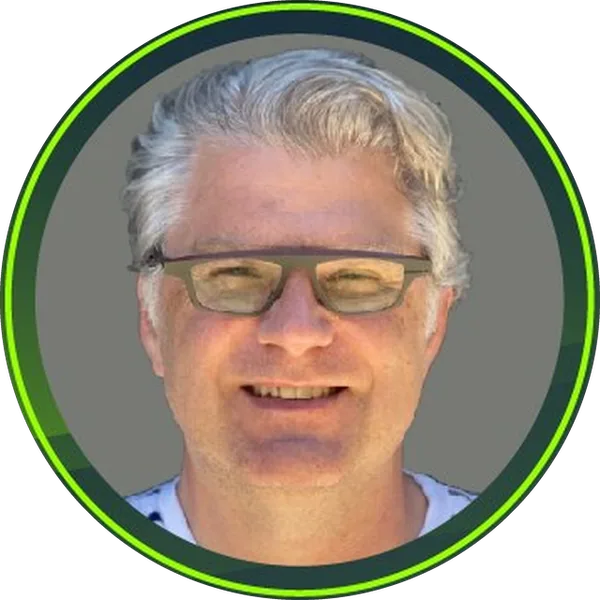
Jay Bartot
Hosts James Benham & Rob Galbraith are joined by Jay Bartot from ZeitWorks. James, Rob & Jay discuss the scope of AI powered business process intelligence.
The full episode
Press play for the whole conversation.

Insurance Tech News
The Insurance Data War: How Old and New School Can Live in Harmony
Tesla Bets It Can Bring Down Insurance Costs, Make Driving Safer
The Club Pro Crisis
The full transcript
Transcribed automatically from the episode audio, so some names and terms may be misheard.
James BenhamJBKnowledge Podcast Network. On episode 89 of the InsurTech Geek podcast talking about AI powered business process intelligence with Jay Bartot from ZeitWorks. The InsurTech Geek podcast powered by JBKnowledge is all about technology that's transforming and disrupting the insurance world. We'll be interviewing guests and doing deep dives into specific tech we see changing the industry. We're taking you on a journey through insurance tech, so enjoy the ride and geek out. Before we get started with our interview, don't forget that you can subscribe to the Insurtech Geek podcast by texting geek out to 66866.
Make sure you never miss an episode. Now to our special guest, Jay Bartot from ZeitWorks. Jay, how's it going? Good. How are you guys? Man, I cannot complain. Glad to have you on the show. Rob Galbraith, how's it going?
Rob GalbraithIt's going, James. It's going. It is almost summertime. It's my daughter's last week of school this week because we're recording. So
James BenhamOh my goodness. Oh my goodness. As we record this, it's Tuesday, 05/23/2022. My kids are in their their last week of school as well. It is summertime in beautiful Texas, and it's been blazing hot. It's been, like, 98 degrees every day. We finally got a cold front came through. It feels a little bit more like May.
Jay BartotJay, where are you at? I am in the Pacific Northwest in Seattle. And I tell you, it's been very cold and rainy here all spring. Well We had a couple nice days over the weekend, so we're super happy for that. Yeah. It's it's been literally
James Benhamjust nasty hot here. So enjoy enjoy your weather that you got up there, and, we're we're we're glad, of course, it's usually a little cooler out there in the Pacific Northwest. Jay, we're we're glad to have you on the show today. Yeah. Thanks for having me. You, you know, you've got you've got experience across a a broad variety of, different different companies and across the industry of, software development, whether it was for well, jeez, you you you you you actually spread it around for a while.
We're gonna talk about all these, including including stops at Hulu, Microsoft. You you really had quite the the array of companies that you have been been able to work at since '93. But I I like to talk about you. Let's talk about your background just a little bit. Where were you born and raised? Where'd you go to grade school, high school? What'd you dream of doing when you were a kid? Yeah. So
Jay BartotI so I was born in Greenwich, Connecticut in New England and was there in Connecticut until I was about nine or 10. And then my family moved to Chicago, inner City Chicago. My parents went to work for the University of Chicago, and grew up there, the rest of my growing up there. Went to school, a few different colleges, but ultimately ended up at the University of Iowa. And then this was the early '90s, early to mid '90s, and the whole grunge thing was happening out in Seattle.
And so all the Midwest kids were moving out to the Pacific Northwest. And and so me and some friends, you know, packed up our stuff and moved on out.
James BenhamNow what what made you this is this is a great combo because I'm obsessed with music as well. I play piano, guitar, sing. Yeah. Grew up in that in South Louisiana. Was obsessed with grunge music in the nineties as well. Mhmm. But what made you triple major music anthropology and computer science at University of Iowa? Yeah. So I
Jay Bartotwas so when I was a kid, I wanted to be a professional musician. I played drums. I played guitar. Was really obsessed with music. And so my first stop at college, my freshman year, was at Berkley College of Music in Boston. And what I learned there, a very valuable life lesson is being a professional musician is a hard living. And after a year of doing that and kinda realizing what my competition was like and just kinda how hard it was to to make a living and make a buck, I went back to Chicago and kinda regrouped.
You know, there's a social scientist in me somewhere from my mother in particular, you know, who has a PhD in sociology and and, you know, studied and taught at University of Chicago. So started thinking about some kind of new things there in social science and anthropology, but the music stayed with me and I couldn't get away from wanting to play, wanting to record, and wanting to compose. And so when I got to the University of Iowa, met a friend who said I was doing music production on kinda cheap four track recorders, and the quality was pretty poor.
And he had this personal computer. He had this early Macintosh computer that he was doing MIDI music development on. And he said, you know, if you go down to the computer center here at school, they'll lend you the money to buy a computer. I was like, someone's gonna lend me money? Are you kidding me? I went down and showed, picked out a Macintosh, this was the late 80s, and brought it back to my room and started doing music production on it and got obsessed with it.
It was the ultimate instrument. I could draw on it. I could play music on it. I could do my homework on it. I mean, you name it. I was really obsessed with it. You know, And gosh, I wasn't a math kid in high school, but I had some some math, you know, kinda geeky friends who had Commodore 60 fours and some of these earlier systems. And somehow, I crossed some kind of bridge and got interested in programming and
James Benhamstarted to teach myself how to program. Now which which Mac? Was this the the Macintosh Plus or was this like It was a it was a Macintosh SE, which was the model that came right after the Plus. Oh, right after the Plus. Yeah. It had two two floppy drives instead of one. Yeah. Yeah. I see. Yeah. Nice. Okay. So so you you you like me because I was, like, obsessed with piano and thought I was gonna be a professional piano player, then I found out how much money they made.
And I was like, hey. And then it got hooked on coding, and I was like, you know, a lot of musicians are coders because it's music's coding. I mean, right? Like, music music, I would argue, is the world's first universal programming language because you could plug the same code into every computer, the computer being the piano or the guitar, and you'd get the same result or roughly the same result. You know, it it it it just makes so much sense once you once you get into it.
Right? Absolutely. And the and the ability with the newer software tools to edit what you've what you've composed
Jay Bartotat a fine grain level. I got a bad note in that recording, so I'm gonna go into my screen and editor and just kinda move that note right over to where it's not a wrong note anymore. Super powerful. And again, I got just really obsessed with the whole thing. Awesome.
James BenhamSo you've spent and I'm gonna fast forward because I want to jump in and talk about insurance and InsurTech. And, we could talk for an hour on your resume, but you you've had a lot of different roles at a lot of different companies. One of them was, acquired. You were CTO and co founder of Voto, which was was acquired by Hulu. And I I've been a longtime Hulu customer. So, you you know, you but you started in software. It's it's always been in software, technology, technology development, CTO, managing director.
Now you've been board member and adviser. Tell me what the what was the path there? Like, were you just always really interested in writing code and it didn't matter which industry? You know, it what it wasn't just code, and it didn't matter what industry. I got interested in two things in the late nineties,
Jay Bartotstartups and machine learning and AI. And I got introduced to those things through some faculty at University of Washington I was working with on one of their startups. Some faculty was doing some spinouts of their research into the private sector and got really interested in pattern recognition and data and all these things I probably would have laughed at myself at ten years earlier being interested in this kind of stuff. But once I was on that startup path and that machine learning path, I ended up, you know, going through a number of different verticals like ecommerce and online advertising, travel, medical informatics, consumer shot video, all of those things have interesting data and machine learning problems associated with it.
So my my thing is like creating these vertical machine learning products that take in some kind of interesting proprietary source of data, pull some signals out of it, and and pass the value on to the customer.
James BenhamAwesome. And let's let's fast forward then. Is Zytwerx your first foray into insurance technology?
Jay BartotAlmost. So after I sold my last startup to Hulu and worked at Hulu for a bit, I took an interesting job that kinda was reflected my background to some degree. I took up a job as CTO and managing director at a startup studio. Basically, we were the small group of people in Seattle who our job was to come up with new interesting venture backable technology startup ideas. And so we looked quite a bit at the insurance space, you know, looking for new opportunities, new products that were needed, new technology that was needed, and so forth.
So that's kind of the first time I started to learn a bit about insurance and InsurTech. That was also the place where looking at the RPA space, you know, we came up with the idea for Zytworks.
James BenhamYou had the opportunity with Zytworks to take the set of tools that you described to me as upstream of RPA and apply them to any industry. So why'd you pick FinTech and Insurtech to be the first foray with Ziteworks? Yeah. So
Jay Bartotthe interesting thing, the nice thing about Ziteworks is that our total addressable market is massive. I mean, repetitive business processes executed by teams of people are found in so many industries, financial services, insurance, health care, manufacturing, I mean, you name it. So that's that's good from a total addressable market space. As a young little startup, we have to focus. We don't wanna boil the ocean. And so financial services and insurance were particularly interesting to us. We chose fintech and insurtech on the bet that because we're a little startup, we gotta move pretty quickly.
And so when we engage customers, ideally, you know, it's a few months of, you know, getting in there, showing our value proposition, and and getting them onboarded as customers. Whereas a lot of the other industries I mentioned, you know, the sales cycle can be really long, and long sales cycles kill start ups. And so, you know, that's kind of why we've been focused on, you know, the the InsurTechs and FinTechs, you know, in order to hopefully move a little quicker. Also be working with folks that maybe might be a little bit more versed in the value of data and how to work with data, you know, to to optimize their businesses and, you know, make more analytical decisions about how to run their businesses and make them more efficient.
Awesome. So in a in a short, sweet, simple nutshell,
James Benhamwhat does ZeitWorks actually do and how is it different than RPA? So what we discovered
Jay Bartotfrom looking at RPA was before you can implement an RPA bot, you have to know what your process is. You have to understand it. You have to know what the steps are in the process. Is the process ready for RPA? Does it need to be reengineered? Does it need to be optimized? And what we found was that although there was a big RPA boom happening at the time we started looking at the space in 2019, when we talked with a lot of customers in the spaces I mentioned, what we heard was I've heard about RPA.
I've heard about it from my colleagues. I've heard about it at the conferences. We're not ready for RPA. We gotta help we gotta figure out what's happening, in our own group of people. I'm not sure what my people do. I'm not sure what processes they follow. I'm not sure what steps they follow. I'm not sure who's a good worker and a not so good worker. I'm not sure who needs help, etcetera, etcetera. And so we wanted to we realized we needed to meet organizations where they are versus where they wanna be, you know, at some point in the future.
And that means, you know, shining a light on on their organizations and their processes and, you know, helping them see what what's going on so they can fix it and make it better.
Rob GalbraithI'm really interested in this Jay because I have worked with RPA both at a couple different carriers that I've worked for in the past. And, you know, the promise is great. And to your point, we've got tons of, workflows, some of which are automated, many of which are not right manual processes. And I think the pandemic has shed a light on a lot of manual parts for insurance companies. I also know I've worked with people that are art based developers and you never seem like you get the ROI that you would think you would.
There's many different reasons for that. But oftentimes maybe, you know, you've got to get information from an external website or database and you go out and you're scraping, you have an automated login and you're going here and there and getting the information. And then all of sudden they change their system. Right? And then it's like, okay, now you got to go back to your RPA breaks and now you've got to go, you know, and it was like we were constantly kind of re engineering RPA. And then, you know, you mentioned something I'd describe as the gate agent problem, right?
Which is if you've been to the airport and you talk to a gate agent and you see them fly through their green screens and you're like, how can they still use that? And it's like, well, to them, they've been using it for decades and they know the system backwards and forwards. So asking them, like, how can you improve upon this process? They're going think about that system. Right? And they may be like, well, I have to, you know, information three different places would be nice if was one, they won't think big enough, right?
It's always about kind of the adjacent possible. I know there's firms like UiPath that do process mining and others. You've talked about Zytworks being a process fitness tracker. So tell me a little bit about how that works, where you're able to actually uncover what people do without them having to sit down and kind of interview them for hours about what they need. Yeah,
Jay Bartotno, absolutely. And that was really the sort of initial problem we saw when we heard from management consulting firms in particular who work with RPA vendors that in order as a as a pre step to RPA, they would need to sit down with their clients and do this manual process discovery and run these workshops where they would bring in gaggles of fresh college grads and have these kids stand over the shoulders of the workers, you know, doing the repetitive business processes and writing everything down manually.
And that was that was time consuming. It was expensive. And it at the end of that exercise, really only revealed a single point in time analysis. You know, processes are always changing. People are always changing. We knew we needed a system that could a sensor, if you will, in our case, software sensor, but conceptually, certainly similar to a hardware sensor that you guys are starting to see in the insurance business. People putting sensors in their homes and so forth and trying to notice and predict water damage and other things that can happen.
In our case, we wanted to build a software sensor that would sit on the desktop machines of the information workers and and passively monitor all of the interactions that they have with the user interface that made up their their business process. So what applications did they interact with? In what order? How long would they spend in those applications? What would they do in those applications? And and by being able to gather that data, you know, suddenly, you know, you can start to see things that you may never have thought of before.
We've had customers who have said, you know, some of this stuff you're validating my hunches that I've had for years. We've had those same customers have also said to us, hey, you know, I had no idea this was going on. I didn't know people were doing this or not doing this. And so, you know, one of our mottos is you can't fix what you can't see. And so with data, you know, suddenly, and some analysis on top of that data, suddenly you can see what's going on.
In a very similar way to all of us who are, you know, with our Apple watches and our Fitbits and all this, you know, other sensor software we're starting to wear, suddenly you've got the data. How many steps did I take today? How much weight did I lose? And once once you have real data, I think we all know that you can make a lot better strategic decisions about where you wanna go. Let's
James Benhamlet's try to understand the technical aspect of how this works. You install a desktop agent on the worker's desktop that then logs all activity and what they're doing on each application so you can build real time process documentation of how each worker does each major process flow? That's right. And then does it reflect itself in some kind of graphical map that it produces saying, hey. They spend this much time over here and this much time over here, and then they're exporting exporting from here and then uploading
Jay BartotWe have a an analytics portal where right now managers can log on and look at their processes, look at the behavior of their teams, you know, look at how application usage in particular is being utilized across different parts of their processes. See all of this data analytically and where necessary, not only see the data analytically in charts and graphs, but be able to drill into where they see strange things or anomalies or outliers. And be able to poke around and say, you know, this is interesting.
My processes on average tend to take an hour to complete, but I see this distribution in this long tail of these other processes, you know, that take twelve hours. What's going on here? You know, is there an issue with the information worker? Is there issues with software? Do people need more training? Is this particular customer whose whose data we're processing, are they problematic? You know, we have we have one customer who when we started showing them their data, you know, started to tell us about how they're a financial services processing customer, and they started to tell us about how they've got customers that they think are not good customers for them because they're not profitable.
Their processes that they have to execute on behalf of those customers are too complex. Or, you know, alternatively, they need to change their pricing scheme to represent the complexity of certain customers' processes. So that was really interesting to us because we knew that, you know, a lot of these processes are broken. We knew that a lot of these information workers may need better training. They may need better design processes, you know, these kinds of things. But we hadn't thought about the the end customer of our customers and whether, you know, those customers were necessarily good customers or bad customers.
So, during our beta period, our pilot period, we've learned about all kinds of new use cases that our data uncovers that people hadn't thought of before.
James BenhamI gotta ask the obvious question.
Jay BartotAre you big or sorry? It's a great question. And it's a deep question. You know, we are certainly sensitive to this topic of surveillance. And you know, one of the things that we think is really important is that if you're going to be measured by something or someone, then you should be able to get value out of that measurement yourself personally. And so, you know, from a go to market standpoint, we focused on selling into managers and then their bosses, are typically CIOs or CROs or so forth.
But we've realized that if the whole team can be involved in the value of Ziteworks, getting value out of Ziteworks and contributing to the value of Ziteworks, then the whole system is gonna be better. So we really want our customers to be transparent, that there's a sensor running, but also give the information workers a login to our system where they can see their own metrics and they can see their own steps and use our tools to, you know, figure out where they're having problems or debug their problems and and be a part of that that whole ecosystem.
So we feel pretty pretty strongly about that and and the the first rev of features were for managers, but now we're starting to focus on features for workers too. Yeah. I just wanted
Rob Galbraithto to go a little deeper on that particular topic, Jay, because I I know, you know, I've managed teams of underwriters in the past that are handling individual accounts, right? And they have essentially productivity stats and quality stats. So we want you to handle a certain number of files with a certain percent of accuracy. And we had processes where we could see their screen, we could listen to phone calls that they were having, etcetera. That was part of the quality audit and evaluation process. And yeah, it just drove conversations, right?
So you'd see somebody that maybe did a really good job with quality, but they struggled to make their productivity goals. And so you'd want to work with that person to be like, Hey, I don't want you to sacrifice quality, but I do want to make sure that you're hitting the productivity number because that's going to help you in your career and advance. And you could see people that were super talented, but it's like, okay, but if you're not mastering your current role, then it's really hard to kind of have you advance in the organization and make that case.
There's a lot of other people that are competing for those types of promotions. So yeah, I was just wondering, have you seen or heard any of these kind of conversations as managers and workers are talking and does it help maybe go beyond the tunnel vision of that gate agent problem that I saw where it's hard for them to think beyond their current processes or systems to a more holistic conversation and lead to better outcomes on both sides?
Jay BartotYeah. I our I would say with our handful of pilot customers we've had so far, we haven't seen a lot of that detail about, for example, as you say, how would Ziteworks data be used in an exact conversation, you know, with an information worker, you know, to help them improve. You know, I think we only sort of know by instinct and analogy that when a worker is armed with information, no matter what kind of worker they are, they're more in a position to advocate for themselves.
You know, one one thing that we we hear a lot about is, well, I do a really good job and at promotion time, you know, I have data to back up the fact that, you know, I do a certain amount of work that, you know, yields a percentage of the teamwork with that we need to accomplish in this quarter or those kinds of things. So I think it can be some it can be information that's used to help a worker that may be struggling. And again, we don't have a lot of experience yet with those scenarios, but we're also hearing about scenarios where workers will tell us, you know, this this is great because this is sort of proof that I do my job well.
So so a lot more to be learned here, Rob. Think, you know, for better or for worse with a lot of the technology startups I've done, you know, we're kinda walking the cutting edge of, you know, data and information and how to use that information responsibly and productively versus it. We know there's possibilities for this information to not be used responsibly and productively. And so, you know, we're looking forward to working with our customers on these issues and and and helping them, articulate the value to their team as well as to up their chain of management.
James BenhamOkay. So let's talk about how you said it's upstream from from RPA. So let's talk about how far upstream because it would seem to me like the next logical thing would be to automatically build an RPA bot from a process that you recorded, almost like recording an Excel macro. And I'm really sorry if I'm oversimplifying this. But
Jay Bartotit would seem to me like that might Absolutely. Be next step. Right? And, you know, as we you know, as I mentioned earlier, you know, we we started out thinking that what was really needed was a way to automate what's called oftentimes called task discovery so that you can understand, well, what are the steps I'm gonna need to teach my bot in order to do this process? And then as I mentioned, you know, we realized there was this sort of bigger problem of help me manage my team, help me understand, you know, where we are and how to optimize things prior to RPA.
But it's logical to think, okay, well, there'll be a time where Zytworks helps a team get their house in order and figure out their processes and understand how well engineered they are and whether they're good candidates for RPA. And at that point, you know, we have all the data. We can certainly output a process map or a task map, if you will, you know, that would be instructional either to automatically create an RPA bot or probably more likely instructions to give an RPA engineer to go and implement Yeah.
You know, a bot. You know, one of the one of the metrics we compute is a complexity score on a process, and not all executions of one particular process are the same. So someone may be processing bank loans, and, you know, James, maybe, you know, your your bank loan application is complicated, but Rob's is more complicated for whatever reason. And so it's not a one size fits all when it comes to these processes and being able to to observe a whole distribution of process executions, say in this case, you know, a a bank loan process, you know, really tells a much greater story of how complicated do these things get?
And, you know, given that and where there's complications, you know, what is the most appropriate use of RPA technology? And you know, can we segment executions of this bank loan process or claims process in insurance, you know, in order to automate the ones we can automate, but also know that, you know, we've got real people with their hands on the wheel for the more complex ones.
James BenhamExactly. Yeah. Yeah. And there's there's a of course, we've done a lot of RPA work. RPA is one potential outcome, but another potential outcome is just literally consulting with the worker and saying, hey. We've gotta we've gotta rethink and reengineer this process. Right? Like, but part part of the outcome, I'm just trying to get, like, what you do with all this. Right? Like, you either build an RPA bot or you reengineer the process with a process engineer, right? I mean what all the options? I Maybe I'm trying that to think some about
Jay Bartotwith this type of information worker, we know that attrition has always been a problem. Institutional amnesia is typical where, you know, the best the best person leaves. They knew where all the bodies were buried in the nooks and crannies of the different applications and systems. Suddenly there's no documentation and the person who is second in command knows a lot less than the person who'd left. And so I think documentation is a big area. We started Ziteworks of course before the whole COVID thing and the surge in remote work.
We're also seeing a lot of people ask for like workplace analytics features. So, you know, since people are not in the office, it's hard to know, like, you know, who's doing well, who's struggling, who's working not enough, but even probably more likely who's working too much. And again, that data can be really hard to get your hands on. So we've been adding features that probably belong more in the workplace analytics sphere of how much are people working, what's their quality of life, you know, how can we keep tabs on them so that we can check-in with them and say, you know, geez, I I saw you work sixty hours last week.
You know, we had a big deadline to hit, but, you know, we can actually see who it impacted and how it impact them. So all of these kinds of features that this data powers are kinda coming together in, you know, yes, still with one foot in the whole automation RPA world, but but but another foot squarely in the help the team be better, help the team survive under the remote work circumstances, and maximize the human potential of the team. So
James BenhamI've got a friend that that's in that space, with an app called Time Doctor, and they record everything going on on the desktop. And they really drive it towards time sheets and productivity reporting. They don't get into process mapping like this. Are are you are you gonna step into the are you gonna step into the time sheets and, you know, that that side? Don't I don't see it on your website, but but are are are are time sheets and productivity reports are those eventually?
Jay BartotYou know, we'll we'll go with we'll go in the direction our customers, you know, want us to go. Of course, we have to stick to our guns too. It's always a always a challenge for a young startup where, you know, a big customer might come along and say, you know, geez, we really want you to do this. And the startup is kinda like, well, you know, you you want us to do that, but everyone else wants us to do this other thing here. So it's always a challenge to to stick to one's guns, but I think with it with enough with the way that work is changing and the whole kind of future of work thing that we're figuring out as a society within corporate cultures, I think there's likely to be new things that will end up building that, you know, frankly, we wouldn't have thought of a couple of years ago because, you know, the needs and requirements are changing.
Rob GalbraithYeah. Jay, just curious, kind of wrapping up our conversation, like, who should be reaching out to you and when? And and I'm thinking specifically, you know, in a past life, our company was setting up an automation center of excellence and, you know, talking to a lot of these RPA vendors and whatnot. But it feels like, man, if I had known Zytworks was around, like you guys would have been a first stop, I guess, on that kind of automated center of excellence journey just to kind of get a lay of the landscape, right, and help inform a lot of the decisions subsequently.
Yeah, absolutely. I mean, I think,
Jay Bartotyou know, most companies, I think, probably have processes that would be good to know more about, and team member teams and execution that would be good to know more about before you RPA, before you automate. And so certainly encourage people to talk with us. You know, I mentioned consultants earlier, and, you know, consultants obviously play a huge role, and not only in business processes and and business processes analysis and modeling, but also automation. And so, you know, we see that as a a big place for us too, you know, to work with consultants who are on the ground, talking with customers, understanding their businesses and the nuances of their businesses and processes, and using Ziteworks to give them that critical near real time data that they need to move quickly and make the right decisions.
James BenhamKnow, Rob, thank you, Jay. And Rob, you had another question I thought was really interesting around incremental innovation.
Rob GalbraithYeah, just to ties a little bit to what I mentioned before about people having a hard time to think about processes independent of systems. And so I'm just thinking that, know, so Jay, you know, we've talked a little bit about the worker conversation before. An analogy I would use is wearables, right? So I've seen wearables companies where they use wearables in the workplace and there's definitely this concern about a big brother, are you watching me, right? But I've also saw in this, hey, we're using this to make a safer workplace.
And if we notice that there was an unexpected slip or whatever, we may come ask you about that as a safety manager and maybe you just stumbled, but maybe, you know, there's a slick spot on the floor, you know, we need some protective matting there or whatnot. Right. And I think it's, you know, kind of what you alluded to earlier. So yeah, just kind of, can you help companies go beyond kind of, hey, we've got a five step process and we wanna make it a four or three step and maybe go beyond that incrementalism to really totally rethink their processes
Jay Bartotof what they could be? Yeah. I mean, I think this is a place where, you know, working with other folks in the ecosystem, a business process analyst or a business process modeler, you know, who would be able to take our data and really start to think creatively, you know, based upon what they see, what what should those processes be? So so I think that that's a big thing. You know, we we also recognize that, you know, we need to one place where we need to continue to move forward with our product and innovate is helping organizations quantify the improvements that are being made.
It's one thing to show somebody a bunch of data and analytics, and they're like, oh, that's great. I didn't know that. You know, it's good to know these things or I'm gonna make a few changes here or a few changes there. You know, but ultimately that stuff will start to wear thin if there aren't more mechanical things around, you know, to help the organization's tools, you know, to to set goals and to make improvements. And so to that to that end, we're launching a goals feature later this month where based upon a number of the analytics that we provide, individuals or or managers, you know, can set goals.
We spent an average of fifteen minutes in this process. You know, let's see if we can get that down to ten minutes. Set the goal, have it be set for the whole team or some particular team members, and then track that progress longitudinally. So a month from now, I know, like, well, we we haven't improved here, or, you know, three months from now, we have improved here due to these changes. So we recognize that we can't just give away data and analytics. We have to give also develop tools that help all those little incremental changes that will probably happen across the people and the processes and the applications and show that they add up and that the sum is greater than the parts.
James BenhamThat's awesome. That's a good discussion. So I'll I'll finish out with this. What's what's long term? Because you've just described everything that you're already doing. Right? So what's
Jay Bartotwhat what's what's on the horizon? Lot lot of things on the horizon. You know, one of the things that interestingly enough, I think that is probably on the horizon for us is that in some sense all roads do lead back to automation. And so, you know, we see some processes where there are parts to it where you need a human. They're looking at a word doc. They're interpreting some unstructured text as an important step in that process and and using their their heads to figure out, okay, what do I do next?
Oftentimes, there's other parts of the same process that are highly repetitive. For example, copying and pasting values from, you know, a web screen into an Excel spreadsheet. Of course, Excel spreadsheets are ubiquitous. They're the they're the glue that holds together the pieces oftentimes between all these different processes. And so we we recognize that the idea of I'll call them micro automations. Pieces of the automation of the process that can be automated, you know, for an information worker and pieces of the process that just need to be done by the by the worker.
So the analogy I use a lot for this is autonomous driving. You know, I think we maybe were led to believe that autonomous driving would be, you know, ubiquitous and powerful by now. I can tell you as a Tesla owner, it's not. It works great on the highway, but when you get into the city, man, you better have your hands on the wheel. And so I think the same thing is true here. You know, we're we're obsessed with thinking that AI is going to replace things and take over things.
When in fact, I think a much better role for AI and machine learning is in an assistive or augmentative role, where it's helping you along and doing those, in this case, very repetitive parts. But in other parts, it's, you know, it's backing off and letting the human do what the human does well.
James BenhamYeah. Yeah. I was watching a interesting special on Hulu about about Tesla and self driving, and, of course, it it recapped all the times that Elon said that full self driving would be fully automated and fully capable and by what date. And they said Yeah. And they missed that one, and they missed that one, and they that one, and then they had a major accident. I mean, because some some problems really are actually monumentous. And I find it interesting, by the way, on that on that one that that he was able to figure out how to land two rockets simultaneously, autonomously before he was able to figure out how to get a car to drive in the city.
Like, ain't that ain't that ain't that amazing? I mean, Oh, yeah. Just to show you how how complicated some problems really are. And me, you know, me being a machine learning geek,
Jay BartotI I was kind of a sucker and, you know, fell fell in for the the big sell, but I can tell you, it's there's there's some work to do there still.
James BenhamYeah. Yeah. My GM Super Cruise on my Cadillac. It's it's nice. They they they definitely undersold it, and it under delivered. You know? So but it but it does it does what what I'd it'll at least get me to Houston on the highway on its own, which is nice. It saves me a lot of hassle. So it it's it's worth it, and they they undersold it. So I was okay. You know? I was like, okay. Well, you undersold and under delivered.
Jay BartotSo it's it's fine. That's a that's a great anecdote. I mean, it's helping. Right? And so you're which it's it's moving in the right direction. Yeah. It helps me.
James BenhamI I got it. And I think that just like Excel macros helped me. Just like, you know, we we built our own internal process documentation system. It doesn't automatically document the process control. I gotta tell you, I I have, like, three processes I wanna fetch Ziteworks on inside my own company right now because I've got 270 employees, some of whom do a lot, you know, manual processing for our clients. And I'm like, you know, there's there's something to do that because we have our own process management system.
So there's a difference between process documentation, process management, and actually self documenting product. And that's actually probably what excites me the most is I I would even I would consider this and I consider RPA a bridge technology. I don't I don't consider it an in state. I I I think APIs are in state. Yeah. Whereas I think RPA is a bridge to API. And, you know, even the but the this is both a bridge and and state because you'll always have people doing things. Right? So you you're you're trying to bridge them through to an automated future.
But as soon as you're done, you know, documenting this you know, this really goes well with my favorite book on lean, two second lean. He says his primary suggestion in implementing lean is to take a video of your process before and after so you can show people how much improvement there was. Yeah. Do y'all actually log videos so you can actually see a video of how someone did it before and then show a video of how they do it after? You know, we we do grab screenshots,
Jay Bartotand we try to minimize how many screenshots we grab. It helps us with our machine learning when we train our models to find processes being executed in the wild. But there's also, again, utility for the for the end user. And I think that's a great example of like, here's where we started. And now, you know, we've analyzed, we've measured, and we've made changes and we're iteratively improving, you know, in a lean style fashion to get better and better. But you gotta know where you came from in order to measure your progress.
Rob GalbraithNow, I'm excited, Jay. I think you're right. And I agree with you, James, about RPA being a bridge technology and use the Excel macro as example, right? And I think about like low code, no code platforms today, right? Much more robust than kind of an Excel macro, but hey, you know, it's quick, it's convenient, definitely works and has its place. Right. And so I think Jay, to your point, it's like, hey, just this is a first step just to better understand your processes. I even think about systems that you're looking to retire and you want to know, does anything still use a system where you've got lots of legacy systems and insurance and that's always a question that we faced.
It's like, hey, does anyone use this? We turn it off without any repercussions or not? And particularly, like you said, with a great resignation as folks walk out the door or not, those might've been your subject matter experts that had that intel and could have told you now they don't, you know, aren't at your company anymore. So how do you know? Right. And so before you just kind of hope and pray, turn it off and then, you know, see if anything breaks, right. This would be a great way to probably test that out as well.
James BenhamSo I'll close out with this. You've raised a few million bucks. Mhmm. One of the more recent announcements was on my birthday last year, 07/07/2021. You raised $2,000,000. Before that, and that's when you actually came in from MVL to be the CEO. And the total raised, at least publicly, was 6 and a half million dollars because you had a 4 and a half million dollar round in 2020, another $2,000,000 in 2021. So you're at 6.5 now. That's correct. You've got some you've got some backer backers like Zillow's CEO, Spencer Raskoff.
You got Blue Nile, Wet Paint founder, Bill Ben Elowitz. So you've got you've got some folks in on the money here. You were with a venture group, you know, with Medrona Venture Group and their Venture Labs, MBL. What what's it what's it looking like? I mean, you know, the the funding landscape is changing a little bit right now. You know, the venture groups are telling their investments to conserve cash and to knuckle down. Yep. What are your thoughts on this phase of Yeah. Venture capital? Well, you know, I'm kind of an old dog.
I've lived through a lot of these ups and downs.
Jay BartotI still got scars from the.com All us
James Benhamon this all have scar tissue from '99 So by the
Jay BartotYeah. That was that one that one was quite spectacular. But throughout my startup career, you see these waves, they come and go. It's just part of the game of coping and adapting, so we'll see. I'm optimistic at this point still that some of the most of the impact we're seeing is with later stage companies and sort of like near unicorns, you know, that are sorta looking to IPO, and and, you know, they're certainly being hurt right now. But, you know, talk to me in a few weeks, and and there could be certainly, you know, some of this stuff falling downstream to to the little guys like me.
So, you know, definitely wanna stay optimistic, but, you know, we'll do what we have to do to survive and and have a lot of experience doing that. So it's just part of the journey. It's part of the game.
James BenhamIt is. It is. It's oh, all things including the ocean, ebb and And so it's you just gotta learn how to how to how to float on top. No matter no matter whether it's an ebb or a flow. It's it's the way the way it goes. This is a a great conversation. I I enjoyed the chat. I hope our listeners out there understand the differences between, you know, process mapping and process intelligence and RPA. And RPAs, you know, they're they're they're they're these are different spaces.
This this is a really weird but interesting hybrid between, like, a a timekeeping productivity app and a process automation app. You know, it's it's it's a it's you're sitting in the middle in a space that I didn't even know existed, which is I kinda feel like I'm spelunking today, I just found a new cavern. It's
Jay Bartotit's exciting. No. Very exciting. And and I think it's early days. You know, there's a there's we know that a lot of companies are are really just embarking still on digital their digital transformation initiatives. I've had experience, you know, guys with a lot of legacy, you know, technologies and different industries, like travel for example, certainly heard a lot about those legacy systems in insurance and financial services and so forth. So, you know, even though I tend to be more on the kind of cutting edge of like, you know, doing new things and creating new spaces, I'm always very cognizant from my experience that there's a lot of bedrock out there, you know, that still needs to be upended and it takes time.
And it can be incremental as well, and so again, that's just really kind of part of the journey of doing these kinds of things.
James BenhamAwesome. Alright. Well, thank you for the discussion, and I know Rob, you got a couple of news stories. What you got? What do you got this week? Yeah. Just, I've got three items that I thought were interesting that caught my eye. The first is,
Rob Galbraithan old friend of mine, Marty Ellingworth wrote from carrier management, titled called an article called the insurance data war. How, excuse me, the insurance data war, how old and new school can live in harmony. And, he actually points out that, there's a ton of actuaries out there that are still using Excel for their, their, you know, reading engines and things like that. And, he's like, you know, it's, it's the tool that's commonly used to communicate with executive management and stuff like that. So trying to bridge that gap between kind of a telematics world and IoT world, etcetera.
And, and, you know, scoring the circle on that one. So I thought it was thought provoking. I wanted to share that. The second one, talked about Tesla. So, Jay, you said you're a Tesla owner. I don't know, if Tesla insurance is available yet in, Washington state, but, Elon Musk this week, made some headlines that were not related to Twitter. He spoke to the attendees of the All In Summit in Miami, where he talked about the car insurance industry is incredibly inefficient. And he said, you've got so many middle entities from the insurance agents all the way to the final reinsurer.
There's like a half dozen companies each taking a cut. And they said that Tesla charges premiums based on real time driving using they calculate a monthly safety score. And there are five factors that go into the score. Forward collision warnings per thousand miles, hard braking, aggressive turning, unsafe following, and forced autopilot disengagement. And these are very different from the traditional determinants like credit score and age. It sounds like when you sign up, get a safety score of 90 to start, and then it can obviously go higher or lower and your premium is adjusted accordingly.
So Jay, I don't know. Do you have Tesla insurance? Does that sound attractive to you?
Jay BartotIt well, it could be attractive and I certainly believe Elon, you know, breaking down the industry and the inefficiencies. I gotta tell a really quick story about the Tesla score though. So, you know, I was a little bit bent out of shape that the self driving stuff didn't work as expected and so I went into dealership and was complaining. And he said, well, you know, there is a beta coming out that we're giving to special customers, you know, who have a high score. What's your score?
And I was like, I didn't know I had a score. And he said, you have the Tesla app installed? I said, yeah. I handed him my phone. He brought up the Tesla app and showed me I had a score of 57. So, yeah, I I, you know, I almost I burst out laughing when he showed it to me. My wife would have gotten a lot pleasure out of seeing that score because she always says I'm I'm Mario Andretti, you know, when it when it comes to driving.
But, know, again, here's data. And I may not have completely agreed with you know, maybe how the scoring was done, but you know, I understood and thanked the gentleman and left.
Rob GalbraithWell, what's interesting is Tesla said in Texas, they're actually the second largest insurer of Tesla Motors or Tesla autos now already. And so obviously kind of has an embedded insurance,
James Benhamplay to it. So it's quite fascinating to follow. Yeah. And then what's like embedded in it's not as they they just need to make it parametric and then they'd have like the the the bi factor there. Right now, think I think it's pretty traditional. It's just it's embedded, but it's traditional insurance. I don't think they're I don't think they're selling by the mile, are they? I don't believe so. No, it's it's the standard standard time based coverage. So Yeah.
Rob GalbraithThe standard review. Then lastly, I'm a golf fan, and I don't know, Jay, if if if you're a golfer, James. But, anyway, I spent this weekend watching the PGA championship in Tulsa, which is very exciting and was kinda, you know, catching some of the summaries on Golf Digest and stumbled across this. It was interesting. During the telecast, they actually advertised their jobs website for the PGA. I was like, I didn't know that they are, like, that hard up for jobs. And so, anyway, this great article from Golf Digest called the Club Pro Crisis.
And so we've been hearing about the great resignation. Well, it's also in golf, and many people think that being the club pro would be a dream job, right? You get to work on a golf course and be outside, but actually you have to deal with just as many emails and meetings as the typical office worker. Maybe these guys work up to eighty hours a week. They may not get vacation time for for much of the year. You know, we may think of them as being out there giving instruction all day every day, but that's actually a small part of their job and and people are leaving the industry in droves.
And so, very similar to others. And and the article was saying that, hey, a lot of golf clubs, they need to rethink the position. They need to actually staff up. They need to cut back time. They need to give more defined responsibilities with some assistance and others, maybe separating out like the golf shop. Right. And some of the items that they sell in the inventories from the teaching and and lessons aspect or whatever. So, anyway, the great resignation has come to golf pros as well. A very interesting article.
Yeah. No.
James BenhamSo so I yeah. I I I enjoy playing and Yeah. I play too. Jay, but I I I
Jay Bartotyeah. So that does not make me happy to hear. I I will pass the news on to my 19 year old son though who's trying to get a job for this summer, and he's a big golfer. He's super into it. So I'll be sure to tell him that tonight.
James BenhamYeah. Awesome. Well, thank you. Thanks for that, Rob. Appreciate it. And, you know, no thank you for that last news article. I don't wanna hear about my pro leaving, but, it's been a good show. J Bartow really enjoyed talking you. I appreciate it. Yeah. You can go to their website. That would be zeitworks.com, I believe. And you can go zeitworks, zeitwerks.com. Thanks, Jay. And thanks, Rob, for being on the show. Thanks, gentlemen. We'll see you next week. Thanks, guys. Take care. This has been the InsurTech Geek podcast, powered by Jimmy Knowledge.
That's jimmyknowledge.com. It's all about transforming and disrupting the insurance world. I've been your host James Binnen. That's jamesbinnen.com with co host Rob Galbraith. That's endofinsurance.com. Big thanks to Jim Greenlee, our podcast producer, Kara Dalton Alero, our creative producer, and thank you for joining us today. We're taking you on a journey through insurance tech. So enjoy the ride and geek out. See you next time.