 YouTube
 Spotify
 Amazon
 iHeart
 Apple
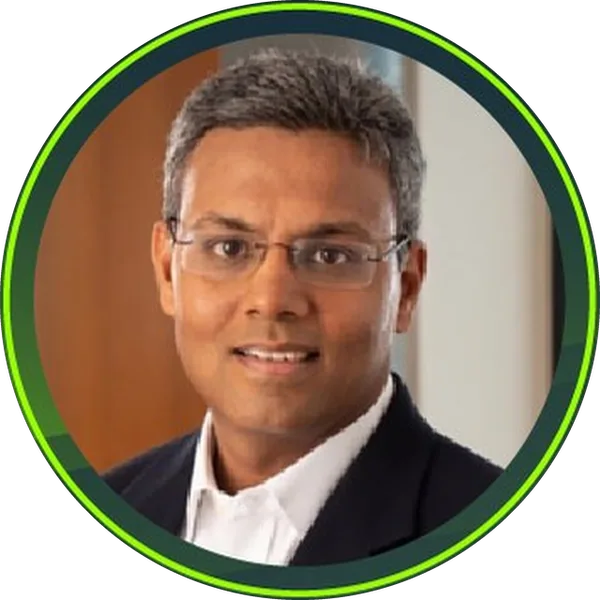
Neeren Chauhan
Hosts James Benham & Rob Galbraith are joined by Neeren Chauhan from Zurich North America. James, Rob & Neeren discuss insuretech that is innovating the insurance landscape.
The full episode
Press play for the whole conversation.

The full transcript
Transcribed automatically from the episode audio, so some names and terms may be misheard.
James BenhamJamie Knowledge Podcast Network. On episode 90 of the InsurTech Geek Podcast, talking about innovating insurance with Neeren Chauhan from Zurich, North America. The InsurTech Geek Podcast powered by JBKnowledge is all about technology that's transforming and disrupting the insurance world. We'll be interviewing guests and doing deep dives into specific tech we see changing the industry. We're taking you on a journey through insurance tech, so enjoy the ride and geek out. Welcome to the Insurtech Geek podcast. I'm your host, James Benham. Today is the first day of our new podcast format, which includes moving to biweekly episodes instead of weekly and inviting a new category of experts and the thought leaders onto the show.
Our next series of guests include executives from top tier insurance carriers, brokers, and TPAs to learn how they're harnessing the power of AI, machine learning, automation, and more to supercharge their company's growth. As always, if you're enjoying this podcast, please be sure to subscribe and leave us a review. Before we get started with our discussion, remember that you can subscribe to the InsurTech Geek podcast by texting geek out. That's g e e k o u t, geek out, to 66866. Make sure you never miss an episode.
And on to our guest, that is Nirain Chauhan from Zurich, North America. Nirain, how's it going, buddy?
Neeren ChauhanIt's going great. Thank you. Thank you for having me, and I look forward to the conversation today.
James BenhamYeah. Awesome. And I hear that you and I are both up in the cool, breezy Midwest right now, not in the sweltering South
Neeren Chauhanlike Mr. Rob there. So you're over in Chicago, right? That's correct. Been here for about a decade and a half, so this is second home. Grew up in India and then came here to go to school and then fell in love with the place. And, yeah, summer is a beautiful time. It it reminds you why you live in Chicago. Now if you spoke to me Yeah. If you spoke to me in in February or March, I probably would say I don't like it as much.
James BenhamYeah. Yeah. It it I I say that the summers carry you through the brutal hard winters. It's it's tough. You know, I married a girl from Michigan, Niraine, and so that's why I live up in Michigan in June, July, and August. I like to come up here and escape the sweltering heat of the South. We have with us Rob Galbraith. Rob, how's it going? I am currently in the swelting South, at home in the studio in San
Rob GalbraithAntonio, Texas, and we started engineering right before we, went on air about the number of 100 degree days, which have far surpassed anything we had last year. It's it's been a pretty brutal summer already.
James BenhamNot looking forward to the rest of it here. Yeah, it was the last time it was this hot in Texas was 2011. That was the first year I started coming up to Michigan. I was escaping seventy straight days of 100 plus temperatures and the rain, it's the winters that remind us why we endure the summers in Texas. It's the opposite. You know, the the only place where you don't have to do that for yourself is Southern California because it's 72 and sunny all the time. That's right.
But but but that's all good. Yeah. So so, Nirain, it's good to have you on. You did grow up in India. You got your MBA from the University of Chicago, from the Booth School of Business, and then it looks like you stuck around the old Chicago afterwards. When you were growing up in India, what is it that you wanted to do as a kid? That's a great question. I I think if
Neeren Chauhanyou ask any kid in India, there is two things that that kind of get people going there, either the Bollywood movies or cricket. Yep. And I indulged in both as a kid, but no, growing up, I think we grew up in fairly modest circumstances. And my dad taught at a university for three decades, so education was really important. It was also the sure shot way of coming out of those modest situations and building a life for yourself and the future generations. So I chose to become an engineer, which was also a way to make sure that you are employable and you have a growth path for you and a long runway for life.
But also I was very interested in physics from a very young age. And it started with, you know, playing ball on the streets, but then carried on through college as I earned and then got trained in mechanical engineering. Then I built cars for a couple of years. I designed seating systems for Ford Motor Company in my very early career. And that's where I think, you know, from my life story of learning to do more with less, and then kind of working on the shop floor and in the automotive industry, that was my initial grounding in this notion of innovation.
You know, how do you start to think about how do I do it better tomorrow? And what will it take within the same means to do more tomorrow? So yeah, that's where I got started. And then over the last two decades, I think I've been very fortunate to have traveled to or lived in or worked in more than two dozen countries across the world, different continents.
James BenhamAwesome. Well, you could argue that Sachin Tindulkar was very innovative in his bat skills in cricket. You could say the same about Varad Kohli or Sunil Gavaskar. I mean, you know, there's a lot of innovation in cricket, but I'm excited that you chose the field of business and engineering. I, I've had a lot of a lot of friends from India who've introduced me to cricket over the over the years and, fascinating game. But I I gotta tell you, Niren, and I Niren, I'm a Cubs fan, like a hardcore Cubs fan.
Yep. And I think that a two and a half to three hour game is long. I can't wrap my head around the all day cricket match thing, man. That's right. That's right. So number one, I'm impressed with your with the familiarity with some of the biggest stars of the game.
Neeren ChauhanBut the longest version of the game is five days. Five days? Yeah. So you come, you start playing in the morning, you take a break for tea, play again for a couple hours, you have lunch, and then you play in the afternoon. So yeah,
James Benhamit can go on for a long time. Yeah, I'm a fan of the much shortened format. So let's jump in now that we know your background. It's so great to get to know you, and I'm excited you had such an interesting path, both geographically. I think that's really interesting, kind of the geographic diversity of your professional background, as well as the industry diversity can make you very effective. So you're now the Chief Strategy Innovation and Business Development Officer for Zurich. What was it that brought you to that position?
You explained your role through the manufacturing room floor, but what led to this current position?
Neeren ChauhanYeah, you know, after the initial years of spending time on the floor and learning to build cars and design cars, I moved on to operations and I spent a bunch of time in technology risk and operational risk at KPMG. And that's when I started travelling the world and having done that for about five years, I realised that most of that experience was East Of GMT. I'd spent a bunch of time in China, Eastern Europe, all over the place in India. So I came all the way to the West to go to UChicago for my MBA and then I spent a few years at McKinsey, which again gave me a flavor for various industries, various topics, but most importantly I'd say that there's a couple of things that I picked up from all of that five years at KPMG and then another five or six years at McKinsey, you start to hone in that instinct or that skill for understanding and almost predicting what will work.
And I think that to me is a huge ingredient in how you think about innovation. And we'll talk about it a little bit more as we go. But, you know, to answer your question around my journey, at the time I was leaving McKinsey, had a number of different opportunities, but I've always followed people. And insurance was not kind of the plan, but I'm glad I went towards it. I spent a number of years in personal lines in a very customer centric environment at Allstate. And as I was kind of reflecting on my journey over the last last couple of years and the switch I made over to Zurich, a huge part of that was my desire to have an impact in commercial space.
So, you know, if you think about the changes and the innovation that has happened in the financial services, I think banks started first. Retail banking had to innovate as people stopped coming to the branches and they were very expensive. They had to figure out a new model and direct banking started the whole revolution in how people interacted with money on their apps. Personal lines insurance followed suit, driven by a couple of companies who were trying to give you a number of options in fifteen minutes, which were much better than whatever you had.
But if you think about commercial insurance, it is still kind of rooted in how things have worked in the past. Things are changing. There are multiple, what I call, injections of fresh blood in the system across the value chain. And individual problems are getting solved today with the use of technology and data. But across the value chain there is still huge huge scope for innovation and change that needs to happen. And to me I think the flavor of that change, number one, is it has to be customer centric.
Sometimes you'll hear from commercial insurance industry that our customers are large companies and they have different needs than individual customers. True. But at the same time, this notion of customer centricity is hugely important. In my mind, that will drive and will lead to a bunch of changes in the overall value chain. The other kind of customer, in a way you could define it, is the broker population or the intermediaries through which you sell in commercial space. There is, in my personal opinion, there is a lot of duplication between what brokers are trying to do and what carriers are trying to do for the customer.
So that is another huge opportunity for innovation or change in this industry. And as I reflected on some of the opportunities, I thought how cool would it be for me to have been in midst of a lot of changes in personal lines and retail banking, then bring some of those learnings and lead the change in commercial space. This opportunity came along. I thought it was very timely and Zurich is a fantastic institution. Innovation is not something that we just talk about. It is part of the bloodstream and a lot of the business decisions and the way investment decisions are made, innovation is a core part of it.
And that's kind of what excited me to take this role. Awesome. That makes a ton of sense. And certainly it's what really geeks me out about getting involved in this industry too. Rob? So, your mind, talking to a senior executive such as yourself, right, that's responsible for strategy
Rob Galbraithand innovation. I know before I got into formally leading innovation efforts, I think I had a lot of pictures about strategy innovation, like sitting around a whiteboard all day, pontificating, you know, drawing different designs, ideation. And I think that's something that a lot of people really enjoy. It can certainly be effective as a team building exercise. But the reality, the day to day of innovation, I think, is a very different reality. So and particularly one that, you know, if you want to actually get to implementation, you want to be, you know, moving the business forward, right?
There's a lot more that goes to it. So perhaps you could just, for our listeners, walk them through what a week in your life looks like. Yeah.
Neeren ChauhanSo so that's that's a very good and very interesting question. Let me take a step sideways and spend maybe a minute on this notion of kind of the way you innovate and the way the world goes. I think there is two sides of this coin in my mind. One part of the whole story is how do you have a vision for where the world could go? And those are what I call the shiny objects on the tree and you want to have a limited number of those rooted in what is happening around in the world and where ultimately the customer is going, whether it's an institutional customer or an individual customer.
And then the other side of that coin is, of those ideas, how do you figure out the art of the possible and figure out what will work today that you can launch, test, and then if it is working and delivering value for the customer, you are able to scale it up, which is where a lot of the frontline innovation comes into play. So, you know, as you try and balance both of those, which I try to do in my day to day job, there is a few, what I call the core ingredients to kind of this recipe.
One is you've got to be leveraging and learning from and looking at industries which are not only insurance. An insurance industry particularly tends to be slightly more insulated than some other industries But what has happened in the last several years as technology has become cheaper and easily deployable in different situations that customers now have one definition of the ideal customer experience and again whether they are individual or institutional customers. And then they are not comparing insurance companies with insurance or banks with banks. Everyone wants a click button Amazon type experience or Netflix type experience in everything that they do.
Being aware of where the customer preferences are and what is happening inside and outside of the insurance industry is a huge part of my week every week. The second part then is understanding customers more deeply and especially you know in this role that I'm in understanding institutional customers is really important. The whole kind of space of risk is evolving every day. You have pandemics, you have supply chain disruptions, war and peace, cyber is emerging every day, and then climate risk, you know, everyone is starting to make commitments, but still there are a lot of unknowns in how the world will transition to that future.
All of that path is kind of paved with varieties of risks. So in that space, the other huge part of my week goes into constantly trying to understand what are the challenges for the customers, institutional customers in this role, and then how could we meet those challenges or be a partner in solving some of those problems. Now, one slight qualification there, I truly believe that what a lot of companies have tried to do in this industry in the past is try and solve these problems on their own.
I think the future will likely look different. So another big part of my week goes into understanding if I know a certain problem and if I'm talking to people to understand it better, who can I partner with to further define and how do I understand where I don't need to reinvent the wheel versus where you need a fundamental solution to a certain problem? So kind of developing that network, understanding the role of the whole ecosystem, and constantly searching for partnerships where you don't have to reinvent the wheel is another big part of my week.
The third part of my week goes into ultimately you know all of these ideas. If I go back to my the beginning of this this part of the conversation, these are the shiny objects. Now you have to think about the realities of the business and the BU leaders or people who are running the businesses. I spend a ton of time with them, with their teams, which helps me understand the opportunities and constraints. It helps me understand their own priority order in which they are trying to solve the problem.
And across a very large and matrixed and complex organisation like Zurich, it allows me to understand of the 30 things that are on the radar all the time, which three things should I be thinking about next week, or next month, or next quarter? And to me, that whole element of simplification is really important to say how do you prioritize and where do you stay focused. And then the last part, shouldn't be a surprise, is my team. That's where probably thirty-forty percent of my time goes every week.
Just making sure I'm opening the doors for the team, I'm providing the resources, the coaching, the guidance, helping teams solve problems, removing barriers for them that need to be removed, and having some fun along the way. So we make sure that we have some time to do nothing, just reflect on what's going on and also connect with each other, which I think has been slightly harder with the pandemic. But with the things starting to open up now and the weather permitting, we're spending a lot more time outdoors, for example, almost every week to just reconnect and recharge.
James BenhamSo that's kind of my typical week. Yeah. I had an interesting article that I read recently. I've long been an inbox zero advocate, and I and I do. I I I eliminate my inbox every day and keep it at zero. Keeps my head clear. But I saw a great article on calendar zero, and that is, you know, killing the meetings and having empty space where you do nothing so that you can actually fill it with your creative time and actually think and, you know, call people that you've been meaning to reach out to or spend, you know, unplanned, unscheduled free time.
It's actually really, I have found it for myself to be very unhealthy to have a constant stream of meetings with no breaks. It does not give me time to actually work on top of the business rather than in the business. And so I love that you're pushing for time to do that. What are some of the innovation projects that you've been leading
Neeren Chauhanthat really geek you out? Yeah, so with your permission, let me broaden that a little bit. Let me talk a little bit about things that really excite me that are happening today. And then within that, I'll talk about a couple of things that we're also trying to do. You know, as I was saying that technology is becoming cheaper and much more easily deployable And that is opening so many doors with what is happening. But overall, if you look at what is happening in the space of insurance, I think this notion that has traditionally existed of asymmetry of information between a carrier and a customer is slowly going away.
And I think the whole notion of you can go online and you can customize your solution and you can buy it yourself was a huge step in that direction. But that was only one step. As that whole concept broadens, that is the space that excites me a lot, where using data and then the ability to process data and then digitally present data with some insights for empowering the end consumer to manage their risk is a very, very exciting space overall. And we've all seen kind of how far we've come literally in the last five years.
Now you can buy car insurance by the hour. And that to me, think the hyper personalization using that technology is going to be a huge driver of change in the whole industry. And when I talk about industry, I'm talking about property casualty, health, life, everything. There are newer business models every day. There are companies which are focused on splitting, if you're sharing apartments with other people you can split the liability coverage and you can all pay your share. There are companies which are very very customer segment focused.
Like for example you know there are business models which are focused on women drivers who tend to have a certain risk profile and then you ask the question to say should they have different kind of rate profile as well for their risk. So there are companies which are catering to that sort of a thing. So I think one theme overall that I find very exciting is the theme of leveraging data and technology to continue to chip away on that information asymmetry and hyper personalize the solutions for the consumer.
And then I think the other space that I think is very exciting, although under explored right now, is the telematics overall. Is it being used? Yes. Is it starting to change the game? Yes. Is there huge potential in what this thing could do? Absolutely yes. And in the personal lines, I think there is enough use cases to say that the whole concept works. But wearables in health and life, still very early stages. There is so much more ground to cover there. And then if you think about Internet of Things for example which in some ways is the commercial equivalent of telematics in your car.
It took off as a concept many years ago but did not take off because they were not five gs waves to carry that data in a very fast and seamless way. Now as five gs is opening up the waves again, I have a feeling that Internet of Things will again become more accessible, cheaper, faster, more efficient, and hopefully there will be more use cases. And since the last time people were excited about this thing, the information processing power and the cost to do that has also come down significantly.
So that's another area. I think if you think about those two things, the third one I'll add is this whole area of sustainability. This notion of how do we transition as a world, individuals and institutional customers, to that future of zero carbon emissions or carbon neutral or whatever language we want to use. There is a ton of innovation happening in all of these three areas. As a company, we are involved in all of those areas as well. So a couple of projects that we have are around sustainability, is a huge focus area of Zurich in North America and globally as well.
So we are working with different companies. In fact, what we do every year is we organize what we call Zurich Innovation Championship. Across the globe, we invite different startups and established companies to come together, present their idea, and then we provide the platform for them to scale that within the Zurich ecosystem globally. Within North America we looked at about 700 companies in the first quarter of this year. We selected a handful. We are working with a couple. A couple of them are in the sustainability space and there is a couple other in other customer experience and that whole notion of data analytics space as well.
So those are some of the things that we're looking at. Very good. Rob? Niran, I'm going put you on the spot. What has been your favorite innovation in the insurance industry and why? Yeah, I think to me this notion of hyper personalization has been kind of my favorite. And what I also am watching very closely is how some of the newer entrants are able to build things grounds up without the constraints of legacy technology. You know again going back to the notion of customer experience and how customers want to interact, a lot of the times I just don't even want to open my iPad or even my laptop.
So how do you and there are companies which are essentially they've built their product around the form factor of an iPhone and everything is very very simple to execute and very very easy to work with. Those types of things in that hyper personalization mode is kind of what I'm most excited about. You know GoGirl is one of those business models I was talking about earlier. Split assurance is another one. Pay as you go, pay by the mile, pay by the hour. Those are some of my favorite innovations more recently and I think the reason I like them is it is kind of challenging that notion.
It happens so often and it is something that is a pet peeve for me when you go to meetings and people say, hey, this is what the customers want and people have those pronouncements and they do some research. I fundamentally believe that it is really hard to slice and dice customer population by demographics or other behavioral data and say this segment will always behave in a certain way. So the companies or the solutions that are much more dynamic in nature which weave the world around the customer to present different options and solutions to them, those are the exciting innovations to me.
Again, banking has proven it before so it's not like we are reinventing the wheel. But this notion of omni channel, like you take a dollar out of your bank account and you have your website, your mobile app, and you're standing in a branch, all three things open at the same time, instantaneously the transaction will reflect all across the board. Good luck trying that with your insurance payment even today with all the technology. Yeah. So those are the things that to me are really exciting, making it easy for people.
And then there's one more thing, know, and you could almost say that that's kind of the future where I see things probably will go, which is another very interesting area to me is this convergence of health, wealth and risk. And the reason I mention that in the stream is that as you think about presenting and surrounding the customer with what they need to choose and how. When I think about the risk while I'm driving a car or my life insurance or how much money do I have when I retire or how do I think about my health, my accident coverage, they all are one flavor of decisions.
But today I have to deal with six different companies and 30 different agents and 40 different websites and apps. How do we solve that problem for the customer? And I feel like in future that convergence will continue to grow. Yeah, that's great, great, great thoughts and thank you for that. Let's wrap
James Benhamwith this last comment on you've mentioned a lot of technologies that are now tech, right? Like you've talked about things that are actually available now being done right now. So it's hard to say that's a that's that's a great quote. I love the future is now it's just not evenly distributed. The future is here. It's just not evenly distributed. So there's there's a lot of companies leveraging what you're discussing, and there's a lot of companies who are not. I would say like the whole market is kind of bifurcated into, you know, very traditional companies that are doing very little experimentation and companies that are doing a whole lot of experimentation.
What do you think is next? I always like I always like ending talking about the future. I'm a big Star Trek fan. I'm a huge fan of science fiction. I love thinking about what's next. Discovery is really big on programmable material that automatically rearranges itself. And, you know, start start I mean, there's a lot of really cool things in all the new Star Trek series. By the way, there's like three in production right now, which is just crazy for a Star Trek fan to get excited about.
So let's just get a little science fiction y and think about, okay, what's currently available on the market, what do you think is poised to be really big So
Neeren Chauhannow we're getting into outside of my role and personally what I think about where things could go. And this will be, I'll totally kind of follow your lead and make it science fictionally. So I don't know if it'll happen or not, but I have a feeling it might go that route. Let me just build off of what you were saying, and I'll use that framing to answer the question. So if you think about some of the new age insurance companies, there is a couple of features to those companies that I see commonly.
Number one, they're very very customer centric. Number two, they're using latest technology unconstrained by the legacy systems that other established incumbents have to deal with all day long. But number three, they also have a feature that a couple of features. They are mostly single product companies and they are mostly direct to consumer. Now first two observations are more of an advantage. The second two, you've got to take it with a pinch of salt to say, you know, it's easier to prove a business case or a business model with one product in three markets in a very limited way.
But ultimately, if you think about the customer in that convergence that I talked about, you want larger scale. You want to be able to prove that repeatedly in different parts of the value chain. And that is still something that we are not doing today. And then there is this notion of, you know, if you look at the larger established incumbents, they find it harder to invest in actually I should say differently the expectation of return on investment when it comes to innovation is very different in larger established companies.
Now it may vary depending on what your ownership structure is, owned by the street versus mutuals and privately owned. But broadly, people work with the business plan for next year and the year after insight and there is limited appetite to fail. Now the good thing going for those larger incumbents is the understanding of the market, stronger financial stability, relationships with the regulators which is very important in this business. So ultimately to me I think the answer is how do we leverage this complementarity and instead of thinking about you know you're eating into my share and I'm going to take away your share, how do we focus on customer to say the whole world institutional as well as individual customers are under protected and the risk is changing every day.
How do we collaborate to increase the size of the pie and everyone wins? And if you can solve a problem better than I can, let's shake hands and do it for the customer together. And in the science fiction way to kind of end it on that note from my end, I think that convergence that I talk about will be supported by more and more data sharing across platforms. If everyone is trying to solve for a customer in one unique way, it is still fragmented for the customer.
So that would be the future I'd love to see similar to credit bureaus that everyone goes to one place to figure out all the data, and then you say, based on that, here are my solutions for you. Yeah, and what a great thought, because we've experienced what
James Benhamthat's like in the area of financial services, just not insurance services. And we have a glimpse of what insurance and risk verification looks like in auto insurance, but not any other lines. There are these little glimpses that we see of what the new world could look like. Of course, if you go super Star Trek y, I I remember, like, one of the episodes of Star Trek The Next Generation that blew my mind is when a guy from the a travel a time traveler came and was talking to Jean Luc Picard, and and he goes, well, how do you guys make money?
And Jean Luc looked at him and goes, oh, we we stopped using money decades ago, you know, centuries ago. We don't we don't use money. And and it was it was so interesting, like, you know, the accumulation of wealth ceased to be a a driver in our society when everybody had plentiful access to everything. It was fascinating because he was talking about, you know, he was really talking about molecular three d printing and replicators. It challenges some very fundamental premises like what if we didn't, in this case, put it in context that you put it.
What if we didn't have to silo all the data on a risk? What if we could actually have common data sets? What we a single blockchain for all properties? What if we had you know, the technologies now exist for us to actually pull it off. It just requires willpower and innovation. So it's an exciting future for sure. Coding, I think, I've already seen this as longtime software developer in the insurance business. We write far, far less actual lines of code than we used to to accomplish our objectives.
And I think we're moving to a world where we can execute technology projects far faster than we ever have in the past. And so that's probably what geeks me out the most. Well, is our time today.
Rob GalbraithRob, any closing comments? That was just fantastic to have you on, Niraine, to hear your perspective. You've got me really excited about what the future holds. I know it can be a challenge. Know, I'm sure you have that experience of two steps forward, one step back, and then you always kind of have your setbacks or you have a lesson learned doesn't go quite the way that you thought as you're testing something out. But, you you've got me fired up about, where we're going and, what lies ahead.
Absolutely.
Neeren ChauhanNo, thank you for the conversation. I am a hardcore optimist and I am always a glass half full kind of person. So honestly, things that don't work, it's so amazing that they fall off my radar pretty quickly. They can come back next month because now I'm thinking about it with a new flavor. But in general, I'm very, very optimistic.
James BenhamAnd I think there's a ton of good that is ahead of us in this space. It's one of the most abundant times to be alive ever in human history. Peter Diamandis does a great job of laying out the case for abundance theory and why we should be excited about the present and the future and what it holds for us. As my daughter, Noel, and I say, let's be an optimist, not be a pessimist. Let's look at the bright side. There's always a case for optimism, I think, even in difficult times.
So thank you so much, Nirain Chowhorn. So good having you on, enjoyed our conversation, and here's to you being the Rahul Dravid or Sunil Gavaskar of InsurTech, right? You may have wanted to be a cricket star when you were young, but you're going to be an InsurTech star of your own right. And so we appreciate it. Remember, Nirane, the largest cricket complex in The United States Of America is forty minutes from my house in Northwest Houston, only a forty five minute drive from College Station. So if you ever want to see The United States' largest cricket complex, I welcome you to the Houston, Texas area.
Neeren ChauhanI might just take you up on that, but no, thank you.
James BenhamAwesome. Alright. And this has been another episode of the InsurTech Geek podcast. A big thanks to Niraine Chawan for joining us today. This has been the InsurTech Geek podcast powered by JBKnowledge. That's jbknowledge.com. It's all about transforming and disrupting the insurance world. I'm your host James Binnom. That's jamesbinnom.com with co host Rob Galbraith. That's endofinsurance.com. Big thanks to Jim Greenlee, our podcast producer, Cara Dalton Alero, our creative producer, and thank you for joining us today. We're taking you on a journey through insurance tech. So enjoy the ride and geek out.
See you next time.