 YouTube
 Spotify
 Amazon
 iHeart
 Apple
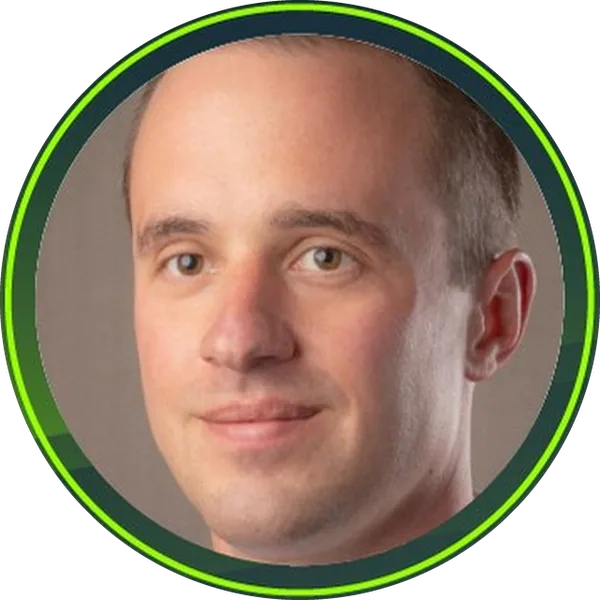
Dan Campany
Hosts James Benham & Rob Galbraith are joined by Dan Campany from The Hartford. James, Rob & Dan talk about innovation, IoT and it's place in the future of insurance.
The full episode
Press play for the whole conversation.

The full transcript
Transcribed automatically from the episode audio, so some names and terms may be misheard.
James BenhamOn episode 94 of the InsurTech Geek Podcast, talking about IoT and its role in the future of insurance with Dan Campany from The Hartford. The InsurTech Geek podcast powered by JBKnowledge is all about technology that's transforming and disrupting the insurance world. We'll be interviewing guests and doing deep dives into specific tech we see changing the industry. We're taking you on a journey through insurance tech, so enjoy the ride and geek out. We are back. Another great episode of the InsurTech Geek podcast. Got my fellow Texagander.
That's a good combination of Texan and Michigander. Mister Rob Galbraith, beautiful San Antonio. Rob, I'm gonna be in your town tonight, my friend. Oh, funny. I'm gonna be in Austin. I'm leaving right after this. After I record, so You heard I was coming and you're getting out, That's right. That's right. Yeah. This town's only big enough for one and sure tech geek can't have both. So I'm going into Austin to see a concert. Do you know who Kristen Chenoweth is? Yeah. No? Yeah. Yes. She was she was in Wicked, and she was in Yeah.
Glee, and she was in a bunch of stuff. So I've got front row seats. Nice. To see my girl, Kristen, with my oldest daughter. That's awesome. So can't wait. Yeah. The majestic downtown San Antonio, my one of my favorite places. Yeah. It's a beautiful theater. So how are things in San Antonio, Rob? Good? They're good. It's just starting to cool down finally. We're getting a little bit of rain and we're coming to the end of summer. Still hot, but Yeah. You know, telling people when it cools down to to 90,
Rob Galbraithyou know, you actually do feel it. It it sounds strange to say, but from Oh, yeah. You know, hundreds down to 90, it's it takes the edge off. So it's it's been kinda nice. Yeah. One zero nine is pretty insufferable. When I got back from Michigan, I was like, what is this? Why are we in an oven? I couldn't I
James Benhamcouldn't take it, man. That's a it's too much. So slight plug for for Rob, by the way, if you're not subscribed to his newsletter, Forest View Insights, if that am I saying it correctly? Forest View Insights.
Rob GalbraithHe has a wonderful email newsletter you can subscribe to. Yeah. The company name is Forest View Insights, and the the newsletter is, Forest View, and people can check it out at seetheforestview.com.
James BenhamThree comes out twice weekly, so highly encourage folks to check it out. Worth the read. Let me just say that. So is his book. I'm a fan. I'm like a like a cohost fanboy. And with us from connect connect I cut. That's how I always remembered how to how to spell it because I'm from Louisiana and we're kinda slow. I was born and raised in Louisiana. You know, we can't spell well much in South Louisiana, so they always say Connect I Cut. He's from Connecticut. Dan Campanee.
What's going on, Dan? How's it going? Man, doing great. Doing great. Excited to to talk about IoT and InsurTech and all kinds of other fun things. Dan, let's talk about you for a second. Sure. Because we're gonna talk about InsurTech. We're gonna talk a lot about IoT because you are the vice president of innovation and head of IoT at this small insurance company. Some people might have never heard of called the Hartford. It's it's not a deer. It's a stag. I was told that many times.
And so it's he's he's from the stag at the Hartford. Okay. So now that we've established that, let's talk about you. Tell me, like, where were you born and raised? And when you're a kid, what'd you what'd you dream of doing? Born and raised in Upstate New York,
Dan CampanyNorth Of Utica, Syracuse area. When I was a kid, I'm sure I wanted to be a professional athlete, but those dreams were dashed before I left high school. So after that, I went to college with a looking for a bachelor of arts and unsure what I was gonna do after that. Yeah. Where's Hamilton College? That's where you went. Yeah. It's near New Hartford, Utica, New York in Clinton. Oh, great. Yeah. I was been spending some time north of the city.
James BenhamAlthough I will say this, I've been working with New Yorkers on the definition of Upstate, and it's a controversial definition. I'm just gonna say, some say North Of Yonkers, Some say North Of West Plains. There there's there's a controversial line. It seems that people don't want to be north of that line. Southern Canada. Yes. Yeah. Yeah. I'm like, exactly what is Upstate? It's like being in Rob, it's like being in Michigan and defining what up north means, you know? And then it's bizarre. In Michigan, I my definition of up north Rob in Michigan is anything North Of Kalamazoo is no.
Or maybe Grand Rapids because no. Let's say Grand Rapids. Anything North Of Grand Rapids is up north. Fair? Yeah. Yeah. I was thinking Lansing, but, yeah, very similar. So pretty much three quarters of the state. Yeah. Yeah. That'd be about the forty the forty fourth latitude is somewhere around there. So it it it's a it's a it's it's a deal. It's a deal. So Dan, you grew up there. You you think you wanted to be a professional athlete. You went to Hamilton College. You studied economics and mathematics.
You were a deek there, by the way, which I think is cool. I was a Fiji, So hung out with some dekes. It was weird. We always had a good time. Very nice. And what'd you go to school for econ and math for? Like what was the what was the what was the vision or the the goal there? For me, economics, it was about
Dan Campanyreally digging digging into the rational sort of sense of why markets behave the way they do, why price points behave the way they the way they do, and understanding the underlying driving forces of the economy. Yeah. And then with respect to math, it was actually more of a I was just good at it, so I just kept doing it. Yeah. And get the good grades, and if you can, you do. That's the way that's the way it is sometimes.
James BenhamKnow, economics to me, it's not just a study of the way markets move, it's the way people behave. Right? Like that's Exactly. Like, you you you really need like a minor in psychology to understand economics because Very true. I mean, you know, markets driven by the people that are in them and people behave remarkably the same way. I mean, it's like truly remarkable. I'm a I'm a a, like, a hardcore history nerd, so huge fan of Dan Carlin's podcast, Hardcore History, and I'm I'm a I'm a big reader, Eric Larson, history books.
And one thing I have learned in all the stuff I've studied is that human beings are fundamentally the same as we have been for about ten thousand years, man. We do the same things. You're right. For the same reasons. The baseline assumption Yeah. Of most most economic theories is rational human behavior. Yeah. So where then when that breaks down is is kind of the challenge for understanding how to apply economics in a real world situation. Yeah. Yeah. I mean, it's it's it's it's of course highly applicable to insurance markets because insurance is about predicting behavior.
Right? And, you know, trying to figure out correlation and causality. So it's a it is we could argue just as much as it as well as a study of human nature. Mhmm. Of course, we have to study mother nature. So I think I'd say we if we're studying two natures and insurance, it's it's it's human nature and mother nature. And interestingly, you know, your area of IoT covers both of those. Now you've it appears to me, you've been at the Hartford your entire career. That's correct.
In fact, I started as an intern when I was still in college. Yeah. That's awesome.
Dan CampanySo tell me like what attracted you to the Hartford and that ride been like? Because you've had a lot of really neat jobs there at Hartford. Yeah, what attracted me was, you know, as an intern, I was just sort of coming in to try to get my feet wet. I wasn't interested in banking where most of my fellow math econ folks were going. But I saw insurance as an opportunity to leverage those skill sets in a pretty broad way with a lot of optionality inside a complex business with interesting products.
That was what attracted me to it. Once I got inside as an intern, it only validated the fact that I believe that someone who could bring a vision, but also that grounding in math and economics could really help the industry transform. And that's kind of been the centerpiece of my career journey since then, really. I did cut my teeth for four years in underwriting, but from there on, really, I've been trying to put myself at the forefront of change and driving change in the insurance industry, whether that's the emergence of direct channels or alternative risk solutions or alternative distribution solutions.
And most recently, prior to IoT, it was Insurtech and the emergence of Insurtech and how we think about that as a catalyst for innovation in insurance, which really for us started in 2016.
James BenhamAnd then that segued into the current role in IoT that I play. So that's kind of a brief journey. That's awesome. But I would think, however brief, you know, three and a half years that your time as an underwriter was, that's a pivotal time for you to understand and learn the insurance business. I mean, you're working in underwriting one of the larger carriers in the world, right? So I mean, you that was that was like your second college degree, Yeah, absolutely. And it's, it's I, I'm thankful for it every day, in terms of the insight,
Dan Campanythe deep desk level knowledge of working with the brokers, working with and underwriting the products and the risk and understanding how the products work in the marketplace with customers, not just the new business cycle, but the renewal cycle and the service cycle as well. And really getting the customer experience, the broker experience and the carrier mindset around how we make money from that underwriting role was foundational.
James BenhamAbsolutely. All right. So before I hand it over to Rob, just tell us, you know, what
Dan Campanyhead of an IoT Innovation Lab, what it means, what you're doing, kind of stuff you're working with. Yeah, so we've got a team of people, and this is really started out of our InsurTech scouting efforts, we realized that one of the biggest challenges a company like The Hartford has at innovating is that all the subject matter expertise that you need in order to shape the idea, bring the idea out to the market, test it, and then bring it and it's ingested into your core business and scale it, is tied up in folks that have day jobs and annual priorities, and they're dealing with hurricanes and Russia Ukraine conflicts, and all these sorts of things that are coming at them all the time, they don't have the time and the space to really focus on longer term innovation, and they're not incentivized to do so.
And there's a whole different, for us, philosophy around risk taking and speed and the cultural norms that we operate on from an innovation standpoint are different. So we decided to stand up the IoT team to reflect those challenges and address those challenges. So it's a dedicated team of folks that only works on IoT innovation all day, every day. That's our full time job. And we've got a team of 14 people, and it's part strategy, project management, part customer solutions and technology expertise. And then a big part of its data engineering and data science.
So those are kind of the key components that we oversee. And then we liaise with the business units to really understand their needs, what will work and might not work in the marketplace, and then get those things out in the marketplace for experiments, test them, see how they go, and shape them and pivot along the way. So, my role is really, honestly, strategizing, hiring great people, overcoming barriers and blockages for those folks, and then helping them to push things forward. Yeah, that's awesome.
James BenhamYeah, innovation rarely happens in spare time. And that's the deal, you have to dedicate, you know, budget staff space and give and and give them a mandate, make it their job. I mean, it's something I I and Rob talk about routinely is is you you have to be intentional and intentionality means budget. Yep. You know, it's always money. Right? Rob, what you got? Yeah, Dan, thanks for walking us through your, your career journey and congrats on all your success.
Rob GalbraithSo as somebody that, has been both on the underwriting side, led underwriting teams and innovation teams, you know, I'm fascinated by your journey. I definitely see some, some parallels and, you've been kind of innovative, me, in an innovation role for quite some time, since 2016, EVP of innovation and, and head of the IOT innovation lab since 2018. So, so not an, I guess, a fly by night type operation or not just looking for a quick fist. You guys are really committed to this in the long run.
I've seen it at the Intertek Hartford Symposium and other events, just the amazing progress that you and your team has made. I'm So really curious, for our listeners, we hear a lot about innovation. I think most people actually have quite a vague notion about it that most people think about ideation, and then all of a sudden, the magic happens and a new product rolls out or new offering, But it's much more than that. So can you maybe walk us through what is a week in your life and your team's life look like?
Sure. So we've got a list of in flight use cases at various stages of maturity, everything from an idea on a napkin,
Dan Campanyto something that we've tested with 1,000 customers, and we're trying to make decisions around if and how to scale it through the whole enterprise. So, we've got a dozen or so use cases at some level of that continuum. And then we've got another probably 20 to 30 ideas in our backlog. So, a big chunk of my time is working with our strategy team to prioritize which of those things do we want to spend our time and money on, because that's one of the biggest thing challenges we have is making sure we spend our time and money wisely.
Because although we're set up to take risk and be able to try things that didn't work, there's only so much appetite for failure before eventually you've got to do something that works, right? So, we spend a lot of time prioritizing. I spend a lot of time cataloging and taking input from business units, from brokers and from customers that helps shape those ideas and that prioritization. I also spend a lot of time evangelizing. So So I spent a lot of time with our executives and the key stakeholders in each of our business units and the business leaders explaining and trying to bring the vision, the opportunity to life, both for the early stage napkin ideas, as well as once we get more data, we get feedback from customers, how that's shaping that vision and the business case or use case as we want to invest continually to build that more towards a scalable offering.
So a lot of time prioritizing, lot of time shaping, a lot of time evangelizing, and a lot of time with the team at a whiteboard, problem solving. And honestly, the weeks I feel like I'm most productive are the weeks when I'm at a whiteboard with our team, saying, here's what's not working, let's talk about how we can pivot and make it work. That's the most effective use, I think, of our collective time. Yeah, thanks for spelling that out,
Rob GalbraithDan. And just as a quick follow-up, when you talk about evangelizing, I'm curious kind of what that looks like. And I know I've given in talks and written about trying to, prevent innovation departments from becoming what I describe as pet project departments. Oftentimes when you work with the business unit leaders, they have their own priorities, understandably so, but, you know, they can want to tap into your budget and your priorities. And, obviously, you're representing the entire organization at The Hartford, and so you've got to make some difficult decisions and trade offs.
So, just kind of curious what that process looks like. Yeah, for evangelizing,
Dan Campanyreally for us, it's about and we often start this in house, right? We get feedback underwriters and risk engineers, and then we kind of take the idea and breathe some life into it, try to make it real, get some vendors that can do it, get some pictures, get some data, get some customer testimonials. And so a lot of the first part, the first leg of our journey on an experiment is oftentimes to put something in market with even if it's only five or 10 customers, just to sort of kick the tires on the tech, kick the tires on the customer value part of it, make sure that we're headed in the right direction.
And then from there, we can tell a story to the business units to say, hey, if we can bring down your, this is all hypothetical still, right? Because we haven't fully tested it. But if we can bring down your loss ratio by 10 points, is that compelling to you? What would you do with that? You know, if we can bring down your expense ratio, if we can differentiate you in this way in the marketplace, and really trying to bring that to life to create the buy in and the space for us to bring more business unit folks in as that idea matures, and really help us shape it into something they can take ownership of over the longer term.
Because that's the other reason we do so much of this evangelizing or collaboration with the business units is my innovation team is no good if we build really great ideas that no one wants to take in home someday. So someone has to take this new thing we've incubated and built into a concept that we figured out how we think it should work in the marketplace, someone's got to take that and own that on a go forward basis. And we're really set up to be an incubation lab, not somebody that scales these ideas and owns them perpetually.
So that's another important piece of the evangelization conversation.
James BenhamYeah, I'd say it's let's go back to one of the comment you made a second ago, because it's something I've spent a lot of time thinking about and looking at, that's prioritization. I would say it's one of the hardest things that I have to do as CEO of a near 300 employee tech company every day is prioritize my staff. We have 220 engineers that write code and you've got to keep everybody moving in the most important direction. Right? So not just the same direction, but the most important one.
That's a challenging thing. That's a challenging thing to do. Mhmm. So let's talk about some of those directions you've had. What are some of these some of the big campaigns or projects that have excited you the most or that you're currently excited about? Sure. That you guys have been working on? Number one on the list has to be water damage prevention technology with respect to
Dan Campanyour middle and large commercial property book. It's something we've been working on for several years now. And we're at the point where we're scaling it and operationalizing it, which is actually a very different muscle for us than sort of creating that early stage prototype. We believe that for certain classes, the ROI on us paying for and deploying water damage prevention technology and giving it to our customers is 5x what the cost of the technology is for The Hartford, just because water damage is such a severe and prevalent cause of loss.
Yeah, I'd say there are other classes, though, where we can either continue to stay open, from an appetite standpoint, or perhaps on the flip end of that, be more aggressive and transition some of that margin we capture through the loss prevention into more aggressive pricing over time to drive market share penetration. So why I'm excited about it is because if you can save those losses, you can reinvest those avoided losses into appetite expansion, growth, or additional services that you offer to the customers to please them.
So, I'm excited for those reasons, and because it's the first one that we're really scaling. So, we're targeting water damage prevention, we're targeting 400 plus customers a quarter. So that's for us, that's a pretty meaningful step change relative to the experiment scale that we had before that. So you're not you know, you're not the only ones doing this, right? So there
James Benhamare others out there and you and I know some of others out there doing this. How's Hartford approaching that that you think might be unique or different? Or do you think that this is going to be a right to play in the property business? Like you're going to have to have water sensors to even get a policy in the next ten years? I do think for some classes,
Dan Campanythis is going to be like sprinklers, right? There's going be properties that you know, we just are uncomfortable with the risk unless you have a sprinkler and the same thing is going to go for water damage prevention technology. I do see that evolving in a similar vein. With respect to the competitive environment, I don't know that it's in the long term, something that's going to distinguish one carrier from another in such a way that somebody's doing it dramatically differently. But the sooner you get these things in market, the sooner you get a head start is, you know, Mateo and I talk all the time about this.
IoT is a muscle, right? And it's something that takes practice, and it takes effort, and you have to work out every day, and you have to hone that muscle. And the sooner you get started, and the harder you work at it, the further along you're going to be. And I kind of feel like it's a never ending race, but you always want to be at the beginning of that race with things like this. And so I think longer term, what we're doing that I think is different is a high level of concierge service for our customers.
So we're not just saying you have to have water damage prevention technology, or we recommend you get it through our risk engineering org. We're actually providing it. We have partnerships with the vendors, we're bringing that to them. And we're very, what we're trying to be really smart about is the economics. When are we going to pay? When are we going to ask the customer to pay? And how are we going to reflect that in our pricing strategies and our underwriting strategies? And I think that's really where the rubber meets the road in terms of execution.
It's not the idea of water sensors.
James BenhamIt's the execution of water sensors that will make the difference in terms of who really captures that benefit that is unique to them. Yeah, just striking a partnership of an offering a discount to a client. If they, know, hey, you can buy discounted water sensors if you want.
Dan CampanyDoes If it doesn't get you more revenue than you've had before, then it's not a useful Yeah. Innovation. Not not not particularly useful. Whereas, when
James Benhamyou actually are providing and installing and even monitoring that network, that's a big deal because you're you're you're reducing you're reducing real I mean, you're really reducing losses. And having had to file a water claim personally Mhmm. On one of my commercial properties in the last year, I'm amazed at how much damage even a small line I had a I had a fridge ice maker line. I mean, it destroyed several 100 square feet of flooring. I mean, it it's amazing. It's amazing. It's amazing how little water can damage so much.
The, you know, the savings are real. Are you well, actually haven't got a lot of data because Rob's got a really great, great question after this. So Rob, go ahead. Yeah, Dan, just wanna build on this kind of scale up and and roll out.
Rob GalbraithAnd you talked a little bit about the IOT Innovation Lab at the Hartford coming out of the work that you had done engaging with InsurTech startups. And one advantage that startups have, right, is that ability to move fast and they have usually a narrow focus. And for larger organizations, they may have more resources, but ironically, there's more bureaucracy. It's harder as you kind of refer to a lot of annual bonuses and compensation are tied to things like combined ratio, revenue growth, etcetera, Not necessarily aligned with long term innovation plays such as IoT.
So what are you doing at The Hartford to speed up insurance product development and deployment to maybe compete with some of those startups that are offering similar type products?
Dan CampanyYeah, and I think we're two main things. One is a deep, meaningful investment in data and analytics, including partnerships with startups, by way. So that's not just that's not an exclusive internal build. And the reason I say that the data analytics is critical to that is because presumably, if you're going to do something innovative, it's because you have a novel insight, right? You understand that you've got new data or a new insight that can help a product work better than than the way it works in the market today, or help a customer get better service than what they get from the market today.
So that's where the data and insight comes. And it's partly it's data capture, whether that's third party, although I'm a bigger fan of first party data, because that's where the uniqueness comes. If it's data we have that isn't for sale in the general market, which is why I love IoT, and I'm sure we'll come back to that in a few minutes. So getting more data, but also the horsepower to derive the novel insights out of that data. And that's no small feat when you think about wearable devices, where you've got a dozen different types of devices with different types of data coming off them.
How do you rationalize that, normalize that, and develop an insight across your book from all the deployments you've done? There's a lot of effort that needs to go into that type of thing from a data engineering and a data science standpoint. So, I think those are important muscles to accelerate innovation. It's actually, honestly, from my experience, one of the areas that startups have been pretty good, right? Like, they're pretty good. Some of their first hires are engineers and data scientists, and they get good talent there.
So we partner with them, or we work in conjunction with them to get that data, process that data. And then beyond that, the thing that really greases the skids for us is the philosophy of it's okay to take some risk. And by that, I mean, to flip the chicken and the egg problem upside down that we always have with actuarial science around new product development. So you know, historically, if you'd go to a product team and say, I want to build a new product that rates off of this instead of what we rate on today, they'd say, Well, do you have a million policy years of historical data that show us that that's going to be profitable?
Right? Yeah. But if you if you ask that question every time for new products, you will never be able to launch a new product. At some point, you have to pull the cord and take a risk. And so having an R and D P and L, the ability to go and have an isolated pocket somewhere, a little P and L where we can take those experiments and wall them off and measure them and keep them controlled, which allows us to then do things where we say, we think we're gonna make money on this, we think this is gonna have a good combined ratio, but we don't know until we try it.
That allows us to try, which really is gonna speed up the product development life cycle for us, by giving us the chance to try things before they're proven, and prove them along the way as opposed to wait till we have concrete proof before we try something. Yeah, that's awesome. Rob, I know as a former underwriter too,
Rob Galbraithyou know, he, you probably have a, some, some insight into, into the difficulty of rolling product out where you don't have data. Yeah. I mean, I think, you know, I always tell people what's unique about the insurance industry among many things, but one of the biggest things is that you don't know your cost of goods sold, right until after you've sold the product. And so, right. That that's kind of novel for a lot of folks outside of our industry. And so, exactly to your point, Dan, it's like, Hey, when you, when you don't know, or you're materially affecting that cost of goods sold, or you hope you are through installing loss prevention.
I know it when I was at USAA, we estimated that water losses were about 40% of all losses and they were the ones too that were non catastrophic, right? So there's certainly mother nature as you refer to James and others, and you kind of treat those different hurricane risk and wildfire and things like that from these, what I call law of large numbers, where it's like, you don't know who's going have the water leak necessarily, but you can look at the age of the structure and things like that, and you can location, things like that, and reasonably guess.
And so in the past it was very difficult to kind of materially impact those non catastrophic losses and reduce them and IOT kind of opens that avenue, that possibility. But yeah, exactly right, Dan. It's like, how do you do that? You kind of see the light at the end of the tunnel, but how do you get there? And I do think there's a first mover advantage here. And everyone, of course, is looking for someone to go first and learn from their failings, right? And try to emulate them on the cheap.
But as you get the first party data and that novel insight, as you mentioned, I think that is valuable
Dan Campanyif played right as a first mover advantage. James, I'd be remiss if I didn't circle back to your question around what I'm most excited about and mentioned a couple other things, if that's all right. Yeah, sure. Let's go. So I'm really excited about that what we just talked about, which is we are just really getting a lot of momentum around not just risk mitigation with IoT, but new product development, incorporating first party data from IoT devices, things like usage based general liability insurance, things like fleet insurance for auto, that are usage and pay how you drive, not just how far you drive.
There's a lot of opportunities in workers compensation to do a better job of reflecting the investments that our customers do make in safety technology and the behavioral changes we see as a result of those investments into a more equitable premium price point for those customers that do choose to make those investments. So that work is really now that we've got a couple of years of data, a couple of years of risk mitigation, now we can start to work on, okay, so how do we take those loss savings, or that data, and use it to develop new and more compelling products and pricing approaches in the marketplace?
There's also some newer tech I'm really interested in, which is things like computer vision. So, vision is really interesting to me, we consider that part of our IoT scope, because it allows you to look for so many different detectors in real time by layering the computer vision on top of existing camera feeds that are there already for various reasons, security, etcetera. And the coverage is so broad in terms of the space, as well as the number of things you can detect. You can detect everything from ergonomics, to people lifting above their heads, to forklifts that are speeding, to people jumping over assembly line structures.
And so the ability for us to see so much of that, you know, they say a picture is worth 1,000 words, No one values the ability to get eyes on something more than an underwriter. And the ability for us to do that from an underwriting and a risk engineering standpoint, twenty fourseven, three '65, by having the computer watch it, so we don't have to have humans watch it, we can almost be there all the time, being a continual risk management partner with our customers. And that's just hugely compelling for me.
There's other new technology that's just emerging too, like occupancy sensors that can tell you how many people are in a zone within a building and where they're moving and how long they stay there. And I just think there's so many opportunities to gain more granular insights around the nature of risk than what we have available to us today as we think about our role as underwriters. So those are really exciting for us.
James BenhamYeah, spent since 2007, I got into construction technology and and built a a pretty large bidding network for construction, and, it was tied in with prequalification and subcontractor default insurance. So the SDI and and bonding. So insurance had its fingerprints all over my product there. But because of that, I got into a lot of evaluating and reviewing and studying and implementing a lot of different construction technologies. Computer vision's been hot and heavy in the construction space, but there's one crossover product called NewMetrix. It is really, really, really interesting.
It used to be called SmartVid IO. A guy named Josh Kanner, he's a longtime friend of mine. He he started Newmetrics. It does exactly that. What was really cool when when not that there was anything cool about COVID hitting, but it allowed him to challenge his software because he uses a machine learning well, he uses he uses a series of machine learning models to identify objects and and photos and videos and to transcribe the audio from video so they can find out what people are talking about, look for keywords as well, like problem hazard error warning issue, and then trained their machine learning model to identify PPE protective equipment.
Right? So hands, gloves, and they built a report called the glove report. And it is before COVID. So they within a few seconds, they can peel through a few million of your photos and they can say, here's all the people that weren't wearing PPE on the job site. Like it's amazing. But we do it when COVID hit, they took it to a next step. They within two weeks of COVID hitting, they train their model to recognize face masks on workers and they rolled out a industry wide face mask adoption index region by region of the country.
And they, and every week, week they would report on how quickly each region was adopting face masks. And it was all direct measurement Mhmm. Like direct measurement of the photos of people on the job site and if they're wearing their face mask or not. So it it's really interesting to see what you can do with that type of technology. Certainly, there's some great folks like Manny Gulpovar Fard over at University of Illinois Champaign Urbana, really led the way on computer vision for worker analysis and movement lifting.
He's done a lot of really interesting work there. So I agree with you. It's it's really computer vision has always been in the IoT category for me and my speeches and my talks and it really should be. You know, you really a drone should be considered an IoT device. Mhmm. It's got so many onboard sensors And there's, like, 50% adoption now in the construction industry, just for one example of of drones. I mean, it's not like a small adoption number. Mhmm. And they have they're loaded with a sensor.
Right? You know? And then you got, you know, Marav, you know, who's throwing sensors on cranes. I mean, there's some cool stuff coming out in the in the IoT space. And I think it requires that people expand their definition of IoT a good bit. It's almost like anything that interacts with humans and the environment has sensors and is connected to the internet. I
Dan Campanyagree. I mean, I think IoT to most people when we started this journey three years ago that I was talking to meant telematics and personal lines vehicles. Yeah. And then now it's expanded to water damage prevention technology. But I think the real true potential of IoT is only really just starting to get tapped in terms of the awareness and the scope of what IoT is. Yeah, I mean, same thing, you know, climate control, it's IoT,
James Benhamknow, and it can tell you people are in the building that it has motion sensors. There's a really interesting technology that attached. I've looked I researched this about two years ago attached to the the structure of a building Mhmm. To the actual beams and columns, and then it can tell you based on vibrations in that how many people are in the on the floor. And I was like Cool. That's amazing. I mean, that that's still IoT, and it's it's absolutely amazing and useful. So good geeky discussion.
But, you know, tying it back to insurance, the reality is you can you can individually underwrite people once you have their data, right? And you don't have to group rate them anymore. Right, exactly. I think, and even within a particular customer going from
Dan Campanyestimates and proxies to real measurable risk factors in real time at a more granular level, mean, we're talking about going for workers' comp, like with wearables, we're talking about going from estimated payrolls and, you know, against workers comp codes that are self identified. And, you know, we audit that for sure. Yeah. But if we can tell that one worker in the same job code is lifting 10 times as much as another worker in the same job code, that's a different risk. And we need to be asking ourselves, what does that mean?
And what are we going to do about that from a risk
James Benhamstandpoint? And so, granularity is what really excites me about the opportunity for IoT plus the real time nature of it. Yeah, that's a phrase that I think you'll only hear in insurance. The granularity of the situation is what excites me the most.
Dan CampanyReally like all the minutiae. I'm on the right bottom.
James BenhamYeah, exactly. Because we do. We actually we're like, are there large amounts of comma separated data files? Yes. I would like to review these, please. Can you please give me the loss history?
Rob GalbraithRob? Yeah, just wrapping up, Dan, I'm curious. So we talked about kind of what you're working on today, but what are some of your best predictions for the future of risk mitigation?
Dan CampanyYeah, a couple all throughout there and maybe ascending order of boldness, so to speak. So I think we're going to get risk mitigation, that's going to be much more real time, right? So instead of it being based on a calendar of I go and I do risk engineering interventions, you know, once a month, once a quarter, whatever the calendar says, it's going to be both more real time because of the technology is twenty fourseven, three sixty five, as well as it's going to be a little bit more, not a little bit, I think it'll be a lot more contextually relevant.
So, we see something in the data that says, hey, you know, there's a risk change here, somebody needs to go talk to this customer. And it's contextually relevant because it's in response to a condition we're seeing related to risk as opposed to, well, it's that time of the month, so I have to go out there. I do think we're going to see a lot more big data and data make its way not just into underwriting, but also into the risk engineering work. So I think you're going to see the idea that we can pull the cost down from a risk engineering intervention standpoint by making more virtual, hybrid and contextually relevant sort of triaging which customers need it and which don't using more data from sensors, which is gonna allow us to bring the cost down and serve more customers from a risk engineering standpoint.
So, I'd love to bring this risk mitigation more aggressively down into areas where it's traditionally been thought of as too expensive, right, in the small commercial space and the personal line space. Because I think if you can do it with cheaper sensors, and you can only engage the people where the people are needed, or at the times the people are needed, you can take a lot of the cost out of the risk mitigation and the risk engineering model, and serve more customers and deliver more value.
I think the boldest prediction I would make is that in the not too distant future, we're going to find that when carriers think about how they distinguish themselves relative to their competitors, that risk mitigation and risk engineering as a discipline will be on par with underwriting actuarial and claims. I think that there is that level of importance for the future of an insurance carrier that we're gonna think about that as an equal leg of the stool. And the reason I say that is why I got into IoT to begin with, I had a couple of epiphanies.
The first was, I was doing an in-depth interview with a small business owner, helping to stand up our small business innovation lab. And the guy says to me that he's a customer at Hartford, he said to me, Look, I pay you a premium every year for a loss that I probably won't have, that if I do have, you may or may not cover. And I'm still gonna have adjacent costs that are beyond what is covered in the policy that I'm gonna have to deal with, and it's still a pain in my rear end.
He said, I would much rather pay you to stop that loss from happening in the first place. And that was a bit of an epiphany moment. And as I sat back, and I don't know about you guys, but when I talk to friends and relatives at home, occasionally, I get the whole, well, you're an insurance, don't you just deny claims for a living kind of a response. And we know, I think we all probably believe, I won't speak for it, but I believe that insurance is a very noble industry, right?
The purpose that we serve is both important and noble. I think if we can make risk mitigation an equal stool to underwriting claims and actuarial science, we can change the brand of insurance to one that is helping customers on the front end, prevent the preventable. And then the insurance policy and the underwriting, etc, is always still there on the back end, because there's always unpredictable stuff that happens. But we can get out front and prevent the preventable so that we only have to rely on the insurance policy for the unpreventable.
There are so many things that happen out there today, it frustrates me, all the auto accidents that are highly preventable, the worker injuries that are highly preventable. Let's take that out of the system, right? Let's work with our customers. And if we can do that, customers are gonna perceive us in a very, very different way. And so that's my mission for IoT and why I'm And excited about it in my bold
James Benhamthat is your closing. That's the perfect closing argument. I agree completely. When insurance doesn't function, entire economies don't function. And that's that's the that's the way it works. Right? And, so we we've we've got to do our part in society to keep the wheels of of business and society moving along. It's just that's the way it works. And we we have a lot more tools at our disposal than when you and I were kids. It's exciting. Dan, thank you so much for joining us today. I really appreciate it.
Thanks so much, gentlemen, for having me. And Rob, always good to see you, my brother.
Rob GalbraithAbsolutely. Yeah. This is, been the first time in a while we've been, I've I've been your copilot on this one. So really glad to to be back flying the Inturtech keep playing with you, Dan. So great to have you on today. You betcha. I'm always I'm always up for good flying analogy too. That's my favorite. And sorry, I'll miss you at a night in San Antonio. I'll tell Kristen Chenoweth you said hello. Please do. And to all of our listeners out
James Benhamto all of our listeners out there in listener, thank you for tuning in today to Geek Out episode 94, our interview with Dan Campany from The Hartford. This has been the InsurTech Geek podcast, powered by Jimmy Knowledge, that's jimmyknowledge.com. It's all about transforming and disrupting the insurance world. I'm your host James Binnom. It's jamesbinnom.com with co host Rob Galbraith. That's endofinsurance.com. Big thanks to Jim Greenlee, our podcast producer, Cara Dalton Alero, our creative producer, and thank you for joining us today. We're taking you on a journey through insurance tech.
So enjoy the ride and geek out. See you next time.