 YouTube
 Spotify
 Amazon
 iHeart
 Apple
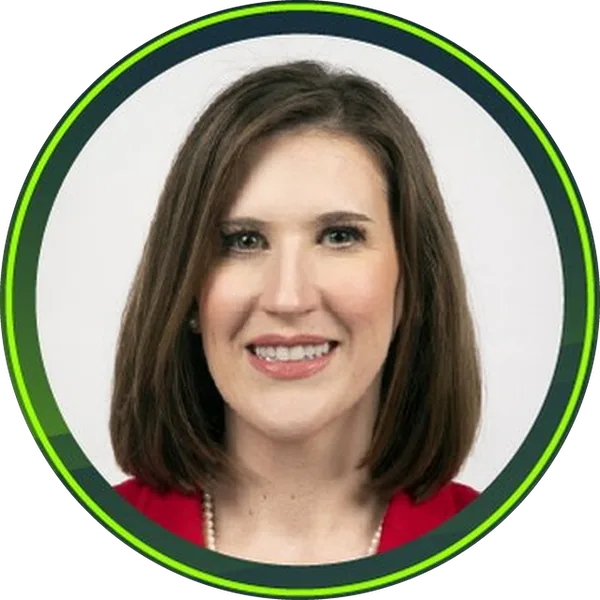
Charlotte Creech
Charlotte Creech from USAA talks about innovation and putting it into practice at scale in the insurance industry.
The full episode
Press play for the whole conversation.

The full transcript
Transcribed automatically from the episode audio, so some names and terms may be misheard.
James BenhamOn episode 95 of the InsurTech Geek podcast, talking about innovation at scale with Charlotte Creech from USAA. The InsurTech Geek podcast powered by JBKnowledge is all about technology that's transforming and disrupting the insurance world. We'll be interviewing guests and doing deep dives into specific tech we see changing the industry. We're taking you on a journey through insurance tech, so enjoy the ride and geek out. And we are back again. Another great show for you here on the InsurTech Geek podcast with my fellow geek, Rob Galbraith.
How's it going, Rob? It's going, James. Had a nice Labor Day weekend. And,
Rob GalbraithI can't believe we're already in the the fall. It's a fast approaching. Football started. It's exciting time. Yeah. Was gonna say, which means it's time for football season,
James Benhamwhich I have been waiting for since February. Oh my goodness. And, yeah, it's it's that special time of the year. My Aggies won their season opener against the ferocious ferocious opponent of Sam Houston State. The real the real game start later. Of course, everybody in the SEC won this week except for Chip Kelly at LSU who just couldn't pull it out, against Florida State in his own home state of New Orleans. Couldn't couldn't figure it out. Chip Kelly on the hot seat already in Baton Rouge, but this is not a football talk show.
Although it could be. I would enjoy that thoroughly. We could definitely cover the SEC and the Big Ten with you and I's background. We're not gonna talk about that though, because we got a all Texas show y'all. Now, alright, just to be clear, none of us were born in Texas. I was born in Louisiana. Charlotte says she's from Connecticut. Rob is from Michigan. So we got three people from three totally different parts of the country. I moved here twenty five years ago. Rob, when did you move to Texas?
'10? Yeah. '24. '24. Yeah. '24. Jeez. Okay. Twenty four years in Texas. Twenty five years in Texas. Charlotte's the newcomer. Charlotte, you you got over here to Texas when? I got here in 2015. So I've been in Texas about seven years. Yes. So that's long enough to say you you if you wanna claim it as a state, which you should. If you don't, you should leave. Oh, I'm sorry. Did I say that? That was the you know, Texas will make you a militant Texan in like no time flat.
Like, you just be like, oh, about yeah. I'm from Texas. I went to France in June, and people asked me where I was from. I didn't say USA. I said Texas. Because, I mean, hell, we're the we're the eighth largest economy in the world. So, you know, it is big enough for people to figure it out. So there's three of us in Texas. Now Charlotte and Rob looked like they worked together at USAA at some point in time and are both in San Antonio. I'm in College Station, Texas.
Rob is, of course, running running his show over there in San Antonio now. Now, Rob, tell me about how you how you met Charlotte. I don't know. Have we even met Charlotte? That's we overlapped for a brief time. But Yeah. Here we are. We we met today. Yeah.
Charlotte CreechAbsolutely. Lots of mutual connections,
James Benhambut this is our first time. I bet you y'all have, like, 500 mutual friends on LinkedIn.
Charlotte CreechYeah. I'll say I I see Bob frequently on my social media feed. So
James Benhamso y'all so y'all have some overlap in your time at USAA together. So Charlotte, we're gonna we're gonna talk about you now. Because innovation we are going to talk about innovation and insurance and we're going to talk about what that looks like at scale at the scale of a USAA. It's a big company, a good one too. And but before we get into that, I want to talk about you. So it looks like I think you were born and raised over there in in Connect iCut.
Is that correct? You got it. Yeah. Nutmegger. Yeah. So a nutmegger. I like that. Yeah. I'm a I'm a Cajun chef from Louisiana. I beat the I beat the Cajun accent out of my accent. I I went I went full Midwestern neutral a few years ago. So tell me about growing up in Connecticut. First off, what part of the state did you grow up in? And secondly, like, what'd you wanna be when you were a kid? Okay. Well, I grew up in the Hartford area.
Charlotte CreechMakes sense. Insurance capital of the world. Yeah. So lots of opportunities there. Grew up in the Connecticut suburbs, had a great upbringing in a quiet suburban town. Thought I was going to explore the world and leave, I made it all the way to Boston for college, but wound up back in Connecticut after I graduated and had my first job at one of the large carriers in the Hartford area.
James BenhamSo that's a little bit about that. So, like, when you're a little girl in the Hartford area, do you, like, grow up playing with, like, little dolls of adjusters? Like, did the boys have little little GI adjusters and, like, GI policy administrators? Is that do they do they bring it into the schools or do they not did did you did you even have an awareness that, like because when I I grew up in South Louisiana. I really didn't understand, like, what economically it was capital of, which is petrochemical industry.
Right? Like, petrochem in Louisiana. So, like, did you did you know that it was all about insurance, or what did that happen later? Yeah, I knew it was all about insurance. And certainly, as I was coming out of my undergraduate degree,
Charlotte Creechif you wanted to work in the Hartford area, really, insurance is where the bulk of the job opportunities are. So the story behind it was I was a business management major, And the company that The carrier that I ended up going to was one of the few companies that came to recruit specifically kind of a generic business degree because where I went to school was heavily focused on accounting. So it's not a very exciting story, but yes, I mean, the job opportunities in the Hartford area are heavily concentrated in insurance.
So if you want to stay local, then that's kind of what you naturally gravitate toward. That's what you do. Awesome. Awesome. Yeah. Here, I'm in Texas, you can guess what our big industry is. Oil and more oil. So
James Benhamthere's a lot of people that like to go into oil and engineering and infrastructure. It's the same thing. Yeah. So you you get out of college, you I I was saying here you went to Bentley and of course, got all all the way all the way to Boston. Right? What what what is that? A three three hour drive? Four four hours Not even. Not even miles. Two hours. No. Cross three states. Here in Texas, that's called down the road. That's like the distance between you you and the Free 0 River.
So it's, you know, awesome. And and you ended up doing something pretty neat that I I thought was really cool. You know, ended up for a few years as co founder of Combat to Career. Can you tell me about that? Because I think that I have a I have a a sense that might play into some of of why USAA may have been appealing to you. So if you could tell me what Combat2Career
Charlotte Creechwas and what led you to start that. Yeah. For sure. Happy to. I'll but I'll start by saying, you know, I I never grew up dreaming of a job in insurance. It wasn't necessarily what I thought I was going to end up doing, but it ended up being a great introduction. And I gained a lot of responsibility very quickly as a latent injury claims adjuster. But what ended up happening is while I was at my first insurance job as an asbestos adjuster, I met my husband, and he was in the Air Force reserves, he ended up getting called up to deploy to combat.
He deployed overseas and that really changed our life. And so, you know, I had this great day job and was a business professional, but my heart was really calling me to this other mission of how do I support my, at the time, boyfriend, now husband, through his deployment, and more importantly, when he came back from a combat area, helping him make that transition back into civilian life. So as I was going through that very emotional experience with him and trying to help him figure out his next steps, it also really motivated me to look at my own career and my own journey and to take a look at what skills do I have and where can I really add value to the world?
And so that mission to serve, I never served directly in the military myself, but indirectly through my husband's service and then also having a brother in the Navy and a stepsister in the Army. I just felt that there was something more I needed to be doing to give back to that community and to serve in a different way. So I say all of that because you really need to understand that context. How did this woman go from working in insurance to starting a tech startup? It doesn't really make sense until you know the story behind it.
So with that business degree, a calling to serve a deep connection to a very prevalent social issue at the time. It motivated me to go get my MBA. And as I was going through graduate school, I started studying venture consulting, wrote a business plan, connected with one of my classmates who had also served in the armed forces. And the two of us naively decided that instead of going to corporate careers after completing our MBA, we were going to start a tech company. And so that's really what gave rise to Combat to Career.
And what the company was was building a veteran specific college search platform. So the mission and the problem was to help our veterans transition more effectively into civilian careers, and we really focused on the part of leveraging their GI Bill benefits, which is a government backed asset, which essentially pays for going to college potentially at no cost to the service member. And we saw that as the pivotal transition point to help them adjust and transition into their post military career, so leveraging that combat to college to career,
James Benhamand that was how it worked. So that's what we set out to do. Yeah. That's a that's a that's a tough transition. I I was in ROTC. I did not commission. There were 18 of us in my unit and 12 commissioned and six of us didn't. But the 12 that did, some are still serving after twenty one years, but most have retired by now. And I've watched them go through that transition and it's not always easy. Some it's very traumatic. Some have an MOS or they have a specialty in the military that translates really well into the civilian world and some don't.
Some have to do some work to translate those specialties. And so it's been an interesting journey to walk through with them and watch them transition out and and get into other businesses. And certainly, I'm thankful for anybody that wants to help them. USAA, of course, was a major sponsor of the Corps of Cadets Association. Still is a major sponsor of the Corps of Cadets Association at Texas A and M. So I'm I'm very thankful for that. And they're they're consistent. So I obviously, they're consistent support for the military because it's that's the heart of the organization and why it was formed.
What led you to wanna go join USAA? Yeah. So I was running this tech startup, learning
Charlotte Creecha lot, failing a lot, but very passionately focused on a specific mission. And as I was trying to grow as a first time startup founder and as a female founder trying to raise venture capital in a world where I didn't have a lot of connections, I ended up going through a feeder program called Patriot Boot Camp. And Patriot Boot Camp is kind of an offshoot from the Techstars Accelerator. And so they take that TechStars Accelerator course, condense it into a three day boot camp format, and offer it free of charge to TechStartup CEOs that are either veterans or spouses of military veterans.
And so went through Patriot Boot Camp, really was able to build out my network, get some incredible mentorship. And unfortunately, I reached that point in growing Combat to Career where we had paying customers, we had a product on the market, we were generating revenue, but I wasn't really making a living doing it yet. And we had some challenges of also starting a family and other things, and so just had to reach that point where we needed to pursue a different path. So I shut down the startup, and as I was looking for my next opportunity, Patriot Bootcamp was taking off and looking to hire its first official executive director and CEO to convert it from being an all volunteer event into a sustainable five zero one(three) nonprofit.
So from Combat to Career, then to becoming a nonprofit CEO, built Patriot Boot Camp for about three years, and that's where USAA came into play. Of course, as a nonprofit leader, you're always looking for the right partners and sponsors, and USAA just made a lot of sense for so many reasons. So built that relationship with USAA, got them signed on to be our lead corporate sponsor for Patriot Boot Camp. And as I got to know some of our teammates at USAA, they said, we're looking for somebody with a claims background, but that has an entrepreneur spirit because we're forming this new claims innovation team.
And so I was just in the right time at the right place and got recruited over to come lead innovation at USAA.
James BenhamThat's awesome. Yeah. And, you know, they're so active in sponsoring and getting involved in organizations supporting the troops and veterans that it's no surprise that they would have had a touchpoint interaction. So my last question on you before I hand it over to Rob, what do you do now for USAA? What kind of team do you lead? What experiments do you work with? I mean, what do you work on now? Yeah, sure. So I'm the head of our claims innovation team, which is embedded within our core property and casualty business.
There's a couple of different pockets of innovation at USAA,
Charlotte Creechbut specifically, my group is attached to that claims experience. So we're all about innovating across both the member and the employee experience, and that's a combination of it could look like process innovation. It could also look like looking ahead, scanning the market for where are those disruption points going to happen and how do we integrate new technology to really digitize experiences that were previously very manual and repetitive, and instead allowing the adjuster to have the best tools so they can focus on delivering the best in class customer service and empathy to our members.
That's awesome. Great. Rob? Charlotte, it's good to have you on.
Rob GalbraithThrilled to meet you. Obviously, we've talked briefly, like, we we have quite a bit of overlap in our connections and and overlap for a very short time at USA, but never had the opportunity to to really interact there. So it's it's so great to have you on the podcast. So I know from my experience both at USAA and then later at AF completing innovation functions, that a lot of people, you know, it it can't sound very sexy. A lot of people immediately go to the kind of the ideation, the brainstorming, the cool tech, etcetera.
But there's a whole lot more to the role than just the parts that maybe come to top of mind with folks. So I'm curious, what does a week in the life look like for you at USAA?
Charlotte CreechTough question to answer because I'd say there's nothing consistent or standardized about leading innovation in general or dealing with technology and huge disruption. But how I stay focused is really on the people. For me, the philosophy here is if you invest in your people first, it's the people that eventually do the work, and happy employees lead to happy customers because if they're motivated to do their jobs and do it well, then they deliver excellent customer service and really focus their valuable time and attention on solving the problems that matter.
So I'd say for me, every week is full of lots of meetings, and innovation is certainly hard to do. It can be very difficult in a large, complex corporation like USAA. Most of my time is spent on working with my team and meeting with all of our stakeholders. You certainly need to spend a lot of time focusing on socializing the art of the possible, gaining alignment on a shared vision for the future, and then caring for your people so they have the influence and the top cover and really feel empowered to go lead and execute and deliver all of the best innovations in the right way.
So a lot of meetings, a lot of stakeholder socialization, influence, shared alignment, and then, of course, everything has to come with a great action plan as well. So just making sure all of the stakeholders are aligned and going through all of the appropriate planning routines can take a lot of coordination too. Yeah.
James BenhamLet's chat through the projects. Give me some example whatever you can talk about. Give me some example projects you've worked on in the past, like how the idea came up, what the project looked like, and and how you how you, you know, how you got it implemented. What were some of the challenges? So give me give me some some stories.
Charlotte CreechSure. Yeah. I'll focus on telematics to start on the auto so my team our portfolio supports both auto and property. So we have a lot of a whole host of a portfolio of auto innovations and property. But I'll focus on auto to start. And it really begins with the product and the member needs. So what member need did we have in our portfolio mix? And it was about giving our members more control over the price portfolio of their insurance, and then also making sure we were leveraging telematics information and driving data that the member had already agreed to share with us to help take care of them and keep them safe on the roads.
So my team specifically has a sub team within it called telematics enabled auto claims. That is a trademarked term, and it's attached to our SafePilot product on the market. So SafePilot is one of our auto telematics policy offerings, and what telematics enabled auto claims does is the crash detection experience. As I'm sure you're well versed in, historically, is all about waiting for the member or the customer to report a loss. But the state of technology is enabling us to do so much more, and so now it's really taking that previously reactive experience and making it proactive.
So if I know that the member was in a collision event before they've even told me, I can start to anticipate their needs and remove that burden of loss reporting off of their shoulders and instead just focus on caring for them in their time of need, making them feel safe and protected. And so we launched our crash detection experience about a year ago, November 2021. We're seeing great traction with it as part of the SafePilot product and hearing some really great member feedback as well about how they feel safe, secure, protected
James Benhamby the experience that we've delivered. Yeah. So you reach out and say, hey. Looks like you've been in an accident. Would you like to open a claim? Or do you need us to call Yeah. Are you okay? Yeah. Are you okay? So it's almost like one like on star. Like, you're you're you're in that role of on star. Do we need to call the police? Do we need to call someone or a tow truck to come get you? Like, it's that level of care. Yeah. It starts with a simple question.
Are you okay?
Charlotte CreechAnd making sure that they know that we have their back and we're there for them in a time of need. So we're kind of at still the precipice of rolling that out, and there's a lot of opportunities to go deeper with the embedded experience to get into rental and tow and all of the really fun stuff down the Road. But I'm seeing great traction and feedback so far on just the, are you okay? Do you need to call 911? And making that information readily available and, you know, streamlined,
James Benhamready to go. And you open an incident report right on the spot. Right? You're not opening a claim yet, but you're opening an incident report? We enable the member to have kind of a shortcut process into our digital first notice of loss flow. Now I have to caveat that by saying it's always the member's choice to actually initiate the claim. But yes, the technology enables them to shortcut right into it. Yeah. The speed speed of processing is what's really of so much value to people. Yeah.
That's a great example of a project. And, you know, you you have a dedicated innovation team. You have an innovation group that you're leading, which is different than, I guess, you know, the the the old school way of doing things where the existing production group would try to work on innovative projects. And instead, you've you've been carved out as a separate unit. Correct? Exactly. Yep. So at some point, you hand off your initiatives to the production team so you can move on to the next innovation.
Correct? That's right. So your job is to ideate and launch and then and then hand over to production. Go, what is that a difficult hand off? I mean, at some point, do you have a hand off meeting where you're like, okay, this is officially no longer part of the innovation group. This, you know, digital enable auto claims or what, you know, Teak, I think it was the acronym I just memorized. This is now part of the production USAA crew, and we're gonna go work on something completely different for the next six months?
I'll say it's blurry at best. It's a blurry line.
Charlotte CreechEven in the four and a half years that I've been at USAA, you know, we've tried a couple of different methods. And some have worked well, some have not. And so failure has to be part of the journey to success. Where we're at today and where we've matured to is having shared accountability. And I wouldn't describe it as a hard line in the sand. I'd say the innovation team's core function is to take defined problem statements and start to ideate on the solutions and eventually build a prototype, prove out the concept, and begin to be able to show the true value of what this would look like in a production environment.
And once we have a pretty solid business case lined up, that's when we start to bring in those production partners and the experienced owners that would implement that solution and own it after it leaves the innovation team. They really have to be bought into the journey. There's no defined timeline for how early you bring them in, but you need to give them time to learn it as well, and so that they're ready to take it over. It's not just this thing that you're throwing over the fence to them and never going to support again.
So yeah, it's tricky, and it really is a combination of good communication between teams, shared vision and alignment, and, of course, having a proven business case so there's
James Benhamstrong incentive on the other side to want to own the solution and manage it. So you don't just send them an email saying, here's the source code. Good luck. At one point in time, we may have done that, but it didn't go so well. Yeah. It's amazing how the how those cold handoffs don't don't generally result in a handoff. It's it's it's it's amazing. Rob. So Charlotte,
Rob Galbraithobviously, a big reason that we wanted to talk to you is just trying to help our audience learn more about innovation at scale with a large company like USA that has that desire, right, to innovate, that entrepreneurial spirit. I still tell people about, hey, USA was started one hundred years ago by 25 army officers at Fort Sam Houston, right, which is still an active army base. The reason they started the company was nobody else would give them auto insurance at that time. They considered them a bad risk and turns out they were an excellent risk and bought this amazing company.
So I'd like you to think about one of your favorite projects to work on an innovation, effort that really meant a lot to you for whatever reason. And maybe you can just hit some highlights about how that walked through from ideation to the planning process. You mentioned the experience team. Like I think a lot of our audience members probably don't know all the stakeholders that are involved. USAA, I think is somewhat unique in having, you know, the claims professionals themselves, right? The people that are doing the actual work day in, day out.
Then you have this innovation team, and then you have this group that's really responsible for viewing holistically the claims process from the member customer's point of view. So maybe you can just walk through, right? Who are some of the key stakeholders? What do you do to have them sign off? And then how do you ultimately go from maybe a small pilot to launching something like a safe pilot type program to everybody that's on all the ads, etcetera?
Charlotte CreechYeah, we could be here talking for a long time to get all through all of that in detail. But as I said before, it really starts with a clearly defined problem statement. It's easy to get caught on shiny things that exist in the marketplace, the latest and greatest technology, and a desire to want to integrate, but you have to get married to the problem first. And so for us, it's all about, in claims, that member experience. So the member comes first, and whatever the member's needs are are how we rally the troops and prioritize our precious resources and development skills as well.
So I'll use an example. I talked a little bit about one of the things with telematics enabled auto claims on the auto side, but why don't I share something that we're doing on the property side as well? And we have a group called the Disaster Innovation Response Team, lovingly coined DIRTT. And this is all about that catastrophe response. When our members are having their worst day, when a catastrophic weather event, a hurricane, a tornado, a hailstorm rips through, a population or a neighborhood where we have a high density of our members close to a military installation or what have you, we wanted to be able to make sure we were not only first on scene but really proactively serving them quickly in the face of a terrible life transition and life event.
Because we know in the claims experience that so often the first one to get their check is also the first one to be able to line up a contractor. And you don't want last pick on who your contractor is going to be to repair your home because that's the center of stability. If you don't have a place to stay, if you don't have food and shelter, how can you focus on delivering the mission of military service to our country or on getting to work every day?
And so really working from that problem statement of how do we best serve our needs, the needs of our members during a catastrophe event, is what gave rise to some of our aerial imagery technology and what we're currently doing in the market with drones and other imagery processing. And so we have a couple of ways that we go after it, but just focusing on the catastrophe experience side, we have both pre catastrophe imagery. So we know where our members' homes are located, and then, of course, we match that up with weather events that pass through, and we can predict how that might play out over time.
And then we are also able to use different methods of aerial imagery capture, so whether it's fixed wing aircraft or actual drones that we fly and have a team deploy, we can then take that post catastrophe imagery and map it up and detect where a member's home may have been damaged. With the state of technology today, that processing time has really come down. So how we've seen this play out in real events like the Colorado wildfires that happened over the last year is we're oftentimes the first one to know that a member's home may have been damaged even before the member has been authorized to return after evacuating an area.
And so while that's a really difficult message to deliver, surprisingly, it brings them comfort and this feeling of USAA is supporting me. USAA is taking care of me and has my back. And so from there, it can really help them get on the road to restoration a lot faster and making sure that we're caring for their needs so they can get back to their lives sooner. So that's kind of one example of the work that we're doing and how it delivers on the very critical member experience.
And then how we get it done, I mean, it can be pretty chaotic. Catastrophe events are chaotic by nature, and it requires a lot of planning and impeccable communication between teams and stakeholders. I will say it takes a village to raise an innovation at USAA. And one of our greatest strengths is that we have so many departments and resources. We're very resource rich, but that is also a challenge in many ways when it comes to the coordination, planning, communication, making sure that everything is done in the right order of operations with the right level of urgency and with the right level of allocation of resources.
So it can be tricky to get that all right, but we've got one hundred years of experience under our belt, and we truly believe that nobody serves our members better than we do.
James BenhamThat's awesome. Charlotte, thank you for that explanation and for for talking through that. I'm a technical guy, so I do wanna know how the sausage is made a little bit. Like, if you have an innovation team, what are they actually doing? Like, you alright. Do you have coders on your team? Do you have business analysts? Do you have people that are just taking off the shelf software and hardware and going in? Because it's not all it's not all software and hardware. It's people, process, and technology.
Right. So I mean, like you just said, you have you have you have you have an army of USAA people. So you you you're you're organizing people, you're implementing new process, and you're applying technology, right? So it's not just tech, but certainly tooling is a big part of this. I mean, you just talked about one of my favorite things, which is aerial drones. Now, I'm a I'm a pilot pilot of airplanes. I'm also a drone pilot. And so I love talking about drones been flying them for a very long time, like, like years and years before people really used them commonly.
I was around here in Downtown Bryan flying my drone around freaking people out. When you have an innovation team at a company this size like USAA, what percentage of those people are really business analysts? What percentage are the are the technical staff? Because we have a lot of questions about how you put this kind of team together and who you put on the team, you know, and then what their skills are. And are you putting any coders on there? Are you actually writing any code? Are you partnering with outside entities to to write code and off the shelf solutions?
I mean, what does that look like from a team structure and the the technical architecture? Yeah. Great question. So all of those resources exist at USAA for sure. They do not all exist directly within my chain of command or in my direct reporting structure. So my team is primarily a team of what I'll call business technologists.
Charlotte CreechWe are business roles, but we have to be tech savvy, and we have to be able to interpret what is the technology and how do we share the vision or explain the vision to our development teams in a way that makes sense to them from a coding perspective. And then we also have to be able to interpret and work with our experience owners in the claims organization to say, this is the vision of what we want to deliver. This is how it will service members' needs.
This is how it will deliver on our strategy. And this is also maybe how it assists with our financial outcomes as well. So from a strategic perspective, it has to be that combination of factors. And my team is the one really bringing all of those parties together. So it's almost like an innovation execution team. You have to be able to do both, whereas there are other pockets of innovation that are more focused on the future facing, really far out stuff, but they're not as directly embedded within the line of business.
And so my team has that healthy challenge of needing to bring the vision to life, bring the future into USAA, but also make sure we're delivering value in the form of value to our members and value to our USAA employees. Makes sense. Makes sense. And really,
James Benhamthat business technologist or the insurance technologist who has knowledge of the insurance industry, and is tech savvy enough to know what the terminology means and what they're really asking for and some of the components of how it works. At the end of the day, though, to pull off execution, you're counting on probably a pretty deep bench technologists
Charlotte Creechand process people that are out outside of the innovation group, correct? Yeah, for sure. We have a lot of partners. And that's why I said earlier, you know, it takes a village to raise innovation at USAA because there is so much that needs to come together. So I definitely don't want to make it seem like my team does everything all by yourselves. It's it's not the case at all. No. Nor nor is it at any company I've ever I've ever worked with.
James BenhamIt's it's it's impossible to single handedly innovate,
Rob Galbraithespecially in an organization the size of yours. Rob, bring us home with our final question. Yeah, Charlotte. So thank you so much for all of your time and really kind of walking through your background as well as what you and your team and how innovation is done at scale at USAA. So my final question is what trend or technology are you following that you think has the potential to, influence and, you know, dare I use that word, disrupt the insurance industry in the future?
Charlotte CreechYeah. Great question. And I'm really excited about this one. Just my opinion, my own personal research, I am really excited about three d printed technology and additive manufacturing. It's not a new concept, but I think the application of this type of technology in the insurance industry is going to be really transformational. And why I say that is because the supply chain has been such a difficult issue for all of the insurance industry through the pandemic and even now. So being able to own your own supply chain and have more control over the inputs, whether it's raw materials or the cost of those materials or just shipping and logistics of procuring what you need to construct a home.
I won't say all of that goes away with three d printed technology, but a large part of it will be different. And so there's a company in Austin called Icon. Just for the record, I am not affiliated with them in any way. I just am a spectator and think they're really cool and have the opportunity to go on-site and see what they're doing up close and in person. And I'm really fascinated with what they're doing, the mission behind the company. And so they are three d printing concrete homes today for both residential and commercial opportunities.
And they talked a lot about the logistics and the supply chain. They also have a very exciting contract with the Department of Defense, they've started to three d print base housing, housing, barracks, etcetera, on some of the military installations. And so it's just a really fascinating time in the market, and they can literally ship the printer and all of the raw materials to mix the concrete to a location. Think about how transformative that is if we could manufacture our own equipment and have it ready to go, put it in a shipping container, and send it on-site, you don't need to worry about the coordination of all of these contractors and all of the materials coming from all different locations.
Definitely the logistics side of it is really fascinating to the insurance industry. Then for the average person, it's interesting. Many of us say, Well, why would I want a three d printed home? But when you go in one and you see it in person, it is beautiful. It's an experience, and it's fully customizable. So gone are the days of living in a subdivision where everybody's house looks exactly the same. If you could just go through a digital catalog and pick the size and shape of your windows and your door frames and everything else, it is the ultimate personalization of comfort
James Benhamin home living. So Yeah. Pretty excited about that. Curved walls, odd angles. There's there's a there's a lot you can do in decorative concrete. It's really an interesting space. There's a there's a great three d printing company called Branch Technologies out of Chattanooga that's been doing some bizarre, bizarre shapes out of buildings that you would never have imagined were possible. And then then you go to Australia and you look at the the groups over there that are doing three d printing and they're they're actually there's the the one that's really leading the way is is Fastbrick Robotics with the Hadrian X and and they built their own proprietary block and they use an adhesive instead of mortar and they print houses with blocks like Lego.
It's pretty amazing to watch and it's in production now. So I think, you know, Charlotte, the exciting thing about a lot of this technology, whether it's, you know, drones for aerial aerial imaging, or whether it's three d printing, or whether it's, you know, VR and augmented reality or what we know, it's if they're now then they've now achieved production status. And so it's like, well, okay, it's a lot more serious. It's not just a lab experiment anymore. I mean, there are people living in icons houses, there's people living in fast brick robotic houses, there's, you know, there's real commercial activity going on around the around that space that could really impact things.
And if you look at how a lot of personal lines property carriers have been absolutely clobbered in the last two years on building and construction costs because of, you know, worker and labor shortages, There's there's a real financial motivation for carriers to get on board with this because they can really upend their their actuarial tables For sure. When you have these big shortages like this. Yeah. That's neat. Well, Charlotte, really interesting conversation. I I appreciate what you're doing at USAA. Welcome now a few years in, seven years in to the great state of Texas.
Glad to have you here along with us other imports from Michigan and Louisiana. Thank you. And I hope you and I hope you've gone to New Braunfels, Green Hall maybe? Of course. Done a little river okay. Done a little river floating. You you you know, like, doesn't get much better. I was in July, went I down to Green. I had pick my daughter up from summer camp in New Braunfels. And I I the night before I went to Green Hall, I was drinking a lone star beer, listening to listening to a phenomenal country musician in a non air conditioning Green Green Hall on the banks of the other I think it's on the Guadalupe or the Comal.
And I was like Texas. Just it just felt like, you know, it was just like the most Texas moment ever. So I hope you've had your Texas moments in the last seven years.
Charlotte CreechYeah. I actually saw a Pat Green concert at Green Hall. We're not Pat. Yes.
James BenhamI bet you and I bet you it was packed. It was. Yeah. Pat Green, he's awesome. Note to self, be careful wearing high heels on the the wood floor. Yeah. Yeah. Yeah. Yeah. You're supposed to wear you're supposed to wear your your boots there, Charlotte. So it's a boots boots have a bigger sliding service. The heels don't do well on that that that old an old wooden floor they got in Green Hall. Pat Green, of course, one of Texas legend, Texas country music legend. I'm a big fan of his.
Yeah. I got a I got a bunch of his music on my phone. I got I got to listen to Robert Alkene this past weekend, another Texas country music legend. It was his final two concerts. Concerts. Oh, Oh, wow. He's he said he's hanging it up and retiring, which I'll be honest, I never really believe when a musician said because they end up doing so many reunion tours. But they said it was his last, and he performed it over at Texas A and M. So it was a lot of fun seeing him there on campus.
And listened about how the road goes on forever and the party never ends, his favorite line. So that's cool. Well, you, Charlotte. Appreciate it. And Rob Galbraith, as always, thank you. Absolutely. Thanks. Great to be with you again, James. Thanks Charlotte so much for joining us today. Likewise. Thanks. And thank you out there in Listener Land for tuning in today, episode 95, our interview with Charlotte Creech from USAA. This has been the InsurTech Geek podcast powered by Jimmy Knowledge. That's jimmyknowledge.com. It's all about transforming and disrupting the insurance world.
I've been your host James Binnen, that's jbinnen.com with co host Rob Galbraith, that's endofinsurance.com. Big thanks to Jim Greenlee, our podcast producer, Kara Dalton, creative producer, and thank you for joining us today. We're taking you on a journey through insurance tech, So enjoy the ride and geek out. See you next time.