 YouTube
 Spotify
 Amazon
 iHeart
 Apple
Peter Grant
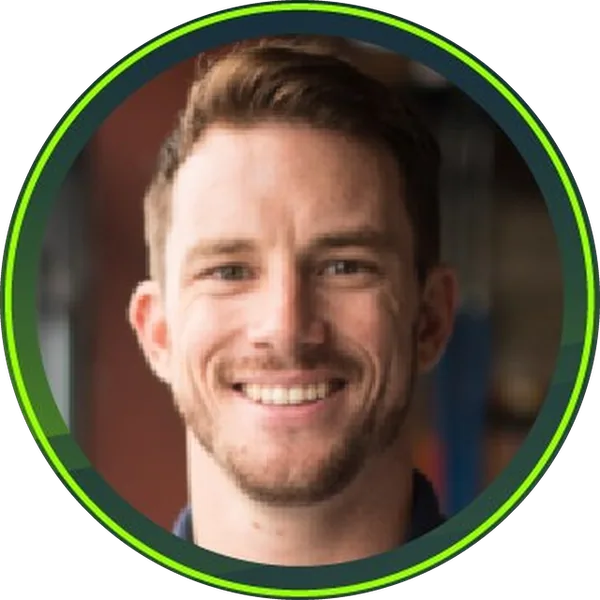
Peter Grant from Safesite discussed the convergence of Construction Tech and Insurance Tech and the effect on worker's compensation.
The full episode
Press play for the whole conversation.

Insurance Tech News
Coalition launches risk products for US small businesses
Revolut dips its paw into pet insurance
Monzo is live in the U.S.
Q4 Net Income Drops 50% for Allstate on Higher Auto Claims
Connect with Peter Grant
The full transcript
Transcribed automatically from the episode audio, so some names and terms may be misheard.
James BenhamJamie Knowledge Podcast Network. On episode 76 of the InsurTech Geek podcast talking about converging ConstructTech and InsurTech for work comp with Peter Grant from SafeSite. The InsurTech Geek podcast powered by JBKnowledge is all about technology that's transforming and disrupting the insurance world. We'll be interviewing guests and doing deep dives into specific tech we see changing the industry. We're taking you on a journey through insurance tech. So enjoy the ride and geek out. Man oh man. Another day, another week. We're in February 2022. Of course, two days ago was my favorite holiday of the year.
It's not Christmas. It's not Valentine's Day. It's not birthday. It's Groundhog Day. That's right. Groundhog Day was February 2. I commemorated it by, you know, eating a fine meal and watching one of the greatest films to ever grace, the silver screen. That is right. Groundhog Day with Bill Murray. Big Bill Murray fan myself. Big Bill Murray fan. Love Groundhog Day. Another Bill Murray movie I love, Rob Galbraith. What About Bob? Remember that instant classic? Oh my gosh. That's a deep cut. That instant classic that was What About Bob?
Baby steps to the elevator. Baby steps to the door. Know, Bill Murray's classic in many regards, of course, of the Ghostbusters legend. And the new Ghostbusters movie is pretty decent too. Of course, Bill Murray made a cameo in that. He's still out causing trouble. He's a good bit older now, but love me some Groundhog Day, but we're not talking about that today. We're actually having on a guy I've had on my other podcast, Contact Crew, that I've talked to before. I've referred to him as the Hugh Jackman of construction tech, but he's just as equally involved in InsurTech.
He tried to make his way in Australia and realized very quickly that the the land of opportunity and free enterprise was actually over here across the pond a little bit. So he he he wove his way over from Australia to the to America, the land of milk and honey. Peter Grant, how's it going, Peter?
Peter GrantGreat. Thanks, James. What an introduction. It's fantastic to be here on the second podcast
James Benhamof the JBKnowledge Yeah. Networks. Excellent to be here. Thanks for having me. Yeah. Glad to glad to have you. We're gonna talk all about the convergence of InsurTech and ConstructTech, how you guys started with a ConstructTech product on environmental health and safety, and then you actually moved into building an MGA that that provides work comp tied to the technology. And that's that's gonna be a really great conversation. Of course, with me, my illustrious cohost, the most interesting man in insurance, my fellow Texa Gander. He loves Texas and Michigan like I do, Rob Galbraith.
Rob, how's it going? It's going well, James.
Rob GalbraithAs we're recording this, we kinda have in the deep freeze here in Texas. Like most parts of the country dealing with severe winter weather. But we have had two snow days with no snow here in San Antonio. So kids are home. They're loving it. They are wanting the snow. Meetings Zoom meeting fatigue still goes on for those of us
James Benhamin the working world. But, yeah, kids are happy. They may be happy. Mine are home yesterday and today. Totally pointless. The roads are completely dry. There's no there's there might be like a little six inch patch of ice somewhere on a road somewhere that somebody's tire slipped on for a microsecond. But other than that, it's fine. But no, we can't go to school. That's okay. That's alright. I'm in the office. I'm in the studio here in beautiful downtown, historic Bryan, Texas right next to College Station, the the heart of Aggieland, home of Texas A and M University.
One of my favorite places on Earth. Not my only favorite place, course. I love Peter's home territory. Australia, when I when I first landed there, you know, I didn't make my way to Australia until a couple of years ago. I've been obsessed with Australia my entire life. And when I when I when I got outside the airport in in Bris Vegas and in Sydney, I knelt on the ground and got on my knees and kissed. I literally, no, it was just Bris Vegas, not Sydney. In Bris Vegas, Brisbane, I knelt on the ground and I kissed the grass and I said, I'm finally here.
I'm home. Yeah, man. You know, I have a nickname. I'll go ahead and tell my podcast listeners I have an Australian nickname. Peter, have I ever told you my Australian nickname? I haven't heard of James. What is it? It is Motto, m a r t o. Motto. Makes total sense for a guy named James Benham. Right? Yeah. Totally. Yeah. Motto. I'm in a CEO forum. I'm I'm a member of a a couple of CEO networks, and I'm in a forum of other software as a service CEOs, and three of my forum mates are Australian.
So, of course, everybody had to get an Australian nickname. I jumped at mine. I've I've for many years have had an Australian alter ego, Shane Martin, who sings karaoke only in Australian and Shine's favorite, I mean, and I mean favorite song to sing is Love Shack by the B fifty twos. And so because of that, because it's Shane Martin, I got nicknamed Motto for my alter ego's last name. So go figure that story out, Peter.
Peter GrantMotto checks out. See? It's it's all you need, and then that'll stick with you for life is I know. I know. It's how they refer you. Into Australia. That'll be on the visa for sure. No question.
James BenhamAustralians name, Australians nickname everything, everything. They don't name anything what it actually is called. Fruits, vegetables, buildings, locations, people, doesn't matter. You're going to get a nickname. Know, Galbraith would be maybe Gabby or it's not always obvious yet. Robo's the obvious one, but it would most likely be something more obscure, You know? But but you never know. Never know. Don't forget out there in listener land that you can subscribe to this podcast. If you're watching us on any of the video streaming locations like LinkedIn or Twitter or Facebook or you're on Vimeo, you can subscribe to the audio podcast by texting geek out to 66866.
That's texting geek out to 66866. And, of course, if you wanna hit the the website up, it's insurtechgeek.com, but that's Insurtech spelled the correct way. Insurtech spelled the same way Insurtech Connect spells it. That's I n s u r e t e c h, Insurtech. Peter, we have a bit of a dispute in the InsurTech community over how to spell InsurTech. I believe that our podcast and InsurTech Connect, which is the largest InsurTech conference in the world, have it correct, and they're spelling it with an e.
Peter GrantJust putting it out there. Yeah. I've I've we I think we had a healthy debate about it internally. I don't I'm not even sure where we landed such as the Yeah. I I think the ongoing debate. But you're right. If if you're setting the trend and you've got the the viewership and you've got the authority to, I think, stamp what you think is the right way to spell it. Yeah. But I will say this, whenever you put it into a Word document or a Google Docs, it's still under underlined with the red squiggle.
So we need to we need to tell someone over at Google the right way to spell it. Then you will truly have the upper hand. You know? And that's really the the key because it's not really about Webster's dictionary anymore. It's about what the spelling autocorrects put you as. Exactly. Exactly.
James BenhamI mean, it's a it's a mess. So with us today is Peter Grant. He's CEO at SafeSite. He's also super involved in their sister company, Foresight, which is an MGA. We're going to talk about both Foresight and SafeSite today. He is Australian. He does live here in The United States. And and before we talk about safe sight and foresight, Peter, I just wanna talk about you for our listeners here. You went to Somerset College, Gold Coast. You went to Griffith for your bachelor in civil engineering.
Got a got a degree in in civil engineering and business management. You know, what what when you went to school, what what attracted you to civil engineering and construction? What what was it a family member in construction? Was it mom, a dad, a uncle,
Peter Grantor did you just like the idea of it? I think the seed was planted in my mind probably when I was a a young kid playing with LEGOs. Lego Lego bricks, I think is the official term. And I would I would spend hours and hours and hours and hours playing with LEGOs, and my parents sort of said, oh, you know, you should get into construction or get into engineering. And so that sort of thread, you know, it was either that or become an astronaut. Unfortunately, there wasn't a a very direct pathway to becoming an astronaut as an Australian, back then.
Maybe, isn't now. Maybe it's improving. So when it when it came to putting in my submissions for university, civil engineering was the top. I wanted to couple that with, some business acumen as well, so hence the double degree. And so really enjoyed my time civil engineering and learning about, structures, structural engineering, and how the buildings and these monoliths that we see in these big cities, how they're all put together, you know, tunnels, all of these mega projects around the world. I think they're just fascinating. And when after working in those industry or working in that industry for six, seven years, working on some massive projects, you know, commercial sorry, civil infrastructure projects, commercial projects, it was it was it was great to see that the the civil engine engineering mathematics and and theories being put into practice out in the fields and and how those those structures go from ideas to pen and paper to the calculations to the to the factors of safety, to then how how you actually have to build this and actually how the builders have to be involved in the design process.
And then ultimately, at the end of the day, when you cut the ribbon and you've got a massive structure that has been completed for the benefit of so many people whether it's public infrastructure or private companies. It's I think that's just a fascinating part of society and I've I've really enjoyed my time in the civil engineering world. Yeah. It's it's it's really
James Benhamamazing the size, scope, scale of projects now in civil engineering. You know, the size of the highways and tollways and dams and bridges. It it just it's really amazing, and and you're really you're truly transforming. I I call it you're when you're in civil engineering, you're in the terraforming Right? You're Yep. You're bending the the planet to your will. It's pretty amazing. Now I'll say LEGO is a critical background for many of us. I am a LEGO fanatic. I kept every LEGO set I've ever owned since I was five years old and all the instructions.
During COVID, I spent I love it. Spent a good bit of time building out. That's my LEGO that's part of my LEGO city. I I reconstructed the entire LEGO city in my my home office. LEGO got many of us interested in in in building. You worked as a graduate engineer and construction engineer for Layton Contractors until 2014, and then something happened, and it triggered you to to found SafeSite. What was that something?
Peter GrantSure. Yeah. So, unfortunately, had my best friend at the time passed away in a workplace accident. Tragedy, obviously. But, you know, a day doesn't go past that I don't think about you. And, certainly, you know, going through the stages of grief and certainly the frustration about, you know, why this completely preventable incident occurred in the first place was due to lack of safety standards and lack of compliance with those those safety standards. So I I knew through my civil engineering project management journey as well that despite working at Layton Contractors, tier one contractor in Australia, all the resources, you know, top top resources that you could have in the industry, we still had pen and paper safety systems.
We still had severe injuries and deaths within our within our teams and within our business. And so combining those two, I guess, seeds together with my understanding and passion for what technology was available and where technology trends were heading, myself and my cofounders, Dave and Lee, put our heads together and said, well, look. What can we do that combines all three of these elements and and do something that's really exciting and really forward thinking for ourselves so that we can prevent injuries and deaths in in these high hazard workplaces and make sure that everyone gets home to their families and friends at the end of the day?
And that that was SafeSite. That's what emerged from that that Genesis. And what's SafeSite v one was essentially a hazard commune recording communication and resolution tool. That's it. We, you know, we we we felt that that alone could really move the needle on compliance with hazards, compliance visibility hazard visibility, and ideally push down the amount of incidents that are occurring in these places. Awesome. And I I know, Rob, you've got a great follow-up there on
James Benhamon on the safe side and its sister company. Yeah. Peter, it's great to see you again. Well, I I love,
Rob Galbraithyou know, that that after this tragic occurrence that you guys, you know, really worked hard to do something about it, right, to not let that death be in vain. And and I've met so many other founders in terms of wearables and others, right, have similar stories. So, you know, applaud you for your efforts to make workplaces safer for those individuals and certainly, right, families, loved ones and others. We'd love to have you tell us a little bit more about the SafeSite platform, the type of data it captures, how it's used.
And then one of the things I find interesting from my insurance background is that you really went beyond just being a SaaS technology company offering a platform to help improve safety at construction sites and others. But you actually went the further step to create your own MGA, which is Foresight, which is an insurance offering that leverages the insights that you get on the SafeSite platform. So we'd love to have you tell our listeners a little bit about how Foresight came about to leverage the insights that you were learning from the SafeSite platform.
Yeah, absolutely. And I know
Peter Grantwe've probably got thirty minutes on this podcast. I'm going to condense down probably seven or eight years of business development, very windy road to get where we are today and and, you know, make it succinct. You know, your first question, what do we do at SafeSite? So we're not just a technology. Right? Certainly, the SafeSite mobile app for use out in the fields for completing safety activities, completing safety compliance. Basically, a pop up occurs that shows shows you exactly the safety initiatives that an individual or a team has to complete within that day or that week.
So we try and make the user experience out in the field very easy for anyone to pick up a mobile phone and engage in their safety program. It's really one of our underlying philosophies is that to move the needle on safety, you need everyone in your organization to engage. And the we develop the mobile app first, as I mentioned, and we we we make that the channel that everyone can engage in in as little as five minutes per week. And if you can't, as an employee or as a supervisor or as a manager, allocate five minutes a week to your safety program, then you really have to reflect on how much you want your business to be sustainable.
We have the desktop portal, which aggregates all of that information for analytics and reporting purposes. You know, you can do your OSHA 300 log there. We just released a really cool feature, which is called campaigns. So if you come into us and say, I'm a roofing contractor in California, we will automatically populate a campaign for you and your teams out in the field, and that will have all of the relevant will have meetings and inspection templates that are filled out on a cadence of your choosing, say, weekly, that has content that is relevant to the risks within your industry.
So now no longer do you have to populate a system. We automatically do that for you as part of our service. And then the third part, so that's the technology side of SafeSite mobile app desktop portal. This I can talk about the predictive analytics side of it. I can talk about, you know, a lot of the features there. But what's what's really cool about the service that we provide at SafeSite is what we call our safety success service. And so we partner companies with our safety success team, and this is a part this is these are safety professionals that are also technologists.
And so they are charged with helping a company go from zero to one when it comes to digitizing their safety program. We we brought on about 5,000 companies in The US onto the SafeSite platform, and they they're not just construction. The construction represents about 50% of our our customer base at the moment, but the the rest ranges from manufacturing, agriculture, logistics, and we've even got some pet shops there. We've got pasta farms. We've got book book binding factories, all sorts of things. We've seen a lot of different companies and organization structures and and and management structures.
So it's really we we get in there, we we understand what the company wants to get out of SafeSite. We help them review their loss history and and their and their claims history and say, from from an industry level, here's what you should be targeting, but from your your experience, here's what you should be targeting. And we make sure that the campaigns that are baked into the SafeSite system, are appropriately targeting those risks, and we get the right people involved at the right time during the right workflows and activities out in the field in the safety program.
And we provide all of the onboarding support, all of the training, regular check ins against the expectations. And so call it handholding, call it what you will, but we make it's we obviously have a vested interest, from a SaaS side and from a Foresight side, that every, customer or policyholder is fully engaged in the SafeSide platform, and we remove any hurdles or reduce the friction as much as possible for these companies to get, engaged. So that's sort of a high level of the summary summary of the services that we provide.
So we you know, if if I'm I'm winding clock back six, seven five, six years ago, we we knew that, you know, digitizing safety workflows is not exactly rocket science. It's it's not exactly a unique thought. Right? So there's certainly a landscape within the marketplace of companies digitizing safety workflows. And to a certain extent, I believe that a lot of the workflows will be commoditized. You know, we have some strategic initiatives around, I mentioned campaigns. We we're we're less focused now on compliance. We're more focused on behavior modification and micro touches rather than your traditional OSHA based workflows, and that's how we differentiate ourselves from a product point of view.
But if we looked at the business model, it essentially is a race to the bottom when you commoditized you're dealing with a commoditized product. We always knew that through our case studies that we had the ability to reduce incident frequency within our customer set, and we knew that with our predictive analytics and our data capture and the way that we score companies that we could have have the ability to predict loss outcomes. And so we started really galvanizing around the ability to reduce loss, the ability to predict it, and we knew if we did that well, the insurance industry would inherently find that valuable.
We can build a business model around that. We have what's called the SafeSite score, and I would say that is the glue that binds the two businesses together. SafeSite and Foresight are symbiotic, in nature, but the glue that binds with the SafeSite score, every activity, every action that is completed out in the field or not completed out in the fields within SafeSite, contributes to the SafeSite score. We capture about 80 data points at the moment. That's obviously increasing. And every data point has an impact on the SafeSite score.
And think of it as your risk, sorry, your credit score or your Moody's score for safety. And it is a letter grade. It's a, b, c, or d, and plus or minus. And that gives us an indication of how engaged that company is in their safety program and how well they're they're executing on their program. And it is all leading indicators. So for example, if you have an incident or a claim that doesn't reduce your score, what will reduce your score is the response to that incident.
So if you don't respond correctly and try and mitigate that claim from happening again, then your score will go down. So we put a lot of effort and a lot of thought into the SafeSite score because we knew that that was an essential differentiator for us and a way to for us to sort of crutch the the impact that we have and use it as a translation tool for underwriters in the workers' comp space. So we obviously explored a few different business models, within the insurance side of things.
We we we ran a brokerage, for two or three years. We brokered about, $6,000,000 of workers' comp premiums. We had some partnerships with some service contracts with some insurance carriers, and that was great. But again, we felt that because we were able to move the needle on incident frequency, we wanted to share in the upside that we're able to deliver. And so there are incredible barriers to entry to becoming and to to becoming an underwriter. So I will correct you. We're not an MJ. We are an MGU.
Subtle distinction there that I'll clarify. We do the underwriting in house, and we found because of the safe side score and the advantage we have with that, we felt it's super important that we do the underwriting in house and develop that competency and capability. And the value proposition that we bring to the workers' comp space is that if you every policyholder gets the SafeSite technology and services for free. It's mandatory to engage in the SafeSite technology and services. But if you do engage and you get a high SafeSite score, that will immediately translate to reduction in your workers' compensation premiums.
And so for the first time, we're able to basically put the power to drive down insurance costs back into the hands of the employers. And when you click those incentive structures together, business owners or CFOs or whoever's, you know, signing the workers' compensation insurance contracts, if they have the ability to drive down those contracts by getting their teams more engaged in safety, that's a top down incentive structure, and we have the bottom up technology for the teams to be able to engage in safety. And we have now this symbiotic relationship where SafeSite's free.
We don't need to make money from SafeSite. We make money from profiting off the underwriting. And we launched Foresight in October of last of twenty twenty twenty. At times gone so fast during COVID. We launched it in October 2020. We've had an insane amount of growth. We started in six states in the Southwest. As soon as we're we're not direct to market. We we go through broker channels. We have an insane had an insane response from those brokers saying this is an amazing product, and it allows them to differentiate their services for their clients.
And we've seen incredible growth. We recently closed our series b funding round off the back of that growth, $39,000,000 coming into our Topco. It's investing both in SafeSite and Foresight. And so it's fair to say that we're going to be continuing to invest in our expansion of the Foresight program and the technology that delivers the value within that program. Do you end up with an adverse selection problem?
James BenhamYou're doing something unique. So many people have talked about premium reductions in exchange for use of technology. You're actually doing it. So you're you're literally lowering premium in exchange for using and and, you know, good use of the of the software. But you're also non you're from what from what I understand, but and this is just from the conversation we just had. It sounds like you're gonna non renew someone who doesn't use your software. Like, they have to use SafeSite. And if they don't use it, then you'll non renew them.
Because of the the nature of this, are you ending up with a bit of an adverse selection problem where you're the majority of customers you're getting are those who cannot get affordable premium from mainline work comp carriers. And so they're they're going to you because they've been either nonrenewed or quoted out of the market elsewhere. And so you actually end up with the worst risks,
Peter Grantand then you you've you've got the most work to do to get them up to speed? No. I would I wouldn't say that. I can see why you why you may be thinking that. But, certainly, we win a lot of business, on a underwriting appetite and competition basis upfront. Not every single when when we're writing policies, not every policyholder has already had experience with SafeSite. So we have to basically assume, well, go go through our standard underwriting practices when we do underwrite them. But there is because we do an aggressive screening process, because there is the expectation of engagements site, because we know the impact on an aggregate that SafeSite will have, underwriting takes into account the expected lift that SafeSite will bring to their safety program and reduction loss ratio.
So we we can get competitive and win and we do win a lot of business away from incumbent carriers because we can be very competitive on price upfront regardless of their their existing engagement in safety SafeSide or any other technology. If businesses have had bad loss experience and they do get kicked out of other carriers, non renewed, we do see that as an opportunity. Obviously, we're not we we we we don't just take them without having a closer look. But if there's if there's a trend or a history of bad incidents, that's obviously a red flag.
But if they've had one or two serious incidents and they've addressed those and, you know, they might have happened two years ago because it's one or two years ago. But as you know, with a mod, it sort of hangs around for two, three, sorry, for four, three to four years. We actually like customers or policyholders that have a mod of between, you know, 1.2 to 1.7 because they have felt the pain of not investing in safety. They want to get that mod down. They need help getting that mod down, and they're willing to invest their time and energy into doing that.
And so we're there with all of the solutions for them to be able to. We expect to end up with actually a cohort of policies or a book of policies that actually starts over time to skew to the right in terms of performance as in better performing because we will be accepting but then flushing out companies that don't adopt and engage in the safety program. By by the nature of how sticky the SafeSite solution is and how how fantastic, frankly, the solution is in operating the the safety program.
It does it it is sticky for clients, and so there is a friction to move away and a cost to move away from Foresight because they will lose lose the SafeSight technology and services. So we expect the book to continuously improve in terms of loss performance and quality over time. You also
James Benhamlook. Lifelong technologist. Right? Been writing software. I've been in this business twenty one years now. I love a good problem. Right? I mean, you know, if you have a higher moderate, yeah, a lot more opportunity to improve. It's hard to take, like, a plus a an an an a player and take them to a plus. It's it's really interesting to take a b player and get them to them to an A. Right? And that's really where you can do is you can help move maybe a B minus player to A or A plus because they've never tried using standardized systems and processes, never taking consultative approach.
So I like what you're talking about with your journeys where you're, I'm sorry, did you call it journey or path? Campaigns? Campaigns, I'm sorry. Yeah. Campaign, Campaigns, I apologize. So you can take your campaigns and it is a campaign. Like what's the outcome? It's really starting your old Simon Sinek, start with the end in mind. Right? Like, you're saying here's the end result we want. We're not just gonna do these five software tasks because that's what you're supposed to do. We're gonna do it because we wanna impact the outcome.
Right? That's exciting. Rob? I want to ask a quick clarifying
Rob Galbraithquestion. So I've had the privilege of actually seeing a demo of the SafeSite technology and I was very, very impressed with all the things. Know for our listeners and our viewers, right, we're unable to do that demo, but I can kind of personally test, you know, being very, very impressed with what you and the entire team there have developed. So my clarifying question is you mentioned Foresight is the MGU. In order to get access to the SafeSite technology, people have to become a customer of Foresight.
Is that correct?
Peter GrantWe we still have our product on the market. So it's a premium product. You can go down download SafeSite for free now and start using it. You can even pay for the premium level, which gives you access to some more advanced analytics. What you won't get on the open market or the SaaS product is the safety success service. We do apply that to some enterprise contracts, but we we usually invest that service primarily in the the Foresight side of the business. And, obviously, there's an upsell.
Right? If companies are engaged in SafeSight, they have a good SafeSight score. We say, hey. You're a perfect candidate for the foresight program. Tell your broker about foresight.
Rob GalbraithYou mentioned obviously, we've talked about construction, but you mentioned several other industries as well. And so who do you think are the the, I guess, ideal customers? Is it that high hazard industry that maybe is paying quite a bit from a work comp or might be looked on different from traditional carriers where because of the insights you're able to glean from the SafeSite platform and the scoring that you're able to possibly save them quite a bit of money as well as
Peter Grantimprove their risk profile over time? Yeah. It's a good question. Right? There's a number of different ways to slice and dice the market. Right? But from a technology point of view, the SafeSide platform works. You know, it can be one individual contractor just completing their actions in the field. We the system is built to be able to be handling multi region, multi division. It is incredibly stratified, and there's a lot of hierarchy that you can bring into the SafeSite platform. So we have companies with 2,000 employees on there and companies with one user.
So in terms of the the scale of business, it can it can you know, it's very adaptable. But, obviously, up top end of town, that's longer sales cycle, higher expectation in I guess, integrations, customizations, and that's not our business. We're not again, we're not trying to make money out of customizing SafeSite for large companies or large GCs. So in terms of where where we focus, it really is middle market. Right? And I I in insurance term, I'm hoping all the listeners are fully understanding. Well, even with insurance, there's different definitions of it.
Right? And so we say anyone with 20 to 200 employees is sort of well within our ballpark. We do have some lower risk class codes that have 2,000 employees that are are on Foresight and SafeSight. But I would say they're on the lower hazard, obviously. Their mod sorry. Their their their rate is a lot lower in terms of their premium. You know, we can talk about industries or we can talk about segments of the market, but I I really think when it comes down to the profile and we sort of touched on this before, you know, just then, James, it's we're we're looking for companies that really want to improve you know, they they have a pain point.
They they're paying too much for workers' comp, or they want to improve their safety because they they know and they understand that it helps them become a more sustainable business, helps them grow their business. And so as when we're explaining the the Foresight program to brokers and to their and explain it to their clients, we make sure that they fully understand that, you know, this program isn't for everyone. We're going to help you go from zero to one. And if you're not willing to come on that journey, then, you know, you're not suitable for us, and that's fine as well.
But you you for those companies that do understand that, have the pain point or the willingness, they're perfect. And that just happens to be in the middle market because no one has really come to the middle market from a product perspective. I mean, you look at incumbent carriers. So sure. They have risk management teams, fantastic men and women out there helping these companies to improve their safety. But sending a PDF of an inspection or, you know, showing up once once or twice a year to consult or review safe the project company operations in in terms of safety.
That's old school. Right? The the SafeSite technology delivers so much more value. It's essentially a new paradigm of value that we're able to deliver instantly and real time to every single one of these policyholders at scale and economically. So for the first time, we're doing we're providing all of this tremendous value to brokers and the middle market that has never been seen before. So that's, you know, fair to say that's our middle that's our target market. And in within that space, obviously, you know, we're high hazard industries again.
So it's we're not we're not we're not doing anything you know, we're not doing retail, for example, because their workers' comp costs are relatively low. We're not gonna have a big impact with a safety program on, you know, probably strains, paper cuts, things like that. But where we do have the biggest impact is those high hazard industries where they do have a high focus on safety. They do have high insurance premiums in terms of their turnover.
James BenhamIt's interesting to me that the role of the technology is almost intrinsic and at the fabric level of this entire effort. Whereas, know, Peter, when you and I spoke years ago, we first met, it was all about being a SaaS company and it was all about, you know, licensing an app, you know? And now it's about something completely I different, mean, it's been a a really big evolution. Now we've seen the the same thing from many many InsurTechs evolving from developing tooling for risk management to really competing in the market.
Literally creating new markets. It's starting out either as MGAs or in your case an MGU. And and then in some cases, going as far as to raise capital and become a carrier and get licensed or or, you know, buy buy somebody's paper and and acquire their way into the carrier market. It's it's just really fascinating to me that technology is still intrinsic to this. Right? Because you're you're able to substantially mitigate risk by knowing what's going on, but also you're able to modify behavior and enforce and encourage good practices through technology.
You're using the technology as a both a consulting tool and as a risk mitigator.
Peter GrantWe call it SafeSide as a platform. Right? The and the the toughest thing as a startup, right, is having all of these fantastic ideas. It's one thing to say that we want to be all encompassing safety platform. It's one thing to say we wanna have predictive analytics. It's one thing to say we wanna underwrite. Right? But where do you invest your time and money and energy and in what sequence? And knowing what we do know now, we probably could have shortened this eight year journey down to four years.
Yeah. Four, five years. Right? Maybe maybe maybe three years ago, the industry wasn't ready. We've got very forward thinking partners on the insurance side that really believe in not just what we're doing now, but the potential of the platform. Right? And the technology that we're delivering. Right? There's so much more optimization that we can provide internally within SafeSite and our safety success process in terms of productizing that. But we also we're a platform. Right? We we plan to integrate with other IoT and wearable companies and give them a way to tap into the insurance value proposition as well.
So you got I saw Kinetic Insurance launched, I think, about a month or two ago. Really cool product. Really cool that they're they're being able to build an insurance product around that. It's it's it's great to see that the industry is really thinking about this InsurTech two point o where you're not just trying to optimize the the acquisition of accounts. You're not trying to go direct to market. It's not a CAC game. It's it's it's really a value driven game and a loss improvement game. And someone like Kinetic, someone like SafeSide are really focused on that, and it it is through technology.
And as you know, James, the the industries that we're working with have been so technology resistant. You've been beating the drum now for as long as I've known you and surely much longer. And still there's, you know, 40 to 60% of companies in our target market that are not digitizing their safety program. It's madness. Yeah. It it is madness. Yeah. But they but Peter, they they understand
James Benhamcomp because they gotta pay their work comp bill. They understand comp. And if they can say, woah, woah, woah, wait. You mean I can get a better initial rate and then I can get even better on renewal if I just if I just use this app and, oh, the app's free, even though really it's baked into premium and, you know, you're you're paying for the technology through your premium. Yeah. That that's an argument that you'll win probably 10 times more often than the than, hey. Buy this app because it makes you safer.
You're saying, hey. Oh, yeah. Buy this insurance because our technology and our process and our people make you safer. It's a lot easier argument to win with a contractor. I mean, they hate spending money on technology still after all these years. And Peter, it's been get this. I started speaking about this and really pushing this part this topic in in 2006. So it's been it's been yeah. It's been sixteen years of beating on this drum. They hate spending money on tech, man. They hate it. Yep.
But but it's a lot easier to to explain it to them in insurance and risk management terms. We're removing the the the cognitive
Peter Grantand financial dissonance between invest like investing in safety workflows and the impact it has on your bottom line as a business. It's it's been so hard to really attribute those. It's like, am I doing this OSHA inspection on a weekly basis? Like, it's just like, why am I doing it? It's just a pencil whipping. But now because and now because of the way that we're using the technology to bind them together, the safe side score, our underwriting model, it's it's it's really resonating, and it's really the we talk about incentive structures.
They're all aligned. But this, like, this is sort of just the beginning. We we see us as as much as you've been a pioneer, James, in, you know, getting technology adoption out in the field where we're essentially pioneers in designing and developing and promoting, these types of programs to the industry, both on the insurance and the broker side and on the on the on the industry side because they're not used to it. They're still thinking a lot of them are thinking the old ways. It's like, give me the lowest price.
Give me the lowest price. I'm not talk I'm not talking to you. But the smart brokers and the forward thinking brokers, our top tier brokers really get the amount of value that this provides, and they're they're so excited to give us their best accounts and work with us to get their best accounts the best value possible because they know that those accounts will invest in safety. Yep. But there's so many cool levers and strings we're be able to pull in terms of pricing. Different states and different regulators obviously have different opportunity for programs that we can design and push out there.
So really cool things that we're working on in terms of pricing and pricing models and how the score can impact the the policyholder
James Benhamin a lot more shorter cycles. I'll leave it at that. Yeah. That's awesome. Well, I'm I'm excited to hear about that. I know Rob is too, but we do have to wrap our conversation and move to talking about a little bit of InsurTech news. Rob, I know you've got a couple of articles that came up this week. I do. Yeah. So,
Rob Galbraithyeah, I just wanna congratulate Peter on his series b raise as that was announced a couple weeks ago. So folks can go check that out, of course, and see about their what they're going to do with the money as well. So really looking forward to kind of your growth and expansion, Peter. Two interesting news articles for me this week. One is from Coverger, our friends over there, saying that the challenger bank Monzo, which is really big in The UK and for a lot of my friends over across the pond, as I say, really talk about Monzo and Sterling Bank and others.
So they're officially live in The US. And it's been an interesting time. We talk about fintech and they're a little bit ahead of Insurtech and the digital banking space and a lot of open banking regulations have led to some of these what are known as challenger banks or neo banks. And they were really popular for the first few years, but they've actually had a little bit of a tough run lately. Talked about in 2020, the valuation for Monza dropped from £2,000,000,000 to just £1,250,000,000 and had to lay off employees.
And I know we talked about, for instance, recently having to do this, but they recently got a fresh round of funding from the Abu Dhabi Growth Fund that put their valuation at $4,500,000,000 And so they have over $5,000,000 customers in The UK. So they're coming here to The US. And it's interesting timing as well because the Allianz backed Challenger Bank in '26 actually announced last month that they are leaving The US market. Kind of an interesting company to kind of watch here in The US and see if Monzo is able to take hold or not.
Yeah, it's not automatic in this, not always easy, is it? I think they're facing an uphill battle for sure. Now we are seeing kind of reduction in a lot of community banks, right? The biggest banks are continuing to get bigger. So they seem to be swimming a bit against the tide here in The States, but we'll see if they can have the success here and lasting success that they're trying to achieve in The UK. And then the other one is a little bit more kind of bread and butter insurance article that Allstate announced that their Q4 results dropped or Q4 profit dropped 50%.
And I found it really interesting. So we know that a lot of companies saw a massive decrease in driving following the pandemic, everybody staying at home rather than driving into the office. And a lot of them even gave refunds or rebates or dividends back to consumers to kind of rebate that. So we're seeing an increase in driving activity, but Allstate noted that it's actually less about an increase in frequency. There's some of that, but actually a lot more about increase in severity. And they acknowledge that there's actually a lot less driving during rush hour, right?
That kind of office commute that many of us had done. But they're saying that now there's more open roads, people are driving faster and they're causing more severe collisions. That's catching them both on the property damage side as well as the injury side. I thought that was quite fascinating. They mentioned rates are going up. Obviously, there's inflation with used car prices, parts, you name it, that are affecting the overall economy as well. So it's been a tough time for personal auto for quite some time, and we had a little bit of a reprieve there, I guess, with the pandemic, but overall, it's been difficult to make money in this segment for a number of years.
Yes, Yes.
James BenhamYes. Yes. And I wondered at the time if they were being a bit premature in issuing rebates, refunds, and I was like, are you sure you wanna do this quite now? I I felt it was kind of like an overreaction, and we saw one carrier do it and then then, you know, two, three, and four followed. And I was like, man, this is this seems grossly premature because when I was out driving, which was one of my few escapes from the house was to go on a drive at the time.
I just saw a bunch of nutty behavior and that's the same thing. And we've been talking about the increase in severity for a little bit. People just are being a little more risky. Now maybe it's a fait accompli, maybe it's a carpe diem seize the day, or it's it's a fatalist perspective, but, you know, people are feeling a little more risky, a little more more frisky and risky. I had two news articles. One that I've done business with, The Coalition, fantastic cyber security InsurTech, that has bundled very similar to what Peter's doing.
They have bundled their insurance product with a suite of cybersecurity tools. They have launched some more product. Backed by Zurich North America, they're now offering directors and officers and employment practices liability. Of course, along with the insurance came a suite of new tools and features to to all their broker partners and their clients that came along with us. Can tell you, Coalition does a pretty amazing job of of providing really effective, good tooling to their clients and encouraging them to use it along with their insurance.
So Peter, I don't know if you've if you use coalition or if you've seen them, but it's a pretty nice package
Peter Grantof product and insurance. Everything I've heard, it's not you know, it's a great product and obviously totally in full support of deploying service and technologies that allow them to get more confident in underwriting and then drive down pricing. I I still think cybersecurity is I I I don't know how they go to sleep at night knowing the potential downside, but obviously, they've come to terms with that and their their investors have too.
James BenhamBut really, really well done to the coalition team. And because I'm a pet fanatic, I'm a dog fanatic. I have 10 animals in my house, three of whom are dogs, the other of whom are furry little creatures mainly. You know, chinchillas, guinea pigs, hedgehogs, rabbits. The rabbits are jerks by the way, but, everybody else is pretty cool. The chinchillas are the funniest and the most mischievous. The hedgehog is the the most shy and private. Imagine that. But Revolut, r e v o l u t, and again, this is from Fintech Global.
Revolut dips his paw into pet insurance. They entered the InsurTech market through the launch of a pet insurance product, which is, you know, yet again something interesting. It's gonna be available in The United Kingdom so our British listeners can get it. You can manage everything related to the pet insurance in one place. Make a claim, view policy documents, access vet support. If you're, using the solution, you can pick a monthly subscription, and it they'll provide up to £10,000 a year in annual vet fee coverage. They're they are not fixed price.
The cost will depend on age, gender, breed, location, but pretty neat InsurTech product. For those of you who wanna manage the cost of all of your animals, I I would be interested in how they view volume discounts because, Peter, you're gonna laugh at this. I am getting pressured by the blonde mafia in my house to get a wallaby. Now wallaby I don't know what I don't know what the laws are about having Oh, Texas. You you can do anything in Texas. You're right. Can have a It's not talking.
Yeah. Yeah. Exactly. So you can do anything in Texas, but female wallabies are actually quite small, and and they are routinely house pets. Yeah. Tell me about the wallaby. Is this is this an animal that's gonna, you know, box me and then slice my stomach open like a male kangaroo?
Peter GrantNo. I mean, wallaby wallaby is wallaby is acute as hell. As you say, you you need to distinguish wallaby is for the listeners who don't know. They're essentially a a a small, probably a third to to half the size of the full full grown red kangaroo. As you say, James, like, when I was growing up, we actually nursed them. There'd be bushfires or there'd be their mothers run over by cars, and we'd actually nurse wallabies back to health. You know, they'd hop around the house. You put a diaper on them, but they'd hop around the house.
You as tempting it as as it is, you shouldn't put your, like, your tools and your your your wallet and your things in their pouch because, obviously, that's, you know, a hygiene situation for the wallaby. But apart so you might need to, tape it up for the sake of the kids. Yeah. They're they're cute as hell. They, they're they're really nice temperament, and if they've been house trained, you can you can really enjoy it. I'd be interested to see the dynamic that it has with the chinchilla.
James BenhamYeah. Exactly. Like like, does the South American chinchilla get along with the Australian wallaby? Exactly. This will most likely be an experiment that will be run-in the Benham household in the near future because I am being severely outvoted on this particular issue. You
Peter Grantshould you should call Pixar because I I feel like that combination of animals is a Pixar movie waiting to happen. I totally is, man. It is a Pixar movie waiting to happen. I tell you what.
James BenhamYeah, they're pretty cool. We went and hung out with some wallabies at a exotic game ranch here in Texas, of course, everybody's like, oh, we have to have a wallaby. I'm like, you have 10 animals. You don't hang out with half of them. Like, don't like, like, no, no, no. But I I think long term, like many battles, most battles, I'm going to lose this one. The question is how do they fare on small airplanes? Of course, being a pilot, I always worry if animal will do well.
The cool thing about wallabies and kangaroos is if you have a pouch and you offer it to them, they will literally jump and claw right in and just go to sleep. And then you just zip the pouch up and you're done. It is even when they're adults, like they understand the pouch concept, don't they Peter? Something
Peter Grantprimitive in their DNA, but yeah, they see a pouch, they love a good nap in a little pouch, a little hidey hole. It's secure from the world. Anything could be everything could be going on. Hell could be raining down, but if there's a little pouch, they'll jump in there, and they'll be they'll go straight to sleep instantly. I wouldn't believe it if I hadn't seen it with my own eyes. I Wobby saw a pouch and went, whoop, and jumped right in and flipped upside down. It's it's awesome.
Well, Peter, man, you're a you're a gentleman and you are an inspiration in ConstructTech and InsurTech.
James BenhamA big shout out to your cofounders if you wanna name them. I just wanna show throw a shout out to them. Yeah. Dave Fontaine heads up the Foresight insurance arm. Leah Pell, our CTO,
Peter Grantyou know, we've we've been in this journey together. You know, shout out to all of the team teams at SafeSite and Foresight. We've grown incredibly rapidly over this last year. We're all remote, and everyone's done a really good job at managing the chaos and getting the company swimming in the right direction. It's it's it's like I said, it's it's very exciting over here. Yeah. Well, we're we're excited to have you on the show.
Rob GalbraithRob, any closing comments? Just echo what you said, Peter. You know, I've been privileged enough to have some touch points along your journey, and so just continue to, applaud your success. I love, you know, James, you kind of touched on this, but we're seeing a lot more in this trend of, you know, we were using the pet analogy, right? You know, eating your own dog food, right, so to speak, to say, hey, I have a technology that I think can improve risk and exposure and lower losses, and I'm going to prove it by having an insurance part of that equation.
So kind of mixing almost insurance as a feature, right, but designing a broader product offering around that that's a little bit more holistic and that's really tangible for your customers. We always say insurance is kind of a set it and forget it. It's like, I buy it, but I hope I don't ever have to use it. And I think that paradigm is absolutely shifting to where folks like yourself and now we're seeing with other companies as well, really become trusted partners that have many more touch points, but it's much more tangible to your customers rather than that insurance policy that they filed away that they hope they never have to pull out to call the 800 number on to file a claim in the future.
Awesome. Well,
James Benhamthank Thank you, Rob, and thank you, Peter. And thank you out there in listener land for listening to yet another episode of the InsurTech Geek podcast powered by Jimmy Knowledge, jimmyknowledge.com. All about technology that's transforming and disrupting the insurance world. I've been your host James Benham, jamesbenham.com. My co host Rob Galbraith, endofinsurance.com. Big thanks to Jim Greenlee, our podcast producer, Cara Daltonaro, creative producer. And thank you for joining us today. We're taking you on a journey through insurance tech. So enjoy the ride and geek out.
See you next week.