 YouTube
 Spotify
 Amazon
 iHeart
 Apple
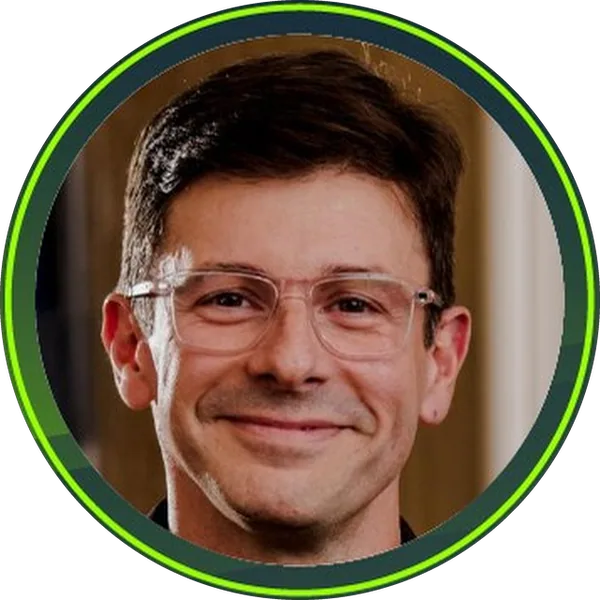
Leandro DalleMule
Host James Benham is joined by Leandro DalleMule from Planck. James & Leandro discuss data, analytics and intelligence and their importance in insurance.
The full episode
Press play for the whole conversation.

Leandro DalleMule from Planck discuss data, analytics and intelligence and their importance in insurance.
All Episodes Available On
The full transcript
Transcribed automatically from the episode audio, so some names and terms may be misheard.
James BenhamOn episode 92 of the InsurTech Geek Podcast, talking about analytics and intelligence with Leandro DalleMule from Plank. The InsurTech Geek podcast powered by JBKnowledge is all about technology that's transforming and disrupting the insurance world. We'll be interviewing guests and doing deep dives into specific tech we see changing the industry. We're taking you on a journey through insurance tech, so enjoy the ride and geek out. And we are here with our guest Leandro.
Leandro DalleMuleHow is it going? Leandro, you're joining us from Connecticut today, I hear. Yeah, James. Everything's going fine. Still summer, as you know, even though you're a little bit, you know, in a, I guess nicer weather than here. We got like the 90 degrees again today. Surprisingly,
James Benhamyes, it is nicer weather in Michigan than in Connecticut. Give me another month. I think we're at a similar latitude, but somehow I'm getting better stuff because it's 75 and sunny today. No, it's all good.
Leandro DalleMuleKnow, I can't complain. It's gonna get cold pretty quickly. Yeah. So you're you're near the city, Well, that's the reason, right? It's strategically positioned, bought the house near the city because I've been working financial services since I can't remember. And my last job at AIG required me to commute every single day. Wow! So it was about an hour and forty five each way of course, which I do not miss. That's a hike! It's a hike man, and I do not miss, right? Because all the way to Water Street where AIG was based and then back every single day, you know, there's only so much you Yeah, can do a you got a train, got a subway, we had, you know, that little bit of walk.
It was it was a hike, really. So I did it for many, many years. Right? Before AIG, I did it for Citibank and BlackRock and Deloitte, and and the list goes on and on. So I feel like those days are I don't I don't wanna say permanently over, but they feel like they're over. I think they're over. Right? I think they're over. I look at the parking lot in my town. We used to be like a very hot commodity. I remember, right? Because I never got a permanent spot because you had to go in line and it will take you five years.
You know, if you're lucky and you get to pay a premium, of course, and yada yada yada. And now it's half empty. Right? So I guess that that commodity, the hot commodity, whoever could sell it should have sold it before COVID. And now, it's just like old times, used you to buy a telephone line. I think you're not that young, right, James? So, you you used to 43. Yeah. Okay. I'm 49. So it's like, yeah. So you probably remember that you buy the line, right? Yeah.
It's an asset,
James Benhamright? I own that number. It was the same thing for the parking lot, and now it's all gone. Crazy. Yeah. Well, let's, we're gonna talk about AI and Plank and all that stuff in a second, but before we do, I wanna talk about you. I wanna talk about your background. You're Brazilian, although Italian family in Brazil. I employ a lot of people in Argentina. I have a lot of Italians in Argentina. Yeah, I lot, I guess. And I just actually went to France in the June, and I noticed how much France and Paris reminded me of Buenos Aires.
So, you know, what most Americans, US Americans, by the way, my Argentinian Argentinians, of course, get offended by everything. Right? Argentinians are are very, you know, I love I love my Argentinians, but they get really bent out of shape when I say Americans. Have to say US Americans because they consider themselves Americans as well. Yeah. I heard that. They're South Americans. You know, France and Italy had a huge outsized influence on Brazil and and Argentina. So your Italian family, born and raised in Brazil, you got a mechanical engineering degree there from Sao Paulo University.
Yep. And then you went on to looks like you went to Chicago
Leandro DalleMuleI did. Just across the lake for me for your MBA. Yeah. Yeah. It was back in thousand one. How did you do with the Chicago winners? It wasn't easy at the beginning, to be honest. I will never forget, man. You know, we we my wife and I actually, we both got you know, we moved over Northwestern. Right? We got our master's at Kellogg. And I remember the first winter, I will never forget this, the heater in the bathroom in the apartment we're living in, it was immediately right below the window.
And yet when we stayed like maybe a week out and we left the apartment closed, when we came back I remember there was like a thick ice cover inside, right, with the heater on. So I'm like, oh my god, you know, imagine how cold it was outside when we were here, like, how is that even possible? Right? But I got got used to it. Right? Yeah. That's that's Now I have more problems with the heat than with the cold. So Yeah. That's that's that's pretty that's pretty cold.
So
James Benhamso you you adjusted from the the hot and humid of Brazil to the cold winters of Chicago. You went to Harvard for a graduate certificate. You you got a master's at Columbia and Math. Into the University of New York. Yeah. So so you you you've you've definitely have educated yourself, but you've also I did. You've also worked in a broad array of companies. You worked in the I would I would almost call it the national industry of Brazil, the petroleum petroleum industry. You did a pretty long stint in oil and gas, didn't you?
I did. I did. Was my first job out of college.
Leandro DalleMuleIt's funny because even though engineering, right, it's a five year full time commitment in Brazil, different than The US, right? You don't major in mechanical engineering. You end up, after five years full time, you don't have an opportunity to learn anything else but engineering and mechanical engineering. But I never got a job in mechanical engineering because at the very start, when I was interviewing for ExxonMobil, they thought that I was a much better salesman than an engineer. They put me in the sort of talk to the sales folks.
So that's where my career took off in marketing and sales instead of engineering. But I did spend my first five years or so out of college with Exxon, which was a great school. I mean, to be honest, in hindsight, I remember knowing nothing about management, know, in my 21, 22 year old kid, I'm like, oh, they're doing this wrong, they're doing that wrong. And if I look at now, tremendous company, right? It's amazing. No wonder they have been around for hundreds of years nearly. It was a great school, right?
But I didn't wanna change, right? So going back again, twenty two years ago, I said, okay, if I wanna get out of marketing or just expand my knowledge and then get out eventually of the oil and gas industry, how do I do it? So an MBA was the door to open sort of new doors and that's why we decided to come over and
James Benhamthe rest is sort of history. That makes sense, Total sense. So you worked over in GE Capital and consumer finance. Got into risk management. I'm guessing
Leandro DalleMuleit looks like GE is really where you had your first taste of insurance and risk management. Is that right? Yeah, that's right. That's right. And going beyond that, I'm kind of laughing because if you look at the years that I worked at GE, there was something that also happened there. My last role there was a global mortgage risk manager around 02/2026.
James BenhamSo you remember what happened back then. The superheated run up of the global of of The US mortgage industry that completely collapsed in 02/1978.
Leandro DalleMuleExactly. And not just The US. I mean, it was a global the GE back then had a bought a $40,000,000,000 mortgage book, a business, which by the way was not it was actually kept in the balance sheet because it was GE, right? The guru might GE could keep $40,000,000,000 of mortgage paper on the balance sheet. And yeah, back then it was a great idea. I was actually, I spent nearly one year in Italy setting up a GE bank there. It was my first, I guess, startup feeling, although backed by GE.
It was the CEO and myself, and I was playing many roles, risk, finance, operations, everything. And guess what? Back in 2004, what we're going to sell in Italy?
James BenhamHow about subprime mortgages? Why not? That sounds like a great idea. Right? Why don't we fractionalize subprime mortgages, split them up, and then pretend that by splitting them up, we actually reduce the risk? The risk is gone. I know. What a what a brilliant idea. So if we take if we take if we take a 100,000 mortgages and we fractionalize all of them and then we blend them all together in a giant financial blender and then and then and then we slice them up into these debt obligations People are gonna buy it.
Then the credit quality of blended drink is somehow better than the credit quality of all the underlying assets.
Leandro DalleMuleOf course. And they're completely uncorrelated, by the way. So if house prices fluctuate, nothing is gonna happen to that paper. So, yeah. So we did that. Actually that bank that we built in Italy got acquired by Deutsche Bank, I remember, a couple of years before the recession. But then you fast forward this to 2006 when I finally said, guys, this thing's gonna blow up. So I left, right? I was maybe one year ahead of that curve, but eventually it did blow up, as we all know.
Incentives were completely misaligned, let's put it this way. So whatever is left of GE today, I mean, part of it, unfortunately, right, it's such a great company, it's due to what happened there, right? And the amount of risk that they took both in GE consumer as well in GE commercial finance, right? Both of them, consumer finance, commercial finance, were leveraged at the point where, I mean, mortgage, right? Without getting to the specifics of finance, but they were leveraged like 100 to one. It's secured, right? There's a house behind it, so no risk.
House prices will never go down. And I heard that. And I'm like, I think they're going down. And I remember they start falling like, you know, like a dominoes. And the first one I remember, it was Australia, where we had very two large comp mortgage companies, I mean, GE, and then the second one was The UK. And then it was just a matter of time until The US collapsed, and The US was like the third big one. So, yeah. Interesting
James Benhamtimes. Yeah, it is interesting times. Very interesting times. So, and we're repeating it right now, by the way. It's amazing. It's human nature, human nature, and we won't learn. We're doing it all again. We're doing it all again. There are people getting interest only mortgages right now, and there are people that, because the rates are up, they're moving to five year ARMs, adjustable rate mortgages, because they want the lower rate for five years, which means that five years from now, we're gonna have a really bad situation.
Leandro DalleMuleI know. It is amazing. And if I and it's funny thing is, especially if you look at going back there, I remember my last period with GE when the market was drying and we couldn't sell those mortgages right through Lehman Brothers or through other investment banks, we found a great solution, which was we're going to create this mortgage insurance and the provider, or we're gonna get mortgage insurance and the provider of mortgage insurance back then was AIG. So I remember dealing with AIG and then fast forward ten years later, I was working for AIG.
And then when everything collapsed, you remember the TARP, I think it was $700,000,000,000.
James BenhamYeah. Most of it went to AIG.
Leandro DalleMuleMost went to AIG. And who managed the TARP for AIG and Citibank? BlackRock. So if you look at my resume, you wonder, how can I be involved with all the companies that were part of that? I mean, because, you know, it started with GE and then we got from AIG. I worked for AIG and then Citibank collapsed and worked for Citi and then BlackRock managed everything. Actually, I joined BlackRock, AIG had just paid,
James Benhamyou know, off everything that they they got back, right? With the Well, they paid off the TARP plus plus plus. They paid all the interest too.
Leandro DalleMuleAccording to Bobby Moshe, he reminded everybody of it. Yeah. That he didn't get even a thank you from the president.
James BenhamYeah. Even though he he even though he would have defaulted without it, but that's okay. Yeah. It was Paul Beamerichette. Yeah. It was I remember all that. A carrot. So you you've been in the middle of a whole bunch of interesting transactions. Yeah. You've you've seen a lot of things evolve with data analytics, with risk management, with just the financial services business in general. And there's, of course, a huge blend between loan companies and insurance companies because insurance companies provide insurance on loan defaults, which you just mentioned, so there's, you know, the two industries are inextricably intertwined.
Your first, it looks like your first insurance position really was when it came to AIG because that's when you started jumping into being a Chief Data Officer for commercial insurance. What was the leap to really being dedicated to insurance? Because up until that point, you'd had a, I would call it an ancillary or tangential relationship with insurance and risk. That is right. What made you want to jump in directly for working for one of the largest insurance companies in the country? Yeah, I had what is not very clear is I did have a lot of insurance experience when I was working with Deloitte.
Yeah. Because Deloitte,
Leandro DalleMuleit goes back to your question about analytics, how it all started, right? I mean, was even call analytics or AI, right? We didn't have a name for it, right? When I was at Deloitte, actually what has become actually Deloitte analytics today, which is a whole practice with hundreds of millions of dollars in revenue, it was born out of the actuary practice, which was obviously insurance. So it's interesting that today what it's called Deloitte Analytics and they supply analytics solutions in consulting across industries, it started with insurance.
And I was there in Hartford, which was one of the places I was based when I was working for Deloitte and that's when I got to, you know, to know the actuaries and get to know the actuarial science. I'm not an actuary, I could not get that far, even if I wanted to, I guess. But I familiarized myself with it and then of course the data science became a thing, right? And that's sort of how it evolved. But you're right, so there was a lot of that period that I had within Deloitte that it was primarily focused on insurance.
And then there was a Citibank, which was analytics. A lot of loans and cards, mortgage and other kinds of analytics. They're interested analytics. But you're correct. When I transitioned to AIG, it was really 100% insurance data as Chief Data Officer initially for the Property and Casualty Group. AIG back then was split into two big groups globally P and C and Life and Retirement. So I was leading the data efforts, which was brand new. We're just creating that whole function from zero. So up to that point, AIG did not have any Chief Data Officer.
Heather Wilson was the Global Chief Data Officer. I was reporting to her with P and C responsibilities, data responsibilities, and another colleague of mine, Tom Warden, was the life in retirement. So that's sort of how we struggled, and we had to build it from ground up. So let's talk about that job title. That was interesting. Yeah. You could make CDO mean anything. So what does a chief data officer do every day? Absolutely. Big picture task, but then, like, on a daily basis, what do they actually do?
Yeah. Yeah. And by the way, he can report to anybody too. That was I still I still think there is no clear structure where CEO should sit. I still believe that it depends on every organization, every industry. But what do from my point of view and what I did, it was we're focused on sort of the sub areas of the data management, let's put it this way, right? So it was not building models to some extent, right? It's not the sexy part. It's plumbing. That's how I always characterized it.
It's not about fancy dashboards or very cool predictive models. It's about plumbing. And plumbing, I mean, we would slice the work and the organization to some extent will mimic that into data governance. Who owns the data? Somebody needs to be responsible for the data. I wasn't. I want the business to be, because the reason is I'm the custodian of that data. But the business needs to, the P and L owner of a line of business, let's say commercial auto, He needs to own those data elements.
Right? So governance is important. Quality is another element, right? So data quality, how can we measure data quality? How can we improve data quality? So that was the other pillar, right? The third pillar, especially in the case of AIG, was sort of data accessibility. How can I make it and control in a controlled environment? Because you do have PII, you do have sensitive data, you do have claims data which is extremely sensitive as you know. So how do you control access to that data and yet make it available for consumption?
So if you think about it, those are like the three in my mind, the three big pillars, right? So if I make data available in a controlled environment, I have this governed, right? From a definition perspective, so we're all speaking the same language. What is a claim? Right? That's one that, by the way, simple question, right? Took us more than six months to answer. When does it a clean start? How do we agree on some of the definitions of very basic data elements? That's covered. And then the third one is okay, the data is not good.
The quality of the data is not good. What are gonna do about it? How are we gonna measure this? How are gonna make that data with such a quality that it can be consumed, it can be trusted? So those are like, that was the day job, really. That's an excellent definition.
James BenhamThank you for diving into the minutiae, because I think a lot of companies look at that position and go, well, I'm not big enough for a chief data officer. I would argue that a CDO or maybe a vice president of data, if you don't want to call it a chief, that needs to be established fairly early on. I mean, when you're talking about $100,000,000 organizations need to have them. This is not a multi billion dollar problem. This is at a much smaller level because of the importance of securing your data, making it available and accessible, connecting it to everybody else, and governing who can read and write it.
These are really, really considering insurance is literally a data business. I mean, it's not a I respect that relationships drive a lot of decisions, and ultimately, the industry takes risks. All of that is based on data. There is no physical product of insurance. There is none. Correct. So data is the product, you know, whether it's data that's wrapped up in a policy, in a contract, or whether, you know, all of that is the only end product that we have in this industry, and so I think that's something that's really important.
Data standards are wonderful when they exist. I was recently, in the last several months, made light of, or made aware of the Object Management Group, OMG, Property and Casualty Data Model, which was established in November 2014. And one of the things that was really so impactful, and I was kicking myself for not knowing about this earlier, because I could have used this a long time ago, The contributors on this was Ace Insurance, Cindy Mike Associates, CSC, CTS, Gail Austin, Garza Data, Harleysville Insurance Group, IBM Corporation, LiquidHub, Mark Gorman Associates, Object Management Group, Penn National Insurance, TCS, and twenty first Century Insurance all collaborated to put together a 48 page description.
Let me see how many pages this is of a data model for PNC Insurance. And no, way more than 48 pages, good Lord. Yeah, 174 pages of common business terms, just agreeing on what the terms are. Exactly, and it's extremely difficult. Yeah, it's extremely difficult. So the terms alone, then agreeing on field names, then agreeing on data models. I mean, if y'all haven't read this, it's the OMG, which of course I just say stands for, oh my gosh, I can't believe I didn't read this before.
P and C data model, they did a ton of work on this and it really helps understand how the plumbing is connected. Yeah. At least at these organizations. You're right. So let's go beyond this. You spend a good bit of time organizing data. What was the biggest challenge? Was it the fact that you had to like interconnect 35 legacy main frame systems and I wish it was just 35. Maybe maybe 35 for one line of business. I mean In the thousands. Yeah. Yeah. It was amazing.
We So tons tons of databases, tons of systems.
Leandro DalleMuleI'll give an idea, right, of the magnitude of the beast. It's a house of cards, right? If you look at sort of the data flows, not the architecture, but the data flow that we actually built, it took us a couple of years to build it. It's just mind boggling, right? But it's this big house of cards. If you think about it, it's like KIG over 100 years old company. Acquisitions, acquisitions, acquisitions. There was a lot of times during a long period of time that it was a great idea to instead of buy something, I'm gonna build something.
Build versus buy was not even a topic. We were gonna build everything because we can. Which is maybe it was the right decision at the time. I wasn't there. The point is fast forward is to, you know, recent years, you have this house of cards and all the systems are super integrated to each other. They're fairly old. And by old, I mean, okay, without being very specific in which systems were built in assembler. For those who know what assembler is, I know you do. Yeah. Me too.
Right? I actually took an assembler course.
James BenhamI did as well. It was it was mind numbing. I don't know why. I don't know why I did it. I know. I did it many, many, many, many, many, many years ago. Me too in the nineties. When I did, I was like, can I please go back to writing an object oriented code, please?
Leandro DalleMuleI don't know why. It was like, think I'm gonna learn this machine, right? How the machine speaking. But, yeah. So fast forward to recent I mean, I don't know today. I left AIG a few years ago, but yeah, they're still built in assembler. Try to come up with a drop down button in assembler. You can't. Try to add another data field. You can't. Or COBOL. COBOL is still very common, right? So you have this very complex system of integrated old things. And how do you solve for that?
You had the tech that keeps consuming most of your IT resources, money and people. So that is one of the barriers for investing in new technology. Because there's only so much money you can, you have to keep them alive, the systems, otherwise you don't have a business. So a lot of money goes there, A lot of the efforts go there. And it's very hard to improve the whole system without breaking many eggs in the process. It has to be done, right? Because otherwise, the reality is COBOL, even COBOL, right?
When we tried to retire 2,000 COBOL programs, we eventually did it, but we had to go back and hire people who he retired. But we were the only people who wrote that because everything is compiled. So we were like, oh my God. And they actually came back and we did it. Probably no system documentation. Probably no. I mean No, zero. It's all in their hands. No test plans, I mean. Yeah. And they charge $600 an hour because they could. And honestly, would if I were in their position, right?
So it's like, sure. That being said, right? There are new technologies that are helping us get there, to overcome that big barrier,
James Benhamwhich is this old systems built over nearly 100. Well, let's jump to the current thing and spend our last fifteen minutes here talking about the present, because we've talked about what a Chief Data Officer is and what some of the challenges in plumbing data in large insurance corporations. By the way, this is why it takes so long to add states and lines and to modify lines of business. Reason number one is, you know, a huge patchwork of legacy systems that still work and function really well and contain all the business logic of that particular line of business and all the nuance to the contracts that that company covers.
So let's talk about Plank. 2018, you leave AIG and go over to be general manager of North America at Plank. What does Plank do and why did you go over to it? I answered
Leandro DalleMulewhy I came over first because it's related to what we do and then I'll go to what we do in detail. But I came over for a couple of reasons. One, the person who like, say, recruit me, is one of our co founders, David Shapiro. He used to be, before he retired, the CEO for Eurnix. And we worked together back at Deloitte, so we go back fifteen years plus. So that's sort of how it all started. I also met when I was at AIG. I met with our founder and CEO, Elad.
Right? He came to my office to talk about plank. Plank resolution back then in 2017. So I already knew about the company, right? And I knew what the technology that they were building was supposed to do. But that was back in 2017. Fast forward 2018, Dave invite me if I would like to join the company. And I did my due diligence, my first startup. I've been working this huge companies before. And then I have a quick funny story later about this, I said, okay, gotta check, right?
I mean, I'm going from 200,000 people and my team alone at AIG was over a thousand people, right? In data management to how many again? Right? So I had to do my own due diligence, they did theirs. And we kind of a man in the middle, I guess. Again, the big reason really is the technology that we built and we continue to build. We will allow carriers to leapfrog, not just carriers, right? I mean, MGAs and overall insurance players leapfrog this years of being behind in terms of data and insight and intelligence, let's call it this way, right?
We're calling ourselves a cognitive business analytics platform, which is a big long name, right? Because it's more than AI.
James BenhamIt's a mouthful. It
Leandro DalleMuletook us a while to come up with it. Short is CBA, but the idea is really how can I tap into this vast wealth of data that is out there and keeps growing exponentially as we all know, right, on the web? How can I tap into that and mine it to get insights that can help business? In our case commercial insurance, to be very specific. For example, we are not a data aggregator, that would be too easy, right? We're not collecting data from multiple sources and putting them together.
We like to say, and this is Elat's analogy that I really like, is like we like to create, it's not about finding the needle in a haystack, it's about creating gold a lot from hay. So we'll get a lot of that data, right? Sometimes it's the same data point, so let's say hours of operation of a business. So sometimes we're going to find that data everywhere, but there are other insights that we can generate like the percentage of liquor receipts in a bar. There's no source that I can tap into that it's going to give me that.
But if I have enough data about that bar out there on the web, I can then train models and then going back to AI machine learning, all these cool names, that will train the models, right, to estimate fairly accurately what is the percentage, you know, of liquor receipt in that restaurant, right, in that, you know, should be close to 100%. If it is a restaurant, right? It's, as you know, it's super important for rating. So you wanna know if it's above 35, is above 50%, maybe it's a bar, it's not a restaurant, right?
But that data points nowhere to be found, right? Unless I get access to the financials of that restaurant, which I won't, but it can be generated. And I think this is really where we shine is that ability to tap into everything real time, right? Bring it in, digest because the models are trained and keep being retrained as we get more and more feedback from our customers and our own training. Right? So the models improve because they learn and we're able to produce even better, faster results to give those insights, to give that intelligence to the carriers, the MGAs, to the reinsurers, so they can make better business decisions.
In the end, the underwriting, pricing, lead generation. We've been expanding our offerings now, but based on the same sort of core technology.
James BenhamSo what's the number one problem people are asking to solve? Is it better reserve setting? Is it better analytics around analyzing a claim and recommending treatments? I've seen a lot of really great applications of data
Leandro DalleMulein insurance. I mean, what the top applications you're seeing people trying to deliver? I mean, the top is really today is around pricing. Right? So how can I which is something that wasn't the top? The top, I'll say two years ago, it was more like, I have a digital portal. I need to pre fill this data very quickly because what's the point, right? If I'm going from paper to That's like meat and potatoes automation. Yeah. It is, right? But yet very difficult to get all the data and pre fill it within seconds.
That was really but we've seen that that has evolved with our customers and even generally in the market. Now we feel that pricing and the ability to know more than my competitor has become more interesting. Let me elaborate a little bit on it. For instance, let's say that I have all these insights, right? 150 insights about a restaurant. Today, how is pricing done for that quote, right? A quote is generated based on a handful, right? Yeah. If it's workers' comp, it's the usual suspects. It is going to be number of employees, payroll, revenue, the class that you're in, and maybe location.
Okay, those five will probably determine the vast majority of your rate. How about now if I have access to all this different information? For example, how about if I know that or I would like to test, and as a matter of fact, we know that for a fact now, that the quality of the management of that business has the higher the quality, right? The lower the probability for workers' comp claims. Well, now I have that correlation, very strong. If gonna able to file another rate with the 50 state regulators, that's a different story.
But at the very least, I can include that in my underwriting criteria. At the very least, can determine my risk appetite knowing more than just payroll and my employees, revenue, class, location. Right. That's where we see the most interest now. It was something that, to be honest, James, even our customers and carriers were very reluctant to share their loss data with us, to share their claims activity data with us, historically speaking, because I know this is my proprietary, but now they are. They probably didn't want to risk that it might go to somebody else or help somebody else make better decisions, right?
Correct. But now they're sharing it or they're or we're providing the insights vice versa. Right. And they are doing the analysis themselves. But we have now this both way going and we see that. And I believe that this is where the big, you know, bucks are. There are also improvements. We talk about the portal pre filling. There's also operational improvements in expense ratios such as, hey, your underwriter takes three hours after he gets a submission, right, an application because he gotta check everything and eventually even pick up the phone and calls the agent or calls the business owner directly.
It takes three hours. You know what? Automate everything with us. This can be done in ten minutes. Right? So it adds up. If you have Are you comboing robotic process automation with the analytic suite? Not so much robotic process, but what we do is we integrate the API to, for for example, a an underwriting portal of a few of our customers. Right? And they will get flags. It's highly configurable. So I like to get flags in certain attributes that either will trigger automatic decline or will trigger further evaluation.
Right? So the underwriters are now and you step in, well, one step above that, you start prioritizing all the submissions that you're getting in terms of, you know, how much work you have to put into them, right? So it's not so much about automating everything in the process, but it's providing more data, more insights very quickly, right? Yeah, absolutely. So what's the end game? What's the data end game? Are we trying to
James Benhamautomate premium? Mean, what are we trying to do, automate underwriting? Are we trying to automatically set reserves and auto adjudication of claims? I mean, what do you think end state is? Are we gonna remove people from the equation and get data models and machine learning models so intelligent that they can make all of these risk decisions? I mean, does it stop? Where does it end? What's the end state? Yeah, I don't think we're gonna get all the way there. In commercial, I'm talking about commercial lines.
Yeah. Personal lines, different story. Frequency is so
Leandro DalleMulehigh versus severity that allows us to get there where we are today, right? You can go online, you can do everything, get a quote, you do almost everything without a human. I think commercial and the bigger, as you go from SME micro business to small to medium to, you know, becomes, as you know, more and more complex, therefore requiring more human intervention. What we see is we make our customers or let's say the underwriter in this case, superheroes. Actually, have that internal definition ourselves, right? We have a Superman picture and we use it all the time because our goal is not for us to be superheroes.
We wanna make our customers superheroes. We wanna make the underwriter be a superhero in terms of how can I leverage a platform to augment my capabilities? Ultimately, they're still going to make decisions, but they're going to make much wiser decisions because they have these superpowers that we are giving them through analytics, through AI, to the ability to tap into thousands of different sources within seconds. That's my take, the superhero is planks philosophy, but my take is it will never get all the way to fully fully automated as you get bigger, larger businesses, because it's just the complexities of a workers' comp policy, a property policy, a bot, you know, will still require humans.
Now you have the whole additional layer of, especially in The US, of the agents, independent agents, the captive agents, right, and how distribution works in commercial lines. And that's a very hard model to break, as we've seen. And that's another sort of a, let's say, complication to that fully automated, you know, future mindset. But definitely more automated and definitely getting these guys to having the superpowers to
James Benhamdo their job much, much, much better, more efficiently. So I have a challenge question for you. Yeah. Why would a company use a system like Plank instead of building their own analytics suite with Power BI and all of the tools and Atlas or Tableau or name any analytics suite, right? Why would they why they use a custom built insurance
Leandro DalleMuleanalytics suite? You're not calling yourself BI, so that's fine. Yeah. No BI. No. No. Yeah. We can't compare ourselves to Tableau or Power BI.
James BenhamBut you could you could use Power Apps, Power BI, you could use that whole suite and try and hack your way into building something like Plank. So what benefit do you think y'all bring to the table versus what's going on in a lot of insurance organizations right now is a whole lot of home built, homegrown analytics efforts that are being driven through the PowerSuite in Microsoft.
Leandro DalleMuleYeah. They're different animals, right, as you know. But generally speaking, right, why wouldn't somebody build a plank, right, Our cognitive business analytics platform. Couple of reasons, one, we've been doing this for five years now. So we have a few 100 insights in many different classes, right? Restaurants, contractors, auto services, healthcare, the list goes on and on. We have specific insights for workers' comp. We have specific insights for property. We have specific insights. So that's one, right? We've been doing this for a living and the only thing we do for five years.
So we've built that critical mass already. That's one. The second thing is our models that are at a point now that they are learning with the feedback that we get from our customers, which exponentially improves our accuracy. Our coverage as we call it hit rate. So again, very hard to get there. There were a couple of, were prospects and I was in the sales process with them a few years ago, large insurance companies, not surprising, that said, this is great. They ran a proof of concept with us and said, we're gonna do this ourselves.
So okay. Good luck. Look, guys. This is not what you do. Right? You do insurance. You sell insurance. But if you wanna create a an AI platform, go for it. A year later, of course, I checked on both of them, and they haven't gone anywhere. Yeah. Right? Because this is how it is. Right? They are all the priorities and they do have a small data science team that is doing other things. Building things is hard. Building things is very hard. And this is again the only thing we do, right?
So you have that and we've got into this feedback loop that allows us to exponentially improve the models and you know without much effort and then which let us give us time and effort to actually build more models to other classes. So at this point, you know, yeah, could a very very large insurance company, like my former employer, actually decide to do it and put a lot of resources? Do they have the money? Yeah, but it's going to take them so long that I doubt that that process is going to come to fruition, you know.
Yeah. Awesome. Executives will never have the patience. Well, thank you for where where do people where do people go to find out more information about Plank? Plankdata.com.
James BenhamVery easy. Planckdata.
Leandro DalleMuleP l a c k, like Max Plank. Yes. Planckdata.com.
James BenhamThe Nobel Prize winner. Yeah. And if you're in Connecticut or New York, can people come hang out with you? Oh, of course. Anytime. Yeah. What's the Brazilian drink that I always get at my Brazilian Caipirinha.
Leandro DalleMuleCaipirinha.
James BenhamYeah. It has to be that. That's the only one. We only have one. It's the only one. We only have one. I'm always right, that one. I've had many of those. It's like an Argentina, get for an A Branca. Really? Yeah. It's just one. And it's funny that the Italians so heavily influenced the drinks too. You know? Yeah. Oh, yeah. Farnaya is an Italian after dinner drink, but they make more of it in Argentina. So, you know, they drink it by the gallon in Argentina, man.
Well, know that, right? Next time you meet your team there,
Leandro DalleMuleyou know this probably already, but they consider themselves not just Americans, they consider themselves Europeans more than South Americans. Oh, yes. So that caused a lot of problems with every other country, including my country, because I'm like, no, guys, you're not Europeans. We're all South Americans. Like, no, we're more Europeans than you you guys, and it's true by the way, but
James BenhamIt's it's a it's a very complicated culture, one that I happen to love, but it's also you can have a lot of fun with them. Yeah. Oh, yeah. Never ending sources of entertainment. Leandro, thank you for joining me on the podcast today. I really appreciate it. It was a good conversation, and I always love talking about data and how we're using it, organizing it, structuring it, and getting better as an industry because of it. So, Leandro, thanks for joining today. Thank you very much, James. It was a pleasure.
And thank you out there in listener lane to tuning the Data Geek Out episode 92, our interview with Leandro Dahlemeul from Plank. This has been the InsurTech Geek podcast powered by JBKnowledge. That's jbknowledge.com. It's all about transforming and disrupting the insurance world. I'm your host James Binnen. That's jamesbinnen.com with co host Rob Galbraith. That's endofinsurance.com. Big thanks to Jim Greenlee, our podcast producer, Kara Dalton Alero, our creative producer, and thank you for joining us today. We're taking you on a journey through insurance tech. So enjoy the ride and geek out.
See you next time.