 YouTube
 Spotify
 Amazon
 iHeart
 Apple
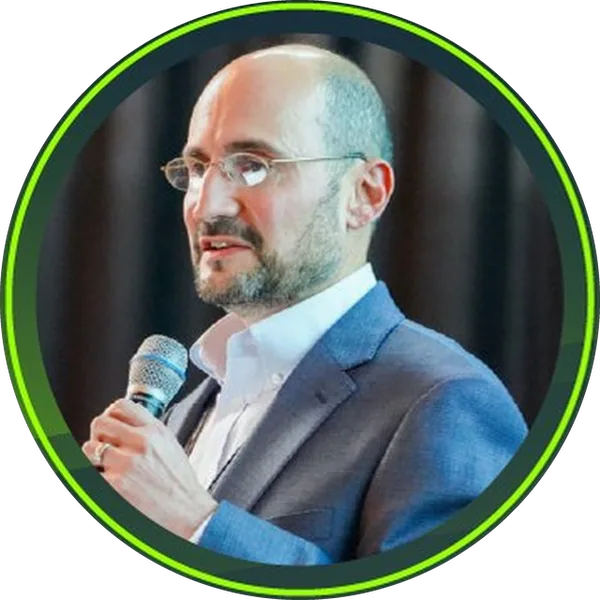
Nicos Vekiarides
Hosts James Benham & Rob Galbraith are joined by Nicos Vekiarides from Attestiv. James, Rob & Nicos discuss data, fraud and what it means in modern insurance.
The full episode
Press play for the whole conversation.

The full transcript
Transcribed automatically from the episode audio, so some names and terms may be misheard.
James BenhamAnd we are here again. Hey, Rob Galbraith. What's going on, bud?
Rob GalbraithHey, James. We are officially into December now as we record this. So Oh. Moving down to the holidays and into the year. I I
James Benhamknow. We got all our vests on and our jackets because Texas, it got below 55, and so now we're actually a little chilly. I mean, it kinda like, the the part of you that's Michigan laughs whenever Texans start shivering at 50. Right?
Rob GalbraithOh, I've joined them. I've joined them. The blood has thinned over the years. So, yeah, I was I was, I walked outside this morning. I was like, woah. Hey. It's kinda cold out today.
James BenhamTime for get the gloves out. Get the hat out. I I I'm part of this workout group. Had the hat on earlier. Walking the dog. I'm I'm part of this workout group called f three, and it's a volunteer men's group. We we work out in a park, you know, outdoors. It's all volunteer led, so no one pays anybody any money. It's great. But we meet at 05:30 in the morning at a at a city park on Tuesday, Thursday, and Saturdays. And so it is early and cold.
It was 38 degrees this morning during the workout. So we had a good one, but it's, it's, look, it's it's good being in December. It's, it's good to be close to Christmas. It's one of my favorite times of the year. And, we've got a a a friend, a new friend, who is from a a a colder, snowier part of the country, Salt Lake City. Now he's not from there. He's a Boston guy, really. But he's recently transplanted to Salt Lake City. Nicos, it is so good to have you on the show.
Welcome.
Nicos VekiaridesWell, thank you for having me here, James.
James BenhamYeah. It's really great to have you on, and I I know you just moved to Salt Lake City six months ago. Are you excited about your first ski season there?
Nicos VekiaridesOh, it's it's great. And, of course, you know, I'm used to snow in Boston. I mean, I I I did chuckle when you said 38 degrees. I mean, anything over freezing is warm. Right?
James BenhamYeah. Exactly. Exactly. It's it it totally is, especially, you know, you Boston guys are you're just particularly tough. You know? You just you just you just hardened by those New England winners, but it's all good. We're we're glad to have you on. So we're gonna we're gonna chat about tech. But before we do, let's chat about you. You actually, you got a bachelor's in electrical engineering from MIT. It's a little, little school there in Cambridge. Fantastic school that I had the the the pleasure of living right next to for three months of my life.
I I I I did a lot of runs around MIT's campus. And, then you got your, your master's over at Carnegie Mellon and then and embarked on a a pretty neat career through the software and technology industry, and then wound up over here in insurance and InsurTech. Just tell us, you know, where were you born and raised, and what did you dream of doing when you were a kid?
Nicos VekiaridesWell, I was born and raised in the Boston area, so you know, certainly. You know, I mean, technology was always my thing. I mean, you know, I used to take things apart from a young age, much to the dismay of my parents, right? You know, things I wasn't supposed to take apart. I figured I'd put them back together. Sometimes it would work out, sometimes I'd come up with a few spare parts, You know, nobody was happy about that. But, you know, engineering was kind of right in my, you know, it was a little bit of definitely my sweet spot there.
And I knew I was going to be an engineer. And certainly I've transitioned to software, but that's really where it's at. And of course, I transitioned to management, but yeah, knew from a young age that this was my calling.
James BenhamNow, I was in a similar boat. I I started writing, software when I was around 11, 12, and just fell in love with technology and computing, at an early age before the Internet was around. So I was I was involved in bulletin board systems and C and Fortran and Pascal and Assembly and all this old stuff. I loved it. I thought it was great. And, I was in the same boat. I I really, you know, fell in love with it. Were were you always a software guy, or were were did you ever get into network administration and computer, you know, building computers?
I mean, were at MIT in the 90s, man. Like, that was when the internet commercialized. I mean, there was a lot going on that transformed the world there. Yeah, yeah, it's interesting. No,
Nicos VekiaridesMy thesis was on new protocols that were kind of more efficient than TCPIP at the time. And of course, none of them stuck because, you know, we're using TCPIP even today. But that's yeah, but I've been all over the network side, the you know, I mean, gosh, I still build my own computers. I mean, it's just, you know, that's Life long nerd. You know, and then when got out of school, I mean, my first job out of school was with Encore Computer, and that was a multiprocessing computer company, which was cool except, you know, it's probably, you know, everything they did you can fit on a chip would be one of the smaller chips these days.
So yeah, the world has transformed, but yeah, software was the way everything was going. And, you know, I started writing code at an early age, too, so it was, you know, it was an easy transition.
James BenhamMan, that's awesome. And I just remember the early 90s as this period of radical transformation, because we went from disconnected computers, you know, well, really from mainframes to personal computers that were not connected to work groups and local networking, bulletin board systems, and then the Internet just exploded onto the scene. And, yes, we still are using TCP IP, and we're still struggling with a migration to IPv6. I mean, there's all kinds of things that we're still struggling with. But but it it was a it was a super exciting time to get started.
So just walk me through you know, you had you had a bunch of stops along the way, you know, like like, great companies too, like Sun, Hewlett Packard, EMC. I mean, some really big companies mixed in with a bunch of, like, startups or smaller companies. Was there ever a path to insurance? At what point did you end up kind of leaning over towards financial services and insurance? Well, it's interesting. What happened is, you know, I settled in around data protection and data availability,
Nicos Vekiaridesand that meant different things at different times, right? It started off with how you back up your data. You know, I'm going to say the T word, tape, used to be a thing.
James BenhamI did tape that up. Before you kind of
Nicos Vekiaridesput it in the I mean, it's still being used in certain circumstances, but that was really where it was. But then, you know, there were other reasons to protect your data, viruses. You know, I mean, fast forward to today and you have ransomware and things like that. So that was always the area where we were working in protecting your data, whether it's using the cloud or other technologies. And what brought us to insurance is, you know, it more of a it started becoming more of a question: Is my data reliable?
Can I trust this data? You know, what does that even mean? Was this corrupted somehow? And then, as we moved into the insurance world and we started talking to insurance folks, it's, Wait a second, it's fraud. It's $300,000,000,000 worth of fraud every year in The US. You know, can we use some of the data that comes in, analyze it, and maybe automate the process of identifying fraud? And that's what drove us to where we are today. And it was, yeah, it was a lot of startups along the way.
This is actually my third. So, you know, it's
James Benhama lot of fun. That's great. And that so let's talk about this company. You're CEO of Attestive. What does it do in the insurance industry? Like, what function does this perform, and what do you sell, and how do you do it? Well, we provide automated fraud protection for digital media.
Nicos VekiaridesWhat does that mean? Photos, videos, documents. The insurance world is going to automated claims where sometimes all you have are photos, videos, or documents to settle a claim. And now, you have to use these to determine if somehow they're fraudulent. And what's happened is that there's a number of tools that you can use to alter reality these days, and they're getting much more sophisticated, right? Yeah, sure, you have Photoshops, I can change the photos, But did you know Apple and iOS 15 lets you change the time or location of your photos and roll them up into things that look like brand new photos?
So, I take a photo from my neighbor's house and I change the location to my house. It's kind of a great feature, except unless you're the insurance carrier who's looking at this and paying a claim on the wrong house. I mean, it's technology like that. And then even the more sophisticated stuff, the AI, the deepfakes, You can build synthetic media. So, as looking toward the future, this becomes a big problem for insurance, particularly as they're thinking of claims automation, right? That means self-service, perhaps, on the insured side.
I'm taking pictures of my vehicle. And then on the carrier side, it's all done by AI and machine learning, and you get a check-in the mail. So the question is, who's looking at the photos? Who's looking at the documents? Who's determining if there's fraud? And how do you do that in real time? And that's exactly what we solve.
James BenhamIn a world filled with deepfakes, attestives on the job. I mean, right? Like, this this is a deepfake world. We're we're looking at the the ability for your average citizen who knows nothing about programming to deepfake audio, video,
Nicos Vekiaridesphotos. I mean, this is gonna get more and more and more challenging, is it not? I mean, it's amazing the scale of this problem. I mean, you know, just look at social media. And social, it's interesting. Social media doesn't care as much about at this point. It's become a little bit more of an issue, but on the other hand, you know, they're just looking for clicks. But insurance, it affects your claims. It affects your loss ratios. Big time. It affects the whole business.
James BenhamYeah. It's a it's a huge impact, and it's not you know, we think about fraud a lot in insurance. We have to think about fraud a lot. But but actually questioning the validity of photographic and video evidence is something that I I don't think enough people are are taking seriously how it is how easy it is to manipulate images, videos, audio.
Rob GalbraithIt's it's a it's a brave new world, and someone's gotta gotta do something about it. Rob, what you got? Yeah. I love, that we're talking about this topic today, James, and so glad to have you on, Nicos. I recently read a book on deepfakes called trust no one. It was very eye opening about how easy it is for folks to do and the progress that's been made in this software just in the last five years to make even somebody such as me that doesn't have the programming background that the two of you have, semi competent in making a decent looking deepfake that could fool a lot of AI systems that haven't relied on the latest technology.
So, Nicos, I'm fascinated. What does a week in in your life look like? I I imagine you certainly have some, you know, technical, you know, new new products, new projects that you're working on in the engineering side. Obviously, we've said this is a constantly evolving space, but then you've also got this education part in letting a lot of folks in the insurance industry, business professionals such as myself that are not technologists, such as the two of you, kind of making them aware of this issue and letting them know how a test of can help.
So just kind of curious, maybe you can walk us through what your typical week looks like.
Nicos VekiaridesRight, right. I mean, my typical week, I, you know, I'm the first to say I hate Mondays, so I usually pack a lot into Monday since it's going to be a bad day anyway. That's where I sit with my team, and we reload for the week. I mean, it's about, what's our sales plan. And being in a startup, these things change so fluidly, right? You know, I mean, you learn something one week and then you realize, hey, we're really onto something now. We've got to change the way we do things.
So we have our sales meetings, marketing meetings, management team meetings, all the first day, really to get everybody loaded and locked and loaded for what this week will look like. So it's, you know, we've taken a day that's usually, you know, everybody's least favorite day, and we've made it into something that's productive and still everybody's least favorite day. But then moving on to the week, it's just a whirlwind between customer meetings. Yeah, it's educating. It's getting out there. At least, you know, once a month, we have the conferences.
We were at ITC. We were recently at Guidewire Connections. So really getting out there and spreading this message and getting people educated. It's not just about fraud either. It's because, you know, fraud doesn't get people as excited sometimes, but but it's just a necessary component to the automation. So kind of getting that across is, hey, if you want to automate, then you have to automate your fraud detection. And that's where we can help. We become a necessary component, and we can help save you money through automation without losing it on the other side due to losses and fraud.
So that's where we really come in. So yeah, it's talking to customers, gosh, talking to investors, you know, being in a startup. You're always out there trying to get the message out to investors as well. So it's very busy. Like I said, the weeks go by incredibly fast.
James BenhamAs they say, the days are long and the weeks are short. It's can be can exhausting. Our Mondays are fun. We run on a system called EOS, Entrepreneurial Operating System, which is the best decision I made ever starting and running this business the last twenty one years to have a methodology to run my business. And so we have these weekly team meetings on Monday called level 10 meetings. It actually turned my Mondays into fun days for me. I enjoy it. I enjoy planning the week out and setting to dos and, you know, checking on our quarterly rocks and looking at our plans.
So it's a lot of fun, but I total I totally get it. Let's let's jump into AI. There's a lot of fake AI out there. There's a lot of, like, really, really, really fake fraudulent AI. It's not AI because it's really just a set of conditional statements, you know, if then statements, or it's an expert system, but not, you know, it doesn't utilize machine learning or AI. So let's talk, you know, true AI, which I think we're still thirty to forty years from where you have, like, the singularity, you have you have a you have a general purpose AI, I I think we're a long way away from.
What we're using right now is, like, specific forms of AI. So let's talk about the stuff that's actually legitimately deep learning, machine learning, artificial intelligence, not the fake stuff that's just a bunch of thin statements. Like, when I first saw chatbots come out, I was like, that's not a that's not a chatbot. That's a anti text terminal interface that I wrote in sixth grade. And and, you know so what what what AI and new tech do you think is gonna help insurance that's actually delivering value right now?
And what do you think could actually hurt insurance?
Nicos VekiaridesSure. The pieces that are delivering value is, yeah, so we use AI for training on images, right? So, for instance, you can do a lot with images. And, you know, there's certainly a lot of rules based stuff that we do. I mean, I can't, you know, I don't want to hide from that because it's true. We run over 40 models on every single picture within seconds. But some of them are AI, and that means we've done this training. So we can tell the difference between a photo of a screen, a photo of a photo, and something that's unoriginal.
We've built, you know, and we've had to train on literally, you know, thousands and tens of thousands of examples in order to get this right. So it is training in that sense. We also have what we call deep analysis of photos that can highlight where they might have been modified. So when you're looking at things like Photoshop or even the deepfakes where you're combining elements into a single photo. We can identify by looking at noise patterns what is actually potentially altered in the photo, and we can highlight it with heat maps.
So all of that is done by our products today. And the same holds true for documents, being able to identify text that is slightly off, doesn't belong there. But it training the system. I mean, could a human do this? Yeah, if you train the human the same way, you know, if you ingest 100,000 documents, some fake, some real, and you learn how to make those decisions. But this is where AI comes in, and it's about, you know, really eliminating a lot of labor or maybe impossible things that have been impossible to do otherwise.
James BenhamYeah, without having to explicitly program things, too. That's the key with machine learning and machine learning models for me is that you don't have to code every potential thing. You you're saying, here's the good stuff. You're training your datasets. Right? Here's the good stuff. Here's the bad stuff. Figure out how to identify it. And and, you know, it has it has a little bit of freedom of interpretation. And, obviously, as you as you train your model, it gets better, and you recompile it, and then you have a smarter model.
You know, and it's ideally going to give you a higher accuracy rate. I've seen some fascinating things about machine learning models around diagnosing cancer, you know, tumors, reading, you know, doing image reading on medical imagery, MRIs and x rays and ultrasounds. Machine learning's at a crazy high accuracy rate in medical imaging. So I think there's a lot to be said for image analysis, voice analysis, video analysis, and particularly because humans get so bored doing it that they often don't do this job well. They're very expensive to have do this, and they get really bored.
And so I think this is one of those jobs that people are happy to have a machine take over for them. So that's the positive side. What's the negative side? Like, where is AI actually introducing big problems for insurance?
Nicos VekiaridesWell, it's it's it's creating ability to have this alternate reality. Right? I mean, this is I can change things. I could change things and wrap them up in a way that they look relatively original. I think that's where it's hurting. I can go to thisxdoesnotexist, thiscarddoesnotexist.com. It's a site that uses generative adversarial networks to create photos of vehicles. You know, rumor has it, you know, the Tesla Cybertruck was just, you know, designed based on that site. They just spit it out as a random vehicle. But it's all there and it's all available and it can be very disruptive and problematic.
I mean, you know, the world has gone so virtual the past few years. I mean, do you know, I mean, how do you even verify that I'm not this bot here, you know, sitting in front of You know, how do you do that? Well, you know, you can fake somebody's voice, you can train on somebody's voice, and then you can start making phone calls as me. And that's happened. Not to me, thankfully, but it's happened to others where you get a phone call from the CEO saying, I'd like you to make this wire transfer.
Sometimes people do it. So yeah, it can cause a significant amount of problems with fraud in insurance. It could cause just a corporate
James Benhamin any corporation, it could lead to fraud. Although I'd say a podcast interview would be a pretty good Turing test for a deepfake. See, how long how long can the bot hang during a podcast interview? Right? Like, that'd be the Look, I mean, everybody uses virtual backgrounds. How long before we get the virtual foreground to go Oh, yeah. Why not? I mean, you can already Why not? Yeah. Like, why why not? I I agree. I mean, the the video for sure that the the first thing will be the video, and then the second thing will be the voice the voice.
Right. And then the and the third thing will be the actual content. Yeah. Yeah. Because it's it's it's interesting where it's a brave it's a brave new world we gotta get our hands around, isn't isn't it, Rob?
Rob GalbraithAbsolutely. And, no. I was thinking, I came across the other day a great example of deepfakes. And I I'm apologize. I'm forgetting the name, but it's basically called lunar disaster. And it is a recreation of the Apollo landing, with real footage from that. But essentially, it's what if something happened to Neil Armstrong and Bald Buzz Aldrin? What if they died on the moon? And so it looks like a newscast. It looks like the real event, but it's a deepfake. It has this tragedy, and then it has, president Nixon addressing the nation, giving a speech that was written for him to deliver in case something went wrong.
So it's actual words that were scripted by his speech writers, and the the the deepfake was trained on his voice and the images from all the presidential addresses, that he had done to his desk. So if you didn't know that this was a fake, I mean, it is very real, very, very convincing. So there's lots of other examples out there. Encourage our, our listeners and viewers to look for some examples. And you'll see kind of what Nicos is really talking about in the knee like the I think in the past, you know, we've thought about these deep fakes as, you know, mentioned Photoshop, It's pretty easy to to to for a human to identify, but that this latest generation stuff, it's not.
I mean, the the what is fake? What is real? That's a real, you know, conundrum and it's only going to get more of an issue going forward. Because I'm fascinated, you know, we've talked a lot about just this particular problem and the technology a little bit about the technology that you've used to try to fight it. But just in general, like what are some innovation trends or technological trends that you think are going to really impact the insurance industry moving forward?
Nicos VekiaridesWell, I think all aspects of automation and a lot of it using AI. I mean, you think of a motor vehicle claim, you're asked to take the photo, photos are submitted, somebody like a testive will verify that, hey, these are real. They're not some sort of alternate reality that somebody created. And then they go into an AI based appraisal system, right? The appraisal system is going to put this all together and then you get a check. And in most cases, it's probably no worse than the appraisal that you got from a person coming to your house and looking at the car and taking a few pictures there.
It's a huge this automation is a huge breakthrough. And then the other thing is there's so much more data that as you apply AI that you can extract from all of this, you know, digital media photos, videos, documents. There's a lot more than a human being has time to extract. And I think it creates a wealth of information as well for insurance and making better decisions. So that's kind of how I see it impacting the future. But I think, you know, AI and automation is key here, And it's really starting to transform the space.
I think, you know, a lot of analysts are saying twenty twenty five, 70% of standard claims are going to be automated. So that's a lot. And it makes for better user experiences, too. I think it's great if I could just take a few photos.
James BenhamIdeally, it does. I mean, I've seen enough sci fi movies to know that there's a potential bad outcome on the other end of this. I mean, if you have a lot of decisions being made that require someone to appeal because they were a terrible decision or they underpaid for the claim and there's no human for them to appeal to. So, I think in an ideal world, yeah, there's a lot of really good opportunity for that. We've just got to craft the tooling around it to make sure that still have people and services behind it that can deal with the exceptions, In particular, in the early days as you continue to train the models.
Nicos VekiaridesAnd that's the beauty of if you do it right, when you spot anomalies, you know, they're not processed automatically. So being able to do this proactively, right? And that's what we do, right? In seconds, we can tell you whether a claim is good or suspect. And we're not going to tell you it's bad because we always on the side of it's suspect and somebody has to look at it. So we switch over to a human being. And that's the way it should be. Clearly, you don't want to have a machine accusing you of fraud.
You want to have human review there? And then sometimes a human review may reveal that there's an honest error. We just send an adjuster over, figure it out. Or, you know, there could even be process issues. I mean, you know, like who shrunk the photos? It's like, oh, the biggest thing we see across the industry is photo manipulation is sort of the inadvertent shrinking of photos. Oh, I'm saving space. But then, you know, at the end of the day, you might be left with a thumbnail to settle the claim.
Now, this isn't fraud. It's just kind of bad practice. But we've seen everything from that all the way to people just sending in photos from their screens, downloads from Google search. It's amazing.
James BenhamYeah. It really, really is. Rob?
Rob GalbraithSo, Nicos, I'm curious, like, you know, what's next for a testive? What's on your roadmap, particularly this unstructured data, right, which I know 90% of it has been there for a long time in the insurance industry and just wasn't made use. Right. So we've had all this fielded data, these database relational databases that were the bread and butter of running insurance operations. And now we can finally use right into property inspection reports and, and medical imagery, as James referred to these photos of vehicles, things like that.
So I'm just kind of curious what's on your roadmap and kind of what's on your future horizon looking at to take a test of? It's an interesting concept. Like, imagine if you can monetize claims, right? Claims as a loss center.
Nicos VekiaridesYou know, how do you monetize? Well, you have so much data that's going in. You're not always doing things with it, right? And if you can use that to make better decisions so you can, you know, whether looking back retrospectively at them and saying, well, these, you know, now I have examples of what an overpayment looks like, or I have examples of what this type of accident should look like, and, you know, be able to figure out the anomalies from that. So, making smarter decisions is something that you can do.
And there's a lot of, you know, detailed analysis of the photos, you know, that can happen, that can save a lot of money. It's, you know, do you have to send an expert, an engineer, to look at hail damage? Sometimes you do, but that can be very expensive. Know, what if you had AI that could determine that, Hey, this is hail damage, this is not hail damage, and this is somebody hitting the roof with a hammer? So, if you had a way to distinguish between all three, you know, it's a it's a great advancement.
James BenhamAbsolutely. There's there's a huge world in front of us, I think, on on where we can go. And it's it's amazing how machine learning and analysis of unstructured data has has woven its way into daily life. I know I use image search on a daily basis now. Just inside my photos app on my iPhone, I search for objects and people that it recognizes. And, you know, I don't tag photos anymore. I just use their machine learning and the AI they've built, around photos and, to to search for stuff all the time.
I mean, it's it's it's really remarkable how how we use this on a daily basis. I am excited about the where where the future can go with this, though, because, I mean, I think the the end result is we wanna detect fraud quickly. We wanna detect legitimate claims quickly. You know, you talked about roofing. You know, Florida, every time there's a hurricane, you know, you have this whole spate of of roof of fake roofing claims. And, you know, the the laws there just changed to try and protect the insurer a little bit more because they were just doing full no deductible, full cost replacement on roofs if there was even a little bit of damage, you have no way of knowing if the guy just got a hammer out and just hit the roof with a hammer.
And so I'm I'm I'm certainly excited because I think that this type of technology is going to save many property carriers from going out of business from fraudulent claims, and has the potential to really expedite legitimate claims. That's what we want. I think that's like a twofold objective. Right? We want to expedite legitimate claims, and we want to deny all the fraud. And we want to do both of those faster. Right? And this is one of the technologies that can actually enable that, in particular with auto and property.
But but even with work comp where you get where you might have job site video footage and you can pull the footage up and see how they were lifting and see if they jumped off the bed of their truck and broke the rules or, you know, there's a lot of things you can do. And you could take this all the way into surveillance too.
Nicos VekiaridesRight. And the other interesting thing is, you know, everybody has one of these smart devices. And if you can create trust the way we do on this device, so you can say, Hey, everything you take can be tamper proof and trustworthy, now you can think about loss control a little bit differently, right? Well, how do we get the losses down? Well, maybe it is through self-service, through all of this data that we're not gathering, that doesn't happen at the point of a claim. If we could have all of that data, then maybe we'll be better prepared to reduce the losses, reduce the claims losses, figure out if people are ready for the next hurricane as opposed to just paying out when it happens.
Yeah, I mean, if you just look at the nature of cameras
James Benhamonboard, let's say, the new iPhone 14 or go back to the 13, if you go to the Pro with LiDAR, you know, if you build a native app that actually engages the LiDAR sensor and you can pull in photo and video, audio and LiDAR, you have a you have a much more tamper proof, you know, documented documented claim experience. So there's a there's a lot more that you can collect now too that I you know, I'm I'm particularly excited about. Even with the advent of live images that Apple came up with where you have a low frame rate video backup behind the photo along with an audio layer, there's a lot of things that we can do to prove that something actually is true and is not a fake.
And, you know, was not just screenshotted off the Internet or texted them by a friend or whatever. You know, there's really sophisticated fraud, and then there's the really cheap fraud that people do all the time. Yeah.
Nicos VekiaridesI think, you know, you start with, you know, solving for the cheaper fraud. But certainly, know, as technology gets more sophisticated, you need protection against all of it. And that's where we come in. We have the roadmap that provides that. And we're constantly, you know, figuring out what the next thing, you know. Sometimes it's Apple letting you edit things and making them imperceptible. But regardless, know, that's what we're always on top of, and we're building new technology to help combat the fraud and really build confidence
James Benhamin automation. And that's ultimately the end game, is build some confidence in the automation so that, you can trust it. Yeah, and just to remind people how big the fraud problem is, because it's one of my favorite sections in Rob's book, where you talk about the, you know, the cost of fraud and how it gets passed on to the consumer. The Coalition Against Insurance Fraud, which is insurancefraud.org, says that it's approximately $308,600,000,000 every year that insurance fraud steals from American consumers, and that it occurs in about ten percent of property casualty insurance losses.
So, is not like a this is a big number. It's a big number, and it's material part of the cost of insurance. And of course, if something's a material part of the cost of insurance, it's a material part of the cost of life because, life requires insurance. I mean, literally, because, you know, the federal government required that several years ago, which was challenged in the Supreme Court. But still, you still have to have insurance if you wanna function. And if 10% of claims are fraudulent, you got $308,000,000,000 every year that this impacts consumers.
This is a problem worth working on.
Rob GalbraithRob, I know you you hit this hard in your book. Yeah. And I think not only that, James, but I've talked to, you know, from a mature tech landscape, right? There's been a lot of companies that are focused on new product innovation, new distribution channels, right, growing revenue. And then there's been those that are focused on automation and cutting expenses. And particularly during the talent crisis, we've seen this huge wave of retirements. This is probably the number one topic I've talked to people about this year.
They want to know how do we backfill for those folks. I've heard about, you know, internship programs for claims and underwriters, whatnot that are twenty two months in length. And I'm like, okay, that nobody wants to sit through that anymore. Right. And so, yes, some of those people that are retiring are going to be replaced by the next generation. But quite frankly, a lot of those folks are ultimately going to be replaced by AI, doing some of the stuff that Nicos is talking about. Claims is probably the area that I think companies have under invested in the intricatech space just because nobody wants to mess with their book.
There's obviously a lot of regulation, requirements, things like that. So it could be a touchy subject. Know you know that very well, James, in terms of, you know, somebody selling technology that space, but but fraud is one that's probably the most straightforward in terms of a business case, right to say, hey, we can make and justify this type of investment fairly easily, because you only need to reduce a fraction of the fraud to make them the economics work on investing in this type of technology. And that actually can fund, as you've talked about, Nika, some of the other automation investments, and you know, maybe that's a new core systems replacement or whatnot, but making sure that you catch that fraud piece to me, that's a relatively low hanging fruit for claims organizations looking where to invest in the technology space.
Yeah. Awesome.
James BenhamSo let's bring it home and and wrap it up. Nicos, what what kind of closing thoughts do you have for our listeners about, fraud and image detection and all the things you're doing at Attestive and just the broader space of the use of AI in insurance?
Nicos VekiaridesWell, AI is transforming the insurance industry, and it's affecting the insurance industry in many ways. It's a highly competitive industry, as you know, and certainly automation helps. But in order to do that automation, you know, at minimum, you don't want the fraud to get any worse. And that's really you know, it makes the case for automated fraud detection is, you know, don't do automation without it. And, you know, you can argue that fraud has always been part of insurance for, you know, one hundred years. But I think the speed of technology, movement toward virtual claims, the movement toward automation is picking up steam right now.
So, you know, carriers should not drop the ball. They should really focus on, you know, how to make fraud protection part of that strategy. A 100%.
James BenhamAnd people can find out more information at attestiv.com, attestiv.com.
Nicos VekiaridesIs that correct? That's correct. Yeah. And, yeah, you can also contact us at info@attestiv.com.
James BenhamYou can find me on LinkedIn. There you go. Always happy to chat. Awesome. Got your Boston guy in in Utah. Enjoy enjoy the ski slopes for me this winter. Yeah. I think there's snow. Yeah, there's snow coming this weekend. They're already open. Oh, yeah. Yeah. It's it's it's it's getting cold early. So you guys are gonna have some earlier snow than maybe the last year or two. So enjoy that for me and enjoy that beautiful state you live in now. And thanks for coming on Insurtech Geek and just geeking out with us about AI and fraud and insurance.
I really appreciate it. Yeah, thank you for having me here, James. And certainly,
Nicos Vekiaridesyou know, enjoy your cold spell in Texas. I know they're pretty rare.
James BenhamThey are, yeah. Was 75 and humid two, three days ago. It'll be back there next week. So, it's it's always around the corner. And and, Rob, thanks as always for joining me, brother. Absolutely. Always a pleasure. And thank you for tuning in today to geek out episode 99. That's right. Hundreds around the corner. Our interview with Nicos Vajares from Attestive.