 YouTube
 Spotify
 Amazon
 iHeart
 Apple
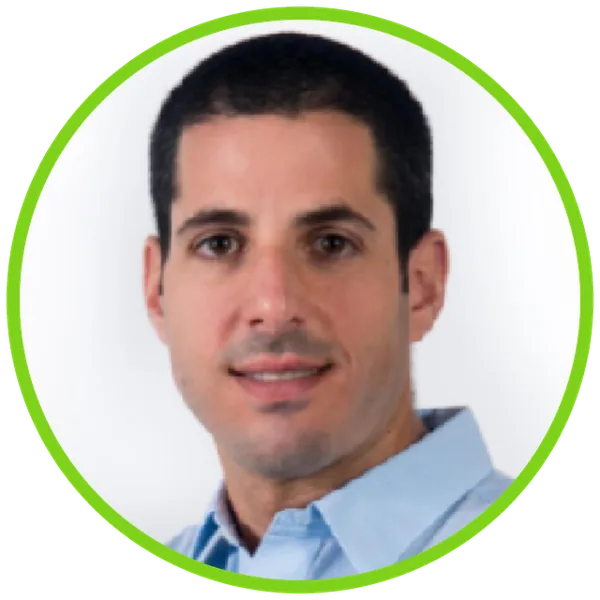
Itay Bengad
Itay Bengad from MDgo discusses Accident Detection and response and the difference in can make in saving lives and its impact on insurance.
The full episode
Press play for the whole conversation.

The full transcript
Transcribed automatically from the episode audio, so some names and terms may be misheard.
James BenhamJBKnowledge Podcast Network. On episode 49 of the InsurTech Geek Podcast talking about accident detection and response for insurance with Itay Bengad from Indigo. The InsurTech Geek podcast powered by JBKnowledge is all about technology that's transforming and disrupting the insurance world. We'll be interviewing guests and doing deep dives into specific tech we see changing the industry. We're taking you on a journey through insurance tech, so enjoy the ride and geek out. Greetings and salutations out there in Insurtech geek land. This is your host, James Benham. I am here with my illustrious co host, the most interesting man insurance, Rob Galbraith.
Rob, how's it going?
Rob GalbraithIt's going. It's going already in February.
James BenhamIt's hard to believe. What happened with that? Where did January go?
Rob GalbraithSeriously.
James BenhamI'm calling it like COVID memory, you know, like we're in a time warp and everything's moving faster for some reason. Like, we're literally approaching the shutdown versary, you know, like the whole world shut It's like, yeah, I remember when they said it could be a year to a year and a half. I was like, oh no, it can't last that long. Oh no, it did last that long.
Rob GalbraithIt did. Yeah. No. I have not been on a plane since early March, which is hard to believe. All
James Benhamyour well, luckily all the frequent flyer programs kicked it down the road into the year, so you don't have to lose all of your status.
Rob GalbraithMarriott keeps giving me free nights. I'm like, this isn't gonna help much. I'm sorry. Cost is not the issue.
James BenhamThat's awesome. And and joining us from Tel Aviv is Israel. We have Itay. Bengal, Itay, how you doing?
Itay BengadHi there. I'm fine. Great. Thank you. And thank you for, having me in for the opportunity. How have you been? Yeah.
James BenhamMy pleasure. Of course, always happy to have, we have quite a few tech firms from Israel that have been on both my podcasts, construct, the content career and the InsurTech Geek. There's a lot of innovation over in Israel, a small country, lots of innovation. And, you know, it's, it's, there's, there's funny, like, of course, Rob and I are both from, well, we both live in Texas. Neither of us are from Texas, but we've both been here for a while. And, you know, there's a lot of comparison maps that show how Israel would fit inside of Central Texas, right?
Just in like the little middle part of our state. You know, it's a small geographic area in the news a lot, of course, in the news a lot recently had a lot of normalized relations. Israelis can go to Dubai now and go to the beach and saw a lot of pictures of that on Instagram, everybody Instagramming their vacations to Dubai on the beach. So interesting time as always in The Middle East, but, we're certainly happy to have you on here at Ty. And we're going talk all about all things geeky.
I just want to remind our listeners out there that if you want to subscribe to our podcast, you can text Geek out to 66866. So if you're watching this on, Vimeo or you're watching this on Facebook where we stream the video or you're watching it on Twitter, we're also stream, you can, you can subscribe, just by texting geekout to 66866. And then you can get our weekly email with the show notes and the news items. And of course the link to listen to the, to the show.
Back to our guests. Ittai, let's, we're going to talk about InsurTech and we're going to talk about all kinds of fun topics like accident detection response, how that, how that ties into insurance. Before we do that, I want to talk about you. You've got some, some, some good educational pedigree I want to talk about. And just wanna say, we were I'm I'm guessing you were born and raised in in Israel. It looks like you went to school in Jerusalem. Tell us about you. Like, where were you born and raised?
What'd you envision doing when you grew up? Well, that's that's gonna be fairly
Itay Bengadfar away from where I'm at, but perhaps interesting path to look at. I grew up in the North. I knew I would like to study medicine since, I don't know, I was 12. If you're asking me what I thought I'm gonna do, I thought I'm gonna head to a hepatobiliary surgery, which combines many of the things that I love, which is the surgeon work and, well, many, many other aspects on my free time, which I am not sure if I have such. But ideally, you know, many of my hobbies are outdoors.
I cycle, which eventually brought brought me to do what I'm doing today. And I will probably talk about it in a couple more sentences. But I cycle, I run, I swim, I climb, I mountaineer. I have three dogs, two cats, a freshly new daughter. So and and and what's what what what I have in my mind, the vast majority of the time is is any every time I find myself in some kind of experience, just try to figure out why didn't I like it or what could have, you know, make it a bit better.
Then, yeah, and that's it.
James BenhamSo that's pretty much who I am. So you actually are a doctor? You got a medical degree?
Itay BengadYeah, I am. I graduated med school from the Hebrew University of Jerusalem. I worked for a period of time at the Sarasaki Medical Center, which is the biggest trauma center that, that we have here in in Tel Aviv, shifted all the way from the heights of Jerusalem to the nearby the Sea Of Tel Aviv. And yep, so so I'm a medical doctor that actually works now as a as a CEO of an Intritech company. But once we'll drill down into what are we stand for, you will see that it's actually fairly obvious.
And it's kind of weird if you're not. So this is how what. Okay.
James BenhamSo talk to me about where the idea came from for Indigo. What was the impetus that got you to leave medicine and go into InsurTech?
Itay BengadAnd so what was the what was the problem statement? What happened that brought the idea up? Yeah, so I think it was I don't actually like during my sixth or seventh grade as a med student, I had my trauma rotation. And I tell you, I'm a cyclist. I participate triathlons. And in one of our morning practices, which was me and a friend of mine from my faculty, we had our usual morning training at 6AM on Wednesday or so. And he was right behind me when we took a really steep road, and he hit a road sign at about 45 miles per hour.
Obviously, I didn't see that. I I I figured out something went wrong when right after the hill, I didn't see him. And then I went back and obviously he cracked his helmet and he was unconscious. And it was clear that I have no idea what's what's what's going on with him. You know, he cannot speak. And I have no idea what happened. Well, I took him to the trauma unit and went through the entire process because I was already during that rotation. And then it pretty much hit me that it took us a lot of time in the trauma unit to understand what happened.
You have to go there's no point questioning, right? He has no idea what happened. So he has to go through a very, you know, several algorithms and go through some computer tomography and and so on until you start to get the first idea of of what went wrong and what you might expect to see. And it really strikes me hard understanding that we have the most advanced technology in the hospital, but practically there's an enigma coming in. And we now have to spend a lot of time trying to figure out what's wrong with that guy Instead of, you know, bringing with a ticket, just provide and push the the best therapy that we can.
Because in the medical area, you have this golden hour, many things that, must be initiated during the first hour. Otherwise, you know, the odds for you to provide the proper treatment to that person highly decreased. And that really really pushed me to the idea that when accident occurs, people are really helpless. You know, that is a severe case. It's a severe case with severe injuries. But when you're looking at car accidents, even if it's something which is very, very minor, people are helpless. And the fact that we don't know neither what happened if you are not aware of what exactly happened in that situation, your capability to provide with the proper help and and service practically doesn't exist.
If you know nothing about a situation, you cannot provide the right treatment, and that goes to the bigger situation. If you don't know, that a person was involved in the accident, you cannot provide help. If you don't know what has happened to his vehicle, you cannot provide help. If you don't know what are the expected injuries, you cannot provide help. And and it's this helplessness that, brought me to understand that there must be a solution in which we will be able to get a very, very, very clear image of what has happened during that situation and push the right and the proper service that should be provided,
James Benhamwhether health related or just, you know, service related. Yeah, and it's interesting, and you've heard about this kind of golden hour, the, you know, the very first minutes after any kind of trauma are absolutely critical. There's been a lot of reporting on that with sports injuries as well, like how, how quickly they get on top of sports injuries has a huge impact on how well that person's going to recover from that event. Whether it's heat stroke, of course, now here in The United States, football teams all over the country keep a giant bucket of ice water on the sidelines, not to keep the drinks cool, but to dump players in because it turns out if you just dump them in a bucket of ice, you can arrest heat stroke pretty quickly.
Same thing with concussions. You know, they not do cold saline or they do that immediately and they can dramatically improve their ability to walk again. I mean, it's fascinating when, you know, minutes count, right? I mean, seconds count. And so, and certainly having the data, if you're sitting there for twenty minutes trying to reconstruct what happened, I can can prove challenging for the medical providers trying to put this person back together. Right. And so it's interesting now, you know, this is not the first technology we've seen that gathers information on a car or from an accident.
It is the first that I've seen that specializes in rapidly relaying that information to the insurer and the medical providers, Right. And that's, I think, is that is that really where your distinct competitive advantages? What makes you absolutely unique?
Itay BengadI think that technology is a never sufficient uniqueness, you might say. I think that a mission statement is something that provides uniqueness and it could be coupled with very advanced technology. We are very proud of our technology. It's being used by the safest car manufacturers in the world, and and and we are very happy to to have that kind of technology. But I think that, the biggest mindset that is changed the way that we look at things than the other technologies that you've mentioned is why is that technology in there in the first place?
I mean, if you're looking at many telematics companies that eventually try to provide better underwriting models for the insurance carriers and to understand how can they figure out a better book of business. We see things a bit differently. And eventually, what we have in mind is the customer service, what people would get when something would happen. So I think the orientation is not the technology and our capability to look at the data and analyze it differently, but is why are we looking at data from the first place, whether if it's to help the carrier or whether it's to help the policyholder in the case of when now we discuss the insurance.
I think that is the biggest change because that practically drags along many, many differences of how do we treat with such data, what is being used for and what is not being used for and so on and so forth. Awesome. Rob? Ty, so love your backstory.
Rob GalbraithAnd we often have founders on that had some experience with the insurance system and saw opportunity to improve it from that experience and kind of came into the industry that way. I'm really appreciate you sharing that story with us. So maybe you can walk me through, what does that customer experience look at? And my understanding is that you partner with insurance carriers to provide kind of that best in class customer experience. That's different today than maybe it was even five or ten years ago. To your point, time is money and customers are usually not recalling everything right at the moment.
They're not used to having this interrogation right after they've had an incident that leads to a claim. Car could be damaged, there could be injuries. So trying to ask, play a game of 20 questions with this person can be really challenging. Maybe you can just walk us through what does an Indigo enabled experience look like for those that have, you know, had an incident occur if they were to walk through using your flow?
Itay BengadSure. I'll just I think I'll begin with the fact that that I think that the standard that that is in the industry today is being determined not by other insurance carrier nor new intranet companies, but actually, it's being determined by companies like Uber and Spotify and Netflix and Apple and Amazon that actually provides a service to each one of us usually, which got us to a point where we already get to use a very, very simple, slick experiences. Because time matters. I mean, thirty years ago, handling with an accident wouldn't count for such a burden.
Because even if I wanted to write a piece of article about the, I don't know, about the civil war, I would have to put a coat, take an umbrella, go to library, pick up a few books, start looking for the best parts and, you know, assemble something. So thirty years ago, everything was tougher than it's today. But what happened is that all those tech companies have pushed us to the point where everything became very simple, very frictionless. Dealing with insurance companies, to some extent, pretty much remained in many cases behind.
And eventually, my job is to align those two things. People cannot use in the morning Netflix and Amazon and Google. And when at noontime someone smashed their car in a parking lot, they have to go back twenty years. It doesn't work that way anymore. You have to adjust to the right time. So the way that we look at things, once if if you're not a specialist at insurance, it means that you didn't you shouldn't do things that are related to insurance. That's that's the idea. I mean, you are not being asked to diagnose yourself before going to the physician.
So those 20 questions that you've mentioned, from our point of view, should not be asked from the first place. Just like you're not being asked by the physician, what are you suffering from? I don't know. I don't know. That's not my job. And, and we look at things the same. Eventually, my job is to make sure that the vehicle or the policyholder would never have to interact with the with the carrier during that policy, and everything would be done for him. So the difference of of of the service that you've asked is so let's say I'll try to give an example of how a normal journey looks like and how our journey looks like.
So when someone might hit someone from behind on a stop sign at six miles per hour, then you pick up the call on the phone and you probably, I don't know, you call to your father or to your friend or to your husband or to your wife. You know, thirty years ago, you might have called your agent, but there is enormous shift towards direct insurance. So the vast majority of millennials don't have an agent to call to anymore. And usually people don't have their agent anymore on their speed dial.
But the point is that you call someone you know because you are looking for guidance. How am I going to handle that? The first number that you have in mind is not the insurance company. They're not going to be the one who will help you. They're probably going to be the one that you're going to provide you with a check at some point. So during that process, you would ask your dad, what should I do? What should I do with the car? What should I do with the person in front of me?
What kind of details should I share with that person? He would like to take a picture of my ID. Is that fine? Is that not? Because we don't know. An accident takes on average happens about every seventeen years or ten years to each one of us. It means by definition that none of us would ever be an expert in accident management. So practically what happened is that you take the vehicle to the body shop that your father-in-law might be familiar with, and so on and so forth.
And then eventually you will contact your carrier at that point, a few hours or a few days later. Those 20 questions that you've mentioned have been forgotten for a long time now. It's normal. The last thing that people want to do when accident occurs is start asking questions. It's an irritating moment. People feel helpless. And the last thing they want to go through an inquiry and they know that if we'll interact immediately now with a carrier, they're going to suffer some bad journey on top of the bad journey they already have.
So we've decided to practically do everything for the person. So in our case, when it really depends on the type of the accident has occurred because when someone's smashing someone vehicles in a parking lot, it's different than the one that I've just mentioned, and it's very different than someone that is involved in a severe accident at 1AM in a rural road. And each one of those cases requires very different services, all the way from EMS dispatching to tow trucking to the relevant body shop. And it really depends on the value of the car and the different injuries and so on and so forth.
So eventually, when we're looking at the, the moment of the accident, our job, as I've mentioned before, is to make sure that that person won't have to do anything except waiting for two minutes for the Uber that will come pick us up him up, and everything would happen. Because eventually, and we all must remember that it's the insurance best interest to gain control of the environment, because this is where the truth is, this is where the 20 answers to those 20 questions could be found. So during that journey, actually, the first thing is SMS is being sent because we use no app, because we don't want to bother anyone or to monetize anyone.
And during that SMS, there is a web flow that allows an immediate and instant data exchange between the two parties. It's really important for both the driver that has no idea what data he should share with the third party, and it's extremely important for the carrier itself to engage with the third party already. The relevancy of the body shop is being determined due to a lot of different variants according to how much time you've been covered within that carrier, what's the value of the car, what is the damage.
We already aware exactly of what the damage is. And if bodily injuries were sustained, what are the type of injuries? Because I hope you understand that in case of bodily injuries, none of the things that I mentioned at the moment is relevant. But but according to the exact vehicle damage, which body shop will be able to fix it faster because it's really important whether the person will be able to get his vehicle back in one day or five days. It has a lot of implications and so on.
And the tow trucking company that everything happens automatically, including the Uber that picks you up and just let you go. Eventually, my job is to make sure that the policyholder has no job practically. And of course, that the most divine, the way that we look at things, value proposition that we provide is the fact that every policy is digitally and directly connected to every EMS in The US. It's about almost 20,000 of those using a third party. And that means that every vehicle that is being covered under our service will get an ambulance that will be dispatched if bodily injuries will be, suffered, and they will receive a very detailed report regarding the type and severity of injuries that that person has suffered so they could optimize the right ambulance or the right helicopter and so on and so forth.
So this is practically the difference between the two customer journeys that you've asked.
Rob GalbraithYeah. Context matters, right? Not all accidents are created the same. We know a lot of things. We may not know everything, but a lot of that can be pulled from your vehicle, from your policy, from your GPS, etcetera. Very fascinating. James?
James BenhamYeah. Let's talk about the tech for a second. Your website, when you go to the technology page talks about the sensor array that does this. And so you have, so, you know, timestamps, tag ID, GPS location, angular velocity acceleration, And then it, and it says, you know, dozens of virtual sensors. And so you're installing this on the vehicle's windshield. It's an Indigo tag that covers the vehicle. So walk me through the actual tech. What's the install process like? What's the hardware look like? How long does it take?
What does it do? All right. So first of all, the product is based on three main ideas.
Itay BengadThe first one is privacy. The second one is simplicity. And the third one is the value proposition that the customer could get. So a sticker looks, just like that. It's literally a sticker. It has its own four g and modem, its own GPS, a solar panel, and a battery, and few other basic components, where the idea is that that there is no other thing that you have to do except for mount it behind the, the back mirror. What does it mean? It means that there is no app.
You don't integrate with anything. You don't connect it into, any, electrical, power source. You don't do anything. There is no buttons on it. Once it's mounted, it takes one second to just like the EZ Pass. Right? Only it doesn't fog off your windshield. So it just like the EZ Pass, and that's it. You don't interact with that. You don't, integrate. You don't care. Nothing. And it hibernates the entire time unless a person requires for roadside assistance, and then he he double tap the the device. It wakes up, and it pushes the data to the roadside assistance center.
But other than that, it does absolutely nothing. It hibernates the entire time, and it wakes up only upon crash.
James BenhamAnd upon crash How long does the battery last?
Itay BengadIt's a, it has a solar panel, so it's actually not a matter of a battery. It's a matter of, of, of electricity, of electronics and components actually. And it's between four to five years.
James BenhamOkay. So it's got a solar panel. It's, it's an accelerometer activated, right? So the accelerometer wakes it up on a certain type of violent event or the user tapping on it. Right. And this is the only time where the device transmit
Itay Bengaddata unless theft event has been indicated. And then we're manually activating the GPS to locate the vehicle. Other than that, it just like I've mentioned.
James BenhamAnd then the, the device itself has a LTE cell card in it or a three gs? Right, exactly.
Itay BengadIt has, it has a four gs, it has a LTE with a SIM card and it's fully autonomously when once it's mounted, you don't have to tell anyone. You don't have to update. You don't have to send any data. We see everything in the cloud. In the cloud, there's the coupling of the sensor ID with the policy number. So from that moment and on, everything is already in the system, so no one need to be, notified or, I don't know, download something or log in or username.
It takes, I don't know, one second, two seconds. How much how many seconds take you to put on the easy pass? It's it's the same. But no cameras,
James Benhamthough. So you can't you can't remotely activate a camera and see what happened in the accident even though you're on the windshield?
Itay BengadNo. There's always the very delicate equilibrium that we have to play with on, what is the data that we acquire and what is it people feel comfortable with. Privacy is something which matters a lot to us, and this is why we don't mind how people look or what they've been doing or how they were driving or where they were driving and when. I told you the the the orientation of the product is to provide the right service to the right person at the right time. This is what we're aiming for.
It's not let's maximize the data that we can gather because we are already there. So let's monetize people and let's track on them. That's that's not our orientation of the product. It's all about privacy from our point. Yeah. So it's, it's a little bit different. You still need a dashcam then. And why'd you choose to do this route rather than an OBD2 port? Well, there are many, many reasons. One of the most important one is when you are looking for a very first of all, many people have no idea what's the OBD port.
That included myself. So many people have no idea what's the OBD port. That's one thing. Second thing, there is when you're looking at a very, very detailed in in a second, I will talk about the virtual sensors that you've mentioned. But when you when you try to to create a very, very detailed picture of what has happened in the moment, you have you need to have something which is very robust during and very much fixed during during an accident. And the OBD port has its has its issues, but it's mainly mainly mainly due to the fact that we think that it's much more simple to put on an EZ Pass because everyone can do so than putting a plug in the OBD two.
At least that's that's the way we see things. Awesome. Rob? Yeah. Ty, I love the the focus on that customer. And you kinda mentioned that a lot of these types of things
Rob Galbraithhave really been more for the carrier's benefit and and may or may not benefit their insured as well. You've obviously taken it kind of from the insured's perspective first and really I think asked at each point along the way, Does this benefit them? So It's an interesting take on it for sure. You and I were talking before we started recording and you mentioned that the question is not whether insurance is going to be disrupted or not, but it's really more about the timing. I mean, you've talked about some of the development on mobile phones, camera technology and other.
So I just kind of wanted to have you expand on your thoughts, particularly, your background as medical doctor, right? That's kind of fallen into insurance and obviously you're at the intersection between insurance and technology and your offering, but you have a unique perspective on it. And so we'd love to have you kind of expand on those thoughts.
Itay BengadYeah. Well, I think that the fact that, as I've mentioned, people already got used to very simple services and everything happens ad hoc. Right? You don't have to wait for a taxi twenty minutes. I just you just call the Uber, pushes the industry to provide with with significant improvements of the customer service. But eventually, the traditional industry is somewhat, you know, not always designed very well to push through digitalization, especially when you're talking about the core. And I think that these days, it's not only that technology is available for whoever can actually utilize it to the extent.
But I think that the entrance of car manufacturers into that industry has actually created a very interesting point of view, where traditional insurance would love to provide you with the crash concierge and make sure that you get the best care ever. The problem is that it creates a burden from a financial point of view. It costs a lot of money to provide a concierge. So the common factor actually would like very much to provide you a concierge because you might pay OnStar, I don't know, 300 or $400 a year.
And if an accident would occur, they would provide you with the best service on Earth. The problem of the insurance company is that they will be the one to pick up the bill. So I think that what happens here is that there is an industry that can provide the right experience to the right person at the right time. They're very much aware of the situation, but they will be the one that will face the customer, and they will be the one that will get the A score.
But luckily, they're not going to be the one to pay for that. So it's the car manufacturer incentive, you know, to take the vehicle to their own repair shop, provide you with a new vehicle from their own brand and so on and so forth. But this is the exact opposite interest in many cases of the traditional insurer. So I think that the situation in which someone can elevate the bar and provide you with an exceptional service that is being paid, by the way, by by someone else, By the traditional, want to pick up the bill, will push everyone forward to align with those kind of services.
Because eventually, what happens is that the car manufacturer will gain more and more facing time with the customers, and that will result with a decreased brand loyalty. And and eventually, you know, they will be able to just shift millions of people from one carrier to the other one because, you know, they do the entire facing in the back end, you know, someone provides with the service. So I think that this is one of the milestones that are already taking place that would push the traditional carrier, you know, at least to try to equal their services to the services that could be provided by high-tech car manufacturers,
Rob GalbraithTesla, GM, and so on. Yeah, you're absolutely right. We kind of see more and more companies, car manufacturers. It's really a computer on wheels. Right? And James, you and I have talked about that before. And so those connected cars, we spoke with Daniel Wiseman, who's the CEO of Motion Insurance recently on the podcast and talked about, I think they're trying to get to the point where you can actually buy insurance from your in vehicle navigation system, that of ordering a Starbucks from there and things like that.
Yeah, it's very interesting. They're getting closer to the consumer than they ever have before. I think in the past, dealers have been between car manufacturers and the ultimate consumers. But now with the connected vehicles and all the data that is capturing, those car manufacturers can actually have a direct relationship with the consumers in a way that they really haven't tuned in the past. Fascinating. James?
James BenhamYeah. We're seeing the similar thing. I'm a pilot and flying. There's a lot of data now and there's a running joke in the pilot community now that you're really flying a computer at this point. You know, you're, yeah, I know my most recent training, like, look, you're, you're really turning into a systems manager here. Yes, you are a pilot and you need to be able to fly the plane, but you're, you're mainly spending your time managing the systems and you're really flying the computer. And I feel that way with, with, with cars too.
Like you're really kind of managing the systems on the vehicle at some point. If y'all didn't see Tesla completely redesign their dashboard on their, their model S and their X, Have y'all seen it? There's no wheel anymore. They, they went to a yoke. They went to a yoke, like an airplane yoke. It's just a two handle yoke. It's completely different because you're not, you're not really using the wheel like you used to anymore in a Tesla. And so there there's a major shift even in how vehicles are being used and how they're being designed and the, the, like the user experience for the vehicle as a whole is completely being revolutionized.
Seeing the same movement in airplanes, a lot of the new modern released airplanes have a joystick on the left instead of a yoke because, you know, you're really not using it very much. Right. I mean, it's a surprising little amount of hand control. So there's a major movement across all of transportation towards automation. And of course, the volumes of data are really quite staggering that are being collected. So let's wrap up our conversation with this. If this is where you're at right now, you've got the hardware dialed in, you're selling this, you've got data being collected, you're doing injury predictions.
I mean, you're predicting all kinds of things based on the accident data. You're relaying in a real time network, you're on LTE, you're probably going to move to five gs when that's available. What's next? What's in the next five or ten years that you think is the next step for this type of product?
Itay BengadWell, I think that the next five years will be reduced the amount of the current existing friction into nearly zero, if not totally zero, because I do think that there's I think that the the auto insurance will remain, to some extent, auto insurance, even though today the best or the biggest camera seller is a cell phone company. So they do nabs one from others industry, and that's what I think would happen with the car manufacturers and the insurance. But I think that the most important thing would be that the reduction of the human interaction and facing when it comes to insurance will be converted into our reduced loss ratio.
Because providing service, it's something that costs money. And it it's a very competitive, it's a very saturated, it's a very competitive market. You cannot, you know, overprice. So the big challenge, and only companies that have a digital core, at least to my knowledge, will be able to mitigate that leap, is once you have provided with an amazing frictionless experience where people remain with the same carrier for several years because there is no point of changing that. It will be translated in a reduced claim cost because reducing claim cost is the number one priority, I think, at least from our point of view.
So eventually, the entire the entire journey that that we've mentioned must pay for itself. We should not expect that people would pay for such a a journey or such a service. They would pay for, you know, perhaps the lowest price or the lowest price when the best policy. So the biggest challenge would be to take all these data and not only provide with an amazing customer service, but actually reduce dramatically the claim cost. And this is by answering those 20 questions automatically. Otherwise, if you don't control the first five minutes, you know, in medicine, there is the golden hour.
In auto insurance, there is the golden three minutes. If you didn't were able to manage the first three minutes, that's if you you lost you lost that one. So so there is no point. There's already an attorney waiting, for you there. So
James BenhamOh, there's always an attorney waiting. Yeah, you look at claim costs before and after attorney involvement and they're drastically different, right? Five times, I think that's the number. Yeah. And the, and the outcomes for the, you know, the actual claimant aren't necessarily better. Right. I mean, it's just because, you know, all, all insurers have a strong desire to make that person whole again. Right. That's the, that's, that's, that's the entire desire. And so that can happen in far more efficient way. And thank you for I wanted to agree and say that eventually
Itay Bengadinsurance will have to regain people's trust once again. That's it. That's that's that's their biggest mission.
James BenhamYeah. And one of the things you can do to gain their trust is by showing them that you are taking every possible step to restore them. Like you're, you know, this this goes down to one of your concepts, like why why even have them file a claim that don't have to. It's already been filed. Hardware takes care of it. You can proactively pay them and handle the situation and really turn into a concierge service, then it's a completely different relationship. This company has my back, not I'm in an adversarial position with this company.
So that's, that's great. And your tech really takes it takes that takes that to a completely different level. And I got to say this, you know, I've been writing software since 1991. I've been involved in hardware and software a long time. I love unique solutions, like truly unique. This is actually unique. I mean, you're combining a suite of sensors and technology and software in a way that I haven't seen yet. And that's pretty exciting. And I'm certainly excited about what you're working on. And I'm certainly looking forward as well to all of us being able to travel so we can we can get together and look at it in person.
Where can people go to find out more information about your company? So you can all read about that at mdgo.io.
Itay BengadYou can read about the product. We haven't discussed the technology, but I think that the technology is very interesting and appealing as you've mentioned. So I think that would be a great piece of trade. Yeah, that's great. MD Go. Right. That's awesome. Rob, any closing comments? You know, I, I, just a really a comment more than a question, but I love the focus on the experience. We often do not think in the insurance industry of insurance as an experience.
Rob GalbraithIt's something you can get because you have to get it, right? And it's something you endure. And so I love that focus of this is an experience and I've been watching a lot of sports lately and obviously getting a ton of ads from State Farm and Geico, Progressive and all this. I'm just thinking, if all that money that's being spent on advertising were instead invested in experiences as you've described, I just think that's how you earn customers for life. And companies that are able to step up and really stand out from a true insurance experience, not, Hey, you are better than a bad crop.
It was marginally better, but truly an outstanding experience. Think at the word-of-mouth that you would get in the endorsements, that's how Amazon, Netflix, others have really grown. Yes, there's some advertising, but it really wasn't as much TV advertising as really that word-of-mouth of people being delighted. You know, that's not a term that you hear a lot in insurance. So yeah, best of luck to you going forward at the go. Thank you. Awesome. And that is all the discussion for the day. We do have a couple of news stories that Rob has brought to the table.
Rob, what you got? Yeah, just quickly, James Willis Towers Watson came out with their kind of latest report talking about Intritech funding for 2020. And, this article was in the insurance journal. So PNC, which is near and dear to my heart, got a record $4,700,000,000 in funding. If you look at all in, Intritech funding was $7,100,000,000 in 2020. That may sound like a lot, but I can tell you it's certainly a drop in the bucket compared to a $5,000,000,000,000 global insurance industry. So the article goes on to say, was definitely a dip in the second quarter as we're hitting that anniversary, our COVID anniversary, but really recovered very, very well in the third and fourth quarter to the point where we are setting new records despite
James Benhamthe crazy year. Awesome. And of course, that's good news for ideas getting to come to market. Right? So when you have when you have funding funding flowing, then new ideas can get to market and old ideas that might not have turned to profit yet have a have a chance to extend their runway to try and prove out their business model.
Rob GalbraithYeah, I think we're at that point where it's no turning back. Right. That's the sentiment I get when a lot of the folks I talk to that Intritech is here to stay. Obviously that's the premise of my book, but I think some of the exits that we've seen and we've talked about before on this podcast have certainly validated that. And then another item actually that was in the news this week that I think is highly relevant to the conversation we were just having with Atai is that Ford and Google announced that Android is going to be used as the software powering their dashboard.
And then that's going to allow all manner of different apps to be run on your Ford vehicles. And so I found this kind of to be interesting and particularly the Android piece, right? Opening up not just being a proprietary software and you've got to work through Ford, but the fact that they're building it on Android obviously opens it much, much wider to the developer community. So you guys are the tech experts, not me, but curious to get your thoughts on both teams at a time this.
James BenhamWell, this is a big deal. If you remember Ford's technology history, they struck a very long, more than decade long relationship with Microsoft for their their in car technology suite. And so switching to Google and Android is a pretty major shift for them from you know, they were the prime mover behind partnering with Microsoft. Microsoft really didn't show up to the game for auto like Apple and Android did. Now I'm a pretty hardcore Apple head and I use CarPlay every day and it's pretty impressive stuff.
But Android really does power the majority of the mobile world out there. So it's no surprise that they picked a relatively open architecture in Android to allow for more apps to be run on the mobile system and for it to run on the, of course, what is really turning into a giant tablet with wheels. Most vehicles are ending up with like an iPad Pro size or larger. If you look at the Ram, the Ram truck has the largest tablet I have ever seen on a vehicle other than some of the older Teslas and Teslas even reduced the size of their their tablet on some of their their their vehicles.
And so there there there are some just some massive displays, being put into these into these vehicles. Tesla's the only one I know of that actually allows you to use your steering wheel to play a video game on the car, though, which I think is pretty sweet, but does result in your wheels turning while you're in a parking spot while you're playing a video game. Not that I've ever done that. Yeah. Because you there's a driver game. It's pretty awesome. So I'm excited about the partnership with Android and with Google.
It's a huge
Itay Bengadstep towards everything we've discussed about gaining not only better experience, that's eventually that's the way to preserve customers, but but actually try to nab additional industries. But I think that eventually, you know, what pushed forward to do so, it's not only thinking, oh, people are gonna have more fun now in my car, but actually behind that, is the financial engine of how are they gonna make money from the data that they can provide and how would that be translated into different apps? And then what is the best platform they can provide their apps upon to generate new revenue streams?
Because one of the biggest challenges that a car manufacturer have today, they have so many sensors. I think they have more codes than the average airplane. But yet how that technology is being converted into additional revenue stream is something that I think they yet to figure out. I think this is one of the reasons why they've been pushing really hard on insurance, because insurance is something that makes sense. Right? You provide a car, you have details. So let's push it towards insurance. But I think that it would be very exciting to see if in five or seven years, we could see that Ford were able to gain additional dramatic new revenue stream.
James BenhamYep. I do wanna point out, this is actually, if you didn't know it, another major blow for BlackBerry as if they could have more blows for BlackBerry. Ford Sync, while it started out with in their partnership with Microsoft, for version three and version four, which which really started, a few years ago, they switched to it being powered by QNX, which is the software that Blackberry Limited has. So for the last five or six years, QNX has had a good deal of revenue providing sync three and sync version four.
This means that they will not be using QNX anymore or have any connections with Microsoft Ford will be working with Google. And so everybody thought that QNX would be the savior of BlackBerry or them or that messaging would, and it looks like this is another major blow for the Canadian technology company, BlackBerry. So moving on, we need to wrap up. Thank you so much for joining us today, Itay, and for putting together some awesome technology. And Rob, always, you for being a wonderful co host. Real pleasure.
Thank you for having me. Yep. Rob, thanks. Yep. Great to be on. Thanks, Ittai. Great to see you again, James. Yep. Thank you. And that is all. This is the InsurTech Geek podcast powered by JBKnowledge. Jbknowledge.com. It's about technology that's transforming and disrupting the insurance world. I've been your co host. I've been your host, James Benham, jamesbenham.com with co host Rob Galbraith, end of insurance dot com. Big thanks to Jim Greenlee, our podcast producer, Cara Dalton, our our creative producer, and thank you for joining us.
We're taking you on a journey through insurance tech. So enjoy the ride and geek out. See you next week.