 YouTube
 Spotify
 Amazon
 iHeart
 Apple
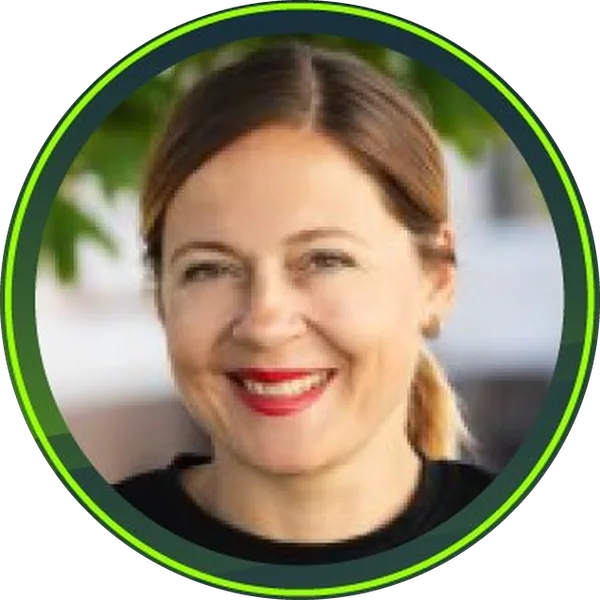
Hedi Mardisoo
Hosts James Benham & Rob Galbraith are joined by Hedi Mardisoo from Cachet
The full episode
Press play for the whole conversation.

Insurance Tech News
Lemonade Set to Buy Insurer Metromile in Its First Takeover
The full transcript
Transcribed automatically from the episode audio, so some names and terms may be misheard.
James BenhamJamie Knowledge Podcast Network. On episode 70 of the InsurTech Geek podcast talking about the platform economy with Hetty Martisu from Cache. The InsurTech Geek podcast powered by Jimmy Knowledge is all about technology that's transforming and disrupting the insurance world. We'll be interviewing guests and doing deep dives into specific tech we see changing industry. We're taking you on a journey through insurance tech. So enjoy the ride and geek out. Oh, man. It's Friday, 11/12/2021. Not 2020, Rob Galbraith. We're we're at the end of '21. It's about to be 2022.
Again, continuing the year and a half long time warp that has been this eighteen months. We are progressing through fall. College football is coming to an end. So terrible. I'm gonna have to resort to watching other sports, which is always a tough move for me, Rob, but it's neither here nor there. How are you doing over there in San Antonio, Rob Galbraith?
Rob GalbraithYeah. Doing well, James. You know, it's nice here about Texas is it's a little bit cooler, a little bit more comfortable being outside. So it's it's almost like our summer up north in some ways. So it's I know. We don't get the we don't get the fall colors, but I'll I'll sit for the temps. Yeah. People are like, oh, it's so nice. Isn't the seventies and sunny? I'm like, this is all summer in Michigan. I'm like, this is what it this is what it feels like.
It's so nice up there.
James BenhamOh my goodness. And joining us from the country of Estonia, Hetty, how are you doing, Hetty? Well, very good.
Hedi MardisooNice to meet you both. Yeah, it's cold and dark outside.
James BenhamYeah. Now it is your neck of the woods, isn't it? It gets cold and dark for what, five, six months? Oh, yeah. It's just getting started to the goldest and darkest month. Well, at least it makes you appreciate sunny summers, right?
Hedi MardisooAbsolutely.
James BenhamMaybe some beach trips down to Israel or Greece or Italy
Hedi Mardisooare in store for you in the near future. Well, actually, I just came from Brussels. Sorry. I just came from Portugal. There was a web summit, so it wasn't too bad. Yeah,
James BenhamI've not been to Portugal. It's on my list. I would like to go there. I hear it's very nice. I've been drinking their wine for decades now, so. Well, recommending highly. Yeah. Should be a really good visit. Well, we're glad to have you on the show. I know it's very late for you there, but we appreciate you joining us. Before we get started talking, don't forget you can subscribe to the InsurTech Geek Podcast by texting Geek Out to 66866. Make sure you never miss an episode.
Text Geek Out to 66866. Back to Hetty Martisu from Cachet, that's c a c h e t. And the website, for those of you who like to look at the website while we're talking is cachet.me. That's cachet.me. You know, there of course, they have an English version of our, of their website for all of our English speakers on the InsurTech Geek podcast. Let's let's we're gonna talk about Cachet in a second. You're co founder and CEO at Cachet. But before we do that, we're gonna talk about you.
You got a bachelor's in information and communication management from Northumbria about twenty years ago, right around the same time I got my my my degree as well. So you you and I graduated within a year of each other. Then you got a master's in information science from Tallinn University. What did you originally want to do career wise? Like, why'd you go into Information and Communication Management and Information Science? Like, what was the original goal and what did it end up being? Very good question. So actually, there's a very good story connected with it.
So, Asunya is known for its kind of digitization.
Hedi MardisooWe are one of the most digitized nation in the world. And I had a luxury of growing up inside literally every IT everything. So my mom used to arrange all the large events like seminars, conferences, exhibitions, and obviously, I had to help out there a lot. So when I was 13 to like 15, I went to the conference every year. And I remember I was just listening to different presentations. And I saw that, you know, there were the Moore's law and everything's just going exponential with data.
And I was thinking, okay, that's probably a safe bet to go and study something connected, how to sort it out, how to really understand, organize, etcetera. So that's basically was the decision why I went to study information science and communications.
James BenhamYeah. And what about technology has really geeked you out for the last twenty years? Like what did you really enjoy hardware, software, web development, mobile, like what really piqued your interest?
Hedi MardisooDepends when. But I worked nine years in a bank and before that in a business software. I've been always very much on the edge of what's happening. I would say twenty years ago, probably mobile technology. I traveled around with very much with Nokia and everything what they were doing and worked very closely with them. And when I went to bank and worked there, then really the kind of big data and the kind of what's happening really in the kind of world cloud space. And obviously, worked very closely with cyber and everything and helped to communicate the issues there.
In 2007, there was the first ever cyber war in Estonia. Was literally in the very central heart of it since the bank got also taxed. So I was very interesting in what's happening in cyberspace and the security and all that part. That's awesome. I'm
James Benhamfascinated about the Estonian connection. For those of you who don't know much about Estonia, I'm not the resident expert. All I can say is that it's right next to Finland and Russia, so it's pretty far north latitude wise, and it is a very, very well developed country. It's been inhabited for at least eleven thousand years. First people, I just did a little, little brush up. I love history. And Estonia, first signs of civilization were 9,000 BC, so there have been people there for a long time.
Fascinating country in general. Most folks that I've talked to from your area of the world speak a bunch of different languages. What languages did you grow up speaking? What do you speak now? I speak Estonian,
Hedi MardisooEnglish, Finnish, a little bit Swedish and Russian. So Finnish, Finnish is pretty much the same as Estonian language. So I literally learned it on watching cartoons when I was a kid. So yeah, but the other languages just came from work. I used to work long years in different Swedish companies.
James BenhamSo yeah, that was a handful. And that was a good, good language to know. And obviously Russia is next to us. So we learn it at school as well. Yeah, that's awesome. And it is a very wired and connected country. It's interesting how, what you grow up in really ends up influencing your life so much. I went to, an engineering high school. It was a public high school, but it was very technologically oriented and dozens of tech companies have spawned off from my high school, because of how, you take a bunch of 14 to 17 year old kids and you give them ultra high speed internet in the nineties.
We had really fast connections and your imagination runs wild. You end up developing a lot of skills. I think that's also the case of where you, you know, that kind of the area that you grew up in and how that's influenced things. Let's go to Cache and just talk about it. What is Cache? What does it do? You know, what does it specialize in? Just walk us through the business. So we started
Hedi MardisooCashena a few years ago, with the goal to really help platform economy with different financial services, because there's a, and we even like to say, enable the platform economy lifestyle via financial services. And what does that really mean? That platform economy is growing extremely fast. There is, you know, in The US you have 50 something almost percent people doing independent work or platform work. It's yeah, there's tons of different terms how you can define it. But I like to use platform economy because that kind of brings both the kind of key workers and also the kind of sharing economy participants into the same phrase.
So we started to create and solve a problem in insurance for ride hailers. So basically Uber, Lyft drivers, and in Europe, there is obviously a list list more. And the problem for them was that majority of the kind of insurance, they could either buy regular or then actually when they started to provide service taxi, and this ended up being five to 10 times more expensive for them. So obviously then, you can't talk about platform economy, because if you want to work couple of hours a week, just as a kind of sideshow or something, then paying just for paying for the taxi insurance, literally need to work minimum ten hours and then start doing something additional.
So, we came up with a solution literally to kind of bring the data from various different platforms around the individual and the vehicle, and make it flexible by that. So, we are the ones that know in our markets, how many hours actually one person with one car is providing service. It doesn't matter if it's doing it on Uber or in Estonia case, Volt, Janetsk taxi or others. And yeah, we managed to really make them very happy because we brought the prices down on average 50% in the market.
That really gave us a very good lift and now we literally have been ensuring almost 90% of everybody that does dry tailing in Estonia, for example, with their own vehicle. So Estonia is a really wonderful test bed. It's a whole country smaller than most US cities, right? And so you've got what 1,300,000
James Benhampeople in the whole country, which allows you to experiment at a scale that allows you to really control the variables. Why have you been successful reducing price that much? It's a huge decrease in premium. How have you been able to decrease premium and still keep your loss ratios in line and be a pro you know, make money? Like what have you done differently that no one else could figure out? So I think that the kind of
Hedi Mardisooone major thing that we did right from the day one was that we understood that there is no whatsoever loyalty in the platform economy. So, there's no such a thing as Uber driver, or there's no such thing as Lyft driver. There's a driver that normally provides services on Uber and in Estonia and Bolt and others at the same time, they are businessmen. They maximise their income at the time they want to work. So we put that hypothesis to the right place right away, which meant that we had the full picture of how they really work.
And by that, a different insight into their risks. And that kind of trustworthy data converted really nicely on the promise of there's going to be or the hypothesis that there's going to be lower risk coming year after, and this we managed to prove. So, and obviously we are, since we are not the carrier ourselves, so we have underwriters that we work with, and the kind of co designed solution, taking some of the historic knowledge that they had with the knowledge that we brought on, and the data that we brought on, we managed to do a really successful product.
So now we are scaling to new markets. And yeah, let's keep fingers crossed that we can do all the same effect there with a slightly larger target group than Estonia.
James BenhamYeah, absolutely.
Rob GalbraithRob? Hey, you know, we've had a chance to talk a little bit prior to this podcast, and it's been great to see your growth and development at Cache. I'd love you to just drill in a little bit more on this idea of you're really creating a full picture of that freelancer. Right. And so exactly as you referenced, know, these folks are on multiple platforms. So you can't just look at, you know, only their activity driving for Uber, only their activity driving for Lyft. Right? But you want to look across all the platforms.
And you've managed to create the connections, to acquire all this data, to process all this data, and to make sense of it, and to create that holistic view of that freelancer. So maybe just talk a little bit about how did you go about it? How challenging has it been to create that full picture? Do you use things like artificial intelligence, machine learning, and others to create some of these models that you mentioned as you work with your underwriting partners? Just give us a little bit of a behind the scenes look of how you make this possible.
So I think the kind of step one is to really understand the problem deeply. And we are super lucky to have also the platforms really coming along, because they understood as well, they knew that their drivers are providing service in many places, and they
Hedi Mardisoounderstood right away that we get that problem. And I will actually explain a bit and bring some deeper and maybe insights to why we are, why we probably are, we have a stronger edge also in really understanding deeply the kind of platform economy because of also the co founder Cashier has. But basically the platforms really were keen and happy to partner up with us. That went very well. So they started to share data with us. That was a very, very big, I would say success. And from there on, obviously, yes, the models that we build is literally the data bigger part of it is really GDPR.
The trust that we have and we are building with the drivers, so we don't collect anything secretly or that they can't see, but the whole concept has been built on the knowledge and the kind of trust between us that they see everything that we collect about them. And there is a very, very kind of important reason behind it, because if you as a person see and understand your kind of different behaviour patterns, work patterns, you start to make your own conclusions of it or and start to understand some of the kind of patterns they come with, what will come with it.
And I think that was a very important thing that we incorporated into that kind of product thinking. So the person constantly sees everything that they do, and they understand what we share also then, and what we use in the models that we have done. And I would say this is probably as important part of the product as any other, because the goal eventually is that when they start to see negative, some negatives, like price increase, they also understand that they probably need to tweak some of their activities like, you know, it's not safe to over drive or try twenty hours in a row, which obviously we tell them and some of them do that.
But it's impossible for us to Uber to know who tries twenty hours because they only know their part. So yeah, that's kind of this kind of triangle that we've built where we really have in a one way empowered the person or the driver in that case, and the other way also kind of make them more accountable and make it visible for them to understand how they work, how they provide
James Benhamservice and what's the kind of loop in the price from there. Sounds like there's an opportunity with all the data you collect and the fact that you share and show them the data that you have a transparent relationship with them about the data. You can actually help them with more than just their insurance. I mean, if there's no brand loyalty at all to the platforms that they're on, and it's all about the independent contractor and you're going to be their primary vendor, right? Other than whoever they buy gas from or whoever repairs their car, their insurance carrier is going to be their main vendor.
It sounds like you could actually step into a value added kind of a preferred advisor role, helping coach them better on how to run their business and mitigate risk. I mean, is that part of the long play? Is it really developing a partnership with all these independent contractors?
Hedi MardisooYeah, and we see ourselves as a kind of ecosystem of services that we're pulling together because, and the kind of key, that key connector around that is exactly that kind of the data model or that could really the work behavior model that we pull together. And it actually goes beyond. I'm an ex banker from my kind of past, and I still often ask from my colleagues, are you giving loans now to Uber drivers? And the answer is no from the kind of more bigger banks. The reason is very simple.
Banks just don't trust that the Uber drivers will actually earn the similar income the next month. But we have two years data to prove that, think the kind of last time during spring, we took it out, we saw that around 80% of the drivers that we have on our kind of portfolio, approximately 60% of the time, try with exactly the same pattern or same logic. So if you give that data to your bank, they say, oh, that's actually something that they can already trust that this person will actually do the same in the next coming months, because obviously there is a massive churn.
I think this kind of thing has been missing today from the patron economy and Cashier has strongly filled that hole and now scaling the solution throughout Europe. Hopefully soon also, we might come across the ocean.
Rob GalbraithYeah, Rob? So Hedi, one of the things that really strikes me in this conversation is that you have a very customer centric approach. And I think about traditional insurance as being very product centric. So you have auto insurance, home or renters insurance. You might have small business insurance, you might have cyber coverage, etc. Maybe you have an agent or broker that's helping you out that's packaging all that together. But typically you're dealing with a lot of different entities. Quite frankly, that's just kind of our system, right?
You have to file certain contract forms with state regulators get approved. And I just think of insurance as general. At the end of the day, they can ask you a lot about your business and try to understand it. But there's going be a set of underwriting questions, it's basically kind of which products that already exist can I put you into? And so you really go beyond that, right? You're giving them the coverage, but then you're also giving them feedback. You're showing them their behavior and you're giving them an opportunity with loss prevention, tips and information.
They can really shape their behavior. They can influence their rate that way. So I know a lot of traditional insurance companies talk about that, maybe have worked around on the fringes, but it just strikes me as a full paradigm shift to go with a customer centric approach that you're taking at Cache. So maybe you can compare and contrast a little bit. What does it take to have a customer centric model rather than product centric one? Let me start by actually, and
Hedi MardisooI like to use the word person centric model. And why is that? Is that we are building it for the person literally. So it's their data, their kind of data room in that sense that we ask and kind of work together in order to get better services and better financial services. So in that sense, the kind of customer centric is even maybe something I would sometimes challenge, because customer centric is often still defined by the big corporations saying that this, you know, this is the way they want to sell to the customer.
But obviously there is a, it could be something to discuss longer. But why we have selected strongly the kind of model is, we are strong believers that the world is moving more and more kind of decentralized and the person and it's kind of digital footprint that everybody's coming much more aware of what to leave behind and what are the kind of pluses and minuses security wise, etc. And I think that it's slowly shaping into more becoming much more organized. And we are developing our solution already to that world literally, where kind of this normal thing is data portability and people can say, okay, my score or I want to use that to get better services.
So that's kind of more on the vision towards what we're building. But why I'm myself very passionate about the data that I leave behind. So I'm monitoring myself since the first Kickstarter campaign of Oura Ring and I've learned so much about myself. So I always kind of feel that this is the either you see yourself and the world in two dimensional kind of view or three-dimensional and this kind of IoT data and the world data patterns really give you the kind of the dimension you often don't notice.
And that's why the team is very passionate about really looking different things that you can improve and actually visualise and illustrate to the customer. By that, you can change behaviours or improve them. I always bring myself as an example when I'm talking about car accidents, I think most of my car accidents have happened in November, dark nights exactly like we have right now, it's rainy, and then the lights are something and then I crash. So today I'm actually not going to take a car, have learned from it, But but someone should have told me already years ago, okay, just maybe use Uber by doing those aiming.
But jokes aside, so we all have those kinds of things we otherwise wouldn't notice and see. And if we can help to correct those habits, and all kind of just make it visible for the person that they will do that themselves, then everybody would win. And I think this part has been always missing from insurance. We from our little corner started to do the first steps of what we can to us there. And platform economy is definitely someone who would benefit the most of this approach.
Sounds like GDPR
Rob Galbraithis actually a competitive advantage for you and being able to start this company in Europe, having that kind of transparency where we don't necessarily have that in The US and certainly not in a lot of Asian markets. To your point, many insurance companies use a ton of data, but it's not always transparent. In fact, rarely is it transparent to the end insured how that data is being used, where it comes from and how it impacts their rates. GDPR definitely inspired us to kind of do that.
Because what I'm
Hedi Mardisoonever advocating that someone should, you know, just delete my data or something. But what I'm, what I've been always pissed off that, you know, I know that the banks, everybody's collecting tonnes of data about me and that have, they know about some things that I don't know about myself. The only thing that I as a person want and I'm like, show that to me as well, so I can learn about myself. Really, just teach me, make me smarter of the data that you collect and analyse.
But obviously this is slowly moving to that direction. And yeah, so I think we would all be much smarter to understand what Facebook is thinking about us or maybe not.
James BenhamIt's interesting, you know, certainly Europe and The United States, and I'd say North America and Europe are moving closer and closer to individual liberties with your data, right? Like actual owning your data, having the rights to your data, knowing what data people are collecting on you. And there's a huge part of Asia that's actually moving the exact opposite direction right now. There was big news out of China this week that they enshrined their leader Xi Xiaoping as a kind of an institutionalized leader in the history of China, which further solidifies and cements his role there.
And they have been leading the way in collecting data on people that they never tell them about. I mean, and demanding that every tech company that operates in their country, including any insurers, and I really believe ultimately this will, you know, continue to lock out a lot of Western insurers from their market, because they require that you hand over so much data on people. But it is, it is interesting that this inspired y'all and, really is neat in a regard that it establishes a positive relationship between the, the MGA in your case, slash carrier.
Of course, their relationship is with you and the insured, right? It's less of an afterthought and more of a meaningful direct relationship. So there's something to be said there for the just the nature of how you relate to the person actually buying the insurance. I would like to go back to a side comment you made that it's a tangent. Okay, so just bear with me. It's a tangent, but you said that you wear the aura ring and that is, help to identify things about yourself. You've got it on right now.
I have some friends that have purchased and been wearing aura rings for years. They were early in on the early adoption program. And this, this type of device is a key part of, of, you know, parametric insurance at some level where you you're tracking and sharing and storing and then insuring off of data. Can you help me understand what you've actually gleaned out of Aura? Like what is it actually telling you that's of value? And how do you think that impacts the future of what you're going to have available to you as an insurer?
Hedi MardisooYeah, I think AuraRing has in that sense inspired me of very much of the one main matter is exactly the patterns and the kind of small doses of info that I get every day, which is the same format, way. And I just, you know, I get it, I look at it and something starts to happen behind my brain, just to kind of connecting the dots and making your own conclusions. I think the most visible example I brought, I actually discovered that I'm lactose intolerant because of the Oura Ring.
And why is that? You know, something started to bother me, and then I just started to kind of try to find answers. And basically with some patterns, what happened, you know, some sort of body temperature increasing, things like that, I literally understood that, okay, need to go and check it out. And then, yeah, eventually it became clear that, yeah, I'm lactose intolerant. So things like that you can start, and I wouldn't have discovered it from just probably something else, but it was purely because I started to see some, some, some movements, some weird changes in, in,
James Benhamin, my kind of daily, daily data. It's interesting because I'm, I'm a hardcore Apple Watch guy and this has been amazing. When I turned 40, I started going to a cardiologist to make sure everything was alright, get checked up. And I rolled in with a boatload of data and he literally didn't even know what to do with it. Like, I'm like, well, here's my last, 30 EKGs. Here's my last, my heart rate. Here's all my AFib tests I took. I'm like, and then here's all the Apple Health connected devices.
And so I opened up Apple Health and I showed him like my record with all my EKGs and all my tests and all my heart, and he's like, Oh, wow. Then he just sits there, and he like geeks out on the data for the next ten minutes. You have an incredible amount of data on this. Have heart rate and EKG data for the last six months. I'm like, yeah, this is like modern, modern life. You know, I've got a ton of data on me that I own.
And of course, I love Apple's perspective on this, right? Is that the individual owns the data. Apple has really led the charge on privacy. And I, one of my favorite quotes on data privacy is from Tim Cook, CEO of Apple, who said, if a, if a service is, if an online service is free, you're not the customer, you're the product. And of course he was speaking very directly about Google, but they've really drawn a line in the sand about data privacy, data ownership, knowing what data is stored on you and then using it effectively, right?
To actually give you recommendations. I mean, I think it's a good hallmark for us for insurance, you know, and what we can do there. So we know where you are now.
Rob GalbraithRob has a wonderful question about the next step with Cache. Yeah, Hedi, we've talked a little bit about ride sharing, of course, I think that was the, maybe the original platform economy or certainly one that most folks kind of think about when we use that term. But there's obviously a ton of different platforms for all manner of provision of businesses, services, Fiverr, Etsy, you name it. I could go on and on. And so it feels like what you're building at Cache really kind of lends itself to maybe a lot of different product lines.
So kind of what products do you offer today
Hedi Mardisooand where is your kind of product roadmap headed in the future? So yeah, today we have the motor insurance for ride hailers as we discussed. We just quite recently now also launched the product called City Rider Insurance. And this is again, person centric. So we designed a solution basically, it's a third party liability together with accidents and some elements of health combined for a city to the rider, someone that has multiple different, is it a kick scooter or is it bicycle or are you traveling mono wheelers or there is a whole bunch of different things you can use while being in church.
And obviously this is the kind of key target, there is also all the workers that provide career service. So that's something we piloted just very recently and we are now looking for ways to do some part of the same, this kind of cross platform to really make it dynamic as well. And yeah, this is still what we believe that in the world of insurance, even though we are probably in somewhat swimming against the tide of everybody wanting to do things via their own platform, that we still believe that if we can bring things together around an individual and create really a slight accountability loop.
That's where the kind of real effect will come into the loss ratios and the overall kind of pricings eventually.
Rob GalbraithHedi, I'd be remiss if I didn't ask you a little bit about distribution as well. So how do customers learn about Cache? Are you sold to agent brokers? Are you direct to consumer? Are you an embedded solution in some of these platforms? How are you finding those persons as part of the person centric business model? So in the markets where we're at, we have, I would say the kind of initial year,
Hedi Mardisoothe very, very big percentage of the customer we get via our partner platforms like Bolt and Uber and others. So they promote us in their kind of onboarding, their driver newsletters, etc. But obviously also we have cracked some sort of life of a key worker forums and places how they operate. So we are quite active in different digital social channels and reaching out to them. And yeah, step by step, this is this has been the way we have built a market and somewhat obviously going to B2C is a kind of sharper hill to climb.
But once you're there, then it's the view is pretty nice. Well,
James Benhambecause of customer acquisition costs. I mean, if you look at the marketing budgets of the top five auto insurers, it's a staggering amount of money that they spend acquiring customers. I think that's really where people get really hung up on is on distribution costs, right? I mean, it's a ton of money to play in that game, in particular here in The United States. Yep,
Hedi Mardisooagreed. There is some benefits of starting off in that sense in the smaller markets where this is not that hard. But then so far it has been pretty coming quite nicely. But obviously we understand when we go into more competitive markets like UK or others, then there is a bit of a different journey and price tag on when you go with the customers. Do you have any desire to compete in The US market? Well, obviously,
Rob Galbraithbut first we will conquer Europe and then come and see what we can do over there. Yeah. That's awesome. Rob? Yeah. Helly, keep us posted on kinda where you're going both from a a product roadmap and a a geography roadmap. I would be curious as you kind of expand to new geographies, kinda what the reception is and what the learning is. Because as James kind of mentioned, I completely agree that I do feel like this is almost bifurcation, right, where in Europe certainly have been leaders in terms of data privacy, the right to be forgotten GDPR.
We've made some steps here with the California Privacy Act. It's kind of modeled after GDPR that many insurers have to comply with even outside the states. It's almost a de facto national standard. But in Asia, certainly we've heard about not just going to the credit scoring, but all the things that kind of go into this societal score risk score or scoring ice in general, not just for risk, but really for all services and products that you buy that is really kind of closed. People don't see it.
They don't know it. But yet it's streaming in a whole bunch of data. And I think it's very interesting, right? We talked a little bit about digital health, the Apple Watch, the Oura Ring. And I know a lot of firms in Asia are really leading in that space because they don't necessarily have some of the HIPAA protections that we have in The US and elsewhere in terms of health and privacy data. While clearly there's a priority that is placed on that, I can tell you, as somebody that's been filling out a lot of forms at doctor's offices throughout the year, that not having the data or the ability to share it or the interchange between doctors can be kind of a pain.
So it'll be interesting to see how this all plays out and the different, I guess societal and cultural views on this is really fascinating.
James BenhamIt's exhausting Rob. It's exhausting when you know that technology already has the solution to that. Apple Health has done it. They've already integrated with Epic. All my Epic records sink into Apple health and it's exhausting that the solutions already there. And, yet there are so many that just refuse to adopt. But this is not the med tech podcast and, I will not rail on them, on them too hard. So a good discussion with Hetty. Thank you so much. That's Hetty Martisu, from Cache. We do have a couple of news stories.
I'll start out with, one of my own and that is that there's a, you know, some, some more funding announcements. This one, this is owl.co,owlowl.co pulled down a 30,000,000 series B round. And they're expanding their, process from monitoring claims and mitigating fraud to address the $80,000,000,000 cost of claim fraud to American consumers. So they're using machine learning to automate and remove bias from the process. And they're trying to seek a future where nobody pays for fraud. That is a bold goal. There is still a lot of insurance fraud out there.
There's a lot of people working on the problem. They got their series a round, 4 and a half million dollars from the Canadian government. Don't you know? Sorry. Little maple syrup on that. And now they've got their next round. So their total funding is now sitting, including all around, Their, their total funding is sitting at $40,000,000 So I'm excited to, to, to hear what's been going on there. There's a couple of other fundings that, that occurred of course, about a month ago, CoverGO got a, a bunch of funding to expand the business to U S Canada and Latin America.
They're a no code platform for insurance firms that helps them streamline their products to manage claims. They raised a bunch of money. There's continual funding announcements out there in the InsurTech space. It was exciting seeing that particular announcement. Claims is, of course, my main bailiwick and what I've spent most of my day on, so it's always good seeing something they have in there. Rob, since we're talking about auto insurance today, you do have an interesting news story on auto insurance. Yeah, James, you know, I know this is our weekly news roundup segment, but I do feel like sometimes it's our weekly lemonade
Rob Galbraithsegment. So we talked to our last podcast episode about lemonade finally making leap into auto insurance after obviously starting on renter's insurance, moving to home quickly, and then pet and life insurance. So this has been a question that's been around for two to three years. When would they get in the auto insurance market? So I I told you about that announcement last week. Well, they made a really big splash this week by announcing that they are acquiring Pay by Mile startup and a quite successful one, Metro Mile, has a valuation of $500,000,000 So Metro Mile shareholders are going to get Lemonade common shares.
So both companies have gone public in the past year at a ratio of 19 to one. The deal is expected to close mid twenty twenty two. And Daniel Schreiber, who, as you probably all know, is the founder and CEO or co founder and CEO, said that most of Lemonade's approximately 1,400,000 customers are car owners and that by bundling its new car insurance with other business lines allows the insurer to entice existing customers and new ones alike and called it a hugely symbiotic opportunity. Now, I saw a lot of naysayers on Twitter and elsewhere about this deal.
I will admit that I'm not in the weeds enough to tell you whether this is a a good or or bad acquisition, but I I I love the splash. I love the idea. It feels like there's a lot of synergy here, so I'm gonna go with a a mild thumbs up, but I'm definitely open to other opinions. So, James, Hetty, any thoughts? Like the Roman Caesar here. You're like Yeah. Yeah. It's a slight it's a slight Thumbs up or thumbs down.
James BenhamYeah. Yeah. Look. You know, Shriver statement is kind of like the no duh statement of the century. Right? You you you mean that that if we bundle and save, people might buy more yeah. Of course. Like, like, oh, yeah. I mean, it's that one's an obvious one. I mean, if you're in almost feel like it's a right to play. If you're in home insurance, kinda need to be in in car insurance at some level because the of the bundling and discounting that goes on with all the other major players over here.
It is interesting who they purchased and certainly how much they paid for them to show you the strategic value that Lemonade believes this will add. There's always going to be a laundry list of naysayers. It's always hard to peg if they're right or not because so many of these companies have defied the conventional odds. A lot of those naysayers are folks who are firmly vested in the current ecosystem of mainline carriers. And it really freaks them out that to insure techs are, are now public and worth a lot of money and are legitimately competing in that market, which means they're gonna, it's gonna further, kinda move their, move their cheese.
So, well, yeah, we'll see. Right? I mean, I I I agree. I'm gonna give it like a thumb sideways, you know? Let's, let's let's see if they can pull this hard. Buying companies is hard. Just being an effective acquirer is really hard and stitching together technology is actually not easy. And so, we'll see how good they are at, at, biting an elephant one one bite at a time. Right? Absolutely. Yeah. The Bloomberg article that I was citing here notes that it's lemonade's first takeover, and I like that they put first takeover in the headline implying that there will be others down the line.
Yeah. Well, when you have that much cash at your disposal and you can only grow grow so fast organically, you're gonna start acquiring companies instead of, you know, just ramping up the lines on your own. Makes sense. Well, thank you. Great conversation. Great news, Rob. And, Hetty, thank you so much for joining us so late in your day over there in Estonia. We appreciate you being on the Insurtech Geek podcast and thanks for doing what you're doing in Insurtech. Well, absolutely.
Hedi MardisooI'm very happy that I had a chance. So thank you so much. It was fun. Yeah. And if people want to find out more information about Cache, it's cache.me.
James BenhamIs that correct? Cache.me? Yep. That's that's correct. Awesome. And of course, you can reach out to to Hetty Martisu on LinkedIn. She's pretty active on there. So you can go connect with her there and reach out to her and chat with her there. As always, Rob Galbraith, most interesting man in insurance. Got any conferences coming up, Rob? I'm just curious. Do you have any speaking events or big conferences on horizon?
Rob GalbraithSo I don't have any in person between now and the rest of the year, but I actually just did a InsurTech Insights webinar on Wednesday with a friend of the program, Carrie Ann Nadeau, as well as Vaughn from High Gear. And so definitely check out their website to find a replay. In fact, I'll also be doing another webinar next month as I did it at the 2020 looking into 2021. So this one will be with Rob and Kira, also an InsurTech Insights webinar
James Benhamlooking what's in our crystal ball for 2022. So definitely check out their website, register for the one that's coming up in December and look for the replay that should be posted soon. Yeah, Rob, as you know, I've been full back at events since like June was my first event that I've been at and I've been trucking it. We pulled together a list of all the InsurTech events in 2022. It's a lot and we're gonna be at a bunch of them. We have two insurance products. We have smart compliance that is certificate of insurance tracking and collection.
And we have our new product, TerraClaim. That's a world class claims platform that we have built over the last two and a half years. We are out on the market selling both of them. We are going to be working and very, very busy in 2022 at pretty much every insurance conference you can shake a stick at showing off our products and talking to insurance folks. And we're very, very excited to be back on the road, back face to face and hanging out with people. And certainly if you're out there on the road, you can always hit me up on Twitter, LinkedIn, Facebook, Insta, wherever you want to connect with me, or you can just text me on the show text line.
That's 97947390409794739040 is our text line. If you want to text us any questions, comments or suggestions, or if you just want to meet up at a you want to meet up at like Dig in or at Rims or, you know, at InsurTech Connect next year or whatever you want to do, we can, we'd love to connect with you. This has been the InsurTech Geek podcast powered by Jibby Knowledge, jibbyknowledge.com, all about technology is transforming and disrupting the insurance world. I'm your host James Benham. That's jamesbenham dot com with co host Rob Galbraith.
That's endofinsurance.com. Big thanks to Jim Greenlee, our podcast producer, Cara Dalton, our creative producer. And thank you for joining us today. We're taking you on a journey through insurance tech. So enjoy the ride and geek out. See you next time.