 YouTube
 Spotify
 Amazon
 iHeart
 Apple
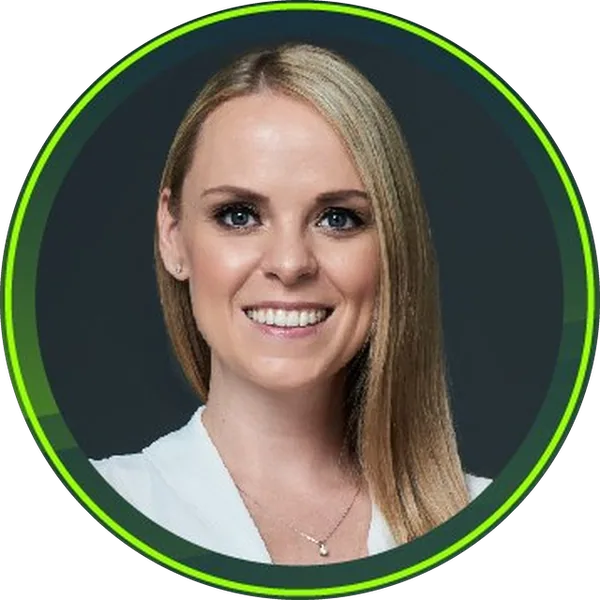
Theresa Blissing
Theresa Blissing, Author of The Future of Insurance - Asia Rising, shares her expertise and insights on how Asia is shaping the future of insurance. Learn about emerging solutions and strategies, and gain insights about the opportunities and challenges in Asia's insurance space.
The full episode
Press play for the whole conversation.

Opportunities for the Future
In the ever-shifting landscape of insurance, one region shines as a powerhouse actively shaping the industry's destiny - Asia. With its rapid economic growth, technological innovation, and shifting consumer behaviors, Asia has positioned itself as a central hub for insurance professionals and experts keen on deciphering the forthcoming chapter of insurance evolution. In this article, we embark on an expedition to uncover the profound impact of Asia on the insurance sector, guided by none other than Theresa Blissing, the Author of "The Future of Insurance - Asia Rising."
Introducing Theresa Blissing
Before we delve into the insurance panorama of Asia, let's acquaint ourselves with our trusted navigator on this journey, Theresa Blissing. As the Author of "The Future of Insurance - Asia Rising," Theresa brings a wealth of knowledge and experience to the fore.
Her educational journey, encompassing an Associate Degree in Insurance from IHK Frankfurt, a Bachelor of Arts in Business Administration from FOM University of Applied Sciences, and an MBA in Business Administration and Management from Webster University, provides her with a solid foundation to navigate the intricate domain of insurance.
Theresa's professional journey is equally impressive, with roles ranging from Director at Accelerating Insurance to the Founder of both the Asia InsurTech Podcast and InsurTech Amplified. Her unwavering passion for insurtech and her commitment to exploring Asia's insurance landscape make her the ideal guest for the ITG podcast.
Asia: The Epicenter of Insurance Innovation
Asia is no longer just a newcomer on the global insurance stage; it has evolved into a juggernaut of innovation and growth, fueled by several pivotal factors:
Economic Expansion: Asia's robust economic growth has fostered a burgeoning middle class and an increase in disposable income. This has led to a surge in demand for financial protection, resulting in thriving insurance markets.
Technological Advancements: The region stands at the forefront of technology adoption. From artificial intelligence and blockchain to data analytics and digital platforms, Asia's insurtech ecosystem is flourishing.
Shifting Consumer Dynamics: Asia's consumers are increasingly insurance-savvy, recognizing the significance of protection in an uncertain world. Consequently, the demand for insurance products and solutions is witnessing an upward trajectory.
Regulatory Support: Numerous Asian governments actively endorse innovation in the insurance sector. Initiatives such as regulatory sandboxes create an environment conducive to the growth of insurtech startups.
Theresa Blissing's Valuable Insights
During her appearance on the ITG podcast, Theresa Blissing shared a treasure trove of insights into the Asian insurance landscape. Here are some key takeaways:
Customer-Centric Approach: Theresa emphasized the transition toward a more customer-centric insurance industry. Insurers are now prioritizing the delivery of personalized experiences and custom-tailored products to cater to individual needs.
Digital Transformation: Asian insurers are harnessing technology to optimize operations, streamline underwriting processes, and enhance customer interactions. The digitalization journey is paramount for maintaining competitiveness.
Collaboration and Alliances: Collaborations between traditional insurance companies and insurtech startups are witnessing a surge. These partnerships drive innovation and enable established insurers to leverage new technologies effectively.
Emerging Insurance Solutions: The podcast delved into emerging solutions, including parametric insurance, microinsurance, and pay-as-you-go insurance. These innovative products are addressing unique challenges in Asia, such as climate-related risks and financial inclusion.
Challenges and Prospects: Theresa highlighted the duality of challenges and opportunities in Asia. While the market potential is vast, insurers must adeptly navigate diverse regulatory terrains and cater to varying consumer preferences across Asian nations.
The Road Ahead
As we cast our gaze into the future, one fact is unequivocal: Asia's role in shaping the insurance industry will continue to burgeon. The region's burgeoning insurtech startups, groundbreaking insurance products, and relentless digitalization efforts are setting the stage for a thrilling era in insurance.
Theresa Blissing's profound insights and her unyielding dedication to unraveling Asia's insurance landscape provide us with a valuable compass to navigate this exhilarating voyage. The insurance industry must remain nimble, adaptive, and open to collaboration as it embraces the transformative influence emanating from Asia.
In conclusion, Asia is not merely rising; it is redefining the insurance landscape. The future of insurance is inexorably intertwined with Asia's narrative of growth. Whether you're an insurance professional, a tech enthusiast, or simply curious about the insurance terrain in Asia, Theresa Blissing's insights are a trove of wisdom that will guide you through the ever-evolving realm of insurance.
Do not miss out on the complete conversation with Theresa Blissing on the ITG podcast. Explore the potential, challenges, and innovations that Asia brings to the insurance's future. Engage in the discourse and remain at the forefront of this enthralling industry.
The full transcript
Transcribed automatically from the episode audio, so some names and terms may be misheard.
James BenhamOn this episode of the InsurTech Geek Podcast, talking about how Asia is shaping the future of insurance with Theresa Blissing, author of The Future of Insurance, Asia Rising. The InsurTech Geek podcast is all about technology that's transforming and disrupting the insurance world. We'll be interviewing guests and doing deep dives into specific tech we see changing the industry. We're taking you on a journey through insurance tech, so enjoy the ride and geek out. And I'm here with our special guest live from New York City, Theresa Blissing.
Teresa, how are doing today? I'm good. Thanks for having me, James. Thanks for coming on the show. It's always a pleasure having a fellow insurance geek on the InsurTech Geek podcast talking about insurance and technology and oh, it's a global business too and that's what your your book is about. Asia Rising. We're going to get to that book in a minute. Before we get to the book, we're going to talk about you.
Theresa BlissingYeah. Do you want to Tell a
James Benhamlittle about your mother. No, we're not. I'll tell you about my mom. She's she's great. Yeah, we talk like twice a day. She's doing awesome. I'm I'm from South Louisiana. You're not from South Louisiana. You're also not from New York City. You're also not I'm originally from Germany.
Theresa BlissingGermany. Yeah. Just just outside of Frankfurt. That's that's where I grew up. Yeah. Awesome. And you've lived all over the world? I have. So the first time I lived abroad was in 2009. At that time, I was working for Generali, the Italian insurer. And so with Generali, I worked for the Asia headquarter in Hong Kong. So yeah, back in 2009 was a different world back then. I then also lived in Bangkok, Thailand. I lived in Jakarta, Indonesia. I spent way too much time in Singapore. Before relocating to New York, I was living in Sydney, Australia.
And yeah, now in New York for another two and a bit years. And then let's see what's next.
James BenhamYeah, you're a wanderer,
Theresa BlissingYeah, I'm not running from the law. I just want to make this clear.
James BenhamI know. I mean, it looks an awful lot like some kind of evasion protocol to get away, you know, as soon as they find out who you really are, up, you pull up stakes and you go to the next country, right? Correct.
Theresa BlissingNo, I'm actually we relocated to New York because my husband is working for the United Nations. So seconded to actually UN Women and gonna be in New York for three years. So another like two and a half more to go.
James BenhamYeah, that's awesome. So what'd you say he was doing at the United Nations?
Theresa BlissingSo he's the strategic military advisor for UN Women. So that's the part of the United Nations that is taking into consideration gender equality, etc, especially in conflict and fragile environments. So that's what he's doing.
James BenhamAwesome. That's good work. Interesting time in global democracy and politics right now. I would be remiss, and you don't have to make any comment on this if you don't want to, but I'd be remiss if I didn't express my love and concern for our InsurTech brethren in Israel right now and the entire region. It's been a very interesting last week. We've had a lot of guests on from Israel, onto the show who either continually active in Israel or are from Israel and have moved in largely New York and other other parts of The United States.
So, hope that the the conflict resolves swiftly and peacefully. And I'm certainly very concerned about our friends' safety and hope they and their families are well. So let's jump in back to you. So what did you grow up wanting to do as a girl in Germany? Like, what was your hope and desire? Did you want to be a lawyer? Did you want to be a diplomat? What did you want to be growing up? Yeah, it's a good question. I
Theresa Blissingkind of wanted to keep my options open. That's also why I had Latin in school because back then in Germany, there was a requirement if you want to become a doctor or a lawyer, you needed to have Latin to get So into that's why I decided to take Latin. And, you know, looking back now, it was probably the most useless language to learn ever. But yeah. And then I ended up in insurance a little bit. Some say it was like destiny because my parents had an insurance agency.
They were running it from my childhood home. We were living on the 2nd Floor and on the 1st Floor there was their insurance agency. And I actually applied for a few different companies, all in like financial services, but not all insurance. But when I had my interview with Generali and that was back in 2004, so almost twenty years, I did really like the vibe and, you know, the whole experience of the interview process. And so I decided to actually go into insurance and yeah, quite a surprise to my parents.
It's not that they were pushing me to do that, but yeah, not regretting it.
James BenhamGood. Yeah, you shouldn't regret anything, right? The path is the path that got you there. So, what led you to to to write this book? Mean, look, first, tell me tell me a little bit about about the career projection and trajectory. Like, what where did you go along your career path? Because obviously, I've got your I've got your LinkedIn, and I can I can see nominally what the stops on the train track were? Right? I can and say, okay, well, she's in New York. We're gonna back up to Sydney and we're gonna back up to these insurance companies she worked at and, you know, she you you had all these kind of innovation studios you've been involved with.
And if you wind all the way back, you were in planning and control, any money laundering, IT security officer, your manager of international business. I mean, you you you really had a a lot of stops along the way. Yeah. Right now, currently, you're a director with Accelerating Insurance. You're a lecturer and public speaker on on your own. You're also founder of the Asia InsurTech podcast Insurtech Amplified. So there's a lot of current jobs on your LinkedIn. So tell me what led to that.
Theresa BlissingYeah, sure. So I worked ten years for Generali and I had different roles. As you know, I mentioned, I was planning and control. I was under money laundering officer, which is a role every insurance company needs to have by law in Germany. I'm actually not sure if it's the same in The U. S, but yet it was one of the titles I had and not something that really enables business, but more prevents business in a way. I then also worked for Generali in their Asia regional office in Hong Kong.
So that was my first introduction to Asia and the Asian market and also on what is happening in that part of the world. My last position with Generali was manager of the international business. So that was their employee benefit business together with the Generali employee benefit network. So I was responsible for the German market, but was connecting with the different offices of the Generali Employee Benefit Network. But I found myself a little bit like on the one hand missing Asia, but also I asked myself like, isn't there more in life than working for an insurance carrier?
And I was also really intrigued by new innovations and new technologies coming up. So that was 2014, 2015 when really the term big data gained a lot of popularity in the insurance industry. And I remember reading all of these articles about how big data is gonna change the insurance industry. And I looked at the company I worked for and also from colleagues and peers in other organizations, there was no big data in insurance. There was not even a small data. There was siloed data. There was a lot of fragmented data all over the place that nobody could really access.
And so, decided to take a break, go back to university. I did my MBA and I took the time to do an academic research study on the adoption of big data because something that I have learned. And during my time with Generali, I was also working on a major merger between the German entity of Generali and a German insurer, which was called Foxwissager. And during that time, I already realized how difficult it is for people to change their behavior and ways of working and adopt new processes, etcetera.
So that's how I really looked at the adoption of big data from like a change management perspective and understanding how, frankly, any innovation or any new technologies can be adopted. What are the challenges, etcetera? And that was my gateway into everything tech and innovation in insurance. And I then decided not to go back working for an insurance carrier, but switched careers a little bit, started working in management consulting. I then worked also with a lot of startups. I worked with different universities and startups accelerators in the Asia region.
And yeah, really, really enjoyed that work. And that was also the time where Michael Waits and I founded the Asia Insurtech podcast to really bring some of these stories
James Benhamto the world. So tell me about your current status. What's largely consuming your time now in Insurtech?
Theresa BlissingSo just finished writing the book at the moment, looking at diving again more into the change management perspective. I think there's a huge opportunity for insurance companies to change their corporate culture, to change their mindset, something I keep hearing from people working in the industry that it's not very attractive, that they are struggling to attract young talents. And I believe also through some of the lessons learned when doing the research for the book, but also when talking to, you know, different companies from the Asia Insurtech podcast, I think there are some ways the insurance industry as a whole can do more to become more attractive for talent and also change a little bit the image about insurance.
And that's something that Brian actually said, who wrote the book together with or published it in his series. Like in Asia, you find a lot of stories where insurance is actually the hero. And I think we need more of that because I believe that the negative perception that many have of the industry is what is holding back a lot of progress and which is making it sometimes challenging for companies to attract talent and especially the younger generation.
James BenhamYeah. One thing I've really enjoyed about this podcast over the last several years has been identifying the societal and moral good that insurance does for people. Like the fact that it allows humans to engage in all kinds of activities that we normally wouldn't engage in without having insurance, that innovation in insurance has allowed people to live safer, happier, more profitable, healthy lives. When bad things happen, they're not wiped out. That it's not the end of their family. I mean, you look back at human history, there were so many events that would just wipe out families.
They would wipe them out financially and then it would wipe them out practically. And so there's a lot of moral good in the insurance business. A lot of there's a lot of reasons why pooling risk makes a lot of sense for people because it allows all of us to pay a premium to not have to worry about losing everything that we have.
Theresa BlissingYeah, no, I agree. And I think we should all working in this industry work on this narrative that how incredible insurance is. And I think that comes out in some of the stories I have in the book. And just to give you an example, I have a story of a company called Koala in Indonesia. And Indonesia is one of the countries with the lowest insurance penetration rates globally. So they have around 1.6% of GDP, whereas The U. S. Has 12.4 and China has even close to 20.
So if you have a population so unaware of the overall concept of insurance, right, but at the same time you have a very young and tech savvy population, 50% of the population of Indonesia is 30 years old. These are all people who grew up like digital natives. And now having these companies who are like redefining how insurance looks like, how it's marketed to the population, and therefore also, you know, having the opportunity to create a completely new image about insurance. And Harshad Lunani, one of the founders of Koala, he said, you know, there's no great economy in the world that got to this place without being well insured because, you know, there's going to be bumps in the road.
And you know what you said, like, you know, families are being wiped out by tragedy. And insurance is really, you know, the tool that enables economies to achieve something greater.
James BenhamAbsolutely. So let's talk about Asia because your whole book is a focus on Asia. Tell us why are you focusing on Asia? What is it that you saw when living there and operating there that made you want to write a book about it and talk about the relationship between insurance, innovation, the future of insurance and the Asian continent?
Theresa BlissingYeah, I mean, as mentioned, the first time I moved to Asia was in 2009 into Hong Kong with Generali. And it was the time where Generali started a lot of their insurance carriers throughout the region in like Indonesia and The Philippines and Thailand and India. And that's when I first understood how different the landscape there is with, you know, again, often very low insurance awareness, very low penetration. So a lot of room for growth. And where there's growth, you have just a very different market compared to, you know, my home country, Germany, which is similar to The US, very mature, but also very saturated.
Yeah, super well insured. Super well insured. Yeah, exactly. And working in a growth market comes obviously also with challenges, but you have great opportunities and you can focus on different things, I guess. So when I then left Generali and I focused on more on the innovation and technology side and started to work with different startups. And I did a lot of research on Insurtech that was back in 2018, 2019 when there was the big Insurtech wave. And something that I found was that there was a lot of hype on what has been happening in The U.
S, but also in Europe, but very little on what was happening in Asia, at least in the major insurance news outlets. And this is when I met Michael Waits and we decided to start the Asia Insurtech podcast to really give a platform on telling these stories because, you know, you can't take a concept that works in a very mature market with high financial literacy and apply it to a country like India or Indonesia or even Thailand. So a lot of Asia and especially developing Asia needs their own solutions.
And at the same time, you find a landscape that is highly digital in a way, right? Because a lot of these countries were able to leapfrog certain development stages. To give you an example, like you and I, we probably access the internet first time through a personal computer connected via a landline, I assume.
James BenhamYep.
Theresa BlissingIf you talk to people in India, the majority access the internet first through a mobile phone. With rise of smartphones and prices going down for mobile data, etcetera. So that has an impact on how products are marketed, right? And even still today, if you look at the traffic share you have in The U. S. And the traffic share you have in India, you will find that still today, most accessed is through mobile phones, right? And that has an impact how companies design a user journey. Whereas in The U.
S. You often find, you had first the internet, you had a website, you access it through a desktop, and then you try to convert that into like a mobile journey. And in many cases that's really clunky because it was not designed for mobile. But in India and other parts of developing Asia where they leapfrogged that development stage, they started straight with the mobile journey and then also designing a user journey so people who have very little financial literacy are able to buy and understand what they are buying when it comes to financial products, right?
So that I found really, really interesting. And I just wanted to give a platform.
James BenhamYeah. And we've we've got the the classic innovator's dilemma in The United States and Europe. When you pioneer a whole suite of technologies, you end up with a lot of legacy baggage. I mean, you you go to you go to an insurance carrier here in The United States or a TPA or an MGA or, you know, brokers that have been around for a while, they they digitized decades ago. And so they've have they have old mainframe applications they have to manage. So you you have you have that that burden of legacy on the consumer side and that you're right.
I mean, I'm I'm 44. So the first time I got on the Internet was on a dial up. I was a a twenty eight eight or a 144 dial up. You know, I'm talking about 14,400 bits per second. So, very slow. Very, very, very, very slow modems that I dialed up on and used in the early nineties, right when dial up became a thing. And so I have a very different perspective on the evolution of technology and the Internet utilization. I've been using it for a very long time through a lot of web browsers.
And you're right. When you have a a country that skips the entire landline phase and they skip the entire t one phase and they go straight to just five g modems, Like Yep. Or they or they went straight to four g and they, you know, they they deploy really high speed wireless networks. Everybody's on the phone. So, know, like WhatsApp spread way faster in other countries in The United States and they started using it for transacting business all over the all over the world and and still in The United States is barely used.
And and because we have a we just you know, everybody here has an iPhone and we we don't we don't messes that way. I mean, to the point that in The United States, if you don't have an iPhone, you're like a social pariah and people get pissed off when they text you because it's green instead of blue and they can't put you in their iMessage groups. So there's there's all kinds of weird things about being in a country that has, you know, prime movers advantage and has been involved there for a long time in in a certain suite of technologies.
It's also a great opportunity for rapid acquisition of market share in countries that skip all those generations go straight to latest gen because you can reach them a lot faster. Right? You can embed insurance purchases and that's what we've seen a lot in Asia and Africa and and Latin America is a is completely different ways of, financial transfers of moving money. They're very, very sophisticated with moving money around electronically, and they're much more willing, in my opinion, because I've been operating in Latin America for a very long time, to buying
Theresa Blissingfinancial products a completely different way than Americans would be. Yeah. And it's not only about the technology legacy, but also the people who have to learn a new behavior, right? Like I can speak for Germany. Like it might also has to do with the history of Germany, but a lot of people don't feel comfortable using like electronic payments or being very digital. There is this resistance to adopt new behaviors, whereas in many parts of Asia, one of the reasons is that in many, especially in the developing countries, you find a very young tech savvy population.
So they are also just much quicker to adopt new ways or for them, it's the way to access financial products because they have not learned any other behavior.
James BenhamYeah, exactly. What are you most excited about in Insurtech?
Theresa BlissingWhat I'm most excited about, I mean, there has been a lot of talk, especially I feel this year where funding is going down and a lot of people say, okay, can we go back to regular business? Have we wasted enough money on Insurtech and all these crazy innovation strategies? I don't agree with that. I do think Insurtech or the whole digitization of financial services has turned out a bit different. We haven't seen major disruption, etcetera. But what I believe it has done is it was a wake up call to the industry that there is a necessity to change.
And there is simply a necessity to change. All of our lives are changing. Even if we are not a highly tech digital economy, like you find it in Singapore, for example. But like we all are increasingly digital and all of our lives have changed. Our behavior has changed through the smartphone, through COVID-nineteen pandemic. Right. And that means risks have changed. Behaviors have changed. So insurance needs to change too. Right. And I believe that Insurtech has really helped with that mindset change. And I think it has also inspired a lot of people working in insurance that insurance can actually be a really exciting industry.
That's It can be. Yeah. That's what I find most exciting about Insurtech.
James BenhamYeah. I mean, you have, you know, your hype cycle and then your trough of disillusionment and then you come out of that trough, which is kind of where we're at, right? You know, funding's drying up for a lot of ideas. The ones that have been funded are seeking follow on funding or profitability and having a hard time finding follow on funding. And so you're you're gonna have a shakeout. There's gonna be a shakeout. There's gonna be a lot of bargain acquisitions, And, this is where the the real solutions start to start to flush out.
Right? I mean, there's a there's been a lot of work on making back office processing simpler. There's been a lot of work on making policy administration and claims handling simpler. There's been a lot of work at making purchasing, quote, buying pay a lot faster and embedding that experience in other applications. Right? So there's there's a lot of things that have been that they've spent a lot of investor money on that have materially changed and reset expectations for the user experience in insurance and the back office experience.
I think it's it's equally important. I've also been impressed, and and not surprised at the number of companies who who said, hey, we're gonna cut the broker out, and now they develop technology for brokers. Because they they they realized I mean, there's a lot of them that that d to c is, you know, going direct to consumer is nice and extremely expensive and very challenging. And sometimes you just have to make the broker experience a whole lot better. And and so I I think at the end of the day, we're gonna come out the other side with a healthier insurance business that's more efficient, more effective, utilizes technology, is more customer centric, utilizes a hell of a lot more data to make decisions with, too.
The other thing is like just database decision making is really big positive outcome from all of us. Yeah, no, I absolutely agree, right? And
Theresa Blissingit's interesting, like you talk a lot about digitizing backend and innovating along the value chain. Whereas me and my book, I'm talking mostly about product design and distribution because that is what a lot of the companies, especially in developing Asias, are focusing on, right? Because if you're in an economy where labor is not as expensive as in The U. S, you have a growing market, you have different priorities. But yeah, that is also something I'm seeing when we go back to Asia. That's probably the next wave we are seeing there is like more companies who are looking at innovations along the value chain.
The first wave was really mostly about distributing products, product design, etcetera. But of course, data, etcetera, always plays a major role there. So what's
James Benhamnext for you? What's the big projects you're working on? Obviously, you have this book release, which is talking about the importance of paying attention to Asia. This is a global industry, so it's important not to get myopic and just look at your country. And you're you're identifying some great opportunities there are are are in Asia for for people to to focus on, invest in, for companies there to focus on. What's next for you? What do you think is your next big thing? Well, I continue to work
Theresa Blissingwith Michael on the Asia Insurtech podcast. We have also started a new show called Insurtech Amplified this year with me being in The US. We had over the years and we have been running the Asia InsurTech podcast since May 2019. So it's over four years now and really positive feedback and decided to add like a global show to it. But beyond that, what we do is we help insurance companies in their media strategy because I firmly believe that every company should be a media company and control that narrative if it is for like internal communication or external communication.
So we work with different insurers on that in Asia and with me now in The U. S. Also in this market. And yeah, I'm working with a few management consulting companies on different projects as well.
James BenhamYeah. Okay, cool. So some last questions before we go about the book. I know it's always fun because I published my book back in November, Yeah. Be Your Own VC, which is about, you know, creating a culture of innovation and bootstrapping it. Let's first off, where can people buy your book? So the book is available on Amazon.
Theresa BlissingIf you are in The U. S, go to your U. S. Amazon account. If you are somewhere else in the world, just go to your local or next best Amazon store. It will be available coming October 17 as paperback, hardcover, and also the Audible audio book, which I recorded, which was probably the most difficult part about the whole project. And already available for preorder is the ebook version.
James BenhamYeah. Did my own audiobook as well. I can It's say different than recording a podcast, isn't it? It's different. I've done podcasting for, like, nine years now. I've podcasting a lot for a long time, but it was definitely having to have every word precisely correct and match it exactly to the manuscript. Don't know if listeners know that, but you have to make it exactly like the book because Amazon does this whisper sync where they sync the text and the audio up. So it's got to be perfectly exactly the same, which is always really interesting.
Theresa BlissingYeah. Correct. And then, you know, imagine doing it as a non native speaker.
James BenhamYes, I know. I cannot imagine recording it in Spanish. So it would be totally different. A) Writing a book in my non native language and then B) Reading it as an audiobook. So kudos to you on that. A couple more things about your book that I wanted to kind of close out with I thought were interesting. You did have some case studies. I'm a huge case study fan. I love, love, love case studies. I love case study based education as well. So when I got my master's in business, it was super heavy on case studies.
In section two of your book, you actually have eight case studies of different companies who are at the forefront in designing the future of insurance in their market and globally. So what what can readers expect to take away from from studying these case studies and reading the book? Yeah,
Theresa Blissingmaybe let me take a step back about when I started working on this on this book, right? So because it is part of Brian Falkirk's The Future of Insurance series. And he had his first book on incumbents, insurance carriers, then the second one on startups, and the third one is on partnerships. I decided I don't want to focus on like startups or incumbents. I do want to focus on what I believe makes Asia special. And this is the way products are distributed and designed, how they embrace partnerships, etcetera.
And I also wanted to give people a glimpse of what is Asia because it's the most populous continent worldwide. And we have been talking in this podcast mostly about developing Asia, but you also find countries like Japan, which is super mature and more similar to The U. S. Market than to India or even Singapore. So I picked eight examples from different countries. I have countries from Hong Kong, Yasen, One Degree. I have companies from India with PhonePe, Indonesia, Kuala. I have Malaysia with TuneProtect. I have China with Ping An and Japan with Habito.
And then Boltec, which is essentially Singapore, but they are operating globally. But they're headquartered in Singapore. And I also have this mix, right? So if you look at Ping An, which is the second largest insurance company in the world, and I tell a little bit about Ping An's history and how they got to this point in talking about their unique ecosystem strategy and how they embrace partnerships. And it's just fascinating to see Ping An launched in 1988. So it's not that old. And when actually Ping An started, there were hardly any privately owned cars.
Today, Ping An is the largest motor insurer in the world.
James BenhamHoly cow.
Theresa BlissingI mean, it's just, you know, mind boggling in a way. So I'm really grateful. I had the opportunity to talk to the Ping team. I talked to Jonathan Larson, the chief innovation officer, and also the head of the Global Voyager Fund about what made Ping An what it is today and also their strategy when it comes to, you know, Insurtech and partnerships. But then I'm also happy to have Habito in the book, which is a company that just launched in June. So they are really, really new.
And they are operating in Japan, which is not a gross market. But again, are looking at how to attract younger customers, better serve the younger generation with financial products, right? And the founder, Samantha Jotti was previously with Singlife. Singlife also one of the success stories in Asia. And bringing that all together, I think is really beautiful to show the diversity of Asia, but at the same time showing that we all operate in the same industry. And regardless if we are, you know, one of the largest insurance companies like Ping An or if we are a new startup, you know, we have some commonalities and more than than you might think.
Yeah, absolutely.
James BenhamYeah. It's I've been operating in three countries for the last twenty years, US and Argentina and South Africa. And I'm always impressed by the differences and the remarkable similarities between business and the countries. There's always cultural differences, but at the end of the day, we're still running business and we're still there's still a lot of things that can be taken away and learned from. And no matter what country you operate in. And there's a lot to be learned by watching how other countries take on a similar problem in a completely different way.
Theresa BlissingYeah. And I find Asia especially interesting and also the companies I chose to see how they are looking at especially attracting millennials and Generation Z. And that's the case for the developing countries, but also Habito in Japan who really is trying in a aging society. Japan has actually the highest median age of any country in the world. Right. Yep. Over 50 A
James Benhamlot of empty houses now, too, because they a declining population and they're in population collapse. Yeah. And
Theresa Blissingyeah, but still over 50% of the wealth is allocated with people older than 65. So naturally, a lot of financial institutions, including insurance, have been targeting this older segment. But what they found now or what Habito found was that the younger generation looks at, you know, a different way to be approached, to be marketed to, etcetera. And that's what they are trying to do in the Japanese market. Yet it's obviously too early to say if they are successful, but it's still a very valuable lesson, I think, how they tackle this problem and also how they take experiences.
Samantha Jocchi has formerly been with Singlife. And what I also find, happy coincidence actually, Walter the Oder, who is the founder of Singlife, he has now left Singlife, started a new venture, but he has actually agreed to write the foreword and talks about the lessons he learned when founding Singlife. And later they acquired Aviva, which was the largest insurance deal in Singapore's history. You know, it's like this cycle of innovation, starting with the forward by Walter, founder of Singlife, and then having Samantha, who was a part of his team, starting her own company in Japan.
James BenhamAwesome. That's a great that's a great example. Great, great story. And I'm excited about your book and your audiobook and kudos and congratulations on the release. I know how much work that takes. It's a lot. And I'm impressed and I hope you enjoy living in New York City as long as you live there. It's an exciting place and from an insurance perspective, fantastic. Couldn't pick a better place to be for great insurance events and taking the train up to Hartford and going to Mecca.
Theresa BlissingSo it's really, really looking forward. So the first few months were a bit, you know, finishing the book, still focusing mainly on Asia and just getting settled. You know how the housing market in New York is. It took us a while to find our way. But yeah, now really excited to learn more about the innovation space in The US.
James BenhamAwesome. Sounds wonderful. Well, Teresa, thank you so much for being on the show today. I really appreciate it. Everybody, please check out her book again. That is The Future of Asia Rising. Think you can check that out on all your usual book sources, ebooks and physical books and audibles with her voice, which is also exciting. I'll always have the author read it. So thanks again, Teresa, and everybody, please check that out. And thank you, listener, for tuning in today to geek out our interview with Theresa Blissing, author of The Future of Insurance Asia Rising.
See you next time. The InsurTech Geek podcast is all about technology that's transforming and disrupting the insurance world. I've been your host, James Benham. That's jamesbenham.com with co host, Rob Galbraith at endofinsurance.com. We're taking you on a journey through insurance tech. So enjoy the ride and geek out.